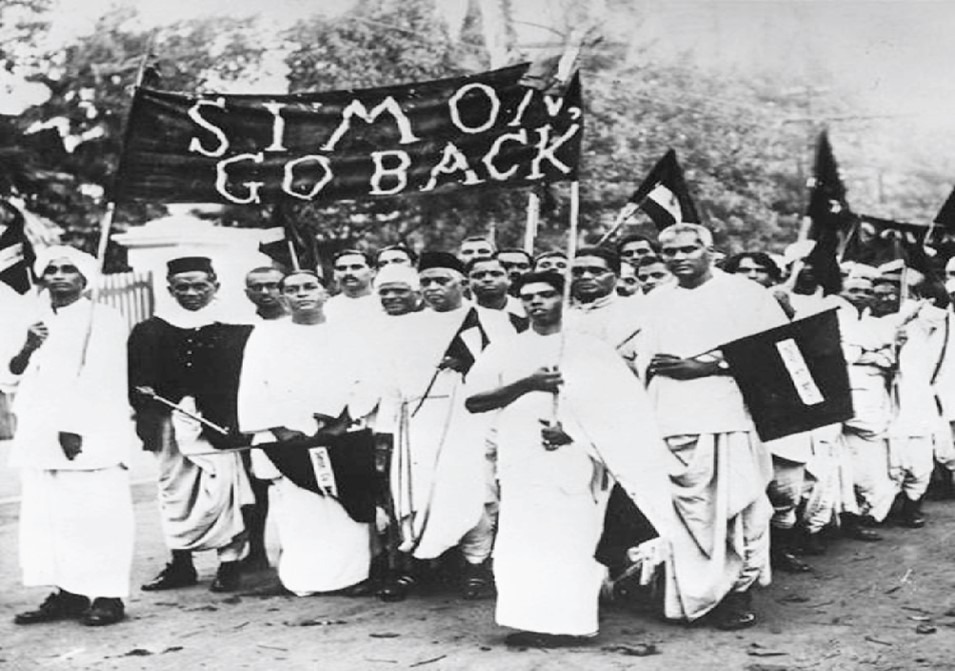
Simon Commission
Simon Commission
- The Crown Rule (1858-1947)
- September 16, 2025
Simon Commission
In November 1927, two years ahead of the scheduled date, the British Government announced the establishment of a seven-member statutory commission chaired by Sir John Simon. The purpose of the commission was to assess the situation in India under its new Constitution. Notably, all members of the commission were British, which led to a boycott from all Indian political parties. The commission submitted its report in 1930, which recommended several changes, including:
– The abolition of dyarchy.
– The extension of responsible government in the provinces.
– The establishment of a federation encompassing both British India and the princely states.
– The continuation of communal electorates.
To discuss and evaluate the commission’s proposals, the British Government organized three round table conferences, bringing together representatives from the British Government, British India, and Indian princely states. Following these discussions, a “White Paper on Constitutional Reforms” was prepared and submitted to the Joint Select Committee of the British Parliament. The recommendations put forth by this committee were subsequently incorporated, with some amendments, into the Government of India Act of 1935.