
India’s Evolving Foreign Policy
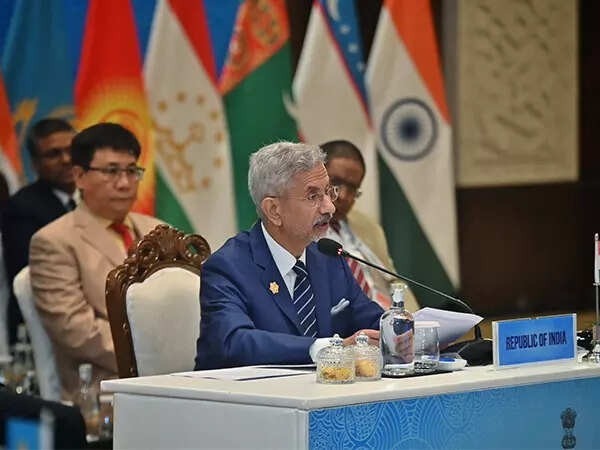
Syllabus:IR
Nehruvian Idealism (1947–1962):
- India’s early foreign policy was shaped by moral diplomacy, non-alignment, and anti-colonial solidarity. Rooted in Gandhian values, India championed peaceful coexistence, multilateralism, and trust-building through initiatives like Panchsheel and UN engagement.
Post-1962 Realism and Security Shift:
- The 1962 war with China marked a pivot from idealism to pragmatism. National interest and security took precedence. India invested in defence infrastructure, strategic planning, and began viewing geopolitics through a realist lens.
Strategic Sovereignty and Nuclear Assertion (1974–1998):
- India’s nuclear tests in 1974 and 1998 underlined a commitment to strategic autonomy. Despite global pressure, India resisted the NPT and CTBT, emphasizing indigenous capability and sovereign decision-making in security affairs.
Counterterrorism and Retaliatory Doctrine (2000s–2019):
- Following repeated terror attacks—26/11, Uri—India transitioned from restraint to calibrated military response. Counterterrorism became central to foreign policy, integrating diplomacy with proactive defence strategies.
Operation Sindoor and Post-2025 Strategic Posture:
- In response to the Pahalgam attack, Operation Sindoor reflected a codified pre-emptive strike policy. India signalled its readiness to escalate decisively against cross-border terrorism, marking a new phase of assertiveness with clear strategic intent.
Key Challenges to India’s Foreign Policy
- Pakistan’s Proxy Warfare: Persistent use of non-state actors under doctrines like “Bleeding India with a Thousand Cuts” undermines regional stability.
- China’s Assertiveness: Post-Galwan tensions and LAC violations demand careful balancing of diplomacy and deterrence.
- Soft Power vs Hard Action: Reconciling India’s civilizational ethos with military responses remains a delicate balance.
- Global Image Management: Military assertiveness may draw scrutiny; India must engage global forums to justify its stance.
- Navigating Strategic Partnerships: Managing ties with the US, Quad, West Asia, and BRICS while preserving autonomy requires nuanced diplomacy.
Way Forward
- Strategic Non-Alignment: Evolve from traditional NAM to flexible partnerships aligned with national interest.
- Defence Self-Reliance: Accelerate Atmanirbhar Bharat through indigenous systems like BrahMos, Agni, and Arihant.
- Proactive Deterrence: Continue calibrated retaliation to dissuade future attacks without crossing escalation thresholds.
- Diplomatic Engagement: Strengthen ties with global powers and lead on global issues like counterterrorism, climate change, and tech governance.
Conclusion
- India’s foreign policy has matured from Nehru’s idealistic vision to a dynamic blend of diplomacy, deterrence, and development. As a rising power, India today balances its moral foundations with strategic clarity, defending its sovereignty while shaping the global order.
Operation Sindoor (2025) exemplifies which of the following principles in strategic doctrine?
- Codification of pre-emptive strikes
- Emphasis on neighbourhood deterrence
- Policy shift to covert retaliation only
- Reaffirmation of non-interventionist soft power projection
Select the correct code:
A. 1 and 2 only
B. 2 and 3 only
C. 1, 2, and 4 only
D. 1, 3, and 4 only
Answer: A
Explanation:
- The operation reflected a proactive, strike-first doctrine and assertiveness in the region. Operation Sindoor is representative of a formally adopted pre-emptive strike doctrine.
- This implies that India is no longer waiting to be attacked before retaliating — it is now willing to strike first if credible threats are detected.This shift from a reactive to a proactive doctrine was seen earlier in limited form in Balakot (2019), but Operation Sindoor codifies it as official military posture.
- It reflects a doctrinal shift—no longer just tactical response, but strategic pre-emption.
NHAI Releases First-Ever Asset Monetisation Strategy
Syllabus: GS2/ Governance
Bottom of Form
Context:
- National Highways Authority of India (NHAI) has launched its first ‘Asset Monetization Strategy for the Road Sector’ under the National Monetisation Pipeline (NMP).
What is Asset Monetization?
- It is the process of leveraging public assets by granting private entities the right to operate them for a fixed period, in return for upfront or periodic payments. This capital recycling model converts mature assets into funds for reinvestment in new infrastructure.
- Performance So Far: ₹1.4 lakh crore mobilized; over 6,100 km of highways monetized.
Key Monetization Models:
- Infrastructure Investment Trusts (InvITs): Regulated by SEBI since 2014; toll assets are transferred into a trust; investors earn returns from toll revenues. Managed by an Investment Manager (returns) and Project Manager (operations).
- Toll-Operate-Transfer (ToT): Introduced in 2016 as a PPP model; private players pay lump sum for toll rights and bear operation and maintenance costs.
- Securitization of Toll Revenues: Future toll revenues used as collateral to raise funds; e.g., Delhi-Mumbai Expressway SPV raised ₹40,000 crore.
Strategic Pillars:
- Value Maximization: Identify and offer high-value assets to maximize returns.
- Transparency: Ensure internal clarity and investor trust through streamlined communication.
- Market Development: Broaden investor base and enhance stakeholder engagement.
- Way Forward: Scale up asset inclusion; boost private sector confidence through transparent, stable policies; build institutional capacity for effective deal management.
With reference to asset monetization in the road sector, consider the following statements:
- Asset monetization necessarily involves the sale of public assets to private entities.
- It follows a capital recycling model, where existing assets are leveraged to create new ones.
- The National Monetisation Pipeline (NMP) was introduced by the Ministry of Road Transport and Highways.
Which of the above statements is/are correct?
A. 2 only
B. 1 and 2 only
C. 2 and 3 only
D. 1, 2 and 3
Answer: A
Explanation:
- Clarification: Asset monetization does not mean selling public assets outright.
- Instead, it refers to leasing or licensing public infrastructure (like highways, pipelines, etc.) to private players for a limited time.
- Ownership of the asset remains with the government, while the private party gets the right to operate and earn revenue under a pre-agreed framework.
Drone – The New Face of Warfare
Syllabus: Defence & Technology
Context:
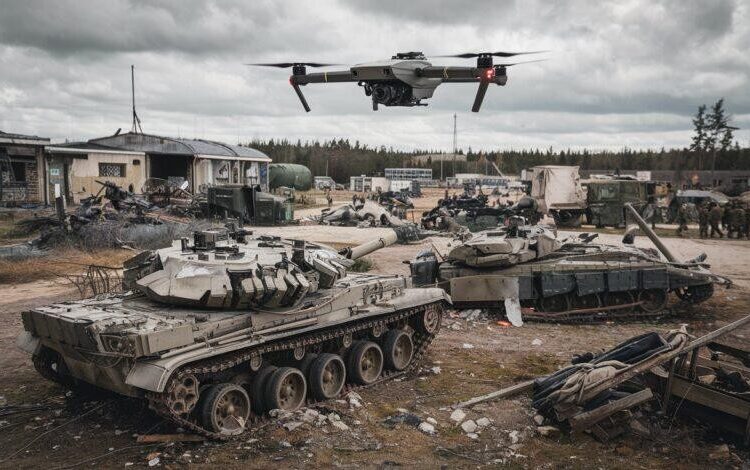
- India’s Operation Sindoor highlights a doctrinal shift via combat drones and stand-off weapons.
What Are Drones?
- Unmanned Aerial Vehicles (UAVs) operated remotely or via AI.
Types of Military Drones:
- Surveillance (Heron, Searcher) for ISR roles; Combat UCAVs (MQ-9 Reaper, Heron TP) for precision strikes; Loitering Munitions (Harpy, Nagastra-1) self-destruct on target; Swarm Drones with AI-coordinated mass deployment; Nano Drones (Black Hornet) for urban/indoor ops.
Key Advantages:
Asymmetric power—low-cost drones neutralize high-value systems; Precision & stealth—surgical strikes with radar-evading tech; ISR edge—real-time battlefield awareness; Psychological impact—persistent aerial presence demoralizes enemies.
Challenges:
Vulnerability to jamming/interception; Risk of civilian misuse and regulatory gaps; Slow domestic production and scalability.
Way Forward for India:
Accelerate indigenous swarm drone tech and AI upgrades; Enable scalable, modular drone manufacturing; Integrate air defence with IACCS; Support drone startups like IdeaForge and Solar Industries. Conclusion: Mastery of drones will define India’s strategic edge in future warfare.
Which of the following statements accurately reflects challenges faced by India in scaling up drone warfare capabilities?
- Civilian drone regulation is fully harmonized with military operational needs.
- Indigenous drone manufacturers suffer from inconsistent procurement and low economies of scale.
- Drones are immune to jamming due to their autonomous AI navigation systems.
- India lacks a modular manufacturing base for large-scale drone production.
Select the correct code:
A. 1 and 2 only
B. 2 and 4 only
C. 3 and 4 only
D. 1, 3 and 4 only
Answer: B
Explanation:
- Statement 1 is incorrect: There’s a known regulatory gap between civil and military drone operations.
- Statement 2 is correct: Lack of consistent orders hinders scaling by Indian drone startups.
- Statement 3 is incorrect: AI navigation reduces, but does not eliminate, vulnerability to jamming/spoofing.
- Statement 4 is correct: Modular mass-production infrastructure is still developing.
India’s first E-Waste Recycling Eco Park
Syllabus:Ecology
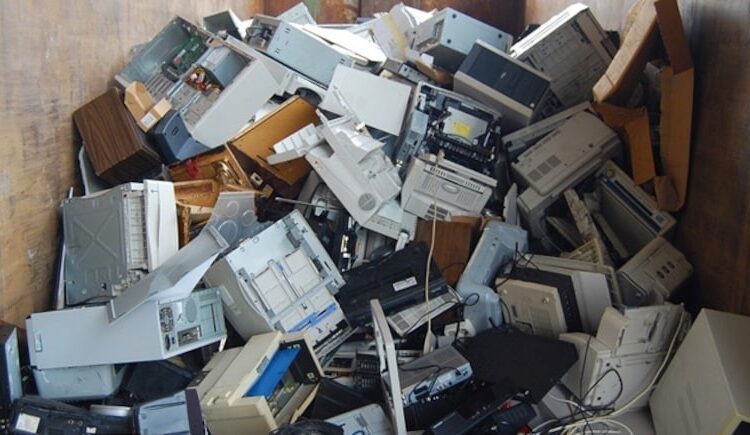
- India’s first E-Waste Recycling Eco Park is being established at Holambi Kalan, North Delhi, announced by the Delhi Environment Minister.
- It will operate on a DBFOT (Design, Build, Finance, Operate, Transfer) model under a Public-Private Partnership with a 15-year concession.
- The Delhi State Industrial and Infrastructure Development Corporation (DSIIDC) will execute the project, floating a global RFQ-RFP, with completion targeted in 18 months.
- Spread over 11.4 acres, the park aims to process 51,000 metric tonnes of e-waste annually through integrated facilities for collection, dismantling, recycling, and refurbishment.
- It will handle all 106 e-waste categories listed under the E-Waste Management Rules, 2022.
- The project involves an investment of ₹150 crore and targets ₹350 crore in revenue, while generating thousands of green jobs and upskilling informal workers.
- It promotes environmental sustainability by preventing toxic dumping and enabling scientific recovery of rare earth elements, supports a circular economy through reuse and resource efficiency, serves as a replicable model for other states, and enhances Delhi’s status as a leader in urban sustainability and e-waste governance—marking a major step toward India’s green infrastructure goals.
With reference to India’s first E-Waste Recycling Eco Park, consider the following statements:
- It will be established under a Build-Own-Operate (BOO) model with perpetual operational rights for the private partner.
- The facility aims to process all e-waste categories defined under the E-Waste (Management) Rules, 2022, including photovoltaic panels and industrial equipment.
- The initiative includes the formalization and skilling of informal sector workers as part of its employment strategy.
- It is expected to be India’s first centrally-funded e-waste facility constructed under the Swachh Bharat Mission-Urban (SBM-U 2.0).
Which of the above statements is/are correct?
A. 2 and 3 only
B. 1 and 4 only
C. 1, 2, and 3 only
D. 2, 3, and 4 only
Answer: A
Explanation:
- Statement 1 is incorrect: The Eco Park follows the DBFOT model (Design, Build, Finance, Operate, Transfer), not BOO, and the concession is limited to 15 years under a PPP framework.
- Statement 2 is correct: The park aims to process all 106 e-waste categories, including solar and industrial equipment, as per the E-Waste Management Rules, 2022.
- Statement 3 is correct: A key feature is the upskilling of informal sector workers, creating thousands of green jobs.
- Statement 4 is incorrect: The project is not centrally funded under SBM-U 2.0 but is being undertaken by the Delhi government through DSIIDC, with global tenders and green-tech participation.
National Investment and Infrastructure Fund (NIIF)
Syllabus:Economy
Introduction:
- The National Investment and Infrastructure Fund (NIIF) is a government-backed investment platform established to attract long-term institutional capital into India’s infrastructure and strategic sectors. Functioning as a sovereign wealth fund-linked asset manager, NIIF maintains operational independence while aligning with national development objectives.
Establishment and Structure:
- Year Established: 2015 (Announced in Union Budget 2015–16)
- Headquarters: Mumbai, Maharashtra
- Nodal Ministry: Ministry of Finance, Department of Economic Affairs
- Fund Structure: Public-private partnership model; Government of India holds a 49% equity stake, while 51% is contributed by international and domestic institutional investors such as ADIA, Temasek, and CPPIB.
- SEBI Registration: Category II Alternative Investment Fund (AIF) since December 2015
Institutional Management and Performance:
- CEO & MD: Sanjiv Aggarwal (Appointed February 2024)
- Assets Under Management (AUM): Over ₹30,000 crore (~US$4.9 billion)
- Capital Mobilization: Facilitated investments worth over ₹1.17 lakh crore
- Investment Partners: Includes sovereign wealth funds, pension funds, and multilateral agencies such as ADB, AIIB, and NDB
Governing Council:
- Chairperson: Union Finance Minister
- Role: Provides strategic oversight, policy guidance, and governance inputs
- Meeting Frequency: Annual review meetings to align fund objectives with evolving economic priorities
- Core Functions:
- Capital Mobilization: Attracts both domestic and international institutional investors to fund infrastructure growth
- Investment Management: Focuses on commercially viable infrastructure and adjacent sectors
- Strategic Collaborations: Co-investment platforms with sovereign and institutional partners
- Policy Alignment: Supports national flagship programs such as Make in India, green transition, and digital infrastructure development
Conclusion:
- NIIF serves as a critical institution in India’s infrastructure financing landscape. By leveraging a public-private model and global partnerships, it plays a key role in mobilizing capital, supporting economic growth, and accelerating the country’s strategic development agenda.
With reference to the National Investment and Infrastructure Fund (NIIF), consider the following statements:
- NIIF functions as a sovereign wealth fund and is fully owned and operated by the Government of India.
- It is registered with SEBI as a Category I Alternative Investment Fund (AIF) and primarily deploys capital through debt instruments in the infrastructure sector.
- NIIF’s strategic investment platforms are designed to align with India’s national priorities such as green energy, Make in India, and digital infrastructure.
- The Governing Council of NIIF is chaired by the Union Minister of Commerce and Industry and meets biannually to assess fund deployment and governance mechanisms.
Which of the above statements is/are correct?
A. 3 only
B. 1 and 4 only
C. 2 and 3 only
D. 1, 2 and 4 only
Answer: A. 3 only
Explanation:
- Statement 1 – Incorrect: NIIF is not fully owned by the Government of India. It follows a public-private partnership model where the Government holds 49% equity and the remaining 51% is held by global and domestic institutional investors (e.g., ADIA, Temasek, CPPIB).
- Statement 2 – Incorrect: NIIF is registered as a Category II AIF, not Category I. It primarily invests equity in infrastructure and related strategic sectors, not just in debt instruments.
- Statement 3 – Correct: NIIF’s investment strategy aligns with national priorities including Make in India, green energy transition, and digital infrastructure, among others. This is a core function.
- Statement 4 – Incorrect: The Governing Council is chaired by the Union Finance Minister, not the Commerce Minister, and it is scheduled to meet annually, not biannually.
Asafoetida (Heeng)
Syllabus:Science and Technology
Context:
- The Council of Scientific and Industrial Research–Institute of Himalayan Bioresource Technology (CSIR-IHBT) has successfully reported the first flowering and seed setting of asafoetida (heeng) at Palampur, Himachal Pradesh — marking a critical step in its acclimatisation and domestication in Indian agro-climatic conditions.
About Asafoetida (Ferula assa-foetida):
- A perennial herbaceous plant known for its oleo-gum resin, derived from its fleshy taproot, which is used both in culinary and medicinal applications. Commonly known as heeng in India; recognized in Ayurveda and classical texts like the Charaka Samhita for its carminative, digestive, and aromatic properties.
Agro-Climatic Suitability:
- Native to cold arid regions such as Iran, Afghanistan, and Central Asia. Prefers sandy, well-drained soils; annual rainfall less than 300 mm; and temperature ranges between –4°C to 40°C. Suitable Indian regions include Lahaul-Spiti, Kinnaur (Himachal Pradesh), and Uttarkashi (Uttarakhand).
Key Botanical & Agronomic Features:
- Requires five years to mature and flower; resin is harvested post-maturity. Oleo-gum content constitutes 40–64% of the dried resin. The plant is highly drought-tolerant and remains dormant in harsh winters. Medicinally valued for treating digestive disorders, bloating, and enhancing metabolism. Culturally mentioned in Mahabharata and Panini’s works; extensively used in Indian cuisine and rituals.
Strategic Significance of Indigenous Domestication:
- India, though a large consumer, was fully import-dependent until now. Successful domestication at Palampur (1300 m altitude) showcases potential beyond traditional cold desert zones. Institutional initiatives include the establishment of the Heeng Germplasm Resource Centre (2022) and development of tissue culture techniques for large-scale propagation.
Conclusion:
- Indigenous cultivation of asafoetida represents a major breakthrough in agricultural diversification, self-sufficiency, and the revival of traditional plant-based knowledge systems in India.
With reference to the recent domestication of Ferula assa-foetida in India, consider the following statements:
- The successful flowering and seed-setting reported at Palampur mark the first-ever recorded growth of asafoetida outside its native range of West Asia and Central Asia.
- Asafoetida requires saline and waterlogged soils, making it suitable for cultivation in India’s Indo-Gangetic plains.
- Despite its historical presence in Indian texts and traditions, asafoetida had never been cultivated domestically prior to the CSIR-IHBT intervention.
- Tissue culture and germplasm conservation efforts for asafoetida are now institutionalized under a dedicated centre established in Himachal Pradesh.
Which of the above statements is/are correct?
A. 1 and 4 only
B. 2 and 3 only
C. 3 and 4 only
D. 1, 3, and 4 only
Answer: A
Explanation:
- Statement 1 – Correct: The Palampur initiative marked the first successful flowering and seed-setting of Ferula assa-foetida in Indian conditions, outside its native habitat in Iran, Afghanistan, and Central Asia.
- Statement 2 – Incorrect: The crop prefers sandy, well-drained soils, low rainfall (<300 mm), and cold-arid conditions—not saline or waterlogged soils typical of the Indo-Gangetic plains.
- Statement 3 – Incorrect: Though India imported all its heeng before this intervention, several attempts were made in the past, but cultivation had never succeeded due to unsuitable agro-climatic zones—not due to complete absence of domestic efforts.
- Statement 4 – Correct: A Heeng Germplasm Resource Centre was established in 2022 by CSIR-IHBT, along with tissue culture facilities, marking a systemic institutionalization of asafoetida domestication.
Gangotri National Park
Syllabus:Ecology
Context:
- Residents of Uttarkashi have strongly opposed the unauthorized operation of a waste incinerator within Gangotri National Park, citing environmental degradation in the Bhagirathi Eco-Sensitive Zone and violations of conservation laws.
Gangotri National Park – Overview
Location and Extent:
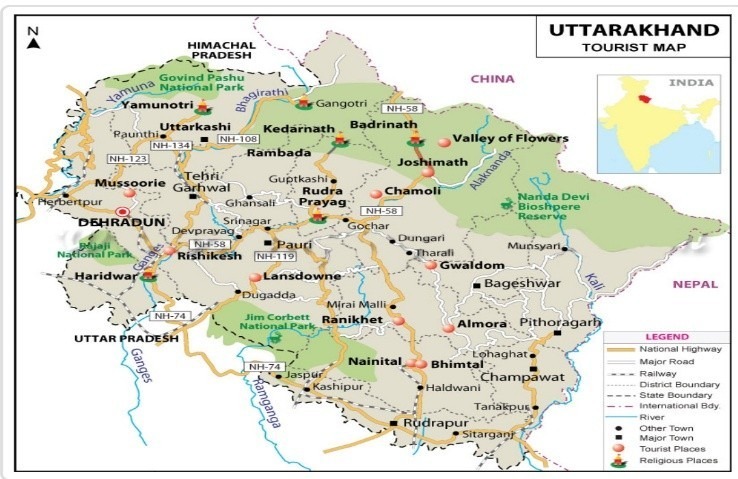
- Situated in Uttarkashi district, Uttarakhand, the park spans 2,390 sq km in the high-altitude Garhwal Himalayas.
- It encompasses the upper catchment of the Bhagirathi River and includes sections of the Gangotri Glacier, the origin point of the Ganga.
- The park shares boundaries with Kedarnath Wildlife Sanctuary and Govind National Park, and lies along India’s international border with Tibet (China).
- Iconic Himalayan peaks within the park include Chaukhamba I–III, Satopanth, and Kedarnath Main.
Vegetation Zones (Flora):
- Western Himalayan Subalpine Conifer Forests dominate lower altitudes with fir, deodar, spruce, and oak.
- Rhododendron thickets and alpine meadows thrive below the snowline.
- Above 3,500 m, alpine shrublands and grasslands sustain hardy, cold-adapted flora.
Wildlife Significance (Fauna):
- Key habitat for the snow leopard, a flagship predator of high-altitude ecosystems.
- Supports endangered species such as the Himalayan musk deer, Himalayan tahr, and blue sheep (bharal).
- Other notable fauna include the brown bear, Asiatic black bear, Himalayan monal, and rare butterfly species.
- Functions as an ecological corridor for migratory birds and alpine wildlife.
Conservation Importance:
- Gangotri National Park serves as a critical component in protecting Himalayan biodiversity, sustaining glacial ecosystems, and preserving the ecological integrity of the Ganga’s headwaters.
With reference to Gangotri National Park, consider the following statements:
- It is contiguous with both a biosphere reserve and a Ramsar wetland.
- The park serves as a catchment area for a river that forms part of the National River Linking Project.
- The park contains vegetation zones that span from subalpine conifer forests to alpine tundra.
- It is India’s only national park sharing an international border with China.
Which of the statements given above are correct?
A. 1 and 4 only
B. 2 and 3 only
C. 3 and 4 only
D. 1, 2, and 3 only
Answer: B
Explanation:
- Statement 1 is incorrect: It is not directly adjacent to a Ramsar site or biosphere reserve.
- Statement 2 is correct: It drains the Bhagirathi, which links to the Ganga basin considered under interlinking plans.
- Statement 3 is correct: It spans conifer forests to alpine shrublands/tundra.
- Statement 4 is incorrect: Other national parks (e.g., Namdapha in Arunachal Pradesh) also share borders with China/Myanmar.
ICC Cricket Hall of Fame 2025
Syllabus:Games
Context:
- Former India captain MS Dhoni has been inducted into the ICC Cricket Hall of Fame 2025, becoming the 11th Indian cricketer to receive this prestigious international honour. He joins six other cricketing legends, including two women players, in the elite class of 2025 inductees.
About ICC Cricket Hall of Fame 2025
What is it?
- The ICC Hall of Fame is an international platform that recognizes and celebrates cricketers who have made exceptional contributions to the sport across generations and cricketing nations.
Origin and Establishment
- Launched: January 2, 2009
- Founded by: International Cricket Council (ICC) in collaboration with the Federation of International Cricketers’ Associations (FICA)
- Initially incorporated 55 players honoured earlier by FICA (1999–2003), along with 5 new inductees in 2009
Eligibility and Induction Criteria
- Cricketers must be retired for at least five years from international cricket.
- Evaluation based on:
- Career impact and longevity
- Statistical achievements
- Leadership and influence
- Legacy across formats (Tests, ODIs, T20Is)
- Open to both male and female cricketers from all Test-playing countries
Key Features
- Intergenerational Recognition: Includes players from the early 20th century to the modern era
- Global Scope: Represents cricketers from all major cricketing nations
- Symbolic Honour: Each inductee receives a customized Hall of Fame cap
- Annual Induction Ceremony: Announcements are typically aligned with major ICC events
Indian Inductees into the ICC Hall of Fame
- Total: 11 Indian cricketers
Prominent Names: - Bishan Singh Bedi (2009)
- Sunil Gavaskar (2009)
- Kapil Dev (2009)
- Anil Kumble (2015)
- Rahul Dravid (2018)
- Sachin Tendulkar (2019)
- Vinoo Mankad (2021)
- Virender Sehwag (2023)
- MS Dhoni (2025)
Women Cricketers from India in the Hall of Fame
- Diana Edulji (2023)
- Neetu David (2023)
- MS Dhoni’s induction marks a new milestone in India’s cricketing legacy, honouring his role as a transformative leader and world-class wicketkeeper-batsman.
With reference to the ICC Cricket Hall of Fame, consider the following statements:
- The ICC Cricket Hall of Fame was launched in partnership with the Marylebone Cricket Club (MCC) and included inductees from the Wisden Almanack Honour Roll prior to 2009.
- A cricketer can be considered for induction only if they have served as a captain in all three international formats (Test, ODI, T20I) for a minimum of five years.
- MS Dhoni’s induction in 2025 makes him the first Indian wicketkeeper to be included in the ICC Hall of Fame.
- The Hall of Fame recognises players exclusively from Test-playing nations and does not include players from Associate cricketing nations.
Which of the above statements is/are correct?
A. 1 and 3 only
B. 2 and 4 only
C. 3 only
D. 3 and 4 only
Answer: C. 3 only
Explanation:
- Statement 1 – Incorrect:The ICC Cricket Hall of Fame was launched in 2009 in partnership with FICA (Federation of International Cricketers’ Associations), not the MCC. It absorbed players previously honoured by FICA (not Wisden).
- Statement 2 – Incorrect:There is no requirement that a player must have captained in all three formats for five years. The eligibility criterion is five years post-retirement, and induction is based on overall impact, not format-based captaincy.
- Statement 3 – Correct:MS Dhoni is indeed the first Indian wicketkeeper to be inducted into the ICC Hall of Fame. Earlier inductees include batsmen, bowlers, and all-rounders, but not a specialist wicketkeeper.
- Statement 4 – Incorrect:The Hall of Fame includes players predominantly from Test-playing nations, but it does not explicitly exclude Associate members. The selection has been heavily tilted toward Full Members, but the criterion is not formally exclusive.