Indian Councils Act of 1892
Indian Councils Act of 1892
- The Crown Rule (1858-1947)
- September 16, 2025
Indian Councils Act of 1892
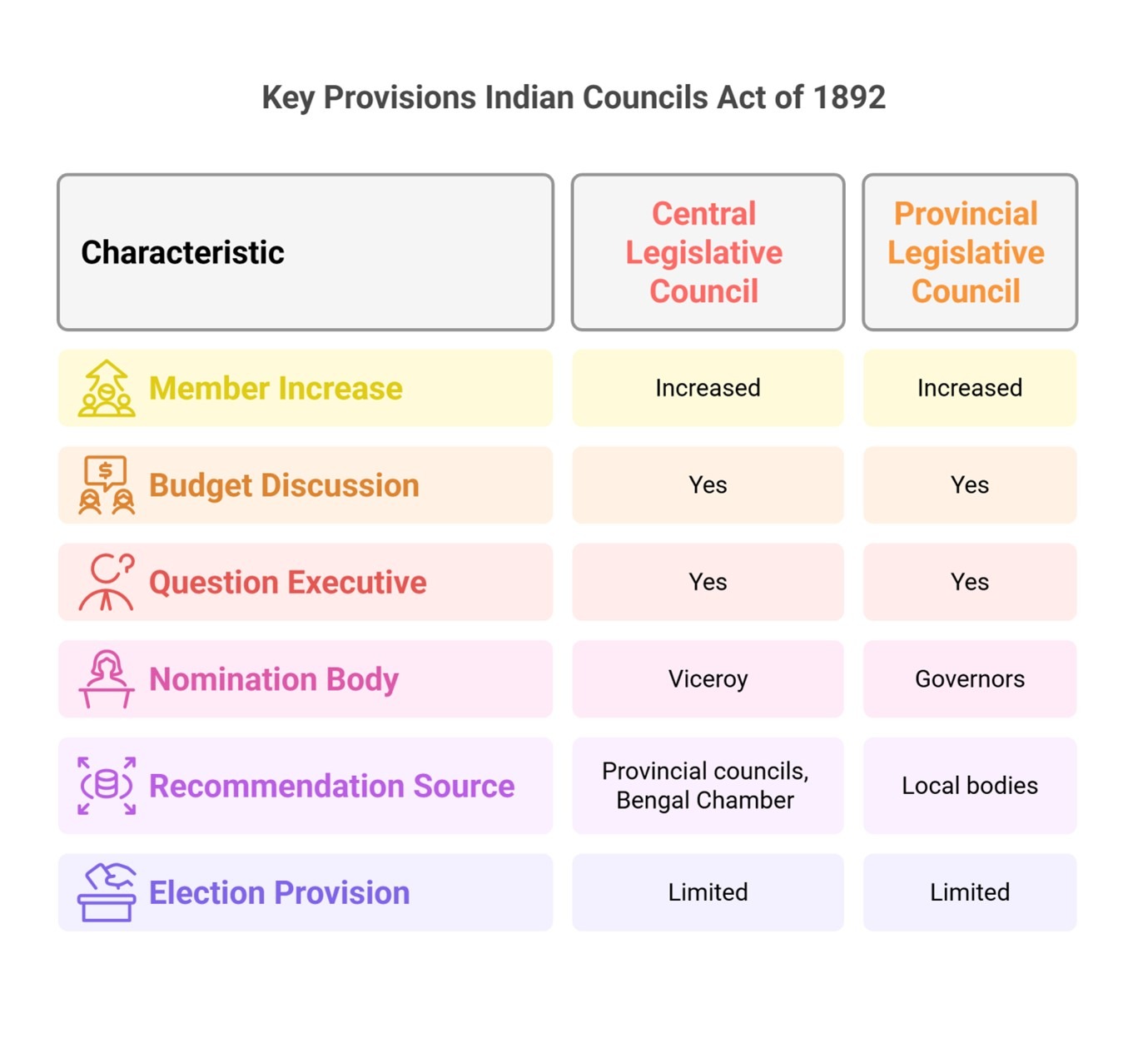
The Indian Councils Act of 1892 introduced several important features aimed at enhancing the legislative framework in India. The key provisions of this Act are as follows:
1. Increase in Non-official Members: The Act expanded the number of additional (non-official) members in both the Central and provincial legislative councils, while still ensuring that the official majority was maintained.
2. Enhanced Legislative Functions: It broadened the functions of the legislative councils, empowering them to discuss the budget and to address questions to the executive.
3. Nomination of Non-official Members: The Act outlined the process for nominating non-official members to the legislative councils. Specifically:
-The Viceroy could nominate some non-official members to the Central Legislative Council based on recommendations from the provincial legislative councils and the Bengal Chamber of Commerce.
– Governors could nominate members to the provincial legislative councils based on recommendations from various local bodies, including district boards, municipalities, universities, trade associations, zamindars, and chambers of commerce.
While the Act included a limited provision for using elections to fill some non-official seats in both the Central and provincial legislative councils, it did not explicitly use the term “election.” Instead, the process was characterized as nominations made on the recommendation of specific bodies.
These provisions represented a gradual move towards greater Indian participation in governance while still maintaining British control over the legislative process.