
The 1813 Charter Act
The 1813 Charter Act
- The Company Rule (1773-1858)
- September 16, 2025
The 1813 Charter Act
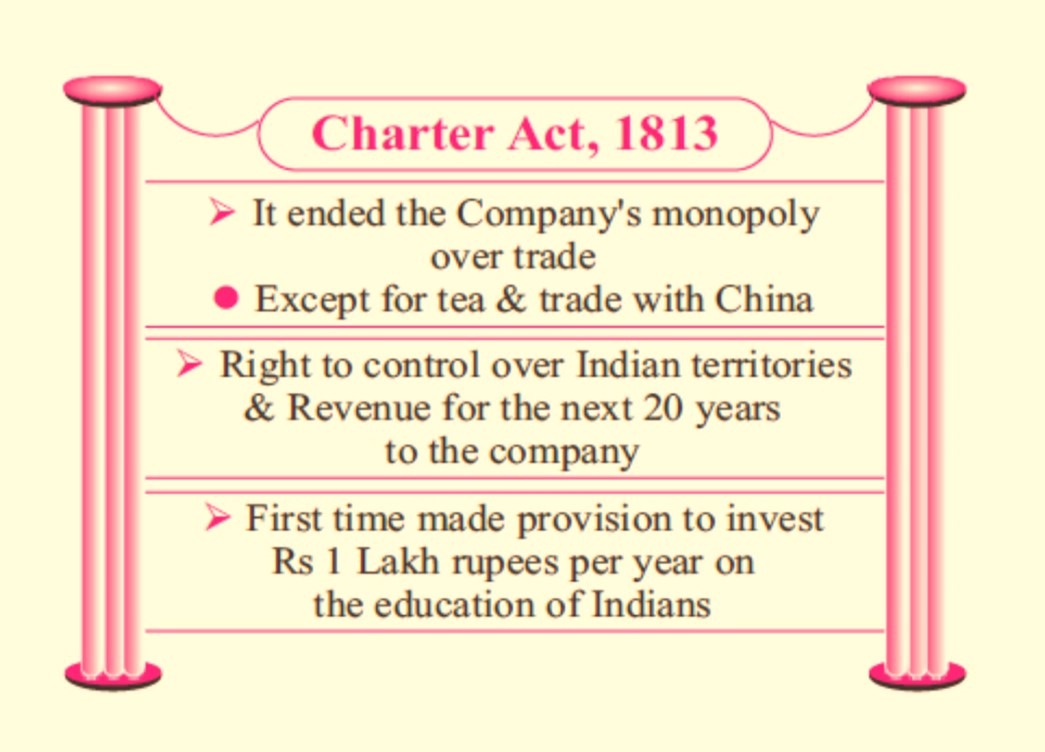
This Act’s characteristics were as follows:
- It ended the company’s trade monopoly in India, which means All British merchants were allowed to deal with India. Nonetheless, it maintained the company’s monopoly on tea and trade with China.
- It affirmed the British Crown’s authority over the Company’s Indian holdings.
- It made it possible for Christian missionaries to travel to India in order to educate the populace.
- It made it possible for the people who lived in the British colonies in India to receive an education in the West.
- It gave Indian local governments the authority to tax citizens. They might also impose penalties on those who fail to pay taxes.
Daily Current Affairs
No posts found
Latest Post
September 28, 2025
September 28, 2025
September 27, 2025
September 26, 2025
September 25, 2025
No posts found
Monthly Current Affairs
September 1, 2025
August 10, 2025
June 17, 2025
May 5, 2025
May 3, 2025
No posts found