
Coal Gasification
- Blogs
- September 15, 2025
Syllabus: GS3 — Environment / Energy
In News:
- Government set up a committee to review mining-plan guidelines and add provisions for Underground Coal Gasification (UCG).
Context / About
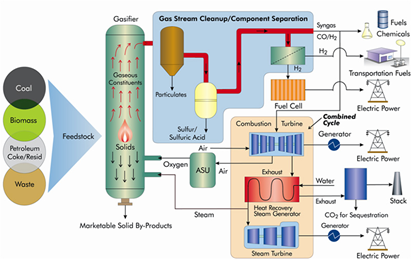
- Coal gasification transforms coal into synthesis gas (syngas): a mixture whose main combustible components are hydrogen (H₂) and carbon monoxide (CO), and which may contain CO₂ and small hydrocarbons.
- Syngas is a feedstock for power generation (combined-cycle gas turbines), chemicals (methanol, dimethyl ether), and fertiliser manufacture (e.g., via hydrogen/urea routes).
- Underground Coal Gasification (UCG) involves converting in-situ coal seams into syngas by injecting oxidants (air/oxygen/steam), igniting the seam under controlled conditions and extracting produced gas to the surface.
Significance / Importance
- Leverages India’s abundant coal reserves — reduces near-term dependence on imported gas/chemical feedstocks.
- Enables utilisation of deep, otherwise-unmineable coal seams with limited surface disturbance — beneficial for interior states with trapped resources.
- Can support domestic coal-to-chemicals complexes, promoting regional industrialisation and employment.
- Potential to produce cleaner synthetic fuels (methanol, DME, synthetic natural gas) and to integrate CO₂ capture and utilisation/storage (CCUS) economically at scale.
Challenges / Concerns
- Environmental risks: possible groundwater contamination (tars, phenolics, benzene), uncontrolled subsidence, fugitive emissions and local air pollution if not well-managed.
- Technical controls required: precise hydrogeologic characterisation, reliable cavity control, product-gas clean‑up and monitoring systems.
- GHG footprint: unless CO₂ is captured and stored/used, syngas-derived fuels still emit CO₂ — lifecycle emissions depend on process design and CCUS deployment.
- Regulatory, land‑use and community consent issues will influence project siting and acceptability.
Do you know?
- Syngas can be converted to liquid fuels via Fischer–Tropsch synthesis or to methanol (and onward to DME) — chemical routes commonly considered for coal-to-liquids/chemicals.
Latest Post
September 28, 2025
September 28, 2025
September 27, 2025
September 26, 2025
September 25, 2025
No posts found
Daily Current Affairs
No posts found
Attempt Quiz
September 27, 2025
September 26, 2025
September 25, 2025
September 25, 2025
September 24, 2025
No posts found