
Viksit Bharat Ka Amrit Kaal Report
Syllabus: Governance
Theme: Seva, Sushasan, Garib Kalyan
- Serving the Poor & Marginalized: Antyodaya in Action
Goal: Inclusive growth through 100% welfare saturation.
- 81 crore received free foodgrains under PMGKY
- 5+ crore MUDRA loans (>50% to SC/ST/OBC)
- 15 crore households got tap water under Jal Jeevan Mission
- 4 crore houses built under PM Awas Yojana
- 68 lakh street vendors aided via PM SVANidhi
- 112+ Aspirational Districts exceeded state development averages
Outcome: IMF affirms end of extreme poverty, UNDP hails MPI progress.
- Farmer Welfare: ‘Beej Se Bazaar Tak’
- Goal: Holistic agricultural reforms
- ₹3.7 lakh crore via PM-KISAN
- MSP procurement surged: Pulses (↑7350%), Oilseeds (↑1500%)
- 1,473 eNAM mandis, 24 Mega Food Parks
- ₹1 lakh crore Agri Infra Fund
Achievements:
- Foodgrain output: 347 MMT
- Milk production: ↑63.56%
- 1,943 agri-startups supported
- Processed food exports: ↑to $9.03 billion
- Nari Shakti: Empowerment Across Life Stages
- Goal: Socio-economic & digital inclusion
- 38 crore MUDRA loans (₹14.72 lakh crore) to women
- 10 crore+ women in SHGs; 3 crore becoming Lakhpati Didis
- Sex ratio at birth: 1020 females/1000 males
- 77 crore+ sanitary pads distributed via Jan Aushadhi
Achievements:
- Paid maternity leave extended to 26 weeks
- Women own 73% of PMAY-Gramin homes
- 50,000+ startups with women directors
Empowering Amrit Peedhi (Youth)
- Goal: Skilling, education, entrepreneurship, sports
- 6 crore skilled under PMKVY
- 6,500 new IIT seats, 23 IITs & 23 AIIMS operational
- 6 lakh+ startups created 6 lakh jobs
- 490 new universities
Achievements:
- 8 lakh direct jobs via DPIIT startups
- 61 medals at Tokyo & Paris Olympics/Paralympics
- 94+ athletes supported under TOPS
- Ease of Living for the Middle Class
- Goal: Connectivity, digital access, housing, tax reforms
- 4 crore homes under PMAY
- Metro spread from 5 to 23 cities
- UPI users: 46 crore individuals, 6.5 crore merchants
- 5G in 6% districts within 22 months
Achievements:
- 5 crore+ flew under UDAN
- ₹37,000 crore unlocked via SWAMIH
- 52 crore Digilocker users
- 2,297+ e-services via UMANG
Affordable, Accessible Healthcare for All
- Goal: Health equity through infrastructure & digital outreach
- 9 crore+ Ayushman Bharat admissions (₹1.3 lakh crore)
- 77 crore ABHA IDs created
- 220+ crore COVID vaccine doses given
- 18 lakh MBBS, 74,000 PG seats
Achievements:
- 16,000+ Jan Aushadhi stores saved ₹38,000 crore
- 37 crore e-consultations via eSanjeevani
- MMR dropped from 130 → 80
- AIIMS in NE, 2,045 medical colleges now operational
Conclusion:
- India’s 11-year journey under PM Modi showcases a new era of inclusive growth, digital empowerment, grassroots upliftment, and global leadership — laying the foundation for a Viksit Bharat by 2047.
Consider the following statements regarding the Aspirational Districts Programme (ADP):
- It uses a data-driven approach focusing on 5 key sectors: Health, Education, Agriculture, Infrastructure, and Basic Financial Inclusion.
- Over 100 aspirational districts have shown improvement beyond the state average in development parameters.
- The programme is being implemented by the Ministry of Rural Development alone.
Which of the statements given above is/are correct?
A. 1 and 2 only
B. 1 and 3 only
C. 2 and 3 only
D. 1, 2, and 3
Correct Answer: A. 1 and 2 only
Detailed Explanation:
Statement 1: Correct
- The Aspirational Districts Programme (ADP) was launched by NITI Aayog in January 2018, with the objective of quickly and effectively transforming 112 most underdeveloped districts of India across key sectors.
The programme uses a data-driven approach by ranking districts based on 49 Key Performance Indicators (KPIs) across 5 core sectors: - Health & Nutrition
- Education
- Agriculture & Water Resources
- Financial Inclusion & Skill Development
- Basic Infrastructure
- The rankings are updated monthly using the Champions of Change dashboard, enabling real-time tracking and nudging of districts towards better governance and service delivery.
Restricting AC Temperature: A Climate-Smart and Health-Safe Cooling Strategy
Syllabus: Energy
Context:
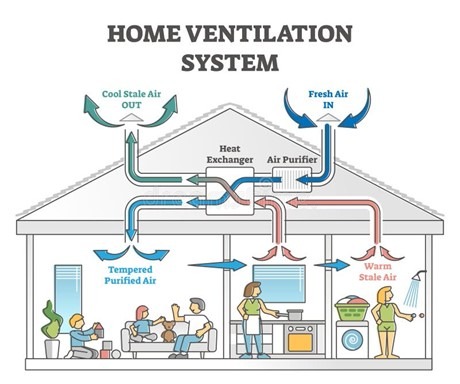
- The Union Ministry of Power has proposed a mandatory operational temperature range of 20°C to 28°C for all new air conditioners used in residential, commercial, and vehicular settings. This marks a significant policy evolution from the 2018 advisory of a default 24°C setting, transitioning from voluntary compliance to enforced manufacturing norms.
Why the Reform Is Necessary
- Mounting Energy Demand from Cooling
- Rising Load Projection: India’s cooling demand is projected to reach 200 GW by 2030, placing immense stress on the national grid.
- Current Burden: ACs already contribute 50 GW, nearly 20% of peak power demand, despite only 6% household penetration, indicating unsustainable growth ahead.
Economic Implications
- Electricity Tariffs: Escalating demand could necessitate tariff hikes and increased fossil-fuel-based generation, disproportionately affecting lower-income households.
- Energy Equity: Demand moderation ensures affordable and inclusive access to electricity, preserving socioeconomic balance.
Health Hazards of Overcooling (<18°C)
- Cardiovascular Stress: Indoor temperatures below 18°C cause vasoconstriction, increasing blood pressure by 6–8 mmHg, elevating hypertension risk.
- Respiratory Risks in Children: Prolonged exposure to ~16°C has been associated with reduced lung capacity and airway resistance in young children.
- Mental Health Deterioration: Cold indoor environments correlate with depression, anxiety, and stress, as observed in studies from temperate regions like the UK.
- Disrupted Sleep & Immunity: Overcooling adversely affects sleep cycles, weakens immune function, and impairs cognitive performance.
- Thermal Vulnerability: Elderly and infants, with diminished thermoregulatory efficiency, are more prone to cold-induced morbidity.
Benefits of the Proposed Temperature Regulation
- Energy Efficiency
- Each 1°C increase in AC temperature can result in 6% energy savings.
- Cumulative savings could reach 20 billion units annually, easing grid pressure during peak demand.
Climate Impact Mitigation
- Reduces CO₂ emissions, supporting India’s net-zero pathway and Paris Agreement commitments.
- Enhances compliance with SDG 13 (Climate Action).
- Health-Conscious Cooling
- Promotes thermal comfort without compromising physiological or mental health.
- Helps normalize moderate cooling as a social and behavioral standard.
- Infrastructure Resilience
- Helps avoid blackouts, reduces reliance on emergency fossil-fuel generation, and curbs long-term infrastructure costs.
Alignment with National and Global Frameworks
- India Cooling Action Plan (ICAP): Reinforces the ICAP target to reduce cooling energy demand by 25–30% by 2038.
- Global Best Practices: Mirrors Japan’s 28°C default, aligning India with international climate-smart standards.
- Smart Cities & Urban Sustainability: Facilitates climate-resilient urban planning, sustainable architecture, and eco-sensitive infrastructure.
Conclusion
- The Ministry’s proposal to mandate a standardized AC temperature range represents a scientifically grounded, eco-conscious, and public health-sensitive regulatory reform. It not only aligns with India’s climate and energy goals but also cultivates responsible consumption behavior. By addressing both infrastructural stress and individual well-being, the initiative marks a decisive step toward sustainable urban living and intergenerational equity in the Anthropocene era.
Consider the following statements regarding the Union Ministry of Power’s proposal to regulate air conditioner temperature settings in India:
- The proposal seeks to make 24°C the maximum allowable temperature setting for all new air conditioners sold in
- The move aims to reduce India’s cooling energy demand in line with the objectives of the India Cooling Action Plan (ICAP).
- Japan’s “Cool Biz” campaign has influenced India’s push towards a behavioral shift in indoor thermal comfort norms.
Which of the statements given above is/are correct?
A. 1 only
B. 2 and 3 only
C. 1 and 2 only
D. 1, 2, and 3
Correct Answer: B. 2 and 3 only
Detailed Explanation:
- Statement 1: Incorrect
- Claim: The proposal seeks to make 24°C the maximum allowable temperature for ACs.
- Reality: The Union Ministry of Power has proposed a mandatory operational temperature range of 20°C to 28°C for all new AC units, not a maximum of 24°C.
- The key misinterpretation here is that 24°C is a maximum, when in fact:
- 24°C was an advisory default setting in 2018 (voluntary).
- Now, the proposed regulation is to hardwire all new ACs with a temperature operating range between 20°C (minimum) and 28°C (maximum).
- This is aimed at limiting excessive cooling to save energy and avoid health hazards.
Statement 2: Correct
- The regulation aligns directly with the India Cooling Action Plan (ICAP), which aims to:
- Reduce cooling energy demand by 25–30% by 2038.
- Promote sustainable and climate-smart cooling solutions.
- Enhance energy efficiency and reduce greenhouse gas emissions from refrigeration and AC use.
- Controlling default temperature settings in ACs directly contributes to these ICAP targets by:
- Reducing electricity consumption.
- Minimizing peak demand on power grids.
Statement 3: Correct
- The “Cool Biz” campaign launched by Japan in 2005:
- Encouraged government offices and businesses to set ACs to 28°C.
- Promoted lighter dress codes and behavioral adaptation to reduce energy use.
- India has drawn inspiration from this global practice to create behavioral norms and public awareness about energy-conscious cooling habits.
- This approach is being incorporated into regulatory norms, not just public campaigns, in India.
Conclusion:
- Statement 1 is incorrect: Misrepresents the policy — 24°C is not the cap; it’s about a 20–28°C operating range.
- Statements 2 and 3 are correct: The policy aligns with ICAP and reflects lessons from international best practices like Japan’s Cool Biz.
DNA Identification Techniques
Syllabus:Science and Technology
Context:
- Following the Air India Boeing 787 crash in Ahmedabad, authorities have turned to DNA identification to ascertain the identities of the deceased victims.
What is DNA Identification?
- DNA identification is a forensic method used to match DNA from human remains with known samples to confirm identity.
- Each individual (except identical twins) has unique DNA, making it an effective biological fingerprint.
- Widely used in mass disasters, aviation accidents, war zones, and criminal investigations.

How It Works
- Sample Collection & Preservation
- Sources: Hard tissues (bones, teeth) or soft tissues (skin, muscle).
- Preservation: Stored in ethanol or frozen at –20°C to prevent degradation, especially crucial in hot/humid conditions.
- Reference DNA
Obtained from:
- Biological relatives (parents, children, siblings).
- Personal items (e.g., toothbrushes, hairbrushes).
- Used for comparison and confirmation.
DNA Analysis Methods
|
Technique |
Use Case |
Notes |
|
STR (Short Tandem Repeat) |
Most common for nuclear DNA |
High accuracy; ideal for preserved samples |
|
mtDNA (Mitochondrial DNA) |
When nuclear DNA is degraded |
Inherited maternally; matches maternal relatives |
|
Y-STR Analysis |
Traces paternal lineage (males) |
Used when maternal relatives are unavailable |
|
SNP (Single Nucleotide Polymorphism) |
Extremely degraded DNA |
Less precise, but useful with minimal reference data |
Key Features & Applications
- Gold Standard: Globally adopted for victim identification in mass casualty incidents.
- Precision: Capable of identifying individuals from even highly degraded remains.
- Storage-Sensitive: Requires careful handling to preserve data integrity.
- International Practice: Used by CBI, Interpol, and ICRC.
- Legal Standing: DNA evidence is admissible in Indian courts under the Indian Evidence Act.
With reference to forensic DNA identification techniques used in mass disasters and aviation accidents, consider the following statements:
- Short Tandem Repeat (STR) analysis can be used even when DNA is highly degraded due to environmental exposure.
- Mitochondrial DNA (mtDNA) analysis is preferred in cases where reference DNA is available only from paternal relatives.
- Y-chromosome STR analysis is ineffective in identifying female victims.
- DNA evidence obtained from personal items like toothbrushes is not legally admissible in Indian courts.
Which of the statements given above is/are correct?
A. 1 and 4 only
B. 2 and 3 only
C. 3 only
D. 1, 2, and 4 only
Answer: C. 3 only
Explanation:
- Statement 1 – Incorrect:STR analysis requires relatively intact nuclear DNA. It is not suitable when DNA is severely degraded due to heat, moisture, or time. In such cases, mtDNA or SNP analysis is used.
- Statement 2 – Incorrect: mtDNA is inherited maternally, not paternally. If only paternal relatives are available, Y-STR (for males) may be used, not mtDNA.
- Statement 3 – Correct:Y-STR analysis traces male lineage (Y chromosome is present only in males). Thus, it is not applicable to identify female victims.
- Statement 4 – Incorrect:DNA obtained from personal items like toothbrushes, razors, or hairbrushes is legally admissible in Indian courts under the Indian Evidence Act, provided chain of custody is established.
A New Species of Jumping Spider
Syllabus:Ecology
Context:
- A team of researchers has identified a new species of jumping spider, Spartaeus karigiri, in the southern Indian states of Karnataka and Tamil Nadu.
- This discovery marks the first recorded presence of the genera Spartaeus and Sonoita in India, which were previously confined to Southeast Asia and Africa.

Key Highlights
Scientific Classification
- Species: Spartaeus karigiri
- Family: Salticidae (Jumping spiders)
- Subfamily: Spartaeinae
- Genera involved: Spartaeus, Sonoita
Geographical Range
- Primary location: Karigiri (Elephant Hill), Devarayanadurga, Karnataka
- Additional site: Villupuram district, Tamil Nadu
Distinctive Features
- Habitat: Rocky outcrops and crevices in dry deciduous forests
- Sexual Dimorphism:
- Male: Active predator, often found in rocky habitats
- Female: Observed guarding egg sacs, indicating maternal care
- Behavioral Traits:
- Intelligent mimicry
- Web-invasion hunting strategy
- Physiology: Advanced vision—a signature trait of Salticidae spiders
Scientific Significance
- Biogeographic Breakthrough:
- Spartaeus and Sonoita genera previously known only from Southeast Asia and Africa
- First Indian record raises questions about historical dispersal and ecological adaptation
- New Record: Confirms presence of Sonoita cf. lightfooti, a species previously thought to be African-endemic
- Conservation Insight: Highlights the underexplored biodiversity of southern India’s rocky terrain
- Ecological Value: Offers insights into the evolution of mimicry, maternal behavior, and predator intelligence in arachnids
With reference to the discovery of Spartaeus karigiri, consider the following statements:
- Spartaeus karigiri is the first documented species of Salticidae in India to exhibit maternal egg guarding behavior in its natural habitat.
- The genera Spartaeus and Sonoita were previously recorded only from the Afrotropical biogeographic realm.
- The discovery of Spartaeus karigiri in Devarayanadurga reinforces the hypothesis of Gondwanan origin for several arachnid lineages in peninsular India.
- The genus Sonoita, unlike Spartaeus, is characterized by nocturnal predation and silk-dependent hunting strategies.
Which of the above statements is/are correct?
A. 1 and 3 only
B. 2 and 4 only
C. 1, 2, and 3 only
D. 1, 3, and 4 only
Answer: A. 1 and 3 only
Explanation:
- Statement 1: Correct — The female of Spartaeus karigiri has been observed guarding her eggs, a behavior not widely documented previously in Salticidae in Indian records.
- Statement 2: Incorrect — Spartaeus and Sonoita were known from both Southeast Asia and Africa, not exclusively from the Afrotropical realm.
- Statement 3: Correct — The discovery in ancient rocky terrain supports hypotheses of Gondwanan biogeographic continuity, where isolated ecosystems in peninsular India retain relic species.
- Statement 4: Incorrect — Jumping spiders of the Sonoita genus are known for keen vision and active daytime hunting, not nocturnal or silk-dependent predation.
Relaxed Key Provisions of the SEZ Rules, 2006
Syllabus:Governance
Context:
- The Government of India has amended key provisions of the Special Economic Zones (SEZ) Rules, 2006, aimed at incentivizing domestic manufacturing in the semiconductor and electronics sectors by simplifying regulatory requirements and facilitating ease of doing business.
About SEZs:
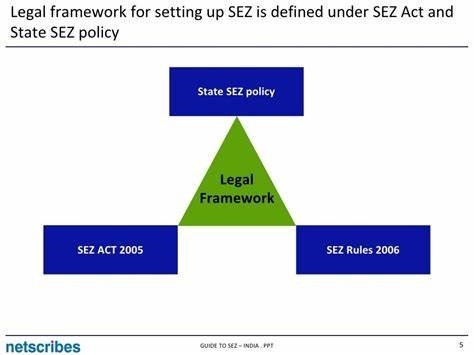
- Legal Basis: Governed under the SEZ Act, 2005 and SEZ Rules, 2006.
- Objective: Promote exports, attract investment (both FDI and domestic), and boost employment through designated zones with differential regulatory and fiscal regimes.
- Administering Authority: Ministry of Commerce and Industry.
Salient Features of SEZ Rules (Pre-Relaxation):
- Minimum Land Requirement: 50 hectares for general SEZs; sector-specific criteria varied.
- Encumbrance-Free Land: Mandatory provision requiring land to be legally and administratively unencumbered.
- Export Orientation: Units required to maintain positive Net Foreign Exchange (NFE) over a five-year period.
- Single-Window Clearance: Facilitated by the Board of Approval (BoA) to streamline administrative approvals.
- Fiscal Incentives: Income tax holidays, customs duty exemptions, and GST-related concessions.
- Separate Customs Territory: SEZs function as deemed foreign territory for trade, tariff, and taxation purposes.
Recent Amendments (2024–25):
- Land Norms Rationalized:
- Reduced Minimum Area: For semiconductor and electronic component SEZs, land requirement reduced from 50 hectares to 10 hectares.
- Purpose: Accommodate high-value, low-footprint industries like chip fabrication and electronics manufacturing.
- Encumbrance-Free Clause Relaxed:
- SEZs can now be established on land that has pending legal, administrative, or financial encumbrances.
- Implication: Accelerates land acquisition and development timelines for strategic sectors.
- Domestic Market Access Allowed:
- SEZ units in the semiconductor and electronics sectors may now supply to the Domestic Tariff Area (DTA) upon payment of applicable duties.
- Impact: Enhances backward integration with domestic value chains and reduces import dependence.
Significance:
- Aligns with India Semiconductor Mission and Make in India
- Encourages capital-intensive, technology-driven investments.
- Enhances strategic autonomy in electronics and chip supply chains.
- Supports India’s ambition to emerge as a global electronics hub.
With reference to the recent amendments to the SEZ Rules, 2006 aimed at boosting semiconductor and electronics manufacturing in India, consider the following statements:
- The amended rules allow SEZs for semiconductor and electronics sectors to be established on land with legal or administrative encumbrances, provided the land lies within notified brownfield zones.
- The relaxation permits SEZ units in these sectors to supply to the Domestic Tariff Area (DTA) without the obligation to maintain positive Net Foreign Exchange (NFE).
- The revised minimum land requirement for setting up a sector-specific SEZ for semiconductors has been brought down to less than one-fourth of the original requirement applicable to general SEZs.
Which of the above statements is/are correct?
A. 1 and 2 only
B. 2 and 3 only
C. 1 and 3 only
D. 3 only
Answer: D. 3 only
Explanation:
- Statement 1 — Incorrect:While the encumbrance-free land requirement has been relaxed, no condition has been introduced regarding the land being in “notified brownfield zones.” The rule now permits SEZs on land with existing legal or administrative issues without this additional stipulation.
- Statement 2 — Incorrect:SEZ units supplying to the Domestic Tariff Area (DTA) are still required to pay applicable customs duties. Moreover, there is no indication that the obligation to maintain Net Foreign Exchange (NFE) has been waived under the new relaxation. The NFE condition generally remains a key requirement under SEZ regulations.
- Statement 3 — Correct:The land requirement has been reduced from 50 hectares to 10 hectares, which is 1/5th (i.e., less than one-fourth) of the original threshold for general SEZs — making this statement factually accurate.
Policy Reforms to Boost the Ease of Doing Research
Syllabus:Governance
Context:
- The Union Minister of Science & Technology has unveiled comprehensive policy reforms aimed at enhancing the Ease of Innovation, Ease of Doing Research, and Ease of Science across the country. These measures target structural bottlenecks that have historically hindered India’s research ecosystem.
What is ‘Ease of Doing Research’?
- It refers to creating a conducive environment for research by removing bureaucratic roadblocks, simplifying procurement and approval processes, and enabling greater institutional autonomy—particularly for academic and scientific research bodies.
Key Reforms & Features:
Non-GeM Procurement Flexibility:
- Research institutions can now bypass the Government e-Marketplace (GeM) for procuring specialised scientific equipment not listed on the portal, expediting the acquisition of critical tools.
Institutional Autonomy for Global Tenders:
- Heads of institutions such as Directors and Vice-Chancellors are empowered to approve Global Tender Enquiries (GTEs) up to ₹200 crore, eliminating dependence on central approvals.
Enhanced Financial Limits:
- Direct purchase limit increased from ₹1 lakh to ₹2 lakh
- Departmental purchase committee ceiling raised from ₹1–10 lakh to ₹2–25 lakh
- Cap for limited/advertised tenders increased from ₹50 lakh to ₹1 crore
Reduction in R&D Delays:
- Reforms aim to address key challenges like slow procurement, delayed approvals, and lengthy exemption processes, which have historically hampered research timelines.
Trust-Based Governance Framework:
- Shifts the research funding model toward one of autonomy and accountability, empowering institutional leadership while ensuring responsible expenditure.
Significance of the Reforms:
- Accelerated Project Implementation: Faster procurement and decision-making mechanisms ensure timely execution of research projects and innovation.
- Boost for Startups and Young Researchers:Simplified access to high-end research tools lowers entry barriers for early-stage innovators and scholars.
- Stimulus for R&D Investment:Encourages greater public-private collaboration by signalling a supportive and agile policy environment.
- Alignment with NEP 2020:Supports the National Education Policy’s emphasis on interdisciplinary and student-led research.
- Towards a $100 Billion Science Economy:Builds on the liberalisation success of India’s space and nuclear sectors to catalyse high-impact research across domains.
Consider the following statements regarding the recent procurement reforms for scientific research bodies in India:
- Institutional heads can now approve Global Tender Enquiries up to ₹500 crore.
- Non-GeM procurement is allowed for specialized scientific tools not available on the portal.
- The limit for direct purchases by research institutions has been increased from ₹1 lakh to ₹2 lakh.
Which of the statements given above is/are correct?
A. 1 and 2 only
B. 2 and 3 only
C. 1 and 3 only
D. 1, 2 and 3
Answer: B
Explanation:
- Statement 1 is incorrect: The limit for GTE approval by institutional heads is ₹200 crore, not ₹500 crore.
- Statements 2 and 3 are correct as per the announced reforms.
Step-and-Shoot Spot-Scanning Proton Arc Therapy (SPArc Therapy)
Syllabus:Science and Technology
Context:
- A 46-year-old woman with skull-base parotid cancer has become the world’s first recipient of treatment using SPArc therapy, an advanced form of proton-based radiotherapy designed to minimize damage to surrounding healthy tissue while delivering highly targeted cancer treatment.
What is SPArc Therapy?
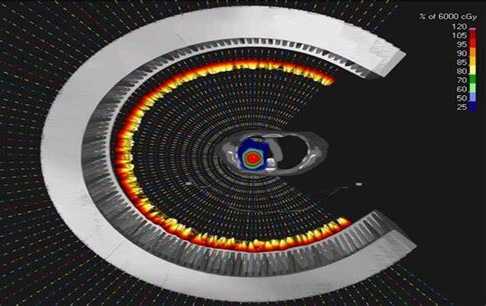
- SPArc (Step-and-Shoot Spot-Scanning Proton Arc Therapy) is an innovative radiotherapy modality that combines the precision of proton therapy with dynamic arc-based delivery. It is particularly suited for treating anatomically complex and high-risk tumours.
Developed By:
- Corewell Health William Beaumont University Hospital, United States.
Key Technological Features:
- Step-and-Shoot Angular Delivery:Radiation is administered at pre-programmed angular intervals (typically across 180º), allowing for high precision while limiting radiation spillage into surrounding tissues.
- Layered Energy Modulation (“Proton Painting”):Tumours are irradiated layer by layer, with modulated proton energies, to ensure comprehensive tumour coverage with minimal exposure to adjacent critical structures.
- AI-Driven Adaptive Planning:Synthetic CT images generated via AI from cone-beam CT scans help dynamically adjust treatment plans in response to real-time anatomical shifts.
- Minimal Toxicity Profile:In the first human trial, the patient experienced only minor skin irritation and maintained normal dietary and daily functions—indicating superior tolerance compared to conventional therapies.
Clinical Applications:
- Head and Neck Malignancies:Particularly effective in tumours located near the brainstem, skull base, optic nerves, and facial nerves.
- Complex or Large Tumours:Offers precise coverage with minimal collateral damage, essential in anatomically dense regions.
- Refractory or High-Risk Cancers:Potentially beneficial in cases where conventional radiotherapy poses significant risk or fails to achieve adequate targeting.
Significance for India:
- Advancing Precision Oncology:SPArc therapy holds promise for improving clinical outcomes in aggressive and otherwise inoperable cancers, marking a leap in India’s cancer care capabilities.
- Equity and Cost Considerations:The high cost of proton therapy infrastructure raises concerns regarding equitable access and its scalability within India’s public health ecosystem.
- Strategic Implementation Opportunity:With India’s rising cancer burden, selective integration of SPArc technology in apex cancer centres (like AIIMS, Tata Memorial, etc.) could serve as a critical component in strengthening tertiary care infrastructure.
With reference to SPArc (Step-and-Shoot Spot-Scanning Proton Arc Therapy), consider the following features:
- It uses photon beams in a continuous arc to maximize tumour targeting.
- It enables real-time adaptation to anatomical changes through AI-generated synthetic imaging.
- It irradiates tumours layer by layer by modulating proton beam energies.
Which of the statements given above is/are correct?
A. 1 and 2 only
B. 2 and 3 only
C. 1 and 3 only
D. 1, 2 and 3
Answer:B
Explanation:
- Statement 1 is incorrect: SPArc uses proton beams, not photon beams.
- Statements 2 and 3 are correct and are central to the technique’s adaptive and precision features.
Daily Current Affairs
16 june 2025 Current Affairs
14 june 2025 Current Affairs
13 june 2025 Current Affairs
12 june 2025 Current Affairs
11 june 2025 Current Affairs
10 june 2025 Current Affairs
9 june 2025 Current Affairs
7 june 2025 Current Affairs
6 june 2025 Current Affairs
5 june 2025 Current Affairs
4 june 2025 Current Affairs
3 june 2025 Current Affairs
2 june 2025 Current Affairs
31th may 2025 Current Affairs
30th may 2025 Current Affairs
29th may 2025 Current Affairs
28th may 2025 Current Affairs
27 may 2025 Current Affairs
26th may 2025 Current Affairs
24th may 2025 Current Affairs
23rd may 2025 Current Affairs
22nd may 2025 Current Affairs
21th may 2025 Current Affairs
20th may 2025 Current Affairs
17th may 2025 Current Affairs
16th may 2025 Current Affairs
15th may 2025 Current Affairs
14th may 2025 Current Affairs
13th may 2025 Current Affairs
12th may 2025 Current Affairs
10th may 2025 Current Affairs
9th may 2025 Current Affairs
8th may 2025 Current Affairs
7th may 2025 Current Affairs
6th may 2025 Current Affairs
5th may 2025 Current Affairs
3rd may 2025 Current Affairs
2nd may 2025 Current Affairs
1st may 2025 Current Affairs
30th april 2025 Current Affairs
29th april 2025 Current Affairs
28th april 2025 Current Affairs
26th april 2025 Current Affairs
25th april 2025 Current Affairs
23rd april 2025 Current Affairs
24 april 2025 Current Affairs
22nd april 2025 Current Affairs
21st april 2025 Current Affairs
19th april 2025 Current Affairs
18th april 2025 Current Affairs
17th april 2025 Current Affairs
16th april 2025 Current Affairs
15th april 2025 Current Affairs
14th april 2025 Current Affairs
12th april 2025 Current Affairs
11th april 2025 Current Affairs
10th april 2025 Current Affairs
9th april 2025 Current Affairs
8th april 2025 Current Affairs
7th april 2025 Current Affairs
5th april 2025 Current Affairs
4th april 2025 Current Affairs
3rd april 2025 Current Affairs
2nd april 2025 Current Affairs
1st april 2025 Current Affairs
31 march 2025 Current Affairs
29 march 2025 Current Affairs
28 march 2025 Current Affairs
27 march 2025 Current Affairs
26 march 2025 Current Affairs
25 march 2025 Current Affairs
24 march 2025 Current Affairs
22 march 2025 Current Affairs
21 march 2025 Current Affairs
20 march 2025 Current Affairs
19 march 2025 Current Affairs
18 march 2025 Current Affairs
17 march 2025 Current Affairs
14 & 15 march 2025 Current Affairs
13 march 2025 Current Affairs
12 march 2025 Current Affairs
11 march 2025 Current Affairs
10 march 2025 Current Affairs
8 march 2025 Current Affairs
7 march 2025 Current Affairs
6 march 2025 Current Affairs
5 march 2025 Current Affairs
4 march 2025 Current Affairs
3 march 2025 Current Affairs
1 march 2025 Current Affairs
28 Feb 2025 Current Affairs
27 Feb 2025 Current Affairs
26 Feb 2025 Current Affairs
25 Feb 2025 Current Affairs
22 Feb 2025 Current Affairs
21 Feb 2025 Current Affairs
20 Feb 2025 Current Affairs
19 Feb 2025 Current Affairs
18 Feb 2025 Current Affairs
17 Feb 2025 Current Affairs
No posts found
Daily Current Affairs MCQs
17 June Current Affairs
16 June Current Affairs
14 June Current Affairs
13 June Current Affairs
12 June Current Affairs
11 June Current Affairs
10 June Current Affairs
7 June Current Affairs
9 June Current Affairs
6 June Current Affairs
5 June Current Affairs
3 June Current Affairs
4 June Current Affairs
2 June Current Affairs
31 May Current Affairs
29 May Current Affairs
28 May Current Affairs
27 May Current Affairs
26 May Current Affairs
24 May Current Affairs
23 May Current Affairs
22 May Current Affairs
21 May Current Affairs
20 May Current Affairs
17 May Current Affairs
16 May Current Affairs
15 May Current Affairs
14 May Current Affairs
13 May Current Affairs
12 May Current Affairs
10 May Current Affairs
9 May Current Affairs
8 May Current Affairs
7 May Current Affairs
6 May Current Affairs
5 May Current Affairs
3 May Current Affairs
2 May Current Affairs
1 May Current Affairs
30 April Current Affairs
29 April Current Affairs
28 April Current Affairs
26 April Current Affairs
25 April Current Affairs
24 April Current Affairs
23 April Current Affairs
22 April Current Affairs
21 April Current Affairs
19 April Current Affairs
18 April Current Affairs
17 April Current Affairs
16 April Current Affairs
15 April Current Affairs
14 April Current Affairs
12 April Current Affairs
11 April Current Affairs
10 April Current Affairs
9 April Current Affairs
8 April Current Affairs
7 April Current Affairs
5 April Current Affairs
4 April Current Affairs
3 April Current Affairs
2 April Current Affairs
1 April Current Affairs
31 March Current Affairs
29 March Current Affairs
28 March Current Affairs
27 March Current Affairs
26 March Current Affairs
25 March Current Affairs
24 March Current Affairs
22 March Current Affairs
21th March Current Affairs
20th March Current Affairs
19th March Current Affairs
18th March Current Affairs
17th March Current Affairs
14 & 15th March Current Affairs
13th March Current Affairs
12th March Current Affairs
11th March Current Affairs
10th March Current Affairs
8th March Current Affairs
7th March Current Affairs
6th March Current Affairs
5th March Current Affairs
4th March Current Affairs
3rd March Current Affairs
1st March Current Affairs
28th Feb Current Affairs
27th Feb Current Affairs
26th Feb Current Affairs
25th Feb Current Affairs
24th Feb Current Affairs
22th Feb Current Affairs
21th Feb Current Affairs
20th Feb Current Affairs
19th Feb Current Affairs
18th Feb Current Affairs
No posts found