
Role of Regional Parties
The presence of numerous regional parties is a defining feature of the Indian political system, significantly influencing politics at local, state, and national levels, especially in the age of coalition politics.
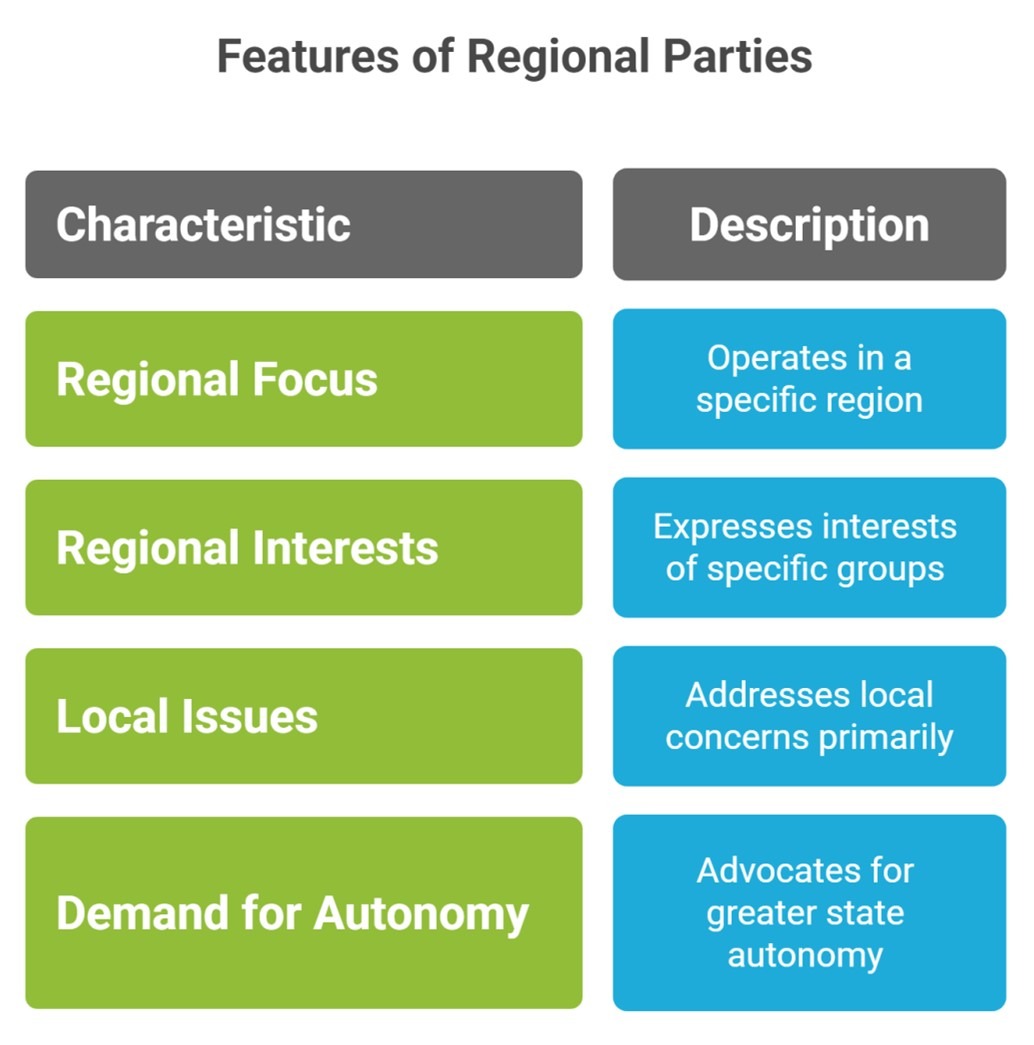
Features of Regional Parties
- Regional Focus: These parties generally operate within a specific state or region, with their electoral base limited to that area.
- Articulating Regional Interests: Regional parties express the interests of particular cultural, religious, linguistic, or ethnic groups.
- Local Issues: They primarily address local concerns and aim for political power within their state, without seeking to control the central government.
- Demand for Autonomy: Regional parties often advocate for greater autonomy for their states within the Indian Union.
Classification of Regional Parties
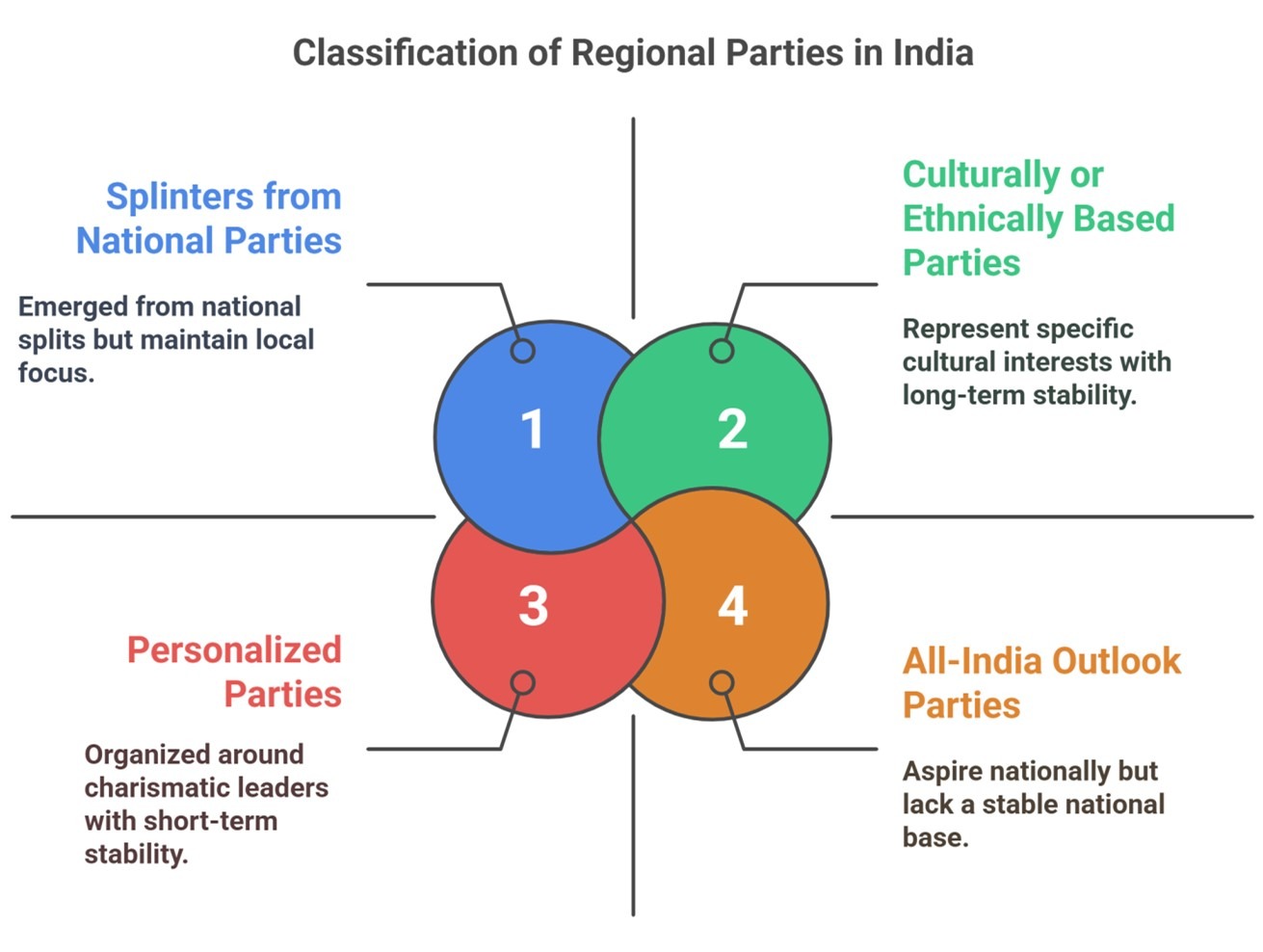
Regional parties in India can be categorized into four types:
- Culturally or Ethnically Based: Examples include Shiromani Akali Dal, DMK, AIADMK, and others that represent specific cultural or ethnic interests.
- All-India Outlook but No National Base: These parties, such as the Indian National Lok Dal and Samajwadi Party, have broader aspirations but lack a national presence.
- Splinters from National Parties: Some regional parties, like the Rashtriya Janata Dal and Janata Dal (Secular), have emerged from splits within larger national parties.
- Personalized Parties: These are organized around charismatic leaders and often lack longevity, such as the Lok Janshakti Party.
Rise of Regional Parties
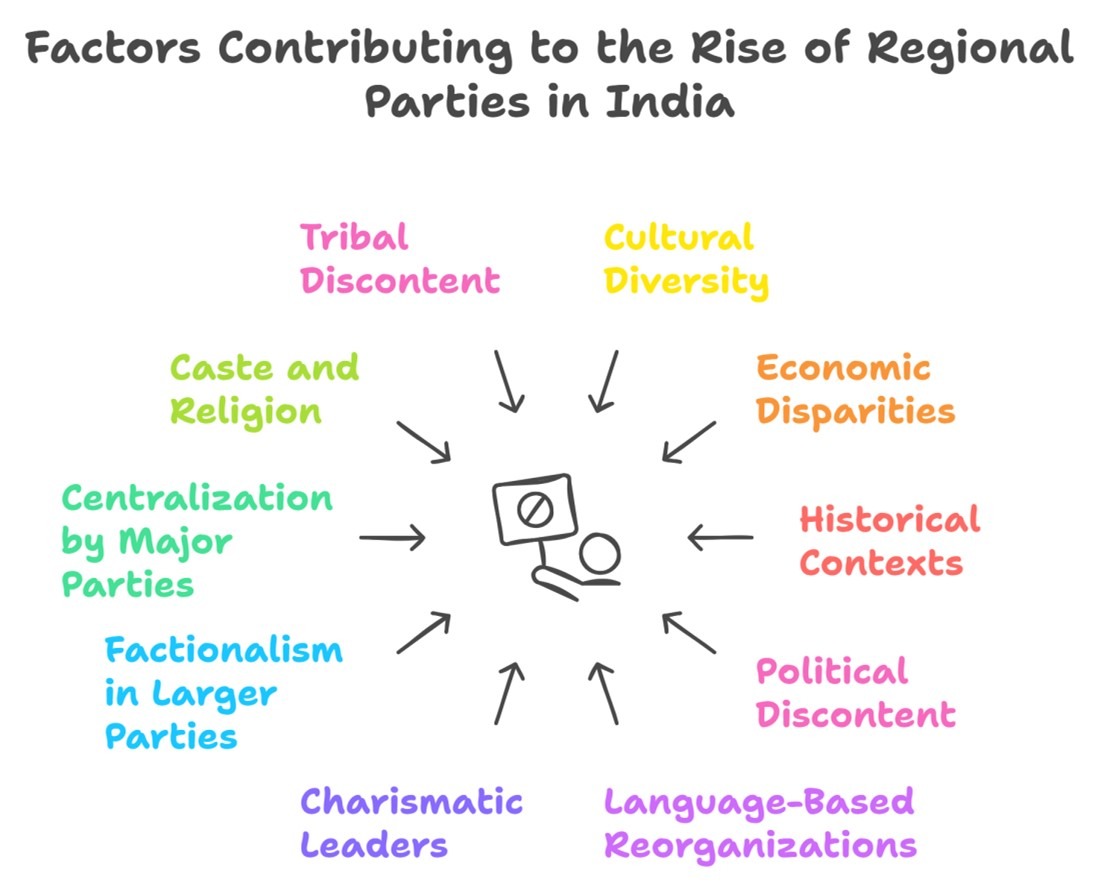
Several factors contribute to the growth of regional parties in India:
- Cultural and Ethnic Diversity: The pluralistic nature of Indian society enables the formation of parties representing specific social groups.
- Economic Disparities: Regional imbalances in development fuel demands for representation and resources.
- Historical Contexts: Certain groups seek to maintain their identities due to historical factors.
- Political Discontent: A lack of responsiveness from national politics to regional aspirations fosters the emergence of regional parties.
- Language-Based Reorganizations: The reorganization of states along linguistic lines has intensified the demand for representation.
- Charismatic Leaders: Strong leadership can catalyze the formation and success of regional parties.
- Factionalism in Larger Parties: Infighting within major parties has prompted some politicians to form new regional parties.
- Centralization by Major Parties: The Congress Party’s centralizing tendencies have led to regional parties striving to assert their significance.
- Caste and Religion: These factors play a crucial role in party formation and political mobilization.
- Tribal Discontent: Alienation among tribal communities has sparked movements for representation and autonomy.
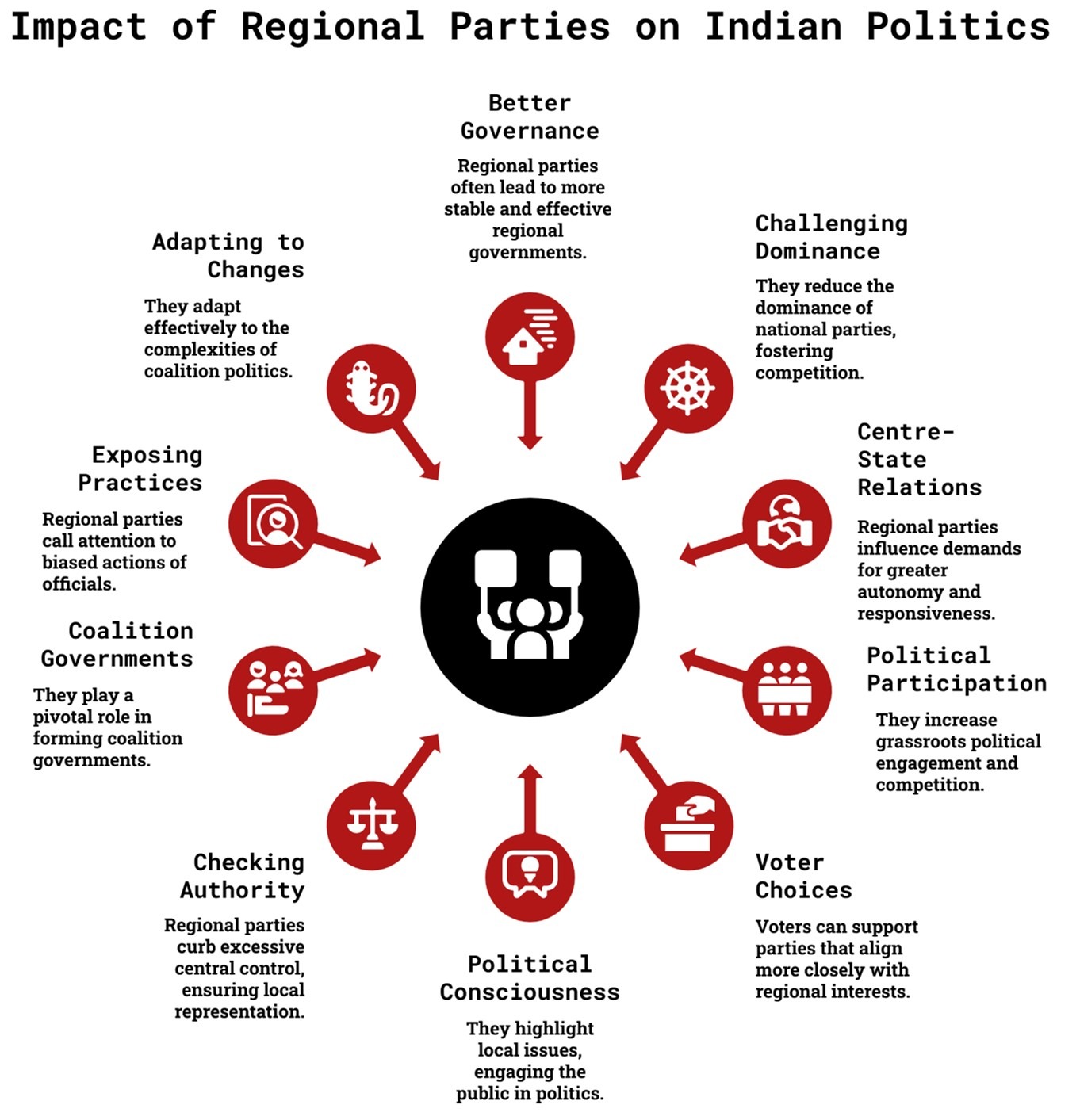
Regional parties contribute significantly to Indian politics by:
- Promoting Better Governance: They often lead to more stable governments at the regional level.
- Challenging Dominance: Regional parties have reduced the Congress party’s historical dominance and encouraged a more competitive political landscape.
- Impacting Centre-State Relations: They influence demands for greater autonomy and responsiveness from the Centre.
- Enhancing Political Participation: Regional parties have increased grassroots political engagement and competition.
- Expanding Voter Choices: Voters can support parties that align more closely with regional interests.
- Raising Political Consciousness: They highlight local issues affecting the population, engaging the public in politics.
- Checking Central Authority: Regional parties can curb excessive central control and ensure that local interests are represented.
- Fostering Coalition Governments: They play a pivotal role in forming coalition governments at the national level.
- Exposing Partisan Practices: Regional parties can call attention to the biased actions of governors and other officials.
- Adapting to Political Changes: Regional parties have adapted effectively to the complexities of coalition politics, becoming integral to governance.
Dysfunctions of Regional Parties
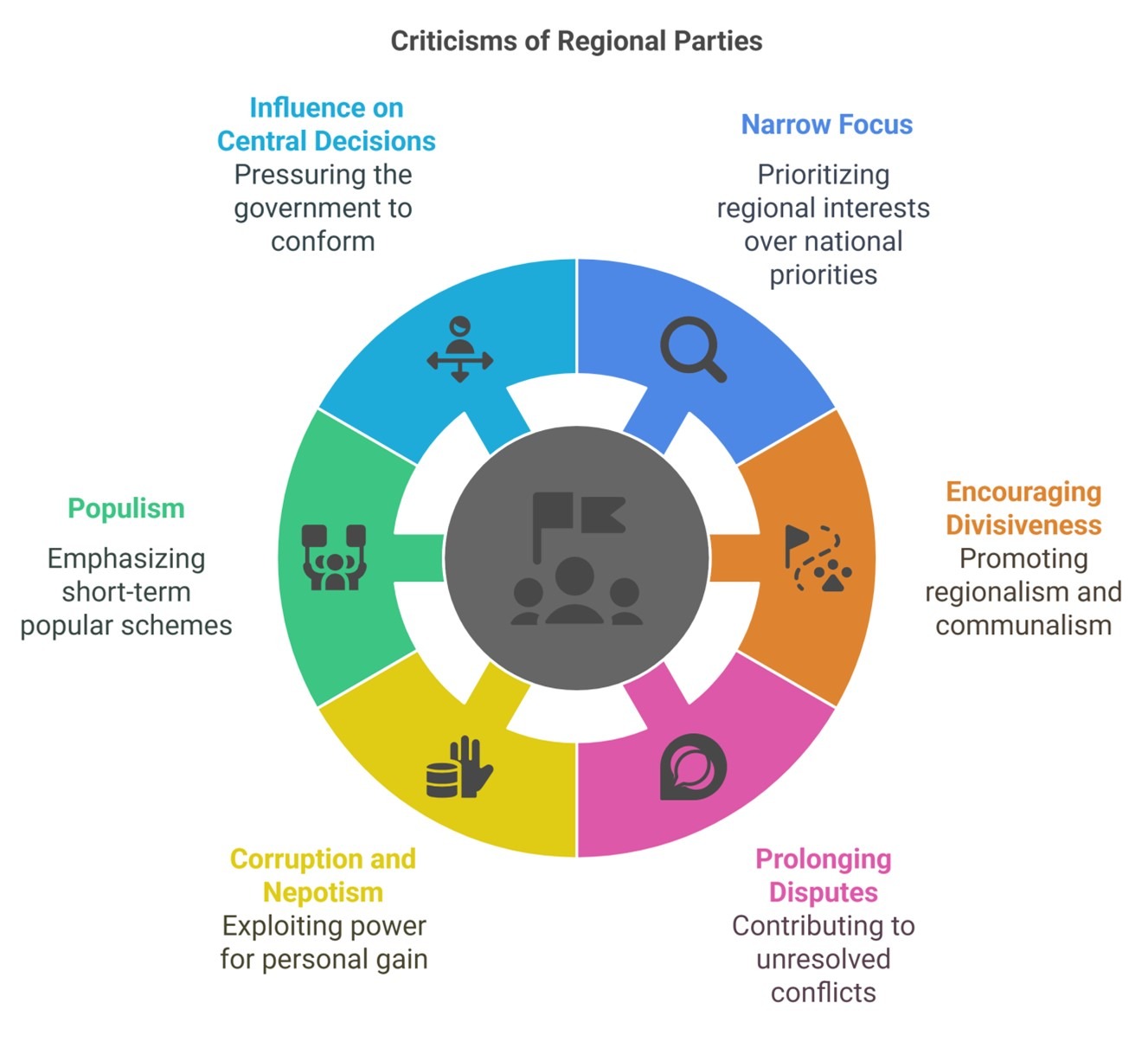
However, regional parties also face criticism for:
- Narrow Focus: They tend to prioritize regional interests over national priorities, neglecting broader implications.
- Encouraging Divisiveness: Their focus on regionalism, casteism, and communalism can hinder national integration.
- Prolonging Disputes: They may contribute to unresolved conflicts, such as inter-state water disputes.
- Corruption and Nepotism: Some regional parties engage in practices that exploit power for personal gain.
- Populism: An emphasis on short-term popular schemes can harm long-term economic development.
- Influence on Central Decisions: Regional parties may introduce regional factors into decision-making at the Centre, pressuring the government to conform to their demands.
Regional, cultural, and developmental issues play a larger role in the regional parties’ programmes and mobilisation techniques. This has evolved over time with the changing dynamics of regionalism and regional issues in India. The Regional Parties must work towards regional development rather than isolating people on regional issues to realise the true purpose of a regional party.