Rights and Liabilities of the Government
Rights and Liabilities of the Government in India
Articles 294 to 300 of the Constitution of India outline the rights, liabilities, obligations, and legal personality of the Union and states. This section pertains to government property, its legal standing in contracts and torts, and the legal recourse available against it.
1. Property of the Union and the States
A. Succession:
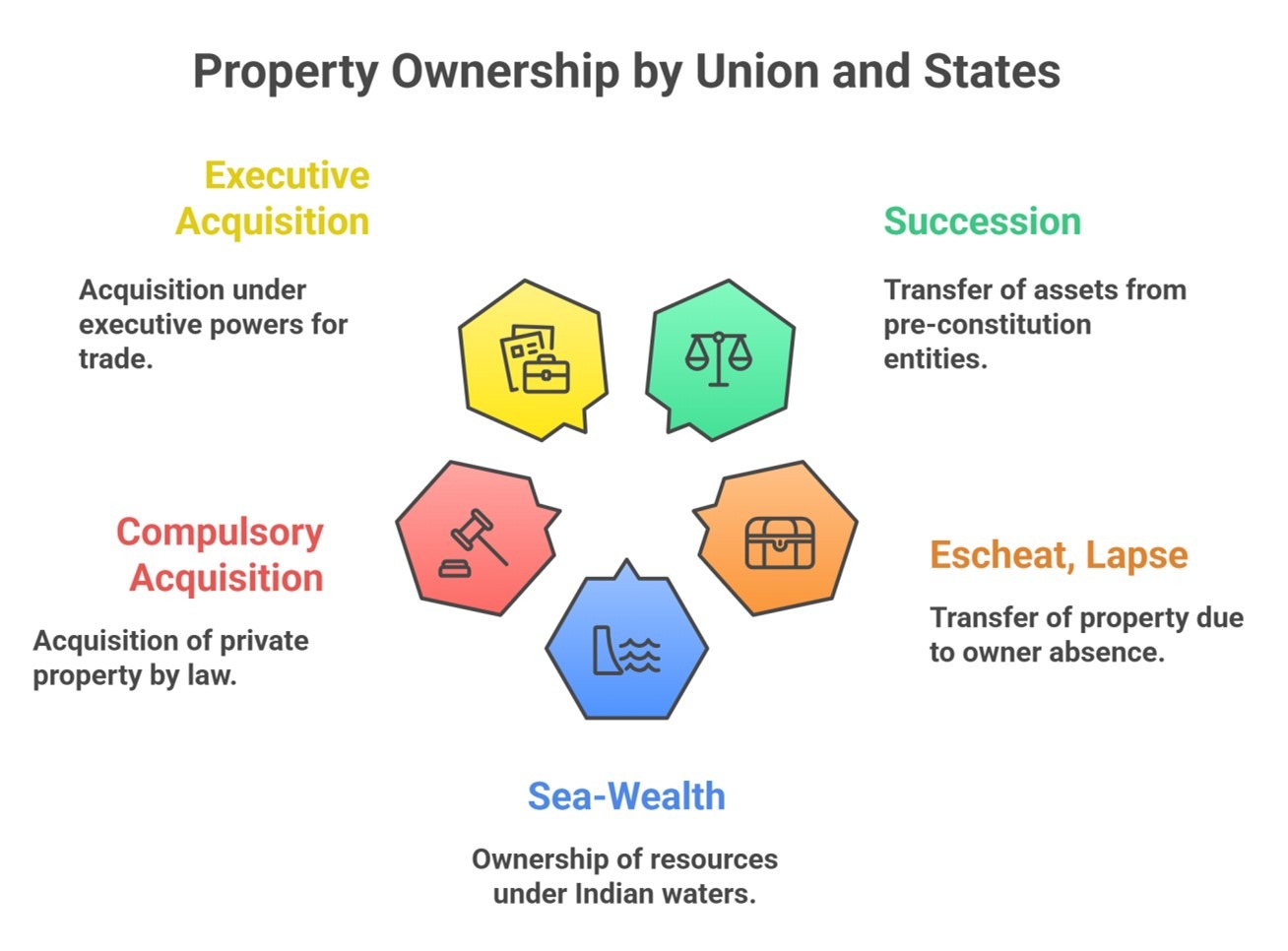
- All property and assets that were previously owned by the Dominion of India, provinces, or princely states before the Constitution came into force are now vested in the Union or the corresponding state governments.
- This includes all rights, liabilities, and obligations of the former governments.
B. Escheat, Lapse, and Bona Vacantia:
- Property that would have accrued to the former rulers (e.g., the King of England) due to escheat, lapse, or bona vacantia now vests in the state where the property is located. If located elsewhere, it vests in the Union.
C. Sea-Wealth:
- All resources (land, minerals, etc.) under the territorial waters, continental shelf, and exclusive economic zone of India belong to the Union (12 nautical miles from base line for territorial waters and 200 nautical miles for exclusive economic zone).
D. Compulsory Acquisition by Law:
- Both Parliament and state legislatures can enact laws for the compulsory acquisition of private property. The 44th Amendment Act, 1978 limits mandatory compensation, with exceptions for minority educational institutions and land held for personal cultivation within statutory ceiling limits.
E. Acquisition under Executive Power:
- Both the Union and state governments can acquire, hold, and dispose of property under their executive powers, which extend to conducting trade or business.
Recent cases have seen a shift in interpretation:
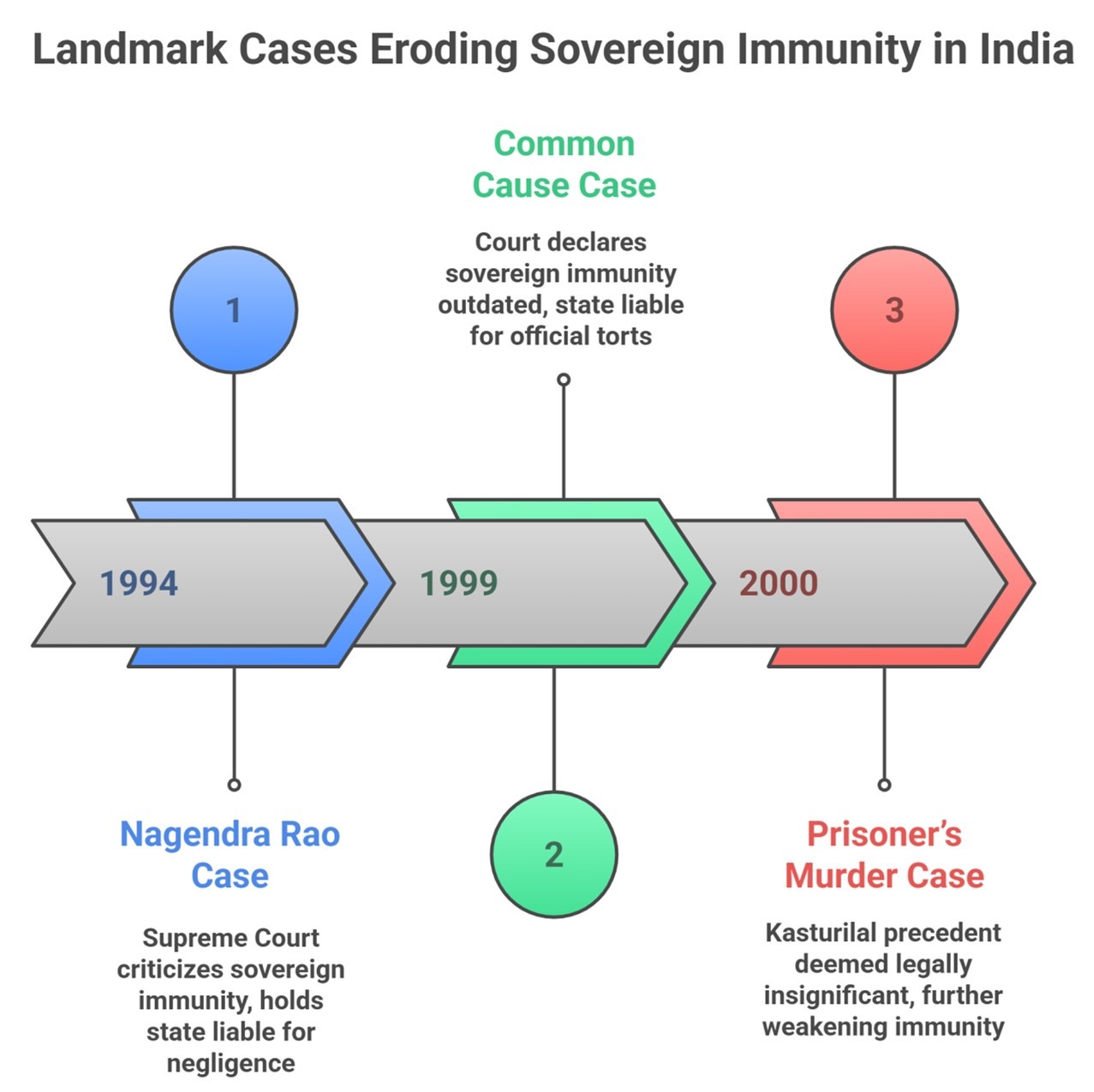
- In Nagendra Rao Case (1994), the Supreme Court criticized the doctrine of sovereign immunity and affirmed that the state is liable for negligent acts causing damage to citizens.
- The Common Cause Case (1999) deemed the sovereign immunity rule outdated, asserting that the state must be liable for torts committed by its officials regardless of the nature of the functions performed.
- The Prisoner’s Murder case (2000) further reinforced this perspective, ruling that Kasturilal’s precedent no longer holds significant legal value.
The provisions outlined in Articles 294 to 300 of the Constitution establish the framework for the government’s rights and obligations regarding property, contractual engagements, and legal responsibility for wrongful acts. Over time, judicial interpretations have evolved to ensure greater accountability of the government in tortious matters, aligning with modern principles of governance and public accountability.
Suits against Public Officials
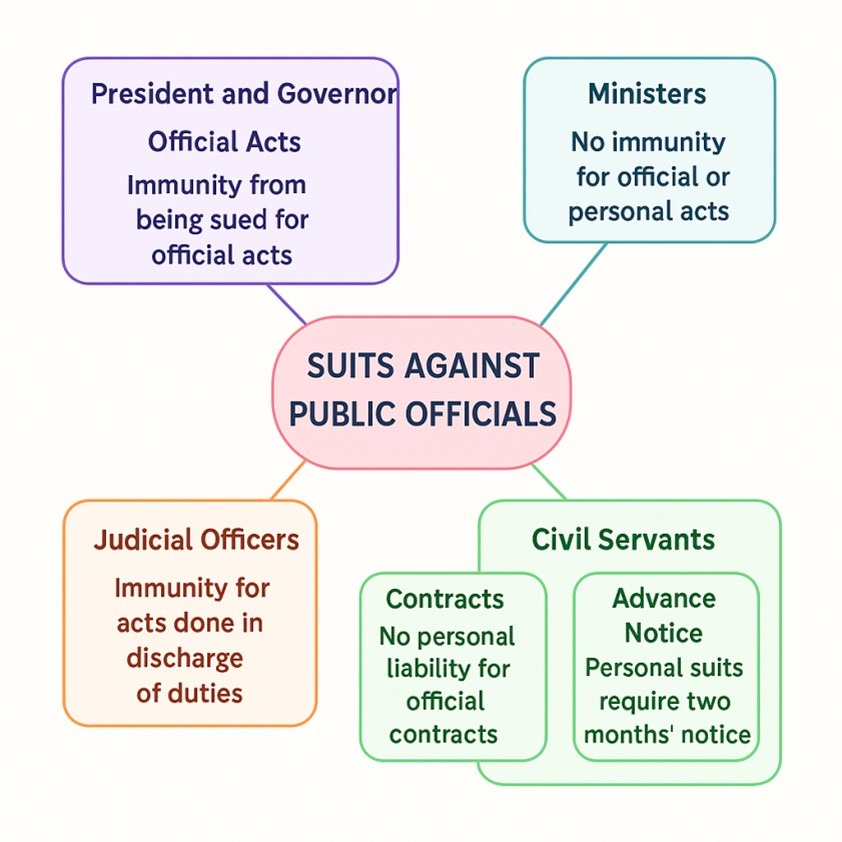
This section outlines the immunities and liabilities of various public officials, particularly the President, Governors, Ministers, Judicial Officers, and Civil Servants, in terms of legal proceedings.
1. President and Governor
A. Official Acts:
- Both the President of India and the Governors of states enjoy immunity for acts performed in the exercise of their official powers during their term of office. This means they cannot be sued for these actions.
- If a complaint arises regarding their official conduct, the matter can be reviewed through impeachment proceedings, which may be investigated by a court or tribunal authorized by Parliament.
- Aggrieved individuals can bring suit against the Union of India instead of the President, or against the state instead of the Governor.
B. Personal Acts:
- No criminal proceedings can be initiated against the President or Governors for their personal acts, nor can they be arrested or imprisoned during their term in office.
- Civil proceedings can be started against them regarding personal acts, but this requires two months’ advance notice.
2. Ministers
- Ministers in India do not have specific immunity for their official acts. However, they are not held liable for the official actions taken by the President or Governors on their advice since courts cannot question that advice.
- Unlike the President and Governors, ministers can be sued for personal acts, including crimes and torts, just like any ordinary citizen.
3. Judicial Officers
- Judicial officers (judges, magistrates, etc.) enjoy immunity concerning their official acts and cannot be sued for actions performed in the discharge of their duties.
- The Judicial Officers Protection Act (1850) protects them from being sued in civil courts for acts done in their official capacity.
4. Civil Servants
- Civil servants have personal immunity for official actions, meaning they cannot be personally held liable for contracts made in their official capacity; liability rests with the government.
- However, if a civil servant enters into a contract without following constitutional requirements, they may be held personally liable.
- They enjoy immunity for tortious acts related to sovereign functions. For non-sovereign functions, their liability is akin to that of any ordinary citizen.
- Civil proceedings against them require a two-month advance notice, except if the action is based on acts outside their official duties. Criminal proceedings can occur for acts done in their official capacity, but they require prior permission from the President or Governor if applicable.