
National Commission for BCs
National Commission for Backward Classes (NCBC)
The National Commission for Backward Classes (NCBC) is a constitutional body established to address and safeguard the interests of socially and educationally backward classes in India. Its formation and functions are significant for ensuring equitable development and representation for these communities.
Establishment of the Commission
1. Supreme Court Directive:
- In the Mandal case(1992), the Supreme Court mandated the central government to create a permanent statutory body to assess complaints regarding the inclusion or exclusion of classes in the lists of backward classes.
2. Initial Formation:
- Following this directive, the NCBCwas established in 1993 as a statutory body.
3. Constitutional Status:
- The 102nd Amendment Act of 2018conferred constitutional status on the NCBC by inserting Article 338-B into the Constitution. This amendment transitioned the NCBC from being a statutory body to a constitutional one, placing it on par with the National Commission for Scheduled Castes (NCSC) and the National Commission for Scheduled Tribes (NCST).

4. Composition:
- The NCBC consists of:
- A Chairperson
- A Vice-Chairperson
- Three other members
- All members are appointed by the President of Indiaby warrant under his hand and seal. The President also determines their conditions of service and tenure.
- The NCBC consists of:

Functions of the Commission
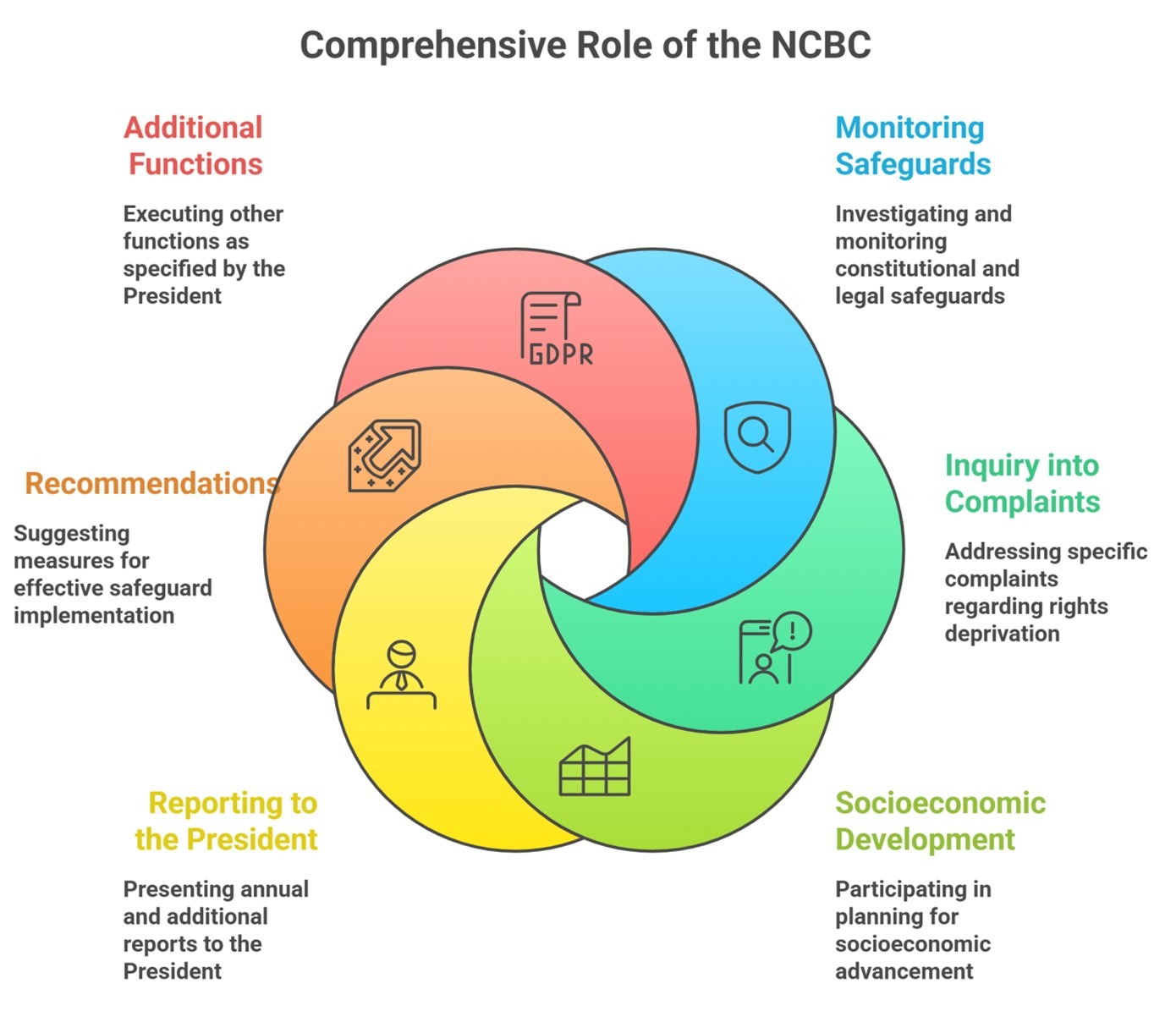
The main functions of the NCBC are:
1. Monitoring Safeguards:
- Investigate and monitor matters relating to constitutional and legal safeguards for socially and educationally backward classes, evaluating their implementation.
2. Inquiry into Complaints:
- Inquire into specific complaints regarding deprivation of rights and safeguards of these backward classes.
3. Socioeconomic Development:
- Participate in and advise on planning processes for the socioeconomic development of backward classes and evaluate the progress of their development at both the Union and state levels.
4. Reporting to the President:
- Present annual reports and additional reports as deemed necessary to the President regarding the workings of safeguards for these communities.
5. Recommendations:
- Recommend measures for effective implementation of safeguards and other actions for the protection, welfare, and development of socially and educationally backward classes.
6. Additional Functions:
- Execute any other functions related to the protection and advancement of backward classes as specified by the President.
Reporting Mechanism
- The NCBC is responsible for preparing and presenting an annual report to the President.
- The President submits these reports to Parliament, accompanied by a memorandum outlining any actions taken on the Commission’s recommendations, including reasons for any non-acceptance.
- Reports concerning state governments are forwarded to the respective state governments, which then submit them to their legislatures along with a similar memorandum.
Powers of the Commission
The NCBC is endowed with specific powers to carry out its functions effectively:
1. Regulation of Procedure:
- The Commission may regulate its own procedures during investigations.
2. Civil Court Powers:
- While investigating or inquiring into complaints, the Commission has the powers of a civil court, particularly in:
- Summoning and enforcing attendance of any person and examining them under oath.
- Requiring the discovery and production of relevant documents.
- Receiving evidence on affidavits.
- Requisitioning public records from any court or office.
- Issuing summons for examination of witnesses and documents.
- Addressing other matters as determined by the President.
- While investigating or inquiring into complaints, the Commission has the powers of a civil court, particularly in:
3. Consultation Requirement:
- The Central and state governments are required to consult the NCBC on all major policy matters affecting socially and educationally backward classes, ensuring that their perspective is included in decision-making.

The National Commission for Backward Classes plays a vital role in advocating for and protecting the rights and interests of socially and educationally backward classes in India. By monitoring safeguards, addressing grievances, and advising the government on development issues, the NCBC contributes to the overall welfare and empowerment of these communities. Its constitutional status and powers enhance its ability to perform effectively and influence policies aimed at social equity.