
The Origin, Evolution And Of Earth
Theories of Earth’s Origin
The question of how the Earth and the wider universe came into existence has fascinated philosophers, scientists, and astronomers for centuries. Over time, several theories—both early and modern—have been proposed to explain the origin of the Earth and the evolution of the universe. While some of these theories are now outdated, they remain significant for understanding the historical development of scientific thought.
Early Theories
1. Nebular Hypothesis
Proposed by: Immanuel Kant (1755) and later revised by Pierre-Simon Laplace (1796).
Concept:
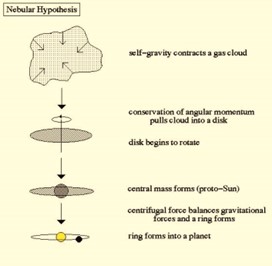
- This classical theory suggested that the Sun and planets originated from a large, slowly rotating cloud of gas and dust, often referred to as a solar nebula. Under the force of gravity, the nebula contracted, flattened into a rotating disk, and began spinning more rapidly. The Sun formed at the center, while the remaining material coalesced into planets and other celestial bodies.
Supporting Evidence:
- Astronomers have observed disk-like structures around young stars, lending credibility to the concept of solar systems forming from nebular disks.
- The conservation of angular momentum explains why the rotation speed increases as the nebula contracts.
Challenges:
- The theory could not fully explain the mechanisms of planet formation, particularly the process by which dust particles combined to form larger planetary bodies.
3. Planetesimal Hypothesis
Proposed by: Thomas Chamberlain and Forest Moulton (1900), later supported by Sir James Jeans and Sir Harold Jeffrey.
Concept:
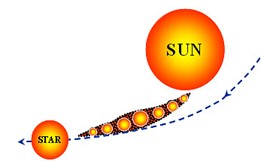
- This theory argued that a massive star passed close to the Sun, and due to gravitational forces, material was pulled from the Sun. This material cooled, condensed into small solid bodies called planetesimals, and eventually grew into planets through accretion.
Supporting Evidence:
- Before nuclear fusion was understood, this theory offered a plausible explanation for how planets could form from stellar material.
- The concept of gravitational tidal forces from passing stars finds parallels in modern cosmic observations.
Challenges:
- The hypothesis relied on the rare occurrence of a near-collision between stars, making it statistically improbable. With advancements in astrophysics, the theory was gradually discarded.
Modern Theories
1. Big Bang Theory (Expanding Universe Hypothesis)
Proposed by: Georges Lemaître (1927) and later supported by Edwin Hubble (1929) through his astronomical observations.
Concept:
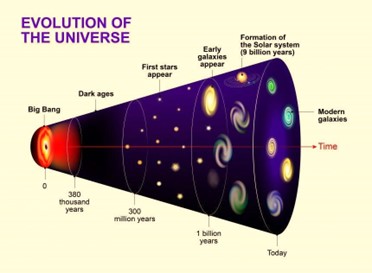
- The universe originated around 13.7 billion years ago from a singular, extremely hot and dense point often described as a “tiny ball of infinite density”. This singularity exploded in an event known as the Big Bang, leading to the rapid expansion of the universe. As it cooled, energy transformed into matter, forming galaxies, stars, and planets.
Supporting Evidence:
- Redshift of Galaxies: Hubble’s observation that distant galaxies are moving away indicates an expanding universe.
- Cosmic Microwave Background Radiation (CMBR): Discovered by Penzias and Wilson, this faint radiation is a remnant of the early universe, strongly confirming the Big Bang.
- Abundance of Light Elements: The predicted relative proportions of hydrogen, helium, and lithium match actual astronomical observations.
Challenges:
- While it explains the large-scale structure of the universe, it does not answer what existed before the Big Bang.
- The mystery of the accelerating expansion of the universe remains unresolved, attributed to the yet-unknown dark energy.
2. Steady State Theory
Proposed by: Fred Hoyle (1948).
Concept:
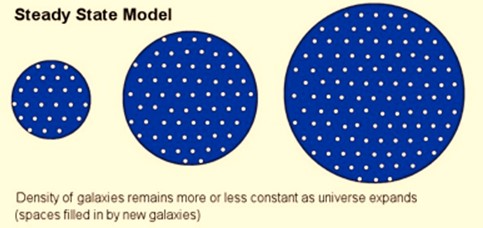
- Contrary to the Big Bang, this theory held that the universe is eternal and unchanging in appearance, with no beginning or end. It argued that matter is continuously created to maintain a constant density, even as the universe expands.
Supporting Evidence (at the time):
- It avoided the question of cosmic origin, appealing to those who preferred the idea of an eternal, infinite universe.
- The concept of continuous creation was considered philosophically attractive.
Challenges:
- The discovery of cosmic microwave background radiation (CMBR) and evidence of a dynamic, evolving universe contradicted this theory.
- Today, it has been largely abandoned in favor of the Big Bang Model.
Theories of Earth’s origin have evolved significantly over time. While early hypotheses like the Nebular and Planetesimal theories contributed to scientific thought, they lacked complete explanatory power. In contrast, modern theories, particularly the Big Bang Theory, are strongly supported by astronomical evidence and remain the most widely accepted explanation of the universe’s origin and evolution. However, unsolved mysteries such as dark matter and dark energy remind us that the scientific quest for understanding continues.
Star Formation, Planet Formation and Evolution of the Earth
The story of the origin of stars, planets, and ultimately Earth is a fascinating journey that begins with the Big Bang and unfolds over billions of years. Through gradual processes driven by gravity, nuclear fusion, and accretion, the universe evolved from a cloud of gases to the complex planetary systems we observe today.
Star Formation
1. Initial Universe and Density Differences
- After the Big Bang (13.7 billion years ago), the universe was filled with matter and energy that were not uniformly distributed.
- Tiny density variations emerged, creating regions with stronger gravitational pull.
- These denser regions began attracting nearby matter, leading to the clumping of material, which eventually laid the foundation for the formation of galaxies.
2. Nebula and Galaxy Formation
- A nebula is a vast cloud of hydrogen gas and cosmic dust, which serves as the cradle of stars and galaxies.
- As hydrogen gas accumulated, galaxies began forming from these nebulae.
- Within a nebula, localized areas became denser due to gravitational attraction, creating gas clumps.
- Over millions of years, these clumps grew in size and density, becoming the birthplace of stars.
3. Birth of Stars
- As gas clumps contracted, they gathered more material, increasing both mass and density.
- The core temperature rose steadily until it reached the point where nuclear fusion ignited.
- This ignition marked the formation of a star, where hydrogen atoms fused into helium, releasing enormous amounts of energy.
- Over millions of years, multiple stars formed within a single galaxy, giving rise to the stellar systems we observe today.
Timeline of Earth’s Evolution
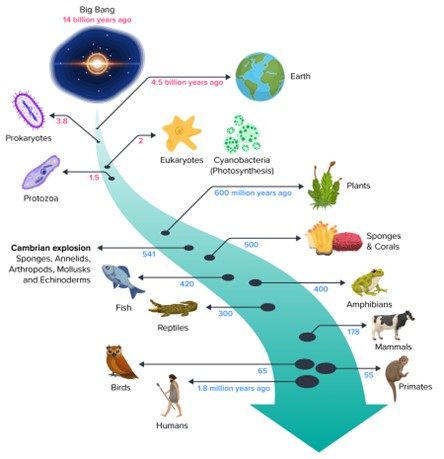
1. 13.7 Billion Years Ago – The Big Bang
- The universe originated from a singularity, giving rise to space, time, matter, and energy.
- In time, galaxies, including the Milky Way, formed and became home to billions of stars and planetary systems.
2. 5–6 Billion Years Ago – Formation of Stars
- Within galaxies, clouds of gas and dust collapsed under gravity to form new stars.
- These stellar processes enriched the cosmos with heavier elements essential for the formation of planets.
3. 4.6 Billion Years Ago – Formation of the Solar System and Earth
- The solar system began forming from a rotating disc of gas and dust surrounding the young Sun.
- Particles collided, coalesced, and underwent accretion to form planets, asteroids, and comets, including the Earth.
4. 4.4 Billion Years Ago – Formation of the Moon
- A colossal impact event occurred when a Mars-sized body (Theia) collided with the early Earth.
- The debris from this collision eventually coalesced to form the Moon.
- The Moon played a crucial role in stabilizing Earth’s axial tilt and regulating tides, which influenced the evolution of life.
5. 4 Billion Years Ago – Formation of Oceans
- As the Earth’s surface cooled, water vapor condensed into liquid form.
- This process led to the accumulation of vast oceans, which became the cradle for early life and regulated Earth’s climate system.
6. 3.8 Billion Years Ago – Origin of Life
- The earliest life forms, likely prokaryotic microorganisms, emerged in the oceans.
- This event marked the beginning of biological evolution, setting the stage for the gradual development of more complex organisms.
7. 2.5–3 Billion Years Ago – Evolution of Photosynthesis
- Primitive cyanobacteria developed the ability to perform photosynthesis, converting sunlight into energy.
- This process released oxygen as a byproduct, drastically changing Earth’s atmosphere.
- The Oxygen Revolution (Great Oxidation Event) paved the way for the evolution of aerobic organisms and more complex life forms.
Geological Timescale
The Solar System
The Solar System is the gravitationally bound system of the Sun—our parent star—and all celestial objects that orbit it, either directly (planets and dwarf planets) or indirectly (moons and satellites).
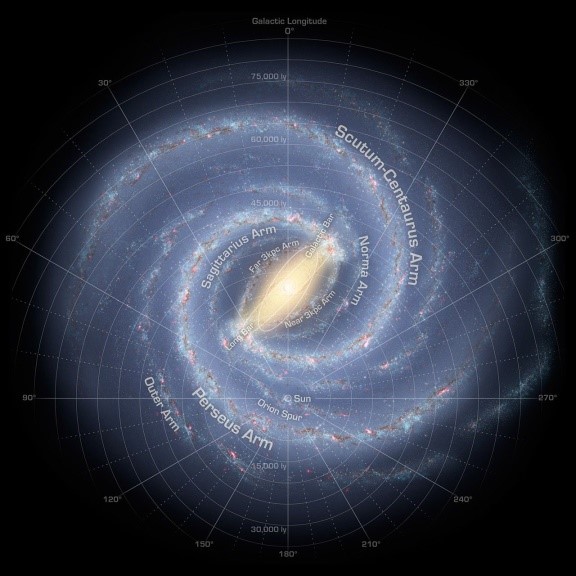
It includes the Sun, eight planets, dwarf planets such as Pluto, more than 200 moons, millions of asteroids, comets, meteoroids, dust, and interplanetary gases. The Solar System is located in the Milky Way Galaxy, within the Orion Arm, approximately 25,000 light-years from the galactic center.
The Solar System formed about 4.6 billion years ago from the gravitational collapse of a giant molecular cloud of gas and dust, which gave rise to the Sun and eventually the planets and smaller celestial bodies.
The Sun
- The Sun is a giant star made primarily of hydrogen (70%) and helium (26.5%), with trace amounts of other gases (3.5%).
- It accounts for 99.83% of the total mass of the Solar System and is located about 150 million km (1 Astronomical Unit) from Earth.
- Its diameter is 109 times larger than Earth, and its mass is approximately 2 × 10²⁷ tonnes.
- The Sun produces energy through nuclear fusion in its core, where hydrogen atoms fuse into helium, releasing enormous amounts of heat and light.
- This energy is radiated outward in the form of visible light, infrared, ultraviolet rays, X-rays, gamma rays, and charged particles.
Key Features of the Sun
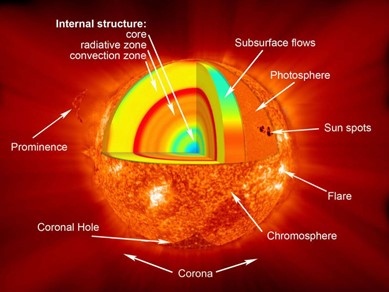
- Photosphere: Visible surface with an average temperature of 6,000°C.
- Chromosphere and Corona: The outer layers of the Sun’s atmosphere; the corona emits spectral lines due to ionized iron, calcium, and nickel.
- Solar Wind: A stream of charged particles (electrons, protons, alpha particles) constantly emitted from the Sun’s corona.
- Solar Flares: Sudden bursts of magnetic energy that can disrupt satellite communication and power grids on Earth.
- Sunspots: Dark, cooler regions (6,500°F) caused by intense magnetic fields; they follow an 11-year solar cycle, alternating between solar maximum (increased activity) and solar minimum (reduced activity).
- Auroras: Charged particles from solar winds trapped in Earth’s magnetic field cause spectacular light displays—Aurora Borealis (Northern Lights) and Aurora Australis (Southern Lights).
Planets of the Solar System
Definition of a Planet (IAU, 2006)
A planet is a celestial body that:
1. Orbits the Sun,
2. Has enough mass for self-gravity to form a nearly round shape,
3. Has cleared its orbital neighborhood of other bodies.
Classification
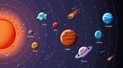
- Inner (Terrestrial) Planets: Mercury, Venus, Earth, Mars – small, rocky, and high-density.
- Outer (Jovian/Gas Giants): Jupiter, Saturn, Uranus, Neptune – massive, low-density, gaseous composition.
- Dwarf Planets: Pluto, Ceres, Eris, Haumea, Makemake – spherical but have not cleared their orbits.
Special Features
- Mercury: Smallest and closest to the Sun.
- Venus: Earth’s twin in size; hottest planet due to carbon dioxide atmosphere and sulfuric acid clouds.
- Earth: The only known habitable planet, with a balanced atmosphere of 78% nitrogen and 21% oxygen.
- Mars: Known as the Red Planet; evidence of past water flow.
- Jupiter: Largest planet with a strong magnetic field; atmosphere rich in hydrogen, helium, methane, and ammonia.
- Saturn: Famous for its ring system made of icy particles and rocky debris.
- Uranus: Rotates on its side due to extreme axial tilt.
- Neptune: Strong winds and storms; farthest from the Sun.
The Moon
- Earth’s only natural satellite; formed around 4.5 billion years ago, possibly due to a giant impact (Theia hypothesis).
- Diameter: one-quarter that of Earth, making it the fifth largest moon in the Solar System.
- It is in synchronous rotation with Earth, so only one hemisphere is visible from Earth.
- Orbital period: 27 days, 7 hours, 43 minutes, and 11.47 seconds.
- Responsible for tides on Earth due to gravitational interaction.
- The scientific study of the Moon is known as Selenology.
Constellations
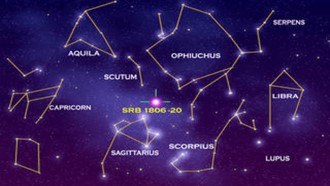
- Constellations are patterns of stars recognized in the night sky. There are 88 officially recognized constellations.
- Ursa Major (Saptarishi / Great Bear): Helps locate the Pole Star; visible in April.
- Orion (Hunter / Mriga in India): Prominent in winter skies; contains some of the brightest stars, including Sirius.
- Leo Major: Shaped like a lion; best seen in summer nights.
- Cassiopeia: W-shaped constellation; visible in winter evenings.
Other Celestial Bodies
Asteroids
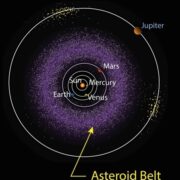
- Small, rocky objects mainly found in the Asteroid Belt between Mars and Jupiter.
- Example: Ceres (largest asteroid, now classified as a dwarf planet).
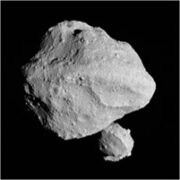
- Some asteroids have moons (e.g., Ida and its moon Dactyl).
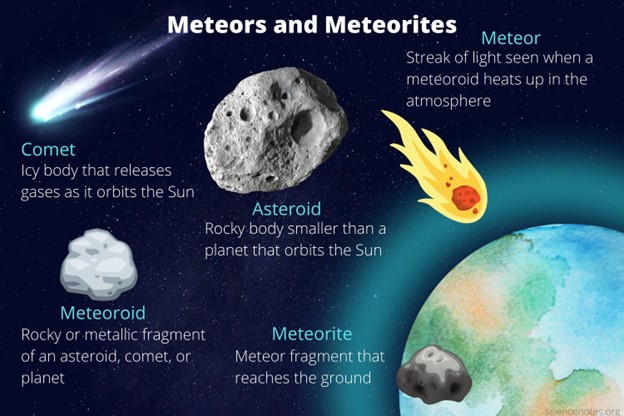
Meteors and Meteorites
- Meteoroids: Small fragments of rock orbiting the Sun.
- Meteors: “Shooting stars” formed when meteoroids burn up in Earth’s atmosphere.
- Meteorites: Meteors that survive and fall to Earth.
- Fireballs: Exceptionally bright meteors.
Comets
- Known as “dirty snowballs”, made of ice, dust, and rocky material.
- When close to the Sun, their icy nuclei vaporize, forming a glowing coma and a tail.
- Halley’s Comet is the most famous, appearing every 76 years.
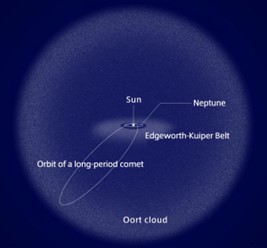
- Originates from the Kuiper Belt (short-period comets) or the distant Oort Cloud (long-period comets).
Exoplanets
- Planets located outside our Solar System, orbiting other stars.
- The Goldilocks Zone is the habitable zone around a star where conditions allow liquid water.
- The TRAPPIST-1 system has 7 Earth-sized planets, with 3 in the habitable zone.
The Milky Way Galaxy
- Our Solar System lies in the Milky Way Galaxy, a barred spiral galaxy.
- Appears as a milky band of light in the night sky.
- In Indian tradition, it is called Akash Ganga, imagined as a river of light.
Dwarf Planets
- A dwarf planet is a celestial body orbiting the Sun that is massive enough to acquire a nearly round shape due to its own gravity but has not cleared its orbital neighborhood of other debris.
- Unlike regular planets, they share their orbits with asteroids and other small bodies.
- Examples: Pluto, Eris, Haumea, Makemake, and Ceres.
- Pluto, once the ninth planet, was reclassified as a dwarf planet in 2006 by the International Astronomical Union (IAU).
Stellar Remnants and Extreme Celestial Objects
1. White Dwarfs
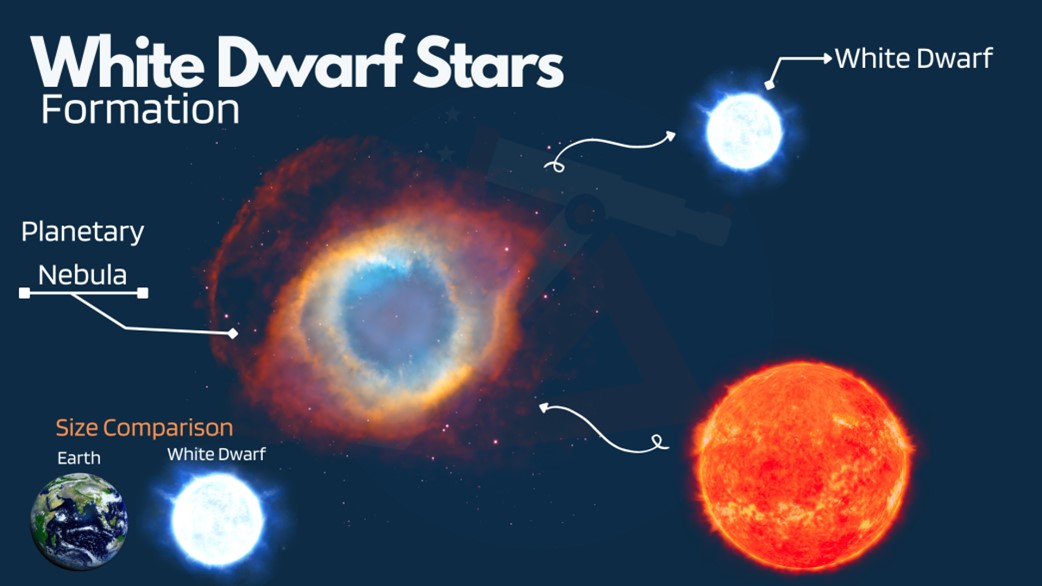
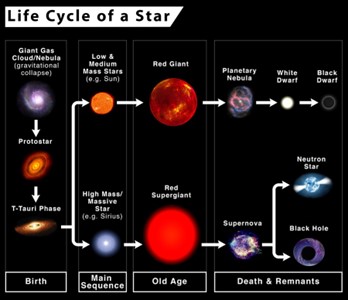
- End stage of medium-sized stars like our Sun.
- When nuclear fuel is exhausted, the outer layers are shed, and the core collapses into a dense, Earth-sized star composed mainly of carbon and oxygen.
- They shine faintly due to residual heat and eventually cool into black dwarfs (a theoretical stage not yet observed).
2. Neutron Stars
- Formed from the remnants of massive stars after a supernova explosion.
- Extremely dense objects, composed almost entirely of neutrons, with a diameter of about 20 km but a mass greater than the Sun.
- Their density is so high that a teaspoon of neutron-star material would weigh billions of tonnes.
3. Pulsars
- A type of rotating neutron star with powerful magnetic fields.
- They emit beams of electromagnetic radiation from their poles, detectable as regular pulses when aligned with Earth.
- Pulsars act as cosmic lighthouses, providing insights into extreme physics and spacetime.
4. Black Holes
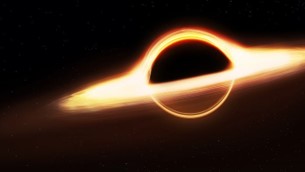
- Regions of spacetime where gravity is so intense that not even light can escape.
- Event Horizon: The boundary around a black hole beyond which nothing can escape.
- Formed when massive stars collapse after exceeding the Chandrasekhar Limit (~1.4 solar masses).
- Classified as stellar-mass black holes, intermediate black holes, and supermassive black holes (at galactic centers).
5. Supernovae
- The violent explosion of massive stars marking the end of their life cycle.
- They release enormous energy, disperse heavy elements into space, and often give rise to neutron stars or black holes.
- Supernovae play a crucial role in the cosmic recycling of elements necessary for planets and life.
6. Quasars
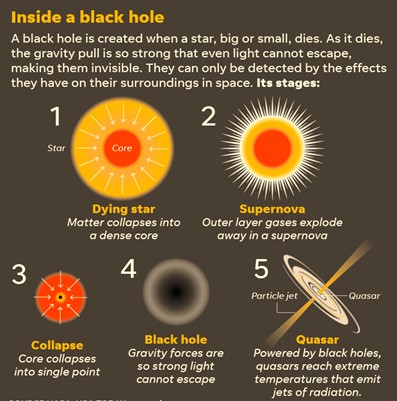
- Extremely luminous and energetic objects found in the centers of distant galaxies.
- Powered by supermassive black holes that accrete matter, emitting radiation across the spectrum.
- Quasars are among the brightest and most distant objects in the observable universe.
Advanced Concepts in Astrophysics
1. Gravitational Lensing
- A phenomenon predicted by Einstein’s General Relativity, where light from distant galaxies bends around a massive intervening object.
- Acts as a cosmic magnifying glass, helping astronomers study dark matter, distant galaxies, and exoplanets.
2. General Relativity
- Proposed by Albert Einstein (1915), it redefined gravity as the curvature of spacetime caused by mass and energy.
- Explains phenomena like gravitational waves, time dilation near massive objects, and orbital precession.
- Confirmed by the detection of gravitational waves (2015, LIGO experiment).
3. Chandrasekhar Limit
- A theoretical limit of about 1.4 times the Sun’s mass, beyond which a white dwarf cannot remain stable.
- If exceeded, the star collapses into a neutron star or black hole.
- Proposed by Subrahmanyan Chandrasekhar, an Indian astrophysicist and Nobel Laureate.
4. Event Horizon
- The point of no return around a black hole.
- Defined as the boundary where the escape velocity equals the speed of light.
- Marks the region beyond which all matter and radiation are irretrievably lost.
Other Celestial Phenomena
1. Oort Cloud
- A hypothetical spherical shell of icy bodies surrounding the Solar System at its farthest boundary.
- Believed to be the source of long-period comets with orbits lasting thousands of years.
2. Planetary Nebulae
- Colorful shells of gas and plasma expelled by dying medium-sized stars.
- Represent the transition of a star into a white dwarf, enriching the interstellar medium with elements.
3. Interstellar Medium (ISM)
- The gas, plasma, and cosmic dust that fills the space between stars in a galaxy.
- Acts as the raw material for new star formation.
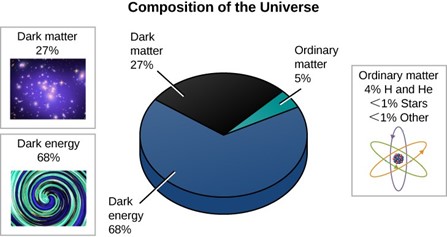
4. Dark Matter and Dark Energy
- Dark Matter: Invisible matter that exerts gravitational influence, explaining anomalies in galaxy rotation curves and cosmic structure.
- Dark Energy: A mysterious force driving the accelerating expansion of the universe.
- Together, they constitute over 95% of the universe’s total mass-energy content, though they remain poorly understood.
The Moon: Earth’s Natural Satellite
The Moon is the only natural satellite of Earth and has always played a profound role in shaping the planet’s climate, tides, and biological cycles. It is not only a subject of astronomical study but also of cultural and historical significance across civilizations.
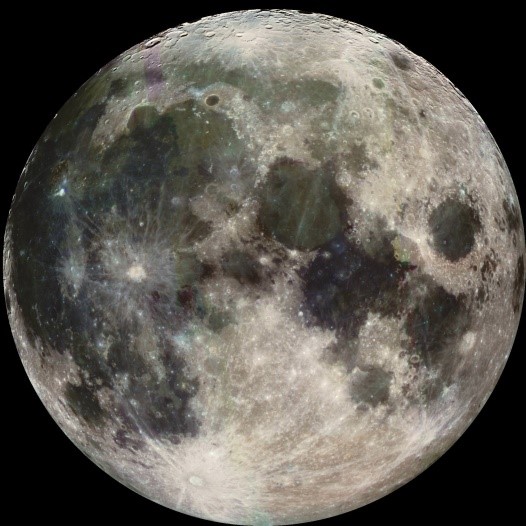
- The Moon is about one-quarter the diameter of Earth and the fifth-largest satellite in the Solar System.
- Despite being relatively small, it is the largest satellite relative to the size of its parent planet.
- Its gravitational interaction with Earth has a stabilizing effect on Earth’s axial tilt, thereby regulating the climate over long geological timescales.
Tidal Locking
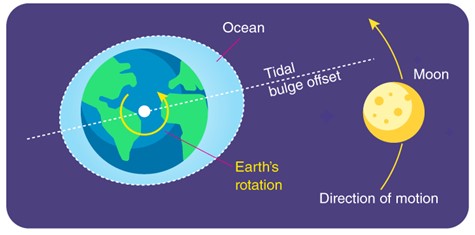
- The Moon is tidally locked to Earth. This means it takes the same time (27 days, 7 hours, 43 minutes, and 11.47 seconds) to rotate on its axis as it does to revolve around Earth.
- Due to this synchronization, only one hemisphere of the Moon (the near side) is visible from Earth, while the far side (often misnamed the “dark side”) remained unseen until space exploration.
- This tidal interaction is also responsible for Earth’s ocean tides, which play a crucial role in shaping ecosystems.
Formation of the Moon
- The most widely accepted explanation is the Giant Impact Hypothesis (Big Splat Theory).
- According to this theory, a Mars-sized body (Theia) collided with the early Earth around 4.5 billion years ago.
- The debris from this colossal impact gradually accreted and coalesced, eventually forming the Moon.
- This theory is supported by similarities in the composition of lunar and terrestrial rocks, particularly oxygen isotopes.
Super Moon
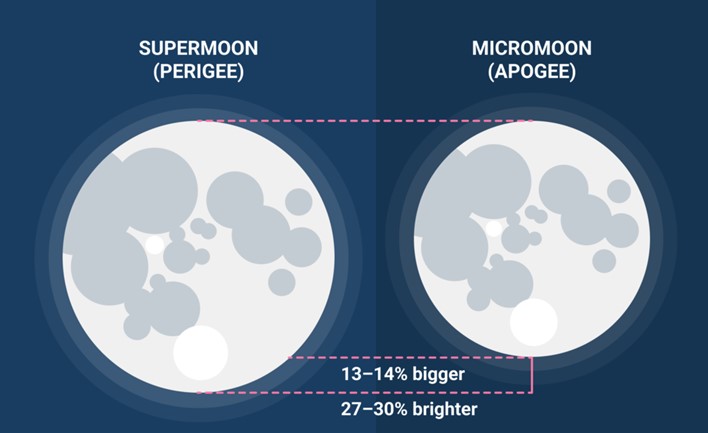
- A Super Moon occurs when the Moon is at its closest point to Earth (perigee) during a full moon phase.
- During this phenomenon, the Moon can appear up to 14% larger and 30% brighter than its normal size in the night sky.
- While scientifically routine, Super Moons have great cultural and visual significance, often celebrated as spectacular celestial events.
Retrograde and Prograde Motion and Rotation
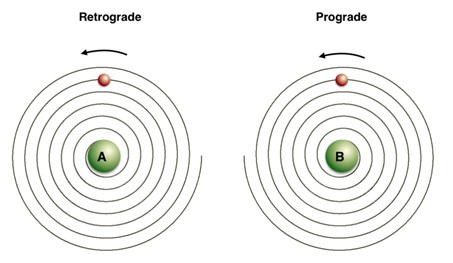
The motion of planets in the Solar System can be understood in terms of orbital movement (motion) and axial spinning (rotation). While most planets follow a standard pattern known as prograde motion, there are unique cases where their movement or rotation appears reversed, described as retrograde.
Prograde Motion
- Definition: The normal eastward motion of a planet against the background of stars as seen from Earth.
- Orbital Nature: Prograde motion corresponds to the counterclockwise revolution of planets around the Sun, when viewed from above the Sun’s north pole.
- Cause: This uniform direction of planetary orbits originates from the conservation of angular momentum of the rotating gas and dust disk (solar nebula) from which the Solar System formed.
Retrograde Motion
- Definition: The apparent westward motion of a planet against the backdrop of stars, as observed from Earth.
- Cause: Retrograde motion is an optical illusion resulting from the relative speeds of planets. When Earth, a faster-moving inner planet, overtakes an outer planet (e.g., Mars), the outer planet appears to temporarily move backward in the sky.
Key Distinction
- Retrograde Motion: Apparent backward motion in the night sky, caused by relative orbital dynamics. It is not a real reversal, but an illusion.
- Retrograde Rotation: A planet’s actual axial spin is opposite to the direction of its orbital revolution around the Sun. This is a physical property, not an illusion.
Retrograde Rotation in Planets
Venus
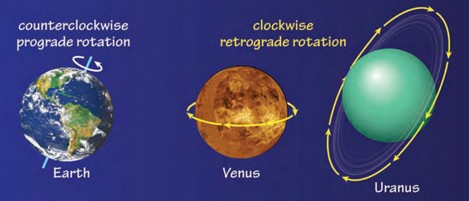
- Rotation: Venus rotates backward (clockwise) compared to most planets, with a very slow rotation period of 243 Earth days.
- Possible Reasons:
- Giant Impact Hypothesis – A massive collision during its early history may have reversed its spin.
- Atmospheric Interactions – Venus’s dense atmosphere could have exerted tidal forces on the planet’s surface, gradually altering its spin direction over millions of years.
Uranus
- Axial Tilt: Uranus has an extreme tilt of about 98 degrees, making it appear to roll on its side as it orbits the Sun.
- This results in a retrograde-like rotation relative to its orbital path.
- Possible Reasons:
- Massive Collisions – One or more catastrophic impacts with large proto-planets likely knocked Uranus onto its side.
- Gravitational Interactions – Early strong gravitational influences from other massive bodies may have altered Uranus’s axial orientation.
Earth: Goldilocks Zone, Latitude, and Longitude
The Earth, the only known planet to harbor life, is the fifth-largest planet in the Solar System. It is often called the Blue Planet because about 71% (two-thirds) of its surface is covered with water in the form of oceans, seas, rivers, and lakes. Its unique location in the Goldilocks Zone, combined with its atmosphere and geophysical conditions, makes it capable of supporting life.
Shape and Physical Characteristics
- The Earth’s shape is not a perfect sphere but a geoid (oblate spheroid), meaning it is slightly flattened at the poles and bulging at the equator due to its rotation.
- It is the densest planet in the Solar System, with an average density of 5.513 g/cm³.
- The rotation speed of the Earth is maximum at the equator (about 1670 km/h) and gradually decreases toward the poles.
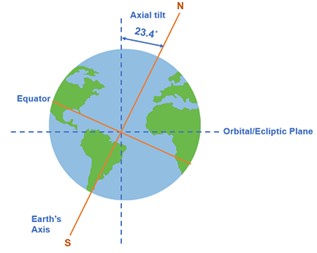
- The axis of the Earth—an imaginary line around which the planet rotates—is tilted at 66½° to its orbital plane (23½° from the perpendicular). This axial tilt is responsible for seasonal variations.
Polestar
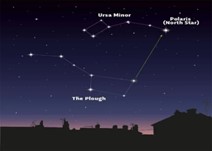
- A Polestar is a star nearly aligned with the rotational axis of a celestial body. For Earth, Polaris (the North Star) lies almost directly above the North Pole.
- It has been historically used for navigation, particularly before modern instruments were developed.
- UPSC Example (2012): If a person needs to walk eastward in a desert and can locate the Polestar, they should walk with the Polestar to their left, as this ensures alignment with the eastward direction.
Goldilocks Zone
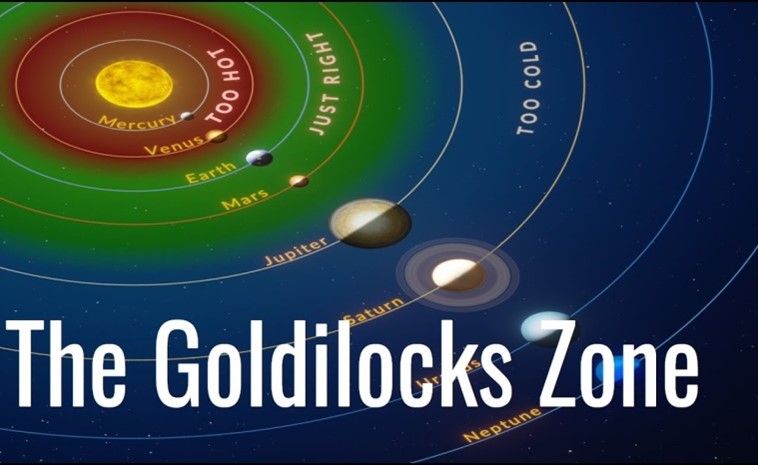
- The Goldilocks Zone, also called the habitable zone, is the region around a star where conditions are ideal for the existence of liquid water, a fundamental requirement for life.
Key Features
- Temperature Range: Within this zone, conditions are “just right”—neither too hot (which would cause water to evaporate) nor too cold (which would freeze water).
- Influencing Factors: The location of the habitable zone depends on the size and brightness of the star. Larger, hotter stars have habitable zones farther away, while smaller stars have zones closer to them.
- Earth as a Model: Earth lies comfortably in the Sun’s Goldilocks Zone, with average temperatures suitable for liquid water and thus for life.
Exoplanets in the Goldilocks Zone
- Exoplanet (Extrasolar Planet): A planet orbiting a star outside our Solar System.
- Proxima Centauri b: Closest known exoplanet in the habitable zone of Proxima Centauri.
- TRAPPIST-1 System: Contains seven Earth-sized planets, with three located in the habitable zone.
- Kepler-186f: The first discovered Earth-sized exoplanet in its star’s habitable zone.
Importance
The concept of the Goldilocks Zone is central to astrobiology. It helps guide the search for extraterrestrial life, as planets in this zone are prime candidates for hosting liquid water and potentially life forms.
Latitude and Longitude
Latitude
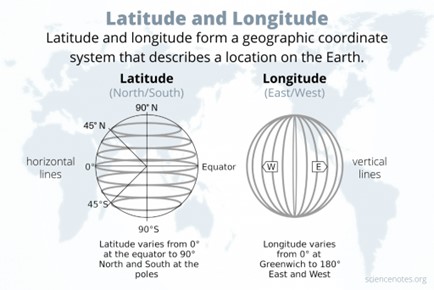
- Defined as the angular distance north or south of the equator, measured in degrees (°).
- Parallels of latitude run east–west and are parallel to the equator.
- Each degree of latitude corresponds to about 111 km (69 miles).
- Example: The latitude of a point (P) is the angle between P and the Equator (Q), measured at the Earth’s center.
Longitude
- Defined as the angular distance east or west of the Prime Meridian, measured in degrees (0°–180°).
- Prime Meridian (0° longitude) passes through Greenwich (UK), extending across France, Algeria, and Antarctica.
- International Date Line (IDL): Located roughly along 180° longitude, it marks where the date changes by a day. The line zigzags to avoid splitting countries into two different dates.
- Convergence: Unlike latitudes, the distance between lines of longitude decreases from the equator to the poles, where they meet.
Standard Time
- If each town were to keep the time of its own meridian, there would be much difference in local time between one town and the other.
- Travelers going from one end of the country to the other would have to keep changing their watches if they wanted to keep their appointments. This is impractical and very inconvenient.
- To avoid all these difficulties, a system of standard time is observed by all countries.
- Most countries adopt their standard time from the central meridian of their countries.
- In larger countries such as Canada, U.S.A., China, and U.S.S.R, it would be inconvenient to have single time zone. So these countries have multiple time zones.
- Both Canada and U.S.A. have five time zones—the Atlantic, Eastern, Central, Mountain and Pacific Time Zones. The difference between the local time of the Atlantic and Pacific coasts is nearly five hours.
- S.S.R had eleven time zones before its disintegration. Russia now has nine time zones.
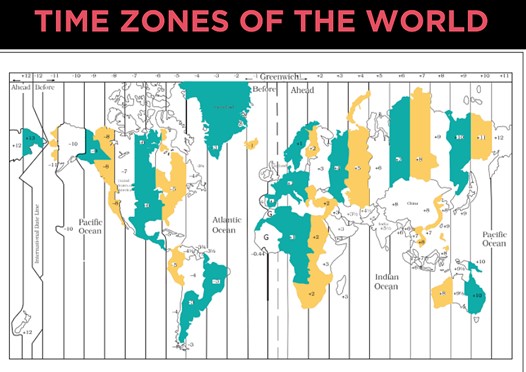
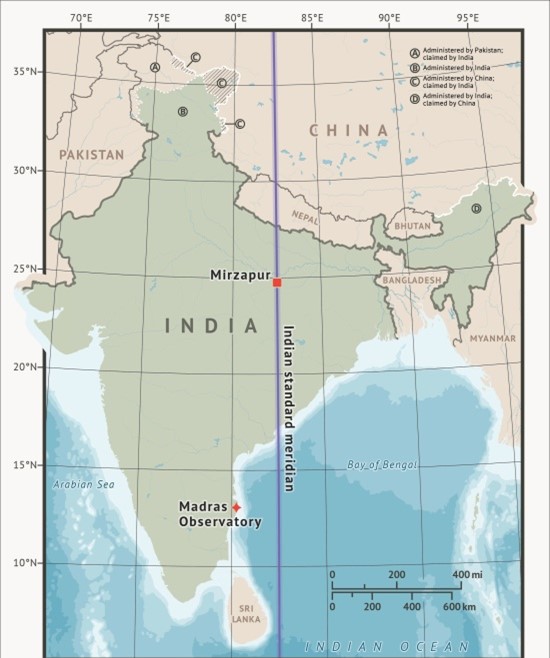
- Indian Standard Time (IST) is based on the 82½° E meridian, passing through states like Uttar Pradesh, Chhattisgarh, Odisha, Madhya Pradesh, and Andhra Pradesh.
- Important cities near this meridian: Kanpur, Raipur, Bhubaneswar, Bhopal, Vijayawada.
- IST is 5 hours 30 minutes ahead of GMT (Greenwich Mean Time).
Great Circles
- A Great Circle is the largest possible circle that can be drawn on a sphere, representing the shortest path between two points.
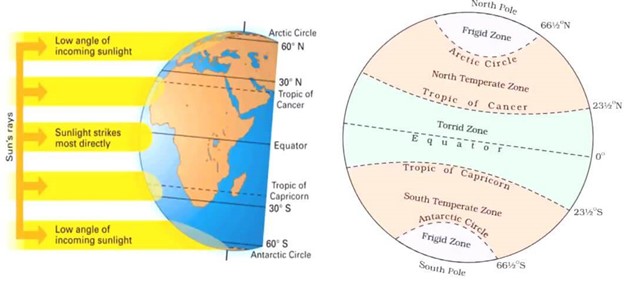
- The Equator (0° latitude) is a Great Circle as it divides Earth into two equal hemispheres.
- All meridians of longitude, when paired with their opposite meridians, also form Great Circles.
- Importance in Navigation:
- Used by aviators and sailors to determine shortest routes.
- Example: Flights from New York to Tokyo follow Great Circle routes, which appear curved on flat maps but are shorter on a globe.
Major Latitudes of Earth
Latitude | Name | Countries Passing Through |
0° | Equator | Africa (Gabon, Congo, DR Congo, Uganda, Kenya, Somalia), Asia (Indonesia, Maldives), South America (Ecuador, Colombia, Brazil, São Tomé and Príncipe) |
23½° N | Tropic of Cancer | North America (Mexico, Bahamas), Africa (Egypt, Libya, Niger, Algeria, Mali, Mauritania), Asia (Taiwan, China, Myanmar, Bangladesh, India, Oman, UAE, Saudi Arabia) |
23½° S | Tropic of Capricorn | South America (Argentina, Brazil, Chile, Paraguay), Africa (Namibia, Botswana, South Africa, Mozambique, Madagascar), Australia (Australia) |
66½° N | Arctic Circle | Europe (Norway, Sweden, Finland), Asia (Russia), North America (Alaska, Canada), Oceania (Greenland, Iceland) |
66½° S | Antarctic Circle | Antarctica (Antarctica) |
Earth’s Geomagnetic Field
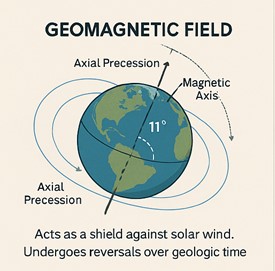
The Earth’s geomagnetic field resembles that of a tilted magnetic dipole, inclined at about 11° from the planet’s rotational axis. It acts as if a bar magnet were placed inside Earth at this angle, with magnetic north and south poles that differ slightly from the geographic poles.
Key Features
- The geomagnetic field is dynamic, constantly changing over geological timescales.
- Its study helps scientists understand the composition and processes within Earth’s metallic core.
- The intensity of the magnetic field is strongest at the poles and weakest at the equator.
Geomagnetic Reversal
- A geomagnetic reversal occurs when the magnetic north and south poles switch places.
- These reversals happen irregularly, roughly every few hundred thousand years.
- Evidence of past reversals is recorded in mid-oceanic ridges, supporting the Seafloor Spreading Theory and Plate Tectonics.
Geomagnetic Poles
- Geomagnetic poles are defined as the points where Earth’s surface intersects with the axis of a hypothetical dipole field.
- If Earth’s field were a perfect dipole, magnetic poles would align vertically with the surface and coincide with the geographic poles.
- In reality, due to irregularities, the Magnetic Poles and Geomagnetic Poles do not exactly coincide.
Significance of the Geomagnetic Field
- Acts as a protective shield, deflecting solar wind particles that could otherwise strip away the atmosphere and harm life. [UPSC 2012]
- Some solar particles do enter near the poles, producing spectacular Auroras:
- Aurora Borealis (Northern Lights) in the Northern Hemisphere.
- Aurora Australis (Southern Lights) in the Southern Hemisphere.
- Essential for navigation, since compasses align with the magnetic field.
- Some species exhibit magneto-perception, navigating long distances using Earth’s magnetic field.
- Studies of paleomagnetism reveal Earth’s past geomagnetic history and have been instrumental in theories of continental drift and plate tectonics.
- Responsible for forming the magnetosphere, Earth’s magnetic shield in space.
Magnetosphere
The magnetosphere is a region of space around Earth dominated by its magnetic field. It protects Earth by trapping charged particles from the solar wind.
Key Features
- Magnetotail: Stretches up to 60,000 km towards the Sun and extends even farther away on the opposite side.
- Magnetopause: The outer boundary of the magnetosphere, separating it from the turbulent solar wind region called the magnetosheath.
- Contains Van Allen Radiation Belts, which store high-energy charged particles:
- Lower Belt: 1,000–5,000 km above the equator; contains protons and electrons.
- Upper Belt: 15,000–25,000 km above the equator; dominated by electrons.
Magnetic Storms
- Caused when strong solar winds disturb Earth’s magnetosphere.
- Lead to rapid fluctuations in the magnetic field, generating electric currents in near-Earth space.
- Consequences:
- Disruption of satellite operations (e.g., GPS).
- Damage to long-range radio communication.
- Affect power grids through geomagnetically induced currents.
- These storms create ring currents, strongest near the equator.
Causes of the Geomagnetic Field
- Generated by the motion of molten iron and nickel in the Earth’s outer core.
- Differences in temperature, pressure, and composition create convection currents in the molten core.
- These flows generate electric currents, producing magnetic fields through the Dynamo Effect.
Heat Zones of the Earth
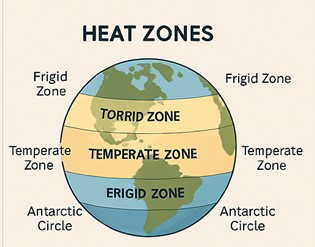
Earth is divided into three primary heat zones based on the angle of the Sun’s rays:
1. Torrid Zone (Tropical Zone)
- Lies between the Tropic of Cancer (23½° N) and Tropic of Capricorn (23½° S).
- Receives direct vertical rays of the Sun throughout the year.
- Hottest region with high temperatures and abundant rainfall.
- Examples: Amazon Basin, Congo Basin, Southeast Asia.
2. Temperate Zone
- Lies between the Tropics and Polar Circles (23½°–66½°).
- Receives slanted rays of the Sun, leading to moderate climate.
- Experiences four distinct seasons.
- Examples: Europe, North America, Southern Australia, Southern South America.
3. Frigid Zone (Polar Zone)
- Lies between the Polar Circles (66½°) and the Poles (90°).
- Receives highly slanted rays with very low solar heating.
- Characterized by extreme cold, long winters, and polar nights.
- Examples: Greenland, Antarctica, Arctic regions of Canada and Russia.
Earth’s Movements and Cycles
Rotation of the Earth
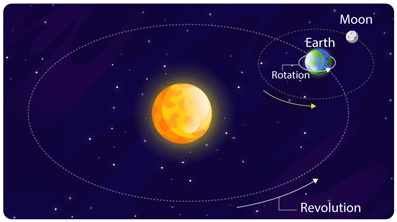
- The Earth rotates west to east once every 24 hours.
- Speed: Fastest at the equator (1670 km/h), decreasing toward the poles.
- Effects:
- Day and Night Cycle.
- Coriolis Effect: Deflects winds and ocean currents (rightward in the Northern Hemisphere, leftward in the Southern Hemisphere).
Revolution of the Earth
- The Earth revolves around the Sun once every 365¼ days in an elliptical orbit.
- Perihelion: Closest to the Sun (~January 3).
- Aphelion: Farthest from the Sun (~July 4).
- Effects:
- Seasons due to Earth’s axial tilt (23.5°). [UPSC 2013]
- Variation in day length across latitudes.
Earth’s Axial Tilt and Precession
- Axial Tilt (Obliquity): Earth’s axis is tilted at 23.5°, responsible for seasons.
- Over a 41,000-year cycle, the tilt varies between 22.1° and 24.5°, altering seasonal intensity.
- Axial Precession: Earth’s axis wobbles like a spinning top, completing one cycle in 26,000 years, shifting seasonal timing.
Milankovitch Cycles
Long-term variations in Earth’s orbit and tilt influencing climate:
- Eccentricity: Earth’s orbit changes shape (circular ↔ elliptical) every 100,000 years, affecting seasonal contrasts.
- Obliquity: Axial tilt variation over 41,000 years influences seasonal intensity.
- Precession: Wobble of Earth’s axis every 26,000 years, altering timing of equinoxes and solstices.
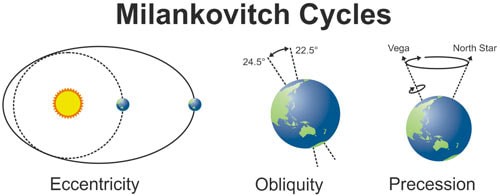
These cycles are crucial for understanding Ice Ages and long-term climate change.
Magnetic Axis and Reversals
- Earth’s magnetic axis is tilted about 11° from its rotational axis.
- The magnetic poles slowly drift due to fluid movements in the outer core.
- Over geological time, magnetic reversals occur, switching north and south magnetic poles.
- These reversals are recorded in igneous rocks and provide evidence for plate tectonics.
Other Influences
- Chandler Wobble: A small irregular movement of Earth’s poles, with a cycle of 433 days.
- Solar Activity Cycles: Sunspot cycles (~11 years) influence Earth’s radiation budget and climate.
Solstices and Equinoxes
Solstices
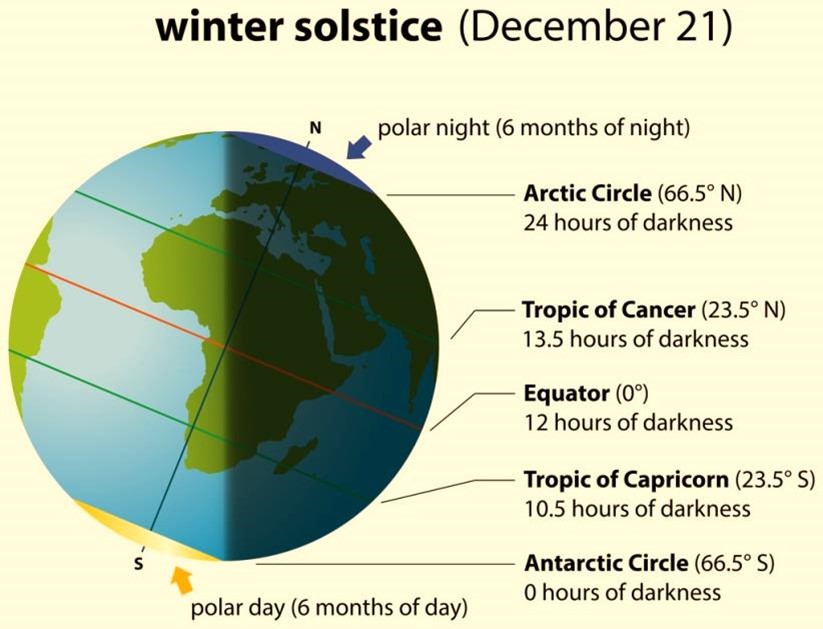
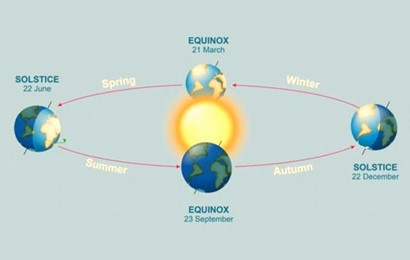
- Summer Solstice (June 21): Longest day in the Northern Hemisphere; 24-hour daylight in the Arctic Circle.
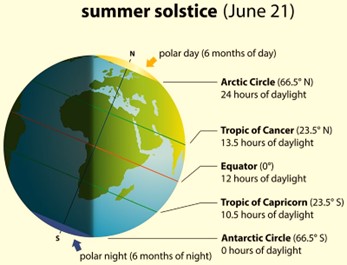
- Winter Solstice (December 22): Shortest day in the Northern Hemisphere; 24-hour daylight in the Antarctic Circle.
Equinoxes
- Spring (March 21) and Autumn (September 23): Day and night are approximately equal (12 hours each) globally.
- Occur when the Sun is directly overhead at the equator.
Moon’s Orbital Plane, Earth’s Orbital Plane and Eclipses
The Moon’s orbital plane is tilted by about 5° relative to the Earth’s orbital plane, also known as the ecliptic plane. This slight tilt is the reason why eclipses do not occur every new moon or full moon. The interaction of these orbital alignments determines the occurrence of phases of the Moon and solar and lunar eclipses.
Phases of the Moon
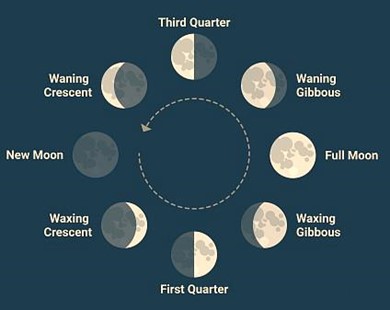
The changing relative positions of the Earth, Moon, and Sun give rise to different phases of the Moon.
- New Moon: Occurs when the Moon lies between the Earth and the Sun. The illuminated half of the Moon faces away from Earth, and the side facing Earth is in darkness.
- Full Moon: Happens when the Earth lies between the Sun and the Moon. The entire face of the Moon visible from Earth is illuminated. However, a lunar eclipse does not occur every full moon because the Moon usually passes above or below the Earth’s shadow due to the orbital tilt.
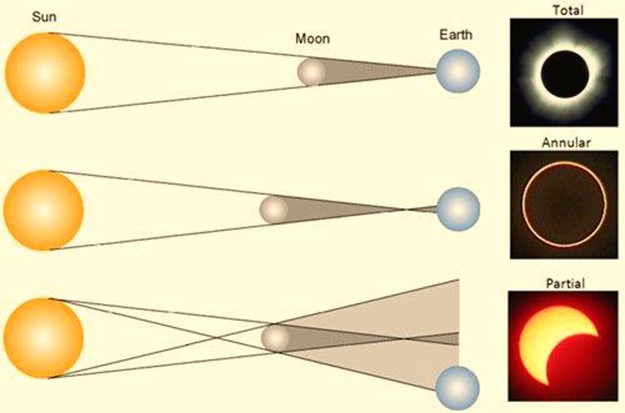
Solar Eclipse
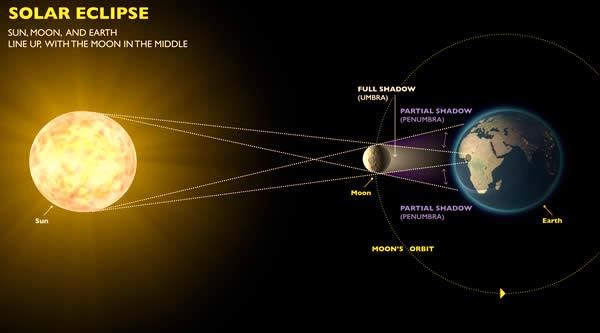
A solar eclipse takes place when the Moon comes between the Earth and the Sun during the new moon phase, blocking sunlight from reaching Earth.
Conditions
- The Moon’s orbit must intersect the ecliptic plane for proper alignment.
- Only then can the Moon’s shadow fall on Earth.
Types of Solar Eclipse
- Total Solar Eclipse – The Moon completely covers the Sun, as seen from Earth. Daylight temporarily turns into darkness.
- Partial Solar Eclipse – The Moon obscures only a part of the Sun, leaving the rest visible.
- Annular Eclipse – The Moon appears slightly smaller than the Sun and covers only the central portion, leaving a glowing “ring of fire” around the edges.
Lunar Eclipse
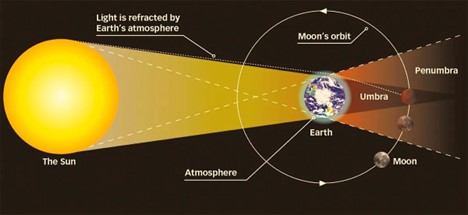
A lunar eclipse occurs during a full moon when the Earth comes between the Sun and the Moon, casting its shadow on the Moon.
Types of Lunar Eclipse
- Total Lunar Eclipse – The Moon is fully engulfed in Earth’s umbra (darkest shadow). It appears reddish due to Rayleigh scattering and atmospheric refraction, which filter out blue light and bend red light toward the Moon.
- Partial Lunar Eclipse – Only a portion of the Moon passes into the Earth’s umbra, leaving part of it illuminated.
- Penumbral Eclipse – The Moon passes through the penumbra (lighter outer shadow) of Earth, causing only a faint dimming, often hard to notice with the naked eye.
IMPORTANT POINTS
- Ecliptic Plane: The imaginary plane containing Earth’s orbit around the Sun. Perfect alignment of the Moon’s orbital plane with the ecliptic plane is essential for eclipses.
- Red Moon Phenomenon: During a total lunar eclipse, the Moon appears red due to atmospheric scattering of sunlight—similar to how the sky appears red at sunrise and sunset.
- Rarity of Eclipses: Although new moons and full moons occur every month, eclipses are rare. This is because the Moon’s orbit is tilted by about 5°. Eclipses occur only during eclipse seasons, when the Moon crosses the ecliptic plane at the same time as a new moon (solar eclipse) or full moon (lunar eclipse).