TOne Academy

Poverty and inequality

Home / Indian Economy / Poverty and inequality

Poverty

Global Definition

       According to the World Bank, poverty is defined as a state of “pronounced deprivation in well-being.”
This holistic definition goes beyond mere income deprivation. It includes:

    • Lack of access to basic resources (like clean water, healthcare, education).
    • Inability to meet essential needs for survival and development.
    • Failure to enjoy a minimum acceptable standard of living, including dignity and societal participation.
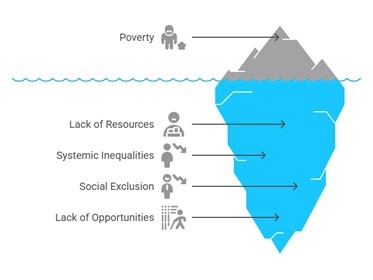
In essence, the World Bank sees poverty as multi-dimensional, linking economic deprivation with social exclusion, lack of opportunity, and vulnerability.

Indian Approach to Poverty

In India, the commonly followed approach to poverty has traditionally been narrower and survival-centric.

    • The official definition tends to focus on a “minimum level of living,” which includes only the most basic human needs—such as food, shelter, and clothing.
    • This subsistence approach does not fully account for other vital aspects like:
        • Access to quality healthcare and education.
        • Social security and employment opportunities.
        • Living with dignity and freedom from exploitation.


This has sparked debate, with critics suggesting that India’s poverty estimation often underestimates the true scale of deprivation.

Measurement of Poverty in India

Earlier Framework – Planning Commission Era

    • The Planning Commission was historically responsible for estimating poverty.
    • These estimates were derived from data collected by the National Sample Survey Office (NSSO), based on Monthly Per Capita Consumption Expenditure (MPCE).
    • Poverty lines were calculated by identifying the expenditure required to meet minimum calorie norms (2,400 kcal for rural and 2,100 kcal for urban).
    • This method was criticized for being outdated and ignoring other dimensions of poverty.

Current Framework – Role of NITI Aayog

    • After the dissolution of the Planning Commission, the responsibility of poverty measurement was transferred to NITI Aayog.
    • NITI Aayog now uses data from the NSSO, which operates under the Ministry of Statistics and Programme Implementation (MOSPI).
    • Estimates are made separately for rural and urban areas, taking into account updated consumption patterns and cost of living.


However, India still lacks an official poverty line post-Planning Commission, and the issue of setting a multidimensional poverty metric is still under discussion.

International Cooperation Against Poverty:

IBSA Trust Fund

    • IBSA refers to a trilateral development initiative between India, Brazil, and South Africa.
    • The IBSA Trust Fund was established to support development projects and combat poverty in other developing countries, especially in Africa, Latin America, and Asia.
    • The agreement was signed during the 8th IBSA Trilateral Ministerial Commission Meeting in Durban (2017).

Key features:

    • Each country pledges an annual contribution of $1 million.
    • Fund is managed by the Special Unit for South-South Cooperation under the United Nations Development Programme (UNDP).
    • Projects focus on capacity building, infrastructure, education, healthcare, and rural development.

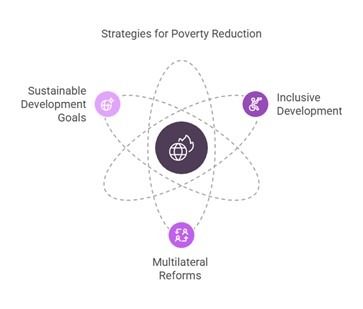
IBSA Dialogue Forum

    • The IBSA Dialogue Forum was created to promote South-South Cooperation—an idea emphasizing mutual support among developing nations.
    • The forum was officially launched through the Brasilia Declaration in 2003.
    • It serves as a platform for consultation and coordination on global issues, such as:
          • Inclusive development.
          • Multilateral reforms.
          • Sustainable development goals (SDGs).

    • IBSA also works to amplify the voice of the Global South in international governance.

Concept of Poverty

Poverty as a Multi-Dimensional Phenomenon

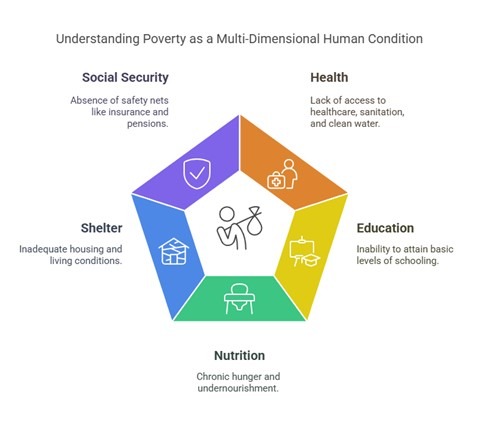
   In modern development discourse, poverty is not merely about income deprivation, but a multi-dimensional condition affecting various aspects of human life.
This broader understanding includes deficits in:

    • Health: Lack of access to healthcare, sanitation, and clean water.
    • Education: Inability to attain even basic levels of schooling.
    • Nutrition: Chronic hunger and undernourishment.
    • Shelter: Inadequate housing and living conditions.
    • Social Security: Absence of safety nets such as insurance, pensions, or unemployment benefits.
    • Empowerment: Lack of decision-making power, especially among women and marginalized communities.


This holistic definition sees poverty not just as economic deficiency but as a condition where individuals lack the means to live with dignity.
Institutional Definitions and Endorsements

    • UNDP (Human Development Report) and the World Bank (World Development Report) promote a comprehensive and integrated view of poverty.
    • As per the UN (2001), poverty is:


     “A human condition characterized by the sustained or chronic deprivation of the resources, capabilities, choices, security, and power necessary for the enjoyment of an adequate standard of living and other civil, cultural, economic, political, and social rights.”

        This stresses that poverty is not just the absence of wealth but the absence of opportunities, security, and rights.

Amartya Sen’s Capability Approach

      Renowned economist and Nobel Laureate Professor Amartya Sen revolutionized the way we look at poverty through his “Capability Approach.”

According to Sen:

Poverty arises when individuals lack the capabilities required to live a life they value.

This includes:

    • Low income
    • Poor health and education
    • Inadequate access to resources
    • Lack of autonomy and self-respect

Key Idea:

     It’s not just what people earn, but what they are able to do or become with that income that determines poverty.

Thus, the focus shifts from “means” to “freedoms.”

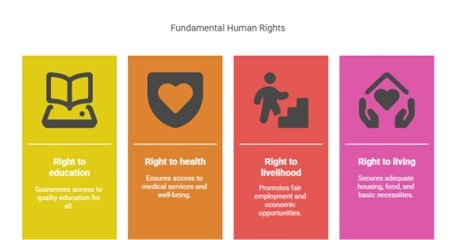
Human Rights Approach to Poverty

Some scholars and international frameworks conceptualize poverty as a violation of human rights.

Under this approach, poverty is seen as a failure of the state or society to guarantee:

    • Right to education
    • Right to health
    • Right to livelihood and employment
    • Right to a decent standard of living


This perspective frames poverty as not just a socio-economic failure, but a denial of justice and human dignity.

Implication:

Eradicating poverty isn’t just about welfare—it’s about upholding basic human entitlements.

Summary of Key Concepts

Dimension

Explanation

Income Poverty

Lack of sufficient financial resources.

Multidimensional Poverty

Deficits in health, education, housing, etc.

Capability Deprivation (Sen)

Inability to achieve desired life outcomes due to lack of freedom and resources.

Rights-Based Poverty

Failure to ensure human rights and minimum entitlements.

Institutional View (UN/World Bank)

Chronic deprivation across economic, political, and social dimensions.

Identifying the Poor: Strategies and Categories

Introduction:

    • The battle against poverty cannot be won without first identifying who the poor are.
    • Mere allocation of funds or schemes is ineffective unless those most in need are accurately targeted.
    • As the adage goes: “What gets measured, gets managed.”


Hence, establishing a robust poverty identification mechanism is vital for:

    • Effective policy targeting
    • Equitable distribution of benefits
    • Monitoring development outcomes

Institutional Framework: India’s Journey in Poverty Estimation

     India has consistently worked to build scientific and data-driven frameworks to identify and categorize poverty.

     The task has largely been institutionalized through the efforts of the Planning Commission and later NITI Aayog.

Key Milestones:

Chronology of Poverty Estimation in India

Year

Body / Committee

Details & Contributions

1950

Planning Commission

– Established by the Government of India to formulate Five-Year Plans.

Initiated macro-level studies on poverty.

– Emphasized the need for estimating poverty for effective planning.

– Initially focused more on economic growth and less on specific poverty metrics.

1962

Study Group (Expert Group)

– First formal attempt to measure poverty scientifically.

– Headed by V.M. Dandekar and N. Rath.

Linked poverty to calorie intake: minimum 2,250 calories per person/day.

– Used National Sample Survey (NSS) consumption data.

– Set the foundation for calorie-norm-based poverty lines in India.

1979

Task Force on Projections of Minimum Needs and Effective Consumption Demand

– Chaired by Y.K. Alagh.

– Proposed separate rural and urban poverty lines, based on calorie norms:

  – 2,400 calories for rural

  – 2,100 calories for urban

– Linked these calorie norms with monthly per capita consumption expenditure.

– Poverty line based on cost of a basket of goods required to meet calorie intake.

– Became the official methodology used for decades.

1989

Expert Group under D.T. Lakdawala

– Recommended that state-specific poverty lines be computed based on local price levels.
– Introduced uniform poverty line basket across states.

– Continued reliance on consumption expenditure via NSS data.

– Marked a shift toward cost-of-living adjustments at the state level.

– Emphasized the need for comparability across time and space.

2005

Expert Group under Suresh Tendulkar

– Major departure from calorie-based norms.
– Shifted focus to actual private consumption expenditure on food, education, and health.

– Advocated a uniform poverty line across rural and urban areas, adjusted for price differences.

– Introduced new poverty lines (Rs. 446.68 for rural, Rs. 578.80 for urban in 2004-05).

– Estimated 37.2% of population below the poverty line in 2004-05.

– Criticized for setting very low poverty thresholds, seen as underestimating poverty.

2014

Expert Group under C. Rangarajan

– Addressed criticisms of the Tendulkar Committee.
– Recommended a higher poverty line:
  – Rs. 972/month (Rural)

  – Rs. 1,407/month (Urban) for 2011-12.

– Used normative levels of adequate nutrition, clothing, housing, transport, education, and health.

– Estimated 29.5% of the population below the poverty line in 2011-12.

– Provided two cut-off estimates: for basic needs and minimum social consumption.

– Not adopted officially by the government, but significant academically.


Comparison Table: Tendulkar vs Rangarajan Committee

Criteria

Tendulkar Committee (2009)

Rangarajan Committee (2014)

Approach

Based on actual expenditure on health, education, and food

Based on normative minimum requirements

Poverty Line (2011-12)

Rs. 816 (Rural), Rs. 1,000 (Urban)

Rs. 972 (Rural), Rs. 1,407 (Urban)

% Below Poverty

21.9%

29.5%

Calorie Norms

Not explicitly linked

2,155 (Rural), 2,090 (Urban)

Uniformity

Uniform across states with price adjustments

State-wise differentiation retained


Additionally, individual economists have contributed by framing theoretical models and data-driven categorization of the population along the poverty spectrum.

Why Accurate Identification is Critical

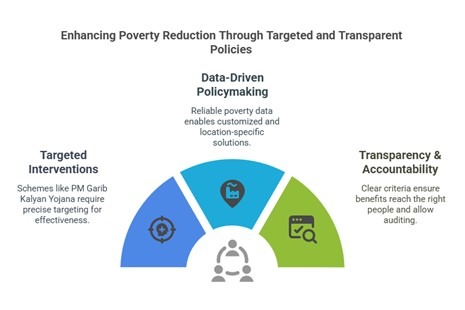
    1. Targeted Interventions Schemes like PM Garib Kalyan Yojana, Ujjwala Yojana, and PDS require precise targeting to be effective.
    2. Data-Driven Policymaking Reliable poverty data enables governments to craft customized and location-specific solutions.
    3. Transparency & Accountability Clear criteria for identification ensure that benefits reach the right people and allow effective auditing.
Need for Evolving Strategies

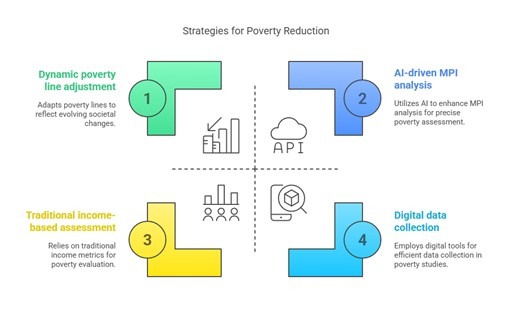
Modern poverty is complex, dynamic, and multi-layered. Identification methods must adapt to these realities.

1. Multidimensional Approach

    • Income is not the sole determinant.
    • Poverty should be assessed through MPI (Multidimensional Poverty Index) indicators:
        • Education
        • Health
        • Standard of living (housing, water, sanitation, etc.)

2. Dynamic Poverty Line

    • Needs periodic revision to reflect:
        • Inflation
        • Changing consumption patterns
        • Urbanization
        • Lifestyle evolution

3. Leveraging Technology

    • Use of digital tools (Aadhaar-linked data, SECC, mobile surveys)
    • Big data and AI analytics can help identify trends, assess eligibility, and prevent exclusion or duplication
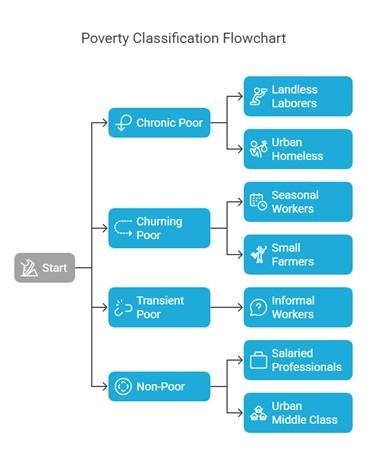
Categorizing the Poor

Poverty is not binary—it exists along a spectrum. Categorization helps in fine-tuning interventions.

Category

Description

Examples

Chronic Poor

Consistently remain below poverty line

Landless laborers, urban homeless

Churning Poor

Oscillate in and out of poverty

Seasonal workers, small farmers

Transient Poor

Generally above the poverty line, but occasionally slip below it

Informal workers during crisis periods

Non-Poor

Secure income and access to services

Salaried professionals, urban middle class

Policy Insight:

    • Chronic poor need long-term social protection and asset creation.
    • Churning poor benefit from livelihood security and microcredit.
    • Transient poor require shock-absorbers like health insurance and employment guarantees.

CAUSES OF POVERTY IN INDIA: A MULTIFACETED ANALYSIS

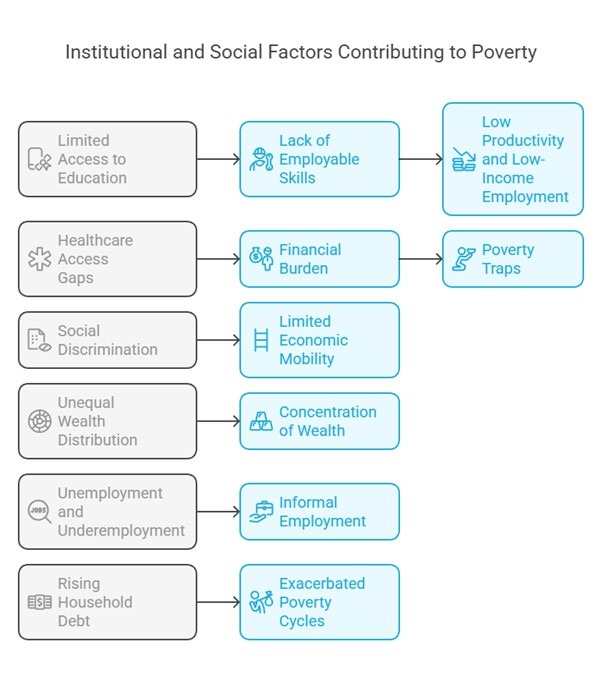
      Poverty in India is not the result of a single factor but a complex interplay of institutional, social, and economic factors. Despite rapid economic growth, millions remain in poverty due to persistent structural barriers and policy gaps.

Institutional and Social Factors

🔹 Limited Access to Education and Skills

    • Only 51.3% of India’s population aged 25 and above has completed secondary education (UNESCO, 2022).
    • This education deficit leads to a lack of employable skills, perpetuating a cycle of low productivity and low-income employment, particularly in informal sectors.

🔹 Healthcare Access Gaps

    • Out-of-pocket expenditure accounts for 47.1% of total health spending (NHA 2019–20).
    • The absence of universal health coverage makes healthcare a major financial burden, pushing vulnerable families into poverty traps after medical emergencies.

🔹 Social Discrimination

    • Caste-based exclusion and discrimination continue to limit economic mobility.
    • Dalits earn 11% less than non-Dalits on average for similar work (World Bank, 2020), highlighting systemic inequity.

🔹 Unequal Wealth Distribution

    • India’s Gini coefficient of 0.35 reflects growing income inequality (World Bank, 2023).
    • The top 10% hold 51% of national income (IMF, 2022), concentrating wealth in the hands of a few and marginalizing the rest.

🔹 Unemployment and Underemployment

    • While the unemployment rate stood at 7.8% in 2022 (World Bank), this masks deeper issues:
        • Underemployment is widespread: 37% of the employed workforce desires more working hours (ILO, 2023).
        • Informal employment remains dominant, with low job security and benefits.

🔹 Rising Household Debt

    • 77% of rural and 55% of urban households reported being in debt (CMIE, 2022).

    • High interest rates from informal credit sources further exacerbate poverty cycles.
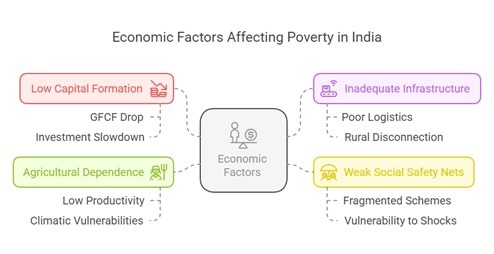
Economic Factors

🔹 Low Capital Formation

    • India’s gross fixed capital formation (GFCF) dropped to 29% of GDP in 2022 (World Bank).
    • Weak private and public investment slows job creation and industrial expansion, limiting avenues out of poverty.

🔹 Inadequate Infrastructure

    • Ranked 38th in the World Bank’s Logistics Performance Index (2023), India struggles with:
        • Poor roads, storage facilities, and logistics,
        • Disconnected rural economies,
        • Limited access to markets and opportunities.

🔹 Weak Social Safety Nets

    • India’s welfare schemes are fragmented and unevenly implemented.
    • In the absence of robust support systems, any shock—be it natural, financial, or health-related—can push households into poverty.

🔹 Agricultural Dependence

    • 45% of the workforce is still employed in agriculture (NITI Aayog).
    • The sector is marked by low productivity, seasonal employment, climatic vulnerabilities, and price volatility—offering little scope for sustainable income generation.
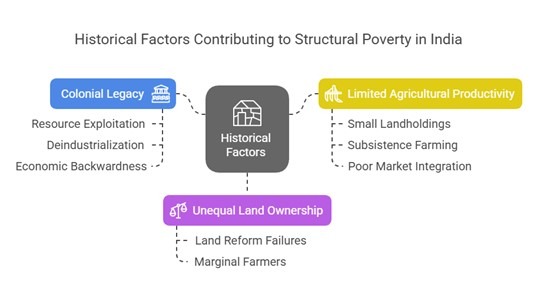
Historical Factors: Roots of Structural Poverty

🔹 Colonial Legacy

    • British colonial rule (1757–1947) systematically exploited India’s resources, redirected agricultural surplus, and deindustrialized traditional industries, especially textiles.
    • The economy was reoriented to serve British commercial interests, leaving a legacy of regional disparities, economic backwardness, and underdeveloped infrastructure that still affects India today.

🔹 Unequal Land Ownership

    • Despite several land reform initiatives post-Independence, land ownership remains highly skewed.
        • According to the World Bank (2018):
        • 68% of rural households are either landless or own less than one hectare of land (marginal farmers).


    • The failure of land redistribution and tenancy reforms means millions are locked out of productive economic assets, reinforcing rural poverty.

🔹 Limited Agricultural Productivity

    • Small and fragmented landholdings, lack of access to quality inputs, irrigation, and modern technology restrict agricultural output.
    • Most smallholders are caught in subsistence farming, with low returns, high risks, and poor market integration.
    • This impairs rural income growth, leading to perpetual poverty, especially in states like Bihar, Odisha, and Jharkhand.
Additional Structural and Contemporary Factors

🔹 Precarious Work and Informal Employment

    • According to the ILO (2018), about 81% of non-agricultural workers are employed in the informal sector.
    • These jobs are marked by:
        • Low and irregular wages,
        • Lack of job security,
        • No social security benefits,
        • Poor working conditions.
    • This makes upward mobility extremely difficult for a large segment of the population.

🔹 Rising Prices and Inflation

    • Inflation, particularly in food and fuel, hits the poor hardest as they spend a larger share of their income on basic necessities.
    • Even moderate inflation can significantly erode real incomes of the poor, aggravating nutrition insecurity and increasing their reliance on loans.

🔹 Inequitable Distribution of Resources

    • Access to quality education, healthcare, financial services, clean drinking water, and employment opportunities remains unequal across regions, castes, and gender lines.
    • Urban-rural, inter-state, and intra-state inequalities sustain cycles of deprivation, making poverty a persistent structural challenge.

🔹 Impact of the COVID-19 Pandemic

    • The pandemic disproportionately impacted the informal sector, where the majority of India’s poor are employed.
    • According to CMIE and Azim Premji University:
        • Over 230 million Indians were pushed below the poverty line during the first year of the pandemic.
        • Women, migrants, and daily wage workers were among the worst hit, with job losses, salary cuts, and reverse migration contributing to widespread distress.

Path Ahead: Breaking the Cycle of Poverty

    • To effectively address the causes of poverty in India, a multi-pronged, long-term strategy is required:

Human Capital Investment

    • Universal access to quality education, skill training, and healthcare.
    • Strengthening institutions like Anganwadis, ASHA workers, and midday meals to break intergenerational poverty.

Inclusive Economic Growth

    • Diversify agriculture, promote MSMEs, and generate non-farm employment.
    • Foster rural-urban linkages and improve connectivity to markets.

Robust Social Safety Nets

    • Expand and streamline schemes like PM-KISAN, MGNREGA, and Ayushman Bharat.
    • Introduce universal basic services in health, education, and nutrition.

Address Institutional Inequities

    • Enforce land reforms, promote financial inclusion, and ensure equity in governance and justice delivery.

POVERTY CLASSIFICATION

1. Absolute Poverty

🔹 Definition:

    • Absolute poverty refers to a condition in which an individual’s income or consumption is below the minimum level necessary to meet basic survival needs like food, clothing, shelter, healthcare, and education.

🔹 Global Benchmark:

    • The World Bank currently defines absolute poverty as living on less than $2.15 per day (PPP, 2022).

🔹 Key Features:

    • Universal measure—used to compare poverty across countries.
    • Static threshold—doesn’t vary with societal wealth.
    • Focuses on basic physical subsistence.

🔹 Causes:

    • Unemployment, lack of access to education, low productivity, poor health systems, conflict, or natural disasters.

🔹 Example:

    • A tribal household in central India unable to afford two full meals a day and without access to a proper shelter or healthcare.

2. Relative Poverty

🔹 Definition:

    • Relative poverty measures how poor a person is in relation to the average income or living standard in their society. It reflects income inequality.
🔹 Measurement:
    • Commonly defined as people earning less than 50% or 60% of the median income in a society.

🔹 Key Features:

    • Varies from country to country.
    • More relevant in developed or unequal societies.
    • Focuses on social exclusion and inequality.

🔹 Causes:

    • Unequal distribution of income, social stratification, discrimination, lack of upward mobility.

🔹 Example:

    • In an urban metro city, someone earning ₹8,000/month may afford food but still be considered poor due to lack of access to decent housing, quality education, or digital resources.

3. Situational Poverty

🔹 Definition:

    • A temporary state of poverty due to unexpected external events like natural disasters, economic recession, illness, or job loss.

🔹 Key Features:

    • Short-term and non-structural.
    • Can be reversed with appropriate support systems (social security, insurance, disaster relief).

🔹 Causes:

    • Personal misfortunes or broader economic/environmental crises.

🔹 Example:

    • A family in Kerala losing its livelihood after floods or a migrant worker losing wages due to a lockdown during COVID-19.

4. Generational Poverty

🔹 Definition:

    • When poverty persists across two or more generations within a family, it becomes generational poverty.

🔹 Key Features:

    • Deep-rooted and difficult to escape.
    • Often involves inter-generational transfer of disadvantages like illiteracy, poor health, and unemployment.
    • Linked to structural inequality—such as caste, gender, or region.

🔹 Causes:

    • Lack of access to quality education and healthcare.
    • Absence of assets, social capital, or skills.
    • Discrimination and systemic barriers.

🔹 Example:

    • Children of daily-wage laborers in rural India growing up with little education and entering the same unskilled labor market.

Comparative Summary:

Type of Poverty

Nature

Duration

Root Cause

Intervention Focus

Absolute

Basic needs unmet

Long-term

Low income, survival-level crisis

Food, shelter, public services

Relative

Social comparison

Ongoing

Inequality, exclusion

Redistribution, welfare

Situational

Event-driven

Temporary

Crisis or disaster

Relief, recovery support

Generational

Inherited

Long-term

Structural, cultural barriers

Education, empowerment


ABSOLUTE POVERTY

Definition and Concept

      Absolute Poverty refers to a condition in which individuals or households are unable to meet the minimum subsistence requirements necessary for a basic standard of living. This includes deprivation of:

    • Food and nutrition
    • Clean drinking water
    • Adequate shelter
    • Education
    • Healthcare
    • Sanitation


It is distinct from “relative poverty,” which compares individual income to societal averages. Absolute poverty is more rigid and universal in its criteria.

Measuring Absolute Poverty: Key Approaches

A. Determining the Poverty Line

    • The poverty line is a threshold that represents the minimum income or consumption expenditure necessary to fulfill essential needs.
    • It may be based on:
        • Calorie intake (e.g., 2400 calories/day for rural and 2100 for urban areas as per early Indian estimates).
        • Consumption expenditure on food, clothing, shelter, health, and education.
    • India-specific notes:
        • Rural vs. Urban poverty lines differ due to cost-of-living variations.
        • States may also have separate poverty lines (e.g., Goa vs. Bihar) due to regional price indices.

B. Head Count Ratio (HCR) / Poverty Incidence Ratio

    • Definition: Proportion of people whose income or consumption falls below the poverty line.
  •  
    • Formula:

HCR= (Number of people below the poverty line Total population) ×100

HCR= (Total population Number of people below the poverty line​) ×100


    • Criticism:

HCR only counts the number of poor but does not reflect how poor they are. A person barely below the poverty line and one far below it is treated the same.


    • India-Specific Data:
        • 1977: HCR peaked at 61.6%
        • 2019–21 (NITI Aayog): Reduced to 14.95%

C. Poverty Gap Ratio (PGR) – Measuring Depth of Poverty

    • Definition: Measures the average shortfall in consumption (or income) from the poverty line among the poor.


    • Formula:

PGR= (Poverty Line−Average Consumption of BPL)

    • Importance:

        • Helps quantify the intensity of poverty.
        • Assists in determining the amount of transfer required per person to bring everyone up to the poverty line.
        • Useful for policy formulation involving targeted cash transfer programs.

Squared Poverty Gap Index (SPGI) – Measuring Severity of Poverty

    • This is an enhanced version of the Poverty Gap Ratio.
    • Definition: Takes the square of the poverty gap for each individual, thus giving greater weight to the poorest of the poor.

Purpose:

    • More sensitive to the inequality among the poor.
    • Helps identify areas where poverty is not just deep but uneven, indicating extreme deprivation.


Often used in global indices like Foster-Greer-Thorbecke (FGT) indices to measure poverty severity.

Summary Table: Tools to Measure Absolute Poverty

Indicator

Purpose

Limitations

Poverty Line

Sets benchmark for BPL classification

Static, may not capture regional variance

Head Count Ratio (HCR)

Measures % of population below poverty

Ignores depth and severity of poverty

Poverty Gap Ratio (PGR)

Measures average income shortfall

Doesn’t account for inequality among poor

Squared Poverty Gap

Measures severity of poverty

Requires complex data and calculations

MULTIDIMENSIONAL POVERTY INDEX (MPI)

      The Multidimensional Poverty Index (MPI) provides a holistic perspective on poverty by recognizing that poverty is not solely defined by income levels. Instead, it takes into account a wide range of deprivations such as poor health, lack of education, and inadequate living standards. This approach expands on the traditional income-based poverty measures, offering a more nuanced understanding of poverty’s complex and multi-faceted nature.

1. What is MPI?

   The Multidimensional Poverty Index (MPI) measures acute poverty by evaluating overlapping deprivations across various indicators. Unlike the World Bank’s income poverty measure (which focuses on extreme poverty, i.e., those living below $1.90/day), MPI includes several dimensions of poverty, providing a more comprehensive view of people’s well-being.

      The MPI was developed by the UN Development Programme (UNDP) and the Oxford Poverty and Human Development Initiative (OPHI) and was introduced in 2010 to offer a richer understanding of poverty beyond income.

2. Key Features of MPI

    • Holistic View: MPI focuses on multiple dimensions of poverty, recognizing that deprivation in one area (e.g., education) often overlaps with deprivation in others (e.g., health, housing).
    • Focus on Acute Poverty: MPI identifies not just those below a specific income threshold but also those suffering from multiple deprivations simultaneously.
    • Replacement of the Human Poverty Index: MPI replaced the older Human Poverty Index (HPI) by shifting the focus from income to a wider range of living conditions.


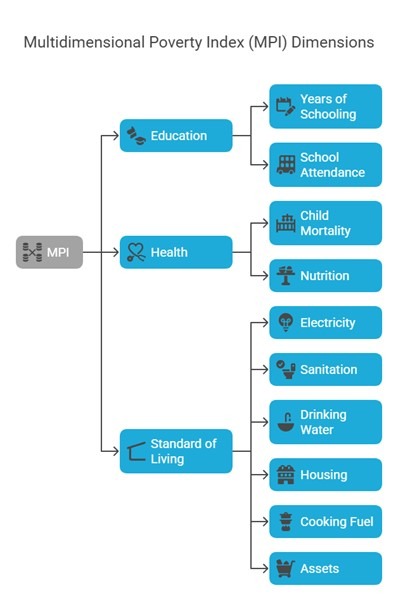
MPI’s use of 10 specific indicators across three dimensions (Education, Health, and Standard of Living) allows for a more detailed and accurate picture of poverty.

3. The Three Dimensions of MPI

A. Education

     Education is a critical component of poverty as it impacts long-term economic and social mobility. The MPI includes two education-related indicators:

1. Years of Schooling:

    • Deprived if no household member (≥ 10 years old) has completed 6 years of schooling.
    • Weight: 1/6th of the MPI.
    • Related SDG: SDG 4 (Quality Education).

2. School Attendance:

    • Deprived if any school-aged child is not attending school up to class VIII.
    • Weight: 1/6th of the MPI.
    • Related SDG: SDG 4 (Quality Education).

B.Health

Health is another critical dimension, as good health is essential for a productive life. MPI includes two health-related indicators:

1. Child Mortality:

    • Deprived if any child in the family has died in the last 5 years.
    • Weight: 1/6th of the MPI.
    • Related SDG: SDG 3 (Good Health and Well-Being).

2. Nutrition:

    • Deprived if any adult (under 70) or child is stunted.
    • Weight: 1/6th of the MPI.
    • Related SDG: SDG 2 (Zero Hunger).

C. Standard of Living

     Living standards directly reflect the quality of life and access to essential services. MPI includes six indicators related to living standards:

1. Electricity:

    • Deprived if the household has no electricity.
    • Weight: 1/18th of the MPI.
    • Related SDG: SDG 7 (Affordable and Clean Energy).

2. Sanitation:

    • Deprived if there is no improved sanitation facility or if shared with other households.
    • Weight: 1/18th of the MPI.
    • Related SDG: SDG 6 (Clean Water and Sanitation).

3. Drinking Water:

    • Deprived if there is no safe drinking water, or it is more than a 30-minute round-trip walk to access it.
    • Weight: 1/18th of the MPI.
    • Related SDG: SDG 6 (Clean Water and Sanitation).

4. Housing:

    • Deprived if the household does not have adequate housing material for roof, walls, and floor, or if the materials used are natural (e.g., mud, straw, etc.).
    • Weight: 1/18th of the MPI.
    • Related SDG: SDG 11 (Sustainable Cities and Communities).

5. Cooking Fuel:

    • Deprived if the household uses dung, wood, charcoal, or coal for cooking.
    • Weight: 1/18th of the MPI.
    • Related SDG: SDG 7 (Affordable and Clean Energy).

6. Assets:

    • Deprived if the household does not own any of the following: radio, TV, telephone, computer, animal cart, bicycle, motorbike, refrigerator, or car/truck.
    • Weight: 1/18th of the MPI.
    • Related SDG: SDG 1 (No Poverty).

4. How MPI is Calculated

    • Deprivation Scoring: Each indicator is scored as either deprived (1) or not deprived (0). If a household is deprived in one of the 10 indicators, it is assigned a score of 1 for that indicator.
    • Identifying Poor Households: A person or household is considered multidimensionally poor if they are deprived in at least one-third of the weighted indicators. This threshold reflects the extent to which a person experiences overlapping deprivations.
    • MPI Value: The MPI value is calculated by considering the incidence of poverty (how many are poor) and the intensity (how severe the deprivation is).

5. Why is MPI Important?

A Holistic Approach:

    • The MPI captures multiple aspects of poverty, which income-based measures miss. This enables governments to design more targeted interventions that address the specific deprivations affecting poor populations.

Focus on Acute Poverty:

    • By focusing on people who face overlapping deprivations, MPI identifies those who are the most vulnerable and at risk of being left behind in development policies.

Global Comparisons:

    • MPI allows for cross-country comparisons on poverty and development, tracking progress toward Sustainable Development Goals (SDGs).

Policy Formulation:

    • The MPI can help governments allocate resources to areas that need the most attention, such as education, health, sanitation, and housing, ensuring more inclusive growth.

6. India and MPI

    India has made strides in reducing multidimensional poverty through various programs like Mahatma Gandhi National Rural Employment Guarantee Act (MGNREGA), Pradhan Mantri Awas Yojana, and Swachh Bharat Abhiyan. However, significant disparities remain, particularly in rural areas and marginalized communities.

For example, as per the Global MPI 2020:

    • India’s MPI value was 0.123, indicating a substantial proportion of the population still faces multiple deprivations across various dimensions.

Key Findings of MPI 2023

Global Reduction in MPI Values:

      The Multidimensional Poverty Index (MPI) report reveals a significant achievement: 25 countries, including India, have successfully halved their MPI values over the past 15 years. This demonstrates global progress in alleviating multidimensional poverty, which includes factors such as education, health, and living standards, beyond just income.

India-Specific Data:

    • 415 million People Lifted Out of Poverty:

From 2005-06 to 2019-21, a remarkable 415 million people in India have moved out of multidimensional poverty. This significant progress highlights the country’s efforts to address the multiple deprivations that contribute to poverty.

Diminishing Deprivation Across Indicators:

     The report indicates that deprivation across the 10 MPI indicators has reduced in India. Notably, the poorest states, children, and marginalized caste groups have seen the fastest improvement. These findings suggest that India’s poverty alleviation strategies are reaching those who need them most.

Global Poverty Statistics (2023):

    • 1.1 billion People: Over 1.1 billion people worldwide, or 18% of the global population, continue to live in acute multidimensional poverty. This underscores the widespread nature of poverty, even as some countries, like India, have made remarkable strides in addressing it.

India’s Achievements and Social Development Schemes:

Impact of Social Development Schemes:

    The report acknowledges that India’s success in reducing poverty is, in part, attributed to social development schemes launched by the current government. These schemes have significantly improved access to basic services like healthcare, education, sanitation, and housing for the most disadvantaged populations.

Despite Economic Growth Criticisms:

     While India’s rapid economic growth has faced criticism for not benefiting the poorest, these findings suggest that the growth has had a positive impact on poverty reduction. The success of poverty reduction programs has been facilitated by the government’s focus on inclusive growth, ensuring the benefits reach the poorest segments of society.

Pandemic Impact:

        Despite significant poverty reduction, the COVID-19 pandemic may have had a reversing effect on some of the progress made in poverty alleviation. However, the lack of sufficient data on the full effects of the pandemic on poverty levels prevents drawing conclusive statements about this impact. Thus, India must continue its direct poverty relief efforts while pursuing economic growth.


National Multidimensional Poverty Index (MPI) – 2023 Review

     The National Multidimensional Poverty Index (MPI), released by NITI Aayog in its second edition titled “National Multidimensional Poverty Index: A Progress Review 2023,” customizes the global MPI to fit India’s priorities. The MPI used by India takes into account dimensions, indicators, weights, and cut-offs that reflect the country’s specific goals and circumstances.

Key Objectives and Focus of the MPI:

    • SDG Target 1: The main objective of India’s MPI is to meet Sustainable Development Goal (SDG) Target 1, which aims to reduce poverty in all its forms by at least 50% by 2030. This aligns India’s poverty reduction strategy with global goals, while also addressing national-specific needs.

Progress in Key Areas:

India has made notable progress in improving access to essential services for its poorest populations. These areas include:

    • Sanitation: Improved access to clean sanitation facilities.
    • Nutrition: Increased focus on improving the nutritional standards of the population.
    • Cooking Fuel: Expansion of access to cleaner cooking fuel, reducing reliance on harmful fuels like wood and coal.
    • Drinking Water: Enhanced accessibility to safe drinking water.
    • Electricity: Greater access to reliable electricity, especially in rural and underserved areas.
    • Financial Inclusion: Progress in expanding financial services to marginalized communities, promoting economic empowerment.

Impact of these Improvements on Poverty:

       According to NITI Aayog’s report, these concerted efforts have contributed to a decline in multidimensional poverty across India, especially in areas related to education, nutrition, and sanitation. These improvements have been critical in reducing overall poverty and raising living standards for marginalized and disadvantaged groups.

Key Indicators and Weights in the National MPI:

      While the MPI takes into account several indicators, the key dimensions and their associated weights help determine the overall poverty index:
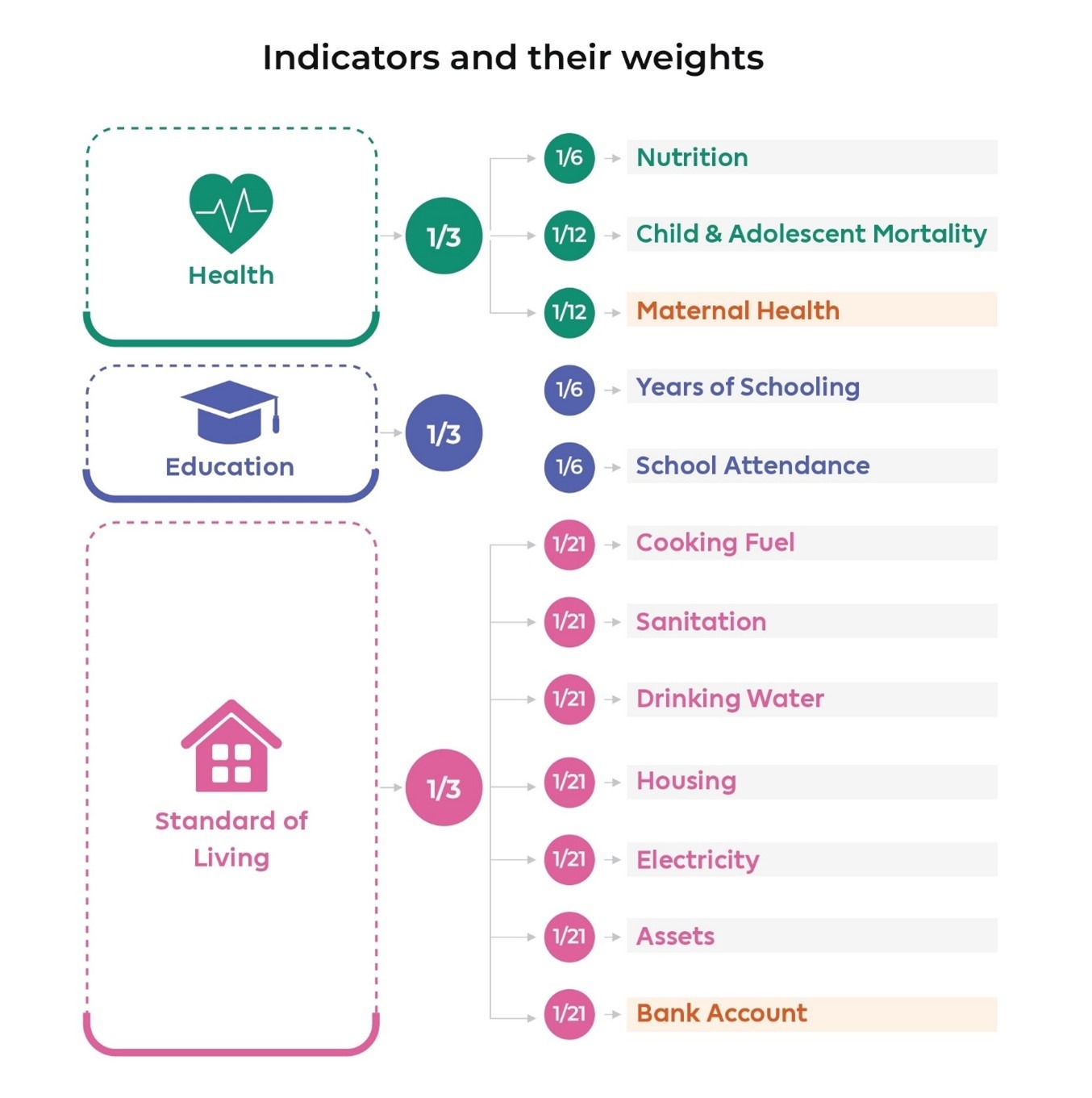
Each of these indicators reflects India’s development priorities, particularly in addressing fundamental human needs such as health, education, and living conditions.

Differences Between Income-Based and Consumption Expenditure-Based Poverty Lines

    The debate between income-based and consumption expenditure-based poverty lines revolves around the most accurate and practical method to measure poverty. The National Sample Survey Office (NSSO) has argued in favor of a consumption expenditure-based poverty line due to several reasons:

1. Income Stability vs. Consumption Stability:

Income-Based Poverty Line:

    • Income is often irregular for many households, particularly those working in the informal sector. For example, daily wage earners or self-employed individuals might have fluctuating incomes due to seasonal variations or other external factors.
    • Income fluctuations can make it challenging to assess the true economic well-being of households over time.

Consumption Expenditure-Based Poverty Line:

    • In contrast, consumption patterns tend to remain more stable than income. Even if a household’s income fluctuates, their spending on basic necessities (such as food, clothing, and shelter) often follows a more predictable pattern.
    • Consumption better reflects the actual standard of living and provides a clearer picture of a household’s well-being, as it shows how much they can afford to consume rather than just how much they earn.

2. Feasibility of Computation:

Income-Based Poverty Line:

    • Estimating a poverty line based on income can be more complex and prone to error, especially when incomes are irregular or variable.
    • Additionally, calculating income from various sources (including informal, non-cash earnings) can be difficult and inconsistent.

Consumption Expenditure-Based Poverty Line:

    • The consumption expenditure approach is generally seen as more feasible and reliable. By examining how much people are spending on goods and services, this method is less susceptible to fluctuations in income and is simpler to calculate using data from household consumption surveys.
    • The use of Uniform Reference Period (URP), Mixed Reference Period (MRP), and Modified Mixed Reference Period (MMRP) helps to adjust for various time periods, making consumption expenditure more stable and accurate for measurement purposes.

3. Advantages of Consumption-Based Approach:

    • The Rangarajan Committee (2014) and World Bank (2015) both endorsed the use of MMRP (Modified Mixed Reference Period) over traditional income-based measures and the URP/MRP methods.
    • The MMRP method, combining various recall periods for different items, offers a better picture of living standards and poverty levels.

Comparative Analysis of Poverty Measurement Methods

    • Here is a comparison of the different poverty measurement methods:


        Three poverty estimation methods used by the National Sample Survey Office (NSSO) in India: URP, MRP, and MMRP, and how they differ in terms of methodology and their impact on poverty estimates.

1. URP (Uniform Reference Period)

🔹 Definition:

    • In the Uniform Reference Period, data on all consumption items (food and non-food) are collected using a 30-day recall period.
    • This means respondents are asked to recall their consumption of every item over the past 30 days.

🔹 Impact on Poverty Estimation:

    • Yields the highest poverty estimates.
    • This is because:
        • People tend to forget or underreport infrequently purchased items (like clothes, footwear, durable goods, etc.) when asked to recall over a short 30-day period.
    • This leads to an underestimation of total consumption expenditure.
    • As a result, more households appear to fall below the poverty line.

🔹 Example:

       If a household buys shoes once in 6 months, they might not mention it in a 30-day recall, underestimating their actual spending capacity.

2. MRP (Mixed Reference Period)

🔹 Definition:

    • In the Mixed Reference Period, the NSSO collects:
        • Food items and some essentials (like fuel, clothing) using a 30-day recall.
        • Low-frequency non-food items (like clothing, footwear, durable goods, education, health) using a 365-day recall.

🔹 Impact on Poverty Estimation:

    • Provides a lower estimate of poverty than URP, but higher than MMRP.
    • Why?
        • It captures infrequent and higher-value purchases more accurately using the longer recall period.
        • Therefore, it records a higher level of consumption, making fewer people appear poor.

🔹 Example:

        If a household bought a refrigerator in the past year, it would be included in the consumption total, giving a better picture of real expenditure.

3. MMRP (Modified Mixed Reference Period)

🔹 Definition:

    • The Modified Mixed Reference Period improves further by using different recall periods for different item groups:
        • Food: 7-day recall (to reduce recall error and capture variations)
        • Frequently purchased non-food items (like fuel, light, etc.): 30-day recall
        • Infrequently purchased non-food items (like clothing, education, durables): 365-day recall

🔹 Impact on Poverty Estimation:

    • Gives the lowest poverty estimate.
    • Because it uses tailored recall periods, it captures:
        • Frequent and infrequent consumption more precisely
        • Results in the most accurate measure of total household expenditure.
        • Hence, fewer people fall below the poverty line.

🔹 Example:

       Daily milk consumption is captured better over a 7-day recall, while rare purchases like medical surgeries are not missed in a 365-day recall.

Summary Comparison Table:

Method

Recall Period

Consumption Accuracy

Poverty Estimate

URP

30 days for all items

Low (misses infrequent spending)

Highest

MRP

30 days (food), 365 days (non-food)

Medium

Moderate

MMRP

7 days (food), 30 days (frequent non-food), 365 days (rare non-food)

High (most precise)

Lowest

MEASURES USED TO ESTIMATE POVERTY

PART 1: Adjustment to Global Poverty Lines by the World Bank (2022)

What is the Global Poverty Line?

    • The Global Poverty Line is a threshold used to define “extreme poverty” on an international scale.
    • It tells us how many people in the world are living below a minimum standard of income required for basic survival.

Updated Poverty Line (September 2022)

    • The World Bank updated the poverty line to $2.15 per day based on 2017 Purchasing Power Parity (PPP).
    • Earlier, this line was $1.90/day, which was based on older PPP rates (from 2011).


PPP (Purchasing Power Parity) adjusts for price differences across countries. It ensures $2.15 has the same real purchasing power in every country.

Why the Update?

    • Inflation and changes in cost of living across the world meant the $1.90 line was outdated.
    • The $2.15 line better reflects the current costs of basic needs in many countries.

Global Impact

    • According to the World Bank, 648 million people were living on less than $2.15/day in 2019.
    • These people are considered to be in extreme poverty, meaning they are unable to meet basic food, housing, and essential needs.

PART 2: Multidimensional Poverty Measures (MPM)

Why Not Just Income?

Monetary income doesn’t tell the whole story. For example:

    • A family might earn enough to be above the poverty line but still lack clean drinking water or basic education access.
    • So, poverty must be seen as a multi-faceted issue, not just about income.

What is Multidimensional Poverty?

Multidimensional Poverty includes non-monetary indicators such as:

    • Education
    • Health and nutrition
    • Sanitation
    • Clean drinking water
    • Electricity
    • Adequate housing


This approach looks at what people don’t have, not just how much they earn.

The World Bank’s MPM

    • The Multidimensional Poverty Measure (MPM) introduced by the World Bank combines both income and non-income factors.
    • It aligns with the Sustainable Development Goals (SDG 1: No Poverty), which aim to end poverty in all its forms.


MPM gives a more realistic, accurate, and holistic picture of who is poor and why—helping governments and international organizations design targeted policies.

Summary Table

Approach

Type

Focus

Used by

Purpose

Poverty Line ($2.15/day)

Monetary

Daily income

World Bank

Measures extreme poverty

Multidimensional Poverty (MPM)

Non-monetary + Monetary

Access to basic needs

UNDP, World Bank

Measures true deprivation, even above poverty line

POVERTY ESTIMATION IN INDIA

Estimates of Poverty – Before Independence

Dadabhai Naoroji’s Estimate (1867–68)

Work:

    • Title: Poverty and the Un-British Rule in India
    • This was one of the first attempts to assess the extent of poverty in India under British rule.

Methodology:

    • Naoroji estimated a subsistence level of income, which he considered the bare minimum required to meet basic human needs like:
    • Food
    • Clothing
    • Shelter

Income Range:

    • He suggested that ₹16 to ₹35 per capita per year (at 1867–68 prices) was needed for a person to survive.

Key Features:

    • He did not use the term ‘poverty line’, which became common later.
    • Instead, he called it a ‘subsistence-based poverty line’, focusing on survival needs.
    • His estimate considered the cost of a minimum diet, and added basic needs expenses.

Importance:

    • He linked poverty in India to colonial exploitation, especially in terms of draining Indian wealth.
    • It laid the foundation for later economic critiques of British policies.

National Planning Committee (1938) – Chaired by Jawaharlal Nehru

Context:

    • This was the first major Indian effort to plan economic development before independence.
    • It was initiated by the Indian National Congress.

Estimate:

    • The committee proposed an irreducible minimum income of ₹15 to ₹25 per capita per month (at pre-World War II prices).
    • This income was seen as essential for:
        • A minimum standard of living
        • Ensuring basic health and nutrition

 Important Notes:

    • Although not officially declared a poverty line, it served as a benchmark for welfare planning.
    • The focus was on creating an economy that could ensure this minimum level for every individual.

Summary Table

Estimator

Year

Estimated Poverty Line

Focus

Dadabhai Naoroji

1867–68

₹16–₹35 per capita per year (1867–68 prices)

Subsistence needs (Survival level)

Nehru-led Committee

1938

₹15–₹25 per capita per month (pre-war prices)

Irreducible minimum income


These early estimates reflect the evolving understanding of poverty in India, moving from basic survival towards a more inclusive concept of human well-being.

Post-Independence Poverty Estimates (Pre-official Committees)

B.S. Minhas (1956-57)

    • One of the earliest economists to estimate poverty in India using National Sample Survey (NSS) data.
    • Estimated poverty at 65% of the population.
    • Method: Used consumption expenditure data and a defined minimum requirement, though not yet linked to calorie norms explicitly.

M.S. Ahluwalia (1960-61)

    • Estimated poverty at 39%.
    • Focused on economic growth and inequality trends.
    • Approach was more analytical, trying to link poverty to planning and policy outcomes.

P.D. Ojha (1960-61)

    • Estimated poverty at 44%.
    • Also used NSS data.
    • His methodology was closer to calorie-norm-based consumption, making his work somewhat of a bridge between Minhas and later calorie-based estimations.

P.K. Bardhan (1968-69)

    • Estimated poverty at 54%.
    • Took a more academic route to defining minimum consumption standards.
    • Highlighted the regional variations in poverty and inequality.


Study

Year

Head Count Ratio (HCR) – Estimated Poverty (%)

B.S. Minhas

1956–57

65%

M.S. Ahluwalia

1960–61

39%

P.D. Ojha

1960–61

44%

P.K. Bardhan

1968–69

54%


Key Committees on Poverty Estimation

Dandekar-Rath Committee (1971)

    • Based on: 1960–61 data
    • Caloric Norm:
        • Minimum nutritional requirement = 2,250 calories/day per person
    • Monetary Poverty Line:
        • Cost of purchasing 2,250 calories was calculated, and anyone spending less was considered poor.

Estimates:

    • Rural poverty: ~40%
    • Urban poverty: ~50%

Contribution:

    • This was the first effort to systematically link nutritional needs with income.
    • Marked a shift from subjective estimates to calorie-based poverty lines, influencing later policy debates.

Y.K. Alagh Task Force (1977)

    • Set up by the Planning Commission
    • First official attempt to define poverty line norms for India.

Method:

    • Rural areas: Minimum 2,400 calories/day
    • Urban areas: Minimum 2,100 calories/day
        • Urban workers were assumed to perform less physically intense work than rural laborers.

Basis:

    • Determined the cost of consumption expenditure required to meet these calorie norms (using NSS data).

Limitations:

    • Only food-based; did not consider health, education, sanitation, housing, etc.
    • Assumed the state would provide non-food needs (like healthcare, education, housing), which didn’t always happen.

Importance:

    • Became the foundation of poverty estimation in India till the early 1990s.
    • Official poverty lines were state-specific, adjusted for price variations.

Summary Table:

Committee/Study

Year

Methodology Focus

Estimated Poverty

B.S. Minhas

1956–57

Consumption expenditure

65%

M.S. Ahluwalia

1960–61

Income & consumption trends

39%

P.D. Ojha

1960–61

NSS data-based consumption estimates

44%

P.K. Bardhan

1968–69

Consumption norms + price adjustments

54%

Dandekar-Rath

1971

2,250 calorie-based consumption line

Rural: 40%, Urban: 50%

Y.K. Alagh Task Force

1977

Calorie-based (2,400 rural; 2,100 urban)

Official estimates thereafter

D.T. Lakdawala Committee

    • Constituted:1989 | Report Submitted: 1993 Data Used: 1973–74 NSS data

Methodology:

    • Poverty was measured using per capita consumption expenditure based on calorie intake norms:
        • 2,400 calories/day for rural
        • 2,100 calories/day for urban
    • Used Uniform Recall Period (URP): data collected based on 30-day recall for all consumption items.
    • State-specific poverty lines were recommended.
    • Price indices used for updating poverty lines:
        • Consumer Price Index for Agricultural Labourers (CPI-AL) in rural areas
        • Consumer Price Index for Industrial Workers (CPI-IW) in urban areas

Estimated Poverty Rate (HCR):

    • 54.9% (All India)

Suresh Tendulkar Committee

    • Constituted:2005|Report Submitted: 2009 Data Used: 2004–05 NSS data

Methodology:

    • Shifted away from calorie norms. Recognized the importance of health and education expenditure.
    • Used Mixed Recall Period (MRP):
        • 30-day recall for most items, but 365-day recall for infrequent items like clothing, education, and health.
    • Introduced the concept of a Uniform Urban Poverty Line Basket (PLB) for both rural and urban areas (to better reflect non-food expenses like education and health).
    • Focused on private expenditure on health and education to calculate poverty.
    • Used Monthly Per Capita Expenditure (MPCE).

Estimated Poverty Rate (HCR):

    • 37.2% (All India) for 2004-05
    • Later used to estimate:
        • 29.8% (2009–10)
        • 21.9% (2011–12)
        • Poverty reduction: 7.9%

Rangarajan Committee

    • Constituted:2012| Report Submitted: 2014 Data Used: 2011–12 NSS data

Methodology:

    • Used Modified Mixed Recall Period (MMRP):
        • 365-day recall for some items (education, clothing)
        • 7-day recall for high-frequency items (perishables)
        • 30-day recall for remaining items
    • Considered calorie, protein, and fat intake, not just calories.
    • Used Monthly Expenditure of a Family of Five (instead of MPCE).
    • Maintained separate poverty line baskets for rural and urban areas.
    • Poverty line calculation was based on minimum acceptable consumption of both food and non-food items.

Estimated Poverty Rate (HCR):

    • 29.5% (All India) for 2011-12
    • For 2009-10: 38.2%
    • Poverty reduction: 8.7%

Comparative Table (Key Features)

Feature

Tendulkar Committee

Rangarajan Committee

Report Submitted

2009

2014

Data Used

2004–05

2011–12

Metric Used

MPCE (Monthly Per Capita Expenditure)

Family-level monthly expenditure

Method Used

MRP

MMRP

Nutrition Focus

Calories only

Calories, protein, and fat

Poverty Basket

Uniform urban basket (for all)

Separate urban and rural baskets

Poverty Rate (2004–05)

37.2%

29.5%

Poverty in 2011–12

21.9%

29.5%

Reduction (2009–10 to 2011–12)

7.9%

8.7%

Key Differences:

    • Tendulkar Committee liberalized the method by including health and education and shifted from calorie norms.
    • Rangarajan Committee was more conservative, set a higher poverty line, and thus showed higher poverty rates.
    • Rangarajan’s inclusion of protein and fat intake made the poverty line nutritionally richer, but also economically tougher to cross.

Tendulkar Method

Threshold Definition:

    • The Tendulkar Committee, set up by the Planning Commission in 2009, determined poverty lines based on consumption expenditure.
    • The thresholds were defined as Rs. 27 per day for individuals in rural areas and Rs. 33 per day for those in urban areas.

Poverty Line Implication:

    • Under this criterion, approximately 21.9% of the Indian population was categorized as Below Poverty Line (BPL) in the year 2011-12.

Criticism:

    • The Tendulkar method faced significant criticism for its perceived inadequacy; many argued that the thresholds were too low to address the basic needs of individuals.
    • This led to public outcry and calls for a revised approach that can better reflect the realities of poverty.

Rangarajan Method

Formation:

    • In response to the criticism faced by the Tendulkar method, the government established the Rangarajan Committee, chaired by C. Rangarajan, to reassess the poverty estimation methodology.

Revised Thresholds:

    • The Rangarajan Committee revised the poverty thresholds to Rs. 32 per day for rural individuals and Rs. 47 per day for urban individuals.

New Poverty Line:

    • This recalibration resulted in a revised estimate of 29.5% of the population being classified as BPL in 2011-12, reflecting a more realistic understanding of the living conditions of impoverished individuals.


Socio-Economic Caste Census (SECC) 2011

    • The SECC 2011 was a comprehensive effort conducted by the Government of India to collect detailed socio-economic data on households across both rural and urban areas.
    • The initiative was technically and financially supported by the central government and aimed to create a robust database for policy formulation and implementation.

Data Collection

The SECC gathered extensive information, which included:

    • Individual particulars (such as age, gender, and education)
    • Housing conditions
    • Employment status
    • Income levels
    • Assets and amenities available to households
    • Land ownership

Classification of Households

The SECC classified households into three categories, facilitating a nuanced approach to targeting poverty alleviation:

1.Automatically Excluded:

    • Households that met specific exclusion criteria, such as ownership of certain assets (like vehicles, phones, or land) that indicate a higher socio-economic status, were automatically excluded from welfare programs.

2. Automatically Included:

    • Households that satisfied any one of five acute social destitution parameters (e.g., homelessness, lack of employment) were automatically included for welfare benefits. This ensured that the most vulnerable populations received aid.

3. Others:

    • The remaining households were ranked based on seven indicators of deprivation (like the quality of housing, education, and health access). Depending on available budgetary resources, these households could also qualify for welfare benefits.

Utilization of SECC Data in Government Programs

SECC data has essentially transformed how poverty is understood and addressed in India:

    • It emphasizes the multi-dimensionality of poverty, recognizing that deprivation can extend beyond mere economic factors (like income).
    • This approach effectively tracks household standards and helps tailor interventions according to specific needs.

Implementation in Government Schemes

SECC data has been incorporated into various key welfare schemes, including:

    • Pradhan Mantri Awas Yojana Gramin: A housing scheme aimed at providing affordable housing to the rural poor.
    • Deendayal Antyodaya Yojana-National Rural Livelihood Mission: A program designed to enhance livelihood opportunities in rural areas through self-employment and wage employment.
    • Pradhan Mantri Jan Arogya Yojana (Ayushman Bharat): A health insurance scheme that aims to provide financial protection for poor and vulnerable families against health expenses.
    • Pradhan Mantri Sahaj Bijli Har Ghar Yojana: Aimed at ensuring electricity supply to all homes, enhancing the standard of living.
    • Pradhan Mantri Ujjwala Yojana: A program that provides liquefied petroleum gas (LPG) connections to women from impoverished households, promoting clean cooking energy.

Government’s Holistic Poverty Alleviation Strategy

Stimulating Economic Growth:

    • The government’s strategy emphasizes fostering economic growth to create job opportunities and increase living standards. This is rooted in the belief that when the economy grows, the benefits will “trickle down” to various segments of society, particularly the poorer classes.
    • Through targeted economic policies, subsidies, and investment in key industries, the government aims to ensure that economic advancements positively impact the impoverished population.

Key Initiatives:

The strategy includes a multifaceted approach to poverty alleviation which encompasses several initiatives, notably:

    • Mahatma Gandhi National Rural Employment Guarantee Act (MGNREGA): A significant program aimed at providing at least 100 days of guaranteed wage employment in a year to every rural household, ensuring income security and livelihood support.
    • Public Distribution System (PDS): This initiative aims to provide food security by distributing subsidized food grains and essential commodities to low-income families, helping alleviate hunger and malnutrition.
    • Integrated Child Development Services (ICDS): Aimed at improving the nutritional and health status of children under six years of age and promoting early childhood education, this program plays a crucial role in breaking the cycle of poverty through child welfare.
    • Awas Yojana (Housing Scheme): This program focuses on providing affordable housing to the urban and rural poor, ensuring that every citizen has access to a roof over their head.
    • Deendayal Antyodaya Yojana-National Rural Livelihood Mission (DAY NRLM): This initiative is designed to reduce poverty by promoting self-employment and providing skills training to rural households.

Universal Access:

    • A key component of the poverty alleviation strategy is ensuring that all citizens have access to essential amenities such as clean drinking water, sanitation, health services, education, and electricity.
    • By providing these basic needs, the government enhances the overall quality of life, reduces health-related poverty, and allows individuals to focus on education and economic opportunities.

Dramatic Decline in Multidimensional Poverty

The government’s efforts have resulted in a significant reduction in multidimensional poverty:

    • Escaping Multidimensional Poverty: Reports indicate that between 2015-16 and 2019-21, approximately 135 million people were lifted out of multidimensional poverty. This is a considerable achievement indicating the effectiveness of the government’s strategies.
    • Overall Poverty Rate Decline: The overall poverty rate decreased from 24.85% to 14.96%, representing a remarkable reduction of nearly 9.89%.
    • Rural vs. Urban Progress:
        • Rural Areas: The rural poverty rate saw the most considerable decline, from 32.59% to 19.28%. This reflects the impact of targeted employment and welfare programs that cater specifically to rural populations.
        • Urban Areas: Urban poverty also decreased significantly, from 8.65% to 5.27%, demonstrating improvements in access to jobs, amenities, and social welfare schemes in urban centers.

Holistic Approach: Measuring Deprivation Across Key Indicators

Definition:

      The MPI is a comprehensive tool designed to assess poverty beyond income, focusing on various dimensions that affect the well-being of individuals and households.

Key Dimensions:

The MPI evaluates deprivation across three primary areas—health, education, and standard of living—utilizing 12 specific indicators that include:

    • Nutrition: Assessing the dietary intake and malnutrition levels among households.
    • Sanitation: Evaluating access to clean sanitation facilities to prevent disease and promote hygiene.
    • Education: Considering the educational attainment and access to schooling for children.
    • Housing: Analyzing the quality and safety of housing conditions.


Comprehensive Improvement

    • The marked improvement across all 12 indicators demonstrates a well-rounded approach to combating poverty, acknowledging that poverty is multi-dimensional and cannot be addressed solely through income growth.

Focus Areas and Key Programs

Health Initiatives

    • Poshan Abhiyan: A national mission aimed at improving nutrition outcomes, particularly for mothers and children. It focuses on reducing malnutrition and promoting healthy diets.
    • Anaemia Mukt Bharat: A program targeting the elimination of anemia among vulnerable populations, particularly women and children, which is essential for improving health outcomes and productivity.

Sanitation and Hygiene

    • Swachh Bharat Mission: Launched to promote cleanliness and sanitation across the country, this initiative has made considerable strides in ensuring access to toilets and sanitation facilities.
    • Jal Jeevan Mission: Aiming to provide safe and adequate drinking water through individual household tap connections, improving health and hygiene.

Financial Inclusion

    • Pradhan Mantri Jan Dhan Yojana: This scheme facilitates the opening of bank accounts for unbanked individuals, promoting savings, access to credit, and financial literacy, which are vital for economic empowerment.

Other Key Programs

    • Saubhagya Yojana: Provides LPG connections to households, promoting clean cooking fuel to improve health and reduce indoor air pollution.
    • Pradhan Mantri Awas Yojana (PMAY): Focuses on providing affordable housing to urban and rural poor, improving living conditions and providing a sense of security.
    • Samagra Shiksha: An integrated program aimed at improving the quality of education and ensuring inclusive education for all children.

Low Deprivation Rates Reflect Progress

    • The noted decrease in deprivation rates concerning key indicators such as access to electricity, the number of bank accounts, and reliable drinking water signifies the positive impact of these government initiatives.
    • These achievements highlight the government’s commitment to enhancing the standard of living and addressing the fundamental needs of its population.

Moving Forward: Building on the Momentum

    • Significant Progress: The progress achieved in reducing multidimensional poverty through a multi-faceted approach indicates the effectiveness of government programs and strategies targeting various aspects of deprivation.
    • Sustained Efforts Needed: Ongoing investment and continuous efforts are essential to build upon this momentum. There is a need for sustained focus on reducing deprivation further and ensuring inclusive development that reaches all parts of society.

Amartya Sen’s capability approach

    Amartya Sen’s capability approach provides a nuanced framework for understanding poverty and development, emphasizing human well-being and the importance of personal agency. Here’s a detailed explanation of the key elements of this approach:

1. Overview of the Capability Approach

Centered on People

    • The capability approach puts individuals at the heart of development and poverty reduction efforts. It seeks to improve their overall well-being by enhancing their capabilities—the range of things they can do and be in life.
    • Unlike traditional welfare programs that often focus on income support or material resources, this approach emphasizes empowering individuals to make choices that matter to them, tailored to their specific needs and aspirations.

2. Key Principles of the Capability Approach

Primary Moral Importance of Freedom

    • Emphasis on Freedom: The capability approach posits that the ability to lead a fulfilling life relies heavily on individual freedom. This freedom is crucial not just as a means to achieve well-being but as an end in itself.
    • Moral Value of Agency: The approach asserts that individuals should have the opportunity to pursue their own goals and values. Thus, true development must include enhancement of personal freedoms that allow people to achieve their desired outcomes in life.


Understanding Well-being

Capabilities and Functionings:

    • Capabilities refer to the various combinations of functionings (what individuals do or can do) that a person can achieve. It encompasses the potential for individuals to lead lives they have reason to value.
    • Functionings are the actual achievements or states that reflect a person’s quality of life—such as being healthy, being educated, and participating in social and political life.
    • This perspective broadens the understanding of well-being, going beyond material wealth to include diverse aspects such as health, education, freedom, and social relations.

3. Development as an Enabling Process

    • From Sen’s perspective, development should be viewed as a process that creates opportunities and conditions for individuals to achieve valuable functionings.
    • This means fostering an enabling environment that supports individuals in realizing their capabilities, which can be influenced by social, political, and economic factors.

4. Critiques of the Capability Approach

While the capability approach has been influential, it is not without its criticisms:

Individualism

    • Critics argue that the approach may overly emphasize individual agency and freedom, potentially neglecting social structures and systemic inequalities that limit opportunities for certain groups.
    • This individualistic focus can risk downplaying the importance of collective action and social solidarity in addressing poverty.


Under-Theorization

    • Some suggest that the capability approach lacks a comprehensive theoretical foundation. Critics feel it does not always provide clear guidance on how to measure capabilities or translate them into concrete policies.


Information Gaps

    • The capability approach requires extensive information about individuals’ capabilities and functionings to effectively tailor development programs. Critics point out that this data may not always be available or easy to obtain, leading to challenges in implementation.

Sen Index of Poverty

      The Sen Index of Poverty, developed by Nobel Laureate Amartya Sen in 1976, presents a comprehensive method for measuring poverty that accounts for its extent, severity, and inequality within a population. This approach combines multiple dimensions of poverty into a single index, making it an effective tool for policymakers and researchers. Here’s a detailed breakdown of the components and the mathematical formulation of the Sen Index:

1. Components of the Sen Index of Poverty

Head Count Ratio (H)

    • Definition: The Head Count Ratio measures the proportion of the population that lives below the poverty line. It indicates how widespread poverty is within a country or community.
    • Interpretation: If the head count ratio is high, it suggests a large portion of the population is affected by poverty. For example, if 30% of a population is living below the poverty line, the head count ratio (H) would be 0.30.

Poverty Gap Index (I)

    • Definition: The Poverty Gap Index measures the intensity of poverty among those who are classified as poor. It quantifies the average shortfall of the income (or consumption) of the poor from the poverty line, expressed as a proportion of the poverty line itself.
    • Interpretation: A higher poverty gap indicates that not only is a significant proportion of the population below the poverty line, but those who are poor are also farther from reaching it. If the poverty gap index is 0.10, it means that, on average, the poor are 10% below the poverty line.

Gini Coefficient (G)

    • Definition: The Gini Coefficient is a measure of income inequality within a population. It ranges from 0 to 1, where 0 indicates perfect equality (everyone has the same income), and 1 indicates maximum inequality (one person has all the income, while others have none).
    • Interpretation: A low Gini coefficient suggests a more equitable distribution of income, while a high Gini coefficient signifies significant income inequality.

2. Mathematical Formulation of the Sen Index

The Sen Index of Poverty (S) is mathematically represented as follows:

S = H * [I + (1 – I) * G]


Breakdown of the Formula

    • S: Represents the Sen Index of Poverty.
    • H: The Head Count Ratio (the fraction of the population below the poverty line).
    • I: The Poverty Gap Index (the average income shortfall of the poor relative to the poverty line).
    • G: The Gini Coefficient (a measure of income inequality).

The formula integrate₹s these components as follows:

    • The term (I + (1 – I) \times G) combines the poverty gap and inequality into a scalar value that reflects both poverty severity and distribution.
    • Multiplying this term by the head count ratio (H) scales the resulting value to reflect the overall poverty status of the population.

3. Interpretation of the Sen Index

    • The Sen Index provides a single value that combines the incidence, depth, and inequality of poverty, allowing for a nuanced understanding of poverty within a society. A higher value of S indicates greater severity and inequality of poverty.
    • This index is particularly useful for comparing poverty across different countries or regions and assessing the effectiveness of poverty alleviation policies.

Randomized Controlled Trials (RCTs) in Poverty Alleviation Research

      Nobel Laureates Abhijit Banerjee, Esther Duflo, and Michael Kremer to the field of poverty alleviation through the use of Randomized Controlled Trials (RCTs) and introduces the Bare Necessities Index as a measure of access to essential services. Below is a detailed explanation of these concepts.

1. Definition and Purpose

    • Randomized Controlled Trial (RCT): An RCT is a method of experimental design primarily used to evaluate the effectiveness of an intervention by randomly assigning participants to either a group that receives the intervention (treatment group) or a group that does not (control group). This design helps isolate the effect of the intervention by controlling for other variables.
    • Application in Poverty Alleviation: RCTs are employed to assess various policy interventions aimed at alleviating poverty, providing empirical evidence on what works effectively. The findings help policymakers make informed decisions based on rigorous data rather than assumptions.

Example of RCT Application

    • A researcher interested in understanding whether increasing teacher employment improves children’s learning outcomes can design an RCT. By randomly assigning certain schools to receive additional teachers while keeping others unchanged, the researcher can compare the learning outcomes between the two groups. This method ensures that any observed differences in outcomes can be attributed to the intervention (in this case, increased teacher employment).

2. Contributions of Nobel Laureates

    • The work of Abhijit Banerjee, Esther Duflo, and Michael Kremer has popularized the use of RCTs in the field of development economics and particularly in poverty alleviation. Their research highlights the importance of evidence-based policies, leading to better-targeted interventions that can effectively address the needs of the impoverished.

3. Bare Necessities Index

Concept Overview

    • The Bare Necessities Index was introduced in the Economic Survey 2020-21 to highlight the fundamental requirements necessary for a decent standard of living, emphasizing the significance of universal access to essential services. The index is aimed at identifying shortcomings in basic necessities that are critical for improved well-being.


Core Components

The index tracks access to important resources that contribute directly to quality of life. These essentials typically include:

    • Housing: Safe and adequate shelter.
    • Water: Access to clean drinking water.
    • Sanitation: Improved sanitation facilities (like toilets).
    • Electricity: Reliable and affordable access to electricity.
    • Clean Cooking Fuel: Use of cleaner fuels for cooking to promote health and reduce smoke exposure.


Calculation of the Index

The Bare Necessities Index is measured using 26 indicators grouped into five dimensions:

    1. Water: Availability, quality, and safety of drinking water.
    2. Sanitation: Access to and quality of sanitation facilities.
    3. Housing: Conditions and safety features of living spaces.
    4. Micro-Environment: Factors affecting health and safety within the home (e.g., ventilation and cleanliness).
    5. Other Facilities: Additional basic services and amenities that contribute to well-being.

4. Significance of the Bare Necessities Index

    • This index serves as a critical tool for policymakers to identify areas needing improvement and assess progress toward achieving universal access to basic necessities. By focusing on these indicators, it helps in formulating targeted interventions to enhance living conditions and reduce poverty.

Universal Basic Income

     Universal Basic Income (UBI) is a transformative idea that proposes providing all citizens with a regular, unconditional cash payment, regardless of their financial situation. The concept gained considerable attention following its discussion in the Economic Survey of 2016-17 in India, which highlighted its potential as a welfare solution. Below is a detailed exploration of the implications, benefits, challenges, and the broader context of UBI.

1. Understanding Universal Basic Income (UBI)

Definition and Concept

    • Universal Basic Income: UBI refers to a system in which every citizen receives a fixed sum of money from the government on a regular basis (typically monthly), without any conditions attached. This means that individuals do not need to prove their income level, demonstrate their need, or fulfill specific obligations to receive the payment.

Objectives of UBI

The main objectives of implementing UBI include:

    • Poverty Alleviation: Ensuring a basic financial safety net that can help lift individuals above the poverty line.
    • Economic Security: Providing individuals with a stable income stream can enhance financial security and empower them to make better life choices.
    • Encouraging Entrepreneurship: With a guaranteed income, individuals might feel more secure in pursuing entrepreneurial endeavors or education, as the financial risk is mitigated.

2. Benefits of UBI

Economic Benefits

    • Stimulating Local Economies: Cash payments can boost consumer spending, especially in low-income communities, leading to increased demand for goods and services.
    • Reducing Bureaucratic Overhead: UBI could streamline welfare programs by replacing complex systems of targeted aid with a straightforward cash payment, reducing administrative costs.

Social Benefits

    • Empowerment and Dignity: By providing unconditional support, UBI promotes dignity and respect for all individuals, acknowledging their right to a basic standard of living.
    • Improved Health and Well-being: Financial stability can lead to better health outcomes, as individuals may have increased access to healthcare, nutritious food, and a more balanced life.

3. Challenges and Concerns

Financial Viability

    • Critics question the feasibility of financing UBI on a large scale. Concerns revolve around sourcing the needed funds, with discussions often focusing on potential tax increases, reallocations from existing welfare programs, or changes in public spending.

Potential Disincentives

    • There are concerns that providing a guaranteed income might reduce the incentive for individuals to seek employment or engage in productive activities, potentially impacting workforce participation.

Inflation Risks

    • Critics argue that injecting a large volume of cash into the economy could lead to inflation, eroding the purchasing power of the income provided and offsetting the benefits of the cash payments.

4. UBI in Global Context

Global Interest

    • The concept of UBI has garnered interest worldwide, with various pilot programs and experiments conducted in different countries. For example, Finland conducted a small-scale UBI trial, while some local experiments have taken place in the United States, Canada, and Kenya.
    • The COVID-19 pandemic further propelled discussions around UBI, as many governments implemented direct cash payments to individuals as a response to economic disruptions caused by lockdowns and job losses.

INEQUALITY

    Inequality encompasses any lack of balance or disparity among individuals or groups across various dimensions in society. It can be structured into several categories beyond just economic or social dimensions:

    1. Economic Inequality: Beyond income and wealth, this can include disparities in access to jobs, capital, and other economic resources.
    2. Social Inequality: Captures differences in social status and access to services such as education, healthcare, and housing, often influenced by gender, race, ethnicity, or religion.
    3. Political Inequality: Involves disparities in political power and influence, often reflected in unequal representation or participation in political processes and decision-making.
    4. Environmental Inequality: Refers to the disproportionate exposure of certain groups to environmental hazards, such as pollution or natural disasters, often linked to socio-economic status.
    5. Health Inequality: Differences in health outcomes and access to healthcare services, which can be affected by geography, socio-economic status, and other demographic factors.
    6. Cultural Inequality: Differences in the representation and valuation of cultural identities and practices. This can affect how certain cultural groups are perceived and treated in broader society.
    7. Educational Inequality: Disparities in access to quality education and learning resources, often reflecting broader socio-economic divides.


Inequality is a complex issue that often intersects with various social, political, and economic factors. It requires multifaceted approaches to address, including policy changes, social reforms, and concerted efforts from governments, organizations, and individuals to foster equity and inclusion across all levels of society.

Methods to Assess Income Inequality

       Assessing income inequality is crucial for understanding how wealth is distributed within a nation. Two primary methods for evaluating income inequality include the Gini Coefficient and the Lorenz Curve, both of which are widely used in economic analysis.

Gini Coefficient

Origin and Purpose

    • Developed by: The Gini Coefficient was developed by Corrado Gini, an Italian statistician, in 1912.
    • Purpose: It was designed to measure the extent of income inequality within a population.

Calculation

1. Lorenz Curve:

    • The Lorenz Curve is a graphical representation of income distribution. It plots the cumulative percentage of total income earned by the bottom x% of the population.
    • The x-axis represents the cumulative percentage of the population, while the y-axis shows the cumulative percentage of income.


2. Calculation Process:

    • Perfect Equality Line: The line of perfect equality is a 45-degree line that represents a scenario where each percentage of the population earns exactly that percentage of the total income.
    • Area Measurement: The Gini Coefficient is calculated by finding the area between the line of perfect equality and the Lorenz Curve. Specifically, it is the ratio of this area (A) to the total area under the line of perfect equality (A + B).

Interpretation

Range:

    • 0 (Perfect Equality): All members of the society earn the same amount of income.
    • 1 (Perfect Inequality): All income is concentrated in the hands of a single individual.


Practical Interpretation:

    • A lower Gini Coefficient indicates more equal income distribution.
    • A higher Gini Coefficient suggests greater income inequality, signifying a wider gap between the wealthiest and the poorest in the population.

Economic and Social Implications

Economic Impact:

    • Consumer Spending: High inequality can limit overall consumer spending since wealth is concentrated in the hands of fewer individuals.
    • Economic Growth: Persistent inequality might stifle economic growth by restricting access to education and economic opportunities for a large portion of the society.


Social Consequences:

    • Social Tension: High levels of inequality can lead to dissatisfaction and unrest.
    • Mobility: It can reduce social mobility, making it harder for individuals from lower-income groups to improve their economic status.


Global Perspective

    • Different countries have varied Gini Coefficients, influenced by their economic policies, social systems, and cultural factors.
    • Policymakers use the Gini Coefficient to assess and compare income inequality across regions and implement policies to address disparities.


Understanding the Gini Coefficient and its implications helps in formulating strategies to promote equitable economic development and social welfare.

Lorenz Curve Overview

      The Lorenz Curve is a critical graphical tool used to illustrate income or wealth distribution within a population. It helps visualize the degree of income inequality and serves as a foundational concept that complements the Gini Coefficient. Below is a detailed explanation of the Lorenz Curve’s characteristics, interpretation, and significance.

Characteristics of the Lorenz Curve

1. Axes:

    • X-axis (Cumulative Population Share): Represents the cumulative percentage of individuals or households, ranked from the poorest to the richest. It ranges from 0% to 100%.
    • Y-axis (Cumulative Income Share): Represents the cumulative percentage of total income earned by the corresponding cumulative percentage of the population. It also ranges from 0% to 100%.


2. Graphical Representation:

    • The Lorenz Curve plots the relationship between the proportion of income earned and the proportion of people earning that income.
    • 45-degree line, known as the line of perfect equality, represents a hypothetical situation where income is equally distributed among all individuals (e.g., if 20% of the population earns 20% of the income).
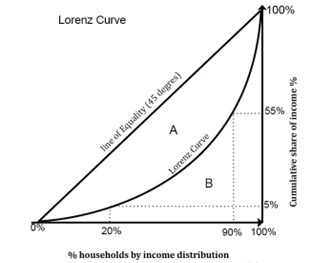
 

Lorenz Curve Explained

Perfect Equality:

    • The straight 45-degree line signifies perfect equality, where every segment of the population earns an equal share of total income.


Actual Income Distribution:

    • The Lorenz Curve, which lies below the line of perfect equality, indicates the actual distribution of income in the population.
    • The more pronounced the curve (the further it bows from the line of perfect equality), the greater the income inequality in that society.


Interpretation of the Curves:

    • The area between the Lorenz Curve and the line of perfect equality indicates the level of inequality; the larger this area, the higher the income inequality.
    • Conversely, if the Lorenz Curve closely approaches the line of perfect equality, it indicates a more equitable distribution of income.

Area Under the Lorenz Curve

Shaded Area ‘A’:

    • The area ‘A’ represents the space between the Lorenz Curve and the line of perfect equality.
    • The Gini Coefficient can be derived from this area:
[ {Gini Coefficient} = {A}{A + B}]

Where:

    • A is the area between the Lorenz Curve and the line of perfect equality, which quantifies the degree of inequality.
    • B is the area under the Lorenz Curve.

Perfect Equality and Gini Coefficient

Perfect Equality Condition:

    • If the area A = 0, the Lorenz Curve coincides with the line of perfect equality. This indicates a scenario of perfect equality, where everyone has the same income.
    • In such cases, the Gini Coefficient would equal 0.

Significance of the Lorenz Curve

1. Policy Tool:

    • The Lorenz Curve is used by economists and policymakers to assess the impact of economic policies on income distribution and to identify areas for intervention.


2. Visual Comparison:

    • It allows for easy visual comparisons of income inequality across different populations or countries, aiding in understanding social and economic disparities.


3. Educational Value:

    • The visual nature of the Lorenz Curve makes it an effective teaching tool for explaining income distribution concepts in economics and social sciences.


In summary, the Lorenz Curve effectively illustrates the extent of income inequality within a society and provides a visual basis for understanding how income is distributed among its members. Its relationship with the Gini Coefficient allows for quantitative analysis of inequality and its implications for social and economic policies

PRESENT STATUS OF INCOME INEQUALITY IN INDIA

     The State of Inequality in India Report, released on May 18, 2022, by Dr. Bibek Debroy, Chairman of the Economic Advisory Council to the Prime Minister (EAC-PM), provides an extensive overview of income inequality in India. This report, crafted by the Institute for Competitiveness, is divided into two main sections: Economic Facets and Socio-Economic Manifestations. It outlines various factors that contribute to the current state of income inequality in India.

Key Areas Analyzed in the Report

1. Income Distribution:

    • The report introduces a focus on income distribution to analyze capital flow, noting that traditional measures of wealth concentration do not adequately reflect changes in household purchasing capacity.
    • Extrapolated data from the Periodic Labour Force Survey 2019-20 indicates that a monthly salary of ₹25,000 places individuals in the top 10% of earners, highlighting significant income disparity in the nation.

2. Labour Market Dynamics:

    • Employment categorization reveals that the majority of workers are self-employed (45.78%), followed by regular salaried (33.5%) and casual workers (20.71%).
    • Self-employment is prevalent among lower income categories, which can be indicative of limited opportunities for upward mobility.
    • The unemployment rate stood at 4.8% in 2019-20, with a worker population ratio of 46.8%, reflecting challenges in job availability and workforce participation.

3. Health:

    • Maternal and Child Health: Findings from the National Family Health Survey (NFHS) indicate marked improvements in maternal health. Antenatal check-ups during the first trimester rose from 58.6% in NFHS-4 (2015-16) to 70% in NFHS-5 (2019-21). Additionally, a high percentage of women received postnatal care shortly after delivery.
    • Nutritional Concerns: Despite improvements, challenges remain in nutritional health, particularly in terms of underweight and anaemia prevalence among children, adolescent girls, and pregnant women. This area needs urgent attention to improve overall health outcomes.

4. Education and Household Characteristics:

    • The report acknowledges significant strides in education and household living conditions, aided by various social protection schemes targeting improvements in water and sanitation access.
    • The Gross Enrolment Ratio (GER) has risen across all educational levels from primary to higher secondary between 2018-19 and 2019-20.
    • By the NFHS-5 (2019-21), 97% of households had access to electricity, 70% benefited from improved sanitation, and 96% had access to safe drinking water, demonstrating substantial enhancements in living standards.

Implications of the Report

      The report emphasizes that the narrative of inequality in India extends beyond mere income disparities. It intricately links various socio-economic factors, including education, health, and access to basic services, shaping the overall well-being of the population. Through this comprehensive analysis, the report highlights how income inequality intersects with issues of class, gender, and regional disparities, impacting societal dynamics and overall growth.

     Addressing these disparities is crucial for fostering inclusive growth, enhancing social cohesion, and improving the quality of life for all citizens. Policies aimed at reducing inequality must target these interconnected areas to truly uplift marginalized communities and promote equitable development across the country.

Government Initiatives to Address Income Inequality in India

     The Indian government has implemented a range of initiatives aimed at reducing income inequality and promoting economic equity. These initiatives address various sectors of the economy and aim to empower marginalized communities. Below is a summary of key initiatives:

1. Land Reforms

    • Objective: To reduce disparities in land ownership and ensure equitable access to land for marginalized farmers.
    • Measures: Includes legislative measures to redistribute land and protect the rights of tenants and small farmers.

2. Monopoly and Trade Practices Control

    • Historical Context: The Monopolies and Restrictive Trade Practices (MRTP) Act has been abolished; however, its principles laid the groundwork for modern regulations.
    • Current Framework: The Competition Act, 2002, aims to prevent monopolistic practices and promote fair competition in the marketplace, ensuring that wealth is not concentrated in the hands of a few firms.

3. Employment Generation

Key Schemes:

    • Mahatma Gandhi National Rural Employment Guarantee Act (MGNREGA): Provides a legal guarantee of at least 100 days of wage employment per year to every rural household, thus enhancing income security.
    • Deen Dayal Upadhyaya National Rural Livelihoods Mission (DDU-NRLM): Focuses on promoting self-employment and organization of rural poor into self-help groups (SHGs).
    • Deen Dayal Upadhyaya National Urban Livelihoods Mission (DDU-NULM): Aims to reduce poverty by enhancing opportunities for self-employment and wage employment in urban areas.

4. Progressive Taxation

    • Approach: India maintains a progressive taxation system, ensuring that higher-income earners pay a higher percentage of their income in taxes. This system aims to redistribute wealth and reduce economic disparities.

5. Education and Job Access

Policies:

    • The National Education Policy emphasizes equal access to quality education, with special provisions for vulnerable groups.
    • Special Economic Zones (SEZs): These zones promote investment and job creation, with a focus on generating employment in high-demand sectors.

Eradicating Poverty and Empowering Communities

Strengthening Social Safety Nets

Key Initiatives:

    • Pradhan Mantri Suraksha Bima Yojana: A government accident insurance scheme providing coverage to low-income individuals.
    • Atal Pension Yojana: Targets workers in the unorganized sector by providing them with a pension during old age.
    • Pradhan Mantri Jeevan Jyoti Yojana: Offers life insurance cover to impoverished families, enhancing their financial security.

Boosting Entrepreneurship

Support Mechanisms:

    • MUDRA Bank: Provides microfinance loans to small entrepreneurs, facilitating access to credit for those who may not qualify under traditional banking systems.
    • National Hub for SC/ST Entrepreneurs: Assists entrepreneurs from Scheduled Castes and Scheduled Tribes, providing necessary resources and support to foster business growth.

Financial Inclusion

    • Prime Minister Jan Dhan Yojana: A flagship initiative aimed at ensuring that every individual has access to banking services, including savings and credit, which are essential for financial participation.

Additional Measures

     Despite these efforts, critiques suggest that the impact on deeply entrenched income inequality remains limited. To enhance effectiveness, the following additional measures have been proposed:

    • Taxing the Super-Rich: Reintroducing taxes such as inheritance tax and wealth tax to ensure that higher-income individuals contribute a fairer share of taxes to support public welfare.
    • Promoting Inclusive Growth: Encouraging labor-intensive industries, especially in agriculture, and emphasizing social protection schemes to create more jobs and improve livelihoods for the marginalized.
    • Enhancing Data Transparency and Financial Inclusion: Ensuring reliable data collection and analysis regarding income distribution and poverty levels, improving the targeting of welfare programs, and expanding financial inclusion efforts.