
TOne Academy

Monetary Policy

Home / Indian Economy / Monetary Policy

Monetary Policy

      Monetary policy refers to the strategies and actions implemented by a country’s central bank to regulate the money supply and interest rates within the economy. The primary objectives of monetary policy typically include controlling inflation, fostering economic growth, and maintaining liquidity in the financial system. In India, the Reserve Bank of India (RBI) is responsible for formulating and implementing monetary policy under the Reserve Bank of India Act, 1934.

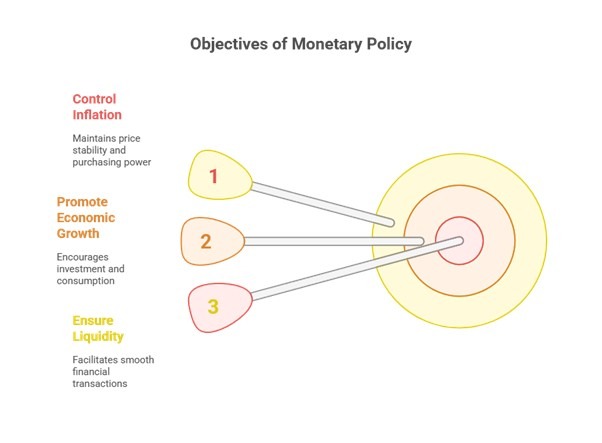
Objectives of Monetary Policy

1. Control Inflation: One of the key goals is to maintain price stability by controlling inflation, ensuring that the purchasing power of the currency is preserved.


2. Promote Economic Growth: Monetary policy aims to support economic growth by managing the availability and cost of credit, encouraging investment and consumption.


3. Ensure Liquidity: The policy seeks to ensure that there is sufficient liquidity in the economy to facilitate smooth financial transactions and economic activities.
Tools of Monetary Policy

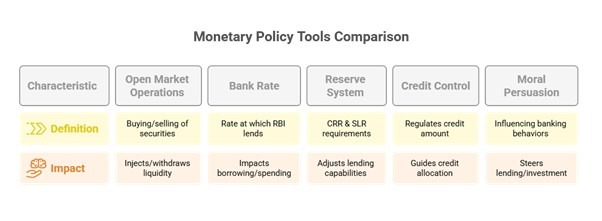
The RBI employs several tools to implement monetary policy effectively:


1. Open Market Operations (OMO):

    • The buying and selling of government securities in the open market to regulate the money supply. Buying securities injects liquidity into the economy, while selling them withdraws liquidity.


2. Bank Rate:

    • The interest rate at which the RBI lends money to commercial banks. Changes in the bank rate influence other interest rates in the economy, impacting borrowing and spending.


3. Reserve System:

    • This includes the Cash Reserve Ratio (CRR) and the Statutory Liquidity Ratio (SLR):
        • CRR: The percentage of a bank’s total deposits that must be held as reserves in cash with the RBI. Increasing the CRR reduces the funds available for lending, while decreasing it provides more credit.
        • SLR: The minimum percentage of net demand and time liabilities that banks must maintain in the form of liquid assets. Adjustments to the SLR influence the amount of money banks can lend.


4. Credit Control:

    • Techniques aimed at regulating the amount of credit available in the economy. This includes measures like selective credit control, where the RBI guides credit flow to specific sectors.


5. Moral Persuasion:

    • The RBI may use persuasive strategies to influence banking institutions’ lending and investment behaviors without resorting to formal regulations or sanctions.


Evolution of Monetary Policy in India

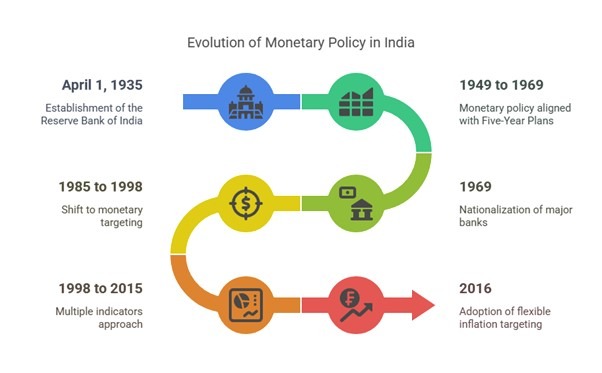
    The evolution of monetary policy in India has undergone significant changes since the establishment of the Reserve Bank of India (RBI) in 1935. According to Shri Shaktikanta Das, Governor of the RBI, the evolution can be categorized into seven distinct phases:


1. 1935 to 1949: Initial Phase of RBI

Foundation

    • The Reserve Bank of India (RBI) was established on April 1, 1935, during a period marked by the Great Depression. This global economic turmoil significantly influenced the economic environment in which the RBI was founded, prompting the need for a central monetary authority to stabilize and regulate India’s financial system.


Monetary Policy Framework

    • The early monetary policy framework of the RBI was guided by the Preamble to the Reserve Bank of India Act, 1934. The primary emphasis during this phase was on maintaining the sterling parity, which aimed to link the value of the Indian currency to the British pound.


Instruments Used

    • To effectively regulate liquidity in the economy and manage monetary stability, the RBI employed the following instruments:
        • Open Market Operations (OMOs): The buying and selling of government securities to control money supply and influence interest rates.
        • Bank Rates: The rate at which the RBI lends money to commercial banks, affecting the cost of borrowing throughout the economy.
        • Cash Reserve Ratio (CRR): The percentage of deposits that commercial banks were required to hold as reserves with the RBI, influencing the amount of money available for lending.


Limitations

    • The period was marked by significant challenges, as the unsettled international monetary system limited the RBI’s policy options. Fluctuations in global economic conditions and the absence of stability in foreign exchange markets constrained the effectiveness of the RBI’s monetary policy tools.

2. 1949 to 1969: Monetary Policy Aligned with Five-Year Plans

Post-Independence Alignment

    • Following India’s independence in 1947, the Reserve Bank of India (RBI) adapted its monetary policy to align with the goals of the country’s Five-Year Plans. These plans aimed to promote economic development and growth, emphasizing the need for structured financial support to various sectors of the economy.


Instruments of Policy

    • During this period, the RBI deployed several key instruments to implement its monetary policy effectively:
        • Bank Rates: The RBI adjusted bank rates to influence borrowing costs for commercial banks, thereby affecting the overall credit availability in the economy.
        • Reserve Requirements: The Reserve Bank set mandatory requirements for commercial banks, which dictated the amount of funds banks needed to hold in reserve, influencing their lending capabilities.
        • Open Market Operations (OMOs): The RBI conducted OMOs to manage liquidity in the financial system by buying and selling government securities as needed.
        • Statutory Liquidity Ratio (SLR): Introduced during this period, SLR required banks to maintain a specified percentage of their net demand and time liabilities in liquid assets, thus supporting government borrowing and ensuring liquidity.


Directed Credit

    • A significant focus of monetary policy during this era was on directing credit to priority sectors such as agriculture, small industries, and other developmental activities. This strategy aimed to foster economic growth and ensure that essential sectors received adequate funding.
    • While there was a strong focus on supporting targeted sectors, the emphasis on price stability became relatively secondary during this period. The priority was to stimulate growth and development, often leading to increased credit allocation to specified industries without stringent controls on inflation.

3. 1969 to 1985: Credit Planning

Bank Nationalization

    • The nationalization of major banks in 1969 marked a significant shift in the Indian banking landscape. This move aimed to enhance credit availability across various sectors, particularly those deemed essential for national development. By bringing major banks under government control, the objective was to redirect funds toward priority sectors, such as agriculture, small industries, and infrastructure development.


Credit Planning

    • Following nationalization, the RBI introduced formal credit planning mechanisms to more effectively allocate financial resources to targeted sectors. Key aspects of this approach included:
        • Selective Credit Control: The RBI implemented measures like quantitative restrictions on credit to ensure that specific sectors received adequate funding. This included limiting the amount banks could allocate to certain industries.
        • Interest Rate Adjustments: The RBI also adjusted interest rates to influence credit availability, encouraging banks to lend more to priority sectors by making borrowing cheaper.


Inflationary Pressures

    • The period from 1969 to 1985 was characterized by significant inflationary pressures. Several factors contributed to rising inflation:
        • Excessive Credit Expansion: The focus on channeling credit toward priority sectors, while sometimes necessary for development, led to an oversupply of money in the economy, contributing to inflation.
        • External Shocks: The economy faced several external challenges, including wars and oil crises, which exacerbated inflation. These shocks increased costs for goods and services and put additional strain on the economy.


4. 1985 to 1998: Monetary Targeting

Fiscal Dominance

    • During the 1980s, India experienced a rise in automatic monetization of the budget deficit. This occurred when the government financed its budget deficits by borrowing from the Reserve Bank of India (RBI), leading to an increase in the Statutory Liquidity Ratio (SLR). The reliance on monetary expansion to fund deficits often had implications for overall monetary stability and inflation.


Shift to Monetary Targeting

    • In response to the inflationary pressures and economic challenges of the time, there was a shift toward monetary targeting. The focus changed to controlling the money supply and credit aggregates as intermediate targets to effectively manage inflation.
        • This involved setting explicit targets for money supply growth and directing monetary policy actions to achieve those targets.


Chakravarty Committee Recommendations

    • The Chakravarty Committee, constituted in 1985, made significant recommendations aimed at instituting a more structured approach to monetary policy:
        • The committee advocated for monetary targeting as a means to limit excessive monetary expansion that contributed to inflation. By strictly controlling the growth of the money supply, it aimed to stabilize prices and curb inflationary expectations.


Challenges

    • The period of monetary targeting uncovered notable challenges:
        • Unstable Relationship: The relationship between money supply and inflation proved to be unstable in the Indian context. Economic conditions and structural changes often caused disconnects between changes in money supply and observable inflation rates.
        • Limitations of the Approach: The limitations of relying solely on monetary targeting became evident as external factors, such as fluctuations in oil prices and domestic economic pressures, complicated the effectiveness of conventional monetary tools.

5. 1998 to 2015: Multiple Indicators Approach

Economic Liberalization

    • The liberalization of the Indian economy that began in the early 1990s led to significant structural changes and necessitated a revised approach to monetary policy. As markets opened and economic reforms were implemented, the Reserve Bank of India (RBI) recognized the need for a more dynamic response to the evolving financial landscape.


Expanded Framework

    • In response to these changes, the RBI adopted a multiple indicators approach to monetary policy:
        • This flexible framework involved considering a broader range of indicators beyond just money supply. Key indicators included:
            • Economic Output: Monitoring GDP growth and overall economic activity.
            • Credit Levels: Observing the trends in credit flow to various sectors to gauge economic health.
            • Inflation Rates: Keeping an eye on inflation metrics to maintain price stability.
            • Exchange Rates: Analyzing currency fluctuations to assess external economic factors and their implications on domestic conditions.
    • This comprehensive approach allowed the RBI to be more responsive to changing economic conditions, making it easier to adjust monetary policy in line with various economic indicators.


Outcomes

    • The implementation of the multiple indicators approach had notable outcomes:
        • Growth Rate: From 1998-99 to 2008-09, India experienced an impressive average domestic growth rate of approximately 6.4%. This growth was attributed to increased credit availability and more effective monetary policy aimed at supporting economic expansion.
        • Moderated Inflation: During this period, wholesale price index (WPI) inflation was managed and averaged around 5.4%, reflecting the RBI’s effective monitoring and policy actions to keep inflation within reasonable limits.

6. 2013 to 2016: Preconditions Set for Inflation Targeting

Post-Crisis Responses

    • Following the global financial crisis of 2008, India faced significant challenges, including persistent inflation and a slowdown in economic growth. This situation underscored the necessity for a more transparent and effective monetary policy framework to tackle rising inflation while stimulating economic recovery.


Urjit Patel Committee

    • In 2014, the Urjit Patel Committee was established to assess the monetary policy framework of India. One of its key recommendations was to adopt inflation targeting as a nominal anchor for monetary policy, suggesting that a clear and defined target for inflation would bring greater stability and predictability to economic conditions.


Inflation Targeting Framework

    • The RBI formally adopted the inflation targeting framework in 2016 following the committee’s recommendations. Key features of this framework included:
        • Inflation Target: The RBI set a target inflation rate of 4%, with a tolerance band of +/- 2%. This means the RBI aims to maintain inflation within the range of 2% to 6%.
        • Prioritization of Price Stability: The framework places a strong emphasis on maintaining price stability as a primary objective of monetary policy. The commitment to controlling inflation is intended to instill confidence among investors and consumers and foster sustainable economic growth.

7. 2016 Onwards: Flexible Inflation Targeting

Amendment of RBI Act

    • In May 2016, the Reserve Bank of India Act was amended to formally adopt a framework of flexible inflation targeting. This amendment marked a significant evolution in the RBI’s monetary policy approach, emphasizing the importance of maintaining price stability while also supporting economic growth.


Monetary Policy Framework Agreement

    • The Monetary Policy Framework Agreement established a structured commitment for cooperation between the Government of India and the RBI. This agreement clarified the roles and responsibilities of the RBI in monetary policymaking and reinforced its independence in conducting monetary policy.
    • This collaboration facilitates effective communication and alignment between fiscal and monetary policy, encouraging a cohesive approach to economic management.


Focus on Stability and Growth

    • Under the flexible inflation targeting framework, the RBI actively focuses on achieving the inflation target while also considering the broader necessity for economic growth.
    • The RBI employs various monetary policy tools, including:
        • Repo Rates: Adjusting the interest rate at which the RBI lends to commercial banks, influencing borrowing costs and liquidity in the economy.
        • Open Market Operations (OMOs): Buying and selling government securities to regulate the money supply and control liquidity.
    • This dual focus allows the RBI to adapt its policies to changing economic conditions, balancing the need to manage inflation with the imperatives of supporting sustainable economic growth. 407630


Objectives of India’s Monetary Policy

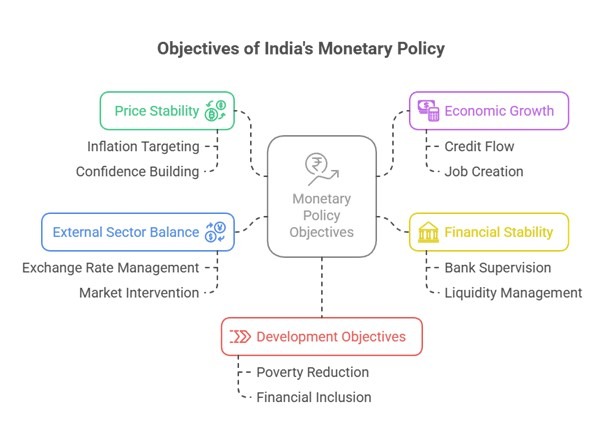
      The objectives of India’s monetary policy are centered around ensuring economic stability, promoting growth, and fostering a conducive environment for sustainable development. The Reserve Bank of India (RBI) strives to achieve these goals through a comprehensive monetary policy framework. Here are the key objectives:


1. Price Stability:

    • Importance: Maintaining a stable price level is crucial as it reduces uncertainty for businesses and consumers. Price stability fosters confidence in the economy, encouraging long-term investments and promoting sustainable economic growth.
    • Current Framework: The RBI follows a flexible inflation targeting framework, with a target inflation rate of 4% and a tolerance band of +/- 2%, aiming to keep inflation within this range.

2. Economic Growth:

    • Stimulation of Activity: Monetary policy tools are employed to stimulate economic activity, facilitating job creation and overall prosperity.
    • Credit Flow: The RBI focuses on ensuring an adequate flow of credit to key sectors such as agriculture, industry, and infrastructure, which are essential for driving economic growth and development.

3. Financial Stability:

    • Stability of the Financial System: Ensuring a sound and stable financial system is vital for protecting depositors, preventing financial crises, and promoting efficient allocation of resources.
    • Regulatory Instruments: The RBI uses various instruments, including bank supervision, regulations, and liquidity management practices, to ensure the stability of banks and other financial institutions.

4. External Sector Balance:

    • Exchange Rate Management: Managing the exchange rate and maintaining a balance of payments equilibrium is essential for facilitating international trade and investment while preventing excessive currency volatility.
    • Market Intervention: The RBI intervenes in the foreign exchange market when necessary to stabilize the Indian rupee and ensure orderly foreign exchange transactions.

5. Development Objectives:

    • Support for Government Goals: Monetary policy plays a significant role in supporting broader government development objectives, including poverty reduction, financial inclusion, and sustainable development.
    • Targeted Initiatives: The RBI implements targeted credit schemes and initiatives to promote these goals, ensuring that financial resources contribute to inclusive growth and the development of underprivileged sectors.

Classification of Monetary Policy

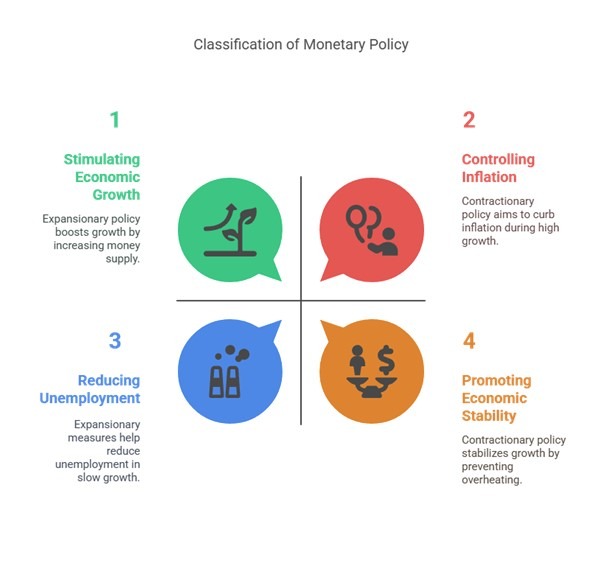
       Monetary policy can be classified based on the prevailing economic conditions and the objectives it aims to achieve. The two primary classifications are expansionary monetary policy and contractionary monetary policy.


1. Expansionary Monetary Policy

Definition:

    • Often referred to as loose monetary policy, this approach involves increasing the supply of money and credit within an economy.


Objectives:

    • Stimulate Economic Growth: The primary aim is to foster economic growth by making money more available to individuals and businesses.
    • Reduce Unemployment: During periods of economic downturn or recession, expansionary policy helps alleviate unemployment by encouraging investment and consumption.


Implementation:

    • Lowering Interest Rates: The central bank reduces interest rates, making loans more affordable and accessible for borrowers.
    • Increasing Money Supply: Through tools such as open market operations, the central bank buys government securities, injecting liquidity into the market.


Expected Outcomes:

    • Increased availability of money at lower costs leads to higher consumer spending on goods and services.
    • Enhanced business investment as borrowing becomes more attractive, ultimately stimulating economic activity and growth.

2. Contractionary Monetary Policy

Definition:

    • Also known as tight or contractionary monetary policy, this approach is employed to curb inflation, particularly when the economy is growing too rapidly (overheating).


Objectives:

    • Control Inflation: The primary goal is to decrease the money supply and control inflationary pressures within the economy.
    • Promote Economic Stability: By preventing overheating, contractionary policy seeks to maintain a sustainable pace of economic growth.


Implementation:

    • Raising Interest Rates: The central bank increases interest rates, making borrowing more expensive and less attractive.
    • Decreasing Money Supply: Through tools such as selling government securities in open market operations, the central bank withdraws liquidity from the economy.


Expected Outcomes:

    • Higher interest rates discourage borrowing and spending, leading to a decrease in business investments and significant consumer purchases (e.g., houses, cars).
    • Reduced consumer spending contributes to stabilizing prices and inflation levels.

Monetary Policy Tools

     The Reserve Bank of India (RBI) employs various tools to implement monetary policy effectively, influencing the overall money supply and ensuring financial stability in the economy. These tools can be broadly classified into quantitative measures and qualitative measures. Below, we focus on the quantitative measures used by the RBI.


Quantitative Measures

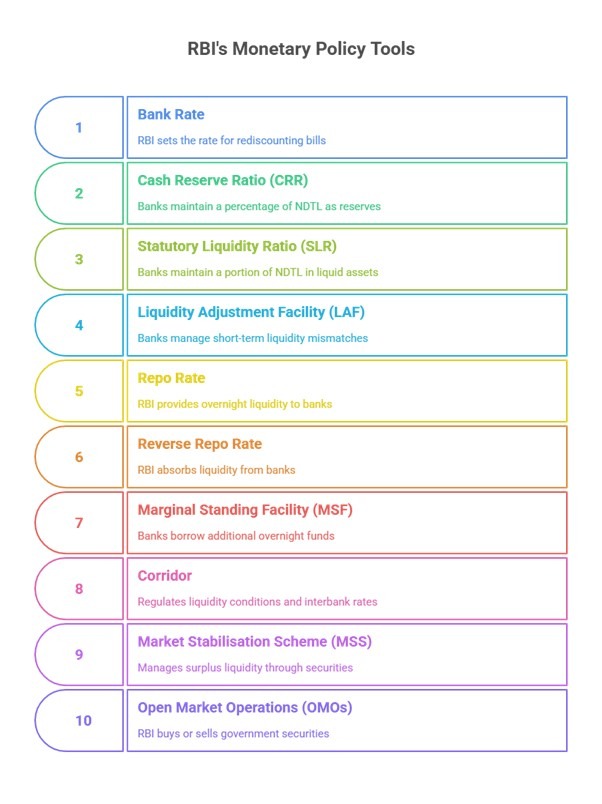
       Quantitative measures involve actions that directly affect the total money supply in the economy. Key instruments under this category include:


1. Bank Rate:

    • This is the rate at which the RBI is willing to buy or rediscount bills of exchange and other commercial papers. Changes in the bank rate influence lending rates across various financial institutions.

2. Cash Reserve Ratio (CRR):

    • The CRR is the percentage of a bank’s Net Demand and Time Liabilities (NDTL) that must be maintained as reserves with the RBI in cash form. An increase in the CRR reduces the amount of money available for banks to lend, thereby tightening liquidity.

3. Statutory Liquidity Ratio (SLR):

    • The SLR is the portion of NDTL that banks must maintain in safe and liquid assets, such as government securities, cash, and gold. Adjusting the SLR affects banks’ lending capacity and ensures that they maintain sufficient liquidity.

4. Liquidity Adjustment Facility (LAF):

    • The LAF includes overnight and term repo auctions that help banks manage short-term liquidity mismatches. This facility allows banks to borrow from the RBI against collateralized government securities for overnight liquidity needs.

5. Repo Rate:

    • The repo rate is the fixed interest rate at which the RBI provides overnight liquidity to banks, allowing them to borrow funds against collateral of approved securities. A lower repo rate typically encourages banks to borrow more, boosting credit availability in the economy.

6. Reverse Repo Rate:

    • The reverse repo rate is the fixed interest rate at which the RBI absorbs liquidity from banks by borrowing funds in exchange for government securities. This tool is used to manage excess liquidity in the banking system.

7. Marginal Standing Facility (MSF):

    • The MSF is a facility allowing scheduled commercial banks to borrow additional overnight funds from the RBI at a rate higher than the repo rate. This serves as a safety valve against unforeseen liquidity shocks, helping maintain stability in the banking system.

8. Corridor:

    • The corridor refers to the range of movement in the weighted average call money rate, determined by the MSF rate (upper bound) and the reverse repo rate (lower bound). It helps to regulate liquidity conditions and influences interbank lending rates.

9. Market Stabilisation Scheme (MSS):

    • Introduced in 2004, the MSS is used to manage surplus liquidity resulting from significant capital inflows by selling short-dated government securities and treasury bills. This helps absorb excess liquidity and maintain stability in the financial markets.

10. Open Market Operations (OMOs):

    • OMOs involve the outright purchase and sale of government securities. By buying securities, the RBI injects liquidity into the economy; by selling them, it absorbs liquidity. OMOs are a crucial tool for managing long-term liquidity.

Statutory Liquidity Ratio (SLR)

Definition:

     The Statutory Liquidity Ratio (SLR) is the minimum percentage of net demand and time liabilities (NDTL) that commercial banks in India must maintain in the form of liquid assets. These assets can include cash, gold, and approved securities. SLR is a regulatory requirement designed to ensure that banks maintain sufficient liquidity to meet customer demands and other obligations.

Current SLR

As of 2023, the current SLR in India stands at 18.00%.

Functioning of Statutory Liquidity Ratio

    • Compliance Requirement: Each bank is required to maintain a specified portion of its NDTL in liquid assets by the end of each day. This ensures that banks are adequately prepared to meet withdrawal demands and maintain solvency.


    • Role of the RBI: The RBI has the authority to adjust SLR rates, with a maximum limit of 40%. Modifications to the SLR influence the capacity of banks to lend money and inject liquidity into the economy. An increase in SLR can help control inflation by limiting the amount of money available for lending.

Components of Statutory Liquidity Ratio

Under Sections 24 and 56 of the Banking Regulation Act, 1949, the following are key components of the SLR:

    • Liquid Assets: Assets that are easily convertible into cash without significant loss of value. This includes:
        • Gold
        • Treasury bills
        • Government-approved securities
        • Government bonds
        • Cash reserves held by the bank


    • Net Demand and Time Liabilities (NDTL): The total public demand and time liabilities that banks hold, which encompass:
        • Demand deposits (checking accounts)
        • Time deposits (fixed deposits and recurring deposits)

SLR Limits

    • The SLR has a maximum limit set at 40%. Adjustments to this limit are made by the RBI based on prevailing economic conditions and policy objectives. Maintaining this ratio is critical for regulating the flow of credit from banks into the wider economy.

Objectives of Statutory Liquidity Ratio

The objectives of the SLR include:

    • Preventing Over-Liquidation: Ensuring that banks do not keep excess liquidity that could lead to inefficiencies in asset usage.
    • Ensuring Solvency: Maintaining adequate liquidity to ensure that banks can meet customer withdrawals and obligations.
    • Regulating Bank Credit Flow: Controlling the amount of credit that banks can extend, particularly during periods of inflation or economic downturns.

Consequences of Non-Maintenance of SLR

In India, failing to maintain the SLR as mandated by the RBI results in penalties:

    • Reporting Requirement: Commercial banks, including scheduled commercial banks and cooperative banks, must report their NDTL to the RBI every fortnight.
    • Penalties for Non-Compliance:
        • A penalty of 3% annually over the bank rate is imposed for non-compliance.
        • This penalty escalates to 5% for defaults occurring on the next working day.
    • These penalties incentivize banks to maintain sufficient cash reserves, ensuring they can meet depositor demands and maintain overall financial stability.

Cash Reserve Ratio (CRR)

Definition:

     The Cash Reserve Ratio (CRR) is the percentage of a bank’s total deposits that must be maintained as liquid cash reserves with the Reserve Bank of India (RBI). This mandatory reserve helps ensure liquidity and stability in the banking system.

Objectives of Cash Reserve Ratio

The Cash Reserve Ratio serves multiple purposes within the monetary and banking system, including:

1. Benchmark for Base Rate:

    • The CRR serves as a benchmark for determining the base rate, which is the minimum lending rate set by the RBI. This ensures transparency in borrowing and lending practices in the credit market.


2. Secure Reserves:

    • Ensures that a secure portion of the bank’s deposits is held with the central bank, thereby promoting the stability and reliability of the banking system.


3. Inflation Control:

    • By adjusting the CRR during periods of high economic growth or inflation, the RBI restricts excess money available for loans and investments. This measure helps curb inflation by reducing liquidity in the economy.

Functioning of Cash Reserve Ratio

    • Adjustment by RBI: When the RBI decides to raise the Cash Reserve Ratio, banks must hold a larger portion of their deposits in reserve, thereby decreasing the funds available for lending and investments. This action is aimed at controlling excessive liquidity in the economy.


    • Maintenance Requirements:
        • Banks are required to maintain a cash balance with the RBI that is not less than 4% of their total Net Demand and Time Liabilities (NDTL) on a fortnightly basis.


    • Components of NDTL:
        • Net Demand and Time Liabilities (NDTL) include:
            • Total public deposits held by the bank.
            • Balances with other banks.
            • Demand deposits (e.g., checking accounts).

Difference between Statutory Liquidity Ratio (SLR) and Cash Reserve Ratio (CRR)

    • The Statutory Liquidity Ratio (SLR) and Cash Reserve Ratio (CRR) are both critical regulatory requirements imposed on banks by the Reserve Bank of India (RBI) that influence their lending capabilities and liquidity management. Below is a comparison highlighting the key differences between SLR and CRR:


Aspect

Statutory Liquidity Ratio (SLR)

Cash Reserve Ratio (CRR)

Mandated by

Banking Regulation Act, 1949

Reserve Bank of India Act, 1934

Nature of Assets

Reserves consist of liquid assets, including cash, gold, and government securities maintained by the bank itself.

Requires banks to maintain cash reserves with the RBI only.

Earning Returns

Banks earn returns on the funds parked as SLR by investing in liquid assets.

Banks do not earn returns on the funds parked as CRR, as they are held as reserves with the RBI.

Credit Expansion Control

SLR is used to control the bank’s leverage and manage credit expansion by determining how much banks can lend.

CRR is employed by the central bank to control liquidity levels in the banking system.

Location of Securities/Reserves

Securities maintained as liquid assets are kept with the banks themselves.

Cash reserves are maintained by banks with the Reserve Bank of India (RBI).

Liquidity Adjustment Facility (LAF)

      The Liquidity Adjustment Facility (LAF) is an essential instrument used by central banks, including the Reserve Bank of India (RBI), to manage liquidity in the banking system. It acts as a bridge between banks facing temporary cash shortages and those with excess funds, ensuring the stability of the financial system.


What is the LAF?

The LAF consists of two main instruments:

1. Repo (Repurchase Agreements):

    • Under the repo mechanism, banks can borrow funds from the RBI by pledging government securities as collateral.
    • The banks agree to repurchase these securities at a specified future date, along with an interest payment based on the repo rate.
    • This arrangement provides banks with immediate liquidity to meet their short-term needs.


2. Reverse Repo:

    • The reverse repo allows banks with excess funds to deposit those funds with the RBI for a defined period, earning interest at the reverse repo rate.
    • This helps absorb surplus liquidity in the banking system, which is essential for controlling inflation.


How Does the LAF Work?

    • Daily Auctions: The RBI conducts daily auctions for both repo and reverse repo operations. Participating banks can borrow or park funds based on their liquidity needs, ensuring flexibility in managing their cash requirements.
    • Interest Rates: The repo and reverse repo rates are vital tools for the RBI in regulating the money supply and influencing economic activity.
        • A higher repo rate discourages banks from borrowing from the RBI, while a higher reverse repo rate encourages banks to deposit excess funds, thus tightening liquidity.
    • Flexibility: The LAF provides banks with flexible opportunities to manage short-term cash needs, enhancing the efficiency of the financial system.


Benefits of the LAF

    • Maintains Financial Stability: By effectively managing liquidity, the LAF helps prevent cash shortages and excess liquidity, contributing to the overall stability of the banking system.
    • Supports Economic Growth: Sufficient liquidity promotes lending by banks, which fuels investment and drives economic activity.
    • Controls Inflation: The LAF empowers the RBI to manage inflation by adjusting interest rates and influencing the overall money supply in the economy.
    • Enhances Market Confidence: A stable and predictable LAF system fosters confidence among banks and market participants, supporting trust in the financial system and the broader economy.


Long Term Repo Operations (LTRO)

Long Term Repo Operations (LTRO) is another tool utilized by the RBI to address liquidity in the banking sector. Key features include:


    • Duration: LTRO allows the RBI to lend money to banks for periods ranging from one to three years at the current repo rate.
  •  
    • Purpose: The primary goal is to inject liquidity into the banking system, facilitating the transmission of monetary policy and ensuring adequate credit flow to the economy.
  •  
    • Collateral Use: Banks can use government securities as collateral to borrow funds from the RBI under LTRO, allowing them to access long-term funding at lower interest rates compared to prevailing market rates.


Challenges of the LAF

    • Dependency on Government Securities: The effectiveness of the LAF relies heavily on the availability of sufficient government securities in the banking system. A shortage may limit its functionality.
  •  
    • Moral Hazard: Easy access to liquidity through repo agreements may lead banks to manage their funds less efficiently, potentially encouraging risky behavior.
  •  
    • Impact on Interest Rates: Frequent adjustments to repo and reverse repo rates can lead to volatility in market interest rates, affecting overall financial stability.

Difference between Base Rate, MCLR, and External Benchmark Rate

    • The Base Rate, Marginal Cost of Funds Based Lending Rate (MCLR), and External Benchmark Rate are important concepts in lending practices used by banks in India. Here’s a comparative overview of these lending rates:


Aspect

Base Rate

MCLR (Marginal Cost of Funds Based Lending Rate)

External Benchmark Lending Rate

Definition

Minimum interest rate set by a bank for lending.

Benchmark lending rate based on the marginal cost of funds.

Interest rate linked to an external benchmark (e.g., repo rate, T-Bill rates).

Year of Introduction

2010

2016

2019

Calculation Basis

Average cost of funds and operational costs.

Marginal cost of funds, negative carry on CRR, operating costs, and tenor premium.

Determined by adding a spread over an external benchmark rate.

Linkage to Cost of Funds

Linked to the average cost of funds.

Linked to the marginal cost of funds.

Linked to an external benchmark rate specified by the RBI.

Flexibility and Responsiveness

Changes were relatively slow.

More responsive to changes in market interest rates compared to Base Rate.

Aims for faster transmission of policy rates to end-borrowers.

Frequency of Review

Changes were not frequent.

Banks are required to review and publish MCLR every month.

Reviewed at least once in three months.

Objective (RBI’s Intent)

Phased out to replace it with a more responsive system (MCLR).

Introduced for better transmission of changes in policy rates to borrowers.

Improve transmission and bring transparency by linking rates to benchmarks.

Discontinuation Status

Phased out by RBI.

Replaced Base Rate.

Currently in use.

Qualitative Measures

     Qualitative measures are monetary policy tools used by the Reserve Bank of India (RBI) to influence the quality and distribution of credit in the economy rather than the quantity. These measures focus on adjusting certain lending practices and guiding banks in their credit allocation decisions. Below are the key qualitative measures employed by the RBI:

1. Marginal Requirements:

    • Definition: Commercial banks establish a margin, which is the difference between the market value of a security and the loan amount given against that security.
  •  
    • Function: When the RBI intends to restrict the flow of money (tight monetary policy), it increases the margin requirement, meaning that borrowers must offer more valuable collateral to secure loans. Conversely, when the RBI seeks to encourage lending (expansionary policy), it may lower margin requirements to make borrowing easier.

2. Selective Credit Control (SCCs):

    • Definition: This instrument is designed to influence the flow of credit to specific sectors of the economy.
  •  
    • Function: Selective credit controls can direct banks to lend to priority sectors (such as agriculture and small enterprises) or restrict lending to particular sectors showing signs of over-leverage or speculative borrowing. This targeted approach helps in directing resources toward sectors that require financial support.

3. Moral Suasion:

    • Definition: Moral suasion refers to the informal and non-binding persuasion techniques used by the RBI to influence the behavior of commercial banks regarding credit and lending practices.
  •  
    • Function: It includes activities such as meetings, seminars, speeches, and discussions where the central bank communicates economic conditions and the rationale for certain monetary policies. By fostering understanding and cooperation, the RBI encourages banks to align their lending activities with broader economic objectives.


Impact: Although not legally enforceable, moral suasion relies on the authority and credibility of the RBI to persuade banks to adapt to necessary changes in their credit

Priority Sector Lending (PSL)

      Priority Sector Lending (PSL) is a key regulatory framework established by the Reserve Bank of India (RBI) to ensure flow of bank credit to critical sectors of the economy that are crucial for development and social welfare but typically receive inadequate funding. Here’s an overview of its key features:

1. Targeted Sectors: PSL covers agriculture, small and medium-sized enterprises (SMEs), exports, education, housing, renewable energy, healthcare, and social infrastructure. These sectors are prioritized because of their importance in achieving inclusive growth.


2. Mandatory Lending Targets: The RBI mandates that banks allocate a specific percentage of their Adjusted Net Time and Demand Liabilities (ANDTL) to these sectors. The overall PSL target currently stands at 40% of a bank’s ANDTL.


3. Sub-Targets: Within the general PSL target, the RBI sets sub-targets for certain sectors such as agriculture and MSMEs, based on their importance and the need to achieve developmental goals.


4. Regulatory Incentives: Banks that meet PSL targets receive incentives like relaxed capital adequacy requirements, preferential access to refinancing facilities, and exemptions from specific statutory rules, facilitating greater ease in operations.


5. Monitoring and Compliance: The RBI actively monitors bank compliance with PSL norms and may impose penalties or corrective measures if banks do not meet the stipulated targets.


This initiative is designed to address credit disparities and enhance financial inclusion by ensuring essential sectors get the financial resources they need to grow and contribute to the economy.

Benefits of PSL:

1. Promotes Inclusive Growth: By channeling credit to under-served and marginalized sectors, PSL supports balanced development and empowers communities that lack access to traditional financial systems.


2. Supports Key Industries: PSL facilitates access to finance for critical sectors like agriculture, SMEs, and infrastructure, which are pivotal for economic expansion and job creation.


3. Enhances Social Well-being: Funding directed towards education, healthcare, and social infrastructure improves living standards and enhances the quality of life for the population.


4. Strengthens Financial Stability: By backing productive sectors, PSL contributes to economic growth, thereby reinforcing the stability of the financial system and aiding in risk mitigation.

Challenges of PSL:

1. Diversion of Funds: There are concerns about the potential misuse or diversion of funds away from intended sectors, which could undermine the program’s goals.


2. Implementation Effectiveness: Successful execution requires rigorous monitoring and enforcement to ensure banks meet the allocations prescribed by the PSL framework.


3. Impact on Bank Profitability: Achieving PSL targets can affect bank profitability, particularly for smaller banks, necessitating adjustments in incentives and performance monitoring.


4. Over-dependence on Specific Sectors: Excessive reliance on certain sectors within PSL may constrain the flow of credit to other vital areas, potentially leading to imbalances.


The effectiveness of PSL thus depends on striking a balance between fulfilling social objectives and maintaining financial prudence, requiring continuous evaluation and adaptation of policies.


      When banks do not meet the Priority Sector Lending (PSL) targets set by the Reserve Bank of India (RBI), they must engage in several compensatory actions, affecting both their financial operations and strategic planning. Here is a detailed explanation of what happens and the various categories involved in PSL:

Consequences of Not Meeting PSL Targets:

1. Deposit into RIDF and Other Funds:

    • Rural Infrastructure Development Fund (RIDF): Banks are required to deposit the shortfall into the RIDF, which is managed by the National Bank for Agriculture and Rural Development (NABARD). These deposits fund rural infrastructure projects.
  •  
    • Other Funds: Shortfalls can also be deposited into urban infrastructure development funds or with specific institutions like SIDBI, MUDRA Ltd, and the National Housing Bank (NHB), supporting a variety of developmental financial activities.

2. Interest Rates and Financial Impact:

    • The interest rates for these deposit obligations are set periodically by the RBI. Lower rates on these deposits can be seen as a penalty compared to potential returns if those funds were otherwise deployed.

3. Regulatory and Strategic Impacts:

    • Non-compliance with PSL targets can constrain a bank’s regulatory approvals, impacting its ability to expand or introduce new services and requiring increased oversight.

4. Co-Lending Arrangements:

    • Banks can opt for co-lending arrangements with Non-Banking Financial Companies (NBFCs) and housing finance companies. This strategy helps banks meet PSL targets by leveraging the outreach and expertise of these entities in distributing credit to priority sectors.

Categories Within Priority Sector Lending:

1. Agriculture: Focuses on providing credit to farmers for crop production and other agricultural and allied activities, facilitating increased agricultural productivity and rural development.


2. Micro, Small and Medium Enterprises (MSMEs): Supports small-scale and medium-sized businesses, crucial for fostering entrepreneurship and employment.


3. Export Credit: Encourages financial support for firms and industries involved in export activities, boosting national economic performance.


4. Education: Provides financial support for educational purposes, such as student loans, promoting higher education and skill development.


5. Housing: Includes loans that support residential housing, particularly targeting affordable housing solutions for various demographics.


6. Social Infrastructure: Involves financing projects like hospitals, schools, and community centers, crucial for community development and improving quality of life.


7. Renewable Energy: Encourages clean energy projects, supporting environmental sustainability initiatives.


8. Food Processing Sector: Assists in the modernization of food processing infrastructure, enhancing value addition and reducing wastage.


9. Weaker Sections: A broad category covering various marginalized groups, including:


        • Small and Marginal Farmers: Farmers with limited landholding and resources.
        • Artisans and Cottage Industries: Small-scale enterprises and traditional artisans.
        • Government Scheme Beneficiaries: Individuals supported under schemes like NRLM, NULM, and SRMS.
        • Scheduled Castes and Scheduled Tribes: Minority communities requiring socio-economic upliftment.
        • Differential Rate of Interest (DRI) Scheme Beneficiaries: Those receiving loans at a low-interest rate meant for weaker sections.
        • Self Help Groups (SHGs): Encouraging collective financial and economic activities.
        • Distressed Indebted Individuals: Includes both farmers and non-farmers who require assistance to repay non-institutional lenders.
        • Women Beneficiaries and Persons with Disabilities: Special focus on empowering women and individuals with physical challenges.
        • Minority Communities: As periodically notified by the government.


10. Other Specialized Categories:

        •  These specific lending categories under the Priority Sector Lending (PSL) scheme describe how financial support is extended to various groups and for different purposes, aiming to promote inclusive economic growth and development:


1. Individual or SHG/JLG Loans under Microfinance:

          • Loans are provided directly to individuals or members of Self-Help Groups (SHGs) and Joint Liability Groups (JLGs) in line with the Master Direction on Regulatory Framework for Microfinance Loans (as of March 14, 2022). This supports low-income individuals in accessing microfinance for their personal and entrepreneurial needs.


2. Loans to SHG/JLG for Non-Agricultural or MSME Activities:

          • SHGs and JLGs can receive loans of up to ₹2.00 lakh for various activities beyond agriculture, including MSME ventures and community needs like housing projects, sanitation, and other social initiatives initiated by these groups.


3. Loans to Distressed Individuals:

          • Financial assistance is available up to ₹1.00 lakh per borrower for distressed individuals to settle debts with non-institutional lenders. However, this excludes distressed farmers, focusing instead on other individuals who require debt relief to stabilize their finances.


4. Loans to State Sponsored Organizations for SC/ST:

          • Funds are directed towards state-sponsored organizations that support Scheduled Castes (SC) and Scheduled Tribes (ST). These loans are specifically for input procurement and marketing activities, aiding in the economic empowerment of these communities.


5. Loans to Start-ups:

          • Start-ups engaged in non-agricultural or MSME activities can access loans up to ₹50 crore. These start-ups must meet the definitions outlined by the Ministry of Commerce and Industry, fostering innovation and entrepreneurship in diverse sectors outside agriculture.


These funding avenues under PSL help target various societal needs, ensuring that economically vulnerable groups get the requisite financial support to improve their livelihoods and contribute positively to the economy.

Monetary Policy Committee

    The Monetary Policy Committee (MPC) is a key component of the Reserve Bank of India (RBI), responsible for setting the country’s monetary policy, particularly the repo rate, which influences the overall economic environment. Here’s a detailed look at its composition and operational framework:

Composition of the MPC:

Membership: The MPC consists of six members:

    • Governor of the RBI: Serves as the ex-officio Chairperson.
    • Deputy Governor of the RBI: Specifically responsible for monetary policy.
    • One RBI Official: Nominated by the Central Board of the RBI.
    • Three External Members: Appointed by the Government of India. These members are selected for their expertise in economics, finance, or related fields.


Decision-Making Process:

    • Each member of the MPC has one vote.
    • In case of a tie in voting, the Governor has a second or casting vote to resolve the decision.


Meeting Requirements:

    • For a meeting to proceed, at least four members must be present.
    • The MPC is mandated to meet at least four times a year to review and set the monetary policy stance.

Operational Framework:

Resolution Publication:

    • After each meeting, the MPC’s resolutions are published, adhering to the guidelines set under Chapter III F of the RBI Act, 1934. This transparency helps in maintaining clear communication with the public regarding monetary policy directions.


Frequency of Meetings:

    • As per the amended RBI Act, the committee is required to convene at least four times annually. These meetings are crucial for assessing economic conditions and making policy adjustments as needed.

Primary Functions:

1. Determining the Repo Rate:

    • The MPC’s main role is to set the repo rate, which is the rate at which commercial banks borrow money from the RBI. Changes in the repo rate influence the overall money supply and the availability of credit in the economy, impacting inflation and economic growth.


2. Inflation Targeting:

    • The MPC sets an inflation target, currently at 4%, with a tolerance band of +/- 2%. This target helps guide the monetary policy measures aimed at achieving price stability.


3. Macroeconomic Assessment:

    • The MPC continuously assesses India’s macroeconomic conditions, reviewing economic data and trends to guide monetary policy decisions. This includes evaluating factors like GDP growth, employment rates, and global economic developments.


4. Publication of Minutes:

    • The proceedings of each MPC meeting are documented and published on the 14th day after the meeting. This includes:
        • The resolution adopted.
        • Voting details of each member.
        • Statements from each member explaining their views and votes.


5. Monetary Policy Report:

    • Every six months, the RBI publishes a Monetary Policy Report. This document outlines:
        • The current sources of inflation.
        • Inflation forecasts for the next 6 to 18 months.
    • This report helps in managing public expectations and enhancing transparency about future monetary policy directions.

Supporting Points for the MPC:

1. Effective Inflation Control:

    • Economists often regard the MPC as a successful reform, highlighting its effectiveness in maintaining low inflation levels. Its systematic approach to monetary policy has helped stabilize prices over time.


2. Inflation-Targeting Regime:

    • The introduction of an explicit inflation-targeting framework has been pivotal in curbing price rises. This regime provides clear objectives and accountability for controlling inflation, making the MPC’s actions more predictable and credible.


3. Managing Demand-Pull Inflation:

    • The MPC has demonstrated its ability to manage demand-pull inflation effectively, which occurs when consumer demand exceeds supply, leading to price increases. By adjusting interest rates, the MPC can moderate demand and control inflationary pressures.


4. Economic Health:

    • Maintaining a stable and moderate inflation rate is crucial for economic stability. It helps protect the purchasing power of the currency and fosters an environment conducive to investment and growth.

Counterarguments Against the MPC:

1. Focus on Inflation Over Growth:

    • Critics argue that the MPC’s predominant focus on controlling inflation may overlook the need for promoting economic growth. This could potentially contribute to economic slowdowns, especially if monetary policy becomes too restrictive.


2. Data Quality and Availability:

    • There are concerns about the adequacy and quality of economic data available to MPC members. Accurate data is essential for informed decision-making, and limitations in this area could hinder the MPC’s effectiveness.


3. Tight Monetary Policy Concerns:

    • The preference for tight monetary policies, characterized by higher interest rates to control inflation, might suppress economic activity and slow down overall growth. Balancing inflation control with growth objectives remains a challenge.


4. Risk of Hyperinflation:

    • While controlling inflation, an overly cautious approach may stifle growth, whereas an excessively expansionary policy could risk triggering hyperinflation. Finding the right balance is crucial to avoiding extreme economic conditions.

Introduction of Inflation Targeting

    • Year of Adoption: The concept of inflation targeting was introduced in India with the signing of the Monetary Policy Framework Agreement between the Government of India and the Reserve Bank of India (RBI) in February 2015.


    • Formal Adoption: The framework came into effect in April 2016 following an amendment to the Reserve Bank of India Act, 1934. This amendment formalized the RBI’s commitment to maintaining price stability through this targeted approach.

Inflation Target

    • Target Rate: The inflation target is determined by the Government of India in consultation with the RBI. The focus is on the Consumer Price Index (CPI), which serves as the primary measure of inflation in the country.


    • Target Horizon: The inflation target is set for the medium term, typically aiming for a rate of 4% with a tolerance band of +/- 2 percentage points. This means the acceptable inflation range is between 2% and 6%.

Monetary Policy Committee (MPC)

    • Formation: To operationalize inflation targeting, the MPC was established. It is responsible for formulating monetary policy actions, including the setting of interest rates (repo rate).
  •  
    • Composition: The MPC consists of six members: three appointed by the Government of India and three from the RBI. The RBI Governor serves as the ex-officio chairperson of the committee.

Policy Rates

    • Repo Rate: The MPC primarily uses the repo rate as a tool to influence borrowing costs and manage liquidity in the economy. Adjustments to the repo rate are made to align with the inflation target.


    • Reverse Repo Rate: This rate is utilized to absorb excess liquidity in the banking system, acting as a tool to stabilize the financial environment.

Inflation Targeting Framework

    • Flexibility: The framework allows the MPC some flexibility in achieving its inflation target. It can accommodate deviations from the target under exceptional circumstances, providing room for policy adjustments when faced with unforeseen economic challenges.


    • Communication: The RBI actively communicates its inflation forecasts and policy stance to the public through monetary policy statements and reports. This transparency helps in managing expectations regarding inflation and monetary policy decisions.

Review and Accountability

    • Bi-Monthly Reviews: The MPC holds meetings every two months to review prevailing economic conditions, assess inflation trends, and determine if the targets are being met.
  •  
    • Accountability: The MPC is accountable for its policy decisions and is required to explain any significant deviations from the inflation target, enhancing its transparency and responsibility.

Challenges and Criticisms

    • External Shocks: Factors such as global oil prices and international economic conditions can significantly impact domestic inflation, making it challenging to maintain the set targets.
  •  
    • Supply-Side Shocks: Events affecting the supply of essential goods, particularly food and fuel, can lead to fluctuations in prices and create short-term deviations from the inflation target.

Transmission mechanism

     The transmission mechanism of monetary policy refers to the process through which changes in monetary policy actions, such as adjustments to interest rates, influence overall economic activity and the price level. This mechanism is crucial for achieving the dual objectives of fostering economic growth and maintaining stable inflation. Here are the five primary channels through which monetary policy is transmitted:


1. Interest Rate Channel

    • Mechanism: Changes in the policy interest rate set by the central bank directly affect money-market interest rates and subsequently influence the lending and deposit rates offered by banks to their customers.


    • Impact:
        • Monetary Easing: When the central bank lowers interest rates (monetary easing), it reduces the cost of borrowing. This stimulates aggregate demand by encouraging businesses to invest and consumers to spend more.
        • Monetary Tightening: Conversely, a rise in interest rates (tightened monetary policy) increases borrowing costs, dampening both consumption and investment, leading to reduced demand and lower inflation.


2. Exchange Rate Channel

    • Mechanism: Lower domestic interest rates can lead to the depreciation of the domestic currency, which influences the exchange rate.


    • Impact:
        • A weaker currency enhances the competitiveness of exports in international markets, boosting demand for domestic goods.
        • However, depreciation may also increase the prices of imported goods (like crude oil), raising costs for businesses that rely on imported inputs and potentially stoking inflation.


3. Credit Channel

    • Mechanism: Expansionary monetary policy leads to an increase in deposits and credit availability for banks.


    • Impact:
        • More available credit encourages investment and consumption, stimulating economic output. As interest rates decrease, businesses may also find it easier to meet their debt obligations, notably strengthening their financial positions.
        • The increased willingness of financial institutions to lend fosters further investments in the economy, contributing to economic growth.


4. Asset Price Channel

    • Mechanism: Changes in interest rates influence asset prices, which can affect individuals’ wealth and borrowing capacity.


    • Impact:
        • Lower interest rates tend to increase asset prices, such as real estate and equities, making it easier for households and businesses to borrow against their enhanced equity (collateral).
        • Higher asset prices increase personal wealth, which can lead to higher consumption levels and increased investments in housing and other assets.


5. Expectations Channel

    • Mechanism: Central banks can shape expectations about future inflation through their monetary policy framework and communication.


    • Impact:
        • Establishing an inflation target anchors inflation expectations, reducing economic uncertainty. When households and businesses have a clearer view of future inflation, they become more confident in making financial decisions related to savings and investments.
        • This confidence can lead to increased economic activity as concerns about inflation or deflation diminish.

Stances of RBI on Monetary Policy

The Reserve Bank of India’s (RBI) monetary policy stance is reflective of the central bank’s approach to managing the economy’s growth and inflation. Here’s an overview of the different stances adopted by the RBI:

1. Accommodative Stance

Definition:

    • An accommodative stance indicates that the RBI is committed to supporting economic growth by ensuring ample liquidity and maintaining lower interest rates.


Implications:

    • This stance reflects a willingness to keep policy rates unchanged unless there is a significant surge in inflation.
    • It signals a supportive environment for businesses and consumers, encouraging borrowing and spending.
    • The RBI adopted this stance in response to economic challenges, particularly during the COVID-19 pandemic, to facilitate recovery.

2. Neutral Stance

Definition:

    • A neutral stance suggests that the RBI is content with the current state of the economy and inflation levels, indicating a balanced approach to monetary policy.


Implications:

    • In this stance, the RBI does not plan to make significant changes to policy rates but will adjust them as necessary based on emerging economic data.
    • It signals that the RBI is observing trends closely and remains flexible to changing economic conditions.

3. Hawkish Stance

Definition:

    • A hawkish stance signifies that the RBI is concerned about rising inflation and aims to tighten monetary policy by raising interest rates or reducing the money supply.


Implications:

    • The focus of a hawkish stance is on curbing inflation, which can involve increasing rates to cool down an overheating economy.
    • This reflects a proactive approach in addressing inflationary concerns to ensure long-term economic stability.

4. Calibrated Tightening

Definition:

    • Calibrated tightening refers to a monetary policy stance where a reduction in the repo rate is not considered, but rate hikes are implemented in a measured fashion.


Implications:

    • While the central bank may not increase rates at every policy meeting, the overall approach is geared toward eventual rate hikes to control inflation.
    • This stance indicates a nuanced approach where changes can occur outside of scheduled policy meetings if deemed necessary due to evolving economic conditions.

Limitations of Monetary Policy in India

The monetary policy in India, while an essential tool for managing the economy, encounters several limitations that hinder its effectiveness. Here’s a detailed overview of these limitations:

1. Constrained Role in Economic Development

    • Limited Impact: The influence of monetary policy on broad economic development is minimal. Its primary role is ensuring sufficient funds are available, rather than driving the overall developmental process.
  •  
    • Dependency on Other Factors: Economic growth relies on structural changes, infrastructure development, and policy interventions beyond the central bank’s control.

2. Limited Efficacy in Price Control

    • Inflation Management Challenges: The RBI’s monetary policy has struggled to effectively curb inflation, reaching the goal of “growth with stability” remains elusive.
  •  
    • Need for Comprehensive Framework: Former RBI Governor I.G. Patel highlighted that an integrated approach, encompassing fiscal, foreign exchange, and income policies, is essential yet lacking in India.

3. Unfavorable Banking Practices

    • Cash Preference: The Indian populace’s inclination to use cash over cheques limits the banking sector’s ability to create credit, thereby constraining the effectiveness of monetary policy.

4. Underdeveloped Money Market

    • Lack of Integration: India’s money market is underdeveloped, with a significant presence of an informal unorganised sector that operates outside the influence of RBI’s monetary policies.
  •  
    • Impact of Informal Sector: The informal lending market dilutes the effectiveness of formal monetary policy measures as many transactions occur outside regulated channels.

5. Presence of Black Money

    • Shadow Economy: The existence of black money affects the money supply and economic conditions, complicating the RBI’s efforts to manage formal economic parameters through monetary policy alone.

6. Conflicting Objectives

    • Objective Misalignment: Monetary policy faces inherent conflicts between the need for economic expansion and the goal of maintaining price stability. Balancing these opposing objectives presents ongoing challenges for policymakers.

7. Influence of Non-Monetary Factors

    • External Influences: Factors such as fiscal deficits and variables in foreign exchange resources can significantly affect inflation. The RBI faces limitations in controlling these areas, which impacts overall monetary policy effectiveness.

8. Limitations of Monetary Instruments

    • Ineffective Instruments: Issues like inflexible bank rates, high margin requirements, and the rigidity of instruments such as Cash Reserve Ratio (CRR) and Statutory Liquidity Ratio (SLR) hinder the ability to implement effective monetary policy.
  •  
    • Constrained Resources: These limitations restrict banks’ capacities to lend and manage liquidity efficiently.

9. Inadequate Implementation

    • Hesitancy in Action: Effective monetary policy requires timely and precise actions, but past experiences indicate the RBI has often hesitated to implement stringent credit control measures, leading to inadequate outcomes.

Currency swaps and forex swaps

     Currency swaps and forex swaps are essential financial instruments used in the foreign exchange market to manage currency risk, optimize cash flows, and secure favorable financing terms. Here’s a detailed overview of both instruments:

Currency Swap

Definition:

    • A currency swap is a financial agreement between two parties to exchange cash flows in different currencies based on predetermined exchange rates. It allows parties to secure access to a specific currency and manage exposure to interest rate fluctuations.


Structure:

1. Principal Exchange: At the onset of the swap, parties exchange principal amounts in different currencies. This allows each party to access the currency they need.


2. Interest Payments: During the life of the agreement, the parties exchange interest payments on the principal amounts at agreed-upon interest rates. These payments may be fixed or floating rates depending on the terms of the swap.


3. Reexchange: At the conclusion of the contract, the parties re-exchange the principal amounts. This re-exchange usually occurs at the original exchange rate but can differ if specified in the agreement.


Example:

    • Involved Parties: Company A (U.S.) and Company B (Eurozone).
    • Scenario:
        • Company A requires euros and borrows $10 million in the U.S., paying interest on the dollar amount.
        • Company B needs dollars and borrows €8 million, paying interest in euros.
        • They enter into a currency swap and exchange amounts at the prevailing exchange rate.
  •  
    • Outcome: At the end of the swap period, both companies re-exchange their principal amounts, allowing them to meet their respective financing needs without taking on currency risk.

Forex Swap

Definition:

    • A forex swap is a derivative financial contract where two parties exchange cash flows (usually currencies) in different currencies. It typically involves the simultaneous purchase and sale of the same amount of currency for two different value dates.


Structure:

1. Spot Transaction: The initial exchange of currencies occurs at the spot rate, allowing one party to obtain the currency it needs immediately.


2. Forward Transaction: Concurrently, there is an agreement to reverse the initial transaction at a predetermined future date, typically at a forward rate agreed upon by both parties.


Example:

    • Involved Parties: Company X (U.S.) and Company Y (Japan).
    • Scenario:
        • Company X wants to acquire ¥100 million for a project in Japan, while Company Y desires $1 million.
        • Company X buys ¥100 million for $1 million at the spot rate.
        • Simultaneously, both parties agree to reverse the transaction in 90 days at a previously agreed forward exchange rate.
  •  
    • Outcome: After 90 days, Company X sells ¥100 million back to Company Y for $1 million, effectively procuring the currency needed without exposing themselves to exchange rate fluctuations.


Here’s a clear outline of the key differences between a currency swap and a forex swap:


Key Differences

Currency Swap

Forex Swap

Nature

Involves the exchange of both principal and interest payments over the duration of the swap.

Involves the exchange of only cash flows, typically with an initial spot transaction and a subsequent forward transaction.

Purpose

Primarily used for obtaining needed currency and managing interest rate risk by locking in favorable interest rates over a period.

Primarily used for hedging against currency fluctuations or obtaining short-term funding in different currencies.

Components

Involves both a principal exchange (spot) and interest payments throughout the life of the swap.

Involves a spot transaction to acquire the currency and a subsequent forward transaction to reverse the initial exchange at a later date.

Summary

    • Currency Swap: Designed for long-term currency needs, focusing on both principal and interest management, generally aimed at reducing exposure to interest rate fluctuations.
  •  
    • Forex Swap: Typically employed for short-term needs, with a focus on cash flow management and mitigating exchange rate risk, using a simpler structure of initial and reverse transactions.