
The Gupta Empire
Following the decline of the Mauryan Empire, the Indian subcontinent witnessed a period of political fragmentation and regional assertion. In the Gangetic Valley, Pushyamitra Shunga established the Shunga dynasty, marking the continuation of Brahmanical traditions and the defense of northern India against external influences. Meanwhile, two powerful dynasties—the Satavahanas in the Deccan and the Kushanas in northwestern and northern India—emerged as dominant forces, playing a crucial role in maintaining political stability and fostering cultural exchange across vast regions. Despite their strong foundations, both the Satavahana and Kushana empires eventually declined by the mid-third century CE, leaving a power vacuum in the north.
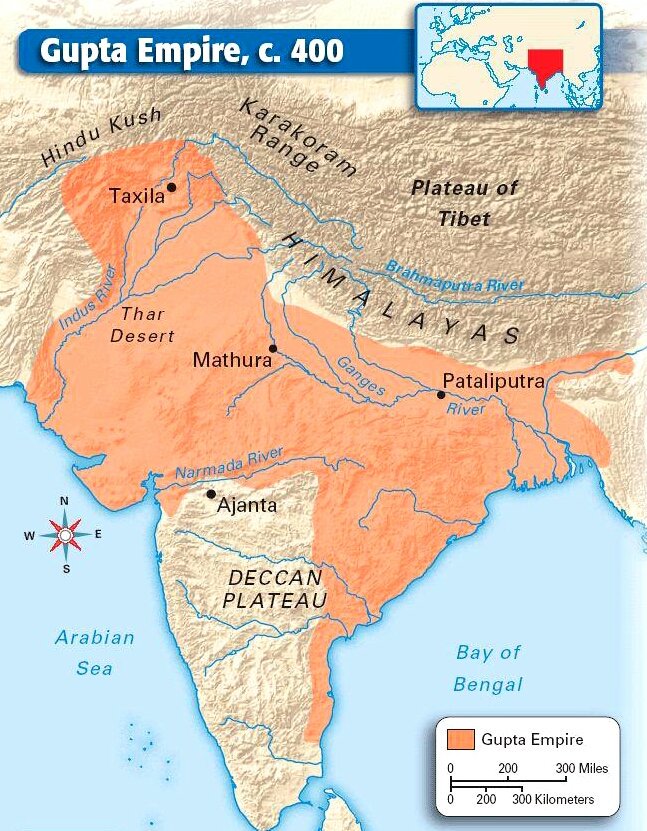
Around 275 CE, from the remnants of the Kushana realm, the Gupta dynasty rose to prominence. Flourishing between the mid-third and mid-sixth centuries CE, the Guptas successfully expanded their domain over large parts of the former Kushana and Satavahana territories. Although the Gupta Empire was territorially smaller than the Mauryan Empire, it achieved remarkable success in politically unifying much of northern India, especially between 335 and 455 CE. Their original kingdom encompassed parts of Uttar Pradesh and Bihar, but archaeological findings, including early Gupta coins and inscriptions, suggest that Uttar Pradesh was likely the dynasty’s core region. The city of Prayag (modern-day Prayagraj or Allahabad) served as a central hub for Gupta administration and expansion into neighboring areas.
Historians believe that the Guptas may have initially been feudatories under the Kushanas and likely of Vaishya (merchant) origin, gradually ascending to imperial status as the Kushana influence waned. This transition appears to have occurred with minimal disruption, as Gupta antiquities often directly succeed Kushana layers in archaeological contexts. The Guptas also adopted several cultural and military practices from their predecessors. Notably, they embraced the use of saddles, reins, buttoned coats, trousers, and boots, all of which were introduced by the Central Asian Kushanas. These adaptations enhanced cavalry mobility, making horsemen the core of Gupta military strength. Although some inscriptions praise Gupta rulers as heroic chariot warriors, horses had clearly replaced chariots and elephants as the dominant force in warfare during this period.
In addition to their military prowess, the Guptas benefited from several strategic material advantages. Their base region, the Madhyadesha—covering the fertile plains of Uttar Pradesh and Bihar—offered rich agricultural yields and access to iron ore deposits in central India and southern Bihar. Furthermore, their proximity to northern trade routes, particularly those connected to the silk trade with the Eastern Roman (Byzantine) Empire, contributed significantly to their economic prosperity. These favorable conditions enabled the Guptas to consolidate power over important regions such as Anuganga (the middle Gangetic basin), Saketa (Ayodhya), Magadha, and Prayag, eventually laying the groundwork for what came to be celebrated as a golden age of Indian culture, science, and political unity.
Sources
Sources for Reconstructing the History of the Gupta Period
The Gupta period (c. 4th to 6th century CE), often referred to as the Golden Age of Ancient India, is well-documented through a wide array of literary, epigraphical, and numismatic sources. These materials provide valuable insights into the political, social, cultural, and economic aspects of Gupta rule, and together form a rich base for reconstructing the history of this important era.
Literary Sources
A number of Sanskrit literary works and religious texts from or about the Gupta period serve as crucial historical records:
-
- The Puranas, especially the Vishnu and Vayu Puranas, are invaluable in tracing the genealogy and chronology of the Gupta kings. Though primarily religious in nature, they also include historical narratives and dynastic lists.
-
- The Devichandraguptam and the Mudrarakshasa, two Sanskrit dramas written by Vishakhadatta, provide political insights. The Devichandraguptam describes the conflict between Ramagupta and his brother Chandragupta II, offering a dramatized account of palace intrigues and succession disputes. The Mudrarakshasa depicts the Mauryan era but is believed to reflect the contemporary political sentiments of the Gupta period.
-
- The Dharmashastras, particularly the Narada Smriti and the Brihaspati Smriti, were likely codified or refined during the Gupta era. These legal texts shed light on the legal systems, duties of rulers, social structure, and family laws, thus contributing to our understanding of Gupta society.
-
- The Kaumudi Mahotsava, another Sanskrit drama, provides a vivid portrayal of the political landscape of Magadha during the period just prior to the rise of the Guptas.
-
- One of the most valuable foreign accounts of the Gupta period comes from the Chinese pilgrim Fa Xian (Faxian), who visited India during the reign of Chandragupta II in the early 5th century CE. His travelogue, Fo-Kuo-Ki (A Record of Buddhist Kingdoms), offers firsthand observations of the social, religious, and economic conditions, including details on urban life, the practice of Buddhism, and the administration of justice.
-
- Another Chinese traveler, I-Qing (I-Tsing), who visited India in the 7th century CE, refers to Maharaja Srigupta, believed to be the founder of the Gupta dynasty. He mentions a Buddhist shrine constructed near Mrigasikhavana (modern-day Bengal region) for Chinese pilgrims, known as the Temple of China. Though I-Tsing visited much after the Gupta era, his reference helps in tracing the dynasty’s early beginnings and cultural influence.
Epigraphical Sources
The Guptas made extensive use of inscriptions to proclaim their achievements, issue royal orders, and record grants, making epigraphy a vital source of historical information. Among the most notable inscriptions are:
-
- The Allahabad Pillar Inscription, also known as the Prayaga Prashasti, composed by Harishena, the court poet of Samudragupta, is one of the most celebrated eulogies in Indian history. It provides a detailed account of Samudragupta’s military campaigns, his diplomatic relations, and his patronage of religion and the arts.
-
- The Mehrauli Iron Pillar Inscription, attributed to Chandragupta II, celebrates the king’s military victories and virtues. The pillar itself, a metallurgical marvel, also stands as a testament to the scientific and technological advancement of the time.
-
- Inscriptions found in Udayagiri Caves, especially those in Cave 6 and Cave 8, refer to Chandragupta II’s rule and highlight his victory over the western regions. These also illustrate his interest in art, architecture, and religious patronage, particularly towards Vaishnavism.
-
- The Bhitari Pillar Inscription of Skandagupta provides valuable information regarding his reign, especially his defense against the Hun invasions, administrative measures, and religious donations. It gives us a picture of the empire’s resilience during times of external threat.
-
- The Gupta era also witnessed a surge in the composition of Prashastis—royal eulogies inscribed in poetic Sanskrit. These inscriptions, while rich in hyperbolic praise, offer significant political and cultural information. Though modern historians approach them critically for factual accuracy, they were prized in their time as works of art and state propaganda, extolling the king’s divine qualities and achievements.
-
- Numerous copper plate inscriptions (Tamrapatra) from the Gupta period also survive, primarily documenting land grants made to Brahmanas and religious institutions. These plates provide precise details such as the names of donors and donees, boundaries of the granted land, and even the reasons for donation—often rooted in religious merit (dharma). They reflect the close alliance between the state and religious institutions and offer insights into land ownership and administration.
The vast and varied sources—ranging from Sanskrit dramas and religious texts to royal edicts and foreign travelogues—together paint a vivid and multidimensional picture of the Gupta Empire. They allow historians to reconstruct a detailed narrative of an age that witnessed cultural brilliance, administrative sophistication, and economic prosperity, making it one of the most celebrated periods in Indian history
Numismatic and Architectural Legacy of the Gupta Period
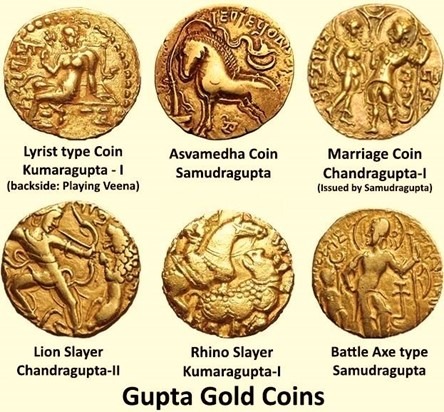
The Gupta period stands out in Indian history not only for its political achievements but also for its rich cultural and artistic contributions, as revealed through various numismatic and architectural sources. Among the most valuable historical records from this era are the coins issued by Gupta rulers, which are remarkable for their artistic quality, inscriptions, and symbolic imagery. These coins do more than serve as currency; they offer insightful glimpses into the royal titles, military victories, religious affiliations, and cultural patronage of the Gupta monarchs. For instance, one of the most iconic numismatic artifacts from this period features Samudragupta, often referred to as the “Napoleon of India,” depicted playing the veena. This unique portrayal not only reflects his prowess as a conqueror but also highlights his deep appreciation for music and the fine arts, showcasing the multi-dimensional personality of Gupta rulers and their support for cultural excellence.
In addition to coins, the Gupta period is renowned for its remarkable architectural developments, particularly in the realm of temple construction. During this time, religious art and architecture flourished, strongly influenced by Brahmanical (Hindu) traditions. The Guptas were devout patrons of Brahmanism, and this is evident in the temples they commissioned, many of which remain significant cultural landmarks today. These temples were among the earliest in India to adopt the classic architectural style featuring a small square sanctum (garbhagriha)—the innermost chamber where the principal deity was enshrined. The deities most commonly represented in these sacred spaces included Vishnu, Shiva, and other prominent figures of the Hindu pantheon.
Two notable examples of Gupta temple architecture are the temple at Deogarh, which is dedicated to the dual worship of Shiva and Vishnu, and the temple at Aihole, a site later associated with the early Chalukyas, where a shrine is devoted to Goddess Durga. These temples reflect not only the religious beliefs of the people but also the aesthetic and structural innovations of Gupta architects. The use of intricately carved stone, balanced proportions, and symbolic motifs marked a significant shift from earlier rock-cut structures to freestanding temples, laying the foundation for classical Hindu temple architecture in India.
Together, the numismatic evidence and monumental architecture of the Gupta age paint a vivid picture of a civilization that balanced military might with cultural refinement, and religious devotion with artistic expression. These sources continue to provide scholars and enthusiasts with a deeper understanding of the Guptas’ role in shaping India’s historical and cultural identity.
Prominent Rulers of the Gupta Empire
The Gupta Empire, which marked a golden age in Indian history, witnessed a succession of powerful monarchs who expanded its territories, promoted art and culture, strengthened administration, and safeguarded Indian society from internal and external threats. Here is a detailed account of the major rulers of the Gupta dynasty:
Chandragupta I (c. 319–335/336 CE)
Chandragupta I is widely regarded as the founder of the Gupta Empire in the true imperial sense. Although the dynasty existed before him, it was under Chandragupta I that the Guptas rose to political prominence and territorial significance. He adopted the grand imperial title “Maharajadhiraja” (King of Kings), which symbolized his sovereign status among contemporary rulers.
His reign is notable for the formal commencement of the Gupta Era in 319–320 CE, which later served as a significant chronological marker in Indian history. One of the most important aspects of Chandragupta’s rule was his strategic matrimonial alliance with Kumaradevi, a Lichchhavi princess from the prominent Nepalese clan. This alliance significantly enhanced his political stature and brought the fertile and strategically important region of Mithila under Gupta control. Coins from this period bear the joint figures and names of Chandragupta I and Kumaradevi, highlighting the political importance of this union.
Their son, Samudragupta, later came to be known as Lichchhavi-dauhitra (grandson of the Lichchhavis), a title that underscores the prestige attached to his maternal lineage. The Gupta Empire, under Chandragupta I, laid the solid foundation for what would become one of the greatest empires in Indian history.
Samudragupta (c. 335/336–375 CE)
Samudragupta, the son of Chandragupta I and Kumaradevi, was the most illustrious ruler of the dynasty and the true architect of the Gupta Empire’s expansion. A brilliant military strategist and an accomplished statesman, Samudragupta pursued an aggressive policy of conquest. His reign marked a period of both political consolidation and territorial enlargement, extending Gupta influence across much of the Indian subcontinent.
The most authentic and detailed account of his reign is found in the Allahabad Pillar Inscription, also known as the Prayaga Prashasti, composed in polished Sanskrit by his court poet and minister Harisena. The inscription, which also contains earlier inscriptions of Ashoka and later of Jahangir, categorizes Samudragupta’s enemies into four groups:
-
- Rulers who were slain and their territories annexed.
- Kings of frontier regions, who were forced to accept subordination.
- Rulers defeated but reinstated as tributaries.
- Distant rulers and foreign kings, such as those from Southeast Asia and Ceylon, who sent embassies acknowledging his supremacy.
Samudragupta’s Southern campaign, especially his defeat of twelve southern rulers including Vishnugopa of Kanchi, is a testament to his military prowess. However, instead of annexing these territories, he followed a policy of political reconciliation, reinstating many defeated kings in return for their loyalty and tribute.
He celebrated his military success by performing the Ashvamedha sacrifice, and issued special Ashvamedha coins to commemorate the event. His coins also depict him playing the veena, reflecting his deep interest in music and the arts. He was a patron of literature, took the title Kaviraja (King of Poets), and supported religious tolerance. He granted permission to Meghavarman, the Buddhist king of Ceylon, to build a monastery at Bodh Gaya, which highlights his compassion and support for Buddhism. He is also associated with the Buddhist philosopher Vasubandhu, who was among his ministers.
Chandragupta II (c. 376–413/415 CE)
Chandragupta II, also known by the illustrious title Vikramaditya, succeeded Samudragupta and carried forward the imperial legacy with remarkable success. Some historical accounts suggest he came to power after defeating and killing his elder brother Ramagupta, who had allegedly signed a humiliating treaty with a Shaka ruler that involved handing over his wife. Chandragupta II is said to have killed the enemy and married Dhruvadevi, Ramagupta’s queen, to uphold the dynasty’s honour.
His reign marked the zenith of Gupta imperial expansion and prosperity. Through a combination of military conquests and strategic matrimonial alliances, he extended Gupta control across western and central India. He married Kuberanaga, a princess of the Naga dynasty, and their daughter Prabhavati Gupta married Rudrasena II of the Vakataka dynasty. After Rudrasena’s death, Prabhavati ruled as regent with the guidance of her father. For nearly two decades, the Vakataka kingdom remained under indirect Gupta influence, further strengthening Gupta dominance in the Deccan.
Chandragupta II’s military conquests included the defeat of the Western Shaka Satraps, bringing regions such as Malwa, Gujarat, and the western seaboard under Gupta control. This gave the empire access to important trade routes and coastal ports, enhancing the prosperity of cities like Ujjain, which became his second capital.
An inscription on the Mehrauli Iron Pillar in Delhi, attributed to his reign, confirms Gupta control over northwestern India, including parts of Bengal. He adopted titles such as Simhavikrama and Vikramaditya, and became the first Gupta ruler to issue silver coins, in addition to the traditional gold dinaras and copper coins. His coinage and inscriptions reflect not only his military victories but also his cultural sophistication.
Chandragupta II’s court was adorned by the legendary Navaratnas (Nine Gems), which included eminent scholars and poets such as Kalidasa, Varahamihira, Amarasimha, Dhanvantri, and others. His era was marked by a flourishing of Sanskrit literature, astronomy, medicine, and fine arts. The Chinese pilgrim Fa Xian visited India during his reign and documented a peaceful and prosperous land with a well-organized administration and a flourishing Buddhist culture.
Kumaragupta I (c. 415–455 CE)
Kumaragupta I, the son of Chandragupta II, ascended the throne at a time when the empire was at its peak. He assumed imperial titles such as Shakraditya and Mahendraditya, and like his illustrious grandfather, performed the Ashvamedha sacrifice, asserting his authority and independence.
One of his major contributions to Indian culture was the founding of the Nalanda University, which later became one of the greatest centres of learning in the ancient world, attracting students and scholars from across Asia. A devout worshipper of Lord Karttikeya, Kumaragupta issued coins bearing the deity’s image.
His reign, though initially peaceful, witnessed the beginning of external threats, particularly from the White Huns (Hepthalites) of Central Asia. In the mid-5th century, they entered India through Gandhara after occupying Bactria. The initial invasion was repelled by Prince Skandagupta, marking the beginning of a prolonged struggle against these northern invaders.
Important inscriptions from his reign include the Bilsad inscription (Gupta year 96/415 CE), Karandanda inscription, Mandsor inscription, and Damodar copperplate grants, all of which help trace administrative practices, land grants, and the chronology of his rule.
Skandagupta (c. 455–467 CE)
Skandagupta, one of the most capable Gupta rulers, faced severe challenges during his reign, both from within and outside the empire. He first defeated a rebel named Pushyamitra and then successfully repelled the Huna invasions, earning the title Vikramaditya.
One of the most important inscriptions of his reign, the Junagadh (Girnar) Inscription, mentions that his governor Parnadatta undertook the restoration of the Sudarshana Lake, reflecting the continued commitment to public welfare and infrastructure.
Despite his military successes, Skandagupta’s reign marked the beginning of decline in central imperial authority. Though the empire endured, the control of the central administration weakened, and regional governors began asserting hereditary rights, indicating a shift towards feudalism.
Later Gupta Rulers and the Decline (Post-467 CE)
After Skandagupta’s death, the Gupta Empire rapidly declined. Successive rulers, including Purugupta (467–473 CE), Kumaragupta II (473–476 CE), Budhagupta (476–495 CE), Narasimhagupta Baladitya (495–530 CE), Kumaragupta III (530–540 CE), Vishnugupta (540–550 CE), Vainyagupta, and Bhanugupta, were unable to maintain the vast empire due to internal dissensions and the continued pressure from foreign invasions.
The weakening of central authority led to the fragmentation of the empire, with many governors establishing independent regional kingdoms, marking the end of classical Gupta imperial power.
Gupta Administration
The Gupta Empire, known for ushering in a golden age in Indian history, had a sophisticated administrative system that blended monarchic central authority with a decentralized, feudal structure. The Gupta rulers assumed grand titles such as Rajadhiraja, Maharajadhiraja, Parambhattaraka, Parameshwara, Samrat, and Chakravartin, asserting their supremacy and divine right to rule. Monarchy was the principal form of governance during this period, and the king was the supreme head of the state, overseeing administration, justice, and military affairs. However, unlike the strict centralization of the Mauryan Empire, the Guptas embraced a more flexible and feudal administrative model.
|
Official Title |
Designation / Role |
|
Mahabaladhikrita |
Commander-in-Chief |
|
Mahadanayak |
Chief Justice |
|
Mahapratihar |
Official in charge of the royal palace |
|
Mahasandhivigrahak |
Official responsible for post-war conciliation |
|
Dandapashika |
Head of the police department |
|
Bhandagaradhikreta |
Head of the royal treasury |
|
Mahapaksha-Patalik |
Head of the accounting department |
|
Vinaysthitisansathapak |
Head of the education department |
|
Sarvadhyaksha |
Inspector for all central departments |
|
Mahashwapati |
Controller of the cavalry |
|
Mahamahipilapati |
Controller and executor of elephantry |
|
Vinaypura |
Official responsible for presenting guests at the court |
|
Yuktapurusha |
Officer responsible for keeping account of war booty |
|
Khadyatpakika |
Inspector of the royal kitchen |
|
Ranabhandagarika |
Officer-in-charge of army stores |
|
Mahanarpati |
Head of foot soldiers (infantry) |
Succession Practices
While kingship was hereditary, the succession process under the Guptas did not always follow the principle of primogeniture. Instead of automatically appointing the eldest son as successor, the reigning monarch often chose the most capable prince from among his sons to ascend the throne. This approach allowed the Gupta emperors to ensure competent leadership, though it could also lead to intra-dynastic conflict.
Decentralized Governance and Bureaucracy
The Gupta administration marked a significant shift from the Mauryan model by reducing centralized control and encouraging regional autonomy. The empire was vast, and direct control over every region was impractical. Consequently, the Gupta emperors delegated many administrative responsibilities to local feudatories, officials, and even to guilds of merchants and artisans. Unlike the elaborate and structured Mauryan bureaucracy, the Guptas relied on a simpler administrative setup. One of the most important administrative officers was the Kumaramatya, a senior functionary appointed by the king, probably compensated through salaries in cash or land grants.
The emperor was advised by a Mantri Parishad or council of ministers, which included royal princes, prominent officials, and local feudatories. The decisions of the council were communicated to the emperor through an Amatya or minister.
Provincial and Local Administration
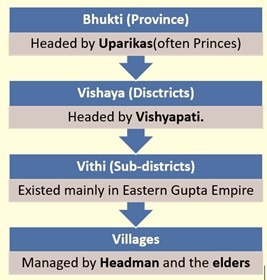
The Gupta Empire was divided into provinces called Bhuktis, each under the control of a governor known as an Uparika, who was often directly appointed by the emperor. These provinces were further subdivided into districts called Vishayas, which were managed by district officers known as Vishayapatis. In certain parts of eastern India, these districts were again divided into smaller units called Vithis, which comprised several villages. At the grassroots level, each village was overseen by a Grāmika or village headman, who administered local affairs with the help of village elders. Land transactions, disputes, and village-level decisions were not valid without the approval of the Grāmika and the local council.
Urban Administration and Guilds
In towns and cities, administration was carried out with the involvement of organized professional bodies or guilds (Shrenis), comprising artisans, merchants, and scribes. These guilds had significant autonomy and were often consulted in matters of land transactions, trade regulations, and civic issues. They also governed their members by enforcing internal codes of conduct and punishing violations independently. This practice reflects the growing influence of commercial communities during the Gupta era.
Military Organization
The Gupta kings maintained a standing army for the protection of the empire and to suppress rebellions or foreign invasions. However, the royal army was often supplemented by troops provided by local feudatories, known as Samantas, who were obliged to offer military assistance when required. During this period, chariots gradually lost their prominence, and cavalry units, particularly horse archers, gained strategic importance in the battlefield. This shift signified a transformation in military tactics and the growing significance of mobile warfare.
Judicial System
The judicial system under the Guptas evolved significantly and was more sophisticated compared to earlier periods. Legal literature like the Narada Smriti and Brihaspati Smriti was compiled during this time, clearly distinguishing between civil and criminal laws. The king served as the highest judicial authority and was assisted by Brahmana priests and legal experts in adjudicating disputes. Although varna-based discrimination remained embedded in the legal system, guilds and local bodies were allowed to adjudicate intra-community matters according to their own laws and customs.
Sources of Revenue
Agriculture remained the chief source of revenue during the Gupta period. The state typically claimed one-fourth to one-sixth of the agricultural produce as tax. However, in contrast to earlier empires, the Gupta rulers imposed fewer taxes on trade and commerce. When the royal army moved through the countryside, villagers were expected to provide supplies such as foodgrains, livestock, and accommodation for officials. In central and western India, peasants were sometimes required to perform Vishti (forced labor) for state officials and military personnel.
Feudalism and the Role of Samantas
A unique feature of Gupta administration was the emergence of a feudal structure marked by the growing power of Samantas—local chiefs or military leaders who had been subjugated and reinstated to govern their regions under Gupta overlordship. These Samantas managed their territories independently, sustained themselves through local revenue collection, and owed military service and allegiance to the emperor. Over time, as central authority weakened, some powerful Samantas declared independence and established their own kingdoms.
Land Grants and Feudal Development
The practice of granting tax-free land to Brahmanas, officials, and religious institutions became increasingly common during the Gupta period. These land grants, known as Agraharas when given to Brahmanas, exempted the recipients from taxes and often gave them judicial and administrative rights over the villages. This trend reflected both the religious patronage of the Gupta rulers and their attempt to cultivate loyalty among local elites. However, the proliferation of land grants led to a gradual erosion of royal authority, as large tracts of revenue-generating land passed into private and ecclesiastical hands.
Historians have debated the implications of this land grant system. Some argue that it was a strategic effort to bring more land under cultivation and expand agriculture, while others believe it signaled a decline in imperial power and an attempt to maintain control through appeasement and religious propaganda.
Economic Guilds and Autonomy
Artisan and merchant guilds flourished during the Gupta age, playing a significant role in both the economy and administration. These guilds, especially those of merchants, enjoyed substantial privileges and were allowed to regulate their internal affairs. They had the authority to punish members who violated the guild’s code of conduct, and in some regions, wielded considerable political influence as well.
Fa Xian’s Observations on Gupta Governance
The Chinese Buddhist pilgrim Fa Xian visited India during the reign of Chandragupta II and provided valuable insights into Gupta administration. He described it as mild, liberal, and benevolent. According to Fa Xian, there was minimal state interference in the daily lives of people, and personal freedoms were respected. He noted the absence of a widespread spy network and reported that the roads were safe for travelers, with crime being virtually nonexistent. Fa Xian further mentioned that punishments were humane—capital punishment was rare, and fines were the most common form of penalization. He also observed that the people were prosperous and that Buddhist monasteries and educational institutions received royal patronage
Trade and Economy during the Gupta Period
The Gupta period witnessed significant economic developments, though it also showed signs of transition and gradual decline in certain sectors, especially long-distance trade. Fa Xian, the Chinese Buddhist pilgrim who visited India during the reign of Chandragupta II, described Magadha as a flourishing region filled with prosperous cities. According to his accounts, wealthy merchants and urban elites generously supported Buddhism and engaged actively in charitable activities, contributing to the construction of monasteries and welfare services. This reflects a thriving internal economy, at least in parts of the empire, driven by both religious patronage and urban commercial activity.
Decline of Long-Distance Trade
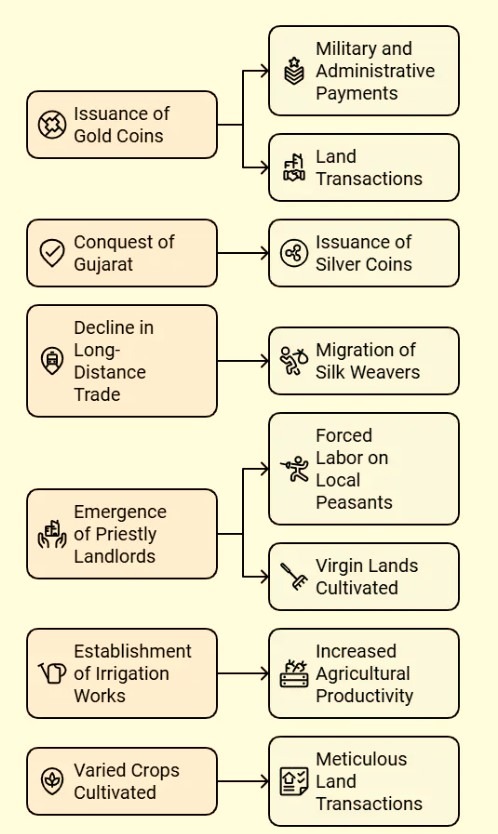
Despite the flourishing internal economy, the Gupta period marked a relative decline in long-distance trade compared to earlier times, particularly with the Roman Empire. One of the major reasons for this decline was the reduced demand for Indian silk in Western markets. By the mid-fifth century CE, Indian silk exports faced a significant setback. The guild of silk weavers from Gujarat, which had traditionally been engaged in the manufacture and trade of silk, migrated to Mandasor and abandoned their ancestral profession in response to falling demand. This shift signaled a deep impact on artisanal communities that had relied heavily on foreign trade.
A more severe blow came around the mid-sixth century CE when the Eastern Roman (Byzantine) Empire learned the technique of silk production directly from China. With the capability to produce silk locally, the dependence on Indian silk was drastically reduced, further undermining India’s export-based economy. The decline of trade with the Roman world also led to the collapse of key trade networks and the diminished prosperity of many port cities and inland trade hubs.
However, trade did not completely disappear. Urban centres like Mahasthan or Mahasthangarh—identified as ancient Pundranagara in present-day Bangladesh—continued to function as commercial and administrative centres during the Gupta era, indicating regional trade activity and localized economic dynamism.
Coinage and Currency
One of the most striking features of the Gupta economy was its prolific coinage. The Gupta emperors issued the largest number of gold coins in ancient India, known in their inscriptions as Dinaras. These coins are particularly noted for their artistic excellence. The obverse typically depicted the reigning monarch in various poses, often showcasing martial prowess, hunting scenes, or musical performances, symbolizing their strength and cultural refinement. The reverse side generally featured Hindu deities, especially Goddess Lakshmi, symbolizing prosperity and divine legitimacy.
Although the Gupta gold coins were impressive in terms of number and design, their gold content was somewhat less pure than those of their predecessors, the Kushans. Nevertheless, these coins played a vital role in sustaining the imperial administration, paying salaries to officials and soldiers, and facilitating land transactions and large-scale commercial exchanges.
|
Coins |
Features |
|
Dinar |
These were gold coins.The quality of gold coins deteriorated. |
|
Rupaka |
These were silver coins16 Rupaka = 1 Dinar |
|
Daler |
These were copper coins |
Following the annexation of Gujarat, the Guptas began issuing silver coins for local use. These coins continued the tradition of the Western Kshatrapas, who had earlier dominated the region and used silver extensively in their currency. In contrast, Gupta copper coins were relatively scarce, suggesting that the use of money had not penetrated the everyday life of the common people to the extent it had during the Kushan era. This could imply that barter systems or localized exchange mechanisms continued to play a significant role in rural economies.
From the sixth century CE onwards, the discovery of Gupta gold coins significantly declined. This trend has led to scholarly debates regarding a possible economic downturn. Some historians attribute this decline to the collapse of long-distance trade with the West following the fall of the Western Roman Empire. The decline of this trade network may have reduced the flow of precious metals into India, thereby affecting the volume of minted currency and the prosperity of those regions dependent on international commerce.
However, others argue that the reduced coin finds might not necessarily indicate a collapse. Instead, coins could have remained in active circulation and were less frequently hoarded or deposited, hence their fewer archaeological recoveries. In support of this, references to coinage continued to appear in inscriptions and literary texts, suggesting that economic transactions involving coins persisted despite fewer discoveries in excavations.
Emergence of Priestly Landlords and Socio-Economic Transformation
Another notable development in the Gupta economy was the emergence of priestly landlords, particularly in regions such as Madhya Pradesh. This phenomenon was closely linked to the widespread practice of land grants. The Gupta rulers extensively granted tax-free lands to Brahmanas and religious institutions, a trend which had originated under the Satavahanas but became more institutionalized during the Gupta era. These land grants played a dual role—they promoted the expansion of agriculture into new territories, but also altered the social structure of rural society.
In many cases, these Brahmana grantees emerged as dominant landholders, often exercising both fiscal and judicial authority over the villages granted to them. While this brought new areas under the plough, it also displaced tribal or marginal communities, pushing them into subordinate socio-economic roles. In central and western India, peasants were often subjected to forced labour (Vishti) for the benefit of these newly established landlords or for royal officials on duty.
This transformation contributed to the development of a semi-feudal agrarian economy, where control over land and its surplus became the primary source of power. The economic dependence of the peasantry on landlord classes—whether royal, priestly, or administrative—marked a departure from earlier more centralized fiscal systems and indicated a shift towards a more stratified rural order.
Caste System during the Gupta Period
The Gupta period witnessed the crystallization of the caste system into a more rigid and hierarchical social structure. The Brahmanas occupied the highest position in the caste hierarchy and enjoyed immense socio-economic privileges. They were the principal recipients of land grants and gifts, both from kings and wealthy patrons, which reinforced their dominance in religious, social, and political spheres. Their elevated status was further legitimized through scriptural authority and ritual superiority.
A significant transformation during this period was the proliferation of sub-castes, driven primarily by two factors: the assimilation of foreign elements into Indian society and the incorporation of tribal populations into the Brahmanical fold.
One important reason for the expansion of the caste system was the assimilation of foreign groups, especially those who entered India as invaders or migrants. These groups, often military in nature, were absorbed into the Kshatriya varna and gradually integrated into the Indian social order. A notable example is the Hunas, who arrived in India in the late 5th century CE. Over time, they were recognized as one of the thirty-six Rajput clans. Even today, certain Rajput families trace their lineage to the Hunas, some retaining the title ‘Hun’ as a symbol of ancestral heritage.
The integration of tribal communities also contributed to the fragmentation of society into multiple jatis (sub-castes). The policy of issuing land grants to Brahmanas often resulted in the inclusion of tribal territories within the expanding agrarian economy. While tribal chiefs were sometimes given respectable positions and mythological genealogies to elevate their status, the common tribal people were typically absorbed into the lower rungs of the caste system. This gradual transformation of tribes into castes marked a critical development in Indian social history—a process that has continued, in various forms, into the modern era.
Improvement in the Status of Shudras
Despite the growing rigidity in the caste system, the status of the Shudras—traditionally considered the lowest of the four varnas—saw some notable improvements during the Gupta period. These changes were primarily economic and cultural in nature, arising from shifts in occupational roles and religious inclusion.
From being confined to roles such as servants and manual laborers, Shudras began to assume more active roles in agriculture and rural economy. By the 7th century CE, they were increasingly recognized as cultivators and agriculturists, which gave them greater social visibility and economic importance.
In the religious domain, Shudras were no longer excluded from participating in mainstream Hindu practices. They were permitted to listen to revered epics such as the Ramayana, Mahabharata, and the Puranas, which had previously been restricted to the upper varnas. They were also allowed to worship popular deities like Krishna, and even to perform some domestic rituals—although still under the guidance of Brahmana priests. These developments provided both spiritual recognition and a limited degree of cultural assimilation.
Untouchables and Marginalized Groups
While certain sections of society experienced upward mobility, the untouchables, particularly the Chandalas, faced increasing marginalization during the Gupta era. These communities, relegated outside the varna system, were associated with occupations considered impure or polluting, such as meat processing, execution, and scavenging.
The social discrimination faced by these groups was so extreme that it was recorded by Fa Xian, the Chinese Buddhist monk who visited India in the early 5th century. He observed that the Chandalas were forced to live outside the village boundaries and had to announce their presence in public spaces by sounding a clapper, so that upper-caste people could avoid contact. The very sight of them was considered polluting. Similarly, Xuan Zang, another Chinese pilgrim who visited in the 7th century CE, noted that executioners and other outcastes were strictly segregated from urban life.
These observations highlight the deep-rooted and institutionalized nature of untouchability during the Gupta period, which had significant implications for social justice and human dignity.
Status of Women in Gupta Society
The position of women during the Gupta period reflected a complex blend of cultural participation and patriarchal subordination. While women were permitted to engage in religious life and, in limited cases, had access to property rights, their overall freedoms were severely restricted by prevailing social norms and legal frameworks.
Religious Access and Cultural Inclusion
Women, especially from upper castes, were allowed to listen to and recite sacred texts such as the Ramayana, Mahabharata, and the Puranas. They were encouraged to worship deities like Krishna, indicating a degree of spiritual inclusion. However, this access did not translate into significant ritual or institutional power.
Education and Livelihood
Education remained a privilege largely limited to wealthy women. While a few elite families may have educated their daughters, the majority of women—especially those from higher varnas—were excluded from formal learning. Interestingly, women from lower castes, such as Vaishyas and Shudras, had relatively more economic freedom. They participated in agriculture, household industries, and labor-based occupations, thereby contributing actively to the economy.
Marriage, Property, and Patriarchy
The subordination of women, particularly among the upper varnas, was linked to their economic dependence on men. Most women did not have independent livelihoods and were denied inheritance rights, especially in landed property. Although marriage gifts, known as stridhana, including jewelry, clothes, and ornaments, were considered a woman’s personal property, control over immovable property was rarely granted.
However, some progressive legal opinions emerged during the later part of this period. The 6th-century lawgiver Katyayana asserted that women had the right to sell or mortgage their immovable property along with their stridhana, indicating an evolution in legal consciousness. Nevertheless, such rights remained largely theoretical and were seldom realized in practice.
Practice of Sati and Social Regression
A disturbing development during the Gupta era was the first recorded instance of Sati—the self-immolation of a widow on her husband’s funeral pyre—dated to 510 CE. Although the practice was not yet widespread, its occurrence reflects a growing tendency to idealize widowhood and reinforce patriarchal control over women’s bodies and lives. The increasing association of women with property, particularly among landowning families, led to the view of women as possessions to be protected or disposed of according to social norms.
The Gupta period marked a turning point in Indian social history, characterized by increasing stratification and the consolidation of caste hierarchies. While certain groups such as Shudras saw improvement in their socio-economic status, others—including untouchables and women—faced heightened marginalization. The period witnessed the expansion of Brahmanical orthodoxy and land-based patriarchy, setting the tone for centuries of structured social inequality. However, amidst these limitations, faint voices of social change—such as legal rights for women and cultural participation of lower castes—began to emerge, sowing the seeds for future transformations.
Religion during the Gupta Period
Resurgence of Hinduism
The Gupta period marked a significant religious transformation in ancient India, characterized by the resurgence of Hinduism, which reasserted itself after centuries of Buddhist dominance, particularly under the Mauryan and Kushana empires. While Buddhism had flourished under earlier rulers like Ashoka and Kanishka, the Guptas actively patronized Brahmanical traditions, thereby revitalizing Hinduism and shaping its institutional, philosophical, and ritualistic contours for centuries to come.
A central feature of this resurgence was the evolution and prominence of sectarian worship, especially Vaishnavism and Shaivism, both of which emphasized bhakti—personal devotion to a chosen deity. These sects grew increasingly influential and attracted followers from various social backgrounds. The worship of deities like Vishnu and Shiva gained a foothold in the everyday religious practices of the people, moving away from abstract philosophical speculation towards emotionally resonant and community-based forms of worship.
This era also witnessed a significant reinterpretation of older Vedic concepts and scriptures. The ideas of divine saviours and cosmic cycles, once explored in Buddhist and Jain thought, were now being mirrored and elaborated upon within Hindu traditions. The concept of divine incarnation—where deities descend to Earth to restore dharma—became a foundational belief, particularly in Vaishnavism.
Vaishnavism and the Rise of Bhagavatism
Vaishnavism, also known as Bhagavatism, emerged as a dominant form of Hinduism during the Gupta era, centering on the worship of Vishnu as the supreme deity. By this period, Vaishnavism had overtaken Mahayana Buddhism in popularity and influence, appealing to a wide spectrum of society—from Brahmanas to artisans, merchants, and even foreign communities.
A cornerstone of Vaishnavite belief was the doctrine of avatars or incarnations of Vishnu. According to this tradition, Vishnu descends to Earth in various forms whenever righteousness (dharma) is threatened. The Dashavatara, or the ten principal avatars of Vishnu, include Matsya (fish), Kurma (turtle), Varaha (boar), Narasimha (half-man, half-lion), Vamana (dwarf), Parashurama, Rama, Krishna, Buddha, and the future avatar Kalki. Each incarnation symbolized divine intervention in human affairs and reinforced the moral order.
Under the Guptas, Krishna, one of Vishnu’s most beloved avatars, rose to particular prominence. The Mahabharata was reworked during this period to emphasize Krishna’s divinity and identify him directly with Vishnu. This integration helped cement Krishna’s status not just as a hero of epic literature but as a universal god worthy of devotion.
Bhagavatism was distinguished by several defining features:
-
- Bhakti (devotion): Emphasis was placed on emotional surrender and personal devotion to the deity.
- Ahimsa (non-violence): Worship often involved vegetarian offerings like rice and sesame seeds, aligning with agrarian values and rejecting animal sacrifice.
- Inclusivity: Unlike earlier Vedic rituals reserved for upper castes, Vaishnavism was open to women, Vaishyas, and Shudras, allowing broader participation.
- Appeal to diverse groups: The devotional simplicity and moral clarity of Bhagavatism attracted foreigners, merchants, and artisans, especially those who had risen in status under earlier dynasties like the Satavahanas and Kushans.
By the sixth century CE, Vishnu had become an integral member of the Hindu trinity (Trimurti), alongside Brahma (the creator) and Shiva (the destroyer). Despite this triadic classification, Vishnu enjoyed an independent and widespread following. The composition of the Bhagavata Purana during this time further codified his worship and helped spread the theology of devotion
Shaivism: Worship of Shiva
Alongside Vaishnavism, Shaivism—the worship of Shiva as the supreme deity—also gained momentum, although it became more prominent after the early Gupta phase. Shiva was revered as the god of destruction and transformation, embodying both ascetic renunciation and cosmic power.
Some Gupta rulers, particularly in later generations, were devotees of Shiva. Temples, images, and religious texts dedicated to Shiva began to emerge, and linga worship (symbolizing Shiva’s formless energy) became widespread. Over time, Shaivism evolved into a complex tradition with its own scriptures, rituals, and sects, forming a vital part of the broader Hindu revival.
Religious Literature and Practices
The Gupta period was a golden age not only for religion but also for religious literature. The two epics—Ramayana and Mahabharata—were extensively re-edited and expanded during this time, embedding deep philosophical and moral teachings within accessible narrative forms. These texts were no longer confined to elite circles but became widely accessible through public recitations, thereby shaping the cultural and ethical values of the common people.
The Puranas, a new category of religious texts, also began to be composed in this period. Written in simple Sanskrit, they conveyed complex theological ideas through myths, genealogies, and legends. These texts played a crucial role in the spread of idol worship, temple-based rituals, and the elevation of local deities into pan-Indian gods.
From this period onwards, idol worship in temples became a defining feature of Hindu practice. Agrarian festivals, once secular in nature, were now infused with religious meaning and rituals, benefiting the Brahmanical priesthood and reinforcing their role as spiritual mediators.
Religious Tolerance and Other Faiths
Despite the revival of Hinduism, the Gupta rulers adopted a policy of religious tolerance. There is no evidence of persecution against Buddhists or Jains. However, these faiths, which had once received substantial royal patronage, began to decline in political and cultural significance.
Buddhism, although in decline, continued to be practiced in various regions. Chinese traveler Fa Xian, who visited India in the early 5th century CE, claimed that Buddhism was flourishing. However, historical and archaeological evidence suggests otherwise. Most Buddhist institutions lacked the grandeur and support they once enjoyed under Ashoka and Kanishka. Still, the tradition survived in pockets, with some stupas and viharas being constructed.
One significant exception was the founding of Nalanda Mahavihara, an ancient center of learning in Magadha, established by Kumaragupta I (also known as Shakraditya, c. 415–455 CE). It became a hub for Mahayana Buddhism, attracting scholars from across Asia. Though destroyed by the Hun king Mihirakula in the early 6th century, it was later restored and continued to flourish until the 13th century.
Nalanda University became renowned for its academic excellence and taught a wide range of subjects including:
-
- The Vedas and Hindu philosophy
- Grammar, medicine, logic, mathematics, and astronomy
- Mahayana Buddhist philosophy, which was a compulsory subject
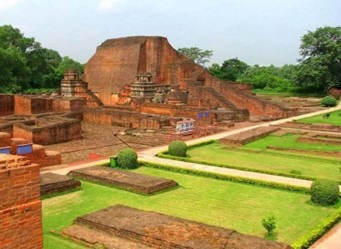
Descriptions of Nalanda primarily come from Buddhist texts and the accounts of Chinese pilgrims:
-
- Fa Xian did not mention Nalanda in his early 5th-century accounts.
- Xuanzang (Hsuan Tsang), who visited India between 630–645 CE, provided a detailed description. He claimed that over 10,000 students resided at Nalanda, though modern archaeology suggests this may have been an exaggeration.
- I-Qing, another Chinese monk, who stayed at Nalanda from 675–685 CE, noted that over 3,000 residents lived there during his time.
Eventually, the institution declined due to foreign invasions, waning royal support, and the gradual erosion of Buddhist influence in India.
Meanwhile, Jainism remained relatively more active in western and southern India, especially in Karnataka. The Jain Council at Valabhi, held during this era, was instrumental in compiling the Jain Canon of the Shwetambaras, thus preserving and organizing Jain scriptures for future generations.
The Gupta period marked a pivotal era in Indian religious history. It witnessed the revival and institutionalization of Hinduism, the emergence of devotional sects, and the codification of religious literature that would shape Indian spirituality for centuries. While Buddhism and Jainism saw a gradual decline in royal patronage, they continued to thrive in various regions and retained significant scholarly and cultural contributions. The Guptas’ commitment to religious tolerance created an environment of pluralism, allowing diverse traditions to co-exist and influence each other in profound ways.
Art and Architecture during the Gupta Period
The Gupta period (c. 320 – 550 CE) is often celebrated as a Golden Age of Indian Culture, marked by significant achievements in the fields of art, architecture, literature, and science. While some scholars describe this era as a renaissance, it is more accurately regarded as the culmination of a long and continuous process of intellectual, religious, and cultural development, rather than a revival following a dark age. The Gupta rulers were great patrons of art, and their reign witnessed the crystallization of classical Indian art forms in their most refined and elegant expressions.
Architectural Developments
Architecture during the Gupta era witnessed remarkable growth and diversification. Structures from this period included religious buildings dedicated to Hinduism, Buddhism, and Jainism. Although many architectural marvels of the time were destroyed during subsequent invasions—particularly by the Hunas—the surviving temples, cave shrines, sculptures, and paintings still reflect the grandeur and sophistication of Gupta craftsmanship.
Hindu temples began evolving into more complex and grandiose structures, shifting from simple flat-roofed sanctuaries to more elaborate designs featuring tall curvilinear towers (shikharas). The temples were often constructed using brick and stone, adorned with ornate carvings and relief panels. Meanwhile, Buddhist architecture continued primarily through the excavation of cave monasteries and chaityas (prayer halls), which were relatively smaller in scale but rich in sculptural and mural work.
One of the most remarkable metallurgical achievements of the Gupta period is the Iron Pillar at Mehrauli in Delhi, which stands testimony to the advanced technological skills of Gupta artisans. Despite being exposed to the elements for over 1,500 years, the pillar has remained rust-free, showcasing the expertise of ancient Indian ironworkers.

Buddhist Art and the Ajanta Caves
Buddhist art reached new heights under the Guptas, as seen in both sculpture and painting. A significant discovery from this period is the two-metre-high bronze image of Buddha recovered from Sultanganj near Bhagalpur, Bihar—an exquisite example of bronze casting, now housed at the Birmingham Museum and Art Gallery in England.
The Mahabodhi Temple at Bodh Gaya, a significant Buddhist pilgrimage site, was reconstructed in its current form during the Gupta period, incorporating many stylistic elements typical of the era.
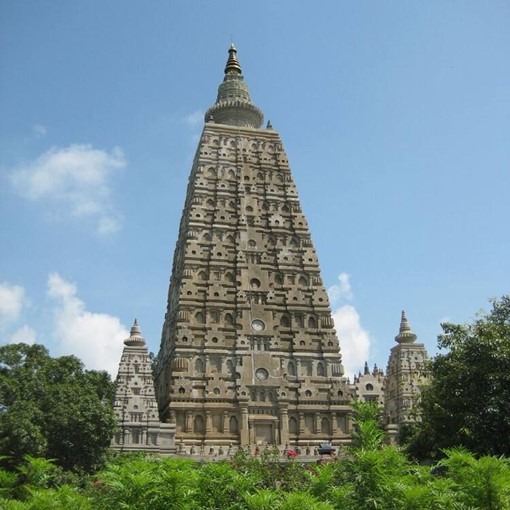
However, the greatest artistic treasures of Gupta Buddhist art are undoubtedly the Ajanta Cave Paintings. These rock-cut caves, located near Chhatrapati Sambhaji Nagar (formerly Aurangabad) in Maharashtra, comprise thirty caves carved into a cliff face above the Waghora River. They were developed in two distinct phases:
1. Early Phase (2nd century BCE – 1st century CE): This phase corresponds to the rule of the Satavahanas. The caves from this period (such as caves 9, 10, 12, 13, and 15A) reflect the Hinayana form of Buddhism, where the Buddha is represented symbolically. These caves were simple in design, featuring chaityagrihas with vaulted ceilings, apsidal ends, and large horseshoe-shaped chaitya windows. Decoration was minimal, with sparse use of mural paintings.
2. Later Phase (5th – 6th century CE): This phase flourished under the Vakataka dynasty, contemporaries of the Guptas. Most of the famous Ajanta paintings belong to this era and reflect the Mahayana tradition, where the Buddha is depicted in anthropomorphic form. These caves were richly decorated with fresco-style tempera paintings and intricate carvings. Scenes from the Jataka tales and the life of Gautama Buddha are vividly illustrated with remarkable naturalism, shading techniques, and emotional depth.
Another notable site of Gupta-era Buddhist art is the Bagh Caves near Gwalior in Madhya Pradesh, which contain murals stylistically similar to those of Ajanta, further highlighting the artistic brilliance of the period.
Hindu Temple Architecture
The Gupta period laid the foundation for classical Hindu temple architecture. The Guptas, who were staunch supporters of Brahmanism, constructed some of the earliest surviving Hindu temples. These temples typically featured a small square sanctum (garbhagriha), often surmounted by a shikhara (spire), and contained images of deities such as Vishnu, Shiva, and Durga.
Key examples include:
-
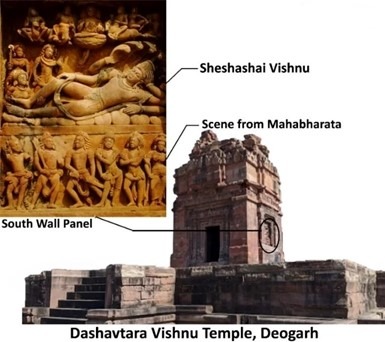
- Dashavatara Temple at Deogarh (Uttar Pradesh): This temple is one of the earliest surviving stone temples in India and is dedicated to Vishnu. Its carvings depict the ten avatars (Dashavatara) of Vishnu and various mythological scenes.
-
- Bhitargaon Temple near Kanpur (Uttar Pradesh): Constructed using terracotta and brick, it is one of the oldest standing brick temples with a shikhara. Its walls are adorned with detailed terracotta panels showing scenes of Shiva, Vishnu, and other figures.

-
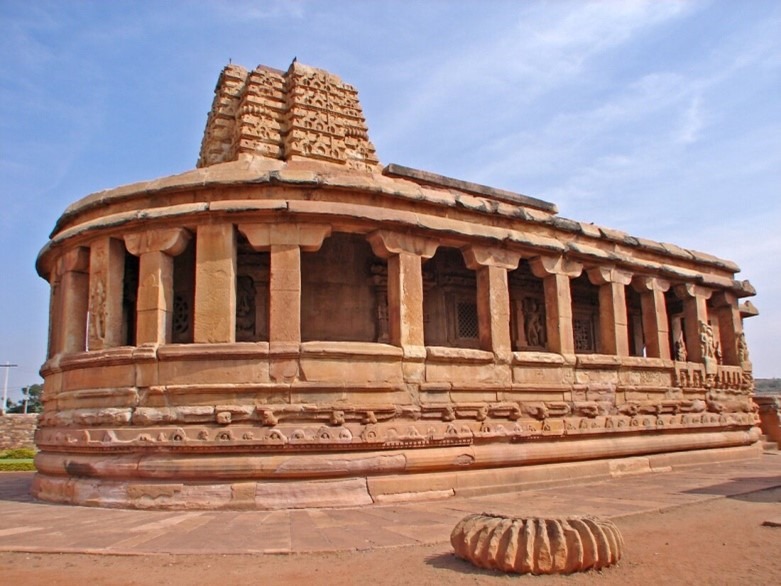
- Durga Temple at Aihole (Karnataka): Although built slightly later, this temple, with its semi-circular apse and pillared corridor, represents the transition from Gupta to early Chalukyan architecture. It features a famous sculpture of Varaha, the boar incarnation of Vishnu, rescuing the Earth goddess.
-
- Udayagiri Caves (Madhya Pradesh): These 20 rock-cut caves near Vidisha are among the earliest examples of Gupta-period Hindu cave architecture. Cave 5 is particularly notable for its large Varaha panel, which depicts Vishnu in his boar form lifting the earth from the cosmic ocean. These caves, discovered by archaeologist Alexander Cunningham in the 19th century, are dedicated primarily to Vishnu and Shiva.

The art and architecture of the Gupta period reflect a harmonious blend of religious devotion, technical excellence, and aesthetic beauty. Whether in the form of serene Buddhist paintings, intricately carved Hindu temples, or magnificent metallurgical artifacts, the creative output of this period has left an enduring legacy on Indian art. The Gupta era not only laid the foundation for the stylistic canons of Indian temple architecture but also enriched the religious and cultural landscape through inclusive patronage of various traditions, including Buddhism, Hinduism, and Jainism. Despite the ravages of time and invasions, the surviving monuments continue to speak volumes about the artistic and spiritual achievements of this classical age.
Literature
For thousands of years, Indians preserved their vast religious and cultural knowledge through oral tradition, passing texts unchanged across generations by listening and repeating. These texts were finally written down during the Gupta period.
The Sanskrit language became prominent during the Gupta period. It was the court language of the Guptas. The best of the Sanskrit literature belonged to the Gupta age. During this time, Nagari script had evolved from the Brahmi script.
|
Author |
Work(s) |
Description / Notes |
|
Shudraka |
Mrichchhakatika (The Little Clay Cart) |
A romantic drama about a poor Brahmana and a courtesan’s daughter; a classic ancient play. |
|
Vishakhadatta |
Mudrarakshasa, Devichandraguptam |
Political dramas based on historical themes. |
|
Bharavi |
Kiratarjuniya |
Epic poem about the encounter between Arjuna and Shiva. |
|
Dandin |
Kavyadarsa, Dasakumaracharita |
Works on poetics and prose fiction. |
|
Vishnu Sharma |
Panchatantra |
Collection of animal fables with moral lessons. |
|
Subandhu |
Vasavadatta |
A romantic Sanskrit prose tale. |
|
Amarasimha |
Amarakosha |
A Sanskrit lexicon; Amarasimha was a Buddhist scholar. |
|
Kalidasa |
Abhijnana Shakuntalam (Drama), Malavikagnimitra (Drama), Meghaduta (Poem), |
Widely regarded as the greatest classical Sanskrit poet and dramatist. |
|
Vikramorvashiyam (Drama), Raghuvamsha (Poem), Kumarasambhavam (Poem), Ritusamhar (Poem) |
Intellectual and Literary Developments during the Gupta Period
The Gupta period (circa 4th to 6th century CE) is widely regarded as a pinnacle in the history of ancient Indian intellectual and cultural life. It witnessed unparalleled advancements in literature, grammar, religious texts, and scientific thought. The era fostered a dynamic environment in which scholars, poets, dramatists, and scientists thrived under the generous patronage of Gupta rulers, especially Chandragupta II and his successors.
Sanskrit Grammar and Lexicography
Sanskrit flourished as the language of elite discourse, scholarly composition, and religious texts during the Gupta period. The grammatical foundations laid by earlier scholars such as Panini and Patanjali continued to influence linguistic studies. A significant contribution of this era was the Amarakosha, a Sanskrit thesaurus composed by Amarasimha, a celebrated scholar in the court of Chandragupta II. The Amarakosha systematized and enriched Sanskrit vocabulary and became a standard reference text for scholars for centuries. It classified words into thematic categories and served not only as a linguistic guide but also as a literary and cultural repository.
Kalidasa and Classical Sanskrit Literature
One of the brightest literary luminaries of the Gupta age was Kalidasa, whose mastery over Sanskrit poetry and drama earned him enduring fame. His works are characterized by rich imagery, deep emotional insight, and artistic elegance. Kalidasa’s plays are notable for depicting the sophisticated life of the royal court. A unique linguistic feature in his plays is the use of Sanskrit for kings and Brahmins, while other characters—particularly women and commoners—speak in Prakrit, reflecting the social and linguistic dynamics of the time.
His most celebrated dramatic work, Abhijnana Shakuntalam (The Recognition of Shakuntala), narrates the poignant love story of King Dushyanta and the maiden Shakuntala. The play beautifully portrays themes of love, separation, and reunion, and is internationally acclaimed as one of the finest works of classical Indian literature. It even attracted admiration from European scholars like Goethe.
Kalidasa also excelled in lyrical poetry. His famed Meghaduta (The Cloud Messenger) is a poetic masterpiece in which a monsoon cloud is personified and sent as a messenger by a lovelorn Yaksha to his distant wife. A famous verse from this poem captures the natural beauty of the Indian landscape:
“A cool breeze, delightful as it is touched With the fragrance of the earth
Swollen by your showers, Inhaled deeply by elephants, And causing the wild figs to ripen, Will blow gently as you go.”
Such verses exemplify Kalidasa’s extraordinary ability to blend emotion with natural imagery.
Growth of Religious Literature
The Gupta age also marked a significant phase in the development and compilation of religious literature, which played a central role in shaping Hindu philosophy and mythology. Oral traditions such as the Mahabharata and Ramayana, which had been evolving over centuries, were finally compiled and systematized during this period, giving them the coherent form we know today.
A key component of the Mahabharata is the Bhagavad Gita, a profound philosophical discourse between Lord Krishna and Arjuna, which encapsulates the core principles of dharma (righteous duty), karma (action), and detachment from results. The Gita became one of the most sacred texts of Hinduism and a spiritual guide across centuries.
In addition to the epics, the Puranas gained prominence. These texts—eighteen in number—contain mythological stories, genealogies of gods and sages, cosmological theories, and religious practices. Notable among them are the Bhagavata Purana, Vishnu Purana, Vayu Purana, and Matsya Purana. The Puranas served to popularize complex Vedic ideas among the general public and laid the foundation for Bhakti (devotional) movements in later centuries.
The period also witnessed the composition of Smritis—legal and social codes that addressed matters of dharma (ethical conduct), rituals, inheritance, and gender roles. Important Smritis compiled during this era include the Narada Smriti, Parashara Smriti, Brihaspati Smriti, and Katyayana Smriti. These texts were composed in verse and aimed to regulate social and religious behavior in accordance with varna (social order) and ashrama (stages of life). While the actual practice of writing commentaries on Smritis began after the Gupta period, their original composition set the foundation for India’s legal and ethical traditions.
Advances in Science: Mathematics, Astronomy, and Medicine
Apart from literary excellence, the Gupta era was a golden age for scientific advancements, particularly in the realms of mathematics, astronomy, and medicine. This intellectual vigor reflected the spirit of rational inquiry and empirical observation.
Mathematics and Astronomy
Aryabhata, one of the most eminent mathematicians and astronomers of ancient India, lived during the Gupta period. In his magnum opus, the Aryabhatiyam, he proposed revolutionary ideas for his time. Aryabhata was among the first to assert that the Earth rotates on its axis, explaining the apparent motion of celestial bodies. He also provided a scientific explanation for solar and lunar eclipses, rejecting mythological interpretations.
Moreover, Aryabhata made significant contributions to geometry and trigonometry, including an approximation of π (pi) remarkably close to the modern value. His calculations on the circumference of a circle and the value of sine functions laid the groundwork for later developments in Indian and Islamic mathematics.
Another brilliant scholar of the time, Varahamihira, authored several influential works. His treatise Pancha Siddhantika (The Five Astronomical Canons) synthesized and compared five different schools of astronomy, including the Romaka Siddhanta, which shows the influence of Greco-Roman knowledge. His other works—Brihat Samhita, an encyclopedia of astronomy and astrology, and Brihat Jataka, a text on predictive astrology—illustrate the sophisticated understanding of celestial movements and their supposed influence on earthly affairs.
Brahmagupta, though slightly post-Gupta, was also influenced by the scientific milieu of this era. He advanced arithmetic, including operations with zero and negative numbers.
Medicine
The Gupta period also saw developments in Ayurvedic medicine, building on the earlier works of Charaka and Susruta. The third of the great medical trinity, Vagbhata, lived during this time and authored the Ashtanga Samgraha, a comprehensive treatise covering eight branches of medicine including surgery, pediatrics, psychiatry, and toxicology. His work helped consolidate and systematize earlier medical knowledge, ensuring its transmission across generations.
The Gupta period was a vibrant age of intellectual awakening and cultural flowering. In the fields of grammar, literature, religion, science, and medicine, it saw landmark contributions that shaped not only the Indian subcontinent but also influenced regions far beyond. The scholarly works of this era—whether the poetic beauty of Kalidasa, the mathematical genius of Aryabhata, or the religious texts that form the core of Hindu philosophy—remain enduring testaments to a civilization at its zenith. The Gupta age thus stands as a beacon of classical Indian achievement, deeply etched in the legacy of ancient India.
The Decline of the Gupta Empire
The decline of the Gupta Empire, once considered a golden age of Indian civilization, was a gradual and multifaceted process. Beginning in the late 5th century CE, a combination of internal weaknesses, external invasions, economic challenges, and the rise of regional powers led to the eventual fragmentation of the once-powerful Gupta state.
Invasions by the Hunas
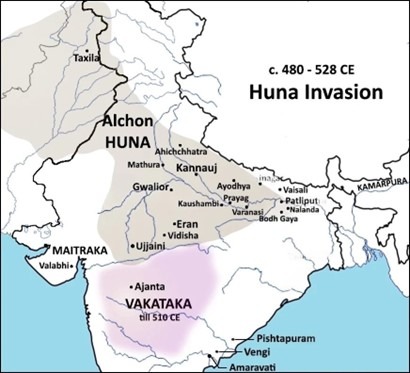
One of the most significant factors that contributed to the downfall of the Gupta Empire was the invasion by the Hunas (Huns), a Central Asian nomadic tribe known for their military prowess. During the later years of Kumaragupta I’s reign (c. 415–455 CE), the Hunas began their incursions into northwestern India through the Hindukush mountains. However, it was his son, Skandagupta (c. 455–467 CE), who bore the brunt of their aggressive onslaught. Skandagupta proved to be a capable and determined ruler; he successfully repelled the initial wave of Huna invasions, thereby preserving the empire for a brief period.
Despite these initial victories, the resilience of the Gupta state began to wane following Skandagupta’s reign. His successors were far less effective in handling the Huna threat. By 485 CE, the Hunas had managed to occupy key territories such as eastern Malwa, central India, Punjab, and Rajasthan. Their superior cavalry skills, archery techniques, and possibly the use of iron stirrups gave them a formidable edge in warfare. The empire’s territorial expanse was significantly reduced, and the Guptas lost control over large parts of northern and western India.
Though the Huna rule was later challenged and defeated by regional rulers such as Yashodharman of Malwa, the damage to the Gupta Empire was already irreversible. Yashodharman not only defeated the Hunas but also challenged Gupta supremacy by erecting victory pillars around 532 CE to commemorate his conquests in northern India. His short-lived yet powerful rule further eroded the political dominance of the Guptas.
Rise of Feudatories and Regional Powers
Another major reason for the decline of the Gupta Empire was the emergence of powerful feudatories who gradually asserted their independence. The administrative system of the Guptas, which involved delegating authority to governors and vassal kings, eventually became a weakness as these regional powers stopped acknowledging Gupta suzerainty.
In Bengal, the governors and local chiefs appointed by the Gupta rulers began to assert autonomy. The late Guptas of Magadha managed to retain power in Bihar for some time, but the Maukharis soon emerged as dominant rulers in Bihar and Uttar Pradesh, establishing their capital at Kanauj. By around 550 CE, much of the Gangetic plains had slipped out of Gupta control.
Simultaneously, in northern Madhya Pradesh, local chieftains began issuing land grants independently, though they continued to use the Gupta era to date their inscriptions, indicating nominal allegiance. The rulers of Valabhi consolidated their hold over Gujarat and western Malwa. Notably, after Skandagupta’s reign, there is a conspicuous absence of Gupta coins and inscriptions in these regions, highlighting the complete loss of control. The loss of these economically vibrant territories, particularly western India which was a hub of maritime trade, was a severe blow to the imperial treasury.
In northwestern India, the rising power of the Thanesar rulers in Haryana further signified the disintegration of the centralized Gupta authority. These rulers later expanded towards Kanauj, solidifying their independent status and contributing to the regional fragmentation of the empire.
Economic Challenges and the Burden of Land Grants
The economic foundation of the Gupta Empire also began to crumble due to a variety of factors. One key issue was the extensive practice of land grants made to Brahmins, temples, and religious institutions. While this may have served religious and political purposes, it significantly reduced the taxable land under direct state control. As more and more land was granted away, the state’s ability to raise revenue weakened considerably.
Moreover, there was a noticeable decline in foreign trade, which had once enriched the empire through commercial links with the Roman Empire, Southeast Asia, and Central Asia. Evidence of this decline is seen in the migration of a guild of silk-weavers from Gujarat to Malwa in 473 CE. The guild’s eventual shift to non-productive professions reflects the waning demand for luxury textiles, hinting at a broader economic downturn.
In a desperate attempt to maintain the appearance of economic stability, the Gupta rulers reduced the gold content in their coins after the mid-5th century. However, this debasement of currency only served to underscore the financial distress of the state.
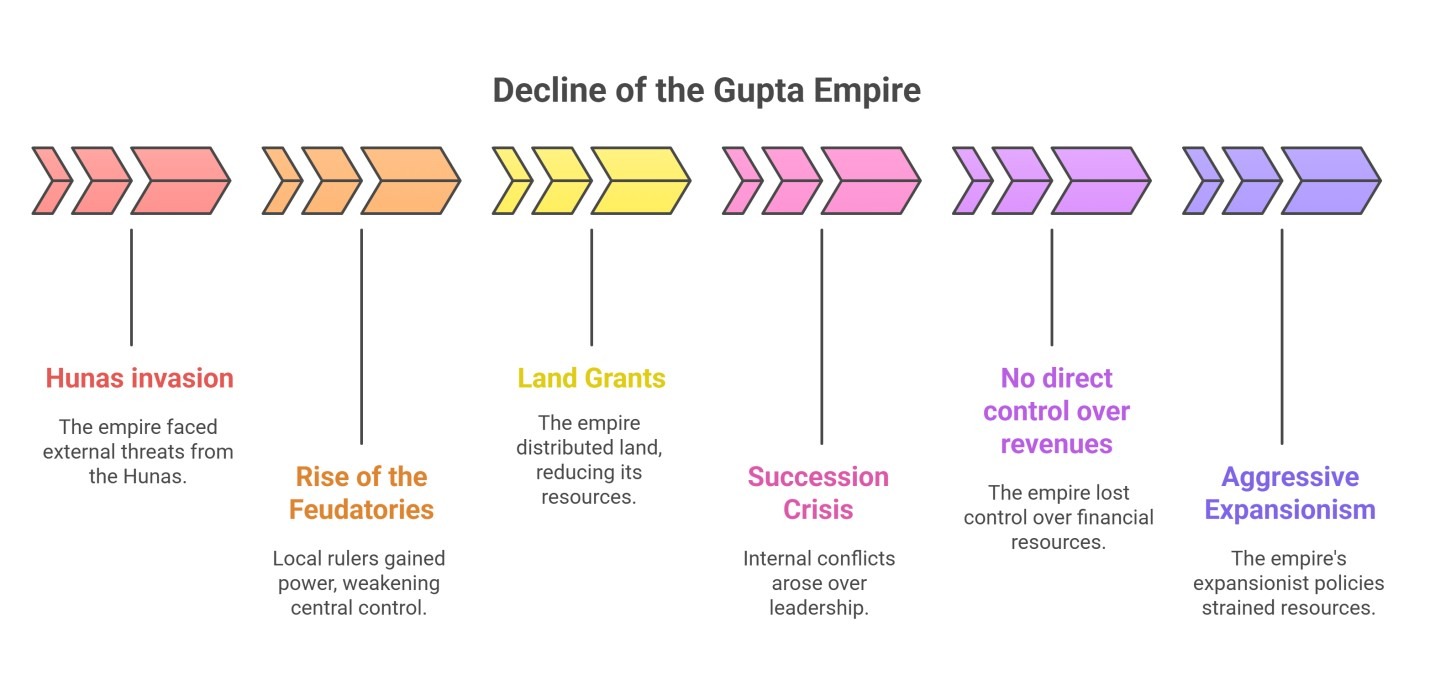
Although the Imperial Guptas nominally retained power until the middle of the 6th century CE, the glory of their rule had largely faded by the end of the 5th century. The once-unified and prosperous empire had been reduced to a loose collection of independent kingdoms and petty principalities. The combined impact of relentless foreign invasions, weakened central authority, economic decline, and the assertion of regional powers marked the end of one of the most illustrious periods in Indian history.
The Gupta Empire
Following the decline of the Mauryan Empire, the Indian subcontinent witnessed a period of political fragmentation and regional assertion. In the Gangetic Valley, Pushyamitra Shunga established the Shunga dynasty, marking the continuation of Brahmanical traditions and the defense of northern India against external influences. Meanwhile, two powerful dynasties—the Satavahanas in the Deccan and the Kushanas in northwestern and northern India—emerged as dominant forces, playing a crucial role in maintaining political stability and fostering cultural exchange across vast regions. Despite their strong foundations, both the Satavahana and Kushana empires eventually declined by the mid-third century CE, leaving a power vacuum in the north.
Around 275 CE, from the remnants of the Kushana realm, the Gupta dynasty rose to prominence. Flourishing between the mid-third and mid-sixth centuries CE, the Guptas successfully expanded their domain over large parts of the former Kushana and Satavahana territories. Although the Gupta Empire was territorially smaller than the Mauryan Empire, it achieved remarkable success in politically unifying much of northern India, especially between 335 and 455 CE. Their original kingdom encompassed parts of Uttar Pradesh and Bihar, but archaeological findings, including early Gupta coins and inscriptions, suggest that Uttar Pradesh was likely the dynasty’s core region. The city of Prayag (modern-day Prayagraj or Allahabad) served as a central hub for Gupta administration and expansion into neighboring areas.
Historians believe that the Guptas may have initially been feudatories under the Kushanas and likely of Vaishya (merchant) origin, gradually ascending to imperial status as the Kushana influence waned. This transition appears to have occurred with minimal disruption, as Gupta antiquities often directly succeed Kushana layers in archaeological contexts. The Guptas also adopted several cultural and military practices from their predecessors. Notably, they embraced the use of saddles, reins, buttoned coats, trousers, and boots, all of which were introduced by the Central Asian Kushanas. These adaptations enhanced cavalry mobility, making horsemen the core of Gupta military strength. Although some inscriptions praise Gupta rulers as heroic chariot warriors, horses had clearly replaced chariots and elephants as the dominant force in warfare during this period.
In addition to their military prowess, the Guptas benefited from several strategic material advantages. Their base region, the Madhyadesha—covering the fertile plains of Uttar Pradesh and Bihar—offered rich agricultural yields and access to iron ore deposits in central India and southern Bihar. Furthermore, their proximity to northern trade routes, particularly those connected to the silk trade with the Eastern Roman (Byzantine) Empire, contributed significantly to their economic prosperity. These favorable conditions enabled the Guptas to consolidate power over important regions such as Anuganga (the middle Gangetic basin), Saketa (Ayodhya), Magadha, and Prayag, eventually laying the groundwork for what came to be celebrated as a golden age of Indian culture, science, and political unity.
Sources
Sources for Reconstructing the History of the Gupta Period
The Gupta period (c. 4th to 6th century CE), often referred to as the Golden Age of Ancient India, is well-documented through a wide array of literary, epigraphical, and numismatic sources. These materials provide valuable insights into the political, social, cultural, and economic aspects of Gupta rule, and together form a rich base for reconstructing the history of this important era.
Literary Sources
A number of Sanskrit literary works and religious texts from or about the Gupta period serve as crucial historical records:
-
- The Puranas, especially the Vishnu and Vayu Puranas, are invaluable in tracing the genealogy and chronology of the Gupta kings. Though primarily religious in nature, they also include historical narratives and dynastic lists.
-
- The Devichandraguptam and the Mudrarakshasa, two Sanskrit dramas written by Vishakhadatta, provide political insights. The Devichandraguptam describes the conflict between Ramagupta and his brother Chandragupta II, offering a dramatized account of palace intrigues and succession disputes. The Mudrarakshasa depicts the Mauryan era but is believed to reflect the contemporary political sentiments of the Gupta period.
-
- The Dharmashastras, particularly the Narada Smriti and the Brihaspati Smriti, were likely codified or refined during the Gupta era. These legal texts shed light on the legal systems, duties of rulers, social structure, and family laws, thus contributing to our understanding of Gupta society.
-
- The Kaumudi Mahotsava, another Sanskrit drama, provides a vivid portrayal of the political landscape of Magadha during the period just prior to the rise of the Guptas.
-
- One of the most valuable foreign accounts of the Gupta period comes from the Chinese pilgrim Fa Xian (Faxian), who visited India during the reign of Chandragupta II in the early 5th century CE. His travelogue, Fo-Kuo-Ki (A Record of Buddhist Kingdoms), offers firsthand observations of the social, religious, and economic conditions, including details on urban life, the practice of Buddhism, and the administration of justice.
-
- Another Chinese traveler, I-Qing (I-Tsing), who visited India in the 7th century CE, refers to Maharaja Srigupta, believed to be the founder of the Gupta dynasty. He mentions a Buddhist shrine constructed near Mrigasikhavana (modern-day Bengal region) for Chinese pilgrims, known as the Temple of China. Though I-Tsing visited much after the Gupta era, his reference helps in tracing the dynasty’s early beginnings and cultural influence.
Epigraphical Sources
The Guptas made extensive use of inscriptions to proclaim their achievements, issue royal orders, and record grants, making epigraphy a vital source of historical information. Among the most notable inscriptions are:
-
- The Allahabad Pillar Inscription, also known as the Prayaga Prashasti, composed by Harishena, the court poet of Samudragupta, is one of the most celebrated eulogies in Indian history. It provides a detailed account of Samudragupta’s military campaigns, his diplomatic relations, and his patronage of religion and the arts.
-
- The Mehrauli Iron Pillar Inscription, attributed to Chandragupta II, celebrates the king’s military victories and virtues. The pillar itself, a metallurgical marvel, also stands as a testament to the scientific and technological advancement of the time.
-
- Inscriptions found in Udayagiri Caves, especially those in Cave 6 and Cave 8, refer to Chandragupta II’s rule and highlight his victory over the western regions. These also illustrate his interest in art, architecture, and religious patronage, particularly towards Vaishnavism.
-
- The Bhitari Pillar Inscription of Skandagupta provides valuable information regarding his reign, especially his defense against the Hun invasions, administrative measures, and religious donations. It gives us a picture of the empire’s resilience during times of external threat.
-
- The Gupta era also witnessed a surge in the composition of Prashastis—royal eulogies inscribed in poetic Sanskrit. These inscriptions, while rich in hyperbolic praise, offer significant political and cultural information. Though modern historians approach them critically for factual accuracy, they were prized in their time as works of art and state propaganda, extolling the king’s divine qualities and achievements.
-
- Numerous copper plate inscriptions (Tamrapatra) from the Gupta period also survive, primarily documenting land grants made to Brahmanas and religious institutions. These plates provide precise details such as the names of donors and donees, boundaries of the granted land, and even the reasons for donation—often rooted in religious merit (dharma). They reflect the close alliance between the state and religious institutions and offer insights into land ownership and administration.
The vast and varied sources—ranging from Sanskrit dramas and religious texts to royal edicts and foreign travelogues—together paint a vivid and multidimensional picture of the Gupta Empire. They allow historians to reconstruct a detailed narrative of an age that witnessed cultural brilliance, administrative sophistication, and economic prosperity, making it one of the most celebrated periods in Indian history
Numismatic and Architectural Legacy of the Gupta Period
The Gupta period stands out in Indian history not only for its political achievements but also for its rich cultural and artistic contributions, as revealed through various numismatic and architectural sources. Among the most valuable historical records from this era are the coins issued by Gupta rulers, which are remarkable for their artistic quality, inscriptions, and symbolic imagery. These coins do more than serve as currency; they offer insightful glimpses into the royal titles, military victories, religious affiliations, and cultural patronage of the Gupta monarchs. For instance, one of the most iconic numismatic artifacts from this period features Samudragupta, often referred to as the “Napoleon of India,” depicted playing the veena. This unique portrayal not only reflects his prowess as a conqueror but also highlights his deep appreciation for music and the fine arts, showcasing the multi-dimensional personality of Gupta rulers and their support for cultural excellence.
In addition to coins, the Gupta period is renowned for its remarkable architectural developments, particularly in the realm of temple construction. During this time, religious art and architecture flourished, strongly influenced by Brahmanical (Hindu) traditions. The Guptas were devout patrons of Brahmanism, and this is evident in the temples they commissioned, many of which remain significant cultural landmarks today. These temples were among the earliest in India to adopt the classic architectural style featuring a small square sanctum (garbhagriha)—the innermost chamber where the principal deity was enshrined. The deities most commonly represented in these sacred spaces included Vishnu, Shiva, and other prominent figures of the Hindu pantheon.
Two notable examples of Gupta temple architecture are the temple at Deogarh, which is dedicated to the dual worship of Shiva and Vishnu, and the temple at Aihole, a site later associated with the early Chalukyas, where a shrine is devoted to Goddess Durga. These temples reflect not only the religious beliefs of the people but also the aesthetic and structural innovations of Gupta architects. The use of intricately carved stone, balanced proportions, and symbolic motifs marked a significant shift from earlier rock-cut structures to freestanding temples, laying the foundation for classical Hindu temple architecture in India.
Together, the numismatic evidence and monumental architecture of the Gupta age paint a vivid picture of a civilization that balanced military might with cultural refinement, and religious devotion with artistic expression. These sources continue to provide scholars and enthusiasts with a deeper understanding of the Guptas’ role in shaping India’s historical and cultural identity.
Prominent Rulers of the Gupta Empire
The Gupta Empire, which marked a golden age in Indian history, witnessed a succession of powerful monarchs who expanded its territories, promoted art and culture, strengthened administration, and safeguarded Indian society from internal and external threats. Here is a detailed account of the major rulers of the Gupta dynasty:
Chandragupta I (c. 319–335/336 CE)
Chandragupta I is widely regarded as the founder of the Gupta Empire in the true imperial sense. Although the dynasty existed before him, it was under Chandragupta I that the Guptas rose to political prominence and territorial significance. He adopted the grand imperial title “Maharajadhiraja” (King of Kings), which symbolized his sovereign status among contemporary rulers.
His reign is notable for the formal commencement of the Gupta Era in 319–320 CE, which later served as a significant chronological marker in Indian history. One of the most important aspects of Chandragupta’s rule was his strategic matrimonial alliance with Kumaradevi, a Lichchhavi princess from the prominent Nepalese clan. This alliance significantly enhanced his political stature and brought the fertile and strategically important region of Mithila under Gupta control. Coins from this period bear the joint figures and names of Chandragupta I and Kumaradevi, highlighting the political importance of this union.
Their son, Samudragupta, later came to be known as Lichchhavi-dauhitra (grandson of the Lichchhavis), a title that underscores the prestige attached to his maternal lineage. The Gupta Empire, under Chandragupta I, laid the solid foundation for what would become one of the greatest empires in Indian history.
Samudragupta (c. 335/336–375 CE)
Samudragupta, the son of Chandragupta I and Kumaradevi, was the most illustrious ruler of the dynasty and the true architect of the Gupta Empire’s expansion. A brilliant military strategist and an accomplished statesman, Samudragupta pursued an aggressive policy of conquest. His reign marked a period of both political consolidation and territorial enlargement, extending Gupta influence across much of the Indian subcontinent.
The most authentic and detailed account of his reign is found in the Allahabad Pillar Inscription, also known as the Prayaga Prashasti, composed in polished Sanskrit by his court poet and minister Harisena. The inscription, which also contains earlier inscriptions of Ashoka and later of Jahangir, categorizes Samudragupta’s enemies into four groups:
-
- Rulers who were slain and their territories annexed.
- Kings of frontier regions, who were forced to accept subordination.
- Rulers defeated but reinstated as tributaries.
- Distant rulers and foreign kings, such as those from Southeast Asia and Ceylon, who sent embassies acknowledging his supremacy.
Samudragupta’s Southern campaign, especially his defeat of twelve southern rulers including Vishnugopa of Kanchi, is a testament to his military prowess. However, instead of annexing these territories, he followed a policy of political reconciliation, reinstating many defeated kings in return for their loyalty and tribute.
He celebrated his military success by performing the Ashvamedha sacrifice, and issued special Ashvamedha coins to commemorate the event. His coins also depict him playing the veena, reflecting his deep interest in music and the arts. He was a patron of literature, took the title Kaviraja (King of Poets), and supported religious tolerance. He granted permission to Meghavarman, the Buddhist king of Ceylon, to build a monastery at Bodh Gaya, which highlights his compassion and support for Buddhism. He is also associated with the Buddhist philosopher Vasubandhu, who was among his ministers.
Chandragupta II (c. 376–413/415 CE)
Chandragupta II, also known by the illustrious title Vikramaditya, succeeded Samudragupta and carried forward the imperial legacy with remarkable success. Some historical accounts suggest he came to power after defeating and killing his elder brother Ramagupta, who had allegedly signed a humiliating treaty with a Shaka ruler that involved handing over his wife. Chandragupta II is said to have killed the enemy and married Dhruvadevi, Ramagupta’s queen, to uphold the dynasty’s honour.
His reign marked the zenith of Gupta imperial expansion and prosperity. Through a combination of military conquests and strategic matrimonial alliances, he extended Gupta control across western and central India. He married Kuberanaga, a princess of the Naga dynasty, and their daughter Prabhavati Gupta married Rudrasena II of the Vakataka dynasty. After Rudrasena’s death, Prabhavati ruled as regent with the guidance of her father. For nearly two decades, the Vakataka kingdom remained under indirect Gupta influence, further strengthening Gupta dominance in the Deccan.
Chandragupta II’s military conquests included the defeat of the Western Shaka Satraps, bringing regions such as Malwa, Gujarat, and the western seaboard under Gupta control. This gave the empire access to important trade routes and coastal ports, enhancing the prosperity of cities like Ujjain, which became his second capital.
An inscription on the Mehrauli Iron Pillar in Delhi, attributed to his reign, confirms Gupta control over northwestern India, including parts of Bengal. He adopted titles such as Simhavikrama and Vikramaditya, and became the first Gupta ruler to issue silver coins, in addition to the traditional gold dinaras and copper coins. His coinage and inscriptions reflect not only his military victories but also his cultural sophistication.
Chandragupta II’s court was adorned by the legendary Navaratnas (Nine Gems), which included eminent scholars and poets such as Kalidasa, Varahamihira, Amarasimha, Dhanvantri, and others. His era was marked by a flourishing of Sanskrit literature, astronomy, medicine, and fine arts. The Chinese pilgrim Fa Xian visited India during his reign and documented a peaceful and prosperous land with a well-organized administration and a flourishing Buddhist culture.
Kumaragupta I (c. 415–455 CE)
Kumaragupta I, the son of Chandragupta II, ascended the throne at a time when the empire was at its peak. He assumed imperial titles such as Shakraditya and Mahendraditya, and like his illustrious grandfather, performed the Ashvamedha sacrifice, asserting his authority and independence.
One of his major contributions to Indian culture was the founding of the Nalanda University, which later became one of the greatest centres of learning in the ancient world, attracting students and scholars from across Asia. A devout worshipper of Lord Karttikeya, Kumaragupta issued coins bearing the deity’s image.
His reign, though initially peaceful, witnessed the beginning of external threats, particularly from the White Huns (Hepthalites) of Central Asia. In the mid-5th century, they entered India through Gandhara after occupying Bactria. The initial invasion was repelled by Prince Skandagupta, marking the beginning of a prolonged struggle against these northern invaders.
Important inscriptions from his reign include the Bilsad inscription (Gupta year 96/415 CE), Karandanda inscription, Mandsor inscription, and Damodar copperplate grants, all of which help trace administrative practices, land grants, and the chronology of his rule.
Skandagupta (c. 455–467 CE)
Skandagupta, one of the most capable Gupta rulers, faced severe challenges during his reign, both from within and outside the empire. He first defeated a rebel named Pushyamitra and then successfully repelled the Huna invasions, earning the title Vikramaditya.
One of the most important inscriptions of his reign, the Junagadh (Girnar) Inscription, mentions that his governor Parnadatta undertook the restoration of the Sudarshana Lake, reflecting the continued commitment to public welfare and infrastructure.
Despite his military successes, Skandagupta’s reign marked the beginning of decline in central imperial authority. Though the empire endured, the control of the central administration weakened, and regional governors began asserting hereditary rights, indicating a shift towards feudalism.
Later Gupta Rulers and the Decline (Post-467 CE)
After Skandagupta’s death, the Gupta Empire rapidly declined. Successive rulers, including Purugupta (467–473 CE), Kumaragupta II (473–476 CE), Budhagupta (476–495 CE), Narasimhagupta Baladitya (495–530 CE), Kumaragupta III (530–540 CE), Vishnugupta (540–550 CE), Vainyagupta, and Bhanugupta, were unable to maintain the vast empire due to internal dissensions and the continued pressure from foreign invasions.
The weakening of central authority led to the fragmentation of the empire, with many governors establishing independent regional kingdoms, marking the end of classical Gupta imperial power.
Gupta Administration
The Gupta Empire, known for ushering in a golden age in Indian history, had a sophisticated administrative system that blended monarchic central authority with a decentralized, feudal structure. The Gupta rulers assumed grand titles such as Rajadhiraja, Maharajadhiraja, Parambhattaraka, Parameshwara, Samrat, and Chakravartin, asserting their supremacy and divine right to rule. Monarchy was the principal form of governance during this period, and the king was the supreme head of the state, overseeing administration, justice, and military affairs. However, unlike the strict centralization of the Mauryan Empire, the Guptas embraced a more flexible and feudal administrative model.
|
Official Title |
Designation / Role |
|
Mahabaladhikrita |
Commander-in-Chief |
|
Mahadanayak |
Chief Justice |
|
Mahapratihar |
Official in charge of the royal palace |
|
Mahasandhivigrahak |
Official responsible for post-war conciliation |
|
Dandapashika |
Head of the police department |
|
Bhandagaradhikreta |
Head of the royal treasury |
|
Mahapaksha-Patalik |
Head of the accounting department |
|
Vinaysthitisansathapak |
Head of the education department |
|
Sarvadhyaksha |
Inspector for all central departments |
|
Mahashwapati |
Controller of the cavalry |
|
Mahamahipilapati |
Controller and executor of elephantry |
|
Vinaypura |
Official responsible for presenting guests at the court |
|
Yuktapurusha |
Officer responsible for keeping account of war booty |
|
Khadyatpakika |
Inspector of the royal kitchen |
|
Ranabhandagarika |
Officer-in-charge of army stores |
|
Mahanarpati |
Head of foot soldiers (infantry) |
Succession Practices
While kingship was hereditary, the succession process under the Guptas did not always follow the principle of primogeniture. Instead of automatically appointing the eldest son as successor, the reigning monarch often chose the most capable prince from among his sons to ascend the throne. This approach allowed the Gupta emperors to ensure competent leadership, though it could also lead to intra-dynastic conflict.
Decentralized Governance and Bureaucracy
The Gupta administration marked a significant shift from the Mauryan model by reducing centralized control and encouraging regional autonomy. The empire was vast, and direct control over every region was impractical. Consequently, the Gupta emperors delegated many administrative responsibilities to local feudatories, officials, and even to guilds of merchants and artisans. Unlike the elaborate and structured Mauryan bureaucracy, the Guptas relied on a simpler administrative setup. One of the most important administrative officers was the Kumaramatya, a senior functionary appointed by the king, probably compensated through salaries in cash or land grants.
The emperor was advised by a Mantri Parishad or council of ministers, which included royal princes, prominent officials, and local feudatories. The decisions of the council were communicated to the emperor through an Amatya or minister.
Provincial and Local Administration
The Gupta Empire was divided into provinces called Bhuktis, each under the control of a governor known as an Uparika, who was often directly appointed by the emperor. These provinces were further subdivided into districts called Vishayas, which were managed by district officers known as Vishayapatis. In certain parts of eastern India, these districts were again divided into smaller units called Vithis, which comprised several villages. At the grassroots level, each village was overseen by a Grāmika or village headman, who administered local affairs with the help of village elders. Land transactions, disputes, and village-level decisions were not valid without the approval of the Grāmika and the local council.
Urban Administration and Guilds
In towns and cities, administration was carried out with the involvement of organized professional bodies or guilds (Shrenis), comprising artisans, merchants, and scribes. These guilds had significant autonomy and were often consulted in matters of land transactions, trade regulations, and civic issues. They also governed their members by enforcing internal codes of conduct and punishing violations independently. This practice reflects the growing influence of commercial communities during the Gupta era.
Military Organization
The Gupta kings maintained a standing army for the protection of the empire and to suppress rebellions or foreign invasions. However, the royal army was often supplemented by troops provided by local feudatories, known as Samantas, who were obliged to offer military assistance when required. During this period, chariots gradually lost their prominence, and cavalry units, particularly horse archers, gained strategic importance in the battlefield. This shift signified a transformation in military tactics and the growing significance of mobile warfare.
Judicial System
The judicial system under the Guptas evolved significantly and was more sophisticated compared to earlier periods. Legal literature like the Narada Smriti and Brihaspati Smriti was compiled during this time, clearly distinguishing between civil and criminal laws. The king served as the highest judicial authority and was assisted by Brahmana priests and legal experts in adjudicating disputes. Although varna-based discrimination remained embedded in the legal system, guilds and local bodies were allowed to adjudicate intra-community matters according to their own laws and customs.
Sources of Revenue
Agriculture remained the chief source of revenue during the Gupta period. The state typically claimed one-fourth to one-sixth of the agricultural produce as tax. However, in contrast to earlier empires, the Gupta rulers imposed fewer taxes on trade and commerce. When the royal army moved through the countryside, villagers were expected to provide supplies such as foodgrains, livestock, and accommodation for officials. In central and western India, peasants were sometimes required to perform Vishti (forced labor) for state officials and military personnel.
Feudalism and the Role of Samantas
A unique feature of Gupta administration was the emergence of a feudal structure marked by the growing power of Samantas—local chiefs or military leaders who had been subjugated and reinstated to govern their regions under Gupta overlordship. These Samantas managed their territories independently, sustained themselves through local revenue collection, and owed military service and allegiance to the emperor. Over time, as central authority weakened, some powerful Samantas declared independence and established their own kingdoms.
Land Grants and Feudal Development
The practice of granting tax-free land to Brahmanas, officials, and religious institutions became increasingly common during the Gupta period. These land grants, known as Agraharas when given to Brahmanas, exempted the recipients from taxes and often gave them judicial and administrative rights over the villages. This trend reflected both the religious patronage of the Gupta rulers and their attempt to cultivate loyalty among local elites. However, the proliferation of land grants led to a gradual erosion of royal authority, as large tracts of revenue-generating land passed into private and ecclesiastical hands.
Historians have debated the implications of this land grant system. Some argue that it was a strategic effort to bring more land under cultivation and expand agriculture, while others believe it signaled a decline in imperial power and an attempt to maintain control through appeasement and religious propaganda.
Economic Guilds and Autonomy
Artisan and merchant guilds flourished during the Gupta age, playing a significant role in both the economy and administration. These guilds, especially those of merchants, enjoyed substantial privileges and were allowed to regulate their internal affairs. They had the authority to punish members who violated the guild’s code of conduct, and in some regions, wielded considerable political influence as well.
Fa Xian’s Observations on Gupta Governance
The Chinese Buddhist pilgrim Fa Xian visited India during the reign of Chandragupta II and provided valuable insights into Gupta administration. He described it as mild, liberal, and benevolent. According to Fa Xian, there was minimal state interference in the daily lives of people, and personal freedoms were respected. He noted the absence of a widespread spy network and reported that the roads were safe for travelers, with crime being virtually nonexistent. Fa Xian further mentioned that punishments were humane—capital punishment was rare, and fines were the most common form of penalization. He also observed that the people were prosperous and that Buddhist monasteries and educational institutions received royal patronage
Trade and Economy during the Gupta Period
The Gupta period witnessed significant economic developments, though it also showed signs of transition and gradual decline in certain sectors, especially long-distance trade. Fa Xian, the Chinese Buddhist pilgrim who visited India during the reign of Chandragupta II, described Magadha as a flourishing region filled with prosperous cities. According to his accounts, wealthy merchants and urban elites generously supported Buddhism and engaged actively in charitable activities, contributing to the construction of monasteries and welfare services. This reflects a thriving internal economy, at least in parts of the empire, driven by both religious patronage and urban commercial activity.
Decline of Long-Distance Trade
Despite the flourishing internal economy, the Gupta period marked a relative decline in long-distance trade compared to earlier times, particularly with the Roman Empire. One of the major reasons for this decline was the reduced demand for Indian silk in Western markets. By the mid-fifth century CE, Indian silk exports faced a significant setback. The guild of silk weavers from Gujarat, which had traditionally been engaged in the manufacture and trade of silk, migrated to Mandasor and abandoned their ancestral profession in response to falling demand. This shift signaled a deep impact on artisanal communities that had relied heavily on foreign trade.
A more severe blow came around the mid-sixth century CE when the Eastern Roman (Byzantine) Empire learned the technique of silk production directly from China. With the capability to produce silk locally, the dependence on Indian silk was drastically reduced, further undermining India’s export-based economy. The decline of trade with the Roman world also led to the collapse of key trade networks and the diminished prosperity of many port cities and inland trade hubs.
However, trade did not completely disappear. Urban centres like Mahasthan or Mahasthangarh—identified as ancient Pundranagara in present-day Bangladesh—continued to function as commercial and administrative centres during the Gupta era, indicating regional trade activity and localized economic dynamism.
Coinage and Currency
One of the most striking features of the Gupta economy was its prolific coinage. The Gupta emperors issued the largest number of gold coins in ancient India, known in their inscriptions as Dinaras. These coins are particularly noted for their artistic excellence. The obverse typically depicted the reigning monarch in various poses, often showcasing martial prowess, hunting scenes, or musical performances, symbolizing their strength and cultural refinement. The reverse side generally featured Hindu deities, especially Goddess Lakshmi, symbolizing prosperity and divine legitimacy.
Although the Gupta gold coins were impressive in terms of number and design, their gold content was somewhat less pure than those of their predecessors, the Kushans. Nevertheless, these coins played a vital role in sustaining the imperial administration, paying salaries to officials and soldiers, and facilitating land transactions and large-scale commercial exchanges.
|
Coins |
Features |
|
Dinar |
These were gold coins.The quality of gold coins deteriorated. |
|
Rupaka |
These were silver coins16 Rupaka = 1 Dinar |
|
Daler |
These were copper coins |
Following the annexation of Gujarat, the Guptas began issuing silver coins for local use. These coins continued the tradition of the Western Kshatrapas, who had earlier dominated the region and used silver extensively in their currency. In contrast, Gupta copper coins were relatively scarce, suggesting that the use of money had not penetrated the everyday life of the common people to the extent it had during the Kushan era. This could imply that barter systems or localized exchange mechanisms continued to play a significant role in rural economies.
From the sixth century CE onwards, the discovery of Gupta gold coins significantly declined. This trend has led to scholarly debates regarding a possible economic downturn. Some historians attribute this decline to the collapse of long-distance trade with the West following the fall of the Western Roman Empire. The decline of this trade network may have reduced the flow of precious metals into India, thereby affecting the volume of minted currency and the prosperity of those regions dependent on international commerce.
However, others argue that the reduced coin finds might not necessarily indicate a collapse. Instead, coins could have remained in active circulation and were less frequently hoarded or deposited, hence their fewer archaeological recoveries. In support of this, references to coinage continued to appear in inscriptions and literary texts, suggesting that economic transactions involving coins persisted despite fewer discoveries in excavations.
Emergence of Priestly Landlords and Socio-Economic Transformation
Another notable development in the Gupta economy was the emergence of priestly landlords, particularly in regions such as Madhya Pradesh. This phenomenon was closely linked to the widespread practice of land grants. The Gupta rulers extensively granted tax-free lands to Brahmanas and religious institutions, a trend which had originated under the Satavahanas but became more institutionalized during the Gupta era. These land grants played a dual role—they promoted the expansion of agriculture into new territories, but also altered the social structure of rural society.
In many cases, these Brahmana grantees emerged as dominant landholders, often exercising both fiscal and judicial authority over the villages granted to them. While this brought new areas under the plough, it also displaced tribal or marginal communities, pushing them into subordinate socio-economic roles. In central and western India, peasants were often subjected to forced labour (Vishti) for the benefit of these newly established landlords or for royal officials on duty.
This transformation contributed to the development of a semi-feudal agrarian economy, where control over land and its surplus became the primary source of power. The economic dependence of the peasantry on landlord classes—whether royal, priestly, or administrative—marked a departure from earlier more centralized fiscal systems and indicated a shift towards a more stratified rural order.
Caste System during the Gupta Period
The Gupta period witnessed the crystallization of the caste system into a more rigid and hierarchical social structure. The Brahmanas occupied the highest position in the caste hierarchy and enjoyed immense socio-economic privileges. They were the principal recipients of land grants and gifts, both from kings and wealthy patrons, which reinforced their dominance in religious, social, and political spheres. Their elevated status was further legitimized through scriptural authority and ritual superiority.
A significant transformation during this period was the proliferation of sub-castes, driven primarily by two factors: the assimilation of foreign elements into Indian society and the incorporation of tribal populations into the Brahmanical fold.
One important reason for the expansion of the caste system was the assimilation of foreign groups, especially those who entered India as invaders or migrants. These groups, often military in nature, were absorbed into the Kshatriya varna and gradually integrated into the Indian social order. A notable example is the Hunas, who arrived in India in the late 5th century CE. Over time, they were recognized as one of the thirty-six Rajput clans. Even today, certain Rajput families trace their lineage to the Hunas, some retaining the title ‘Hun’ as a symbol of ancestral heritage.
The integration of tribal communities also contributed to the fragmentation of society into multiple jatis (sub-castes). The policy of issuing land grants to Brahmanas often resulted in the inclusion of tribal territories within the expanding agrarian economy. While tribal chiefs were sometimes given respectable positions and mythological genealogies to elevate their status, the common tribal people were typically absorbed into the lower rungs of the caste system. This gradual transformation of tribes into castes marked a critical development in Indian social history—a process that has continued, in various forms, into the modern era.
Improvement in the Status of Shudras
Despite the growing rigidity in the caste system, the status of the Shudras—traditionally considered the lowest of the four varnas—saw some notable improvements during the Gupta period. These changes were primarily economic and cultural in nature, arising from shifts in occupational roles and religious inclusion.
From being confined to roles such as servants and manual laborers, Shudras began to assume more active roles in agriculture and rural economy. By the 7th century CE, they were increasingly recognized as cultivators and agriculturists, which gave them greater social visibility and economic importance.
In the religious domain, Shudras were no longer excluded from participating in mainstream Hindu practices. They were permitted to listen to revered epics such as the Ramayana, Mahabharata, and the Puranas, which had previously been restricted to the upper varnas. They were also allowed to worship popular deities like Krishna, and even to perform some domestic rituals—although still under the guidance of Brahmana priests. These developments provided both spiritual recognition and a limited degree of cultural assimilation.
Untouchables and Marginalized Groups
While certain sections of society experienced upward mobility, the untouchables, particularly the Chandalas, faced increasing marginalization during the Gupta era. These communities, relegated outside the varna system, were associated with occupations considered impure or polluting, such as meat processing, execution, and scavenging.
The social discrimination faced by these groups was so extreme that it was recorded by Fa Xian, the Chinese Buddhist monk who visited India in the early 5th century. He observed that the Chandalas were forced to live outside the village boundaries and had to announce their presence in public spaces by sounding a clapper, so that upper-caste people could avoid contact. The very sight of them was considered polluting. Similarly, Xuan Zang, another Chinese pilgrim who visited in the 7th century CE, noted that executioners and other outcastes were strictly segregated from urban life.
These observations highlight the deep-rooted and institutionalized nature of untouchability during the Gupta period, which had significant implications for social justice and human dignity.
Status of Women in Gupta Society
The position of women during the Gupta period reflected a complex blend of cultural participation and patriarchal subordination. While women were permitted to engage in religious life and, in limited cases, had access to property rights, their overall freedoms were severely restricted by prevailing social norms and legal frameworks.
Religious Access and Cultural Inclusion
Women, especially from upper castes, were allowed to listen to and recite sacred texts such as the Ramayana, Mahabharata, and the Puranas. They were encouraged to worship deities like Krishna, indicating a degree of spiritual inclusion. However, this access did not translate into significant ritual or institutional power.
Education and Livelihood
Education remained a privilege largely limited to wealthy women. While a few elite families may have educated their daughters, the majority of women—especially those from higher varnas—were excluded from formal learning. Interestingly, women from lower castes, such as Vaishyas and Shudras, had relatively more economic freedom. They participated in agriculture, household industries, and labor-based occupations, thereby contributing actively to the economy.
Marriage, Property, and Patriarchy
The subordination of women, particularly among the upper varnas, was linked to their economic dependence on men. Most women did not have independent livelihoods and were denied inheritance rights, especially in landed property. Although marriage gifts, known as stridhana, including jewelry, clothes, and ornaments, were considered a woman’s personal property, control over immovable property was rarely granted.
However, some progressive legal opinions emerged during the later part of this period. The 6th-century lawgiver Katyayana asserted that women had the right to sell or mortgage their immovable property along with their stridhana, indicating an evolution in legal consciousness. Nevertheless, such rights remained largely theoretical and were seldom realized in practice.
Practice of Sati and Social Regression
A disturbing development during the Gupta era was the first recorded instance of Sati—the self-immolation of a widow on her husband’s funeral pyre—dated to 510 CE. Although the practice was not yet widespread, its occurrence reflects a growing tendency to idealize widowhood and reinforce patriarchal control over women’s bodies and lives. The increasing association of women with property, particularly among landowning families, led to the view of women as possessions to be protected or disposed of according to social norms.
The Gupta period marked a turning point in Indian social history, characterized by increasing stratification and the consolidation of caste hierarchies. While certain groups such as Shudras saw improvement in their socio-economic status, others—including untouchables and women—faced heightened marginalization. The period witnessed the expansion of Brahmanical orthodoxy and land-based patriarchy, setting the tone for centuries of structured social inequality. However, amidst these limitations, faint voices of social change—such as legal rights for women and cultural participation of lower castes—began to emerge, sowing the seeds for future transformations.
Religion during the Gupta Period
Resurgence of Hinduism
The Gupta period marked a significant religious transformation in ancient India, characterized by the resurgence of Hinduism, which reasserted itself after centuries of Buddhist dominance, particularly under the Mauryan and Kushana empires. While Buddhism had flourished under earlier rulers like Ashoka and Kanishka, the Guptas actively patronized Brahmanical traditions, thereby revitalizing Hinduism and shaping its institutional, philosophical, and ritualistic contours for centuries to come.
A central feature of this resurgence was the evolution and prominence of sectarian worship, especially Vaishnavism and Shaivism, both of which emphasized bhakti—personal devotion to a chosen deity. These sects grew increasingly influential and attracted followers from various social backgrounds. The worship of deities like Vishnu and Shiva gained a foothold in the everyday religious practices of the people, moving away from abstract philosophical speculation towards emotionally resonant and community-based forms of worship.
This era also witnessed a significant reinterpretation of older Vedic concepts and scriptures. The ideas of divine saviours and cosmic cycles, once explored in Buddhist and Jain thought, were now being mirrored and elaborated upon within Hindu traditions. The concept of divine incarnation—where deities descend to Earth to restore dharma—became a foundational belief, particularly in Vaishnavism.
Vaishnavism and the Rise of Bhagavatism
Vaishnavism, also known as Bhagavatism, emerged as a dominant form of Hinduism during the Gupta era, centering on the worship of Vishnu as the supreme deity. By this period, Vaishnavism had overtaken Mahayana Buddhism in popularity and influence, appealing to a wide spectrum of society—from Brahmanas to artisans, merchants, and even foreign communities.
A cornerstone of Vaishnavite belief was the doctrine of avatars or incarnations of Vishnu. According to this tradition, Vishnu descends to Earth in various forms whenever righteousness (dharma) is threatened. The Dashavatara, or the ten principal avatars of Vishnu, include Matsya (fish), Kurma (turtle), Varaha (boar), Narasimha (half-man, half-lion), Vamana (dwarf), Parashurama, Rama, Krishna, Buddha, and the future avatar Kalki. Each incarnation symbolized divine intervention in human affairs and reinforced the moral order.
Under the Guptas, Krishna, one of Vishnu’s most beloved avatars, rose to particular prominence. The Mahabharata was reworked during this period to emphasize Krishna’s divinity and identify him directly with Vishnu. This integration helped cement Krishna’s status not just as a hero of epic literature but as a universal god worthy of devotion.
Bhagavatism was distinguished by several defining features:
-
- Bhakti (devotion): Emphasis was placed on emotional surrender and personal devotion to the deity.
- Ahimsa (non-violence): Worship often involved vegetarian offerings like rice and sesame seeds, aligning with agrarian values and rejecting animal sacrifice.
- Inclusivity: Unlike earlier Vedic rituals reserved for upper castes, Vaishnavism was open to women, Vaishyas, and Shudras, allowing broader participation.
- Appeal to diverse groups: The devotional simplicity and moral clarity of Bhagavatism attracted foreigners, merchants, and artisans, especially those who had risen in status under earlier dynasties like the Satavahanas and Kushans.
By the sixth century CE, Vishnu had become an integral member of the Hindu trinity (Trimurti), alongside Brahma (the creator) and Shiva (the destroyer). Despite this triadic classification, Vishnu enjoyed an independent and widespread following. The composition of the Bhagavata Purana during this time further codified his worship and helped spread the theology of devotion
Shaivism: Worship of Shiva
Alongside Vaishnavism, Shaivism—the worship of Shiva as the supreme deity—also gained momentum, although it became more prominent after the early Gupta phase. Shiva was revered as the god of destruction and transformation, embodying both ascetic renunciation and cosmic power.
Some Gupta rulers, particularly in later generations, were devotees of Shiva. Temples, images, and religious texts dedicated to Shiva began to emerge, and linga worship (symbolizing Shiva’s formless energy) became widespread. Over time, Shaivism evolved into a complex tradition with its own scriptures, rituals, and sects, forming a vital part of the broader Hindu revival.
Religious Literature and Practices
The Gupta period was a golden age not only for religion but also for religious literature. The two epics—Ramayana and Mahabharata—were extensively re-edited and expanded during this time, embedding deep philosophical and moral teachings within accessible narrative forms. These texts were no longer confined to elite circles but became widely accessible through public recitations, thereby shaping the cultural and ethical values of the common people.
The Puranas, a new category of religious texts, also began to be composed in this period. Written in simple Sanskrit, they conveyed complex theological ideas through myths, genealogies, and legends. These texts played a crucial role in the spread of idol worship, temple-based rituals, and the elevation of local deities into pan-Indian gods.
From this period onwards, idol worship in temples became a defining feature of Hindu practice. Agrarian festivals, once secular in nature, were now infused with religious meaning and rituals, benefiting the Brahmanical priesthood and reinforcing their role as spiritual mediators.
Religious Tolerance and Other Faiths
Despite the revival of Hinduism, the Gupta rulers adopted a policy of religious tolerance. There is no evidence of persecution against Buddhists or Jains. However, these faiths, which had once received substantial royal patronage, began to decline in political and cultural significance.
Buddhism, although in decline, continued to be practiced in various regions. Chinese traveler Fa Xian, who visited India in the early 5th century CE, claimed that Buddhism was flourishing. However, historical and archaeological evidence suggests otherwise. Most Buddhist institutions lacked the grandeur and support they once enjoyed under Ashoka and Kanishka. Still, the tradition survived in pockets, with some stupas and viharas being constructed.
One significant exception was the founding of Nalanda Mahavihara, an ancient center of learning in Magadha, established by Kumaragupta I (also known as Shakraditya, c. 415–455 CE). It became a hub for Mahayana Buddhism, attracting scholars from across Asia. Though destroyed by the Hun king Mihirakula in the early 6th century, it was later restored and continued to flourish until the 13th century.
Nalanda University became renowned for its academic excellence and taught a wide range of subjects including:
-
- The Vedas and Hindu philosophy
- Grammar, medicine, logic, mathematics, and astronomy
- Mahayana Buddhist philosophy, which was a compulsory subject
Descriptions of Nalanda primarily come from Buddhist texts and the accounts of Chinese pilgrims:
-
- Fa Xian did not mention Nalanda in his early 5th-century accounts.
- Xuanzang (Hsuan Tsang), who visited India between 630–645 CE, provided a detailed description. He claimed that over 10,000 students resided at Nalanda, though modern archaeology suggests this may have been an exaggeration.
- I-Qing, another Chinese monk, who stayed at Nalanda from 675–685 CE, noted that over 3,000 residents lived there during his time.
Eventually, the institution declined due to foreign invasions, waning royal support, and the gradual erosion of Buddhist influence in India.
Meanwhile, Jainism remained relatively more active in western and southern India, especially in Karnataka. The Jain Council at Valabhi, held during this era, was instrumental in compiling the Jain Canon of the Shwetambaras, thus preserving and organizing Jain scriptures for future generations.
The Gupta period marked a pivotal era in Indian religious history. It witnessed the revival and institutionalization of Hinduism, the emergence of devotional sects, and the codification of religious literature that would shape Indian spirituality for centuries. While Buddhism and Jainism saw a gradual decline in royal patronage, they continued to thrive in various regions and retained significant scholarly and cultural contributions. The Guptas’ commitment to religious tolerance created an environment of pluralism, allowing diverse traditions to co-exist and influence each other in profound ways.
Art and Architecture during the Gupta Period
The Gupta period (c. 320 – 550 CE) is often celebrated as a Golden Age of Indian Culture, marked by significant achievements in the fields of art, architecture, literature, and science. While some scholars describe this era as a renaissance, it is more accurately regarded as the culmination of a long and continuous process of intellectual, religious, and cultural development, rather than a revival following a dark age. The Gupta rulers were great patrons of art, and their reign witnessed the crystallization of classical Indian art forms in their most refined and elegant expressions.
Architectural Developments
Architecture during the Gupta era witnessed remarkable growth and diversification. Structures from this period included religious buildings dedicated to Hinduism, Buddhism, and Jainism. Although many architectural marvels of the time were destroyed during subsequent invasions—particularly by the Hunas—the surviving temples, cave shrines, sculptures, and paintings still reflect the grandeur and sophistication of Gupta craftsmanship.
Hindu temples began evolving into more complex and grandiose structures, shifting from simple flat-roofed sanctuaries to more elaborate designs featuring tall curvilinear towers (shikharas). The temples were often constructed using brick and stone, adorned with ornate carvings and relief panels. Meanwhile, Buddhist architecture continued primarily through the excavation of cave monasteries and chaityas (prayer halls), which were relatively smaller in scale but rich in sculptural and mural work.
One of the most remarkable metallurgical achievements of the Gupta period is the Iron Pillar at Mehrauli in Delhi, which stands testimony to the advanced technological skills of Gupta artisans. Despite being exposed to the elements for over 1,500 years, the pillar has remained rust-free, showcasing the expertise of ancient Indian ironworkers.
Buddhist Art and the Ajanta Caves
Buddhist art reached new heights under the Guptas, as seen in both sculpture and painting. A significant discovery from this period is the two-metre-high bronze image of Buddha recovered from Sultanganj near Bhagalpur, Bihar—an exquisite example of bronze casting, now housed at the Birmingham Museum and Art Gallery in England.
The Mahabodhi Temple at Bodh Gaya, a significant Buddhist pilgrimage site, was reconstructed in its current form during the Gupta period, incorporating many stylistic elements typical of the era.
However, the greatest artistic treasures of Gupta Buddhist art are undoubtedly the Ajanta Cave Paintings. These rock-cut caves, located near Chhatrapati Sambhaji Nagar (formerly Aurangabad) in Maharashtra, comprise thirty caves carved into a cliff face above the Waghora River. They were developed in two distinct phases:
1. Early Phase (2nd century BCE – 1st century CE): This phase corresponds to the rule of the Satavahanas. The caves from this period (such as caves 9, 10, 12, 13, and 15A) reflect the Hinayana form of Buddhism, where the Buddha is represented symbolically. These caves were simple in design, featuring chaityagrihas with vaulted ceilings, apsidal ends, and large horseshoe-shaped chaitya windows. Decoration was minimal, with sparse use of mural paintings.
2. Later Phase (5th – 6th century CE): This phase flourished under the Vakataka dynasty, contemporaries of the Guptas. Most of the famous Ajanta paintings belong to this era and reflect the Mahayana tradition, where the Buddha is depicted in anthropomorphic form. These caves were richly decorated with fresco-style tempera paintings and intricate carvings. Scenes from the Jataka tales and the life of Gautama Buddha are vividly illustrated with remarkable naturalism, shading techniques, and emotional depth.
Another notable site of Gupta-era Buddhist art is the Bagh Caves near Gwalior in Madhya Pradesh, which contain murals stylistically similar to those of Ajanta, further highlighting the artistic brilliance of the period.
Hindu Temple Architecture
The Gupta period laid the foundation for classical Hindu temple architecture. The Guptas, who were staunch supporters of Brahmanism, constructed some of the earliest surviving Hindu temples. These temples typically featured a small square sanctum (garbhagriha), often surmounted by a shikhara (spire), and contained images of deities such as Vishnu, Shiva, and Durga.
Key examples include:
-
- Dashavatara Temple at Deogarh (Uttar Pradesh): This temple is one of the earliest surviving stone temples in India and is dedicated to Vishnu. Its carvings depict the ten avatars (Dashavatara) of Vishnu and various mythological scenes.
-
- Bhitargaon Temple near Kanpur (Uttar Pradesh): Constructed using terracotta and brick, it is one of the oldest standing brick temples with a shikhara. Its walls are adorned with detailed terracotta panels showing scenes of Shiva, Vishnu, and other figures.
-
- Durga Temple at Aihole (Karnataka): Although built slightly later, this temple, with its semi-circular apse and pillared corridor, represents the transition from Gupta to early Chalukyan architecture. It features a famous sculpture of Varaha, the boar incarnation of Vishnu, rescuing the Earth goddess.
-
- Udayagiri Caves (Madhya Pradesh): These 20 rock-cut caves near Vidisha are among the earliest examples of Gupta-period Hindu cave architecture. Cave 5 is particularly notable for its large Varaha panel, which depicts Vishnu in his boar form lifting the earth from the cosmic ocean. These caves, discovered by archaeologist Alexander Cunningham in the 19th century, are dedicated primarily to Vishnu and Shiva.
The art and architecture of the Gupta period reflect a harmonious blend of religious devotion, technical excellence, and aesthetic beauty. Whether in the form of serene Buddhist paintings, intricately carved Hindu temples, or magnificent metallurgical artifacts, the creative output of this period has left an enduring legacy on Indian art. The Gupta era not only laid the foundation for the stylistic canons of Indian temple architecture but also enriched the religious and cultural landscape through inclusive patronage of various traditions, including Buddhism, Hinduism, and Jainism. Despite the ravages of time and invasions, the surviving monuments continue to speak volumes about the artistic and spiritual achievements of this classical age.
Literature
For thousands of years, Indians preserved their vast religious and cultural knowledge through oral tradition, passing texts unchanged across generations by listening and repeating. These texts were finally written down during the Gupta period.
The Sanskrit language became prominent during the Gupta period. It was the court language of the Guptas. The best of the Sanskrit literature belonged to the Gupta age. During this time, Nagari script had evolved from the Brahmi script.
|
Author |
Work(s) |
Description / Notes |
|
Shudraka |
Mrichchhakatika (The Little Clay Cart) |
A romantic drama about a poor Brahmana and a courtesan’s daughter; a classic ancient play. |
|
Vishakhadatta |
Mudrarakshasa, Devichandraguptam |
Political dramas based on historical themes. |
|
Bharavi |
Kiratarjuniya |
Epic poem about the encounter between Arjuna and Shiva. |
|
Dandin |
Kavyadarsa, Dasakumaracharita |
Works on poetics and prose fiction. |
|
Vishnu Sharma |
Panchatantra |
Collection of animal fables with moral lessons. |
|
Subandhu |
Vasavadatta |
A romantic Sanskrit prose tale. |
|
Amarasimha |
Amarakosha |
A Sanskrit lexicon; Amarasimha was a Buddhist scholar. |
|
Kalidasa |
Abhijnana Shakuntalam (Drama), Malavikagnimitra (Drama), Meghaduta (Poem), |
Widely regarded as the greatest classical Sanskrit poet and dramatist. |
|
Vikramorvashiyam (Drama), Raghuvamsha (Poem), Kumarasambhavam (Poem), Ritusamhar (Poem) |
Intellectual and Literary Developments during the Gupta Period
The Gupta period (circa 4th to 6th century CE) is widely regarded as a pinnacle in the history of ancient Indian intellectual and cultural life. It witnessed unparalleled advancements in literature, grammar, religious texts, and scientific thought. The era fostered a dynamic environment in which scholars, poets, dramatists, and scientists thrived under the generous patronage of Gupta rulers, especially Chandragupta II and his successors.
Sanskrit Grammar and Lexicography
Sanskrit flourished as the language of elite discourse, scholarly composition, and religious texts during the Gupta period. The grammatical foundations laid by earlier scholars such as Panini and Patanjali continued to influence linguistic studies. A significant contribution of this era was the Amarakosha, a Sanskrit thesaurus composed by Amarasimha, a celebrated scholar in the court of Chandragupta II. The Amarakosha systematized and enriched Sanskrit vocabulary and became a standard reference text for scholars for centuries. It classified words into thematic categories and served not only as a linguistic guide but also as a literary and cultural repository.
Kalidasa and Classical Sanskrit Literature
One of the brightest literary luminaries of the Gupta age was Kalidasa, whose mastery over Sanskrit poetry and drama earned him enduring fame. His works are characterized by rich imagery, deep emotional insight, and artistic elegance. Kalidasa’s plays are notable for depicting the sophisticated life of the royal court. A unique linguistic feature in his plays is the use of Sanskrit for kings and Brahmins, while other characters—particularly women and commoners—speak in Prakrit, reflecting the social and linguistic dynamics of the time.
His most celebrated dramatic work, Abhijnana Shakuntalam (The Recognition of Shakuntala), narrates the poignant love story of King Dushyanta and the maiden Shakuntala. The play beautifully portrays themes of love, separation, and reunion, and is internationally acclaimed as one of the finest works of classical Indian literature. It even attracted admiration from European scholars like Goethe.
Kalidasa also excelled in lyrical poetry. His famed Meghaduta (The Cloud Messenger) is a poetic masterpiece in which a monsoon cloud is personified and sent as a messenger by a lovelorn Yaksha to his distant wife. A famous verse from this poem captures the natural beauty of the Indian landscape:
“A cool breeze, delightful as it is touched With the fragrance of the earth
Swollen by your showers, Inhaled deeply by elephants, And causing the wild figs to ripen, Will blow gently as you go.”
Such verses exemplify Kalidasa’s extraordinary ability to blend emotion with natural imagery.
Growth of Religious Literature
The Gupta age also marked a significant phase in the development and compilation of religious literature, which played a central role in shaping Hindu philosophy and mythology. Oral traditions such as the Mahabharata and Ramayana, which had been evolving over centuries, were finally compiled and systematized during this period, giving them the coherent form we know today.
A key component of the Mahabharata is the Bhagavad Gita, a profound philosophical discourse between Lord Krishna and Arjuna, which encapsulates the core principles of dharma (righteous duty), karma (action), and detachment from results. The Gita became one of the most sacred texts of Hinduism and a spiritual guide across centuries.
In addition to the epics, the Puranas gained prominence. These texts—eighteen in number—contain mythological stories, genealogies of gods and sages, cosmological theories, and religious practices. Notable among them are the Bhagavata Purana, Vishnu Purana, Vayu Purana, and Matsya Purana. The Puranas served to popularize complex Vedic ideas among the general public and laid the foundation for Bhakti (devotional) movements in later centuries.
The period also witnessed the composition of Smritis—legal and social codes that addressed matters of dharma (ethical conduct), rituals, inheritance, and gender roles. Important Smritis compiled during this era include the Narada Smriti, Parashara Smriti, Brihaspati Smriti, and Katyayana Smriti. These texts were composed in verse and aimed to regulate social and religious behavior in accordance with varna (social order) and ashrama (stages of life). While the actual practice of writing commentaries on Smritis began after the Gupta period, their original composition set the foundation for India’s legal and ethical traditions.
Advances in Science: Mathematics, Astronomy, and Medicine
Apart from literary excellence, the Gupta era was a golden age for scientific advancements, particularly in the realms of mathematics, astronomy, and medicine. This intellectual vigor reflected the spirit of rational inquiry and empirical observation.
Mathematics and Astronomy
Aryabhata, one of the most eminent mathematicians and astronomers of ancient India, lived during the Gupta period. In his magnum opus, the Aryabhatiyam, he proposed revolutionary ideas for his time. Aryabhata was among the first to assert that the Earth rotates on its axis, explaining the apparent motion of celestial bodies. He also provided a scientific explanation for solar and lunar eclipses, rejecting mythological interpretations.
Moreover, Aryabhata made significant contributions to geometry and trigonometry, including an approximation of π (pi) remarkably close to the modern value. His calculations on the circumference of a circle and the value of sine functions laid the groundwork for later developments in Indian and Islamic mathematics.
Another brilliant scholar of the time, Varahamihira, authored several influential works. His treatise Pancha Siddhantika (The Five Astronomical Canons) synthesized and compared five different schools of astronomy, including the Romaka Siddhanta, which shows the influence of Greco-Roman knowledge. His other works—Brihat Samhita, an encyclopedia of astronomy and astrology, and Brihat Jataka, a text on predictive astrology—illustrate the sophisticated understanding of celestial movements and their supposed influence on earthly affairs.
Brahmagupta, though slightly post-Gupta, was also influenced by the scientific milieu of this era. He advanced arithmetic, including operations with zero and negative numbers.
Medicine
The Gupta period also saw developments in Ayurvedic medicine, building on the earlier works of Charaka and Susruta. The third of the great medical trinity, Vagbhata, lived during this time and authored the Ashtanga Samgraha, a comprehensive treatise covering eight branches of medicine including surgery, pediatrics, psychiatry, and toxicology. His work helped consolidate and systematize earlier medical knowledge, ensuring its transmission across generations.
The Gupta period was a vibrant age of intellectual awakening and cultural flowering. In the fields of grammar, literature, religion, science, and medicine, it saw landmark contributions that shaped not only the Indian subcontinent but also influenced regions far beyond. The scholarly works of this era—whether the poetic beauty of Kalidasa, the mathematical genius of Aryabhata, or the religious texts that form the core of Hindu philosophy—remain enduring testaments to a civilization at its zenith. The Gupta age thus stands as a beacon of classical Indian achievement, deeply etched in the legacy of ancient India.
The Decline of the Gupta Empire
The decline of the Gupta Empire, once considered a golden age of Indian civilization, was a gradual and multifaceted process. Beginning in the late 5th century CE, a combination of internal weaknesses, external invasions, economic challenges, and the rise of regional powers led to the eventual fragmentation of the once-powerful Gupta state.
Invasions by the Hunas
One of the most significant factors that contributed to the downfall of the Gupta Empire was the invasion by the Hunas (Huns), a Central Asian nomadic tribe known for their military prowess. During the later years of Kumaragupta I’s reign (c. 415–455 CE), the Hunas began their incursions into northwestern India through the Hindukush mountains. However, it was his son, Skandagupta (c. 455–467 CE), who bore the brunt of their aggressive onslaught. Skandagupta proved to be a capable and determined ruler; he successfully repelled the initial wave of Huna invasions, thereby preserving the empire for a brief period.
Despite these initial victories, the resilience of the Gupta state began to wane following Skandagupta’s reign. His successors were far less effective in handling the Huna threat. By 485 CE, the Hunas had managed to occupy key territories such as eastern Malwa, central India, Punjab, and Rajasthan. Their superior cavalry skills, archery techniques, and possibly the use of iron stirrups gave them a formidable edge in warfare. The empire’s territorial expanse was significantly reduced, and the Guptas lost control over large parts of northern and western India.
Though the Huna rule was later challenged and defeated by regional rulers such as Yashodharman of Malwa, the damage to the Gupta Empire was already irreversible. Yashodharman not only defeated the Hunas but also challenged Gupta supremacy by erecting victory pillars around 532 CE to commemorate his conquests in northern India. His short-lived yet powerful rule further eroded the political dominance of the Guptas.
Rise of Feudatories and Regional Powers
Another major reason for the decline of the Gupta Empire was the emergence of powerful feudatories who gradually asserted their independence. The administrative system of the Guptas, which involved delegating authority to governors and vassal kings, eventually became a weakness as these regional powers stopped acknowledging Gupta suzerainty.
In Bengal, the governors and local chiefs appointed by the Gupta rulers began to assert autonomy. The late Guptas of Magadha managed to retain power in Bihar for some time, but the Maukharis soon emerged as dominant rulers in Bihar and Uttar Pradesh, establishing their capital at Kanauj. By around 550 CE, much of the Gangetic plains had slipped out of Gupta control.
Simultaneously, in northern Madhya Pradesh, local chieftains began issuing land grants independently, though they continued to use the Gupta era to date their inscriptions, indicating nominal allegiance. The rulers of Valabhi consolidated their hold over Gujarat and western Malwa. Notably, after Skandagupta’s reign, there is a conspicuous absence of Gupta coins and inscriptions in these regions, highlighting the complete loss of control. The loss of these economically vibrant territories, particularly western India which was a hub of maritime trade, was a severe blow to the imperial treasury.
In northwestern India, the rising power of the Thanesar rulers in Haryana further signified the disintegration of the centralized Gupta authority. These rulers later expanded towards Kanauj, solidifying their independent status and contributing to the regional fragmentation of the empire.
Economic Challenges and the Burden of Land Grants
The economic foundation of the Gupta Empire also began to crumble due to a variety of factors. One key issue was the extensive practice of land grants made to Brahmins, temples, and religious institutions. While this may have served religious and political purposes, it significantly reduced the taxable land under direct state control. As more and more land was granted away, the state’s ability to raise revenue weakened considerably.
Moreover, there was a noticeable decline in foreign trade, which had once enriched the empire through commercial links with the Roman Empire, Southeast Asia, and Central Asia. Evidence of this decline is seen in the migration of a guild of silk-weavers from Gujarat to Malwa in 473 CE. The guild’s eventual shift to non-productive professions reflects the waning demand for luxury textiles, hinting at a broader economic downturn.
In a desperate attempt to maintain the appearance of economic stability, the Gupta rulers reduced the gold content in their coins after the mid-5th century. However, this debasement of currency only served to underscore the financial distress of the state.
Although the Imperial Guptas nominally retained power until the middle of the 6th century CE, the glory of their rule had largely faded by the end of the 5th century. The once-unified and prosperous empire had been reduced to a loose collection of independent kingdoms and petty principalities. The combined impact of relentless foreign invasions, weakened central authority, economic decline, and the assertion of regional powers marked the end of one of the most illustrious periods in Indian history.
The Gupta Empire
Following the decline of the Mauryan Empire, the Indian subcontinent witnessed a period of political fragmentation and regional assertion. In the Gangetic Valley, Pushyamitra Shunga established the Shunga dynasty, marking the continuation of Brahmanical traditions and the defense of northern India against external influences. Meanwhile, two powerful dynasties—the Satavahanas in the Deccan and the Kushanas in northwestern and northern India—emerged as dominant forces, playing a crucial role in maintaining political stability and fostering cultural exchange across vast regions. Despite their strong foundations, both the Satavahana and Kushana empires eventually declined by the mid-third century CE, leaving a power vacuum in the north.
Around 275 CE, from the remnants of the Kushana realm, the Gupta dynasty rose to prominence. Flourishing between the mid-third and mid-sixth centuries CE, the Guptas successfully expanded their domain over large parts of the former Kushana and Satavahana territories. Although the Gupta Empire was territorially smaller than the Mauryan Empire, it achieved remarkable success in politically unifying much of northern India, especially between 335 and 455 CE. Their original kingdom encompassed parts of Uttar Pradesh and Bihar, but archaeological findings, including early Gupta coins and inscriptions, suggest that Uttar Pradesh was likely the dynasty’s core region. The city of Prayag (modern-day Prayagraj or Allahabad) served as a central hub for Gupta administration and expansion into neighboring areas.
Historians believe that the Guptas may have initially been feudatories under the Kushanas and likely of Vaishya (merchant) origin, gradually ascending to imperial status as the Kushana influence waned. This transition appears to have occurred with minimal disruption, as Gupta antiquities often directly succeed Kushana layers in archaeological contexts. The Guptas also adopted several cultural and military practices from their predecessors. Notably, they embraced the use of saddles, reins, buttoned coats, trousers, and boots, all of which were introduced by the Central Asian Kushanas. These adaptations enhanced cavalry mobility, making horsemen the core of Gupta military strength. Although some inscriptions praise Gupta rulers as heroic chariot warriors, horses had clearly replaced chariots and elephants as the dominant force in warfare during this period.
In addition to their military prowess, the Guptas benefited from several strategic material advantages. Their base region, the Madhyadesha—covering the fertile plains of Uttar Pradesh and Bihar—offered rich agricultural yields and access to iron ore deposits in central India and southern Bihar. Furthermore, their proximity to northern trade routes, particularly those connected to the silk trade with the Eastern Roman (Byzantine) Empire, contributed significantly to their economic prosperity. These favorable conditions enabled the Guptas to consolidate power over important regions such as Anuganga (the middle Gangetic basin), Saketa (Ayodhya), Magadha, and Prayag, eventually laying the groundwork for what came to be celebrated as a golden age of Indian culture, science, and political unity.
Sources
Sources for Reconstructing the History of the Gupta Period
The Gupta period (c. 4th to 6th century CE), often referred to as the Golden Age of Ancient India, is well-documented through a wide array of literary, epigraphical, and numismatic sources. These materials provide valuable insights into the political, social, cultural, and economic aspects of Gupta rule, and together form a rich base for reconstructing the history of this important era.
Literary Sources
A number of Sanskrit literary works and religious texts from or about the Gupta period serve as crucial historical records:
-
- The Puranas, especially the Vishnu and Vayu Puranas, are invaluable in tracing the genealogy and chronology of the Gupta kings. Though primarily religious in nature, they also include historical narratives and dynastic lists.
-
- The Devichandraguptam and the Mudrarakshasa, two Sanskrit dramas written by Vishakhadatta, provide political insights. The Devichandraguptam describes the conflict between Ramagupta and his brother Chandragupta II, offering a dramatized account of palace intrigues and succession disputes. The Mudrarakshasa depicts the Mauryan era but is believed to reflect the contemporary political sentiments of the Gupta period.
-
- The Dharmashastras, particularly the Narada Smriti and the Brihaspati Smriti, were likely codified or refined during the Gupta era. These legal texts shed light on the legal systems, duties of rulers, social structure, and family laws, thus contributing to our understanding of Gupta society.
-
- The Kaumudi Mahotsava, another Sanskrit drama, provides a vivid portrayal of the political landscape of Magadha during the period just prior to the rise of the Guptas.
-
- One of the most valuable foreign accounts of the Gupta period comes from the Chinese pilgrim Fa Xian (Faxian), who visited India during the reign of Chandragupta II in the early 5th century CE. His travelogue, Fo-Kuo-Ki (A Record of Buddhist Kingdoms), offers firsthand observations of the social, religious, and economic conditions, including details on urban life, the practice of Buddhism, and the administration of justice.
-
- Another Chinese traveler, I-Qing (I-Tsing), who visited India in the 7th century CE, refers to Maharaja Srigupta, believed to be the founder of the Gupta dynasty. He mentions a Buddhist shrine constructed near Mrigasikhavana (modern-day Bengal region) for Chinese pilgrims, known as the Temple of China. Though I-Tsing visited much after the Gupta era, his reference helps in tracing the dynasty’s early beginnings and cultural influence.
Epigraphical Sources
The Guptas made extensive use of inscriptions to proclaim their achievements, issue royal orders, and record grants, making epigraphy a vital source of historical information. Among the most notable inscriptions are:
-
- The Allahabad Pillar Inscription, also known as the Prayaga Prashasti, composed by Harishena, the court poet of Samudragupta, is one of the most celebrated eulogies in Indian history. It provides a detailed account of Samudragupta’s military campaigns, his diplomatic relations, and his patronage of religion and the arts.
-
- The Mehrauli Iron Pillar Inscription, attributed to Chandragupta II, celebrates the king’s military victories and virtues. The pillar itself, a metallurgical marvel, also stands as a testament to the scientific and technological advancement of the time.
-
- Inscriptions found in Udayagiri Caves, especially those in Cave 6 and Cave 8, refer to Chandragupta II’s rule and highlight his victory over the western regions. These also illustrate his interest in art, architecture, and religious patronage, particularly towards Vaishnavism.
-
- The Bhitari Pillar Inscription of Skandagupta provides valuable information regarding his reign, especially his defense against the Hun invasions, administrative measures, and religious donations. It gives us a picture of the empire’s resilience during times of external threat.
-
- The Gupta era also witnessed a surge in the composition of Prashastis—royal eulogies inscribed in poetic Sanskrit. These inscriptions, while rich in hyperbolic praise, offer significant political and cultural information. Though modern historians approach them critically for factual accuracy, they were prized in their time as works of art and state propaganda, extolling the king’s divine qualities and achievements.
-
- Numerous copper plate inscriptions (Tamrapatra) from the Gupta period also survive, primarily documenting land grants made to Brahmanas and religious institutions. These plates provide precise details such as the names of donors and donees, boundaries of the granted land, and even the reasons for donation—often rooted in religious merit (dharma). They reflect the close alliance between the state and religious institutions and offer insights into land ownership and administration.
The vast and varied sources—ranging from Sanskrit dramas and religious texts to royal edicts and foreign travelogues—together paint a vivid and multidimensional picture of the Gupta Empire. They allow historians to reconstruct a detailed narrative of an age that witnessed cultural brilliance, administrative sophistication, and economic prosperity, making it one of the most celebrated periods in Indian history
Numismatic and Architectural Legacy of the Gupta Period
The Gupta period stands out in Indian history not only for its political achievements but also for its rich cultural and artistic contributions, as revealed through various numismatic and architectural sources. Among the most valuable historical records from this era are the coins issued by Gupta rulers, which are remarkable for their artistic quality, inscriptions, and symbolic imagery. These coins do more than serve as currency; they offer insightful glimpses into the royal titles, military victories, religious affiliations, and cultural patronage of the Gupta monarchs. For instance, one of the most iconic numismatic artifacts from this period features Samudragupta, often referred to as the “Napoleon of India,” depicted playing the veena. This unique portrayal not only reflects his prowess as a conqueror but also highlights his deep appreciation for music and the fine arts, showcasing the multi-dimensional personality of Gupta rulers and their support for cultural excellence.
In addition to coins, the Gupta period is renowned for its remarkable architectural developments, particularly in the realm of temple construction. During this time, religious art and architecture flourished, strongly influenced by Brahmanical (Hindu) traditions. The Guptas were devout patrons of Brahmanism, and this is evident in the temples they commissioned, many of which remain significant cultural landmarks today. These temples were among the earliest in India to adopt the classic architectural style featuring a small square sanctum (garbhagriha)—the innermost chamber where the principal deity was enshrined. The deities most commonly represented in these sacred spaces included Vishnu, Shiva, and other prominent figures of the Hindu pantheon.
Two notable examples of Gupta temple architecture are the temple at Deogarh, which is dedicated to the dual worship of Shiva and Vishnu, and the temple at Aihole, a site later associated with the early Chalukyas, where a shrine is devoted to Goddess Durga. These temples reflect not only the religious beliefs of the people but also the aesthetic and structural innovations of Gupta architects. The use of intricately carved stone, balanced proportions, and symbolic motifs marked a significant shift from earlier rock-cut structures to freestanding temples, laying the foundation for classical Hindu temple architecture in India.
Together, the numismatic evidence and monumental architecture of the Gupta age paint a vivid picture of a civilization that balanced military might with cultural refinement, and religious devotion with artistic expression. These sources continue to provide scholars and enthusiasts with a deeper understanding of the Guptas’ role in shaping India’s historical and cultural identity.
Prominent Rulers of the Gupta Empire
The Gupta Empire, which marked a golden age in Indian history, witnessed a succession of powerful monarchs who expanded its territories, promoted art and culture, strengthened administration, and safeguarded Indian society from internal and external threats. Here is a detailed account of the major rulers of the Gupta dynasty:
Chandragupta I (c. 319–335/336 CE)
Chandragupta I is widely regarded as the founder of the Gupta Empire in the true imperial sense. Although the dynasty existed before him, it was under Chandragupta I that the Guptas rose to political prominence and territorial significance. He adopted the grand imperial title “Maharajadhiraja” (King of Kings), which symbolized his sovereign status among contemporary rulers.
His reign is notable for the formal commencement of the Gupta Era in 319–320 CE, which later served as a significant chronological marker in Indian history. One of the most important aspects of Chandragupta’s rule was his strategic matrimonial alliance with Kumaradevi, a Lichchhavi princess from the prominent Nepalese clan. This alliance significantly enhanced his political stature and brought the fertile and strategically important region of Mithila under Gupta control. Coins from this period bear the joint figures and names of Chandragupta I and Kumaradevi, highlighting the political importance of this union.
Their son, Samudragupta, later came to be known as Lichchhavi-dauhitra (grandson of the Lichchhavis), a title that underscores the prestige attached to his maternal lineage. The Gupta Empire, under Chandragupta I, laid the solid foundation for what would become one of the greatest empires in Indian history.
Samudragupta (c. 335/336–375 CE)
Samudragupta, the son of Chandragupta I and Kumaradevi, was the most illustrious ruler of the dynasty and the true architect of the Gupta Empire’s expansion. A brilliant military strategist and an accomplished statesman, Samudragupta pursued an aggressive policy of conquest. His reign marked a period of both political consolidation and territorial enlargement, extending Gupta influence across much of the Indian subcontinent.
The most authentic and detailed account of his reign is found in the Allahabad Pillar Inscription, also known as the Prayaga Prashasti, composed in polished Sanskrit by his court poet and minister Harisena. The inscription, which also contains earlier inscriptions of Ashoka and later of Jahangir, categorizes Samudragupta’s enemies into four groups:
-
- Rulers who were slain and their territories annexed.
- Kings of frontier regions, who were forced to accept subordination.
- Rulers defeated but reinstated as tributaries.
- Distant rulers and foreign kings, such as those from Southeast Asia and Ceylon, who sent embassies acknowledging his supremacy.
Samudragupta’s Southern campaign, especially his defeat of twelve southern rulers including Vishnugopa of Kanchi, is a testament to his military prowess. However, instead of annexing these territories, he followed a policy of political reconciliation, reinstating many defeated kings in return for their loyalty and tribute.
He celebrated his military success by performing the Ashvamedha sacrifice, and issued special Ashvamedha coins to commemorate the event. His coins also depict him playing the veena, reflecting his deep interest in music and the arts. He was a patron of literature, took the title Kaviraja (King of Poets), and supported religious tolerance. He granted permission to Meghavarman, the Buddhist king of Ceylon, to build a monastery at Bodh Gaya, which highlights his compassion and support for Buddhism. He is also associated with the Buddhist philosopher Vasubandhu, who was among his ministers.
Chandragupta II (c. 376–413/415 CE)
Chandragupta II, also known by the illustrious title Vikramaditya, succeeded Samudragupta and carried forward the imperial legacy with remarkable success. Some historical accounts suggest he came to power after defeating and killing his elder brother Ramagupta, who had allegedly signed a humiliating treaty with a Shaka ruler that involved handing over his wife. Chandragupta II is said to have killed the enemy and married Dhruvadevi, Ramagupta’s queen, to uphold the dynasty’s honour.
His reign marked the zenith of Gupta imperial expansion and prosperity. Through a combination of military conquests and strategic matrimonial alliances, he extended Gupta control across western and central India. He married Kuberanaga, a princess of the Naga dynasty, and their daughter Prabhavati Gupta married Rudrasena II of the Vakataka dynasty. After Rudrasena’s death, Prabhavati ruled as regent with the guidance of her father. For nearly two decades, the Vakataka kingdom remained under indirect Gupta influence, further strengthening Gupta dominance in the Deccan.
Chandragupta II’s military conquests included the defeat of the Western Shaka Satraps, bringing regions such as Malwa, Gujarat, and the western seaboard under Gupta control. This gave the empire access to important trade routes and coastal ports, enhancing the prosperity of cities like Ujjain, which became his second capital.
An inscription on the Mehrauli Iron Pillar in Delhi, attributed to his reign, confirms Gupta control over northwestern India, including parts of Bengal. He adopted titles such as Simhavikrama and Vikramaditya, and became the first Gupta ruler to issue silver coins, in addition to the traditional gold dinaras and copper coins. His coinage and inscriptions reflect not only his military victories but also his cultural sophistication.
Chandragupta II’s court was adorned by the legendary Navaratnas (Nine Gems), which included eminent scholars and poets such as Kalidasa, Varahamihira, Amarasimha, Dhanvantri, and others. His era was marked by a flourishing of Sanskrit literature, astronomy, medicine, and fine arts. The Chinese pilgrim Fa Xian visited India during his reign and documented a peaceful and prosperous land with a well-organized administration and a flourishing Buddhist culture.
Kumaragupta I (c. 415–455 CE)
Kumaragupta I, the son of Chandragupta II, ascended the throne at a time when the empire was at its peak. He assumed imperial titles such as Shakraditya and Mahendraditya, and like his illustrious grandfather, performed the Ashvamedha sacrifice, asserting his authority and independence.
One of his major contributions to Indian culture was the founding of the Nalanda University, which later became one of the greatest centres of learning in the ancient world, attracting students and scholars from across Asia. A devout worshipper of Lord Karttikeya, Kumaragupta issued coins bearing the deity’s image.
His reign, though initially peaceful, witnessed the beginning of external threats, particularly from the White Huns (Hepthalites) of Central Asia. In the mid-5th century, they entered India through Gandhara after occupying Bactria. The initial invasion was repelled by Prince Skandagupta, marking the beginning of a prolonged struggle against these northern invaders.
Important inscriptions from his reign include the Bilsad inscription (Gupta year 96/415 CE), Karandanda inscription, Mandsor inscription, and Damodar copperplate grants, all of which help trace administrative practices, land grants, and the chronology of his rule.
Skandagupta (c. 455–467 CE)
Skandagupta, one of the most capable Gupta rulers, faced severe challenges during his reign, both from within and outside the empire. He first defeated a rebel named Pushyamitra and then successfully repelled the Huna invasions, earning the title Vikramaditya.
One of the most important inscriptions of his reign, the Junagadh (Girnar) Inscription, mentions that his governor Parnadatta undertook the restoration of the Sudarshana Lake, reflecting the continued commitment to public welfare and infrastructure.
Despite his military successes, Skandagupta’s reign marked the beginning of decline in central imperial authority. Though the empire endured, the control of the central administration weakened, and regional governors began asserting hereditary rights, indicating a shift towards feudalism.
Later Gupta Rulers and the Decline (Post-467 CE)
After Skandagupta’s death, the Gupta Empire rapidly declined. Successive rulers, including Purugupta (467–473 CE), Kumaragupta II (473–476 CE), Budhagupta (476–495 CE), Narasimhagupta Baladitya (495–530 CE), Kumaragupta III (530–540 CE), Vishnugupta (540–550 CE), Vainyagupta, and Bhanugupta, were unable to maintain the vast empire due to internal dissensions and the continued pressure from foreign invasions.
The weakening of central authority led to the fragmentation of the empire, with many governors establishing independent regional kingdoms, marking the end of classical Gupta imperial power.
Gupta Administration
The Gupta Empire, known for ushering in a golden age in Indian history, had a sophisticated administrative system that blended monarchic central authority with a decentralized, feudal structure. The Gupta rulers assumed grand titles such as Rajadhiraja, Maharajadhiraja, Parambhattaraka, Parameshwara, Samrat, and Chakravartin, asserting their supremacy and divine right to rule. Monarchy was the principal form of governance during this period, and the king was the supreme head of the state, overseeing administration, justice, and military affairs. However, unlike the strict centralization of the Mauryan Empire, the Guptas embraced a more flexible and feudal administrative model.
|
Official Title |
Designation / Role |
|
Mahabaladhikrita |
Commander-in-Chief |
|
Mahadanayak |
Chief Justice |
|
Mahapratihar |
Official in charge of the royal palace |
|
Mahasandhivigrahak |
Official responsible for post-war conciliation |
|
Dandapashika |
Head of the police department |
|
Bhandagaradhikreta |
Head of the royal treasury |
|
Mahapaksha-Patalik |
Head of the accounting department |
|
Vinaysthitisansathapak |
Head of the education department |
|
Sarvadhyaksha |
Inspector for all central departments |
|
Mahashwapati |
Controller of the cavalry |
|
Mahamahipilapati |
Controller and executor of elephantry |
|
Vinaypura |
Official responsible for presenting guests at the court |
|
Yuktapurusha |
Officer responsible for keeping account of war booty |
|
Khadyatpakika |
Inspector of the royal kitchen |
|
Ranabhandagarika |
Officer-in-charge of army stores |
|
Mahanarpati |
Head of foot soldiers (infantry) |
Succession Practices
While kingship was hereditary, the succession process under the Guptas did not always follow the principle of primogeniture. Instead of automatically appointing the eldest son as successor, the reigning monarch often chose the most capable prince from among his sons to ascend the throne. This approach allowed the Gupta emperors to ensure competent leadership, though it could also lead to intra-dynastic conflict.
Decentralized Governance and Bureaucracy
The Gupta administration marked a significant shift from the Mauryan model by reducing centralized control and encouraging regional autonomy. The empire was vast, and direct control over every region was impractical. Consequently, the Gupta emperors delegated many administrative responsibilities to local feudatories, officials, and even to guilds of merchants and artisans. Unlike the elaborate and structured Mauryan bureaucracy, the Guptas relied on a simpler administrative setup. One of the most important administrative officers was the Kumaramatya, a senior functionary appointed by the king, probably compensated through salaries in cash or land grants.
The emperor was advised by a Mantri Parishad or council of ministers, which included royal princes, prominent officials, and local feudatories. The decisions of the council were communicated to the emperor through an Amatya or minister.
Provincial and Local Administration
The Gupta Empire was divided into provinces called Bhuktis, each under the control of a governor known as an Uparika, who was often directly appointed by the emperor. These provinces were further subdivided into districts called Vishayas, which were managed by district officers known as Vishayapatis. In certain parts of eastern India, these districts were again divided into smaller units called Vithis, which comprised several villages. At the grassroots level, each village was overseen by a Grāmika or village headman, who administered local affairs with the help of village elders. Land transactions, disputes, and village-level decisions were not valid without the approval of the Grāmika and the local council.
Urban Administration and Guilds
In towns and cities, administration was carried out with the involvement of organized professional bodies or guilds (Shrenis), comprising artisans, merchants, and scribes. These guilds had significant autonomy and were often consulted in matters of land transactions, trade regulations, and civic issues. They also governed their members by enforcing internal codes of conduct and punishing violations independently. This practice reflects the growing influence of commercial communities during the Gupta era.
Military Organization
The Gupta kings maintained a standing army for the protection of the empire and to suppress rebellions or foreign invasions. However, the royal army was often supplemented by troops provided by local feudatories, known as Samantas, who were obliged to offer military assistance when required. During this period, chariots gradually lost their prominence, and cavalry units, particularly horse archers, gained strategic importance in the battlefield. This shift signified a transformation in military tactics and the growing significance of mobile warfare.
Judicial System
The judicial system under the Guptas evolved significantly and was more sophisticated compared to earlier periods. Legal literature like the Narada Smriti and Brihaspati Smriti was compiled during this time, clearly distinguishing between civil and criminal laws. The king served as the highest judicial authority and was assisted by Brahmana priests and legal experts in adjudicating disputes. Although varna-based discrimination remained embedded in the legal system, guilds and local bodies were allowed to adjudicate intra-community matters according to their own laws and customs.
Sources of Revenue
Agriculture remained the chief source of revenue during the Gupta period. The state typically claimed one-fourth to one-sixth of the agricultural produce as tax. However, in contrast to earlier empires, the Gupta rulers imposed fewer taxes on trade and commerce. When the royal army moved through the countryside, villagers were expected to provide supplies such as foodgrains, livestock, and accommodation for officials. In central and western India, peasants were sometimes required to perform Vishti (forced labor) for state officials and military personnel.
Feudalism and the Role of Samantas
A unique feature of Gupta administration was the emergence of a feudal structure marked by the growing power of Samantas—local chiefs or military leaders who had been subjugated and reinstated to govern their regions under Gupta overlordship. These Samantas managed their territories independently, sustained themselves through local revenue collection, and owed military service and allegiance to the emperor. Over time, as central authority weakened, some powerful Samantas declared independence and established their own kingdoms.
Land Grants and Feudal Development
The practice of granting tax-free land to Brahmanas, officials, and religious institutions became increasingly common during the Gupta period. These land grants, known as Agraharas when given to Brahmanas, exempted the recipients from taxes and often gave them judicial and administrative rights over the villages. This trend reflected both the religious patronage of the Gupta rulers and their attempt to cultivate loyalty among local elites. However, the proliferation of land grants led to a gradual erosion of royal authority, as large tracts of revenue-generating land passed into private and ecclesiastical hands.
Historians have debated the implications of this land grant system. Some argue that it was a strategic effort to bring more land under cultivation and expand agriculture, while others believe it signaled a decline in imperial power and an attempt to maintain control through appeasement and religious propaganda.
Economic Guilds and Autonomy
Artisan and merchant guilds flourished during the Gupta age, playing a significant role in both the economy and administration. These guilds, especially those of merchants, enjoyed substantial privileges and were allowed to regulate their internal affairs. They had the authority to punish members who violated the guild’s code of conduct, and in some regions, wielded considerable political influence as well.
Fa Xian’s Observations on Gupta Governance
The Chinese Buddhist pilgrim Fa Xian visited India during the reign of Chandragupta II and provided valuable insights into Gupta administration. He described it as mild, liberal, and benevolent. According to Fa Xian, there was minimal state interference in the daily lives of people, and personal freedoms were respected. He noted the absence of a widespread spy network and reported that the roads were safe for travelers, with crime being virtually nonexistent. Fa Xian further mentioned that punishments were humane—capital punishment was rare, and fines were the most common form of penalization. He also observed that the people were prosperous and that Buddhist monasteries and educational institutions received royal patronage
Trade and Economy during the Gupta Period
The Gupta period witnessed significant economic developments, though it also showed signs of transition and gradual decline in certain sectors, especially long-distance trade. Fa Xian, the Chinese Buddhist pilgrim who visited India during the reign of Chandragupta II, described Magadha as a flourishing region filled with prosperous cities. According to his accounts, wealthy merchants and urban elites generously supported Buddhism and engaged actively in charitable activities, contributing to the construction of monasteries and welfare services. This reflects a thriving internal economy, at least in parts of the empire, driven by both religious patronage and urban commercial activity.
Decline of Long-Distance Trade
Despite the flourishing internal economy, the Gupta period marked a relative decline in long-distance trade compared to earlier times, particularly with the Roman Empire. One of the major reasons for this decline was the reduced demand for Indian silk in Western markets. By the mid-fifth century CE, Indian silk exports faced a significant setback. The guild of silk weavers from Gujarat, which had traditionally been engaged in the manufacture and trade of silk, migrated to Mandasor and abandoned their ancestral profession in response to falling demand. This shift signaled a deep impact on artisanal communities that had relied heavily on foreign trade.
A more severe blow came around the mid-sixth century CE when the Eastern Roman (Byzantine) Empire learned the technique of silk production directly from China. With the capability to produce silk locally, the dependence on Indian silk was drastically reduced, further undermining India’s export-based economy. The decline of trade with the Roman world also led to the collapse of key trade networks and the diminished prosperity of many port cities and inland trade hubs.
However, trade did not completely disappear. Urban centres like Mahasthan or Mahasthangarh—identified as ancient Pundranagara in present-day Bangladesh—continued to function as commercial and administrative centres during the Gupta era, indicating regional trade activity and localized economic dynamism.
Coinage and Currency
One of the most striking features of the Gupta economy was its prolific coinage. The Gupta emperors issued the largest number of gold coins in ancient India, known in their inscriptions as Dinaras. These coins are particularly noted for their artistic excellence. The obverse typically depicted the reigning monarch in various poses, often showcasing martial prowess, hunting scenes, or musical performances, symbolizing their strength and cultural refinement. The reverse side generally featured Hindu deities, especially Goddess Lakshmi, symbolizing prosperity and divine legitimacy.
Although the Gupta gold coins were impressive in terms of number and design, their gold content was somewhat less pure than those of their predecessors, the Kushans. Nevertheless, these coins played a vital role in sustaining the imperial administration, paying salaries to officials and soldiers, and facilitating land transactions and large-scale commercial exchanges.
|
Coins |
Features |
|
Dinar |
These were gold coins.The quality of gold coins deteriorated. |
|
Rupaka |
These were silver coins16 Rupaka = 1 Dinar |
|
Daler |
These were copper coins |
Following the annexation of Gujarat, the Guptas began issuing silver coins for local use. These coins continued the tradition of the Western Kshatrapas, who had earlier dominated the region and used silver extensively in their currency. In contrast, Gupta copper coins were relatively scarce, suggesting that the use of money had not penetrated the everyday life of the common people to the extent it had during the Kushan era. This could imply that barter systems or localized exchange mechanisms continued to play a significant role in rural economies.
From the sixth century CE onwards, the discovery of Gupta gold coins significantly declined. This trend has led to scholarly debates regarding a possible economic downturn. Some historians attribute this decline to the collapse of long-distance trade with the West following the fall of the Western Roman Empire. The decline of this trade network may have reduced the flow of precious metals into India, thereby affecting the volume of minted currency and the prosperity of those regions dependent on international commerce.
However, others argue that the reduced coin finds might not necessarily indicate a collapse. Instead, coins could have remained in active circulation and were less frequently hoarded or deposited, hence their fewer archaeological recoveries. In support of this, references to coinage continued to appear in inscriptions and literary texts, suggesting that economic transactions involving coins persisted despite fewer discoveries in excavations.
Emergence of Priestly Landlords and Socio-Economic Transformation
Another notable development in the Gupta economy was the emergence of priestly landlords, particularly in regions such as Madhya Pradesh. This phenomenon was closely linked to the widespread practice of land grants. The Gupta rulers extensively granted tax-free lands to Brahmanas and religious institutions, a trend which had originated under the Satavahanas but became more institutionalized during the Gupta era. These land grants played a dual role—they promoted the expansion of agriculture into new territories, but also altered the social structure of rural society.
In many cases, these Brahmana grantees emerged as dominant landholders, often exercising both fiscal and judicial authority over the villages granted to them. While this brought new areas under the plough, it also displaced tribal or marginal communities, pushing them into subordinate socio-economic roles. In central and western India, peasants were often subjected to forced labour (Vishti) for the benefit of these newly established landlords or for royal officials on duty.
This transformation contributed to the development of a semi-feudal agrarian economy, where control over land and its surplus became the primary source of power. The economic dependence of the peasantry on landlord classes—whether royal, priestly, or administrative—marked a departure from earlier more centralized fiscal systems and indicated a shift towards a more stratified rural order.
Caste System during the Gupta Period
The Gupta period witnessed the crystallization of the caste system into a more rigid and hierarchical social structure. The Brahmanas occupied the highest position in the caste hierarchy and enjoyed immense socio-economic privileges. They were the principal recipients of land grants and gifts, both from kings and wealthy patrons, which reinforced their dominance in religious, social, and political spheres. Their elevated status was further legitimized through scriptural authority and ritual superiority.
A significant transformation during this period was the proliferation of sub-castes, driven primarily by two factors: the assimilation of foreign elements into Indian society and the incorporation of tribal populations into the Brahmanical fold.
One important reason for the expansion of the caste system was the assimilation of foreign groups, especially those who entered India as invaders or migrants. These groups, often military in nature, were absorbed into the Kshatriya varna and gradually integrated into the Indian social order. A notable example is the Hunas, who arrived in India in the late 5th century CE. Over time, they were recognized as one of the thirty-six Rajput clans. Even today, certain Rajput families trace their lineage to the Hunas, some retaining the title ‘Hun’ as a symbol of ancestral heritage.
The integration of tribal communities also contributed to the fragmentation of society into multiple jatis (sub-castes). The policy of issuing land grants to Brahmanas often resulted in the inclusion of tribal territories within the expanding agrarian economy. While tribal chiefs were sometimes given respectable positions and mythological genealogies to elevate their status, the common tribal people were typically absorbed into the lower rungs of the caste system. This gradual transformation of tribes into castes marked a critical development in Indian social history—a process that has continued, in various forms, into the modern era.
Improvement in the Status of Shudras
Despite the growing rigidity in the caste system, the status of the Shudras—traditionally considered the lowest of the four varnas—saw some notable improvements during the Gupta period. These changes were primarily economic and cultural in nature, arising from shifts in occupational roles and religious inclusion.
From being confined to roles such as servants and manual laborers, Shudras began to assume more active roles in agriculture and rural economy. By the 7th century CE, they were increasingly recognized as cultivators and agriculturists, which gave them greater social visibility and economic importance.
In the religious domain, Shudras were no longer excluded from participating in mainstream Hindu practices. They were permitted to listen to revered epics such as the Ramayana, Mahabharata, and the Puranas, which had previously been restricted to the upper varnas. They were also allowed to worship popular deities like Krishna, and even to perform some domestic rituals—although still under the guidance of Brahmana priests. These developments provided both spiritual recognition and a limited degree of cultural assimilation.
Untouchables and Marginalized Groups
While certain sections of society experienced upward mobility, the untouchables, particularly the Chandalas, faced increasing marginalization during the Gupta era. These communities, relegated outside the varna system, were associated with occupations considered impure or polluting, such as meat processing, execution, and scavenging.
The social discrimination faced by these groups was so extreme that it was recorded by Fa Xian, the Chinese Buddhist monk who visited India in the early 5th century. He observed that the Chandalas were forced to live outside the village boundaries and had to announce their presence in public spaces by sounding a clapper, so that upper-caste people could avoid contact. The very sight of them was considered polluting. Similarly, Xuan Zang, another Chinese pilgrim who visited in the 7th century CE, noted that executioners and other outcastes were strictly segregated from urban life.
These observations highlight the deep-rooted and institutionalized nature of untouchability during the Gupta period, which had significant implications for social justice and human dignity.
Status of Women in Gupta Society
The position of women during the Gupta period reflected a complex blend of cultural participation and patriarchal subordination. While women were permitted to engage in religious life and, in limited cases, had access to property rights, their overall freedoms were severely restricted by prevailing social norms and legal frameworks.
Religious Access and Cultural Inclusion
Women, especially from upper castes, were allowed to listen to and recite sacred texts such as the Ramayana, Mahabharata, and the Puranas. They were encouraged to worship deities like Krishna, indicating a degree of spiritual inclusion. However, this access did not translate into significant ritual or institutional power.
Education and Livelihood
Education remained a privilege largely limited to wealthy women. While a few elite families may have educated their daughters, the majority of women—especially those from higher varnas—were excluded from formal learning. Interestingly, women from lower castes, such as Vaishyas and Shudras, had relatively more economic freedom. They participated in agriculture, household industries, and labor-based occupations, thereby contributing actively to the economy.
Marriage, Property, and Patriarchy
The subordination of women, particularly among the upper varnas, was linked to their economic dependence on men. Most women did not have independent livelihoods and were denied inheritance rights, especially in landed property. Although marriage gifts, known as stridhana, including jewelry, clothes, and ornaments, were considered a woman’s personal property, control over immovable property was rarely granted.
However, some progressive legal opinions emerged during the later part of this period. The 6th-century lawgiver Katyayana asserted that women had the right to sell or mortgage their immovable property along with their stridhana, indicating an evolution in legal consciousness. Nevertheless, such rights remained largely theoretical and were seldom realized in practice.
Practice of Sati and Social Regression
A disturbing development during the Gupta era was the first recorded instance of Sati—the self-immolation of a widow on her husband’s funeral pyre—dated to 510 CE. Although the practice was not yet widespread, its occurrence reflects a growing tendency to idealize widowhood and reinforce patriarchal control over women’s bodies and lives. The increasing association of women with property, particularly among landowning families, led to the view of women as possessions to be protected or disposed of according to social norms.
The Gupta period marked a turning point in Indian social history, characterized by increasing stratification and the consolidation of caste hierarchies. While certain groups such as Shudras saw improvement in their socio-economic status, others—including untouchables and women—faced heightened marginalization. The period witnessed the expansion of Brahmanical orthodoxy and land-based patriarchy, setting the tone for centuries of structured social inequality. However, amidst these limitations, faint voices of social change—such as legal rights for women and cultural participation of lower castes—began to emerge, sowing the seeds for future transformations.
Religion during the Gupta Period
Resurgence of Hinduism
The Gupta period marked a significant religious transformation in ancient India, characterized by the resurgence of Hinduism, which reasserted itself after centuries of Buddhist dominance, particularly under the Mauryan and Kushana empires. While Buddhism had flourished under earlier rulers like Ashoka and Kanishka, the Guptas actively patronized Brahmanical traditions, thereby revitalizing Hinduism and shaping its institutional, philosophical, and ritualistic contours for centuries to come.
A central feature of this resurgence was the evolution and prominence of sectarian worship, especially Vaishnavism and Shaivism, both of which emphasized bhakti—personal devotion to a chosen deity. These sects grew increasingly influential and attracted followers from various social backgrounds. The worship of deities like Vishnu and Shiva gained a foothold in the everyday religious practices of the people, moving away from abstract philosophical speculation towards emotionally resonant and community-based forms of worship.
This era also witnessed a significant reinterpretation of older Vedic concepts and scriptures. The ideas of divine saviours and cosmic cycles, once explored in Buddhist and Jain thought, were now being mirrored and elaborated upon within Hindu traditions. The concept of divine incarnation—where deities descend to Earth to restore dharma—became a foundational belief, particularly in Vaishnavism.
Vaishnavism and the Rise of Bhagavatism
Vaishnavism, also known as Bhagavatism, emerged as a dominant form of Hinduism during the Gupta era, centering on the worship of Vishnu as the supreme deity. By this period, Vaishnavism had overtaken Mahayana Buddhism in popularity and influence, appealing to a wide spectrum of society—from Brahmanas to artisans, merchants, and even foreign communities.
A cornerstone of Vaishnavite belief was the doctrine of avatars or incarnations of Vishnu. According to this tradition, Vishnu descends to Earth in various forms whenever righteousness (dharma) is threatened. The Dashavatara, or the ten principal avatars of Vishnu, include Matsya (fish), Kurma (turtle), Varaha (boar), Narasimha (half-man, half-lion), Vamana (dwarf), Parashurama, Rama, Krishna, Buddha, and the future avatar Kalki. Each incarnation symbolized divine intervention in human affairs and reinforced the moral order.
Under the Guptas, Krishna, one of Vishnu’s most beloved avatars, rose to particular prominence. The Mahabharata was reworked during this period to emphasize Krishna’s divinity and identify him directly with Vishnu. This integration helped cement Krishna’s status not just as a hero of epic literature but as a universal god worthy of devotion.
Bhagavatism was distinguished by several defining features:
-
- Bhakti (devotion): Emphasis was placed on emotional surrender and personal devotion to the deity.
- Ahimsa (non-violence): Worship often involved vegetarian offerings like rice and sesame seeds, aligning with agrarian values and rejecting animal sacrifice.
- Inclusivity: Unlike earlier Vedic rituals reserved for upper castes, Vaishnavism was open to women, Vaishyas, and Shudras, allowing broader participation.
- Appeal to diverse groups: The devotional simplicity and moral clarity of Bhagavatism attracted foreigners, merchants, and artisans, especially those who had risen in status under earlier dynasties like the Satavahanas and Kushans.
By the sixth century CE, Vishnu had become an integral member of the Hindu trinity (Trimurti), alongside Brahma (the creator) and Shiva (the destroyer). Despite this triadic classification, Vishnu enjoyed an independent and widespread following. The composition of the Bhagavata Purana during this time further codified his worship and helped spread the theology of devotion
Shaivism: Worship of Shiva
Alongside Vaishnavism, Shaivism—the worship of Shiva as the supreme deity—also gained momentum, although it became more prominent after the early Gupta phase. Shiva was revered as the god of destruction and transformation, embodying both ascetic renunciation and cosmic power.
Some Gupta rulers, particularly in later generations, were devotees of Shiva. Temples, images, and religious texts dedicated to Shiva began to emerge, and linga worship (symbolizing Shiva’s formless energy) became widespread. Over time, Shaivism evolved into a complex tradition with its own scriptures, rituals, and sects, forming a vital part of the broader Hindu revival.
Religious Literature and Practices
The Gupta period was a golden age not only for religion but also for religious literature. The two epics—Ramayana and Mahabharata—were extensively re-edited and expanded during this time, embedding deep philosophical and moral teachings within accessible narrative forms. These texts were no longer confined to elite circles but became widely accessible through public recitations, thereby shaping the cultural and ethical values of the common people.
The Puranas, a new category of religious texts, also began to be composed in this period. Written in simple Sanskrit, they conveyed complex theological ideas through myths, genealogies, and legends. These texts played a crucial role in the spread of idol worship, temple-based rituals, and the elevation of local deities into pan-Indian gods.
From this period onwards, idol worship in temples became a defining feature of Hindu practice. Agrarian festivals, once secular in nature, were now infused with religious meaning and rituals, benefiting the Brahmanical priesthood and reinforcing their role as spiritual mediators.
Religious Tolerance and Other Faiths
Despite the revival of Hinduism, the Gupta rulers adopted a policy of religious tolerance. There is no evidence of persecution against Buddhists or Jains. However, these faiths, which had once received substantial royal patronage, began to decline in political and cultural significance.
Buddhism, although in decline, continued to be practiced in various regions. Chinese traveler Fa Xian, who visited India in the early 5th century CE, claimed that Buddhism was flourishing. However, historical and archaeological evidence suggests otherwise. Most Buddhist institutions lacked the grandeur and support they once enjoyed under Ashoka and Kanishka. Still, the tradition survived in pockets, with some stupas and viharas being constructed.
One significant exception was the founding of Nalanda Mahavihara, an ancient center of learning in Magadha, established by Kumaragupta I (also known as Shakraditya, c. 415–455 CE). It became a hub for Mahayana Buddhism, attracting scholars from across Asia. Though destroyed by the Hun king Mihirakula in the early 6th century, it was later restored and continued to flourish until the 13th century.
Nalanda University became renowned for its academic excellence and taught a wide range of subjects including:
-
- The Vedas and Hindu philosophy
- Grammar, medicine, logic, mathematics, and astronomy
- Mahayana Buddhist philosophy, which was a compulsory subject
Descriptions of Nalanda primarily come from Buddhist texts and the accounts of Chinese pilgrims:
-
- Fa Xian did not mention Nalanda in his early 5th-century accounts.
- Xuanzang (Hsuan Tsang), who visited India between 630–645 CE, provided a detailed description. He claimed that over 10,000 students resided at Nalanda, though modern archaeology suggests this may have been an exaggeration.
- I-Qing, another Chinese monk, who stayed at Nalanda from 675–685 CE, noted that over 3,000 residents lived there during his time.
Eventually, the institution declined due to foreign invasions, waning royal support, and the gradual erosion of Buddhist influence in India.
Meanwhile, Jainism remained relatively more active in western and southern India, especially in Karnataka. The Jain Council at Valabhi, held during this era, was instrumental in compiling the Jain Canon of the Shwetambaras, thus preserving and organizing Jain scriptures for future generations.
The Gupta period marked a pivotal era in Indian religious history. It witnessed the revival and institutionalization of Hinduism, the emergence of devotional sects, and the codification of religious literature that would shape Indian spirituality for centuries. While Buddhism and Jainism saw a gradual decline in royal patronage, they continued to thrive in various regions and retained significant scholarly and cultural contributions. The Guptas’ commitment to religious tolerance created an environment of pluralism, allowing diverse traditions to co-exist and influence each other in profound ways.
Art and Architecture during the Gupta Period
The Gupta period (c. 320 – 550 CE) is often celebrated as a Golden Age of Indian Culture, marked by significant achievements in the fields of art, architecture, literature, and science. While some scholars describe this era as a renaissance, it is more accurately regarded as the culmination of a long and continuous process of intellectual, religious, and cultural development, rather than a revival following a dark age. The Gupta rulers were great patrons of art, and their reign witnessed the crystallization of classical Indian art forms in their most refined and elegant expressions.
Architectural Developments
Architecture during the Gupta era witnessed remarkable growth and diversification. Structures from this period included religious buildings dedicated to Hinduism, Buddhism, and Jainism. Although many architectural marvels of the time were destroyed during subsequent invasions—particularly by the Hunas—the surviving temples, cave shrines, sculptures, and paintings still reflect the grandeur and sophistication of Gupta craftsmanship.
Hindu temples began evolving into more complex and grandiose structures, shifting from simple flat-roofed sanctuaries to more elaborate designs featuring tall curvilinear towers (shikharas). The temples were often constructed using brick and stone, adorned with ornate carvings and relief panels. Meanwhile, Buddhist architecture continued primarily through the excavation of cave monasteries and chaityas (prayer halls), which were relatively smaller in scale but rich in sculptural and mural work.
One of the most remarkable metallurgical achievements of the Gupta period is the Iron Pillar at Mehrauli in Delhi, which stands testimony to the advanced technological skills of Gupta artisans. Despite being exposed to the elements for over 1,500 years, the pillar has remained rust-free, showcasing the expertise of ancient Indian ironworkers.
Buddhist Art and the Ajanta Caves
Buddhist art reached new heights under the Guptas, as seen in both sculpture and painting. A significant discovery from this period is the two-metre-high bronze image of Buddha recovered from Sultanganj near Bhagalpur, Bihar—an exquisite example of bronze casting, now housed at the Birmingham Museum and Art Gallery in England.
The Mahabodhi Temple at Bodh Gaya, a significant Buddhist pilgrimage site, was reconstructed in its current form during the Gupta period, incorporating many stylistic elements typical of the era.
However, the greatest artistic treasures of Gupta Buddhist art are undoubtedly the Ajanta Cave Paintings. These rock-cut caves, located near Chhatrapati Sambhaji Nagar (formerly Aurangabad) in Maharashtra, comprise thirty caves carved into a cliff face above the Waghora River. They were developed in two distinct phases:
1. Early Phase (2nd century BCE – 1st century CE): This phase corresponds to the rule of the Satavahanas. The caves from this period (such as caves 9, 10, 12, 13, and 15A) reflect the Hinayana form of Buddhism, where the Buddha is represented symbolically. These caves were simple in design, featuring chaityagrihas with vaulted ceilings, apsidal ends, and large horseshoe-shaped chaitya windows. Decoration was minimal, with sparse use of mural paintings.
2. Later Phase (5th – 6th century CE): This phase flourished under the Vakataka dynasty, contemporaries of the Guptas. Most of the famous Ajanta paintings belong to this era and reflect the Mahayana tradition, where the Buddha is depicted in anthropomorphic form. These caves were richly decorated with fresco-style tempera paintings and intricate carvings. Scenes from the Jataka tales and the life of Gautama Buddha are vividly illustrated with remarkable naturalism, shading techniques, and emotional depth.
Another notable site of Gupta-era Buddhist art is the Bagh Caves near Gwalior in Madhya Pradesh, which contain murals stylistically similar to those of Ajanta, further highlighting the artistic brilliance of the period.
Hindu Temple Architecture
The Gupta period laid the foundation for classical Hindu temple architecture. The Guptas, who were staunch supporters of Brahmanism, constructed some of the earliest surviving Hindu temples. These temples typically featured a small square sanctum (garbhagriha), often surmounted by a shikhara (spire), and contained images of deities such as Vishnu, Shiva, and Durga.
Key examples include:
-
- Dashavatara Temple at Deogarh (Uttar Pradesh): This temple is one of the earliest surviving stone temples in India and is dedicated to Vishnu. Its carvings depict the ten avatars (Dashavatara) of Vishnu and various mythological scenes.
-
- Bhitargaon Temple near Kanpur (Uttar Pradesh): Constructed using terracotta and brick, it is one of the oldest standing brick temples with a shikhara. Its walls are adorned with detailed terracotta panels showing scenes of Shiva, Vishnu, and other figures.
-
- Durga Temple at Aihole (Karnataka): Although built slightly later, this temple, with its semi-circular apse and pillared corridor, represents the transition from Gupta to early Chalukyan architecture. It features a famous sculpture of Varaha, the boar incarnation of Vishnu, rescuing the Earth goddess.
-
- Udayagiri Caves (Madhya Pradesh): These 20 rock-cut caves near Vidisha are among the earliest examples of Gupta-period Hindu cave architecture. Cave 5 is particularly notable for its large Varaha panel, which depicts Vishnu in his boar form lifting the earth from the cosmic ocean. These caves, discovered by archaeologist Alexander Cunningham in the 19th century, are dedicated primarily to Vishnu and Shiva.
The art and architecture of the Gupta period reflect a harmonious blend of religious devotion, technical excellence, and aesthetic beauty. Whether in the form of serene Buddhist paintings, intricately carved Hindu temples, or magnificent metallurgical artifacts, the creative output of this period has left an enduring legacy on Indian art. The Gupta era not only laid the foundation for the stylistic canons of Indian temple architecture but also enriched the religious and cultural landscape through inclusive patronage of various traditions, including Buddhism, Hinduism, and Jainism. Despite the ravages of time and invasions, the surviving monuments continue to speak volumes about the artistic and spiritual achievements of this classical age.
Literature
For thousands of years, Indians preserved their vast religious and cultural knowledge through oral tradition, passing texts unchanged across generations by listening and repeating. These texts were finally written down during the Gupta period.
The Sanskrit language became prominent during the Gupta period. It was the court language of the Guptas. The best of the Sanskrit literature belonged to the Gupta age. During this time, Nagari script had evolved from the Brahmi script.
|
Author |
Work(s) |
Description / Notes |
|
Shudraka |
Mrichchhakatika (The Little Clay Cart) |
A romantic drama about a poor Brahmana and a courtesan’s daughter; a classic ancient play. |
|
Vishakhadatta |
Mudrarakshasa, Devichandraguptam |
Political dramas based on historical themes. |
|
Bharavi |
Kiratarjuniya |
Epic poem about the encounter between Arjuna and Shiva. |
|
Dandin |
Kavyadarsa, Dasakumaracharita |
Works on poetics and prose fiction. |
|
Vishnu Sharma |
Panchatantra |
Collection of animal fables with moral lessons. |
|
Subandhu |
Vasavadatta |
A romantic Sanskrit prose tale. |
|
Amarasimha |
Amarakosha |
A Sanskrit lexicon; Amarasimha was a Buddhist scholar. |
|
Kalidasa |
Abhijnana Shakuntalam (Drama), Malavikagnimitra (Drama), Meghaduta (Poem), |
Widely regarded as the greatest classical Sanskrit poet and dramatist. |
|
Vikramorvashiyam (Drama), Raghuvamsha (Poem), Kumarasambhavam (Poem), Ritusamhar (Poem) |
Intellectual and Literary Developments during the Gupta Period
The Gupta period (circa 4th to 6th century CE) is widely regarded as a pinnacle in the history of ancient Indian intellectual and cultural life. It witnessed unparalleled advancements in literature, grammar, religious texts, and scientific thought. The era fostered a dynamic environment in which scholars, poets, dramatists, and scientists thrived under the generous patronage of Gupta rulers, especially Chandragupta II and his successors.
Sanskrit Grammar and Lexicography
Sanskrit flourished as the language of elite discourse, scholarly composition, and religious texts during the Gupta period. The grammatical foundations laid by earlier scholars such as Panini and Patanjali continued to influence linguistic studies. A significant contribution of this era was the Amarakosha, a Sanskrit thesaurus composed by Amarasimha, a celebrated scholar in the court of Chandragupta II. The Amarakosha systematized and enriched Sanskrit vocabulary and became a standard reference text for scholars for centuries. It classified words into thematic categories and served not only as a linguistic guide but also as a literary and cultural repository.
Kalidasa and Classical Sanskrit Literature
One of the brightest literary luminaries of the Gupta age was Kalidasa, whose mastery over Sanskrit poetry and drama earned him enduring fame. His works are characterized by rich imagery, deep emotional insight, and artistic elegance. Kalidasa’s plays are notable for depicting the sophisticated life of the royal court. A unique linguistic feature in his plays is the use of Sanskrit for kings and Brahmins, while other characters—particularly women and commoners—speak in Prakrit, reflecting the social and linguistic dynamics of the time.
His most celebrated dramatic work, Abhijnana Shakuntalam (The Recognition of Shakuntala), narrates the poignant love story of King Dushyanta and the maiden Shakuntala. The play beautifully portrays themes of love, separation, and reunion, and is internationally acclaimed as one of the finest works of classical Indian literature. It even attracted admiration from European scholars like Goethe.
Kalidasa also excelled in lyrical poetry. His famed Meghaduta (The Cloud Messenger) is a poetic masterpiece in which a monsoon cloud is personified and sent as a messenger by a lovelorn Yaksha to his distant wife. A famous verse from this poem captures the natural beauty of the Indian landscape:
“A cool breeze, delightful as it is touched With the fragrance of the earth
Swollen by your showers, Inhaled deeply by elephants, And causing the wild figs to ripen, Will blow gently as you go.”
Such verses exemplify Kalidasa’s extraordinary ability to blend emotion with natural imagery.
Growth of Religious Literature
The Gupta age also marked a significant phase in the development and compilation of religious literature, which played a central role in shaping Hindu philosophy and mythology. Oral traditions such as the Mahabharata and Ramayana, which had been evolving over centuries, were finally compiled and systematized during this period, giving them the coherent form we know today.
A key component of the Mahabharata is the Bhagavad Gita, a profound philosophical discourse between Lord Krishna and Arjuna, which encapsulates the core principles of dharma (righteous duty), karma (action), and detachment from results. The Gita became one of the most sacred texts of Hinduism and a spiritual guide across centuries.
In addition to the epics, the Puranas gained prominence. These texts—eighteen in number—contain mythological stories, genealogies of gods and sages, cosmological theories, and religious practices. Notable among them are the Bhagavata Purana, Vishnu Purana, Vayu Purana, and Matsya Purana. The Puranas served to popularize complex Vedic ideas among the general public and laid the foundation for Bhakti (devotional) movements in later centuries.
The period also witnessed the composition of Smritis—legal and social codes that addressed matters of dharma (ethical conduct), rituals, inheritance, and gender roles. Important Smritis compiled during this era include the Narada Smriti, Parashara Smriti, Brihaspati Smriti, and Katyayana Smriti. These texts were composed in verse and aimed to regulate social and religious behavior in accordance with varna (social order) and ashrama (stages of life). While the actual practice of writing commentaries on Smritis began after the Gupta period, their original composition set the foundation for India’s legal and ethical traditions.
Advances in Science: Mathematics, Astronomy, and Medicine
Apart from literary excellence, the Gupta era was a golden age for scientific advancements, particularly in the realms of mathematics, astronomy, and medicine. This intellectual vigor reflected the spirit of rational inquiry and empirical observation.
Mathematics and Astronomy
Aryabhata, one of the most eminent mathematicians and astronomers of ancient India, lived during the Gupta period. In his magnum opus, the Aryabhatiyam, he proposed revolutionary ideas for his time. Aryabhata was among the first to assert that the Earth rotates on its axis, explaining the apparent motion of celestial bodies. He also provided a scientific explanation for solar and lunar eclipses, rejecting mythological interpretations.
Moreover, Aryabhata made significant contributions to geometry and trigonometry, including an approximation of π (pi) remarkably close to the modern value. His calculations on the circumference of a circle and the value of sine functions laid the groundwork for later developments in Indian and Islamic mathematics.
Another brilliant scholar of the time, Varahamihira, authored several influential works. His treatise Pancha Siddhantika (The Five Astronomical Canons) synthesized and compared five different schools of astronomy, including the Romaka Siddhanta, which shows the influence of Greco-Roman knowledge. His other works—Brihat Samhita, an encyclopedia of astronomy and astrology, and Brihat Jataka, a text on predictive astrology—illustrate the sophisticated understanding of celestial movements and their supposed influence on earthly affairs.
Brahmagupta, though slightly post-Gupta, was also influenced by the scientific milieu of this era. He advanced arithmetic, including operations with zero and negative numbers.
Medicine
The Gupta period also saw developments in Ayurvedic medicine, building on the earlier works of Charaka and Susruta. The third of the great medical trinity, Vagbhata, lived during this time and authored the Ashtanga Samgraha, a comprehensive treatise covering eight branches of medicine including surgery, pediatrics, psychiatry, and toxicology. His work helped consolidate and systematize earlier medical knowledge, ensuring its transmission across generations.
The Gupta period was a vibrant age of intellectual awakening and cultural flowering. In the fields of grammar, literature, religion, science, and medicine, it saw landmark contributions that shaped not only the Indian subcontinent but also influenced regions far beyond. The scholarly works of this era—whether the poetic beauty of Kalidasa, the mathematical genius of Aryabhata, or the religious texts that form the core of Hindu philosophy—remain enduring testaments to a civilization at its zenith. The Gupta age thus stands as a beacon of classical Indian achievement, deeply etched in the legacy of ancient India.
The Decline of the Gupta Empire
The decline of the Gupta Empire, once considered a golden age of Indian civilization, was a gradual and multifaceted process. Beginning in the late 5th century CE, a combination of internal weaknesses, external invasions, economic challenges, and the rise of regional powers led to the eventual fragmentation of the once-powerful Gupta state.
Invasions by the Hunas
One of the most significant factors that contributed to the downfall of the Gupta Empire was the invasion by the Hunas (Huns), a Central Asian nomadic tribe known for their military prowess. During the later years of Kumaragupta I’s reign (c. 415–455 CE), the Hunas began their incursions into northwestern India through the Hindukush mountains. However, it was his son, Skandagupta (c. 455–467 CE), who bore the brunt of their aggressive onslaught. Skandagupta proved to be a capable and determined ruler; he successfully repelled the initial wave of Huna invasions, thereby preserving the empire for a brief period.
Despite these initial victories, the resilience of the Gupta state began to wane following Skandagupta’s reign. His successors were far less effective in handling the Huna threat. By 485 CE, the Hunas had managed to occupy key territories such as eastern Malwa, central India, Punjab, and Rajasthan. Their superior cavalry skills, archery techniques, and possibly the use of iron stirrups gave them a formidable edge in warfare. The empire’s territorial expanse was significantly reduced, and the Guptas lost control over large parts of northern and western India.
Though the Huna rule was later challenged and defeated by regional rulers such as Yashodharman of Malwa, the damage to the Gupta Empire was already irreversible. Yashodharman not only defeated the Hunas but also challenged Gupta supremacy by erecting victory pillars around 532 CE to commemorate his conquests in northern India. His short-lived yet powerful rule further eroded the political dominance of the Guptas.
Rise of Feudatories and Regional Powers
Another major reason for the decline of the Gupta Empire was the emergence of powerful feudatories who gradually asserted their independence. The administrative system of the Guptas, which involved delegating authority to governors and vassal kings, eventually became a weakness as these regional powers stopped acknowledging Gupta suzerainty.
In Bengal, the governors and local chiefs appointed by the Gupta rulers began to assert autonomy. The late Guptas of Magadha managed to retain power in Bihar for some time, but the Maukharis soon emerged as dominant rulers in Bihar and Uttar Pradesh, establishing their capital at Kanauj. By around 550 CE, much of the Gangetic plains had slipped out of Gupta control.
Simultaneously, in northern Madhya Pradesh, local chieftains began issuing land grants independently, though they continued to use the Gupta era to date their inscriptions, indicating nominal allegiance. The rulers of Valabhi consolidated their hold over Gujarat and western Malwa. Notably, after Skandagupta’s reign, there is a conspicuous absence of Gupta coins and inscriptions in these regions, highlighting the complete loss of control. The loss of these economically vibrant territories, particularly western India which was a hub of maritime trade, was a severe blow to the imperial treasury.
In northwestern India, the rising power of the Thanesar rulers in Haryana further signified the disintegration of the centralized Gupta authority. These rulers later expanded towards Kanauj, solidifying their independent status and contributing to the regional fragmentation of the empire.
Economic Challenges and the Burden of Land Grants
The economic foundation of the Gupta Empire also began to crumble due to a variety of factors. One key issue was the extensive practice of land grants made to Brahmins, temples, and religious institutions. While this may have served religious and political purposes, it significantly reduced the taxable land under direct state control. As more and more land was granted away, the state’s ability to raise revenue weakened considerably.
Moreover, there was a noticeable decline in foreign trade, which had once enriched the empire through commercial links with the Roman Empire, Southeast Asia, and Central Asia. Evidence of this decline is seen in the migration of a guild of silk-weavers from Gujarat to Malwa in 473 CE. The guild’s eventual shift to non-productive professions reflects the waning demand for luxury textiles, hinting at a broader economic downturn.
In a desperate attempt to maintain the appearance of economic stability, the Gupta rulers reduced the gold content in their coins after the mid-5th century. However, this debasement of currency only served to underscore the financial distress of the state.
Although the Imperial Guptas nominally retained power until the middle of the 6th century CE, the glory of their rule had largely faded by the end of the 5th century. The once-unified and prosperous empire had been reduced to a loose collection of independent kingdoms and petty principalities. The combined impact of relentless foreign invasions, weakened central authority, economic decline, and the assertion of regional powers marked the end of one of the most illustrious periods in Indian history.
Lorem ipsum dolor sit amet, consectetur adipiscing elit. Ut elit tellus, luctus nec ullamcorper mattis, pulvinar dapibus leo.
Lorem ipsum dolor sit amet, consectetur adipiscing elit. Ut elit tellus, luctus nec ullamcorper mattis, pulvinar dapibus leo.