
Simon Commission and Its Controversial Genesis (1927)
The Government of India Act, 1919, had laid down that a statutory commission would be set up after ten years (i.e. by 1929) to evaluate the progress of constitutional reforms in India. Pre-empting this timeline, the British Conservative Government, under pressure from political developments at home, appointed the Simon Commission on 8 November 1927—two years ahead of schedule.
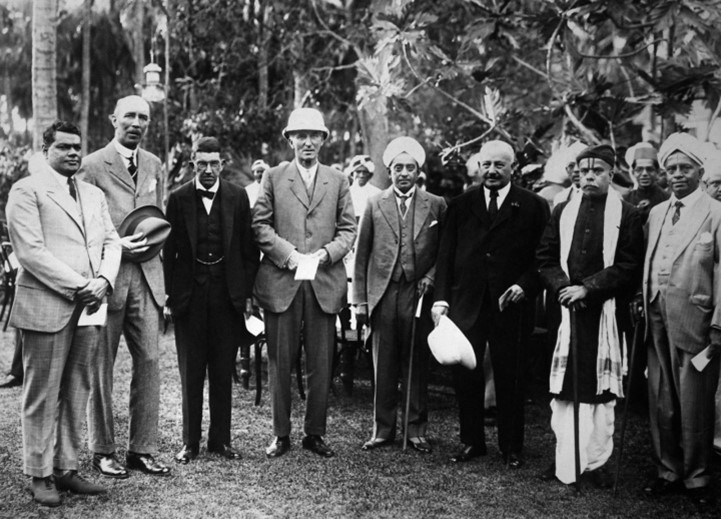
Composition of the Simon Commission
The Commission comprised seven British members—representatives of the Conservative, Liberal, and Labour parties. There was not a single Indian member included in this body meant to review India’s political future.
This exclusion was justified by the British government on two grounds:
- The Commission had to report to the British Parliament, not the Indian people.
- There was no consensus among Indian political parties on constitutional reforms.
However, the real motive was fear—Lord Birkenhead, the Secretary of State for India, was apprehensive that Indian and British Labour members might unite in favour of Indian self-government.
Aims of the Commission
The primary objectives of the Commission were:
- To review the functioning of the provincial governments.
- To examine how effectively representative institutions were operating.
- To outline proposals for future constitutional development and steps toward responsible governance.
Several strategic factors led to the premature appointment of the Commission:
- Upcoming British General Elections (1929): The Conservatives feared that the Labour Party might win and take a more sympathetic view of Indian aspirations.
- Communal Tensions in India: The government hoped to present the communal divide as a reason Indians were “unfit” for self-rule.
- Mounting Pressure from Nationalists and Youth Movements: Radical voices, led by Nehru and Subhas Chandra Bose, were intensifying their demand for complete independence.
- Swarajists’ Growing Influence: Their activism in legislative assemblies was an additional cause for British concern.
Nationwide Boycott and Political Unity
The all-white composition of the Commission, excluding Indians from a body meant to determine their future, was seen as a deliberate insult. The response from Indian political leadership was swift and united:
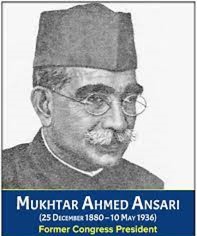
- At the Madras Session of the Indian National Congress in December 1927, presided over by Dr. M.A. Ansari, the INC passed a resolution to boycott the Commission in every form.
- The All India Hartal was declared for 3 February 1928, the day the Commission landed in Bombay.
- Wherever the Commission travelled, it was met with black flags, slogans of “Simon Go Back!”, and massive protests.
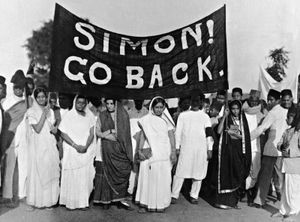
This marked a rare moment of unity:
- A section of the Muslim League led by Jinnah, the Hindu Mahasabha, and even liberal groups like the Federation of Indian Chambers of Commerce and Industry supported the boycott.
- Indian revolutionaries, including Bhagat Singh, rejected the Commission’s legitimacy and opposed it on nationalist grounds.
However, some groups like:
- The Muslim League faction under Muhammed Shafi,
- The Justice Party in Madras,
- The Bahishkrit Hitakarini Sabha under Dr. B.R. Ambedkar,
- And the All India Achut Federation chose not to participate in the boycott.
Supporters of the Simon Commission | Opponents of the Simon Commission |
Conservatives in the UK | Indian National Congress (INC) |
Muslim League led by Muhammed Shafi | Muslim League led by M. A. Jinnah |
Justice Party in Madras | Hindu Mahasabha |
Unionists in Punjab | Indian revolutionaries like Bhagat Singh, etc. |
Bahishkrit Hitakarni Sabha |
The Nehru Report (1928):
Lord Birkenhead’s Challenge (1925)
In 1925, Lord Birkenhead, the British Secretary of State for India, issued a provocative challenge to Indian leaders, questioning their ability to frame a constitution that would be accepted by all communities in India. His statement was widely perceived as an insult and sparked a strong desire among Indian nationalists to demonstrate their political maturity.
Congress Response and Hindu-Muslim Dialogue
Guwahati Congress Session (1926)
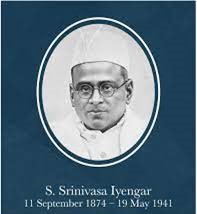
Held under the presidency of Srinivasa Iyengar, the 1926 session passed a resolution urging the Congress Working Committee (CWC) to work with Hindu and Muslim leaders to resolve communal differences and report their findings by March 31, 1927.
The Delhi Proposals (March 1927)
Prominent Muslim leaders met in Delhi on 20 March 1927 and agreed to accept joint electorates, subject to specific conditions:
1. One-third Muslim representation in the Central Legislature.
2. Proportional representation in Muslim-majority provinces like Punjab and Bengal.
3. Creation of three new Muslim-majority provinces
- Sindh as a separate province.
- NWFP and Baluchistan to receive full provincial status.
Jinnah played a major role in formulating these proposals.
Congress Reaction
The Congress Working Committee welcomed the proposals but suggested that Sindh should be separated on general administrative grounds, not communal ones.
Congress Moves towards a Constitutional Draft
AICC Meeting in Bombay (May 1927)
The All India Congress Committee (AICC) met in May 1927 and adopted important resolutions to respond to political developments:
- It accepted the Delhi Proposals, albeit with certain modifications.
- It authorised the Congress Working Committee to collaborate with elected legislators and prepare a Swaraj Constitution for India.
This marked a critical step towards asserting Indian political agency in drafting a constitution free from British interference.
Madras Congress Session (December 1927)
Under the presidency of Dr. M.A. Ansari, the 42nd Annual Session of the Indian National Congress at Madras made several historic declarations:
- Boycott of the Simon Commission was formally adopted.
- The Working Committee was empowered to draft a Constitution for India.
- The Congress condemned the deployment of Indian troops abroad in countries like Persia, China, and Mesopotamia.
- Most significantly, Jawaharlal Nehru introduced a resolution calling for Complete Independence (Poorna Swaraj)—the first explicit call for full sovereignty from British rule.
This session reflected growing radicalisation among Congress ranks, especially from younger leaders who were disillusioned with half-measures like dominion status.
All Parties Conferences and the Drafting of the Constitution
Delhi All-Parties Conference (February 1928)
The first All-Parties Conference, convened in Delhi and chaired by Dr. M.A. Ansari, was attended by representatives of the Congress, Muslim League, Hindu Mahasabha, Liberals, and other groups.
- While many delegates favoured Dominion Status, youth leaders like Nehru and Bose strongly pushed for complete independence.
- A compromise resolution was passed authorising the drafting of a constitution to establish a fully responsible government in India.
Bombay Conference and Formation of the Nehru Committee (May 1928)
On May 19, 1928, a second All-Parties Conference in Bombay appointed a committee to draft a Constitution for India.
- Pandit Motilal Nehru was chosen as Chairman.
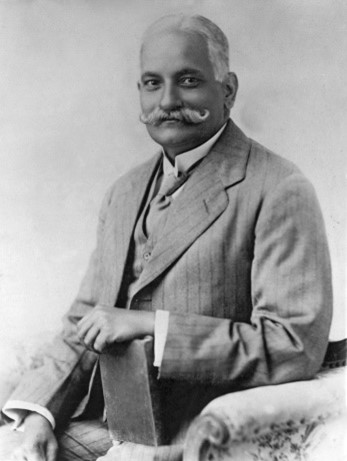
- Members included Subhas Chandra Bose, Sir Tej Bahadur Sapru, M.R. Jayakar, Shuaib Qureshi, Sardar Mangal Singh, N.M. Joshi, and others.
- Jawaharlal Nehru served as the General Secretary of the committee.
This body came to be known as the Nehru Committee, tasked with formulating the first Indian-drafted constitutional framework.
Lucknow All-Parties Conference (August 1928)
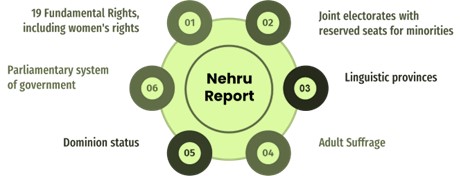
The final All-Parties Conference met in Lucknow, where the Nehru Report was formally presented. It outlined a comprehensive vision for India’s political future, firmly rooted in constitutional democracy, secularism, and federalism.
Key Recommendations of the Nehru Report
1. Dominion Status: India should attain Dominion Status within the British Commonwealth as an immediate goal.
2. Joint Electorates: The report rejected separate electorates and called for joint electorates with universal adult suffrage.
3. Minority Rights:
- Muslim reservations in provinces where they were in a minority, not where they were in a majority (e.g., Punjab and Bengal).
- Reservation for all religious minorities in legislatures for a period of 10 years.
4. Strong Central Government:
- Establishment of a federal structure with residuary powers vested in the Centre.
- A parliamentary system with a bicameral legislature.
5. Responsible Government: The executive must be fully accountable to the legislature.
6. Linguistic Provinces: Provinces should be reorganised on linguistic lines.
7. Fundamental Rights: A set of 19 fundamental rights, including:
- Equality before the law
- Freedom of expression, religion, and association
- Equal rights for men and women
- Secular state with no religious interference
Proposed Constitutional Status
India would be recognised as the Commonwealth of India, enjoying equal status with other British dominions such as Canada and Australia. The proposed government would have the power to make laws for peace, order, and good governance, with an executive responsible to Parliament.
Opposition and Criticism of the Nehru Report
Muslim League Reaction
While some factions of the Muslim League initially supported joint electorates, the final draft of the Nehru Report led to widespread Muslim opposition, particularly from Jinnah, who put forward three key demands:
- One-third representation for Muslims in the Central Legislature.
- Proportional representation for Muslims in Muslim-majority provinces like Punjab and Bengal.
- Residuary powers to be vested in the provinces, not the Centre.
The Congress rejected all three demands, leading Jinnah to distance himself from Congress-led initiatives.
Jinnah’s Fourteen Points (1929)
In March 1929, Jinnah articulated his famous Fourteen Points, which became the cornerstone of Muslim League demands. These included:
Fourteen Points by Jinnah
- Separate electorates
- Federal Constitution with residuary powers vested in the provinces.
- Provincial autonomy
- One-third of the seats in the central legislature for the Muslim
- One-third of Muslim Ministers in central and provincial cabinet
- Sindh should be separated from the Bombay Presidency.
- Reforms should be introduced in the North-West Frontier Province and Baluchistan on the same footing as in other provinces.
- Adequate Muslim representation in all legislatures and elected bodies in every province without reducing the majority of Muslims in any province to a minority or even equality.
- Any territorial redistribution should not affect the Muslim majority in the Punjab, Bengal and North- West Province.
- The Central Legislature should not change the constitution without the concurrence of the States
- Full religious liberty should be guaranteed to all communities.
- No bill should be passed in any legislature or any other elected body if three-fourths of the members of any community in that particular body oppose such a bill
- Adequate Muslim representation in Services and in self-governing bodies
- Adequate safeguards for the protection of Muslim religion, culture, education, language and personal law in the constitution
These points laid the ideological foundation for the two-nation theory in the years to come.
Rise of the Independence for India League (1928)
In reaction to the moderate tone of the Nehru Report:
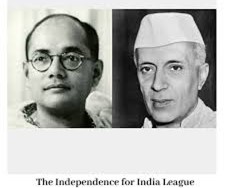
- Jawaharlal Nehru, Subhas Chandra Bose, and Srinivasa Iyengar formed the Independence for India League.
- The League was established as a pressure group within the Congress and declared Purna Swaraj (complete independence) as its ultimate goal—not dominion status.
Significance of the Nehru Report
- The first Indian-authored constitutional framework, showing Indians could govern themselves.
- It refuted British claims that Indians were incapable of constitutional politics.
- Though not implemented, it influenced the eventual Indian Constitution (1950).
- It marked a turning point in nationalist politics—from seeking dominion status to demanding complete independence.
Although the Nehru Report failed to achieve pan-Indian consensus, it was a landmark document in the Indian freedom struggle. It reflected the maturity of Indian leadership, showcased Indian capacity for constitutional governance, and planted the seeds of a sovereign Indian republic. Its failure, however, catalysed a shift in nationalist politics toward Purna Swaraj (Complete Independence) and mass civil disobedience, ultimately culminating in the Lahore Resolution of 1929.
Poorna Swaraj (Complete Independence): A Defining Moment in India’s Freedom Struggle
Calcutta Session of the Indian National Congress (December 1928)
The 1928 session of the Indian National Congress (INC) was held in Calcutta under the presidentship of Motilal Nehru. This session was politically significant for several reasons:
- Mahatma Gandhi returned to active politics and participated in the session, reinvigorating the national movement with his presence.
- The Nehru Report, a constitutional framework drafted under Motilal Nehru’s leadership, was formally approved by the Congress.
- The All India Youth Congress was founded during this session, marking a decisive step in integrating young leadership into the freedom movement.
A growing ideological divide emerged between the older generation (like Gandhi and Motilal Nehru) and the younger leaders (like Jawaharlal Nehru and Subhas Chandra Bose). While the older leaders advocated for Dominion Status, the younger section demanded nothing short of Poorna Swaraj (complete independence).
To strike a balance, Congress resolved that if the British Government failed to grant Dominion Status by 31 December 1929, it would adopt complete independence as its official goal and initiate a civil disobedience movement to achieve it.
Irwin’s Declaration (Deepavali Declaration) – October 31, 1929
In the context of rising nationalist pressure, Lord Irwin, the Viceroy of India, made a significant public statement known as the Deepavali Declaration:
- He acknowledged that the ultimate aim of British policy was Dominion Status for India, echoing the 1917 Montagu Declaration.
- However, no timeline was provided, and the declaration was vague and non-committal.
- Irwin also proposed the convening of a Round Table Conference to discuss future constitutional reforms after the Simon Commission submitted its report.
This statement failed to satisfy Indian political leaders who sought clarity and immediate steps toward self-governance.
The Delhi Manifesto – November 2, 1929
In response, a meeting of national leaders issued the Delhi Manifesto, which outlined the Indian position clearly:
- The upcoming Round Table Conference should focus on implementing Dominion Status, not debating its merits.
- The Congress should have majority representation in any such deliberation.
- A general amnesty for political prisoners and a more conciliatory British policy were also demanded.
However, in December 1929, Viceroy Irwin rejected the demands of the Delhi Manifesto, further straining relations between the British Government and the Indian leadership.
Lahore Congress Session (December 1929 – January 1930)
The 44th Session of the Indian National Congress convened at Lahore from 29 December 1929 to 1 January 1930. This landmark session was presided over by Jawaharlal Nehru, marking a generational shift in Congress leadership. Interestingly, Nehru was chosen as President despite support from only 3 of the 18 Provincial Congress Committees—his selection was significantly influenced by Gandhi.
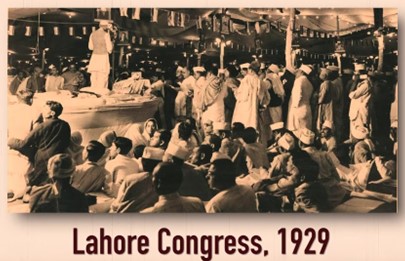
Key Decisions and Outcomes:
- The Congress formally declared Poorna Swaraj (Complete Independence) as its ultimate political objective.
- It declared that the Nehru Report had become null and void, since the government had failed to act on its recommendations.
- Congress decided to boycott the Round Table Conference.
- The Working Committee was empowered to initiate a Civil Disobedience Movement, including non-payment of taxes.
- All Congress members were instructed to resign from legislative bodies as a mark of protest.
- The Congress resolved to observe 26 January 1930 as India’s first Independence Day, to be celebrated annually.
At the stroke of midnight on 31 December 1929, Jawaharlal Nehru hoisted the tricolour flag of independent India on the banks of the Ravi River in Lahore, symbolising the dawn of a new era in India’s national struggle.
26 January 1930 – First Independence Day
On this day, Indians across the country gathered in public meetings, hoisted the Poorna Swaraj Flag, and took the Independence Pledge, which declared:
“It is the inalienable right of the Indian people, as of any other people, to have freedom and to enjoy the fruits of their toil… If any government deprives a people of these rights and oppresses them, the people have a further right to alter it or abolish it.”
Mahatma Gandhi urged the public to spend the day engaging in constructive activities like spinning khadi, promoting Hindu-Muslim unity, eradicating untouchability, and advocating prohibition.
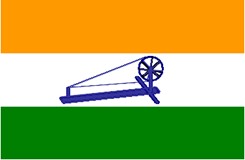
The Poorna Swaraj Flag (Chakra Flag)
The Poorna Swaraj Flag adopted in 1930 had:
- Three horizontal bands—Saffron (courage), White (peace), and Green (prosperity).
- A spinning wheel (charkha) in the centre, symbolising self-reliance and the economic empowerment of the Indian masses.
Formation of the Congress Democratic Party (1930)
Dissatisfied with Congress’s growing militant tone, leaders like Srinivasa Iyengar and Subhas Chandra Bose walked out of the Lahore session and formed the Congress Democratic Party in 1930. Their goal was to promote a more radical and militant programme outside the mainstream Congress structure.
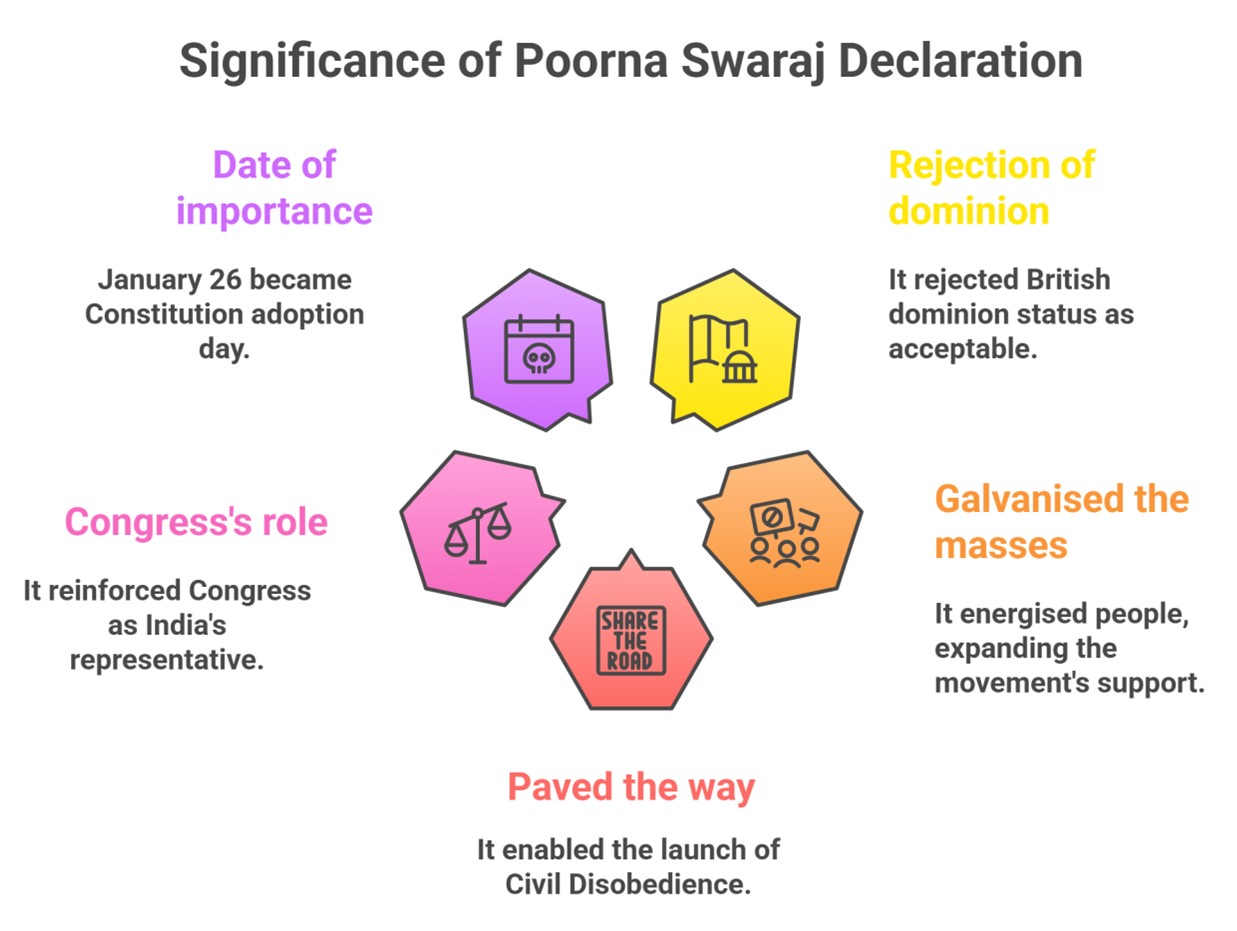
Significance of the Poorna Swaraj Declaration
- It marked the first formal rejection of British dominion status as an acceptable outcome.
- It galvanised the masses and expanded the base of the national movement.
- It paved the way for the launch of the historic Civil Disobedience Movement led by Mahatma Gandhi.
- It reaffirmed the Congress’s role as the representative body of the Indian people.
- The date 26 January, first observed in 1930 as Independence Day, was later chosen as the day for the formal adoption of the Constitution of India in 1950.
This watershed moment in India’s freedom struggle firmly established complete independence as the non-negotiable objective of the Indian National Congress. It unified diverse sections of society and reinvigorated the national movement with a renewed sense of purpose and urgency.