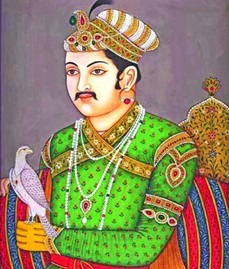
TOne Academy

Mughal Empire

Home / Indian History / Mughal Empire

Mughal Empire

Babur: Founder of the Mughal Empire in India

     Zahir-ud-din Muhammad Babur, widely recognized as the founder of the Mughal Empire in India, holds a significant place in the subcontinent’s history. He was a descendant of two of Asia’s most legendary conquerors—Timur on his father’s side and Genghis Khan through his mother. This illustrious lineage gave him both a sense of legacy and the ambition to carve out his own empire.


     Babur laid the foundation of the Mughal Empire in 1526 after defeating the last Sultan of the Delhi Sultanate, Ibrahim Lodi, in the historic First Battle of Panipat. This victory marked the beginning of a new political epoch in India, ushering in nearly three centuries of Mughal rule, from 1526 to 1857. The six most prominent emperors of this dynasty—Babur, Humayun, Akbar, Jahangir, Shah Jahan, and Aurangzeb—shaped a golden era in Indian history. Although the empire began to weaken after the death of Aurangzeb in 1707, it formally ended following the Revolt of 1857, when British colonial rule replaced Mughal authority.

Babur’s Early Life and the Central Asian Legacy

     The roots of Babur’s ambition can be traced to the political turbulence in Central Asia during the late 15th and early 16th centuries. Following the disintegration of the Mongol Empire, Timur had managed to unite vast regions, including Iran and Transoxiana, into a powerful empire. This empire extended from the Volga River in the west to the Indus River in the east, encompassing modern-day Turkey, Iran, Central Asia, Afghanistan, and parts of northwestern India.


      After Timur’s death in 1405, his grandson Shahrukh Mirza retained control over much of the empire, with cities like Herat and Samarqand flourishing as centers of Islamic art, culture, and scholarship. However, the Timurid practice of dividing territories among multiple heirs weakened the empire significantly. This internal disunity led to the rise of new powers: the Sunni Uzbeks in Transoxiana, the Shia Safavids in Iran, and the expanding Sunni Ottoman Empire in the west.


    Babur ascended the throne of Farghana at the tender age of 12 in 1494. His early reign was dominated by attempts to recapture Samarqand, the symbolic heart of the Timurid empire. Despite briefly seizing the city twice, Babur was ultimately driven out by the formidable Uzbek leader Shaibani Khan. Realizing the difficulty of reclaiming his ancestral lands, Babur turned his attention to Kabul in 1504, which he captured and ruled for over a decade. During this period, he continued to harbor ambitions of reconquering Central Asia.


      In 1510, when Shah Ismail of Iran defeated Shaibani Khan, Babur briefly regained Samarqand with Iranian support, but the triumph was short-lived. With the Uzbeks tightening their grip on Transoxiana, Babur was compelled to shift his imperial vision toward India, where political instability presented a timely opportunity.
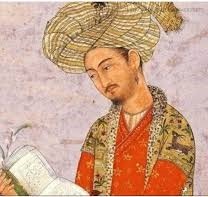
 

Babur’s Entry into India: Political Context and Early Campaigns

      Northwest India at the time was rife with internal dissent and weakening authority. Following the death of Sultan Sikandar Lodi in 1517, his son Ibrahim Lodi struggled to consolidate power. His centralization efforts alienated many Afghan nobles and alarmed regional powers like the Rajputs, leading to widespread dissatisfaction. This volatile political scenario proved advantageous for Babur.


    In 1518–19, Babur launched an expedition and conquered Bhira (in present-day Punjab), but Daulat Khan Lodi, the regional governor, resisted Babur’s influence. When Babur returned to Kabul, Daulat Khan ousted his officials and reclaimed Bhira. Undeterred, Babur crossed the Indus again in 1520–21 and reoccupied Bhira and Sialkot. He also captured Lahore, but internal challenges in Qandhar forced him to withdraw temporarily.


    By 1524, Babur received emissaries from Daulat Khan Lodi and possibly Rana Sanga of Mewar, inviting him to invade India and depose the unpopular Ibrahim Lodi. Sensing an opportune moment to realize his imperial ambitions, Babur advanced into India with determination. However, Daulat Khan betrayed Babur, prompting the latter to defeat him and firmly establish his hold over the Punjab region.

The First Battle of Panipat (1526): The Dawn of Mughal Rule

     The decisive clash between Babur and Ibrahim Lodi took place on 21 April 1526, at Panipat. Though vastly outnumbered, Babur’s army employed superior military tactics, including strategic positioning, use of field artillery, and effective flanking maneuvers. His deployment of Turkish-style cart-mounted cannons shocked the traditional Indian armies.


     The battle ended in a resounding victory for Babur. Ibrahim Lodi was killed on the battlefield, along with thousands of his soldiers. This battle not only ended the Lodi dynasty but also gave Babur control of Delhi and Agra. However, his position remained precarious, as he still had to contend with powerful regional forces like the Rajputs and the Afghans.

The Battle of Khanwa (1527): Consolidation of Mughal Power

    In 1527, Babur faced a formidable coalition led by Rana Sangha of Mewar, who envisioned Rajput dominance in northern India. The battle was fought near Khanwa, close to Agra. Despite being outnumbered, Babur’s forces, equipped with advanced artillery and fortified defensive positions, decisively defeated the Rajput confederacy.


    Rana Sanga, although wounded, managed to escape. However, his dream of a united Rajput front crumbled, and he was later poisoned by his own nobles to prevent further conflict. Babur, to galvanize his troops and justify the war, declared the battle a jihad and assumed the title of Ghazi (warrior of Islam). This victory ensured Mughal dominance in the Delhi-Agra region and paved the way for further expansion.

Following Khanwa, Babur captured Gwalior, Dholpur, and parts of Alwar. He also defeated Medini Rai at Chanderi, where Rajput defenders chose to perish in battle while their women performed jauhar—a tragic testament to the period’s brutal warfare.

The Battle of Ghagra (1529): Final Challenges in the East

     Babur’s last major military engagement was the Battle of Ghagra in 1529, where he faced a coalition of Afghan nobles and Nusrat Shah of Bengal. The conflict took place at the confluence of the Ganga and Ghagra rivers in Bihar.


     Though Babur successfully forced the enemy to retreat, he refrained from pursuing a conclusive victory. With health deteriorating and growing concerns about Central Asia, Babur opted for diplomacy. He made peace with the Afghan chiefs, acknowledged their control over Bihar under Mughal suzerainty, and signed a treaty with Nusrat Shah before returning to Agra.


    Shortly afterward, in 1530, Babur passed away near Lahore on his way back to Kabul. His son Humayun succeeded him, inheriting both the challenges and the promise of the nascent Mughal Empire.

Legacy and Significance of Babur’s Rule

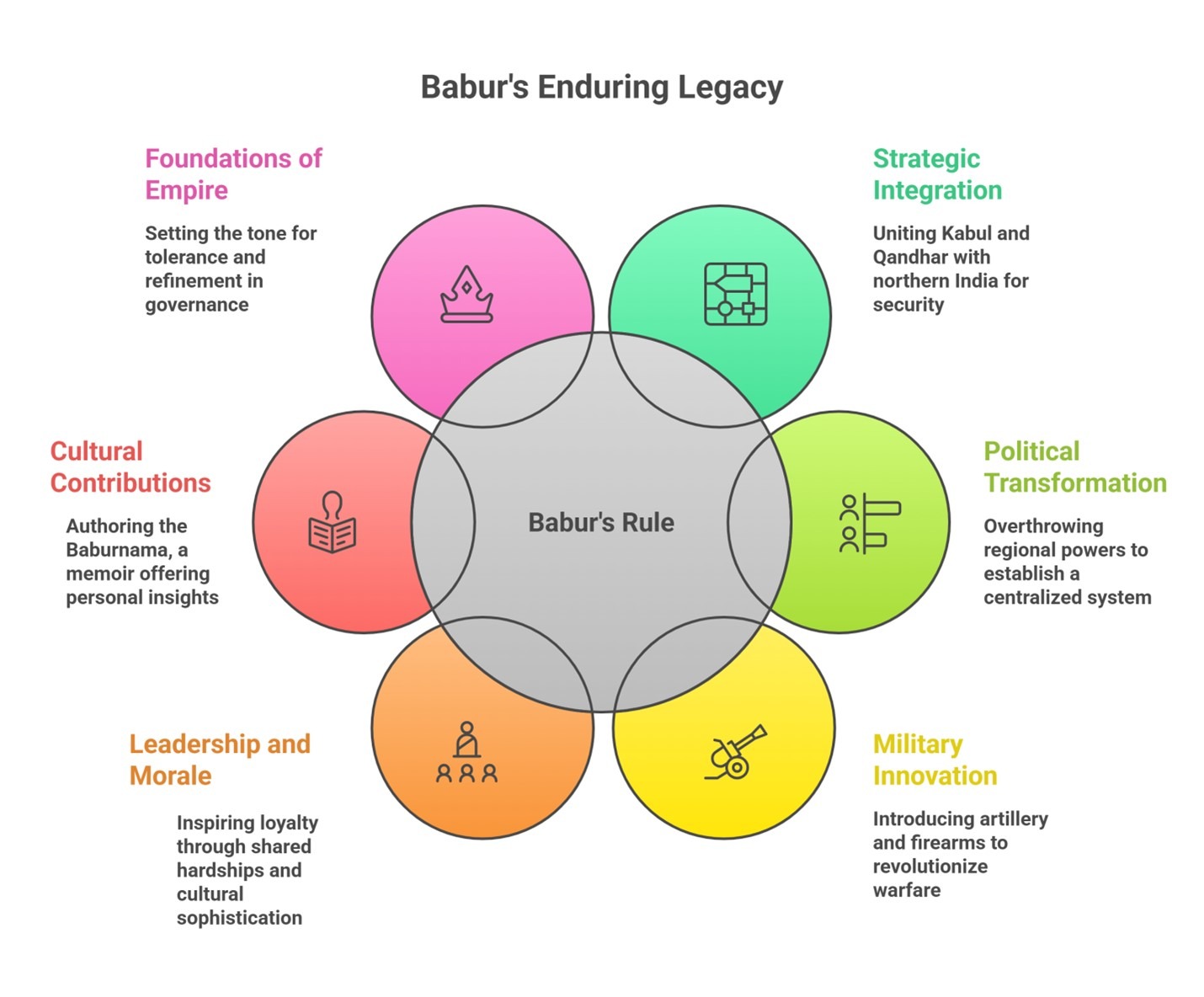
     Babur’s brief but impactful reign laid the foundation for one of the most enduring empires in Indian history. His military brilliance, administrative foresight, and personal charisma made a lasting impression on the Indian subcontinent. Key aspects of his legacy include:


    • Strategic Integration: For the first time since the Kushana era, the regions of Kabul and Qandhar were integrated with northern India, providing strategic depth and long-term security against invasions.
  •  
    • Political Transformation: The defeat of the Lodis and the Rajputs disrupted the fragmented regional power structure, creating space for a centralized imperial system that his successors would further develop.
  •  
    • Military Innovation: Babur demonstrated the revolutionary potential of artillery and firearms in Indian warfare. His campaigns introduced a new military culture that quickly gained traction across the subcontinent.
  •  
    • Leadership and Morale: A bold and resilient commander, Babur shared in the hardships of his soldiers, earning their unwavering loyalty. He was also known for his magnanimity and cultural sophistication.
  •  
    • Cultural Contributions: A gifted scholar and poet, Babur authored the celebrated Baburnama (Tuzuk-i-Baburi), his memoirs written in the Chagatai Turki language, which offers invaluable insight into his personality, worldview, and times.
  •  
    • Foundations of Empire: Babur’s establishment of strong central authority, combined with his emphasis on tolerance and refinement, set the ideological and administrative tone for the Mughal Empire’s golden age under Akbar and beyond.


Babur’s entry into India was not just the start of a dynasty but the beginning of a new political and cultural chapter in the history of South Asia. His life, though short, altered the course of Indian history forever.
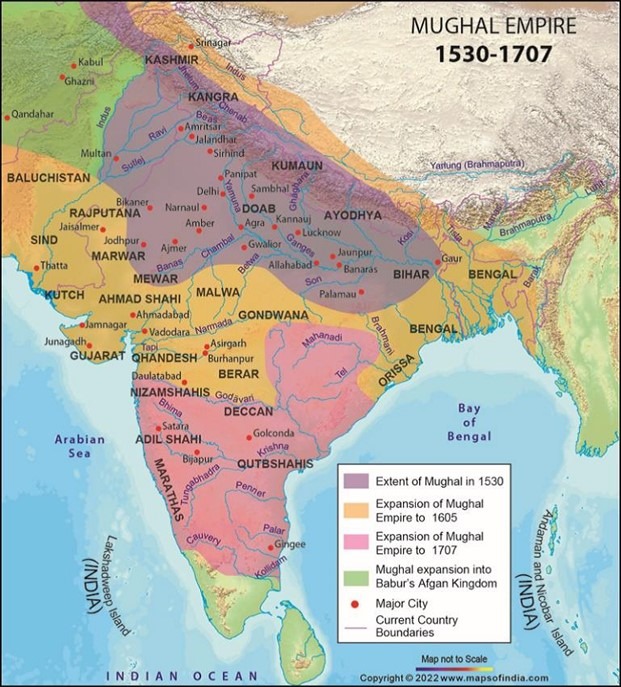
 

Humayun (1530–1540 CE, 1555–1556 CE):

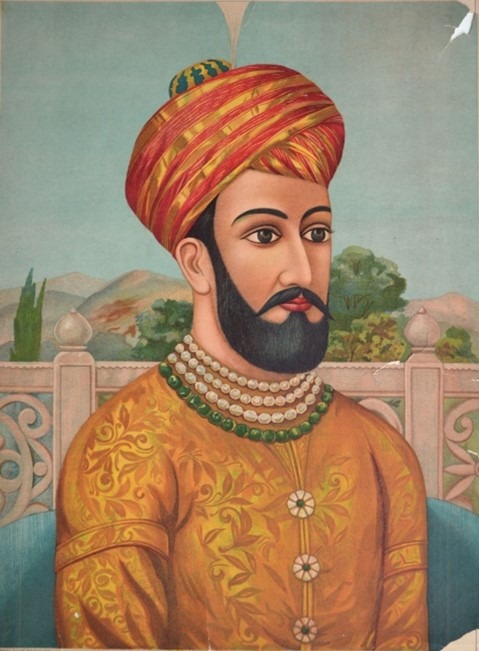
     Nasir-ud-Din Muhammad Humayun, the eldest son of Babur, succeeded his father to the Mughal throne in December 1530, at the age of just 23. Despite being the heir to a formidable empire, Humayun’s reign was riddled with internal strife, unstable governance, and external threats that tested his leadership at every step. Unlike his father Babur, Humayun lacked military prowess and strategic decisiveness, which contributed to his initial failures as a ruler.


Challenges at Accession

Humayun inherited a fragile empire from Babur that was still in its formative stage. Among the pressing challenges he faced were:


    • An unstable administrative system that had not yet taken deep roots in India.
    • A depleted imperial treasury, leaving the government financially vulnerable.
    • Rising Afghan resistance, particularly in the eastern regions, where leaders like Sher Khan (later Sher Shah Suri) aimed to displace the Mughals.


In addition, Humayun had pledged to his father on his deathbed to treat his brothers with kindness. True to his word, he divided the empire among them:


    • Kamran received Kabul and Kandahar
    • Askari was granted Sambhal
    • Hindal obtained Alwar


This division, although rooted in goodwill, sowed seeds of disunity and rivalry within the imperial family.

Major Threats during Humayun’s Early Reign

Upon ascending the throne in Agra, Humayun faced challenges from three major fronts:


1. Internal opposition from his brother Kamran

2. The rising Afghan power under Sher Khan in the east

3. Expansionist ambitions of Bahadur Shah of Gujarat

1. Kamran’s Ambitions

    Although Kamran was initially given Kabul and Kandahar, he remained dissatisfied. Without the emperor’s permission, he marched eastward and seized Lahore and Multan. Instead of confronting his brother militarily, Humayun, in an effort to preserve peace and avoid a civil war, formally acknowledged Kamran’s control over Punjab and Multan.

2. The Afghan Menace under Sher Khan

      Afghan resurgence, particularly in Bihar and eastern Uttar Pradesh, was led by Sher Khan, a skilled administrator and military tactician. In 1532, Humayun launched a campaign against the Afghans and achieved a temporary victory at Daurah. He then laid siege to the fort of Chunar, an important stronghold controlled by Sher Khan. After four months, Sher Khan offered terms of loyalty, which Humayun naively accepted, lifting the siege—an act that would later prove to be a critical error.

3. Threat from Bahadur Shah of Gujarat

    While Humayun was engaged with the Afghan threat, news arrived that Bahadur Shah of Gujarat had annexed Malwa and Rajasthan. To prevent the formation of a western front against the Mughals, Humayun signed an agreement with Sher Khan and turned his attention to Gujarat.


     In a swift campaign, Humayun forced Bahadur Shah to retreat and successfully occupied Gujarat and Malwa, placing them under the control of his brother Askari. However, Bahadur Shah soon reclaimed these territories, and Mughal control waned. Even though the campaign failed to consolidate Mughal authority, it succeeded in eliminating Bahadur Shah as a future threat. He was eventually assassinated by the Portuguese, bringing an end to anti-Mughal resistance from Gujarat.

Construction of Dinpanah and Missed Opportunities

     Instead of capitalizing on his initial military successes, Humayun spent the next one and a half years on an ambitious architectural project—building a new city in Delhi named Dinpanah. Meanwhile, Sher Khan was expanding his power base in the east by defeating local rulers and strengthening his army. This period of inactivity gave Sher Khan a significant strategic advantage.

Battle of Chausa (1539 CE): The Turning Point

     By 1539, Sher Khan had declared himself the ruler of Bengal and captured strategic locations such as Rohtas fort. Alarmed by Sher Khan’s growing strength, Humayun led an expedition to confront him in Bengal.


    However, upon reaching Gaur (Gauda), Humayun received troubling news: his brother Hindal had rebelled and declared himself emperor in Agra. Humayun decided to return west to suppress the rebellion.


    Despite internal dissent, the monsoon season, and constant skirmishes from Sher Khan’s forces, Humayun’s army managed to regroup near Chausa, close to modern-day Buxar. Here, a decisive battle was fought in June 1539.


    • Sher Khan emerged victorious due to his superior tactics and command.
    • Humayun suffered a humiliating defeat and narrowly escaped death by swimming across the Ganga River.
    • This battle marked the beginning of Sher Khan’s rise as a dominant force in North India.

Battle of Kanauj (1540 CE): The Fall of Humayun

       In an attempt to recover from his defeat, Humayun regrouped his forces with the support of his brothers Askari and Hindal and prepared for a renewed confrontation. The final battle between Humayun and Sher Khan took place at Kanauj (also known as Bilgram) in 1540.


    • Humayun’s forces, hastily assembled and lacking coordination, proved no match for Sher Khan’s seasoned army.
    • Sher Khan decisively defeated Humayun, who was forced into exile.
    • With this victory, Sher Khan assumed the throne under the title Sher Shah Suri, establishing the Sur Empire and displacing the Mughals from Delhi.

The Downfall and Exile

     The period from 1530 to 1540 marks the first phase of Humayun’s reign, characterized by strategic missteps, lack of political foresight, and internal family divisions. His failure to recognize the threat posed by Sher Khan and his overreliance on diplomacy cost him his empire.


     However, this was not the end of Humayun’s story. After years of exile and support from the Persian court, he would eventually return to reclaim the Mughal throne in 1555, though his second reign was tragically brief.

Sher Shah Suri (1540–1545 CE):

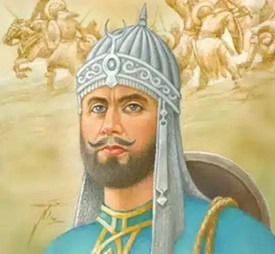
     Sher Shah Suri, originally named Farid, is remembered in Indian history as one of the most efficient and visionary administrators of medieval India. Rising from humble origins, he not only ousted the Mughal emperor Humayun but also laid the foundation of what came to be known as the Second Afghan Empire. His reign, though brief, left an indelible mark on India’s political, administrative, and infrastructural systems.

Early Life and Rise to Power

     Sher Shah was born in Sasaram, Bihar, into a modest Afghan family. His father, Hasan Khan, was a jagirdar (landholder) of Sasaram. From a young age, Farid displayed exceptional military and administrative skills. While serving under Bahar Khan Lohani, the Afghan ruler of Bihar, he earned the title “Sher Khan” after reportedly killing a tiger in a single combat—an act of remarkable bravery.


He was a pious Muslim, yet known for his religious tolerance. Sher Shah employed Hindus in key administrative positions, recognizing their abilities irrespective of religion. His inclusive policies allowed him to consolidate his rule across a diverse empire.
 

Military Achievements and Territorial Expansion

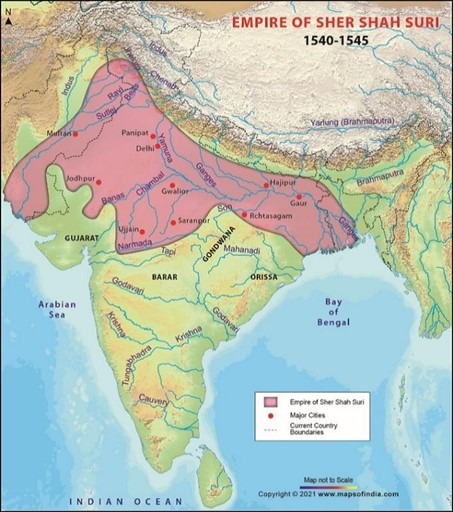
     Sher Shah established a vast empire stretching across almost all of North India, from Bengal in the east to the Indus River in the west, and from Kashmir (excepted) in the north to Malwa and Rajasthan in the south-west.


    • He decisively defeated Humayun in the Battle of Chausa (1539 CE) and again at Kanauj (1540 CE), forcing the Mughal emperor into exile.
    • He successfully defeated the Bengal army at the Battle of Surajgarh, consolidating his control over the east.
    • His last military expedition was against Kalinjar, a heavily fortified location in Bundelkhand. During the siege, a cannon accidentally exploded, severely injuring him. Sher Shah succumbed to his injuries in 1545 CE, shortly after learning that the fort had been captured.

Administrative Reforms: The Legacy of a Visionary Ruler

       One of Sher Shah’s most enduring contributions was his comprehensive reform of the Sultanate administration, which later influenced Mughal governance under Akbar. His administrative structure was detailed, systematic, and aimed at efficient revenue collection and justice delivery.

Administrative Units and Officers

    • Village was the smallest unit of administration. The muqaddam, a village headman, served as the government’s link with the people, maintaining law and order.
    • A cluster of villages formed a pargana, several of which comprised a shiqq (equivalent to the Mughal sarkar).
    • The shiqdar (shiqqdar-i-shiqqdaran) was in charge of law enforcement and revenue at the pargana level. He was assisted by two karkuns (clerks) who maintained records in both Persian and local languages (such as Hindavi).
    • The patwari, though not a government employee, maintained village records and belonged to the local community.
    • Munsif was responsible for land measurement, while the munsif-i-munsifan operated at the shiqq level, later evolving into the Mughal post of amin.
    • The qanungo was a hereditary official managing land records at the pargana level.
    • The fotadar served as the pargana’s treasurer.
    • Sher Shah’s administration had 66 sarkars, each meticulously documented and managed.


Administrative Unit

Head/Official Title(s)

Iqta (Province)

Haqim and Amin

Shiq or Sarkar

Shiqdar-i-Shiqdaran (or Faujdar) and Munsif-i-Munsifan

Pargana

Munsif or Amil

Grama (Village)

Amil and Muqaddam

Land Revenue System

Sher Shah introduced a scientific land revenue system, which became a model for future rulers.

    • Land was measured and classified into three categories: good, middle, and bad.
    • The state’s share was fixed at one-third of the average produce, payable in cash or kind.
    • He introduced the concepts of Patta and Qabuliat:
        • Patta was a document specifying the land’s measurement and the amount due from each peasant.
        • Qabuliat was a written agreement from the cultivator accepting these terms.
    • To mitigate risks from famine or crop failure, a cess of two and a half seers per bigha was levied.

Sher Shah Suri Currency and Economic Reforms

    • Sher Shah introduced a standardized silver coin known as the Rupiya, which later evolved into the modern rupee.
    • He also issued copper coins called Dam, which remained in circulation until 1835.

Public Works and Infrastructure

Sher Shah is justly celebrated for his massive infrastructure projects, especially his contribution to road construction and communication systems:


    • He reconstructed and extended the Grand Trunk Road (Sadak-e-Azam) from Chittagong (Bengal) to Kabul (Afghanistan)—one of the oldest and longest roads in Asia.
    • Built several important roads such as:


        • Agra to Jodhpur and Chittor
        • Lahore to Multan


    • To facilitate trade and travel, he built over 1700 Sarais (rest houses) at intervals of two kos (around 8 km) along these roads.


        • Sarais offered separate accommodations for Hindus and Muslims.
        • Brahmins were employed to serve Hindu travelers and feed their animals.
        • Each Sarai was manned by guards under a Shahna (custodian).


These roads and Sarais were famously referred to as “the arteries of the empire”.

Justice and Policing

Sher Shah believed that justice was the cornerstone of governance. He famously remarked:

Justice is the most excellent of religious duties, approved alike by the king of infidels and of the faithful.


    • Qazis were appointed in towns and districts to ensure fair and swift justice.
    • Islam Shah, his son, later codified the laws to institutionalize the legal framework.
    • To prevent crime, muqaddams and zamindars were held accountable for thefts and disturbances in their jurisdictions.


It was said that an old woman could travel alone through forests with gold on her head, untouched by robbers—a reflection of the fear and effectiveness of his law-and-order system.

Infrastructure and Communication: The Grand Trunk Legacy

Sher Shah is perhaps best remembered for revolutionizing India’s communication infrastructure:


    • Rebuilt and expanded the Grand Trunk Road (Sadak-e-Azam) from Chittagong (Bengal) to Kabul (Afghanistan).
    • Built roads connecting:


        • Agra to Jodhpur and Chittor
        • Lahore to Multan, a key transit point to West and Central Asia.
  •  
    • Constructed over 1700 Sarais (rest houses) at regular intervals of two kos (8 km).


        • These Sarais had separate quarters for Hindus and Muslims.
        • Brahmins were employed to serve Hindu travelers, providing food and fodder.
        • Each Sarai had guards under a Shahna (custodian).
        • Over time, markets and settlements developed around these halting places.


These roads and Sarais became known as “the arteries of the empire”, fostering trade, security, and administrative control.

Legacy of Sher Shah Suri

Sher Shah’s greatest achievement lies in his revival of centralized authority and establishment of law and order. He is remembered for:


    • A well-organized bureaucracy
    • Scientific land revenue reforms
    • Standardized currency
    • Vast network of roads and communication
    • Justice, discipline, and secular administration


He was not a religious bigot, although Jizya (tax on non-Muslims) continued under his rule. His administration was largely composed of Afghan officers, but his policy of inclusion helped maintain stability.


     Humayun himself called Sher Shah “Ustad-i-Badshahan” – the teacher of kings, acknowledging his exemplary governance. Though Sher Shah’s reign was short, his reforms laid the groundwork for the later administrative successes of the Mughal Empire under Akbar.

Humayun’s Return from Exile and Restoration of the Mughal Throne

   After his decisive defeat at the Battle of Kanauj in 1540 at the hands of Sher Shah Suri, Humayun was forced into exile. While retreating towards Sindh, he married Hamida Banu Begum, and the couple spent over two years in the region. During this period, in 1542, their son Akbar was born in the fort of Amarkot, a small Rajput kingdom ruled by Rana Prasad, who offered them refuge.


   Subsequently, Humayun sought asylum at the court of the Safavid ruler of Iran, Shah Tahmasp I. With Iranian military assistance, Humayun launched a successful campaign and managed to recapture Qandhar and Kabul in 1545. During his exile, young Akbar was held in custody by Humayun’s brother Kamran Mirza, who, despite their strained relations, ensured that Akbar was treated well. Akbar was finally reunited with his parents after the conquest of Qandhar.


    As the Sur dynasty began to crumble after the death of Islam Shah, Humayun seized the opportunity to reclaim his lost empire. In 1555, he defeated the Afghan forces and re-established Mughal rule in India.


     However, Humayun’s return to power was tragically short-lived. In January 1556, merely six months after regaining the throne, he died from a fatal fall down the steps of his library in Delhi. His sudden death left the empire in the hands of his young son, Akbar, who was only thirteen years old at the time.

Akbar (1556–1605 CE):


      Jalal-ud-din Muhammad Akbar, popularly known as Akbar the Great, ascended the Mughal throne in 1556 CE at the tender age of 13, following the untimely death of his father, Humayun. Despite his youth, Akbar would go on to become the most illustrious and effective ruler of the Mughal dynasty, transforming a fragile inheritance into one of the most powerful and enduring empires in Indian history.

Accession and the Second Battle of Panipat (1556)

    • Upon his ascension, Akbar faced significant threats from powerful Afghan and Rajput forces who sought to reclaim power from the weakened Mughal presence in India.
  •  
    • Fortunately, Akbar was guided and supported by Bairam Khan, a trusted noble of Humayun, who assumed the role of regent and Wakil (prime minister), bearing the title Khan-i-Khanan.
  •  
    • Meanwhile, the Afghans regrouped under Hemu, a brilliant Hindu general serving Adil Shah, the successor of Sher Shah Suri. Hemu swiftly captured Gwalior and Agra, defeating the Mughals near Delhi and taking control of the capital.
  •  
    • In November 1556, the young Akbar marched with Bairam Khan’s forces to reclaim Delhi. The decisive Second Battle of Panipat Though initially on the verge of victory, Hemu was struck in the eye by an arrow and lost consciousness. His troops, leaderless, fled the battlefield. This pivotal Mughal victory re-established Akbar’s rule over northern India.
 

Consolidation under Bairam Khan (1556–1561)

    • For the first five years of Akbar’s reign, Bairam Khan served as the de facto ruler, consolidating Mughal control from Kabul to Jaunpur, including key regions like Gwalior and Ajmer.
    • However, Bairam Khan’s autocratic behavior and arrogance alienated several nobles. Akbar, seeking to assert his own authority, dismissed Bairam Khan through a royal farman.
    • In response, Bairam Khan rebelled but was swiftly defeated and captured. Akbar treated him with magnanimity and allowed him the choice of continuing service, retiring, or undertaking the Hajj to Mecca. Bairam chose to retire to Mecca but was assassinated by an Afghan en route.
    • Akbar later married Bairam Khan’s widow, his own cousin, and adopted Bairam’s son, who grew up to be the distinguished courtier and poet Abdur Rahim Khan-i-Khanan, one of Akbar’s celebrated Navaratnas (Nine Jewels).

Navaratnas (Nine Gems of Akbar’s Court)

      Akbar’s court was enriched by scholars, poets, musicians, and administrators, collectively called the Navaratnas:


Name

Key Contributions & Details

Abul Fazl

• Author of Ain-i-Akbari and Akbarnama

• Led Mughal campaigns in the Deccan

• Assassinated by Bir Singh Bundela on orders of Prince Salim

Faizi

• Brother of Abul Fazl and a Persian poet

• Translated Lilavati (math text) into Persian

• Supervised the Persian translation of the Mahabharata

Fakir Aziao Din

• A Sufi mystic and spiritual advisor of Akbar

Tansen

• Renowned musician from Gwalior, originally Ram Tanu Pandey

• Disciple of Sufi saint Muhammad Ghaus

• Credited with invoking rain (Megh Malhar) and fire (Deepak)

Raja Birbal (Mahesh Das)

• Trusted courtier of Akbar

• Conferred the titles “Raja” and “Birbal”

• Died in battle against the Yusuf Shahis on the North-West frontier

Raja Todar Mal

• Finance Minister of Akbar

• Introduced efficient revenue reforms, standard weights, and measures

• Earlier served under Sher Shah Suri

• Title: Diwan-i-Ashraf

Raja Man Singh

• Mansabdar and general in Akbar’s army

• Grandson of Akbar’s father-in-law

Abdul Rahim Khan-i-Khanan

• Poet and linguist, son of Bairam Khan

• Devotee of Lord Krishna despite being Muslim

• Translated Baburnama into Turki

Mirza Aziz Koka

• Also known as Khan-i-Azam or Kotaltash

• Foster brother of Akbar

• Served as Subedar (governor) of Gujarat

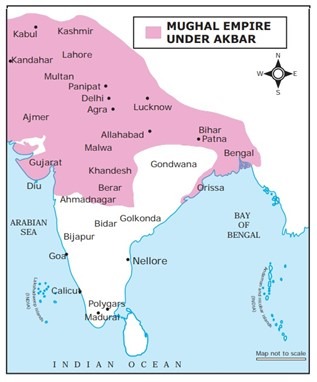
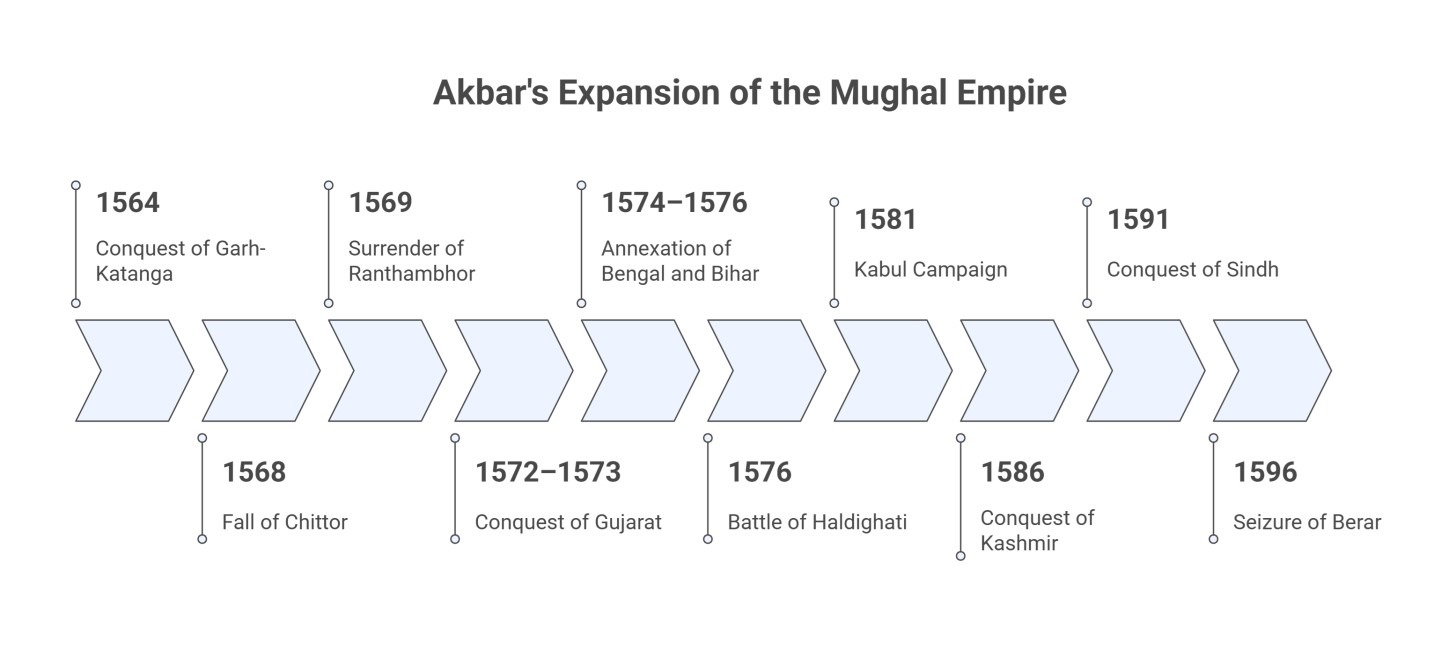
Territorial Expansion of the Mughal Empire under Akbar

     Akbar’s reign witnessed a systematic and extensive expansion of the Mughal Empire, marked by strategic diplomacy, military excellence, and integration of diverse regions into the imperial structure.

Garh-Katanga (1564)

    • The Garh-Katanga kingdom, located in present-day Madhya Pradesh, included Gond and Rajput principalities in the Narmada valley.
    • Rani Durgavati, the regent of her son Bir Narayan, valiantly resisted Mughal forces but was defeated and martyred. This campaign brought the central Indian tribal belt under Mughal control.

Chittor (1568)

    • The fortress of Chittor, a stronghold of Rajput pride, became a symbol of Akbar’s resolve to subdue Rajput resistance.
    • After a six-month-long siege, Chittor fell. Rana Udai Singh had retreated to the hills, leaving Jaimal and Patta, two legendary warriors, in charge.
    • In their honour, Akbar commissioned statues of Jaimal and Patta riding elephants at the Agra Fort, demonstrating respect for valour even in victory.

Ranthambhor (1569)

    • Following Chittor, Akbar targeted Ranthambhor, considered Rajasthan’s strongest fortress.
    • It was defended by Surjan Hada, who eventually surrendered.
    • With victories in Jodhpur, Bikaner, and Jaisalmer, most Rajput rulers accepted Mughal suzerainty, except Mewar, which continued to resist.

Gujarat (1572–1573)

    • Akbar marched into Ahmedabad, which surrendered peacefully. He then subdued the rebellious Mirzas, who held Surat, Broach, and Baroda.
    • In Cambay, Akbar saw the sea for the first time and met Portuguese merchants, who were attempting to extend their influence inland. Akbar’s conquest curtailed their ambitions.

Bengal and Bihar (1574–1576)

    • The Afghans remained strong in eastern India and had overrun Orissa, killing its king.
    • Daud Khan Karrani, the last independent Afghan ruler, declared himself sovereign. Akbar responded by invading Bengal.
    • After defeating Daud in a major battle in 1576 CE, the Mughals executed him and annexed Bengal and Bihar, ending Afghan rule in northern India.

Mewar and the Battle of Haldighati (1576)

    • The fierce Battle of Haldighati was fought between Maharana Pratap of Mewar and the Mughal army led by Man Singh I of Amber.
    • Though defeated, Maharana Pratap escaped and continued guerrilla resistance, refusing to submit to the Mughals.
    • His lone resistance became a symbol of Rajput honour and patriotism, contrasting with other Rajput houses that allied with Akbar.

Kabul Campaign (1581)

    • Mirza Hakim, Akbar’s half-brother and ruler of Kabul, attempted to aid rebellions in Bihar and Bengal.
    • With the help of Raja Man Singh and Bhagwan Das, Akbar defeated Mirza Hakim.
    • Rather than annexing Kabul, Akbar handed it over to his sister, showcasing his liberal outlook and faith in women’s administrative capabilities.

Northwest Frontier and the Uzbek Threat

    • Abdullah Khan Uzbek, a long-standing rival from Central Asia, posed a significant threat by capturing Badakhshan in 1584.
    • Akbar launched campaigns to block Uzbek expansion, capturing:
        • Kashmir (1586) from Yusuf Khan and Yakub Khan
        • Sindh (1591) from Jani Beg Mirza
        • Baluchistan, and reopened the Khyber Pass, which had been closed by tribal insurgents.
    • During one expedition, Raja Birbal, Akbar’s beloved courtier, lost his life fighting rebellious Afghan tribes.

Deccan Expeditions

    • By 1591, Akbar’s forces occupied the strategic Khandesh region in northwestern Deccan.
    • In 1596, the Mughal army seized Berar from Chand Bibi, regent of Ahmednagar, who had fiercely defended the fort against Mughal aggression.
    • By 1600, parts of Ahmed Nagar had fallen into the hands of Mughal forces.
Akbar’s Religious Policy: A Vision of Tolerance and Unity

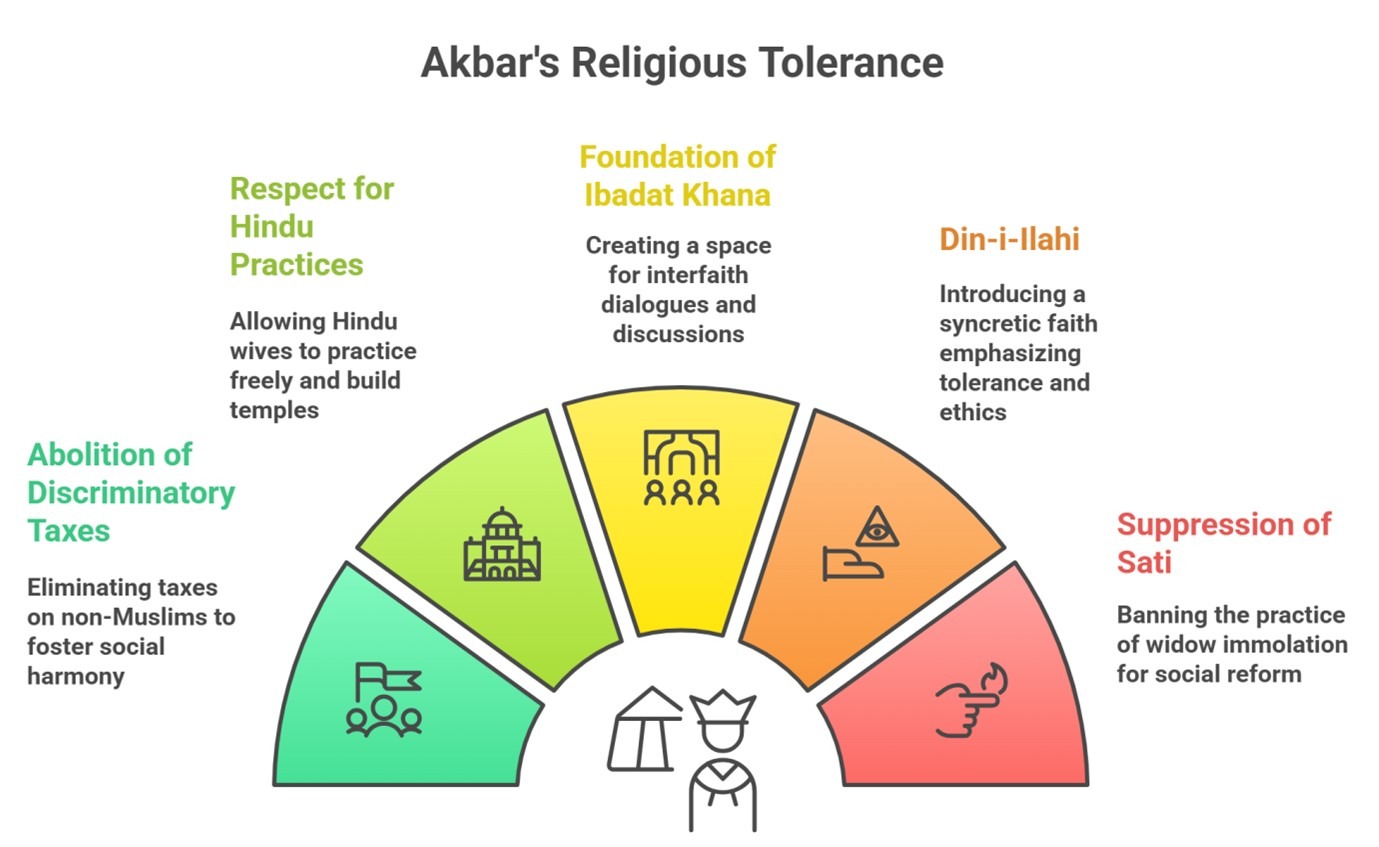
     One of the most celebrated aspects of Akbar’s reign was his liberal and inclusive religious policy, which not only marked a significant departure from the orthodoxy of earlier rulers but also served as the foundation for cultural integration and imperial stability. His approach reflected both personal conviction and political pragmatism, rooted in tolerance, dialogue, and respect for diverse faiths.

Factors Influencing Akbar’s Religious Outlook

Several elements shaped Akbar’s liberal religious worldview:


    • His early exposure to Sufi teachings, which emphasized spirituality over ritualism and encouraged religious harmony.
    • His interactions with Hindu Rajput nobles, particularly after his marriage alliances with Rajput princesses.
    • The need to administer a vast, religiously diverse empire, where Hindus formed the overwhelming majority.

Key Features of Akbar’s Religious Policy

    • Abolition of Discriminatory Taxes: In a bold and historic move, Akbar abolished the pilgrim tax and the Jizya, a tax traditionally imposed on non-Muslims. This enhanced social harmony and won the goodwill of the Hindu population.
  •  
    • Respect for Hindu Practices: Akbar allowed his Hindu wives to freely practice their religion and construct temples within palace premises, demonstrating unprecedented religious tolerance for a Muslim ruler of that era.
  •  
    • Foundation of the Ibadat Khana (1575 CE): At his newly established capital Fatehpur Sikri, Akbar built the Ibadat Khana or House of Worship, where interfaith dialogues were held. Scholars and theologians from various religionsIslam, Hinduism, Jainism, Christianity, and Zoroastrianism—were invited to engage in discussions on theology and ethics.
  •  
    • Din-i-Ilahi (1582 CE): Inspired by these interfaith exchanges, Akbar introduced a new syncretic religious philosophy called Din-i-Ilahi (Divine Faith). This faith sought to synthesize the best moral and spiritual values from various religions, emphasizing monotheism, rationality, tolerance, and ethical living. However, Akbar never imposed this belief on his subjects, and it remained a personal, elite-oriented faith rather than a mass religion.


    • Suppression of Sati: Akbar also took steps toward social reform, most notably by discouraging and banning the practice of Sati, wherein Hindu widows were immolated on their husband’s funeral pyre.
 

Sulh-i-Kul: The Doctrine of Universal Peace

One of Akbar’s most profound contributions to governance and social thought was the doctrine of Sulh-i-Kul, which means “peace with all”.


    • This doctrine stemmed from Akbar’s realization that religious orthodoxy and dogmatic interpretations often bred intolerance and division.
    • Sulh-i-Kul advocated for universal tolerance, mutual respect, and peaceful coexistence, regardless of religion, caste, or ethnicity.
    • It became the philosophical cornerstone of Akbar’s imperial policy, forming the basis of a secular administrative structure.
    • His close associate and court historian Abul Fazl helped formulate this concept and embed it into the Mughal vision of governance.


The principle of Sulh-i-Kul not only cemented Akbar’s legacy as a secular ruler but also inspired future generations to embrace pluralism and inclusivity.

Rajput Policy: Political Alliance Through Diplomacy and Matrimony

     A key pillar of Akbar’s success was his conciliatory and strategic policy toward the Rajputs, who were among the most powerful warrior clans of the time. Instead of outright subjugation, Akbar chose diplomacy, mutual respect, and marital alliances to integrate them into the Mughal Empire.

Salient Features of Akbar’s Rajput Policy

    • Matrimonial Alliances: Akbar forged multiple marriages with Rajput princesses, thereby creating a strong political and cultural bond with their kingdoms.


        • He married Harkha Bai (popularly known as Jodha Bai), the daughter of Raja Bhar Mal (also called Bihari Mal) of Amber.
        • He also married princesses of Bikaner and Jaisalmer, expanding his influence across Rajasthan.
        • Prince Salim (later Jahangir), born of Harkha Bai, married the daughter of Raja Bhagwan Das, further strengthening imperial-Rajput ties.
  •  
    • Inclusion in Administration: Rajput nobles were granted high-ranking positions in the Mughal court, particularly in the mansabdari system.


        • Raja Man Singh, grandson of Raja Bhar Mal, became one of Akbar’s most trusted generals.
        • Raja Bhagwan Das played a crucial role in diplomacy and military campaigns.
        • Raja Todar Mal, though a Khatri by caste, rose to become Diwan (Finance Minister) due to his expertise in revenue matters.
        • Birbal, a Brahmin known for his wit and wisdom, was one of Akbar’s closest companions and advisors.
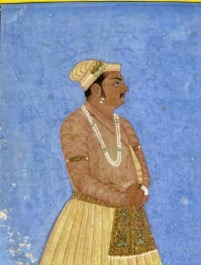


This inclusive policy not only ensured peace in Rajasthan but also brought loyalty, military strength, and administrative talent into the Mughal fold.

Resistance from Mewar and Marwar

    Despite his diplomatic success with many Rajput states, Akbar faced stiff resistance from two prominent Rajput kingdoms: Mewar and Marwar.

Mewar and Maharana Pratap

    • Rana Pratap Singh, son of Rana Udai Singh of Mewar, refused to accept Mughal suzerainty and continued his resistance till his death in 1597 CE.
    • The famous Battle of Haldighati (1576 CE) between Rana Pratap and the Mughal forces led by Man Singh I ended in a Mughal tactical victory, but Rana Pratap escaped and continued guerrilla warfare.
    • His defiance became a symbol of Rajput pride and self-respect, and his struggle remains immortalized in Indian folklore.

Marwar and Chandra Sen

    • In Marwar (Jodhpur), Chandra Sen, son of Maldeo Rathore, resisted Mughal authority till his death in 1581 CE.
    • Although his brothers sided with the Mughals, Chandra Sen never submitted, marking Marwar as a final frontier of Rajput independence.


Akbar’s religious and Rajput policies represented a visionary approach to empire-building. By replacing religious persecution with tolerance, and conquest with collaboration, he transformed the Mughal Empire into a multi-ethnic, multi-religious, and culturally integrated realm.


     His belief in dialogue over dogma, inclusion over imposition, and peace over persecution made him one of the greatest rulers in Indian history, earning him the well-deserved epithet: “Akbar the Great”.

Jahangir (1605–1627 CE):

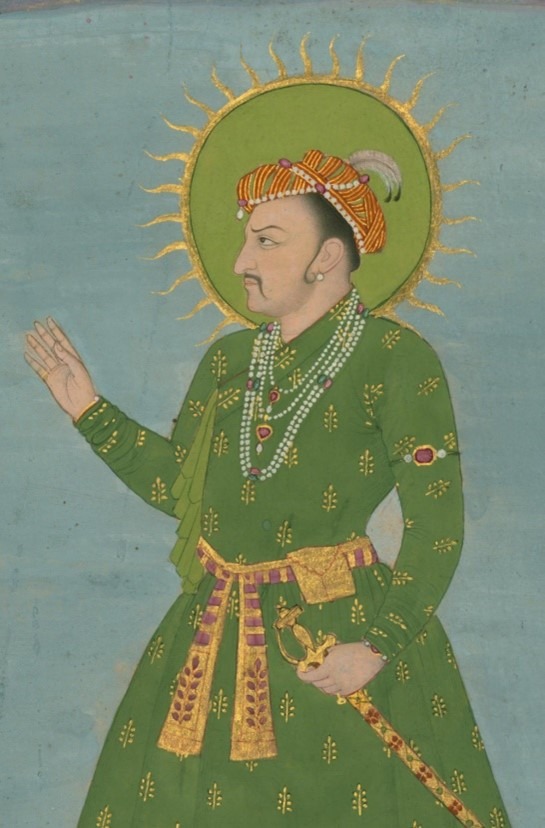
     After the death of Emperor Akbar in 1605 CE, his son Salim ascended the Mughal throne under the regal title Nur-ud-din Jahangir. His succession was uncontested, primarily because his rivals, including his younger brothers, had died earlier due to alcoholism and internal conflict.
 

Rebellion of Khusrau and the Execution of Guru Arjan

    • Early in his reign, Jahangir faced a rebellion from his eldest son, Khusrau, who declared himself emperor and gained some support from nobles and the Sikh community.
    • Jahangir’s forces defeated Khusrau near Lahore, captured him, and had him imprisoned and blinded.
    • The fifth Sikh Guru, Guru Arjan Dev, was arrested for allegedly blessing the rebel prince. He was ordered to convert to Islam, and upon refusal, he was tortured and executed in 1606 CE. This marked a turning point in Sikh-Mughal relations, as the Sikh community began its transformation into a militarized order.

Marriage to Nur Jahan and Her Political Influence

    • In 1611 CE, Jahangir married Mehrunnisa, the widow of Sher Afghan, a Persian noble. She was later given the title Nur Jahan (“Light of the World”).
    • Nur Jahan played a dominant role in state affairs, influencing court politics, royal appointments, and imperial diplomacy.
    • She encouraged Persian art, literature, and court culture, introducing new fashions, etiquette, and patronage practices in the royal household.

Rebellion of Prince Khurram (Shah Jahan)

    • In 1622 CE, Prince Khurram, later known as Shah Jahan, rebelled against Jahangir’s authority. Some historians attribute this to Nur Jahan’s political ambitions, while others believe it was due to Khurram’s reluctance to campaign in Kandahar.
    • The rebellion persisted for four years, weakening imperial administration.
    • After Jahangir’s death in 1627 CE, Shah Jahan returned to Agra with the support of the military and nobles, defeated rivals, and assumed the Mughal throne.
    • Nur Jahan was granted a pension and spent the remaining 18 years of her life in seclusion.

Shah Jahan (1627–1658 CE):

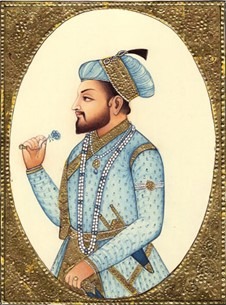
     Shah Jahan, the son of Emperor Jahangir and his Rajput queen Jodha Bai, ascended the Mughal throne in 1627 CE. His reign is often referred to as the Golden Era of Mughal architecture, courtly refinement, and cultural prosperity. Under his leadership, the Mughal Empire reached its peak in terms of art, literature, urban planning, and architectural excellence.


Northwestern Campaigns and the Kandahar Conflict

Shah Jahan was determined to restore Mughal dominance over ancestral lands in Central Asia and Afghanistan, which led to several military campaigns:


    • In 1638, Mughal forces successfully recaptured Kandahar, a region previously conquered by Akbar but lost during Jahangir’s reign.
    • However, in 1647, Kandahar was retaken by the Safavids of Persia, and despite repeated attempts to regain control, the Mughals failed. These military expeditions cost the Mughal army over 5,000 lives.
    • The emperor also attempted to conquer Balkh from the Uzbeks, but this too ended in failure, marking a significant setback in the empire’s northwestern frontier policy.

Deccan Campaigns and Southern Consolidation

Shah Jahan’s campaigns in the Deccan region were notably more successful:


    • In 1632, the Mughals annexed the Ahmadnagar Sultanate after a decisive military victory.
    • By 1636, the sultanates of Bijapur and Golkonda acknowledged Mughal supremacy by signing formal treaties, thereby extending the empire’s influence deep into the southern peninsula.
    • To consolidate control, Shah Jahan carved out four new Mughal provinces in the DeccanKhandesh, Berar, Telangana, and Daulatabad—and entrusted them to his capable son, Aurangzeb.

Architectural Achievements: A Legacy in Stone

Shah Jahan’s reign stands as a monumental chapter in the history of Indian architecture:

    • The crowning jewel of his legacy is the Taj Mahal, constructed on the banks of the Yamuna River in Agra. Built as a mausoleum for his beloved wife, Mumtaz Mahal, who died in 1631, it remains a symbol of eternal love and a masterpiece of Mughal architecture.
    • Other landmark structures include:
        • The Red Fort (Lal Qila) in Delhi, a massive citadel of power and splendor.
        • The Jama Masjid in Delhi, one of the largest and most revered mosques in India.
        • The Peacock Throne, an extravagant seat of royalty encrusted with precious gems, valued at approximately 5 million pounds sterling, according to French traveler Jean-Baptiste Tavernier, a jeweller by profession.

Foreign Visitors and Accounts of His Reign

Shah Jahan’s reign drew the attention of several European travellers, who recorded rich accounts of life at the Mughal court:


    • Jean-Baptiste Tavernier (French gem merchant)
    • François Bernier (French physician and political observer)
    • Peter Mundy (English trader and chronicler)
    • Niccolao Manucci (Italian writer and adventurer)


These visitors described Shah Jahan as a ruler with a keen sense of justice, a universal vision of peace, and a court characterized by immense wealth, discipline, and grandeur.

War of Succession and Final Years

In 1657, Shah Jahan fell seriously ill in Delhi, sparking a violent war of succession among his four sons:


    • Dara Shukoh, the designated crown prince and a liberal scholar
    • Aurangzeb, the governor of the Deccan and a strict orthodox
    • Shuja, the governor of Bengal
    • Murad Baksh, the governor of Gujarat and Malwa


The most ruthless and ambitious of the four, Aurangzeb, emerged victorious after defeating his brothers. He executed Dara Shukoh, declared himself emperor, and confined Shah Jahan to the female quarters (Zenana) of Agra Fort under strict watch. However, the deposed emperor was treated with respect and lived in relative comfort, attended by his devoted daughter, Jahanara Begum.


     Shah Jahan remained a prisoner for eight years, gazing at the Taj Mahal from his window until his death in 1666 CE. He was buried beside Mumtaz Mahal, fulfilling his eternal wish to rest beside his beloved.

Aurangzeb (1658–1707 CE):

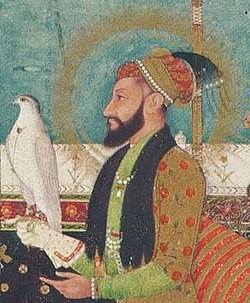
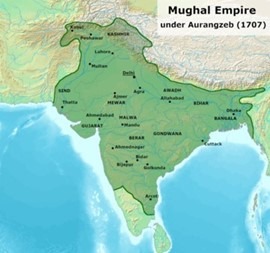
    Aurangzeb, who ascended the Mughal throne in 1658 CE under the regnal title Alamgir, meaning “World Conqueror,” ruled for nearly five decades, making him the longest-reigning Mughal emperor. His reign witnessed the greatest territorial expansion of the empire but also sowed the seeds of its eventual decline due to continuous warfare and religious orthodoxy.
 

Division of Aurangzeb’s Reign

    • First 25 Years (1658–1682): Aurangzeb governed primarily from Delhi, dealing with internal rebellions and administering the empire’s northern territories.
    • Last 25 Years (1682–1707): He remained stationed in the Deccan, personally directing military campaigns against the Marathas, Bijapur, and Golkonda.

Rebellions in Northern India

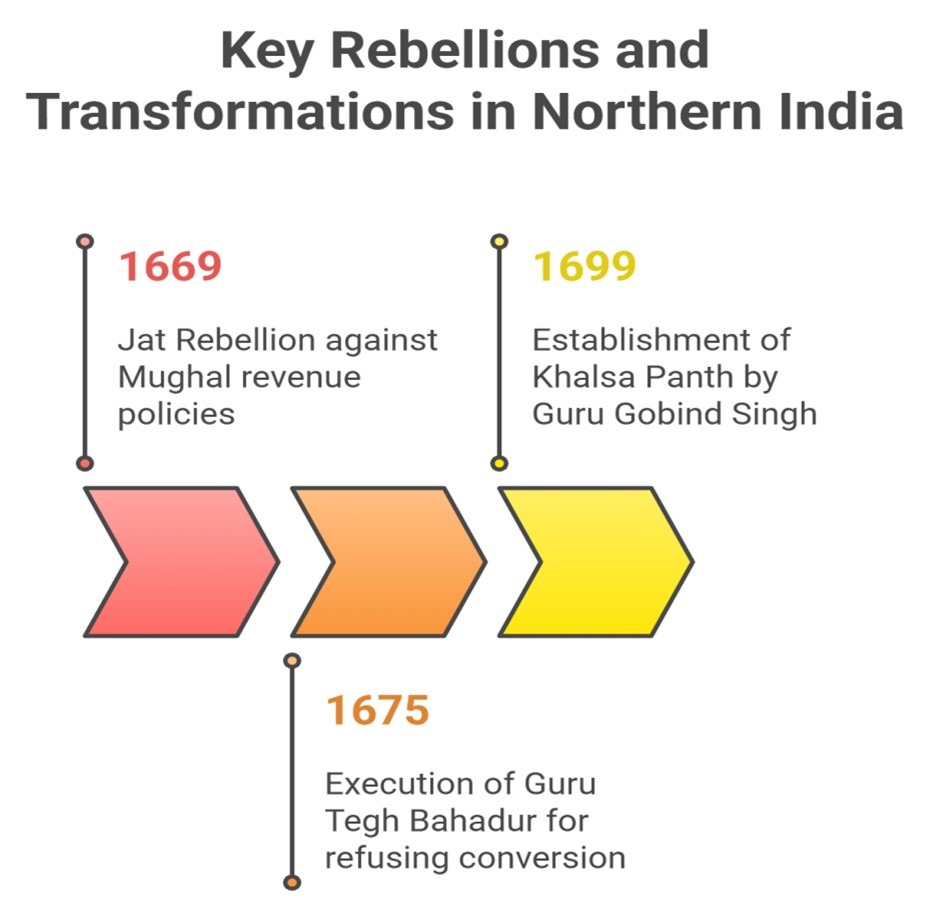
    • Jat Rebellion (1669): The Jats of Mathura rebelled against oppressive revenue policies. Although their leader Gokla was executed, the resistance persisted and eventually led to the emergence of an independent Jat state in the 18th century.
    • Satnami Revolt: The Satnamis, a socio-religious sect in Haryana, revolted against Mughal authority but were crushed with the support of local Hindu zamindars.
    • Sikh Resistance: Tensions escalated when Guru Tegh Bahadur, the ninth Sikh Guru, refused to convert to Islam and was executed in 1675. His son Guru Gobind Singh established the Khalsa Panth in 1699, transforming the Sikhs into a formidable military force.
 

Rajput Affairs and Rebellion

    • The death of Raja Jaswant Singh of Marwar without a male heir led to a succession crisis. Aurangzeb’s attempt to impose a puppet ruler provoked armed resistance.
    • Rani Hadi, the queen, and later Ajit Singh, Jaswant Singh’s posthumous son, led the resistance against the emperor.
    • Rana Raj Singh of Mewar allied with Prince Akbar, Aurangzeb’s rebellious son. Though the rebellion was ultimately crushed, Rajput–Mughal relations were deeply strained.
    • In 1681, a treaty with Mewar marked the end of this phase of conflict.

Deccan Policy and Maratha Conflict

Aurangzeb’s Deccan policy was the most ambitious and draining part of his reign:


    • Chhatrapati Shivaji Maharaj, founder of the Maratha Empire, initially cooperated but later turned against the Mughals.
    • Treaty of Purandar (1665): Signed between Shivaji and Raja Jai Singh, it was short-lived. Shivaji was summoned to Agra, imprisoned, but made a dramatic escape and resumed guerrilla warfare until his death in 1680.
    • His son Sambhaji continued resistance but was captured and executed in 1689. This act intensified Maratha hostility, giving rise to what historians call the “Deccan Ulcer.”
    • Annexation of Deccan Sultanates:
        • Bijapur (1686) and Golkonda (1687) were conquered.
        • These victories brought the Mughals face-to-face with the Marathas, escalating the conflict.
    • Aurangzeb’s continuous presence in the Deccan from 1682 until his death in 1707 severely strained imperial finances and administration.
 

Religious Policy: Orthodoxy and Intolerance

Aurangzeb’s religious policy marked a radical departure from the liberal and inclusive practices of Akbar and Jahangir:


    • He was a devout Sunni Muslim, committed to enforcing Sharia law throughout his empire.
    • Established a department of moral policing, led by a Muhtasib, who enforced Islamic codes, banned music, and monitored public conduct.
    • Strict bans were imposed:
        • Construction and repair of Hindu temples were prohibited.
        • Important temples in Mathura and Banaras were destroyed.
        • Jizya (poll tax on non-Muslims) and pilgrimage tax were re-imposed.
        • Shia practices and festivals were suppressed.
        • Sufi saints and their liberal views were also targeted.
    • He ended public ceremonies like Jharokha Darshan, banned Nauroz (Persian New Year) celebrations, and discontinued the inscription of Kalima on Mughal coins.

Ahom–Mughal Conflicts: A Saga of Resistance in Northeast India

     The Ahom–Mughal conflicts refer to a prolonged series of military confrontations between the Ahom Kingdom of Assam and the Mughal Empire during the 17th century. These conflicts primarily revolved around control over the Brahmaputra Valley and represented one of the most sustained regional resistances faced by the Mughals during their imperial expansion in eastern India.

Origins of the Conflict

    • The Ahom Kingdom, established in the 13th century by the Tai people, gradually rose to power by integrating local communities and expanding its territorial boundaries.
    • By the 16th century, the Ahoms had successfully incorporated various smaller principalities and emerged as a formidable regional power.
    • The deterioration of the Koch Hajo kingdom—a branch of the Kamata kingdom—due to Mughal intervention, brought the Mughals face-to-face with the Ahoms.
    • The Mughal Empire, under successive emperors, attempted to bring Assam under its direct control, but the Ahoms consistently resisted these advances.

Ahom–Mughal Conflicts under Shah Jahan’s Reign (1627–1658 CE)

During the reign of Shah Jahan, relations between the Ahoms and the Mughals were characterized by intermittent conflict, temporary truces, and political intrigue.


    • The Ahoms offered asylum to various hill chiefs who were mistreated by Mughal administrators in Bengal. This humanitarian gesture heightened tensions between the two powers.
    • The situation worsened with the betrayal of Satrajit, who conspired with Balinarayan, a Koch prince supported by the Mughals, to attack the Ahom-controlled Kamrup region.
    • Although the Ahoms initially succeeded in repelling invasions, they suffered a decisive defeat in 1637, allowing the Mughals to gain control over western Assam.
    • A treaty of peace was signed in 1639, known as the Treaty of Asurar Ali, in which:


        • Western Assam, including Kamrup, was formally ceded to the Mughals.
        • The Ahoms acknowledged Mughal overlordship in the region.


    • Despite this formal agreement, tensions simmered, and disputes continued over boundaries and the conduct of Mughal officials.
    • In 1648, taking advantage of the Mughal succession crisis, Ahom king Jayadhwaj Singha expelled the Mughal forces from Gauhati and launched raids deep into Mughal territory, reigniting hostilities.

Ahom–Mughal Conflicts under Aurangzeb’s Reign (1658–1707 CE)

Under Emperor Aurangzeb, the Mughal imperial ambition to control the northeastern frontier intensified.

Mir Jumla’s Invasion (1662–1663)

    • Aurangzeb appointed Mir Jumla, a trusted general, to lead the campaign to restore Mughal authority over Assam and Cooch Behar.
    • In 1662, Mir Jumla launched an ambitious military expedition against the Ahoms.


        • Due to internal dissent and lack of preparation, the Ahoms offered minimal resistance.
        • Key territories, including the Ahom capital of Garhgaon, were captured by Mughal forces.


    • However, Mir Jumla’s advance was hampered by logistical challenges, the monsoon season, and guerilla attacks by retreating Ahom forces.
    • In 1663, a peace treaty was signed at Ghilajharighat, which required:


        • Cession of western Assam to the Mughals.
        • Payment of war indemnity by the Ahoms.


    • Disputes soon arose regarding indemnity and Mughal conduct, laying the groundwork for renewed conflict.

Chakradhwaj Singha’s Resistance and the Recapture of Guwahati (1667)

    • In 1667, the dynamic Ahom king Chakradhwaj Singha launched a counteroffensive to recover lost territory.
    • Under the leadership of his general Atan Burhagohain, the Ahom forces successfully expelled the Mughals from Guwahati, restoring national pride.
    • This victory marked a turning point in the Ahom–Mughal struggle, as it reversed Mughal gains in the region.

The Battle of Saraighat (1671)

    • To avenge the loss of Guwahati, Aurangzeb dispatched Raja Ram Singh I of Amber to recapture Assam.
    • The ensuing Battle of Saraighat in 1671 was a naval and land battle, strategically fought on the Brahmaputra River.
    • Led by the brilliant Ahom general Lachit Borphukan, the Assamese forces achieved a decisive victory, forcing Ram Singh to retreat.
    • This battle is considered one of the greatest military triumphs in Indian history, demonstrating the effectiveness of guerrilla tactics, local terrain knowledge, and naval warfare.

Conspiracy and the Final Battle of Itakhuli (1679–1682)

    • In 1679, Laluk Barphukan, the Ahom viceroy of Guwahati, conspired with the Mughals, seeking to usurp the throne.
    • He invited Muhammad Azam Shah, the Mughal Subahdar of Bengal, to occupy Guwahati, handing over the fort of Saraighat in exchange for support and rewards.
    • However, the people of Assam soon rallied behind Gadapani, who ascended the throne in 1681 as Gadadhar Singha.
    • In 1682, Gadadhar Singha launched a massive campaign to reclaim lost territories.
    • In the Battle of Itakhuli, the Mughals were decisively defeated and expelled from Assam.
        • The Ahoms established control over all territories up to the Manaha River, which remained the western boundary of Assam until the British annexation in 1826.

Key Phases and Events in the Ahom–Mughal Conflict

Phase

Time Period

Key Events

Initial Aggression

1616–1636

Mughals advanced into Assam; Ahoms resisted. Treaty of Asurar Ali (1639) formalized Mughal control over western Assam.

Ahom Resistance

1648–1663

Jayadhwaj Singha expelled Mughals from Guwahati. Mir Jumla’s invasion led to temporary Mughal dominance and the Treaty of Ghilajharighat (1663).

Renewed Conflict

1667–1671

Chakradhwaj Singha recaptured Guwahati (1667). Battle of Saraighat (1671) marked a major Ahom victory under Lachit Borphukan.

Political Intrigue & Final Victory

1679–1682

Laluk Barphukan’s betrayal led to Mughal reentry. Gadadhar Singha launched final resistance. Battle of Itakhuli (1682) ensured complete Ahom control till British arrival.


The Ahom–Mughal conflicts were not merely a struggle for territory but a testament to Assamese resilience, strategic leadership, and indigenous unity. Despite repeated attempts by the powerful Mughal Empire to conquer the Brahmaputra Valley, the Ahoms emerged victorious, safeguarding their sovereignty and identity for more than 600 years. The Battle of Saraighat and the final victory at Itakhuli serve as enduring symbols of regional resistance against imperial expansion in Indian history.