
Delhi Sultanate
The Delhi Sultanate (1206–1526 CE): A New Political Epoch in Indian History
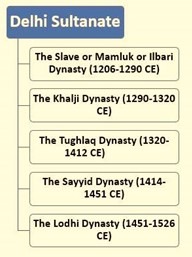
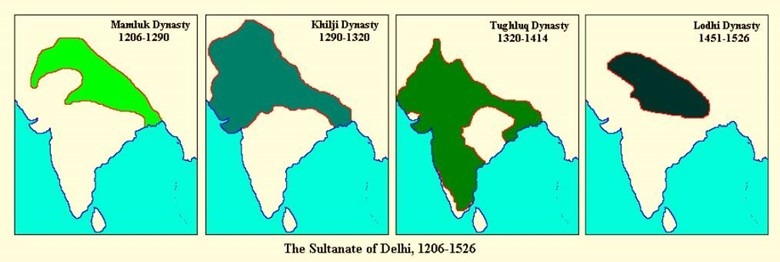
The period between 1206 and 1526 CE marks a transformative phase in Indian history, commonly referred to as the era of the Delhi Sultanate. During these three centuries, Delhi emerged as the epicentre of Islamic political authority in India, ruled by a succession of powerful dynasties. These included the Slave (Mamluk) Dynasty, Khilji Dynasty, Tughlaq Dynasty, Sayyid Dynasty, and the Lodi Dynasty. All these dynasties, except the Lodis, were of Turkish origin. The Lodi rulers were Afghans, and their reign brought the Delhi Sultanate to its end, making way for the rise of the Mughal Empire.
Qutbuddin Aibak (Reign: 1206–1210 CE)
Qutbuddin Aibak, the founder of the Slave Dynasty and the Delhi Sultanate, was originally a slave of Muhammad Ghori. A trusted commander, Aibak played a key role in expanding the Ghurid empire in India following the second Battle of Tarain in 1192.
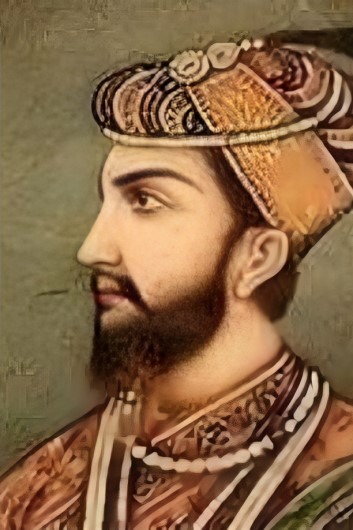
After the death of Ghori in 1206, Aibak seized the opportunity to declare independence and assumed the title of Sultan. He established Lahore as his capital and began consolidating his power. Despite facing several challenges from regional Rajput rulers and rival commanders such as Tajuddin Yalduz (ruler of Ghazni) and Nasiruddin Qabacha (governor of Multan and Uchch), Aibak managed to assert control over key territories through both diplomacy and military prowess.
His recapture of Badaun and Farrukhabad, along with the severing of ties with Ghazni, enabled India to develop an independent political identity separate from Central Asian geopolitics.
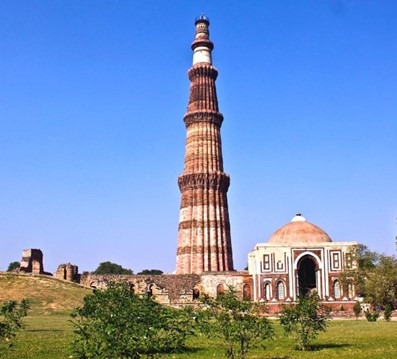
Despite ruling for only four years, Aibak is remembered for his generosity, earning him the epithet Lakh Baksh (Giver of Lakhs) among Muslim writers. He was a patron of literature and supported scholars like Hasan Nizami. Architecturally, he initiated the construction of the Qutub Minar in Delhi (named in honor of the Sufi saint Qutbuddin Bakhtiyar Kaki), which was later completed by his successor. He also began the construction of the Adhai Din Ka Jhonpra mosque in Ajmer.
In 1210, Aibak died unexpectedly while playing chaugan (horse polo). His son Aram Shah briefly succeeded him but proved incompetent and was swiftly overthrown by Shamsuddin Iltutmish.
Shamsuddin Iltutmish (Reign: 1211–1236 CE)
Shamsuddin Iltutmish, Aibak’s son-in-law and former governor of Badaun, emerged as the most capable ruler of the early Delhi Sultanate. After defeating Aram Shah and securing Delhi, he firmly established the foundation of the Delhi Sultanate, earning him the title of “the real founder” of the Sultanate.
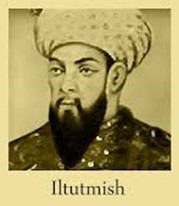
When Iltutmish came to power, the Sultanate was surrounded by internal rebellions and external threats:
- Rivals such as Yalduz and Qabacha challenged his authority
- Several Rajput chiefs in Jalore, Ranthambore, Gwalior, and Kalinjar declared independence
- The Mongol threat, led by Chenghiz Khan, loomed large over the northwestern frontiers
Iltutmish acted decisively. He defeated Yalduz in the Battle of Tarain (1215–16) and drove Qabacha out of Punjab by 1217. When the Mongol prince Jalaluddin Mangbarani sought refuge while fleeing Chenghiz Khan, Iltutmish wisely refused asylum, thus avoiding a full-scale Mongol invasion. This strategic foresight likely saved the nascent Sultanate from destruction.
Administrative and Territorial Consolidation
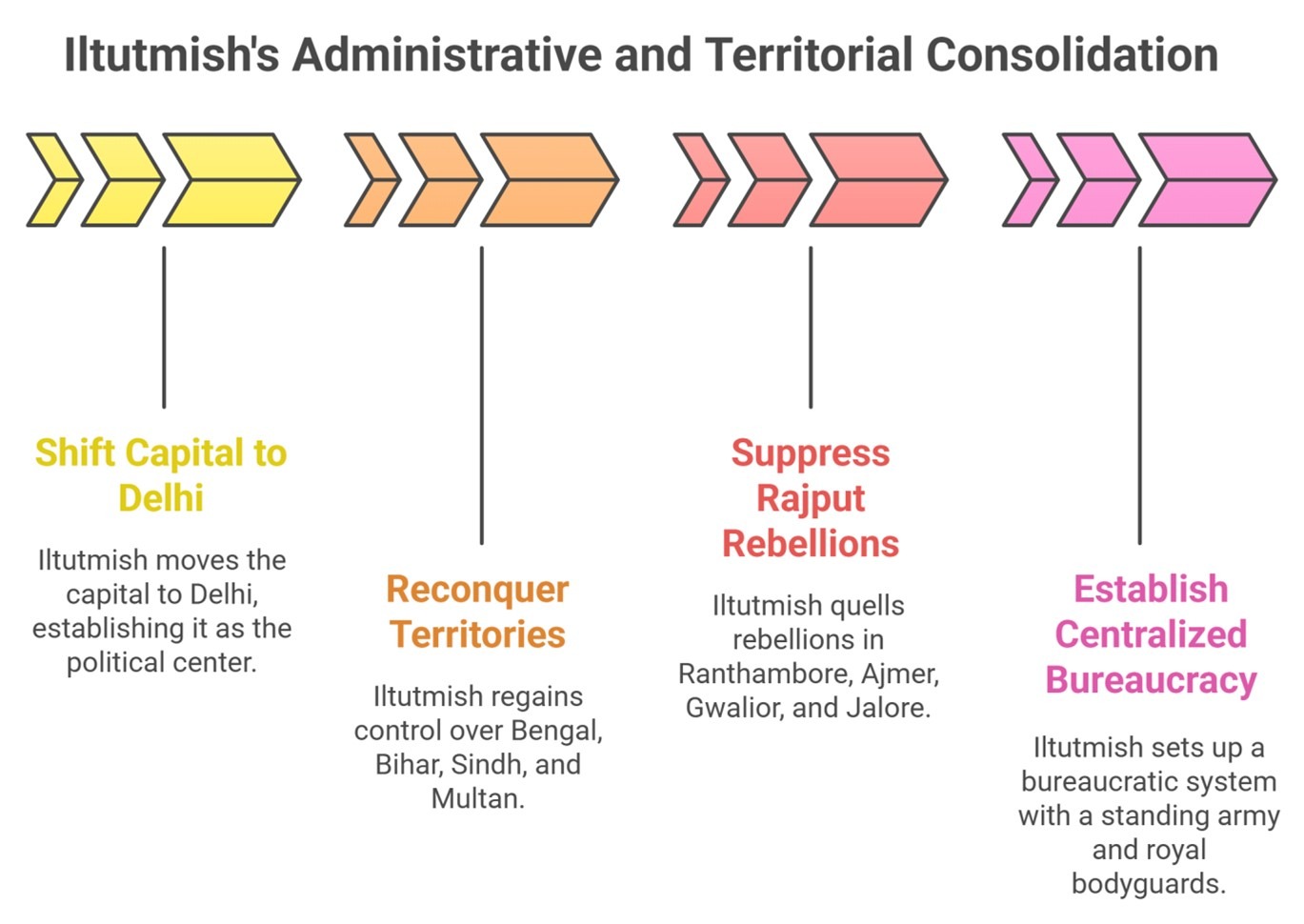
- Iltutmish shifted the capital from Lahore to Delhi, establishing it as the political heart of India.
- He reconquered Bengal, Bihar, Sindh, and Multan, and suppressed multiple Rajput rebellions in Ranthambore, Ajmer, Gwalior, and Jalore.
- He laid the foundations of a centralized bureaucratic system, including a core standing army, known as Hashm-i-Qalb, and royal bodyguards, called Sar-i-Jandar.
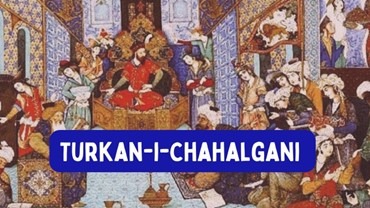
Turkan-i-Chahalgani (The Forty Nobles)
Iltutmish created an elite group of trusted Turkish nobles called the Turkan-i-Chahalgani (The Forty), who were entrusted with significant administrative responsibilities. Though effective during his reign, this group later became too powerful, influencing the selection of sultans after his death.
Legitimacy and Economic Reforms
In 1229, Iltutmish received a Letter of Investiture from the Abbasid Caliph of Baghdad, securing international recognition of his rule and solidifying his legitimacy as Sultan.
He introduced a standardized currency system, issuing two principal coins:
- The Silver Tanka
- The Copper Jital
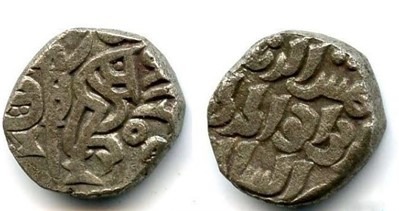
These coins became the standard currency of the Sultanate, influencing monetary practices for centuries.
The Iqta System
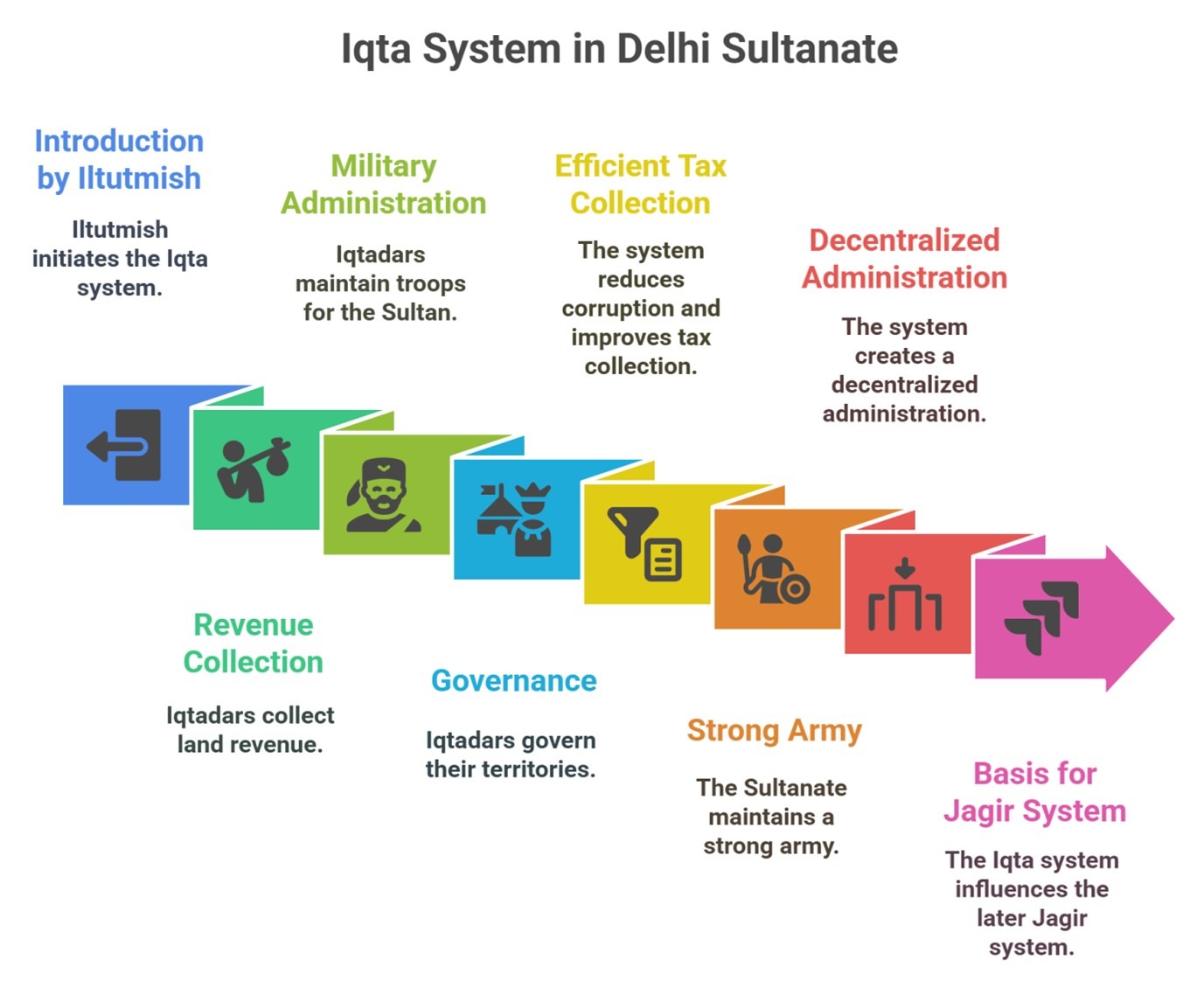
To streamline revenue collection and administration, Iltutmish expanded the Iqta system, granting land assignments to nobles instead of cash salaries. The recipients, known as Iqtadars, were responsible for:
- Collecting land revenue
- Maintaining law and order
- Funding military contingents
This move allowed Iltutmish to maintain control over vast territories, especially the fertile Doab region, which became the financial backbone of the Sultanate.
Razia Sultan (r. 1236–1240 CE)
Razia Sultan, daughter of Iltutmish, is remembered as the sole female ruler of Delhi. Described by contemporary chroniclers like Minhaj-us-Siraj as possessing royal qualities surpassing her brothers, she reigned for three and a half years with courage and conviction.

Rejecting the traditional purdah, Razia adopted male attire, appeared unveiled in court, and ruled with authority unequalled among her predecessors. She exercised full executive power, personally presided over judicial matters, and proved herself a competent military leader—leading campaigns to recover Ranthambore and expanding the Sultanate’s influence.
Razia’s progressive mindset extended to her appointments: she entrusted significant posts to non-Turk nobles, including her Abyssinian slave-adviser Yakut as Master of the Royal Stables. This bold move sparked jealousy among the Chihalgani, who viewed Yakut’s rise as a direct challenge. The rebellion was led by Malik Altunia, the Governor of Bhatinda, who captured both Razia and Yakut, resulting in Yakut’s death.
After persuading Altunia to reverse allegiance, Razia married him and returned to Delhi to mount a defense against Muizuddin Bahram Shah, supported by the Chihalgani. Although their joint efforts failed and they fled toward Kaithal, they were ambushed by brigands and killed, leaving the Sultanate once again unstable. This paved the way for Bahram Shah (1240–42) and subsequent short-reigned sultans.
Balban (Ghiyas-ud-din, r. 1266–1287 CE)
Ghiyas-ud-din Balban, originally Ulugh Khan, emerged in 1246 as the de facto ruler by installing Nasiruddin Mahmud, Iltutmish’s son, as a champion sultan. When Nasiruddin died without an heir in 1266, Balban ascended the throne and introduced a sweeping vision of kingship, centralizing power with near-absolutist authority.
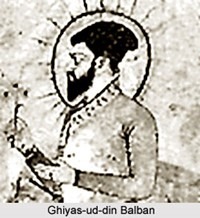
Believing the ruler to be God’s representative on earth, a doctrine he called the “Divine Rights of Kingship”, Balban implemented a regime of “blood and iron” to suppress internal dissent and defend against Mongol threats. He dismantled the Chihalgani, executing or removing the most powerful nobles to eliminate interference in royal authority.
Balban also standardized a firm legal code, personally disciplining errant governors—even through public punishment or execution—and targeted brigandage near Delhi. Amid growing Mongol incursions along the northwestern frontier, he elevated the military’s status by naming his son, Prince Mahmud, to lead border defense.
Though his troops failed to repel the Mongols and Prince Mahmud fell in battle, Balban’s vigilant leadership prevented large-scale invasions. He also discouraged noble conspiracies by stopping the hereditary rise of powerful families. Balban died in 1287 at the height of his reign. He was succeeded briefly by his grandson, Kaiqubad, whose weak rule opened the door to Jalaluddin Khalji’s coup in 1290—ushering in the Khilji Dynasty.
Impact and Achievements of Balban
Balban stands out as one of the most formidable architects of the Delhi Sultanate. His reign marked a turning point in the consolidation of monarchical power and the centralization of authority. Through his strong leadership and assertive policies, Balban significantly enhanced the prestige of the Sultanate.
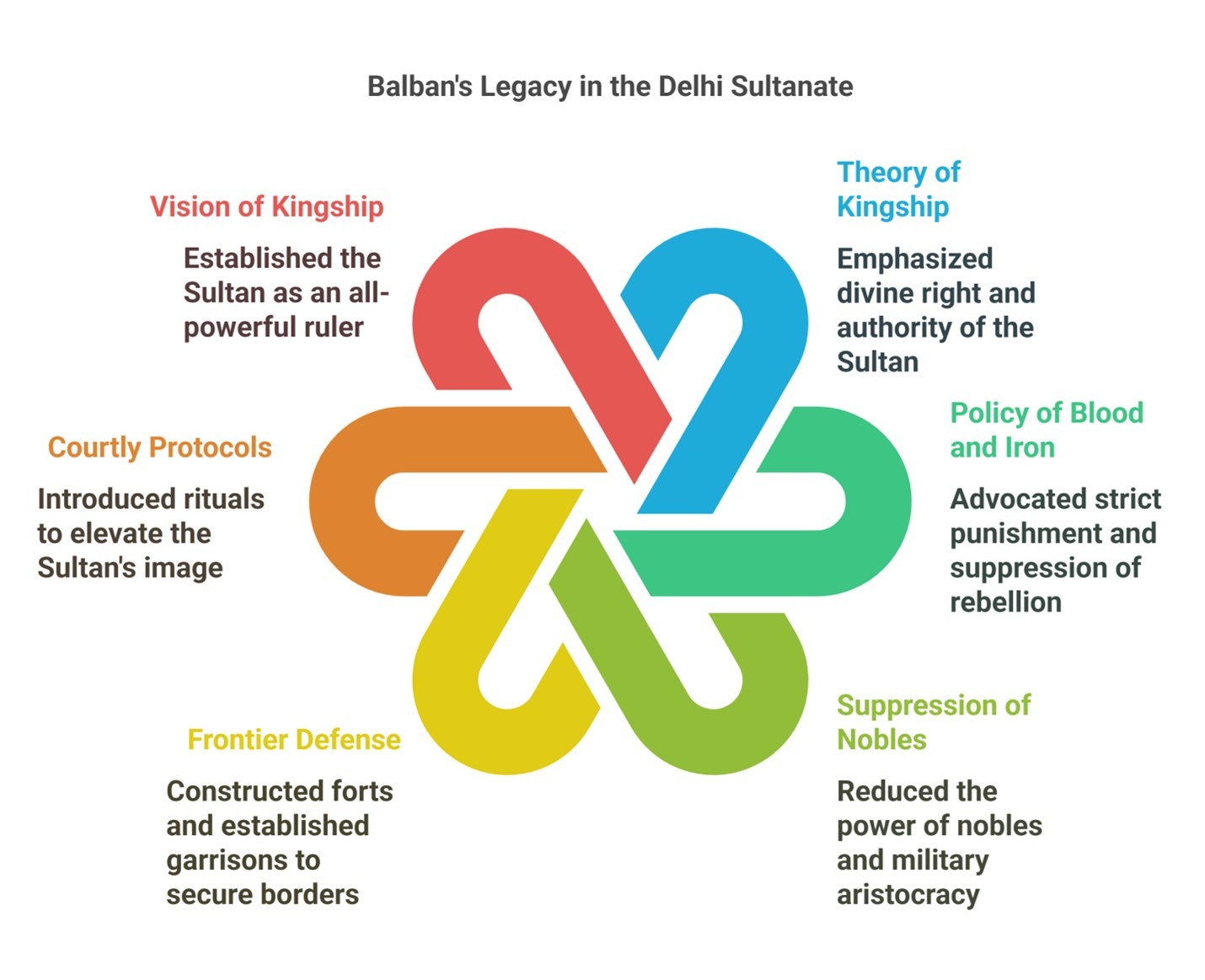
One of his most notable contributions was the introduction of the theory of kingship, which emphasized the divine right and supreme authority of the Sultan. He believed in ruling with an iron hand and adopted the policy of “Blood and Iron”, which advocated the use of strict punishment, harsh discipline, and brutal suppression of rebellion to maintain law and order. This policy proved effective in curbing internal dissent and strengthening the authority of the monarchy.
Balban worked tirelessly to suppress the power of the nobles and the military aristocracy, thereby diminishing the influence of potential rivals. His rule brought much-needed peace and order to the empire. To safeguard India’s eastern frontiers, he constructed forts and established Afghan garrisons to secure vital communication routes with Bengal.
Although he could not completely prevent Mongol invasions, Balban made determined efforts to defend the Sultanate from their repeated incursions. His military preparedness and defensive measures played a significant role in delaying the Mongol threat.
Balban was also known for maintaining grandeur and ceremonial dignity at his court. He introduced courtly protocols and rituals that elevated the Sultan’s image to that of a divine monarch, distancing the ruler from the common people and reinforcing the majesty of kingship.
Importantly, in a period when the Islamic world was undergoing a crisis of authority due to the decline of the Abbasid Caliphate, Balban emerged as one of the first rulers in India to articulate a clear and authoritative vision of kingship. He firmly established the notion of the Sultan as an all-powerful, sovereign ruler—a legacy that influenced future monarchs of the Delhi Sultanate.
These achievements laid a strong foundation for the continued dominance of the Delhi Sultanate in the centuries to come.
Jalaluddin Firuz Khilji (r. 1290–1296 CE)
At the age of seventy, Jalaluddin Firuz Khilji assumed power and became the first Sultan of the Khilji dynasty. In contrast to his predecessors who favored authoritarian rule, Jalaluddin adopted a mild, lenient, and inclusive approach. He was known for his generosity, forgiveness, and conciliatory attitude, even toward former rivals and rebels. For instance, he allowed Malik Chhajju, the nephew of Balban, to retain his governorship in Kara despite earlier associations with the former dynasty. Even when Chhajju rebelled, he was initially forgiven.
Jalaluddin’s clemency extended even to common robbers and rebellious Mongols—whom he would pardon after issuing stern warnings. However, this lenient approach was increasingly seen as a weakness by members of his court, including his ambitious son-in-law and nephew, Alauddin Khilji.
In 1296 CE, Alauddin undertook a successful military expedition to Devagiri, capital of the Yadava kingdom in the Deccan. Upon returning to Kara, he lured Jalaluddin under the pretext of sharing the spoils. In a calculated betrayal, Alauddin murdered Jalaluddin and declared himself Sultan, assuming the regal title Alauddin Khilji.
Alauddin Khilji (r. 1296–1316 CE)
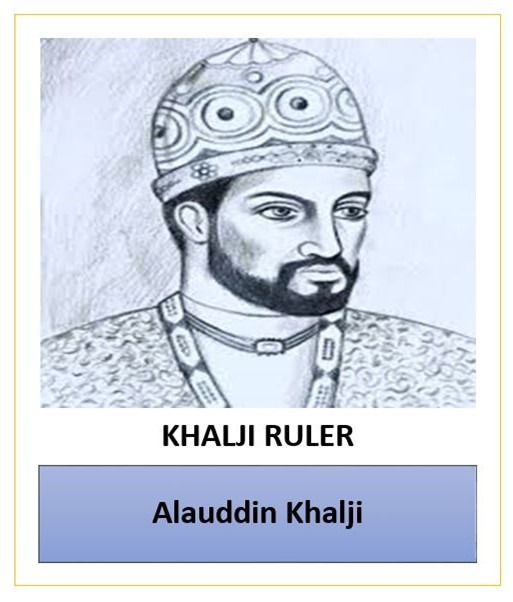
Alauddin Khilji, the most powerful and renowned ruler of the dynasty, was a man of immense ambition and ruthless determination. A capable military commander, strategic thinker, and efficient administrator, he implemented sweeping reforms in administration, revenue, and military organization. He revived and furthered the authoritarian legacy of Balban, but with far more systematic control and centralized power.
Military Campaigns and Territorial Expansion
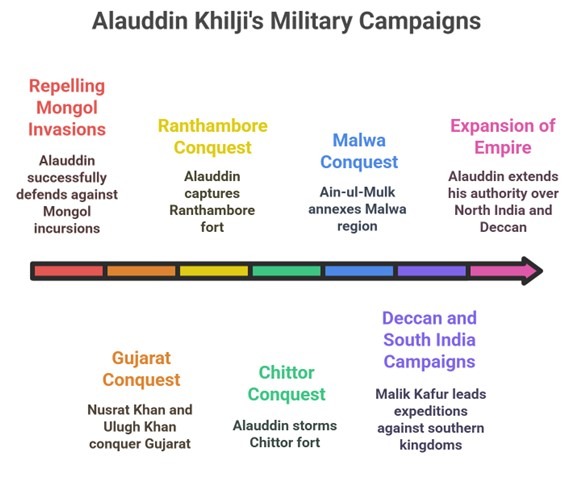
Alauddin’s reign was marked by relentless military expansion and resistance to Mongol invasions. Between 1297 and 1306, he repelled multiple Mongol incursions, often through brutal means. In one instance, thousands of captured Mongols were executed to deter further invasions. To safeguard the northwest frontier, he appointed Ghazi Malik (later Ghiyasuddin Tughlaq) as the Warden of the Marches and built strong frontier outposts.
His empire expanded through a series of major military conquests:
- Gujarat (1299): Generals Nusrat Khan and Ulugh Khan led an expedition into Gujarat. The local king fled, his queen was captured and brought to Delhi, and a eunuch slave named Malik Kafur—later to play a key role in the Sultanate—was introduced into Alauddin’s service.
- Ranthambore (1301): The fort of Ranthambore, ruled by Hammir Dev, provided refuge to rebellious Mongols. After a prolonged siege, Alauddin captured the fort and broke the morale of Rajput resistance.
- Chittor (1303): Alauddin stormed the fort after an extended siege. Although romantic legends like Malik Muhammad Jayasi’s “Padmavat” later associated the siege with Queen Padmini, contemporary accounts such as Amir Khusrau’s make no mention of her. After capturing Chittor, Alauddin ordered a massacre and renamed it Khizrabad after his son Khizr Khan.
- Malwa (1305): Ain-ul-Mulk was sent to subdue Malwa, and the region, including Ujjain, Dhar, Chanderi, and Mandu, was successfully annexed.
- Deccan and South India (1308–1311): These were Alauddin’s most ambitious and successful campaigns. His general Malik Kafur led expeditions against the four major southern kingdoms:
- Yadavas of Devagiri: Ramachandra Deva submitted and agreed to pay tribute.
- Kakatiyas of Warangal: Prataparudra was defeated, and massive loot was seized.
- Hoysalas of Dwarasamudra: Vira Ballala III surrendered.
- Pandyas of Madurai: Vira Pandya fled, and treasures were carried to Delhi.
By 1311 CE, Alauddin Khilji had extended his authority over almost all of North India and vast parts of the Deccan, earning him the title “Sikandar-i-Sani” or “Second Alexander.”
Alauddin’s Theory of Kingship
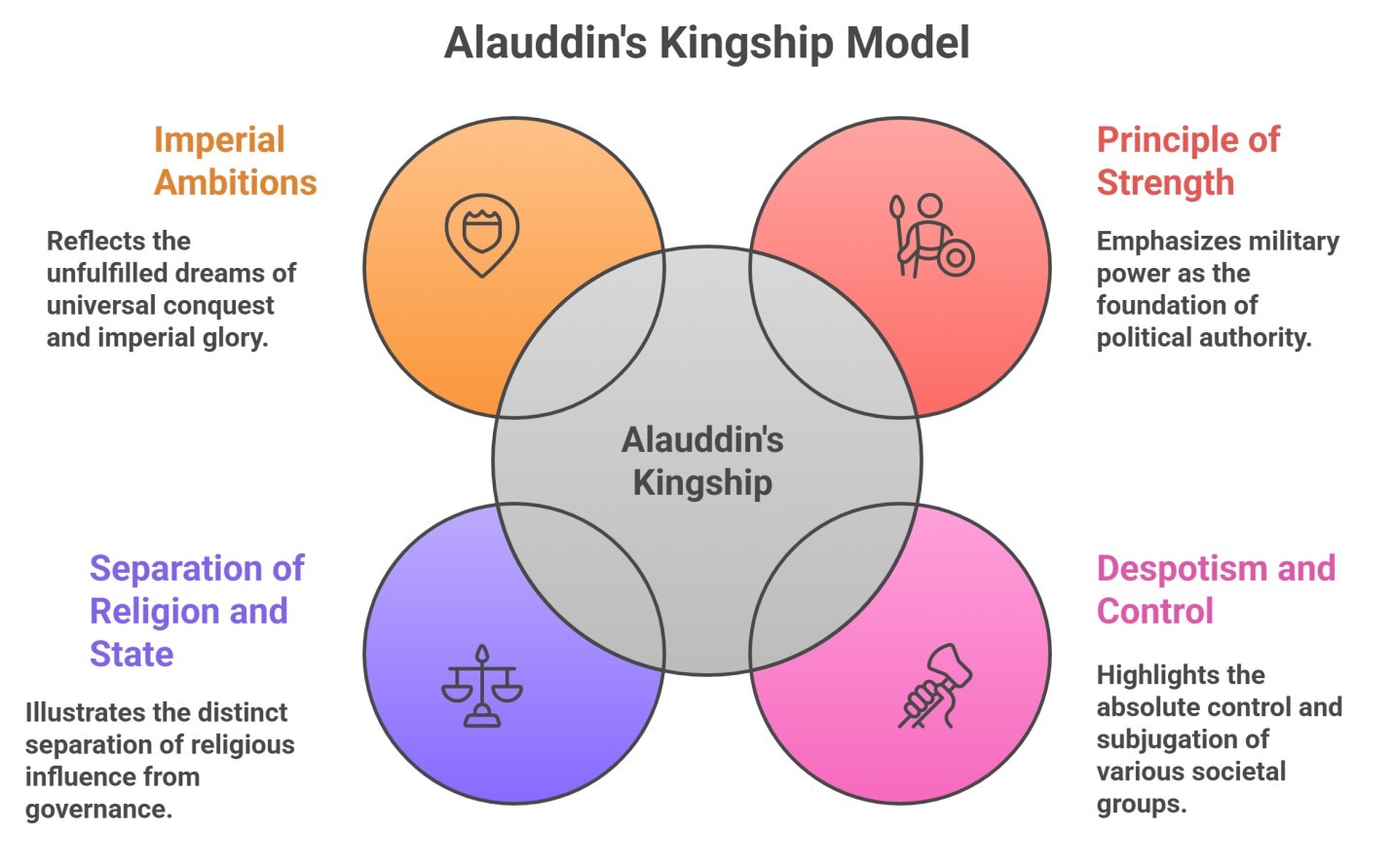
Alauddin Khilji introduced a distinct and radical model of kingship that departed significantly from previous traditions. The primary source for his theory is Amir Khusrau’s “Khazain-ul-Futuh”.
- Principle of Strength: Alauddin believed that political power was based solely on military strength, not lineage. “Kingship,” he asserted, “knows no legitimacy or illegitimacy—it justifies itself by its power.”
- Despotism and Control: He practiced absolute monarchy, subjugating not only the nobles but also the clergy, the army, and commoners. He rejected Balban’s notion of divine kingship and instead created a highly centralised authoritarian regime.
- Separation of Religion and State: For the first time, religion was separated from governance. This was not driven by secularism but was a pragmatic move to consolidate absolute authority. Alauddin refused to base policies on religious recommendations and never consulted the ulema (Islamic scholars) on state matters.
- Imperial Ambitions: He dreamt of universal conquest, drawing inspiration from Alexander the Great, and assumed the title “Sikandar-i-Sani.” However, due to declining health and internal challenges, these ambitions remained largely unfulfilled.
Alauddin Khilji’s Administrative Reforms
One of the most remarkable aspects of Alauddin Khilji’s reign (1296–1316 CE) was his comprehensive and far-sighted administrative reforms. Having ascended the throne through ambition and political maneuvering, Alauddin was acutely aware of the threats posed by internal dissent and aristocratic conspiracies. Therefore, he devoted considerable attention to restructuring the state to ensure absolute control, efficient governance, and the elimination of rebellion.
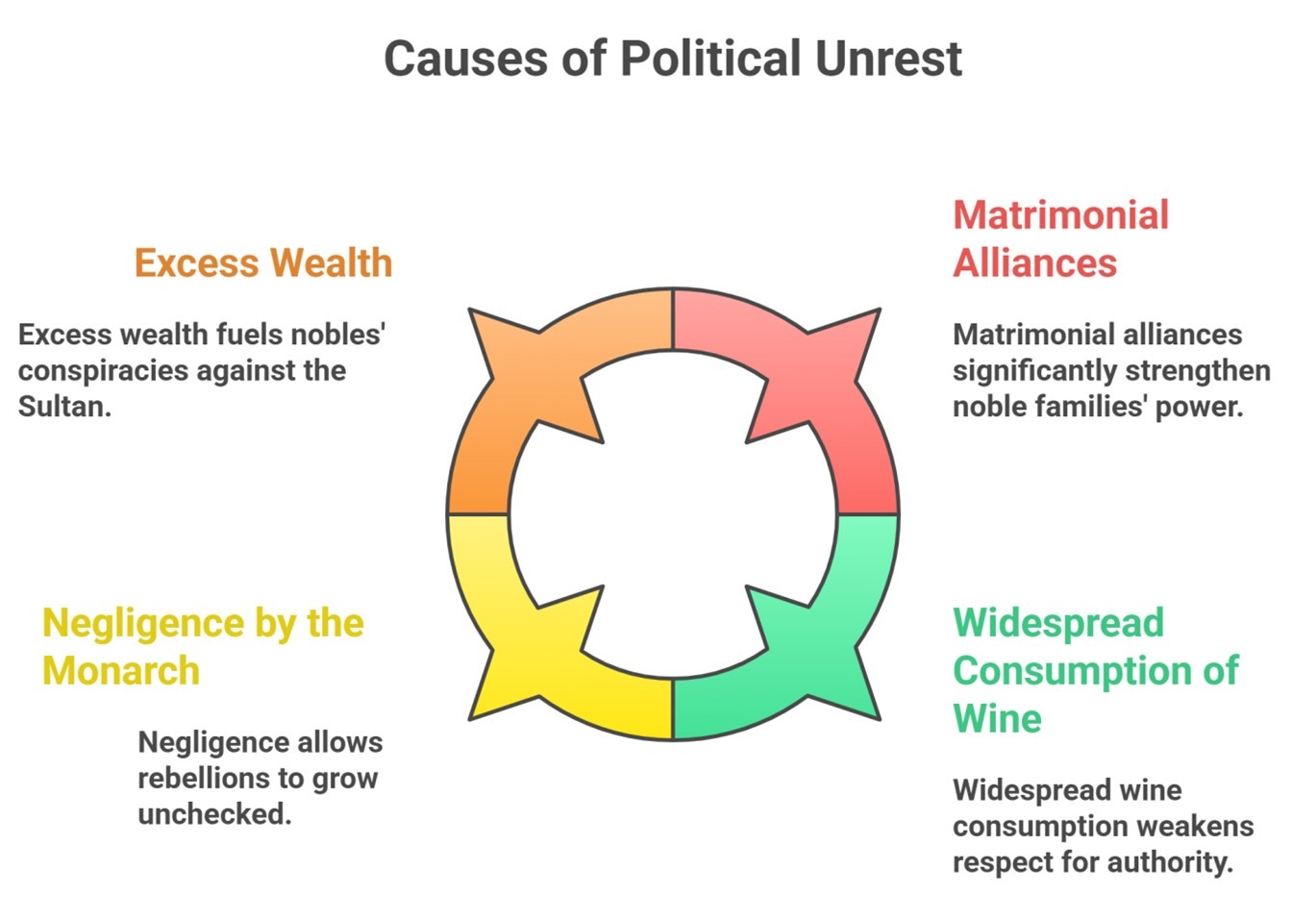
After analyzing the causes of earlier uprisings and revolts, Alauddin identified four fundamental reasons for political unrest:
- Excess Wealth among the Nobility: He believed that the accumulation of surplus wealth among nobles and landlords gave them leisure to plot conspiracies and contemplate the weaknesses of the Sultan.
- Negligence by the Monarch: A lack of strict vigilance and direct oversight by the Sultan was considered a major reason why rebellions were allowed to fester.
- Widespread Consumption of Wine: Alauddin viewed the widespread indulgence in alcohol as a moral and political weakness, reducing fear and respect for authority.
- Matrimonial Alliances among Nobles: Marriage alliances between powerful noble families increased their collective strength, making them potential threats to royal authority.
Ordinances and Countermeasures
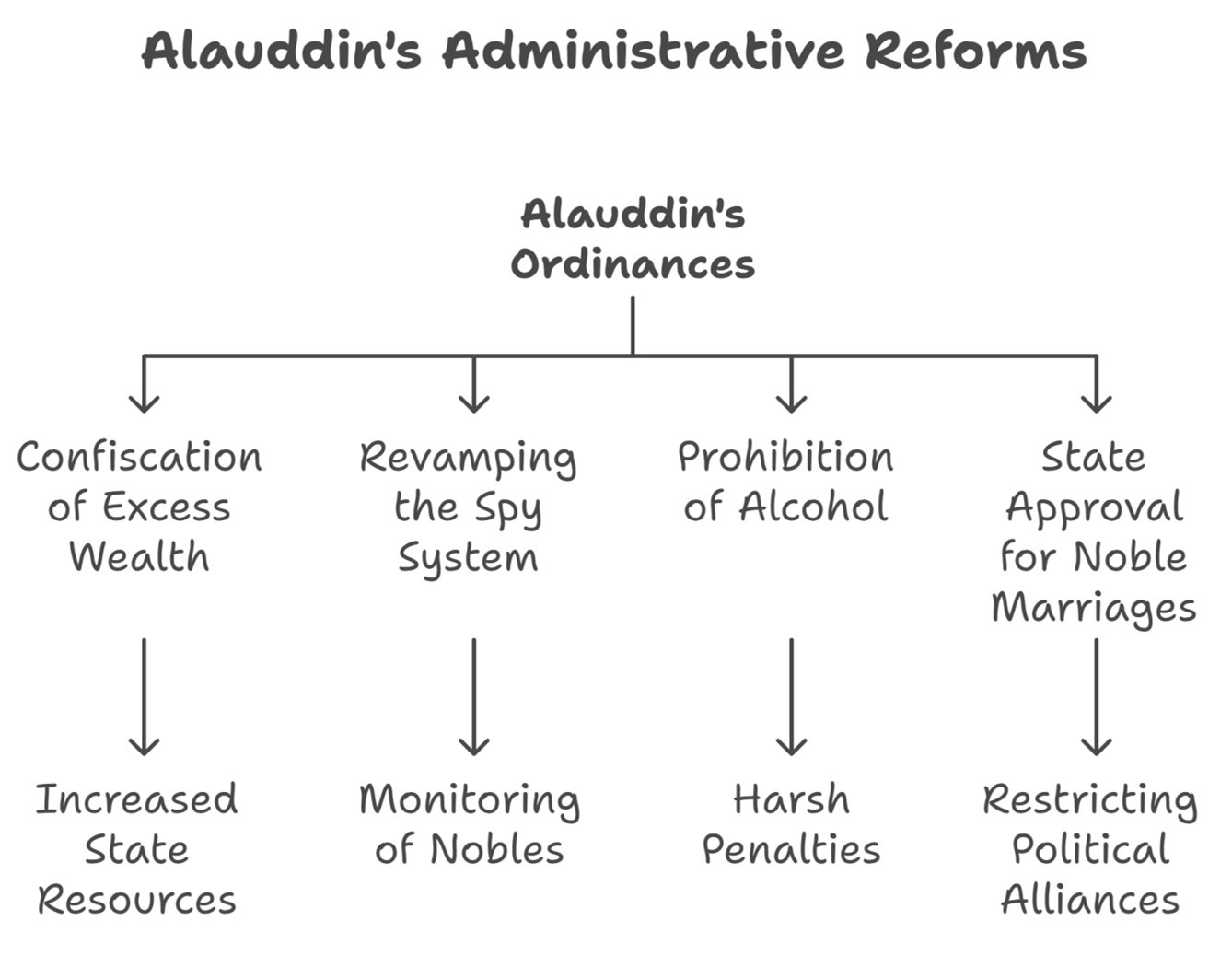
To neutralize these perceived threats, Alauddin issued a set of four crucial ordinances, forming the backbone of his administrative reforms:
- Confiscation of Excess Wealth: He revoked all free land grants, such as inam, milk, and idrar bestowed by previous regimes. This not only curtailed the wealth of the nobility but also increased state resources.
- Revamping the Spy System: A highly effective and secretive spy network was developed to monitor the activities of nobles, military commanders, and provincial governors. Spies were appointed at every administrative level to report directly to the Sultan.
- Prohibition of Alcohol: The consumption and sale of wine and intoxicants were strictly prohibited. Harsh penalties were imposed on those who violated the rule.
- State Approval for Noble Marriages: Prior permission from the Sultan was made mandatory for marriages among noble families, thereby restricting political alliances that could challenge the throne.
These reforms significantly strengthened the Sultanate, and notably, no major rebellion occurred during Alauddin’s reign—a testament to the effectiveness of his policies.
Alauddin khilji Revenue Reforms
Alauddin Khilji implemented sweeping reforms in the revenue administration, aimed at augmenting state income to maintain a massive standing army and ensure an overflowing royal treasury.
Key Measures:
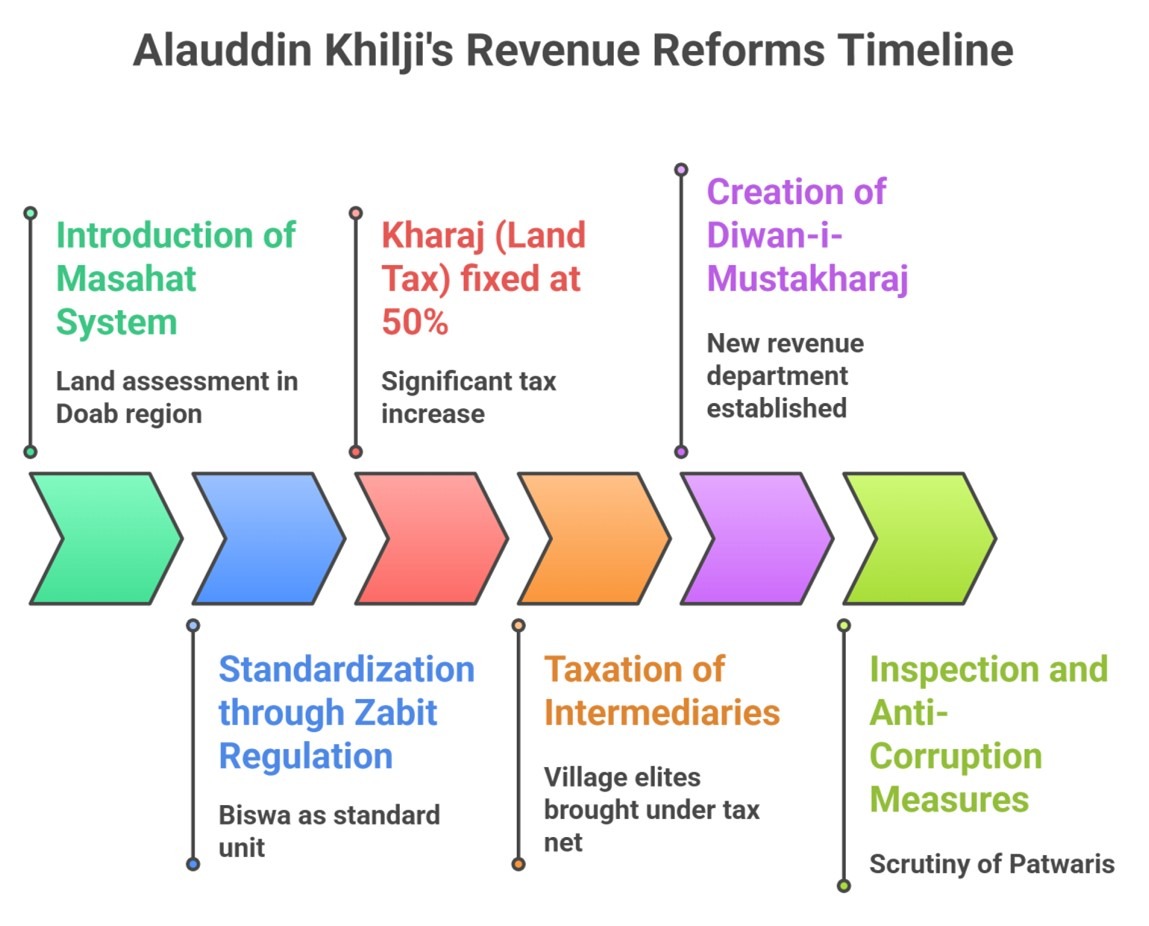
- Introduction of Masahat System: A systematic land assessment known as the Masahat system was introduced, especially in the Doab region (between the Ganga and Yamuna rivers), due to its proximity to the capital. The land was measured, and tax was fixed based on the measurement.
- Standardization through Zabit Regulation: The Biswa was declared the standard unit of land measurement.
- Kharaj (Land Tax): Land revenue was fixed at 50% of the total agricultural produce. This was a significant departure from earlier times when landlords often kept a large share of the produce.
- Taxation of Intermediaries: For the first time, village-level intermediaries such as Khuts, Muqaddams, Chaudharis, as well as upper-level rural elites like Rais, Ranas, Rawats, were brought under the tax net. This broke their financial independence and political influence.
- New Taxes Introduced:
- Ghori – House Tax
- Chorai – Grazing Tax
- Khums – The state’s share in war booty was increased.
- Creation of Diwan-i-Mustakharaj: A new revenue department was created to ensure the proper collection of taxes and recovery of state dues.
- Inspection and Anti-Corruption Measures: Corrupt officials were punished severely. Patwaris (village accountants) were placed under close scrutiny to ensure transparency.
Alauddin khilji Market Reforms
Objectives Behind Market Regulation
Historians have offered varied interpretations regarding the motivations behind Alauddin’s market control policies:
- Ziauddin Barani, in his Tarikh-i-Firozshahi, claims these were aimed at military needs—to maintain a large army at a low cost.
- Amir Khusrau, in Khazain-ul-Futuh, viewed them as measures of public welfare.
However, a detailed assessment suggests that these reforms served both military and administrative objectives, ensuring a steady supply of affordable goods while curbing profiteering.
Implementation of Market Control
- The empire was divided into two zones:
- Controlled Zone: Included regions from Lahore to Allahabad and parts of Rajputana. These areas were close to the capital and housed the army; hence, market regulations were strictly enforced here.
- Free Zone: The rest of the empire where these regulations were not enforced strictly.
- A dedicated department known as Diwan-i-Riyasat was established to oversee market regulations. It was headed by Sadir-i-Riyasat.
- The empire was divided into two zones:
-
- Three types of markets were established:
- Mandi – for food grains
- Sarai Adl – for luxury items like cloth and sugar
- Animal Market – for the sale of cattle, horses, slaves, and birds
-
- Each market was placed under a Shehna-i-Mandi, who ensured the fixed prices (Zawabit) were followed and reported violations.
- Horse Trading was directly handled by the Diwan-i-Arz (Military Department) to ensure the availability of quality animals for the army.
Alauddin’s market regulations were rigidly enforced, and violators faced harsh punishments, including public humiliation, fines, and imprisonment.

Alauddin khilji Military Reforms
Alauddin Khilji maintained one of the largest standing armies of the time. His military reforms were designed to build a disciplined, professional, and loyal fighting force.
- According to Ferishta, he maintained over 4,75,000 cavalrymen.
- Salaries were paid in cash, a significant change from the earlier iqta system where military officers were granted land.
- Introduced the Dagh (horse branding) system to prevent fraud in cavalry maintenance.
- Implemented Huliya or Chehra – a descriptive register of each soldier to avoid impersonation or substitution.
- Conducted regular inspections to maintain combat-readiness and discipline.
- Built and repaired forts along the northwest frontier to protect against Mongol invasions.
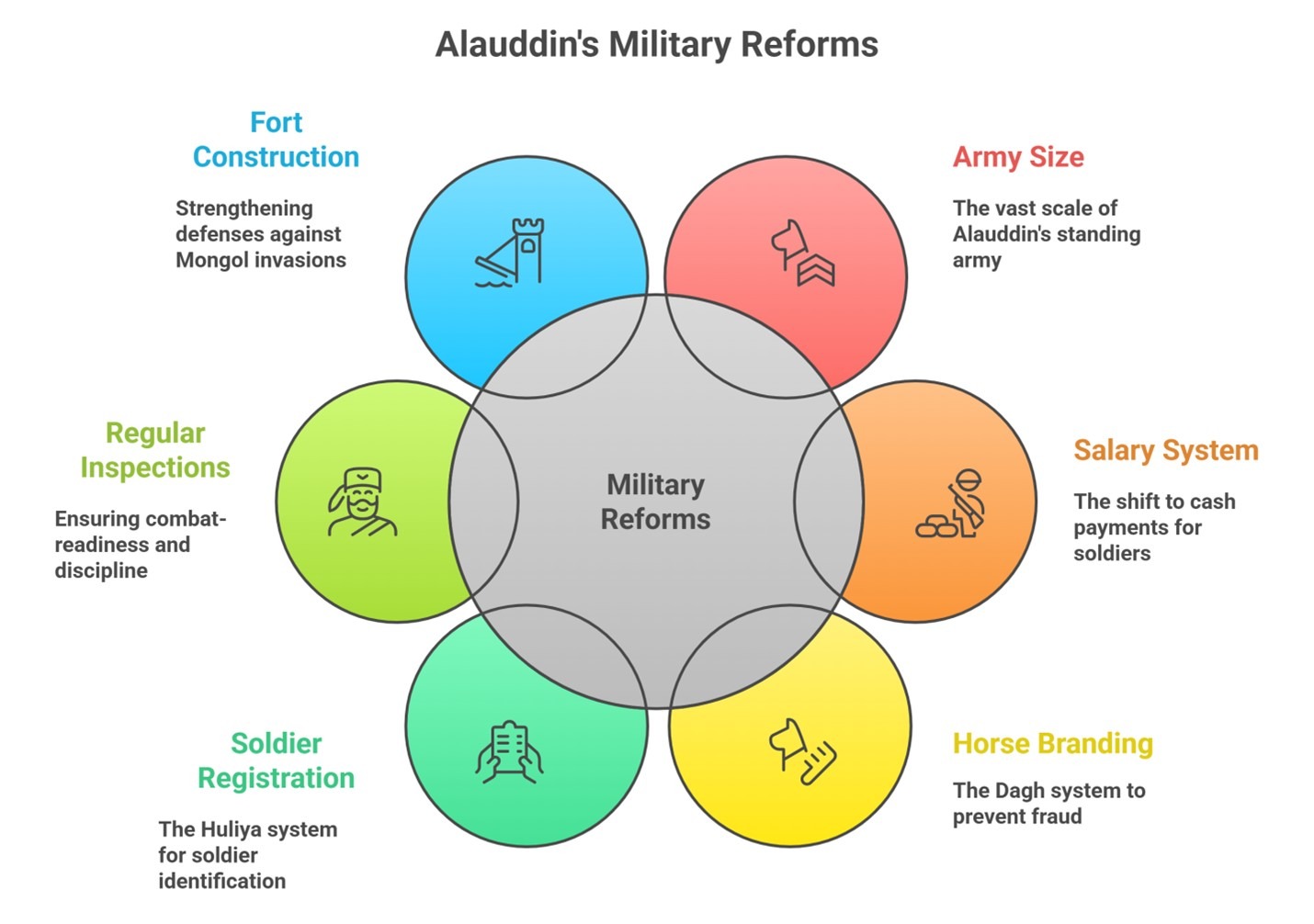
These reforms made Alauddin’s army more efficient and reliable, capable of defending the Sultanate and enabling aggressive military campaigns.
Alauddin khilji’s Art and Architecture
Despite being illiterate, Alauddin Khilji was a great patron of literature, music, and architecture.
- He supported legendary poets like Amir Khusrau and Amir Hasan, whose works continue to illuminate the cultural life of the period.
- Architecturally, his contributions were significant:
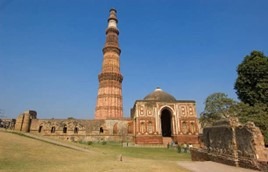
- Built Alai Darwaza, a magnificent gateway near Qutub Minar, notable for its intricate inlay work and arches.
- Founded a new capital city named Siri near Delhi.
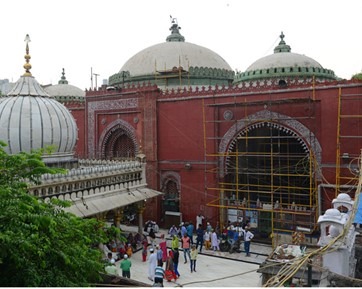
- Constructed the Jamait Khana Mosque at the dargah of Nizamuddin Auliya.
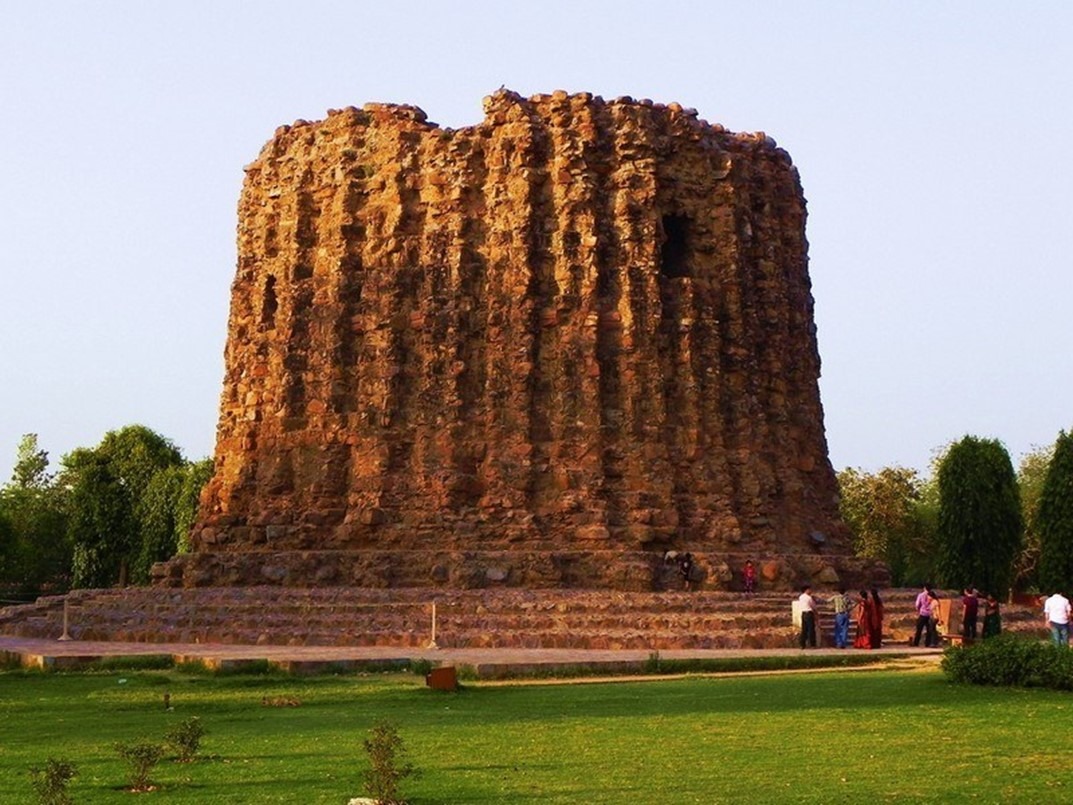
- Initiated the Alai Minar, intended to be twice the height of the Qutub Minar, but it remained incomplete after his death.
Decline of the Khilji Dynasty
Alauddin Khilji died in 1316 CE, leaving behind an empire at the peak of its territorial expansion but plagued with internal vulnerabilities. He was succeeded by his son Mubarak Shah, who lacked the strong administrative capabilities of his father.
Mubarak Shah was later murdered by Khusrau Khan, a courtier who briefly became Sultan. However, his rule lacked legitimacy and widespread support.
In 1320 CE, Ghazi Malik, the Governor of Dipalpur, marched on Delhi, defeated and killed Khusrau Khan, and established a new dynasty—the Tughlaq Dynasty, under the name Ghiyasuddin Tughlaq.
Thus came to an end the thirty-year reign of the Khilji dynasty, a period noted for its military conquest, administrative innovation, and strong centralized authority.
Ghiyasuddin Tughlaq (1320–1325 CE)
Ghazi Malik, the governor of Dipalpur, assumed the title Ghiyasuddin Tughlaq upon ascending the throne. A capable military leader and administrator, he consolidated power by defeating Khusrau Khan, the last Khilji ruler. His reign focused on stabilizing the empire and asserting control over rebellious provinces. He dispatched his son Juna Khan (later Muhammad bin Tughlaq) to the Deccan to suppress the Kakatiyas of Warangal. The campaign was successful, and Prataparudra, the Kakatiya ruler, was defeated.
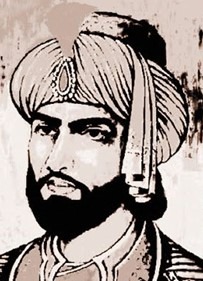
However, Ghiyasuddin’s rule was short-lived. He died in 1325 CE under mysterious circumstances following the collapse of a wooden pavilion constructed by his son. While some claim it was an accident, several sources allege a conspiracy by Muhammad bin Tughlaq to hasten his accession.
Muhammad bin Tughlaq (1325–1351 CE)
Upon the death of Ghiyasuddin, Juna Khan ascended the throne as Muhammad bin Tughlaq. He remains one of the most enigmatic and controversial figures in Indian history. An intellectual and a scholar, he was fluent in Arabic and Persian and had a deep interest in subjects like philosophy, astronomy, mathematics, and logic. A tolerant ruler, he maintained diplomatic relations with distant lands like China, Egypt, and Iran, and allowed open celebration of festivals like Holi at court. He also invited thinkers and foreigners, including the famous Moroccan traveller Ibn Battuta, who served as Qazi of Delhi and documented his reign in the celebrated travelogue Rihla.
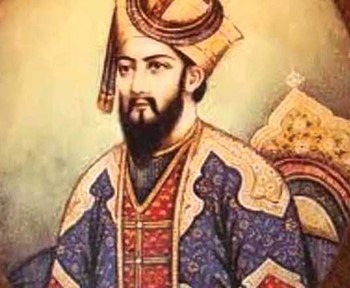
Muhammad bin Tughlaq’s reign is remembered for its ambitious experiments and far-reaching reforms, many of which, though visionary in concept, ended in disaster due to poor implementation or the lack of practical foresight.
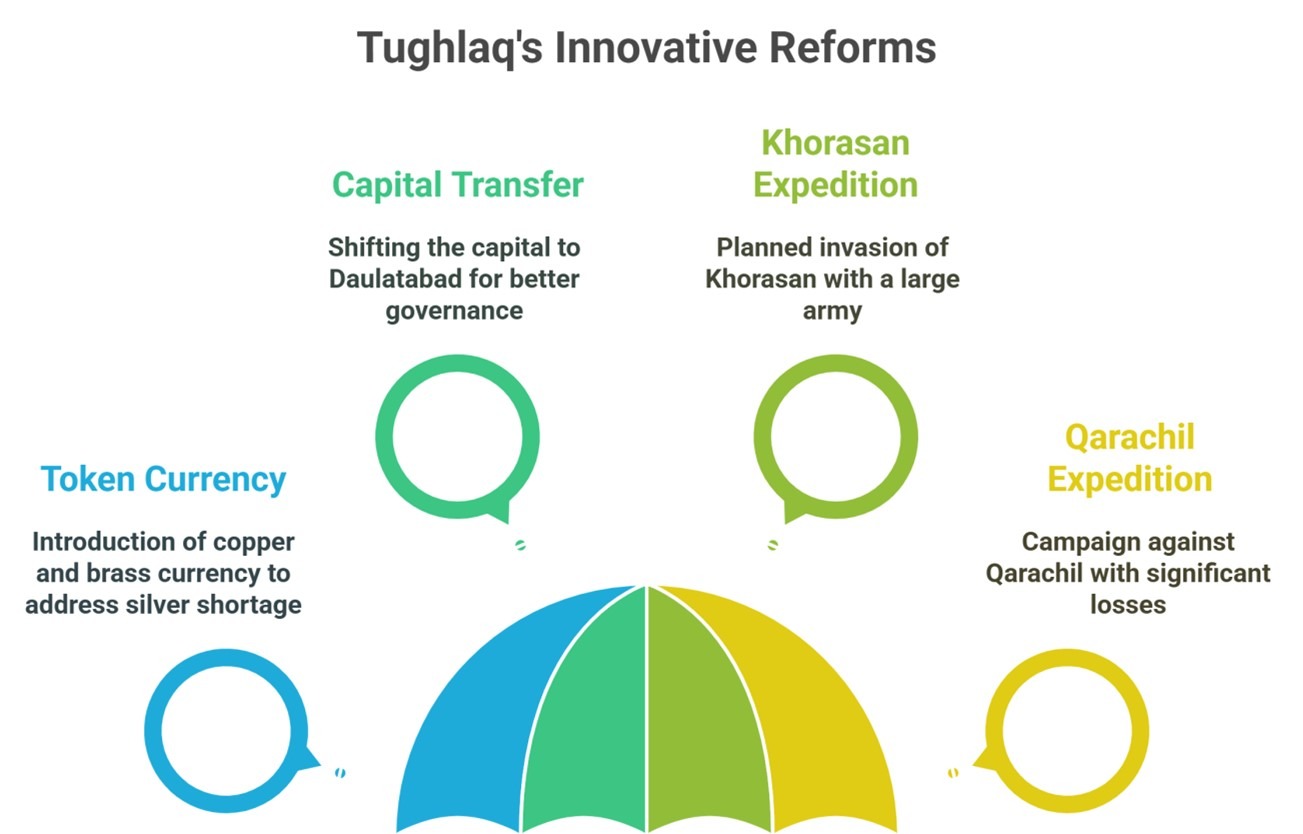
Key Experiments and Reforms of Muhammad bin Tughlaq
1. Introduction of Token Currency (1329 CE)
In response to a global shortage of silver, Muhammad bin Tughlaq issued a novel token currency made of copper and brass, assigning it the same value as silver and gold coins. The idea, inspired by Chinese practices, was meant to resolve fiscal shortages and support military expansion.
- Reason for failure: The Sultan failed to regulate the minting process. Counterfeit coins flooded the market as anyone could forge them. Traders refused to accept the debased currency, leading to an economic collapse.
- Impact: Trade and commerce suffered, rebellions increased, and peasants used fake coins to pay taxes. The policy was eventually withdrawn in 1333 CE.
2. Transfer of Capital to Daulatabad (1327–1328 CE)
The Sultan decided to shift the capital from Delhi to Daulatabad (in present-day Maharashtra) to strengthen control over the Deccan and escape frequent Mongol attacks on Delhi. The move was intended to facilitate direct governance over peninsular India.
- Execution: Officers, nobles, religious elites, and administrators were forced to migrate. New roads were built, and trees were planted for the journey.
- Impact: Thousands perished during the forced relocation. Daulatabad proved impractical for governing northern India. The experiment ended in failure, and the capital was shifted back to Delhi.
- Legacy: Despite the calamity, the migration contributed to the cultural and religious integration of North and South India and laid the foundation for the later emergence of the Bahmani Sultanate.
3. Khorasan Expedition (1332–1333 CE)
With dreams of global conquest, the Sultan planned a campaign to invade Khorasan (in present-day Iran), which was experiencing political turmoil. Convinced by exiled nobles, he raised an army of 370,000 soldiers, offering them a year’s salary in advance.
- Outcome: The expedition was abandoned due to a change in the political situation — Abu Said, a powerful ruler, regained control of Khorasan. The army was disbanded without recovering the advance, showcasing the Sultan’s generosity and the state’s immense resources.
4. Qarachil (Kumaon) Expedition (1333–1334 CE)
The Sultan launched a campaign against the small Himalayan kingdom of Qarachil, sending 10,000 cavalrymen. Though the initial success forced the local ruler to accept Delhi’s suzerainty and pay tribute, the return journey proved fatal due to treacherous weather and attacks by tribal groups. According to Barani, only a handful of soldiers returned.
Agrarian Reforms and the Doab Tragedy
To increase revenue for his expanding empire, Muhammad bin Tughlaq introduced steep taxation in the fertile Doab region (between the Ganga and Yamuna rivers). Taxes were allegedly increased ten to twenty times, and new taxes such as Ghari (house tax) and Charai (grazing tax) were imposed.
- Problem: These reforms coincided with a severe famine. Combined with corrupt officials and oppressive collection methods, the policy led to mass suffering, depopulation, and peasant revolts.
Firoz Shah Tughlaq (1351–1388 CE)
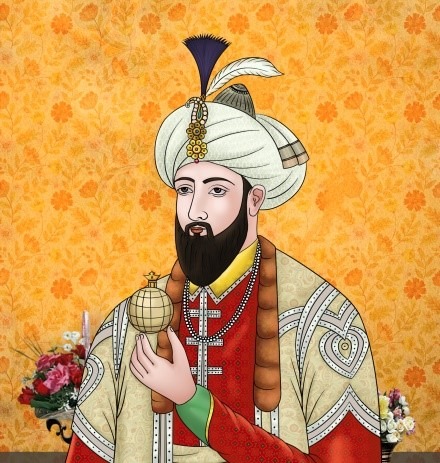
Firoz Shah Tughlaq, the nephew of Muhammad bin Tughlaq, assumed power in 1351 CE. Unlike his predecessor, he was a conservative and pragmatic ruler who prioritized administrative reform, public welfare, architectural development, and religious orthodoxy.
Agrarian Reforms
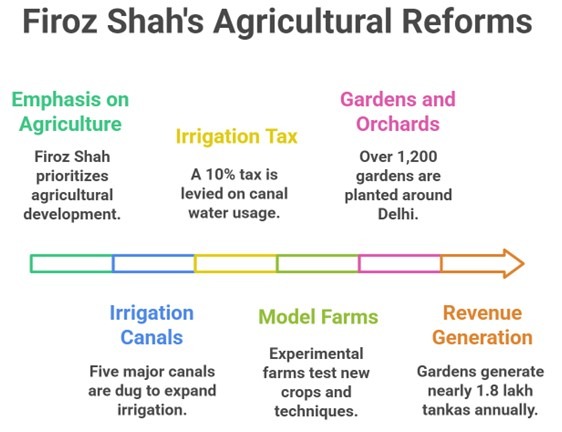
Firoz Shah placed significant emphasis on improving agriculture:
- Irrigation Canals: Five major canals were dug to expand irrigation, with a 10% irrigation tax levied on peasants using canal water.
- Model Farms: Experimental farms tested new crops and techniques before being introduced to the general population.
- Gardens and Orchards: Over 1,200 gardens were planted around Delhi, generating revenue of nearly 1.8 lakh tankas annually.
Welfare Measures
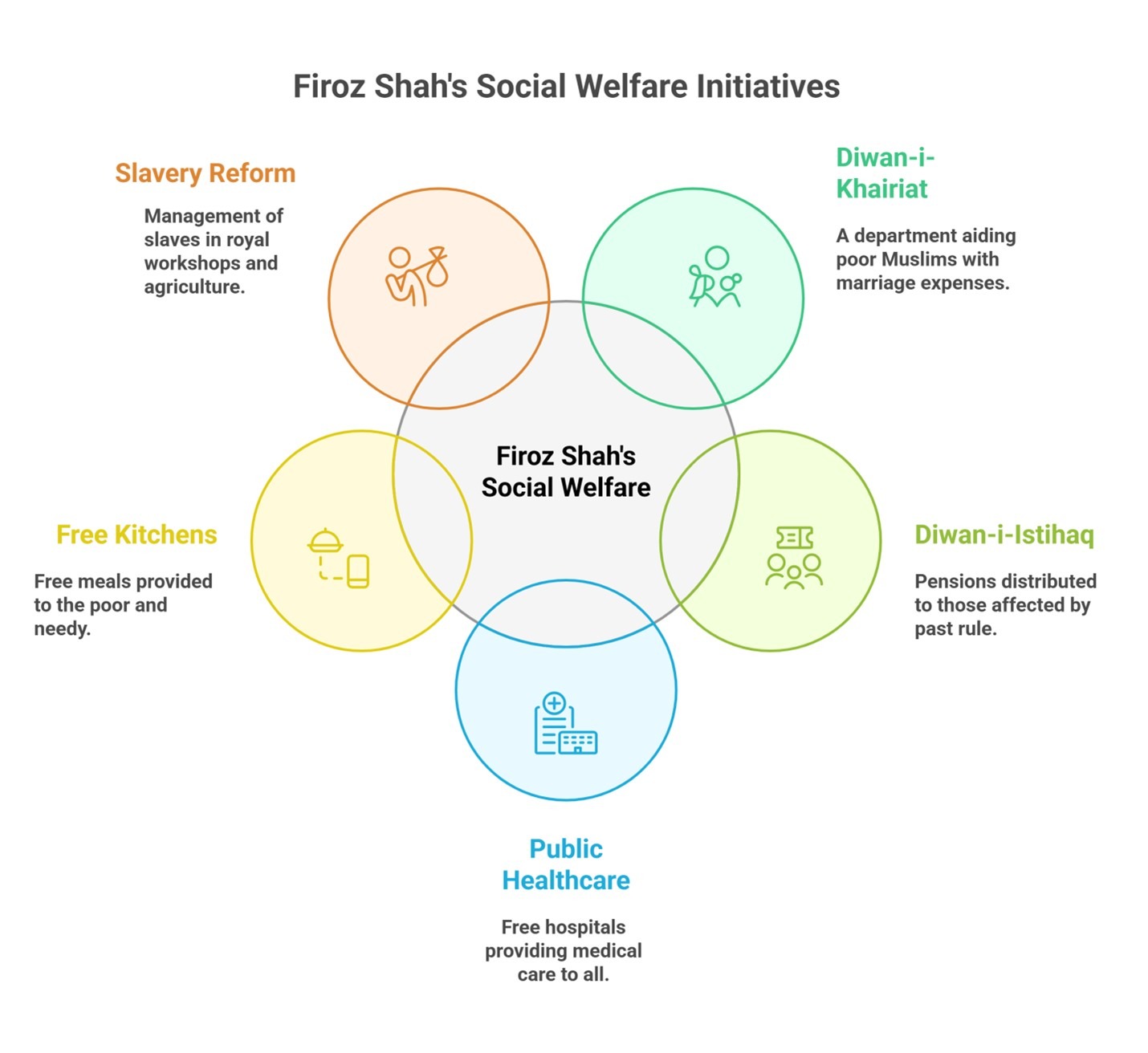
Firoz Shah Tughlaq was deeply invested in social welfare:
- Diwan-i-Khairiat: A department to assist poor Muslims, especially in marriage expenses for their daughters.
- Diwan-i-Istihaq: Distributed pensions to those who suffered during Muhammad bin Tughlaq’s rule; 4,200 people received state support.
- Public Healthcare: Free hospitals (Dar-ul-Shafa) were built, with physicians dispensing medicine and treatment.
- Free Kitchens and Slavery Reform: Free kitchens fed the poor. A department called Diwan-i-Bandagan managed over 4.8 lakh slaves, who were employed in karkhanas (royal workshops) and agriculture.
Construction and Urban Development
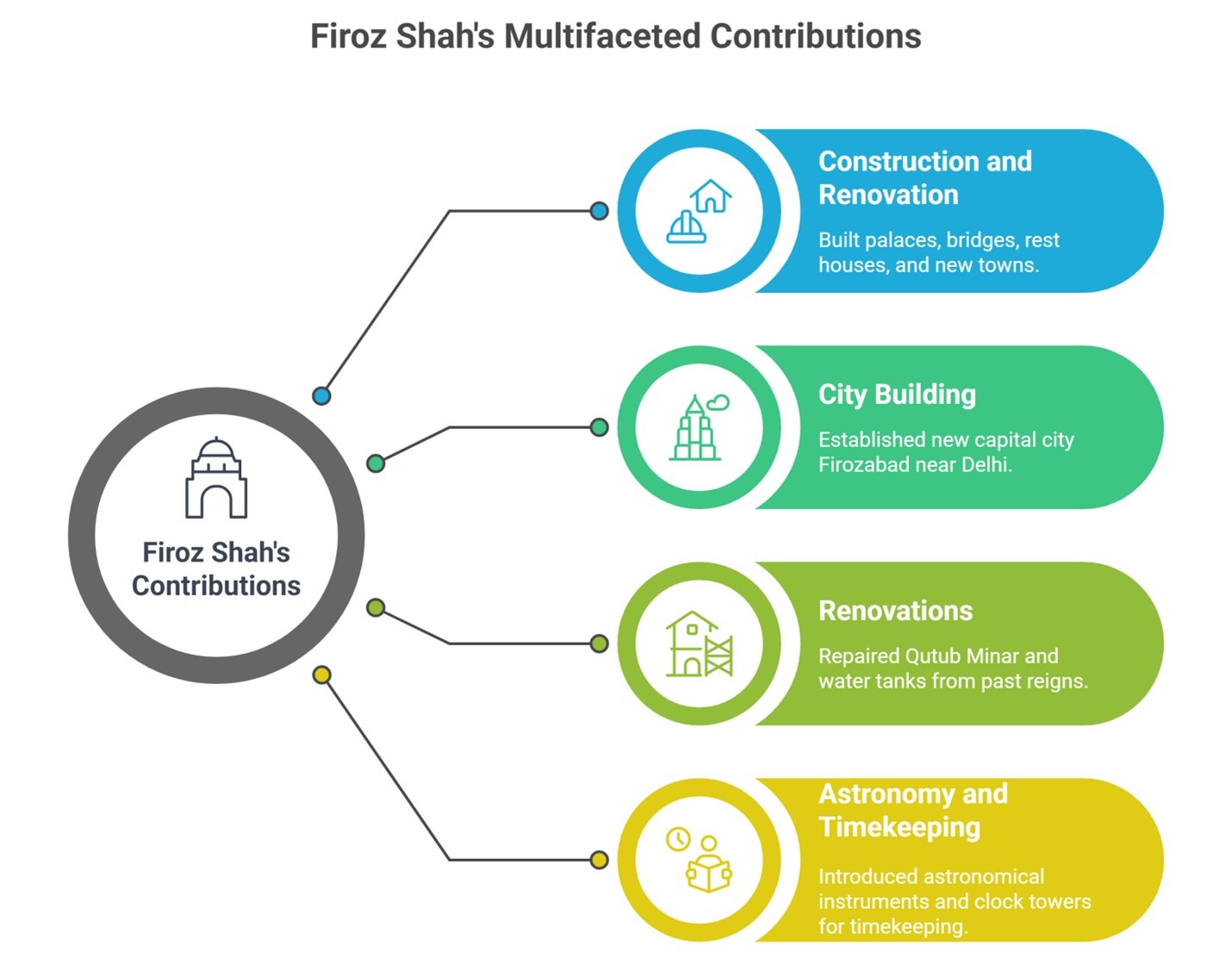
Firoz Shah was one of the most prolific builders among Delhi Sultans:
- Constructed or renovated: 30 palaces, 100 bridges, 200 public rest houses, 300 new towns.
- Firozabad (Firoz Shah Kotla): A new capital city built near Delhi.
- Other cities: Hisar, Jaunpur, Fatehabad, Firozpur.
- Renovations: Repaired Qutub Minar and water tanks from earlier reigns. Brought two Ashokan pillars from Meerut and Topra to Delhi.
- Astronomy and Timekeeping: Built astronomical instruments like Usturlab and clock towers (Tas-i-Ghariyal) to announce time publicly.
Judicial and Religious Policies
- Judicial Reform: Harsh punishments like amputation were abolished. The penal code was softened to align with Islamic principles.
- Religious Orthodoxy: Firoz Shah promoted Islam with the support of the Ulema. Non-Islamic practices were banned. Jizya was imposed even on Brahmins—a rare policy not seen under earlier Sultans.
Patronage of Learning
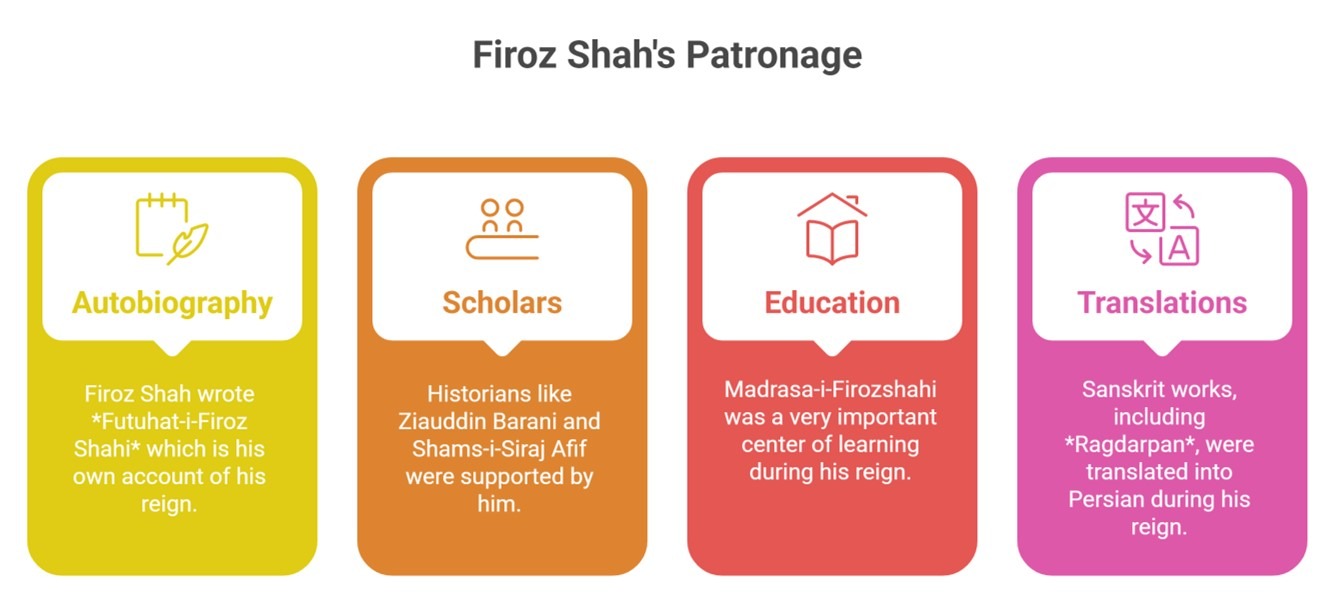
Firoz Shah was a scholar himself and a generous patron of education:
- Autobiography: Futuhat-i-Firoz Shahi is his own account of his reign.
- Scholars: Historians like Ziauddin Barani and Shams-i-Siraj Afif flourished under him.
- Education: Madrasa-i-Firozshahi became a leading center of learning.
- Translations: Sanskrit works, including Ragdarpan (a treatise on music), were translated into Persian.
Decline of the Tughlaq Dynasty
Firoz Shah died in 1388 CE. Though the dynasty nominally continued under weak successors like Nasiruddin Mahmud and Daulat Khan, it disintegrated rapidly due to administrative decay, internal rebellions, and external threats. The final blow came in 1398 CE when Timur, the Central Asian conqueror, invaded and plundered Delhi. This effectively marked the end of the Tughlaq Empire.
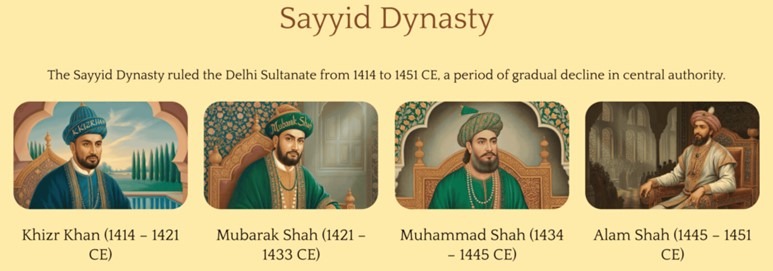
4. Sayyid Dynasty (1414–1451 CE)
The Sayyid dynasty emerged in the aftermath of Timur’s devastating invasion of Delhi in 1398. Before leaving India, Timur appointed Khizr Khan, the governor of Multan, as his vassal in the region. In 1414 CE, Khizr Khan captured Delhi and established the Sayyid dynasty, claiming to be the spiritual descendants of the Prophet Muhammad.
Khizr Khan (1414–1421 CE)
Khizr Khan was a capable and pragmatic ruler who tried to restore the waning authority of the Delhi Sultanate. Although he did not assume the title of Sultan, preferring to govern in Timur’s name, he undertook military campaigns to reassert control over lost provinces. However, his rule remained largely confined to the region around Delhi due to internal dissension and external challenges.
Mubarak Shah (1421–1434 CE)
Khizr Khan was succeeded by his son Mubarak Shah, who assumed the royal title of Sultan. Mubarak Shah was more assertive in his rule. He attempted to curb the power of rebellious nobles and conducted military expeditions to strengthen the authority of the Sultanate. However, his efforts were met with limited success, and he faced constant conspiracies and uprisings. He was eventually assassinated in 1434 CE.
Muhammad Shah (1434–1445 CE)
Following Mubarak Shah’s death, his nephew Muhammad Shah ascended the throne. His reign was plagued by increasing weakness in the central administration. He remained preoccupied with palace intrigues and revolts by ambitious nobles. The Sultanate’s influence declined sharply during his rule, with regional governors asserting virtual independence.
Alauddin Alam Shah (1445–1451 CE)
The last ruler of the Sayyid dynasty, Alauddin Alam Shah, proved to be the weakest of all. He showed little interest in governance or administration and retired to Budaun, willingly handing over the throne of Delhi to Bahlul Lodi, the Afghan governor of Punjab, in 1451 CE. With this voluntary abdication, the Sayyid dynasty came to an end, paving the way for the rise of the Lodis.
5. Lodi Dynasty (1451–1526 CE)
The Lodi dynasty marked the last phase of the Delhi Sultanate and was the first Afghan dynasty to rule Delhi. Unlike their predecessors who were of Turkic origin, the Lodis were Afghans by descent. They sought to strengthen the Sultanate and reassert the authority of Delhi, but their rule ultimately ended with the advent of Mughal dominance in India.
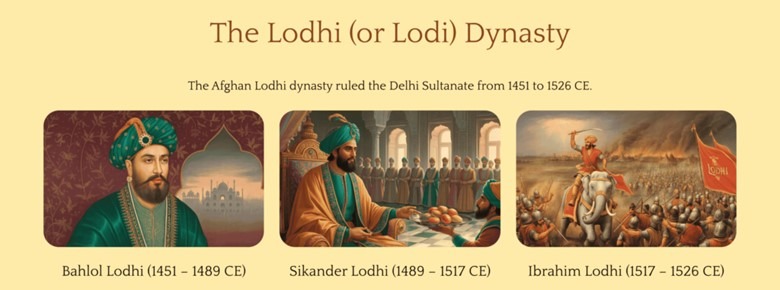
Bahlul Lodi (1451–1489 CE)
Bahlul Lodi was the founder of the Lodi dynasty. A prominent Afghan noble and the governor of Punjab under the Sayyids, he was invited to assume control of Delhi by the outgoing ruler, Alauddin Alam Shah. Bahlul was a seasoned warrior and an astute administrator. He embarked on military campaigns to re-establish control over territories that had slipped from Delhi’s grasp. He brought large parts of Uttar Pradesh back under the Sultanate and was largely successful in checking the power of rebellious provincial chiefs.
Despite being a capable leader, Bahlul’s reign was marked by ongoing military campaigns, particularly against the Jaunpur kingdom, which he eventually annexed. He laid the foundation for a more centralised administration and consolidated the Lodi rule before his death in 1489 CE.
Sikandar Lodi (1489–1517 CE)
Sikandar Lodi, the son of Bahlul Lodi, succeeded his father and is widely regarded as the most illustrious ruler of the Lodi dynasty. He expanded the Sultanate’s territory significantly by conquering Bihar and suppressing numerous Rajput rebellions. Under his leadership, the Sultanate stretched from Punjab in the west to Bihar in the east.
One of Sikandar Lodi’s notable administrative reforms was the transfer of the capital from Delhi to Agra, a more centrally located and strategically favourable site. This shift played a crucial role in improving governance and overseeing military operations in eastern India.
Sikandar introduced several fiscal reforms, including the measurement of land through a new scale known as the Gaz-i-Sikandari. He also promoted trade by reducing internal restrictions and improving road infrastructure. His reign saw significant developments in agriculture and irrigation, leading to enhanced prosperity for the peasantry.
However, Sikandar Lodi was also known for his religious orthodoxy and intolerance. A staunch Sunni Muslim, he imposed the Jizya tax and pilgrimage taxes on non-Muslims and reportedly demolished Hindu temples. Despite his bigotry, he was a patron of art and literature and composed Persian poetry under the pen name Gulrukhi, meaning “Rose-Faced.”
Ibrahim Lodi (1517–1526 CE)
Ibrahim Lodi, the son of Sikandar Lodi, succeeded him in 1517 CE. However, unlike his father, he lacked political wisdom and administrative acumen. Arrogant and autocratic, Ibrahim alienated many nobles and governors, including his own relatives and loyal officers. He publicly insulted and humiliated court nobles, causing widespread resentment and rebellion.
The most significant rupture came when Daulat Khan Lodi, the governor of Punjab, and Rana Sanga, the Rajput king of Mewar, invited Babur, the Timurid ruler of Kabul, to invade India. Babur responded promptly, marched into India, and confronted Ibrahim Lodi at the historic First Battle of Panipat in 1526 CE. Ibrahim was killed in battle, and his army was decimated.
Provincial and Local Administration under the Delhi Sultanate
The Delhi Sultanate had a well-defined administrative structure that ensured efficient governance across its vast territory. One of the most important features of this administrative setup was the Iqta system, which was initially inspired by the administrative practices of the Caliphate in Western Asia. This system, tailored to suit the needs of the Sultanate, played a crucial role in provincial administration.
The Iqta System: Origins and Evolution
The Iqta system was introduced by Iltutmish, one of the prominent rulers of the Delhi Sultanate. Under this system, the entire empire was divided into territorial units known as Iqtas. These Iqtas were essentially revenue assignments granted to high-ranking nobles, known as Walis or Muqtis, in lieu of cash salaries for their services to the Sultan.
The nobles who received Iqtas were responsible for maintaining law and order, administering justice, and collecting land revenue in their assigned regions. However, this arrangement also posed significant administrative challenges:
- The Iqta-holders often became de facto rulers of their territories, acting independently and challenging central authority.
- The shortage of available land made it difficult to allocate Iqtas to all nobles, creating dissatisfaction and rivalry among the nobility.
In an attempt to control the growing power of the nobles, Alauddin Khalji abolished the Iqta system during his reign. His objective was to centralize power and eliminate feudal tendencies. However, recognizing the crucial role of the nobles in maintaining military and administrative stability, later Sultans revived the system.
Initially, Iqtas were non-hereditary and were transferred periodically to prevent nobles from establishing permanent control. But this policy changed during the reign of Firoz Shah Tughlaq, who, in an effort to gain the loyalty of the nobles, made Iqta assignments hereditary. This decision, however, weakened central control and is considered one of the factors that led to the decline of the Tughlaq dynasty.
Functioning of the Iqta System
The Iqtadars (holders of Iqtas) collected land revenue, which they used for maintaining their own troops and meeting administrative expenses. The surplus revenue, known as Fawazil, was then sent to the Sultan’s treasury. At the local level, the Iqtadar was supported by:
- Amil – responsible for revenue collection
- Mushrif – an accountant who maintained records
- Khazandar – a treasurer or custodian of funds
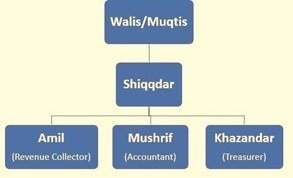
This hierarchical structure ensured a smooth revenue collection process and maintained the flow of resources to the central government.
Local/Village Administration
The rural administration of the Delhi Sultanate was largely dependent on the traditional village hierarchy. The rural aristocracy consisted of the Khut, Muqaddam, and Chaudhri, who played vital roles in tax collection and local governance.
- The Muqaddam or Chaudhri served as the village headman, overseeing administration and coordinating with government officials.
- The Khut acted as the local revenue collector, managing the assessment and collection of land taxes (Kharaj) from peasants.
- Patwaris served as village accountants, keeping records of land ownership, cultivation, and taxes.
As a reward for their services, revenue collectors were allowed a form of remuneration known as Haqq-i-Khuti or Haqq-i-Muqaddam. This entitlement granted them exemption from paying taxes on a portion of the land they held. In addition, they were permitted to retain a share of the revenue collected from the peasants, referred to as Qismat-i-Khoti or Qismat-i-Muqaddam.
The provincial and local administration of the Delhi Sultanate, anchored by the Iqta system, was a unique blend of Persian-Islamic governance models and indigenous Indian practices. While it initially helped in strengthening the Sultanate’s hold over vast territories, its misuse and the eventual shift toward hereditary assignments weakened central authority in the long run. Despite its flaws, the system laid the groundwork for structured administration and revenue collection, influencing later Islamic and regional Indian polities.
Art and Architecture
The Indo-Islamic architectural style that emerged during this era fused Islamic aesthetics with Indian craftsmanship. Key features included:
- Use of arches, domes, minarets, and calligraphy.
- Incorporation of red sandstone, marble, and glazed tiles.
Key Monuments:
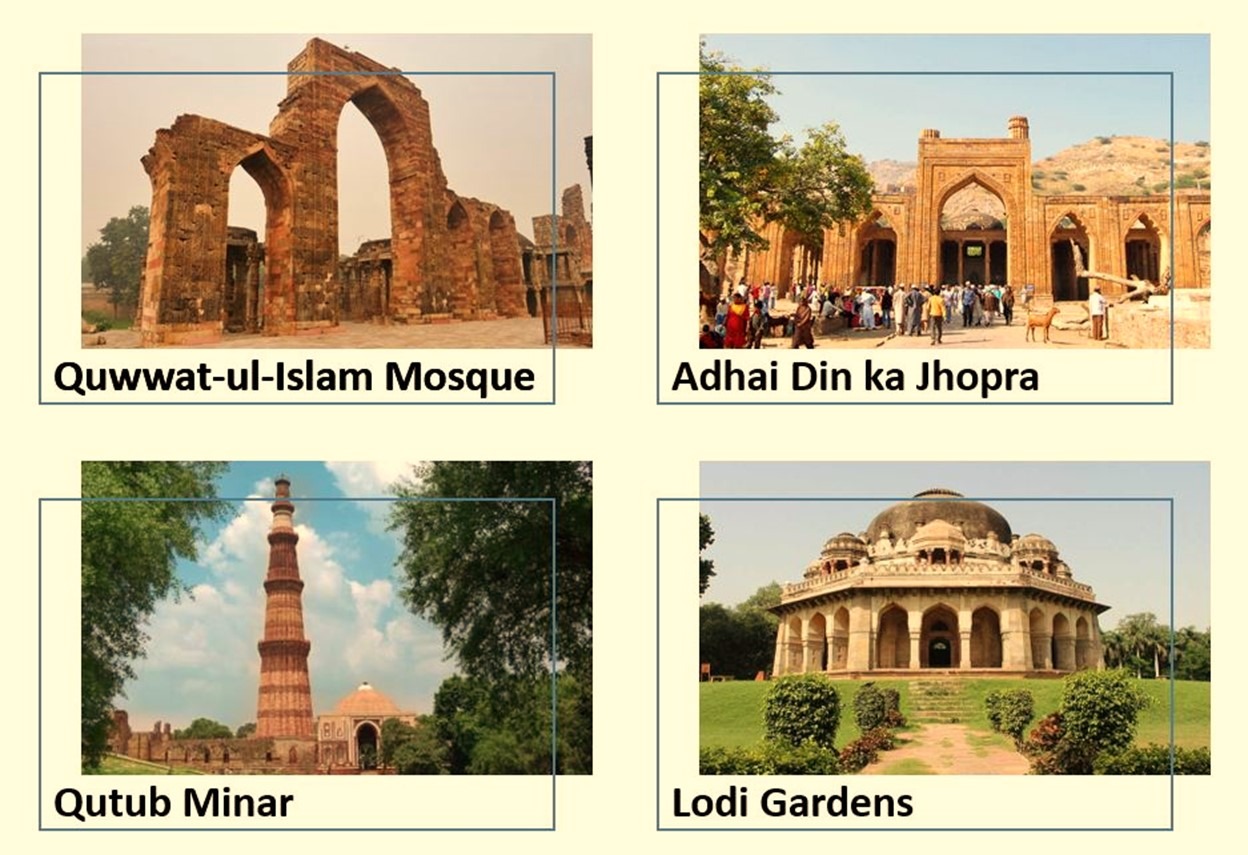
- Qutub Minar: Begun by Qutbuddin Aibak and completed by Iltutmish.
- Quwwat-ul-Islam Mosque: Built from remains of destroyed temples.
- Alai Darwaza, Hauz Khas, Tughlaqabad Fort, Firoz Shah Kotla, and Lodi Garden represent architectural achievements across dynasties.
Decline of the Delhi Sultanate
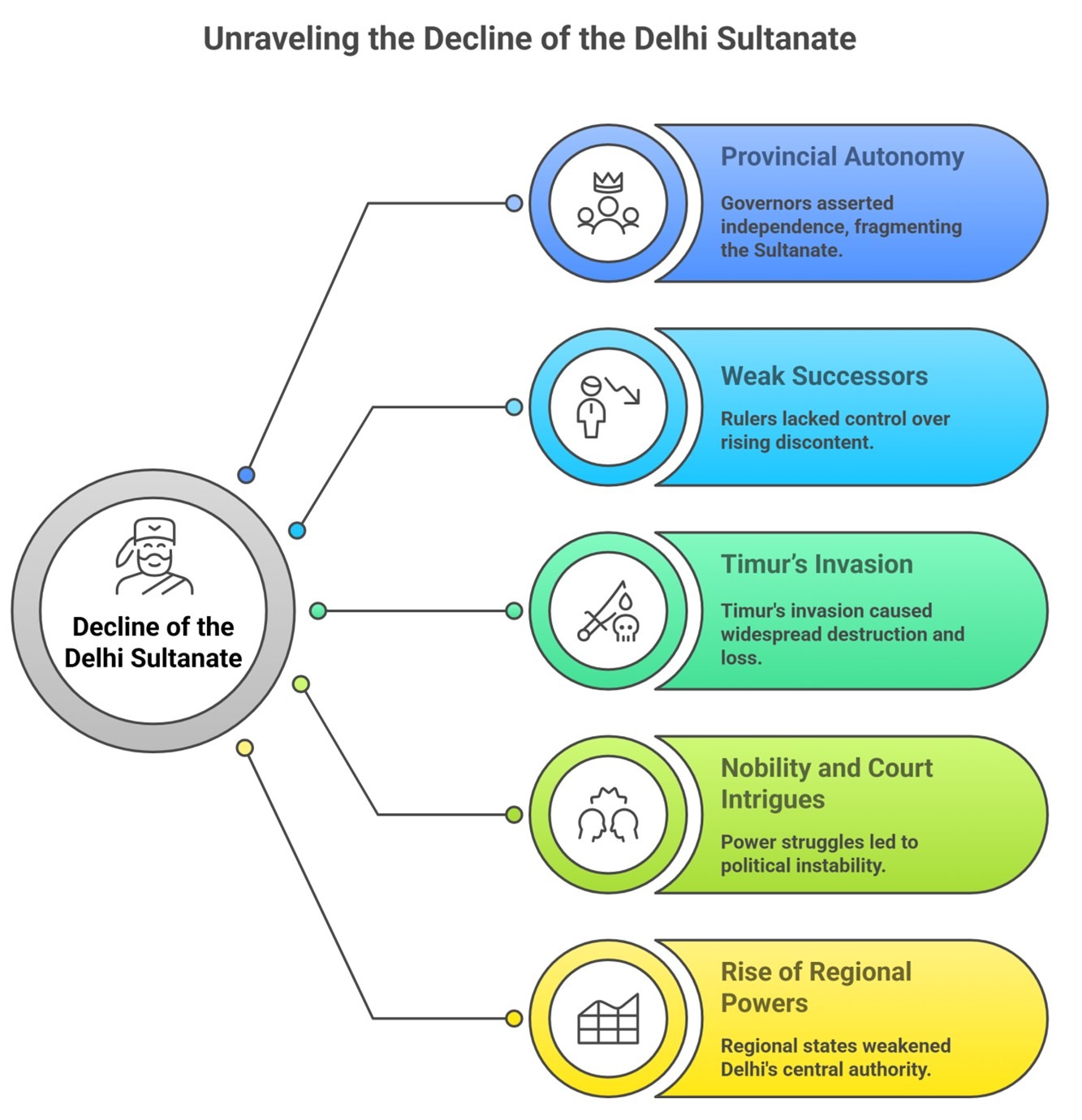
The decline of the Delhi Sultanate was a gradual but inevitable process, influenced by multiple internal and external factors:
- Provincial Autonomy: Many provincial governors began asserting their independence, leading to the fragmentation of the Sultanate. Regions such as Malwa, Gujarat, Jaunpur, and Bengal established independent kingdoms.
- Weak Successors: The later rulers of the Tughlaq, Sayyid, and Lodi dynasties lacked the ability and foresight to control the rising discontent among nobles and local rulers.
- Timur’s Invasion (1398): The brutal invasion of Delhi by Timur caused widespread destruction. Delhi was plundered and depopulated in three days, and the prestige of the Sultanate suffered irreparably.
- Nobility and Court Intrigues: Continuous power struggles among nobles and interference in royal succession led to political instability.
- Rise of Regional Powers: The emergence of powerful regional states and the formation of independent sultanates in the Deccan further weakened the central authority of Delhi.
Ultimately, the Delhi Sultanate collapsed under the weight of its own internal divisions and the superior military tactics of the Mughals. The transition to Mughal rule marked a new era in Indian history — one that would blend Central Asian traditions with Indian culture on a grand imperial scale.
Following the Ghurid invasion of North India, several regional Sultanates emerged across the subcontinent. Among them, the Delhi Sultanate rose to prominence as the most powerful and enduring. It successfully established a centralized rule over vast territories, dominating large parts of the Indian subcontinent for several centuries. The Delhi Sultanate laid the foundation for administrative reforms, military expansion, and cultural integration. Eventually, its decline paved the way for the emergence of a new imperial power—the Mughal Empire—which would go on to reshape the political and cultural landscape of India.
Notable writers
Author | Important Works |
Amir Khusrau | Khazain ul-Futuh, Tughlaq Nama, Laila Majnu |
Ziauddin Barani | Tarikh-i-Firuz Shahi |
Ibn Battuta | Rihla (The Journey) |
Amir Hassan Sizzi | Fawaid-ul-Fuad |
Alberuni | Alberuni, Tahkik-i-Hind |
Departments under Delhi Sultanate Administration
Central Department | Function |
Diwan-i-Arz | Department of Military |
Diwan-i-Bandagan | Department of Slaves |
Diwan-i-Insha | Department of Correspondence |
Diwan-i-Ishtiaq | Department of Pensions |
Diwan-i-Khairat | Department of Charity |
Diwan-i-Kohi | Department of Agriculture |
Diwan-i-Mustakhraj | Department of Arrears |
Diwan-i-Qaza-i-Mamalik | Department of Justice |
Diwan-i-Risalat | Department of Appeals |
Officials under the Delhi Sultanate Administration
Title | Role/Responsibility |
Diwan-i-Ariz | Minister of War or Chief of Army |
Wazir | The most important office was the Diwan-i-Wizarat, headed by the wazir, who is responsible for administration and finance. |
Diwan-i-Insha | Head of the Department of Correspondence and Petitions |
Diwan-i-Risalat | Head of the Department of Religious Affairs |
Diwan-i-Khairat | Head of the Department of Charity and Religious Endowments |
Diwan-i-Mustakhraj | Officer responsible for checking and verifying revenue accounts |
Qazi | Islamic judges responsible for dispensing justice according to Sharia law |
Barid-i-Mumalik | Head of the information and intelligence department |
Ariz-i-Mumalik | Head of the military department |
Muqaddam | Local village headman responsible for tax collection and administration |
Kotwal | Chief of Police responsible for maintaining law and order in cities |
Amil | Revenue officer responsible for revenue collection in a district |
Musharraf-i-Mumalik | Accountant General |
Karkun | Clerk or administrative assistant |