
Economic Critique of the Drain of Wealth
Pioneering Analysts
- Dadabhai Naoroji – Poverty and Un-British Rule in India.
- R.C. Dutt – Economic History of India.
- Justice M.G. Ranade, G.K. Gokhale, G. Subramania Iyer, Prithwishchandra Ray.
Key Critiques
1. Trade & Railways
- Foreign trade designed to import finished goods and export raw materials.
- Railways facilitated commercial exploitation rather than industrialisation.
- G.V. Joshi: Railway spending was an “Indian subsidy to British industries”.
2. One-Way Free Trade & Tariff Policy
- Destruction of handicrafts due to unequal competition.
- Tariff policy favoured British capitalist interests.
- Heavy tax burden on Indians, with minimal impact on British merchants and administrators.
Land Revenue Policies under British Rule – Transformation of Agrarian India
The British colonial administration fundamentally reshaped India’s agrarian structure, introducing new land tenure systems that maximized revenue extraction at the cost of peasant welfare. This reorganisation, driven by economic motives rather than agricultural improvement, altered rural power structures, weakened village communities, and deepened agrarian distress.
Pre-British Agrarian Structure
Before British intervention, Indian agriculture operated within self-sufficient village communities:
- Village Communities functioned as self-governing units, with no concept of absolute private ownership of land.
- Cultivators’ Rights were secure, as peasants paid a share of produce to local rulers or overlords without fear of eviction.
- The Patil acted as the village head, responsible for revenue collection, land allocation, irrigation management, and working alongside the Panchayat for dispute resolution.
British Economic Motives and Early Impact
The British saw India primarily as a revenue-generating estate:
- Maximisation of Revenue was the priority, leading to a disregard for traditional agrarian systems.
- Dependence on Land Revenue — forming the bulk of government income — made peasants the backbone of the colonial fiscal structure.
- Consequences: Agricultural stagnation, abandonment of land due to excessive taxation, recurring famines, and eventual policy revisions.
Major Land Tenure Systems Introduced by the British
The colonial administration implemented three major systems of land revenue collection:
- Zamindari System – Covered ~19% of British India.
- Mahalwari System – Covered ~30%.
- Ryotwari System – Covered ~51%.
1. Zamindari System
Introduced after the East India Company gained Diwani rights (1765) in Bengal, Bihar, and Orissa.
Warren Hastings’ Ijaradari System (1769–70)

- Concept: Revenue collection was auctioned to contractors (Ijaradars) for fixed periods.
- Problems:
- Exploitation – Contractors maximized profits without regard for peasant welfare.
- Unrealistic Bids – Revenue demands exceeded agricultural capacity, pushing cultivators into debt.
- Corruption – Traditional zamindars were replaced by speculative contractors.
- These failures prompted Lord Cornwallis to introduce the Permanent Settlement (1793).
Permanent Settlement (1793)
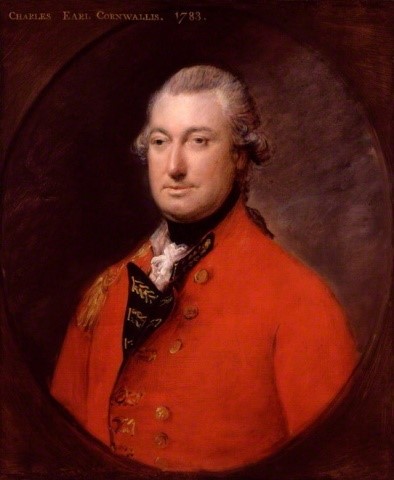
- Architect: Philip Francis (concept), implemented by Lord Cornwallis.
- Coverage: Bengal, Bihar, Orissa, parts of Madras (~19% of British India).
- Key Features:
- Permanent Revenue Fixation – The land revenue was fixed forever, irrespective of future productivity.
- Proprietary Rights to Zamindars – They could sell, mortgage, or transfer land, retaining a fraction of collections.
- Sunset Clause (1794) – Failure to pay on time led to auction of estates.
- Shortcomings:
- Excessive revenue demands (up to 89% in Bengal) caused peasant distress.
- Growth of absentee landlordism and sub-infeudation (layering of intermediaries).
- Neglect of agricultural improvement as zamindars focused on rent extraction.
- Shortcomings:
-
- Later Reforms: Bengal Rent Acts (1859, 1885) granted limited occupancy rights to tenants but did not resolve exploitation.
2. Mahalwari System (1819–1822)

- Proposed by Holt Mackenzie (1819), formalised under Regulation VII (1822).
- Coverage: North-West Provinces, parts of Punjab, Central India.
- Structure:
- Mahal (village or group of villages) as the basic revenue unit.
- Revenue collected collectively by village headmen.
- State Share: Initially 66% of rental value, later reduced to 50%.
- Challenges:
- Complex surveys, inaccurate assessments, and manipulation of rent calculations.
- Heavy revenue burdens accelerated rural indebtedness and land alienation.
- Discontent during the Revolt of 1857 was partly fuelled by these oppressive measures.
- Challenges:
-
- Reforms:
- Regulation IX of 1833 simplified processes; Merttins Bird introduced 30-year settlements.
- Saharanpur Rules (1855) capped state demand at 50%, though often ignored in practice.
- Reforms:
3. Ryotwari System

- Introduced in 1792 by Thomas Munro and Captain Alexander Read in Madras Presidency; formalised in 1820.
- Coverage: Madras, Bombay, parts of Assam, Coorg, and Berar.
- Key Features:
- Direct Settlement with Ryots – No intermediaries; peasants were recognised as landowners with transferable rights.
- Taxation: 45–55% of estimated produce, paid directly to the state.
- Non-Permanent Settlement – Revenue periodically revised, creating uncertainty.
- No Relief during Calamities – Taxes were collected even during droughts or floods.
- Problems:
- High and fluctuating tax rates created debt traps.
- Coercion in collection was rampant — documented in the Madras Torture Commission Report (1855).
- Problems:
- Reforms:
- 1855 scientific surveys reduced over-assessment.
- 1864 revision fixed rates at 50% for 30 years, marginally improving conditions.
- Reforms:
Regional Impacts
- Madras Presidency: The 50% demand was crippling; famine (1867–78) exposed structural flaws.
- Bombay Presidency: Reforms by Elphinstone, Chaplin, and Wingate improved administration, but faulty surveys led to agrarian riots (1875) and the Deccan Agriculturists’ Relief Act (1879).
Overall Impact of British Land Revenue Policies
- Agrarian Distress: Increased indebtedness, land alienation, and rural poverty.
- Commercialisation without Safeguards: Shift to cash crops for export markets made agriculture vulnerable.
- Disruption of Traditional Structures: Decline of self-governing village communities.
- Social Change: Emergence of landlords, moneylenders, and rural proletariat.
Contribution to Revolts: Economic grievances fuelled uprisings, notably the Revolt of 1857