In Situ Conservation:
In-Situ Conservation: Preserving Biodiversity in Natural Habitats
In-situ conservation refers to the protection and preservation of genetic resources within their natural environments, ensuring that plant and animal species continue to thrive in the ecosystems where they naturally occur. This method of conservation helps maintain ecological processes, species interactions, and natural evolutionary adaptations, thereby fostering biodiversity in a sustainable manner.
Significance of In-Situ Conservation
By conserving species within their natural habitats, in-situ conservation supports ecosystem stability, promotes genetic diversity, and enables species to adapt to environmental changes. It plays a crucial role in protecting not just individual species but also the ecological relationships that sustain life. Healthy ecosystems provide essential services such as air and water purification, climate regulation, pollination, and soil fertility, making in-situ conservation fundamental to environmental sustainability.
In-Situ Conservation in India
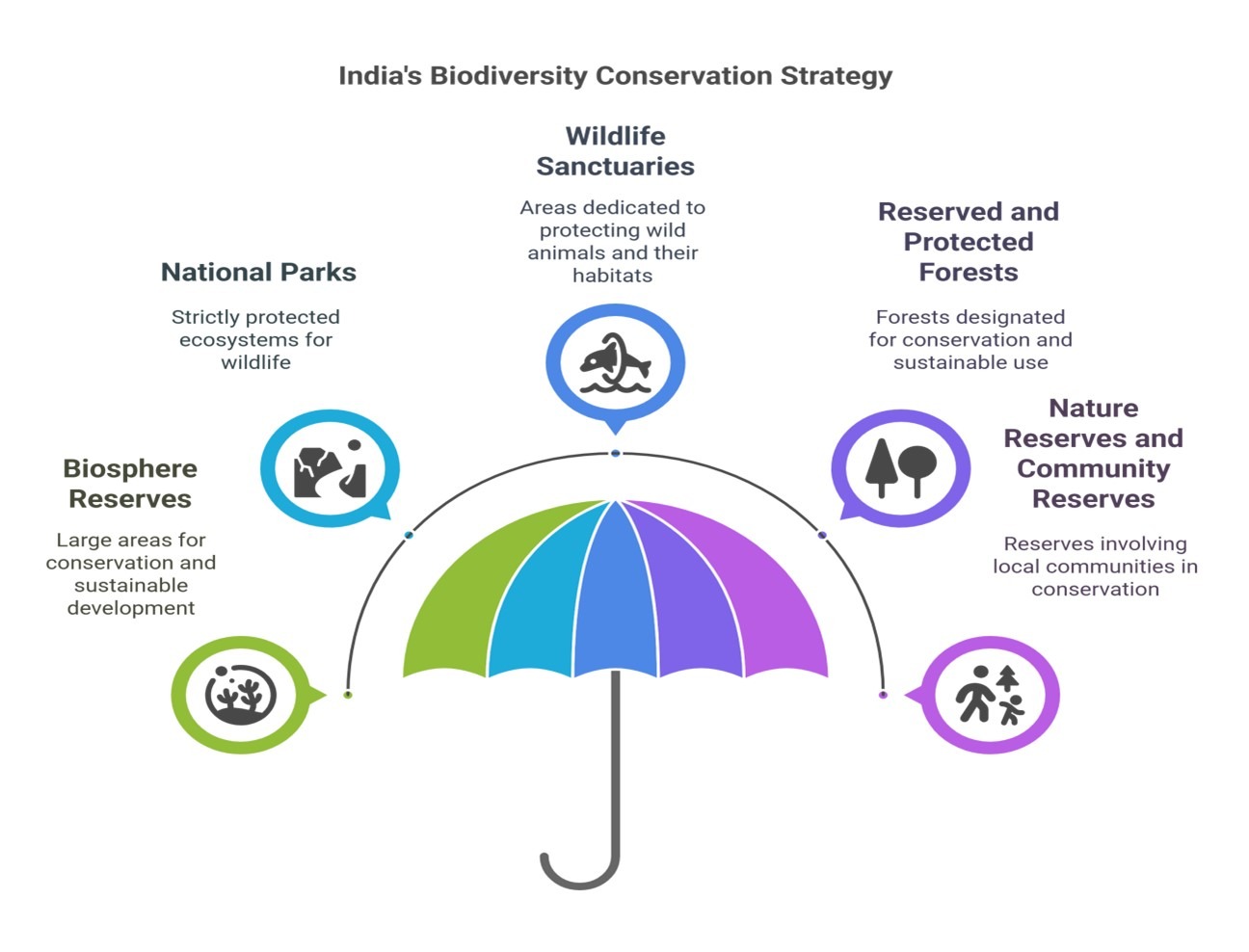
India is one of the world’s most biodiversity-rich countries, boasting a wide range of ecosystems that support diverse flora and fauna. Recognizing the importance of preserving its ecological wealth, the country has established a network of legally protected areas to safeguard biodiversity. These include:
- Biosphere Reserves – Large areas that support conservation efforts while also promoting research, education, and sustainable development. Examples include the Nilgiri Biosphere Reserve, Sundarbans Biosphere Reserve, and Nanda Devi Biosphere Reserve.
-
- National Parks – Strictly protected areas where ecosystems remain undisturbed, providing safe habitats for wildlife. Some notable national parks in India include Jim Corbett National Park, Kaziranga National Park, and Ranthambore National Park.
-
- Wildlife Sanctuaries – Areas dedicated to protecting wild animals and their habitats, allowing for limited human activity. Examples include Bharatpur Bird Sanctuary (Keoladeo National Park) and Gir Wildlife Sanctuary.
-
- Reserved and Protected Forests – These forests are designated for conservation, ensuring the sustainable use of forest resources while safeguarding flora and fauna.
-
- Nature Reserves and Community Reserves – Protected areas that involve local communities in conservation efforts, ensuring both environmental and cultural preservation.
Reserved and Protected Forests:
Both reserved and protected forests are designated under the Indian Forest Act of 1927 and have the potential to be elevated to the status of wildlife sanctuaries or national parks, which would provide them with greater protection and financial support.
Key Distinction:
- Reserved Forests: All activities, including hunting and grazing, are prohibited unless specifically authorized. India’s rich and diverse forest ecosystems are safeguarded through various conservation measures, with reserved forests and protected forests being two key classifications under the Indian Forest Act of 1927. These forests serve as crucial habitats for wildlife, help mitigate climate change, and support local communities by providing essential ecological services. Over time, both reserved and protected forests can be elevated to the status of wildlife sanctuaries or national parks, offering them greater legal protection and access to financial resources for conservation efforts.
Key Distinctions Between Reserved and Protected Forests
1. Reserved Forests
- Reserved forests receive a higher degree of protection compared to protected forests. The designation aims to strictly control human activities to preserve biodiversity and prevent deforestation.
- Prohibited Activities: All activities, including hunting, poaching, logging, and grazing, are strictly forbidden unless specifically authorized by the government.
- Purpose: These forests are designated to conserve wildlife, maintain ecological balance, and protect watersheds.
- Management: The government has absolute control over these forests, ensuring minimal human interference.
- Examples: The Sundarbans Reserved Forest in West Bengal and the Dibang Reserved Forest in Arunachal Pradesh are some of India’s most notable reserved forests.
2. Protected Forests
- Protected forests receive a lesser degree of protection compared to reserved forests, but they still play a vital role in conservation and sustainable resource management.
- Limited Rights to Communities: Unlike reserved forests, local communities may be granted specific rights, such as collecting firewood, grazing livestock, or harvesting minor forest produce, depending on government regulations.
- Regulated Activities: While some activities are allowed, hunting and commercial exploitation remain restricted to prevent overuse of resources.
- Purpose: These forests serve as buffer zones that balance conservation with local livelihood needs.
- Examples: Many forests across states like Madhya Pradesh and Chhattisgarh are designated as protected forests, serving as important green corridors for wildlife.
Hierarchy of Protection for Forest Conservation in India
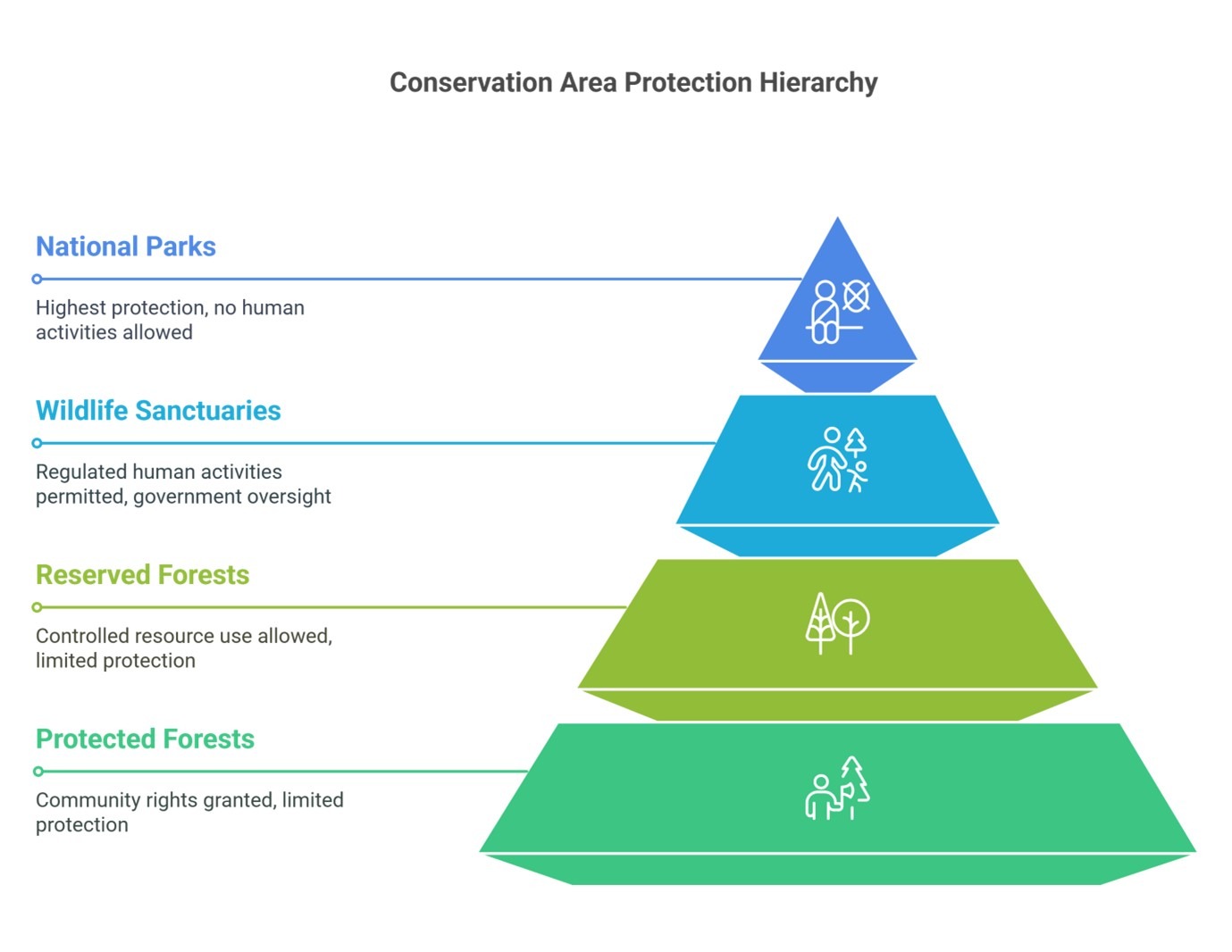
- India follows a structured hierarchy of protection to ensure the highest levels of conservation for ecologically sensitive areas. The levels of legal protection and restrictions increase as we move up the hierarchy:
- National Parks – Highest level of protection, with no human activity (including resource extraction or settlements) allowed. Examples: Jim Corbett National Park, Kaziranga National Park.
- Wildlife Sanctuaries – Protection for wildlife with some controlled human activity (e.g., tourism and research) permitted. Examples: Ranthambore Wildlife Sanctuary, Bharatpur Bird Sanctuary.
- Reserved Forests – Highly protected areas where human activities are strictly regulated.
- Protected Forests – Lower protection level, with some community rights granted for sustainable resource use.
Wildlife Sanctuaries or Wildlife Refuges:
Wildlife sanctuaries, also known as wildlife refuges, serve as protected areas dedicated to the conservation of endangered species in their natural environments. These areas provide a safe habitat, shielding wildlife from threats such as hunting, habitat destruction, poaching, predation, and human encroachment. By maintaining the delicate balance of nature, wildlife sanctuaries play a critical role in the long-term survival of vulnerable flora and fauna.
Over time, if a sanctuary meets certain ecological and conservation criteria, it can be upgraded to the status of a National Park, which offers even greater legal protection and stricter regulations against human activities.
Legal Framework and Establishment of Wildlife Sanctuaries
Wildlife sanctuaries in India are established and governed under the Wild Life (Protection) Act of 1972. Unlike National Parks, which require legislative approval, state governments can designate a wildlife sanctuary through an official notification, simplifying the process of conservation area expansion.
Key administrative responsibilities within wildlife sanctuaries include:
- State Government’s Role: The state government is responsible for identifying ecologically important regions and issuing the notification for their designation as wildlife sanctuaries.
- Appointment of a Collector: The government appoints a collector to assess the rights of individuals within the sanctuary, ensuring that the interests of local communities are considered.
- Chief Wildlife Warden: This official is tasked with the overall management, protection, and administration of the sanctuary, implementing conservation policies and ensuring compliance with legal protections.
Human Settlements and Resource Use in Wildlife Sanctuaries
While human activities are strictly regulated, some rights may be granted to individuals residing within wildlife sanctuaries. These typically include:
- Regulated Grazing: In certain cases, pastoral communities and tribal groups are permitted to graze livestock in designated areas under controlled conditions.
- Sustainable Resource Collection: Indigenous and forest-dependent communities may be allowed to collect firewood, medicinal plants, and minor forest produce in a manner that does not harm the ecosystem.
However, permanent human settlements are generally prohibited to prevent disturbances to wildlife and their natural habitats. In some cases, pre-existing tribal settlements within sanctuaries continue to exist, and government-led efforts are undertaken to facilitate their voluntary relocation while ensuring fair rehabilitation and livelihood opportunities.
Significance of Wildlife Sanctuaries in Conservation
1. Biodiversity Protection: Wildlife sanctuaries help conserve a wide range of species, including critically endangered ones, by offering a safe and undisturbed habitat.
2. Genetic Diversity: These areas help maintain the genetic diversity of plant and animal species, which is crucial for ecological balance and adaptation to environmental changes.
3. Sustainable Ecotourism: Many wildlife sanctuaries promote responsible tourism, allowing visitors to experience nature while raising awareness about conservation efforts.
4. Climate Regulation: Protected forests and grasslands within sanctuaries act as natural carbon sinks, reducing the effects of climate change.
5. Scientific Research and Education: These areas provide opportunities for wildlife research, ecological studies, and conservation education programs for students, scientists, and environmentalists.
Examples of Prominent Wildlife Sanctuaries in India
India is home to over 500 wildlife sanctuaries, each supporting a diverse range of flora and fauna. Some of the most well-known sanctuaries include:
- Ranthambore Wildlife Sanctuary (Rajasthan): A famous tiger reserve known for its large population of Bengal tigers.
- Bharatpur Bird Sanctuary (Keoladeo National Park, Rajasthan): A UNESCO World Heritage Site and a crucial migratory bird habitat.
- Gir Wildlife Sanctuary (Gujarat): The only place in the world where Asiatic lions are found in the wild.
- Periyar Wildlife Sanctuary (Kerala): Known for its elephant population and picturesque landscapes.
- Manas Wildlife Sanctuary (Assam): A UNESCO-listed sanctuary housing rare and endangered species, including the Golden Langur and Indian Rhinoceros.
Tiger Reserves:
Tiger reserves are specially designated protected areas established to ensure the conservation of India’s national animal, the Bengal tiger (Panthera tigris tigris). These reserves play a crucial role in preserving tiger populations, maintaining ecological balance, and preventing habitat destruction. While their protection status is similar to wildlife sanctuaries, tiger reserves are exclusively monitored and managed by the National Tiger Conservation Authority (NTCA), a statutory body established under the Wild Life (Protection) Act of 1972.
Role of the National Tiger Conservation Authority (NTCA) and Project Tiger
The National Tiger Conservation Authority (NTCA) is the apex body responsible for implementing Project Tiger, India’s flagship conservation program launched in 1973 to counter the alarming decline in tiger populations. The NTCA oversees tiger reserves across the country, ensuring that conservation measures align with scientific principles, habitat management strategies, and anti-poaching regulations.
Key responsibilities of the NTCA include:
- Policy Implementation: Enforcing the guidelines and framework of Project Tiger to ensure the long-term survival of tiger populations.
- Monitoring & Research: Conducting tiger population censuses, tracking their movements, and studying habitat conditions through advanced techniques such as camera traps and satellite monitoring.
- Financial & Technical Support: Allocating funds and resources to state governments for the effective management of tiger reserves.
- Anti-Poaching Measures: Strengthening protection infrastructure by deploying forest guards, utilizing drones, and enhancing surveillance mechanisms to prevent poaching and illegal wildlife trade.
- Community Engagement: Involving local communities and tribal populations in conservation efforts while ensuring their sustainable livelihood opportunities.
Core-Buffer Strategy in Tiger Reserves
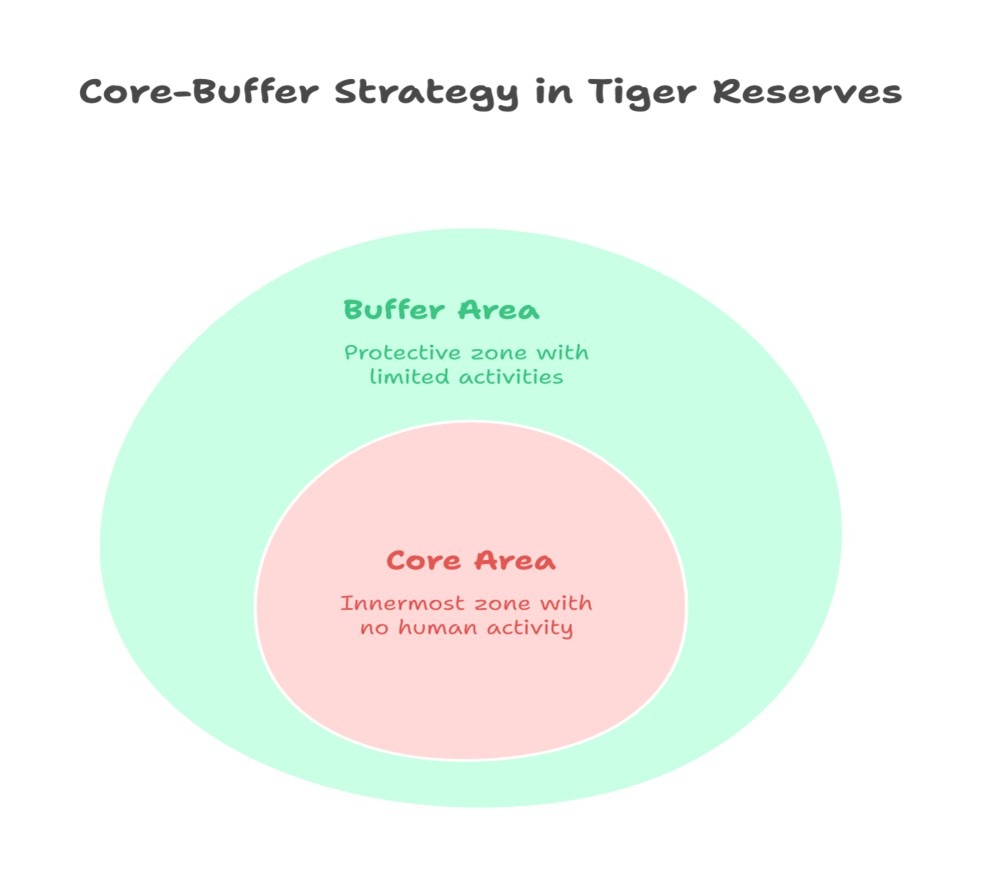
The tiger reserve model in India follows the core-buffer strategy, which ensures a balanced approach between strict conservation and sustainable resource use. This strategy divides the reserve into two key zones:
1. Core Area (Critical Tiger Habitat):
- The innermost and most protected zone where no human activity is allowed.
- Serves as a breeding ground for tigers and other wildlife.
- Free from commercial exploitation, logging, and human interference.
- Tourism and entry are highly restricted to prevent habitat disturbance.
2. Buffer Area:
- Surrounds the core area and acts as a protective shield against external threats.
- Limited human activities such as sustainable grazing, agriculture, and eco-tourism are permitted under strict regulations.
- Encourages community participation to promote conservation-friendly practices.
This core-buffer strategy helps create safe and sustainable ecosystems that support both wildlife conservation and the needs of local communities.
Prominent Tiger Reserves in India
India is home to over 50 tiger reserves, covering vast landscapes and providing refuge to nearly 3,000 wild tigers—the largest population of wild tigers in the world. Some of the most renowned tiger reserves include:
- Jim Corbett Tiger Reserve (Uttarakhand): India’s first and oldest tiger reserve, established in 1973.
- Ranthambore Tiger Reserve (Rajasthan): Known for its historic fort ruins and frequent tiger sightings.
- Kanha Tiger Reserve (Madhya Pradesh): Inspiration for Rudyard Kipling’s The Jungle Book, home to a thriving tiger population.
- Sundarbans Tiger Reserve (West Bengal): Famous for its mangrove ecosystem and swimming tigers.
- Bandhavgarh Tiger Reserve (Madhya Pradesh): Boasts one of the highest tiger densities in India.
- Nagarhole Tiger Reserve (Karnataka): A part of the Nilgiri Biosphere Reserve, supporting a large prey base for tigers.
Challenges in Tiger Conservation
Despite the success of Project Tiger, tiger conservation faces several challenges, including:
- Habitat Destruction: Encroachment, deforestation, and infrastructure development threaten tiger habitats.
- Human-Wildlife Conflict: Stray tigers sometimes attack livestock or enter human settlements, leading to retaliatory killings.
- Poaching and Illegal Trade: Demand for tiger body parts in international markets remains a major threat.
- Climate Change: Rising temperatures and altered rainfall patterns are affecting tiger ecosystems, particularly in mangrove areas like the Sundarbans.
National Park:
India’s diverse landscapes are home to an extraordinary variety of flora and fauna, necessitating the creation of protected areas to ensure their survival. Among the most significant conservation designations are National Parks and Wildlife Sanctuaries, both of which are established under the Wild Life (Protection) Act of 1972. While these areas serve the common goal of protecting biodiversity, they differ in terms of level of protection, land ownership, and regulations regarding human activities.
Legal Framework and Establishment
Both National Parks and Wildlife Sanctuaries are officially notified by the respective state governments and granted legal protection under the Wild Life (Protection) Act, 1972. The process involves:
- Identifying ecologically important regions that require protection.
- Issuing an official notification to designate the area as a Wildlife Sanctuary or National Park.
- Ensuring ongoing monitoring and management by relevant authorities such as the Chief Wildlife Warden and the National Board for Wildlife (NBWL).
Once designated, these areas fall under the strict purview of conservation laws, with National Parks receiving the highest level of protection among all types of protected areas.
Key Differences Between National Parks and Wildlife Sanctuaries
1. Level of Protection and Human Activities
National Parks:
- Offer stricter protection than wildlife sanctuaries.
- No rights are granted to local inhabitants; human activities, including grazing, hunting, and resource collection, are completely prohibited.
- Strict restrictions ensure minimal human interference, promoting undisturbed ecological processes.
Wildlife Sanctuaries:
- While still protected, they allow for certain regulated human activities.
- Some rights may be granted to people living within the sanctuary, such as grazing livestock or collecting forest produce.
- The Chief Wildlife Warden has the authority to regulate, control, or ban grazing, depending on conservation needs.
2. Boundary Demarcation
National Parks:
- Have clearly defined boundaries, legally demarcated by the state governments.
- The boundaries cannot be altered without state legislature approval based on recommendations from the National Board for Wildlife (NBWL).
Wildlife Sanctuaries:
- Boundaries may not always be explicitly defined and can be subject to change depending on conservation policies.
3. Land Ownership and Management
National Parks:
- The land is owned by the state government, ensuring complete control over the area.
- Any modifications to the boundaries of National Parks require legislative approval.
- National parks receive greater financial and legal backing for conservation initiatives.
Wildlife Sanctuaries:
- The land may be under state or private ownership, depending on the region.
- Less restrictive than national parks, but still managed with the goal of species and habitat protection.
Hierarchy of Protection Among Conservation Areas
In India’s legal conservation framework, protected areas follow a hierarchy based on the level of protection they receive:
1. National Parks → Highest level of protection, no human activities allowed.
2. Wildlife Sanctuaries → Some regulated human activities permitted under government oversight.
3. Reserved Forests → Limited protection, controlled resource use allowed.
4. Protected Forests → Lesser degree of protection, community rights granted.
Significance of National Parks and Wildlife Sanctuaries
- Biodiversity Conservation: Both National Parks and Wildlife Sanctuaries serve as safe havens for India’s rich wildlife, helping protect endangered species such as Bengal Tigers, Asiatic Lions, Snow Leopards, and Indian Rhinoceroses.
- Ecosystem Services: These areas maintain ecological balance, regulate climate, and support natural processes such as pollination, seed dispersal, and water cycle regulation.
- Scientific Research & Education: National parks and sanctuaries provide valuable sites for ecological studies, allowing scientists and conservationists to study wildlife behavior and environmental changes.
- Eco-Tourism & Sustainable Development: Many national parks and sanctuaries promote responsible wildlife tourism, which generates revenue for conservation efforts while raising awareness about biodiversity protection.
Examples of Prominent National Parks and Wildlife Sanctuaries in India
National Parks:
1. Jim Corbett National Park (Uttarakhand): India’s first national park, established in 1936.
2. Kaziranga National Park (Assam): Home to the world’s largest population of one-horned rhinoceroses.
3. Sundarbans National Park (West Bengal): Famous for mangrove forests and Bengal Tigers.
4. Gir National Park (Gujarat): The only habitat of Asiatic Lions in the world.
5. Kanha National Park (Madhya Pradesh): Inspiration for Rudyard Kipling’s The Jungle Book.
Wildlife Sanctuaries:
1. Ranthambore Wildlife Sanctuary (Rajasthan): Known for its high tiger population and historic ruins.
2. Bharatpur Bird Sanctuary (Keoladeo National Park, Rajasthan): A UNESCO World Heritage Site, critical for migratory birds.
3. Manas Wildlife Sanctuary (Assam): A diverse sanctuary housing rare species like the Golden Langur.
4. Periyar Wildlife Sanctuary (Kerala): Famous for elephants and scenic landscapes.
5. Dachigam Wildlife Sanctuary (Jammu & Kashmir): The only habitat of the endangered Kashmir Stag (Hangul).
Biosphere Reserve:
Biosphere Reserves: A Holistic Approach to Conservation and Sustainable Development
Biosphere reserves are protected areas designed to conserve biodiversity while promoting sustainable development. These reserves aim to balance environmental protection, economic growth, and community well-being. They encompass terrestrial, marine, and coastal ecosystems, ensuring the conservation of unique flora, fauna, and cultural heritage.
International Recognition and Legal Framework
Biosphere reserves are internationally recognized by UNESCO’s Man and the Biosphere (MAB) Programme, based on recommendations from national governments. In India, the designation and management of biosphere reserves are overseen by the IN-MAB Committee under the Ministry of Environment, Forest and Climate Change (MoEF&CC).
- Sovereign Jurisdiction: Despite international recognition, biosphere reserves remain under national jurisdiction, and the legal status of land and resources is preserved.
- Funding Support: Financial aid for the maintenance of these reserves follows a 90:10 funding ratio (90% central, 10% state) for North-Eastern and Himalayan states, while for other states, the funding follows a 60:40 ratio.
UNESCO Criteria for Biosphere Reserves
To qualify as a biosphere reserve under UNESCO’s MAB Programme, an area must meet the following conditions:
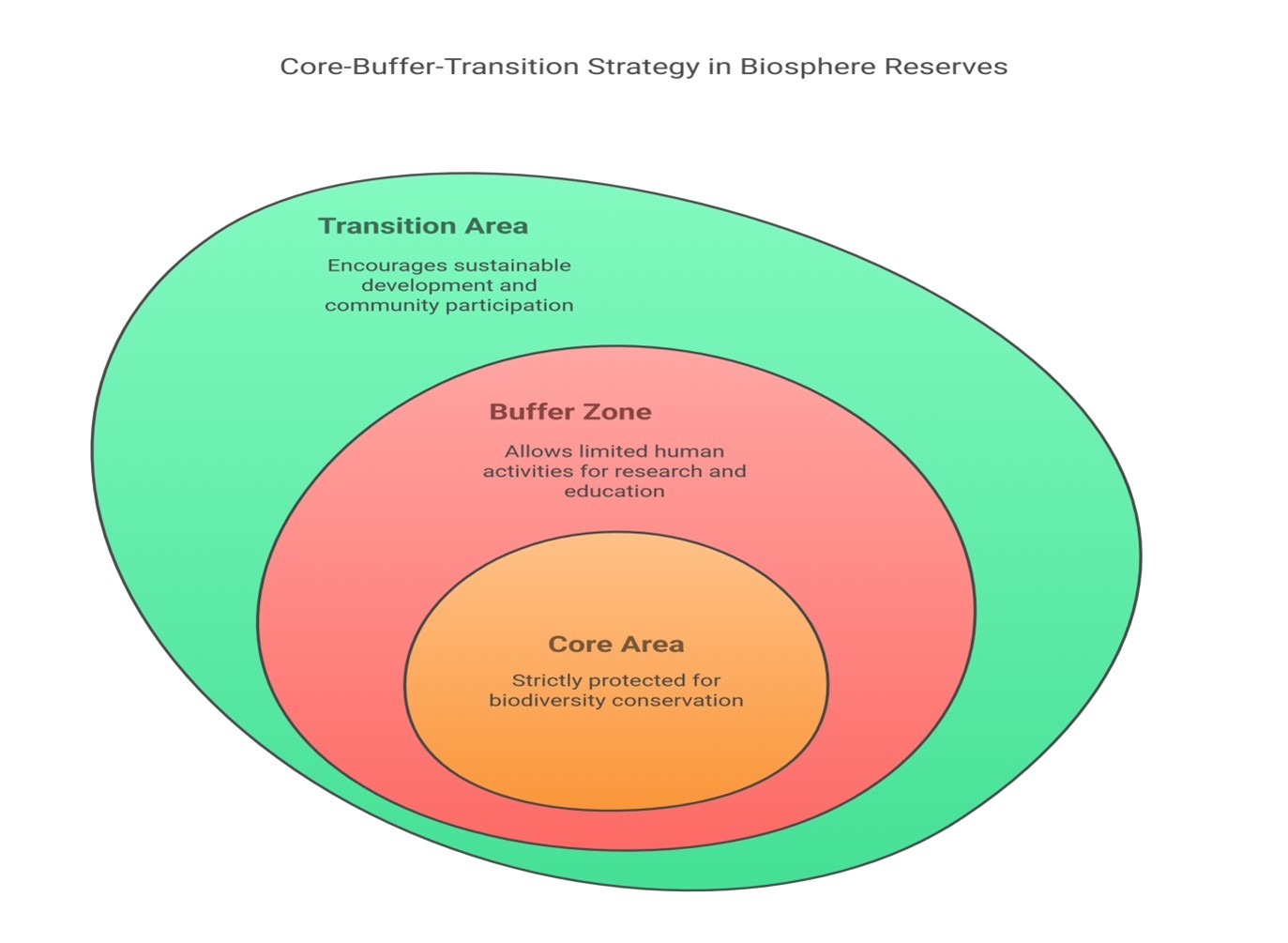
1. Core Area: A minimally disturbed natural ecosystem that supports biodiversity conservation and protects viable populations across all trophic levels.
2. Buffer Zone: A surrounding area where limited human activities such as scientific research, monitoring, and education are permitted.
3. Transition Area: The outermost region where sustainable human activities like agriculture, eco-tourism, and resource harvesting are encouraged.
Core-Buffer-Transition Strategy of Biosphere Reserves
Biosphere reserves function on a zoning system to effectively balance conservation and sustainable development.
1. Core Area:
- The innermost zone, strictly protected for biodiversity and ecosystem conservation.
- No human interference is allowed.
- Regulated under the Wild Life (Protection) Act, 1972.
2. Buffer Zone:
- Surrounds the core area, allowing limited human activities such as:
- Scientific research
- Environmental education
- Monitoring biodiversity
- Strictly regulated to minimize ecological disturbances.
- Surrounds the core area, allowing limited human activities such as:
3. Transition Area:
- The outermost zone, where sustainable development and community participation are encouraged.
- Activities include:
- Sustainable agriculture
- Eco-tourism
- Traditional resource management
- Local communities play a significant role in maintaining ecological balance.
This core-buffer-transition strategy ensures that natural ecosystems remain undisturbed while allowing economic opportunities for local communities.
Seville Strategy (1995): Strengthening People-Nature Relationships
In 1995, the Seville Strategy was introduced to enhance the effectiveness of biosphere reserves by:
- Integrating social and ecological needs into biosphere reserve management.
- Promoting sustainable development alongside conservation efforts.
- Encouraging scientific research, traditional knowledge, and modern conservation techniques.
- Strengthening local and international cooperation in biosphere reserve management.
The Seville Strategy highlights the importance of balancing human development with environmental protection, ensuring harmonious coexistence between people and nature.
Importance of Biosphere Reserves
Biosphere reserves serve multiple ecological, economic, and social purposes, making them a vital tool for conservation and sustainable development.
1. Biodiversity Conservation:
- Protects endangered species, genetic diversity, and ecosystems.
- Maintains ecological balance and resilience against climate change.
2. Sustainable Development:
- Encourages eco-friendly livelihoods such as organic farming, traditional crafts, and eco-tourism.
- Strengthens local economies without harming natural resources.
3. Scientific Research and Education:
- Provides a living laboratory for ecological and climate research.
- Encourages knowledge-sharing among local communities, scientists, and policymakers.
4. Cultural Heritage Preservation:
- Recognizes and promotes traditional knowledge systems and indigenous conservation practices.
- Encourages community participation in decision-making.
Examples of Biosphere Reserves in India
India is home to 18 biosphere reserves, out of which 12 are internationally recognized by UNESCO. Some prominent ones include:
1. Nilgiri Biosphere Reserve (Tamil Nadu, Kerala, Karnataka):
- India’s first biosphere reserve, established in 1986.
- Home to Asiatic elephants, Nilgiri tahr, and lion-tailed macaques.
2. Sundarbans Biosphere Reserve (West Bengal):
- A UNESCO World Heritage Site.
- The world’s largest mangrove ecosystem, home to the Royal Bengal Tiger.
3. Gulf of Mannar Biosphere Reserve (Tamil Nadu):
- India’s first marine biosphere reserve.
- Rich in coral reefs, seagrass beds, and marine biodiversity.
4. Pachmarhi Biosphere Reserve (Madhya Pradesh):
- Home to rare medicinal plants and diverse wildlife.
5. Great Nicobar Biosphere Reserve (Andaman & Nicobar Islands):
- Houses pristine rainforests and endemic species like the Nicobar megapode.
Eco-Sensitive Zones (ESZs):
Eco-Sensitive Zones (ESZs) are designated buffer areas surrounding national parks, wildlife sanctuaries, and other protected regions to minimize environmental degradation and human-wildlife conflict. These zones play a critical role in preserving ecological balance by preventing unregulated development while allowing limited, eco-friendly activities.
Legal Framework and Notification Process
The Ministry of Environment, Forest and Climate Change (MoEF&CC) notifies ESZs under the provisions of the Environmental (Protection) Act, 1986, which empowers the government to regulate or prohibit activities that may pose a threat to the environment.
Key Legal and Policy Milestones:
1. National Wildlife Action Plan (2002–2016):
- Recommended declaring a 10 km radius around all protected areas as an Eco-Sensitive Zone to enhance conservation efforts.
2. Supreme Court Mandate (2022):
- Directed that a minimum 1 km-wide ESZ be maintained around all protected areas across India.
- The width of ESZs varies based on ecological requirements, geographical features, and local conditions.
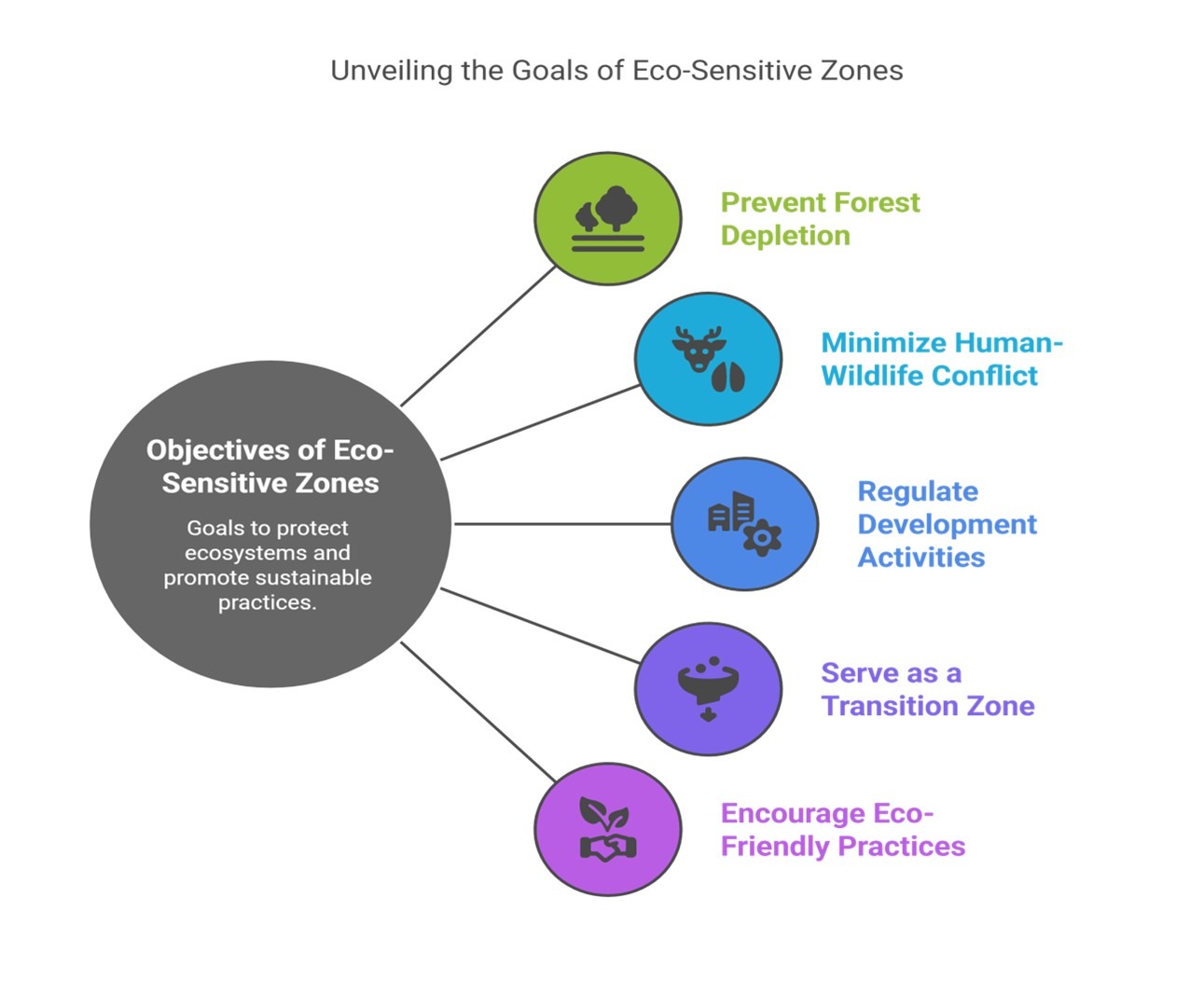
Objectives of Eco-Sensitive Zones
- Prevent Forest Depletion: Reduce environmental degradation around protected areas by controlling deforestation and habitat destruction.
- Minimize Human-Wildlife Conflict: Reduce encroachments and unregulated activities that threaten biodiversity.
- Regulate Development Activities: Ensure sustainable development by controlling pollution and environmentally harmful projects.
- Serve as a Transition Zone: Function as a buffer between protected areas and human settlements, preventing sudden habitat fragmentation.
- Encourage Eco-Friendly Practices: Promote organic farming, sustainable tourism, and green energy solutions to support both conservation and local livelihoods.
Core-Buffer Model in Eco-Sensitive Zones
Eco-Sensitive Zones follow a Core-Buffer Model to balance strict conservation efforts with regulated human activities.
1. Core Area (Strict Protection Zone):
- Comprises legally designated protected areas such as national parks, tiger reserves, and wildlife sanctuaries.
- No human activity is permitted except for conservation efforts, scientific research, and eco-tourism in some cases.
2. Buffer Area (Eco-Sensitive Zone):
- Surrounds the core area, serving as a protective shield that prevents habitat destruction.
- May include reserved forests, community-managed forests, or unprotected wildlife corridors.
- Limited, regulated activities are allowed to support local communities while ensuring environmental sustainability.
Regulations and Permitted Activities in ESZs
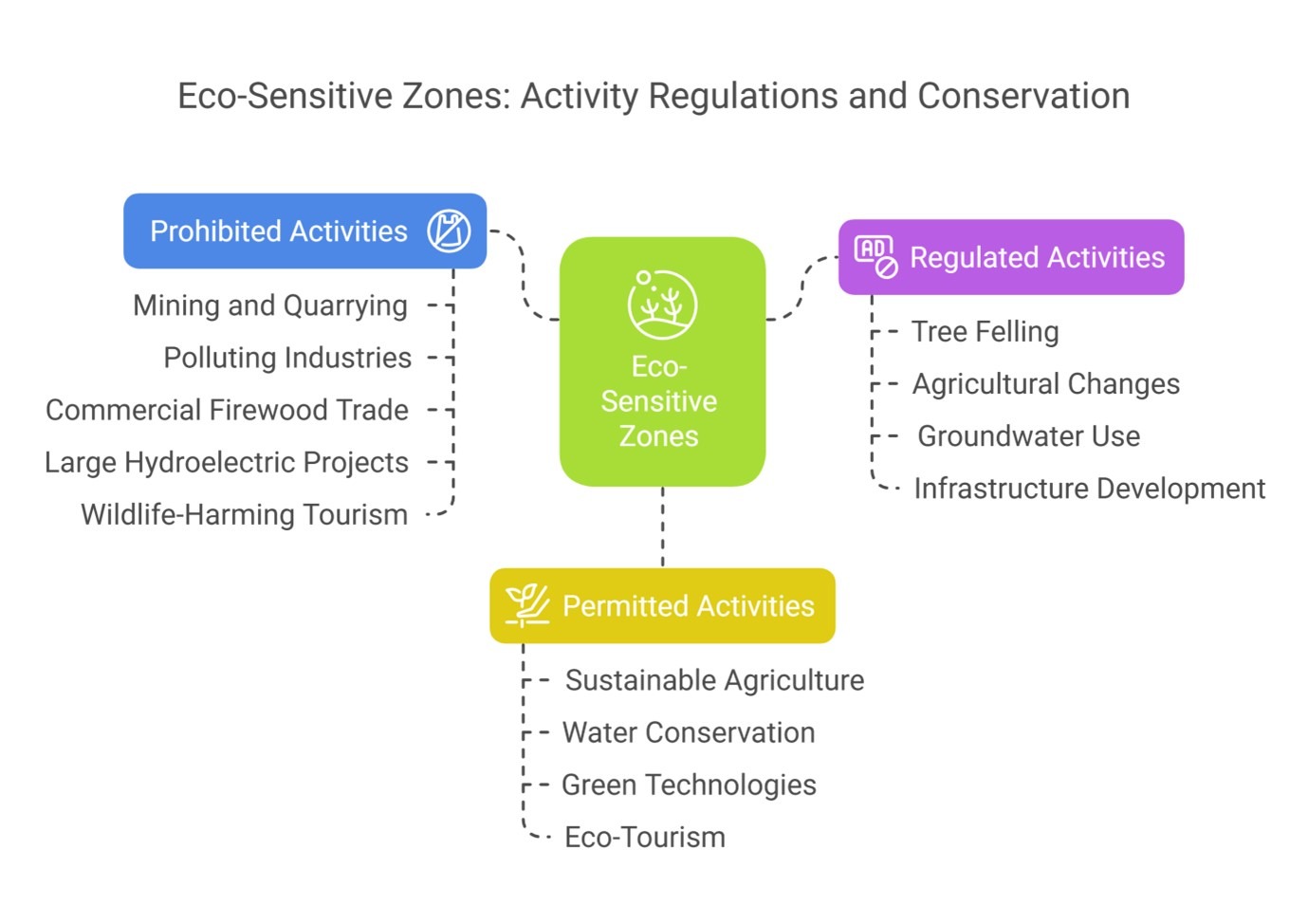
Eco-Sensitive Zones operate under a tiered system of activity restrictions, ensuring conservation while allowing limited sustainable use of natural resources.
1. Prohibited Activities (Strictly Banned in ESZs)
Certain industrial and commercial activities are entirely banned due to their destructive environmental impact. These include:
- Mining and Quarrying: Extraction of minerals, sand mining, and stone crushing.
- Polluting Industries: Factories releasing hazardous chemicals, effluents, and pollutants.
- Commercial Firewood Trade: Large-scale logging and sale of firewood.
- Large Hydroelectric Projects: Dams and power plants that disrupt riverine ecosystems.
- Tourism Activities that Harm Wildlife: Aircraft flights over protected areas, adventure tourism with high ecological impact.
2. Regulated Activities (Allowed with Restrictions and Environmental Clearance)
Certain activities are permitted under strict supervision to ensure they do not harm the ecological balance:
- Tree Felling: Only for forest management purposes and with government approval.
- Agricultural Changes: Shifting from traditional farming to commercial agriculture is monitored to prevent excessive deforestation.
- Groundwater Use: Regulated to prevent over-extraction and depletion of water resources.
- Infrastructure Development: The establishment of hotels, resorts, and small-scale industries requires environmental assessments and clearances.
3. Permitted Activities (Encouraged for Sustainable Development)
Some environmentally friendly activities are actively promoted to support conservation and local livelihoods, including:
- Sustainable Agriculture: Organic farming, traditional crop cultivation, and permaculture.
- Water Conservation: Rainwater harvesting, check dams, and watershed management.
- Green Technologies: Adoption of solar, wind, and hydro energy for power generation.
- Eco-Tourism: Community-led sustainable tourism initiatives that generate income without harming ecosystems.
Significance of Eco-Sensitive Zones
Eco-Sensitive Zones serve as a bridge between conservation and sustainable development, offering numerous benefits:
1. Conservation of Biodiversity
- Protects endangered and endemic species by preventing habitat destruction.
- Ensures the long-term survival of ecosystems adjacent to protected areas.
2. Prevention of Habitat Fragmentation
- Maintains connectivity between forests, wetlands, and wildlife corridors, allowing free movement of species.
- Reduces urban sprawl and unplanned development near protected areas.
3. Sustainable Development and Livelihood Generation
- Encourages eco-friendly industries, providing jobs without harming the environment.
- Supports indigenous communities and local populations through regulated access to resources.
4. Reduction of Human-Wildlife Conflict
- Controls unregulated human encroachments, reducing incidents of animal attacks in villages.
- Provides alternative economic opportunities that discourage illegal poaching and deforestation.
Examples of Prominent Eco-Sensitive Zones in India
1. Western Ghats ESZ (Maharashtra, Goa, Karnataka, Kerala, Tamil Nadu):
- Home to UNESCO-listed biodiversity hotspots, crucial for monsoon regulation and endemic species conservation.
2. Sundarbans ESZ (West Bengal):
- Protects mangrove forests and the Royal Bengal Tiger habitat.
3. Jim Corbett National Park ESZ (Uttarakhand):
- Regulates eco-tourism and sustainable agriculture in surrounding villages.
4. Kaziranga National Park ESZ (Assam):
- Reduces flood impact and controls tourism-related environmental degradation.
5. Great Himalayan National Park ESZ (Himachal Pradesh):
- Prevents overgrazing and unsustainable land-use practices in alpine meadows.
Challenges in Implementing Eco-Sensitive Zones
Despite their critical role, ESZs face several implementation challenges, including:
- Resistance from Local Communities: Restrictions on agriculture and resource use can lead to opposition.
- Illegal Activities: Encroachments, poaching, and deforestation remain concerns in some regions.
- Lack of Enforcement: Weak regulatory oversight can lead to violations of ESZ guidelines.
- Conflicting Interests: Development pressures and industrial projects often clash with conservation goals.
Conservation Reserves:
Conservation Reserves are legally designated protected areas established by State Governments to conserve biodiversity, wildlife habitats, and ecological corridors. These reserves act as buffer zones between highly protected regions such as National Parks and Wildlife Sanctuaries and areas under human use, ensuring a harmonious balance between conservation and sustainable development.
Legal Framework and Authority
Under the Wildlife (Protection) Act, 1972, State Governments have the authority to designate Conservation Reserves within territories they own, particularly in areas that:
- Lie adjacent to existing National Parks or Wildlife Sanctuaries.
- Function as wildlife corridors, linking two or more protected areas.
- Hold ecological, biological, or environmental significance.
A key feature of Conservation Reserves is that their designation must involve discussions with local communities, forest dwellers, and other stakeholders to ensure participatory conservation efforts. This distinguishes them from National Parks and Wildlife Sanctuaries, where stricter legal restrictions apply.
Objectives and Significance of Conservation Reserves
The primary goal of Conservation Reserves is to ensure that natural habitats are safeguarded while promoting community engagement in conservation efforts. These reserves play an essential role in:
1. Providing Buffer Zones for Highly Protected Areas
- Conservation Reserves serve as transition zones between protected areas and human settlements, preventing abrupt habitat fragmentation.
- They help in reducing human-wildlife conflicts by ensuring a designated ecological corridor for species movement.
2. Ensuring the Protection of Wildlife Corridors
- Many migratory species rely on interconnected ecosystems to move between different regions for food, breeding, and seasonal survival.
- Conservation Reserves act as linkages between National Parks and Wildlife Sanctuaries, ensuring uninterrupted movement of wildlife populations.
3. Encouraging Community Participation in Conservation
- Unlike National Parks and Wildlife Sanctuaries, Conservation Reserves are managed with the direct involvement of local communities.
- Traditional conservation knowledge and sustainable resource management practices from indigenous communities are integrated into wildlife protection strategies.
- The establishment of reserves often benefits local economies through eco-tourism, afforestation, and alternative livelihood programs.
4. Preventing Unregulated Land-Use Changes
- Conservation Reserves ensure that ecologically sensitive regions do not fall prey to unregulated urbanization, deforestation, or industrial expansion.
- They preserve native flora and fauna while allowing low-impact economic activities, such as regulated tourism and scientific research.
Management and Governance of Conservation Reserves
1. Community and Government Collaboration
- Unlike National Parks and Wildlife Sanctuaries, where management is exclusively under government authorities, Conservation Reserves involve local communities and NGOs in decision-making.
- State Wildlife Boards and Conservation Committees oversee management efforts, ensuring that policies align with conservation objectives and community interests.
2. Flexible Protection Measures
- While hunting, poaching, and industrial activities remain strictly prohibited, Conservation Reserves allow for certain regulated, sustainable activities that do not harm the ecological balance.
- Ecotourism, controlled grazing, and organic farming may be permitted under specific guidelines to support local livelihoods.
3. Scientific Research and Biodiversity Monitoring
- Conservation Reserves serve as research hubs where scientists, environmentalists, and policymakers can study climate change impacts, species behavior, and ecological interactions.
- Regular biodiversity monitoring helps track the health of ecosystems and implement necessary conservation measures.
Examples of Notable Conservation Reserves in India
Several states in India have proactively designated Conservation Reserves to enhance their network of protected areas. Some notable examples include:
1. Asola Bhatti Wildlife Sanctuary (Delhi-Haryana Border)
- Serves as a crucial green buffer zone between Delhi’s urban sprawl and the Aravalli Hills, preserving biodiversity amidst rapid urbanization.
2. Thane Creek Flamingo Conservation Reserve (Maharashtra)
- Protects wetland ecosystems and migratory bird habitats, particularly for flamingos, herons, and storks.
3. Barak Bhuban Conservation Reserve (Assam)
- Home to several threatened primate species, including the Hoolock Gibbon, India’s only ape species.
4. Dihing Patkai Conservation Reserve (Assam)
- Preserves the lowland tropical rainforests of Assam, acting as an essential ecological corridor for elephants and big cats.
5. Sorsan Conservation Reserve (Rajasthan)
- A vital habitat for endangered birds like the Great Indian Bustard, contributing to bird conservation efforts.
Challenges in Implementing Conservation Reserves
Despite their importance, Conservation Reserves face multiple challenges in effective implementation and management:
1. Lack of Awareness and Community Involvement:
- Many local communities are unaware of the ecological importance of these reserves, leading to low participation in conservation programs.
2. Human-Wildlife Conflict:
- Conservation Reserves, being buffer areas, often experience conflicts between wildlife and local populations, particularly in agriculture-dependent villages.
3. Deforestation and Encroachment:
- Illegal land encroachment, unsustainable farming practices, and grazing pressure threaten the ecological balance of many reserves.
4. Insufficient Funding and Infrastructure:
- Unlike National Parks and Wildlife Sanctuaries, Conservation Reserves do not always receive adequate financial support for management and monitoring.
5. Weak Law Enforcement:
- While legal provisions exist, enforcement of conservation laws remains inconsistent, leading to illegal logging, poaching, and habitat destruction.
Way Forward: Strengthening Conservation Reserves
To maximize the effectiveness of Conservation Reserves, governments, conservationists, and local communities must work together to:
1. Increase Awareness and Capacity Building
- Conduct educational programs, training sessions, and awareness campaigns to involve local communities in conservation efforts.
2. Improve Financial and Technical Support
- Provide better funding, advanced monitoring technologies, and infrastructure for conservation projects.
3. Implement Sustainable Development Practices
- Promote eco-tourism, sustainable agriculture, and afforestation programs to balance conservation with economic needs.
4. Strengthen Wildlife Corridors and Habitat Connectivity
- Ensure that Conservation Reserves effectively link protected areas, allowing species to move freely and maintain genetic diversity.
5. Enhance Law Enforcement and Community Participation
- Empower local governance bodies and forest protection teams to monitor and prevent illegal activities in these reserves.
Community Reserves and Sacred Groves: Preserving India’s Ecological and Cultural Heritage
India is home to a diverse range of protected areas, each playing a unique role in wildlife conservation and ecosystem preservation. Among these, Community Reserves and Sacred Groves stand out as examples of community-driven conservation efforts, blending traditional wisdom, ecological responsibility, and sustainable resource management.
Community Reserves: A Model of Participatory Conservation
What Are Community Reserves?
Community Reserves are protected areas established on private or community-owned lands, where individuals, villages, or local organizations have voluntarily pledged to conserve wildlife and its habitat. These reserves bridge the gap between government-protected areas and local conservation initiatives, fostering greater participation from non-governmental stakeholders.
Legal Framework and Governance
Community Reserves were introduced under the Wildlife (Protection) Act, 1972, through an amendment in 2002. State Governments have the authority to designate such reserves, but only on lands where:
- The landowners or local communities voluntarily agree to conservation efforts.
- The land is not already included within the boundaries of a National Park, Wildlife Sanctuary, or Conservation Reserve.
Once designated, Community Reserves receive legal protection, and no changes in land use can occur without governmental approval. However, the rights of individuals residing within these reserves remain unaffected, ensuring a balance between conservation and livelihood needs.
The State Government appoints a Community Reserve Management Committee, comprising local community members, to oversee the administration, sustainable development, and protection of the reserve.
Objectives and Importance of Community Reserves
1. Strengthening Conservation Outside Government-Managed Protected Areas
- Many ecologically rich landscapes fall outside the jurisdiction of National Parks and Wildlife Sanctuaries. Community Reserves ensure biodiversity protection in such unprotected zones.
2. Encouraging Local Participation in Conservation
- Unlike government-designated National Parks and Sanctuaries, Community Reserves empower local stakeholders to actively participate in wildlife protection, reducing the dependency on state interventions.
3. Preventing Habitat Fragmentation and Wildlife Corridors
- Many Community Reserves are located near wildlife corridors and function as connecting zones between protected areas. This helps in the uninterrupted movement of species, thereby maintaining genetic diversity.
4. Promoting Eco-Tourism and Sustainable Livelihoods
- Well-managed Community Reserves create alternative income opportunities for local communities through eco-tourism, sustainable forestry, and handicraft production.
Examples of Community Reserves in India
1. Kangchup Community Reserve (Manipur)
- A critical corridor for biodiversity conservation in Northeast India, particularly benefiting rare and endangered species.
2. Lengteng Community Reserve (Mizoram)
- Helps in the conservation of the Hoolock Gibbon and other species native to the region.
3. Chopta-Chen Community Reserve (Arunachal Pradesh)
- Home to rare orchids, Red Pandas, and Musk Deer, playing a significant role in biodiversity conservation.
4. Phawngpui Community Reserve (Mizoram)
- Protects unique cloud forest ecosystems and endemic flora and fauna.
Sacred Groves: India’s Ancient Conservation Tradition
What Are Sacred Groves?
Sacred Groves are patches of forests that have been protected for centuries by local communities due to religious, spiritual, or cultural beliefs. These forests often serve as repositories of biodiversity, containing many rare and endemic species of plants and animals.
Sacred Groves are often associated with deities, ancestral spirits, or local myths, leading to strict community-imposed restrictions on tree felling, hunting, and land conversion. These groves serve as one of the oldest forms of forest conservation in India.
Cultural and Ecological Importance of Sacred Groves
1. Biodiversity Hotspots and Genetic Reservoirs
- Many Sacred Groves preserve rare plant species that may no longer be found in larger forested landscapes due to deforestation.
- They shelter endangered animals, birds, and medicinal plants, serving as miniature biodiversity reserves.
2. Source of Traditional Knowledge and Herbal Medicine
- Many indigenous communities have deep-rooted knowledge of medicinal plants within Sacred Groves, which are used for traditional healing practices.
3. Climate Regulation and Watershed Protection
- Sacred Groves play an essential role in carbon sequestration, water conservation, and soil preservation, reducing the effects of climate change.
4. Spiritual and Religious Significance
- These groves are considered abodes of deities or ancestral spirits, and their protection is seen as a religious duty among many indigenous groups.
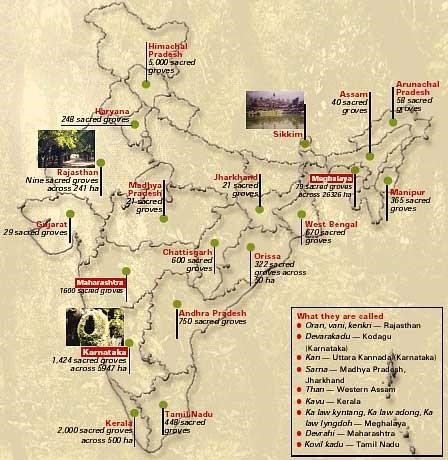
Sacred Groves Across India
1. Khasi and Jaintia Hills, Meghalaya
- The Khasi and Jaintia tribes have conserved hundreds of Sacred Groves, some dating back over a thousand years.
- Example: Mawphlang Sacred Grove, a biodiversity hotspot.
2. Aravalli Hills, Rajasthan
- Sacred Groves such as those in Jaisalmer and Alwar are protected by local communities and Rajput clans.
- The Bishnoi community has been at the forefront of conservation, famously sacrificing lives to protect Khejri trees.
3. Western Ghats (Karnataka and Maharashtra)
- The Western Ghats host numerous Sacred Groves, locally called “Devarakadus” in Karnataka and “Devrais” in Maharashtra.
- Example: Amrith Mahal Kaval Sacred Grove, Karnataka.
4. Chanda and Bastar Regions, Chhattisgarh
- The Gond and Baiga tribal communities conserve Sacred Groves as spiritual centers dedicated to nature deities.
Challenges Faced by Community Reserves and Sacred Groves
Despite their ecological and cultural significance, Community Reserves and Sacred Groves face several challenges:
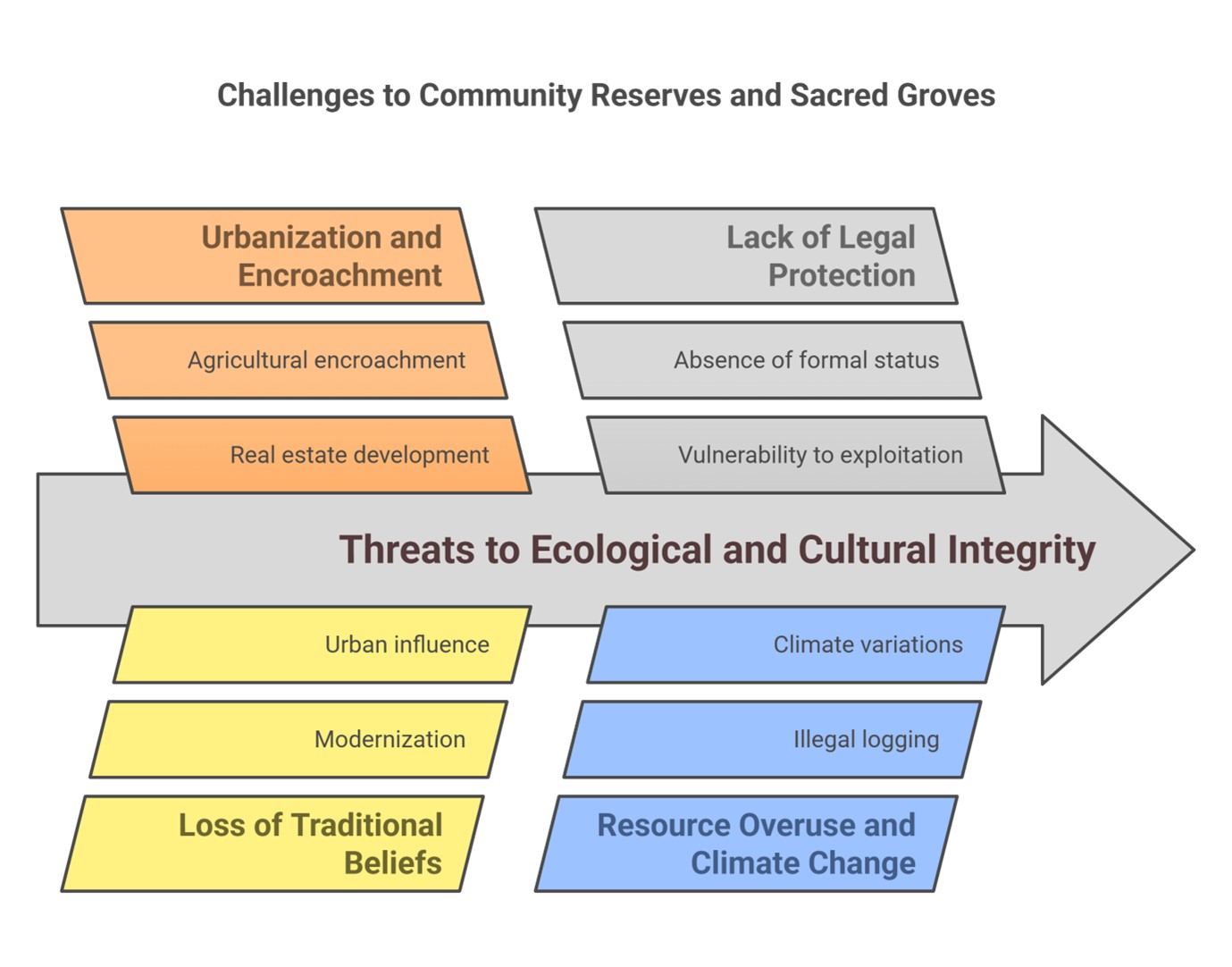
1. Urbanization and Encroachment
- Many Sacred Groves are rapidly disappearing due to real estate development, road expansion, and agricultural encroachment.
2. Loss of Traditional Beliefs
- Modernization and urban influence have led to a decline in traditional conservation ethics, causing degradation of these groves.
3. Lack of Legal Protection for Sacred Groves
- Unlike Community Reserves, most Sacred Groves do not have formal legal status, leaving them vulnerable to deforestation and resource exploitation.
4. Resource Overuse and Climate Change
- Illegal logging, overgrazing, and climate variations threaten the long-term sustainability of both Sacred Groves and Community Reserves.
Way Forward: Strengthening Community Conservation Efforts
To ensure the long-term survival of Community Reserves and Sacred Groves, proactive measures need to be taken:
1. Recognizing Sacred Groves as Legally Protected Areas
- Government policies should include Sacred Groves under conservation programs, offering them legal protection against destruction.
2. Promoting Eco-Tourism and Sustainable Livelihoods
- Developing community-led eco-tourism projects can provide economic incentives for conservation while educating visitors about biodiversity and cultural heritage.
3. Strengthening Community Rights and Traditional Practices
- Conservation strategies should focus on empowering local communities, integrating traditional ecological knowledge into modern conservation frameworks.
4. Creating Awareness and Educational Initiatives
- Awareness campaigns and school programs should educate younger generations about the significance of Sacred Groves and Community Reserves, ensuring their cultural and ecological preservation.
Ex Situ Conservation:
Ex-Situ Conservation: Preserving Biodiversity Beyond Natural Habitats
Ex-situ conservation is a vital strategy for the preservation of threatened, endangered, and rare species by removing them from their natural ecosystems and safeguarding them in controlled environments. This method plays a complementary role to in-situ conservation (protecting species within their natural habitats) by preventing extinction, restoring populations, and ensuring genetic diversity for future generations.
What is Ex-Situ Conservation?
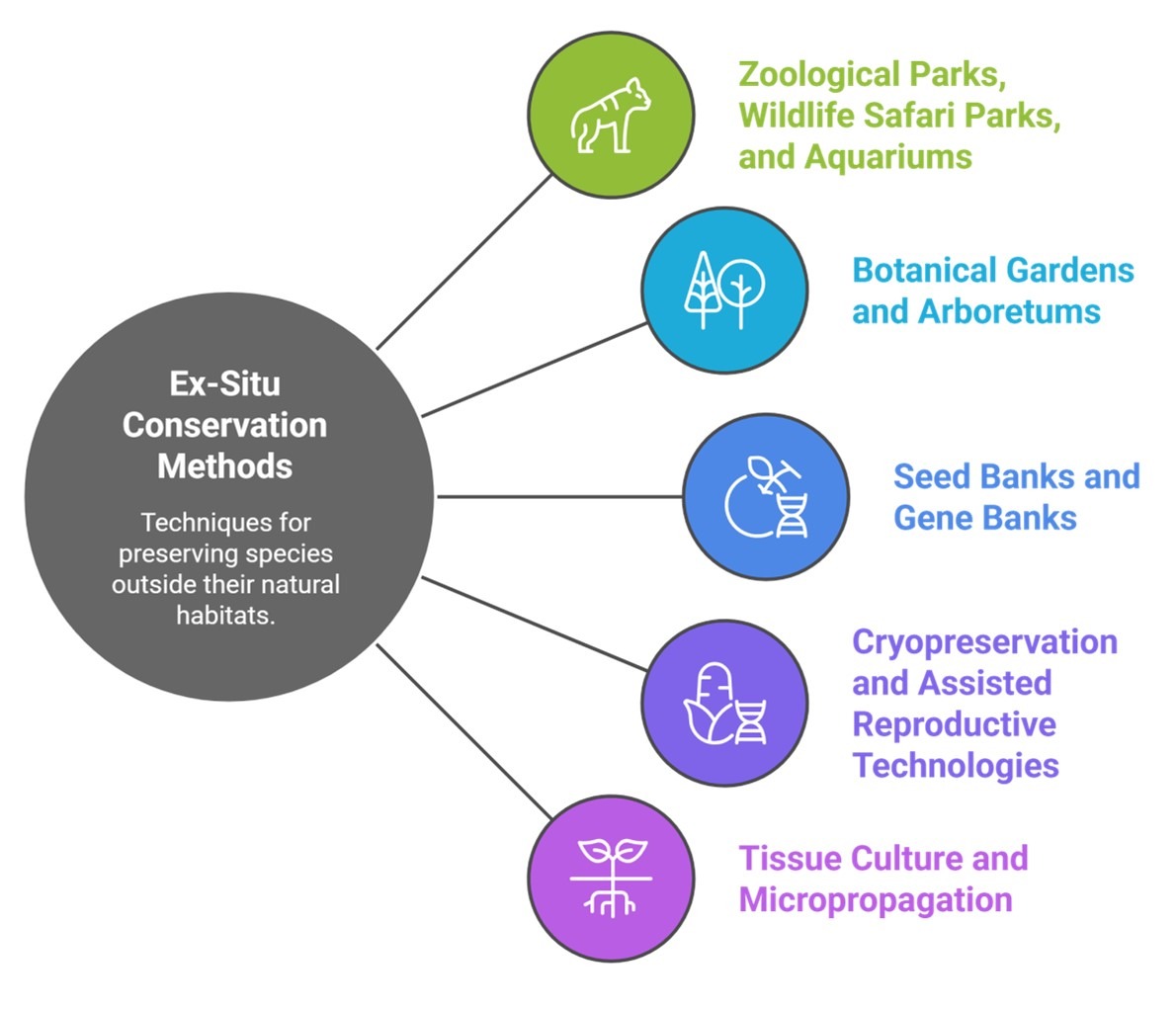
Ex-situ conservation involves the relocation of plants, animals, and genetic materials from their native habitats to protected settings, where they receive specialized care, breeding support, and protection from environmental threats such as deforestation, climate change, poaching, and habitat destruction. These protected settings include:
1. Zoological Parks and Wildlife Safari Parks
2. Botanical Gardens and Arboretums
3. Seed Banks and Gene Banks
4. Cryopreservation Facilities
5. Captive Breeding and Assisted Reproduction Programs
6. Aquariums and Marine Conservation Centers
Importance of Ex-Situ Conservation
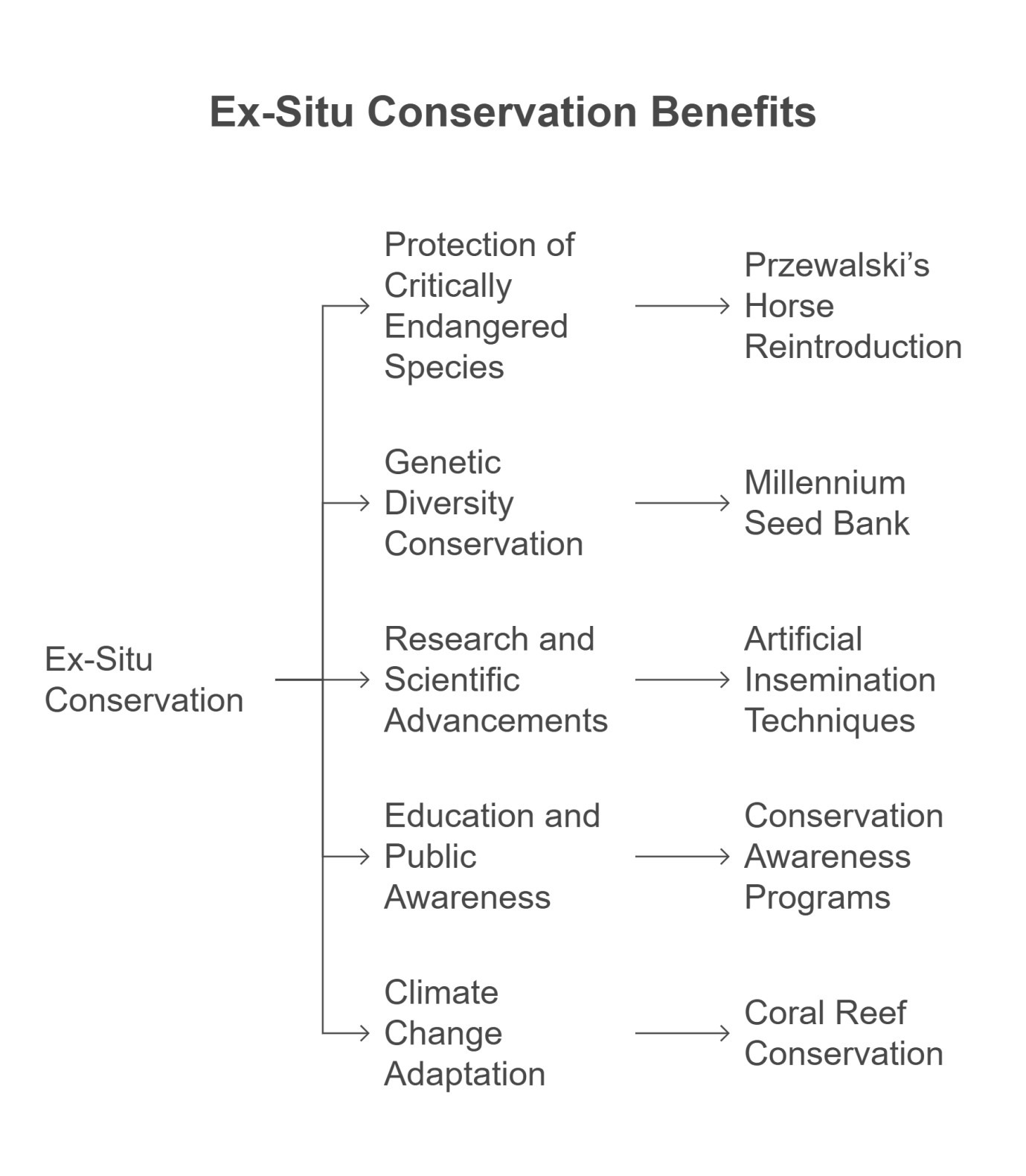
1. Protection of Critically Endangered and Extinct-in-the-Wild Species
- Ex-situ conservation serves as a lifeline for species facing imminent extinction in the wild.
- Example: The Przewalski’s Horse, once extinct in the wild, has been successfully bred in captivity and reintroduced into its native range in Mongolia.
2. Genetic Diversity Conservation for Future Restoration
- Preserving genetic material in gene banks and seed vaults ensures that species retain genetic variability, reducing the risk of inbreeding and extinction.
- Example: The Millennium Seed Bank (UK) and India’s National Gene Bank at ICAR-NBPGR (Delhi) safeguard commercially valuable and endangered plant species for future use.
3. Research and Scientific Advancements
- Ex-situ conservation provides opportunities for scientific studies on genetics, behavior, and reproduction, leading to better conservation strategies.
- Example: Artificial insemination, in-vitro fertilization (IVF), and tissue culture techniques are used for the reproduction of threatened species.
4. Education and Public Awareness
- Zoos, botanical gardens, and aquariums serve as platforms for educating the public about biodiversity, conservation challenges, and ecological importance.
- Example: The Arignar Anna Zoological Park (Vandalur Zoo, Tamil Nadu) runs conservation awareness programs on endangered species like the Lion-tailed Macaque and White Tiger.
5. Climate Change Adaptation and Disaster Recovery
- In cases of climate-induced habitat destruction, forest fires, and disease outbreaks, ex-situ conservation provides a backup for restoring species populations.
- Example: Coral reef conservation programs protect coral species from bleaching due to rising ocean temperatures.
Key Methods of Ex-Situ Conservation
1. Zoological Parks, Wildlife Safari Parks, and Aquariums
- Zoos and safari parks play a crucial role in the captive breeding of endangered species, reintroducing them into the wild when conditions permit.
- Aquariums help conserve marine and freshwater species, particularly those affected by pollution, overfishing, and habitat degradation.
- Examples:
- The Padmaja Naidu Himalayan Zoological Park (Darjeeling) specializes in Snow Leopard conservation.
- The Mysore Zoo is involved in breeding programs for the Gaur (Indian Bison) and Indian Elephant.
- Marine aquariums in Chennai and Visakhapatnam focus on the conservation of rare marine species like corals and seahorses.
2. Botanical Gardens and Arboretums
- Botanical gardens house and cultivate rare and endangered plant species, ensuring their survival outside natural habitats.
- Arboretums specialize in the conservation of tree species, often playing a role in forest restoration projects.
- Examples:
- The Indian Botanical Garden (Howrah, West Bengal) conserves over 12,000 plant species, including the Great Banyan Tree.
- The Lalbagh Botanical Garden (Bangalore) specializes in rare medicinal and ornamental plants.
3. Seed Banks and Gene Banks
- Seed banks store the seeds of rare, economically valuable, and climate-resilient plants, safeguarding genetic resources for future agricultural and ecological restoration efforts.
- Examples:
- The National Gene Bank at ICAR-NBPGR (Delhi) preserves over 400,000 accessions of crop and plant species.
- The Millennium Seed Bank (UK) houses billions of seeds from around the world.
- The Svalbard Global Seed Vault (Norway) stores genetic material for global food security.
4. Cryopreservation and Assisted Reproductive Technologies
- Cryopreservation involves storing seeds, embryos, gametes (sperm and eggs), and plant tissues at ultra-low temperatures for long-term conservation.
- Assisted reproductive technologies (ARTs), such as IVF, artificial insemination, and cloning, are used to conserve species with declining populations.
- Examples:
- The Frozen Zoo (San Diego, USA) preserves genetic material of endangered animals like the Northern White Rhino.
- India’s National Bureau of Animal Genetic Resources (NBAGR, Haryana) works on embryo transfer and cryogenic conservation of indigenous cattle breeds.
5. Tissue Culture and Micropropagation
- Tissue culture (cloning) allows for the rapid multiplication of endangered plant species in laboratories.
- Micropropagation techniques help restore rare medicinal plants and tree species.
- Examples:
- The Institute of Forest Genetics and Tree Breeding (Coimbatore) uses tissue culture for teak and sandalwood conservation.
- The Central Institute of Medicinal and Aromatic Plants (CIMAP, Lucknow) cultivates endangered medicinal herbs using micropropagation.
Challenges of Ex-Situ Conservation
1. High Costs and Resource Requirements
- Maintaining large ex-situ facilities, breeding programs, and gene banks requires substantial financial investment and expertise.
2. Limited Space and Ethical Concerns
- Some species do not adapt well to captivity, leading to behavioral changes, stress, and reduced survival rates.
3. Risk of Genetic Bottlenecks
- Long-term breeding in small captive populations may lead to reduced genetic diversity, affecting species’ ability to adapt to changing environments.
4. Reintroduction Challenges
- Many captive-bred animals struggle to survive in the wild due to lack of natural survival skills, habitat loss, and human-wildlife
National Initiatives:
Wildlife Mitigation Measures and Conservation Efforts in India
- India, home to diverse ecosystems and rich biodiversity, has undertaken various wildlife mitigation measures to protect its natural habitats and reduce human-wildlife conflicts. The increasing expansion of infrastructure, such as highways and agricultural land, has fragmented wildlife corridors, posing threats to species survival. Among the significant initiatives aimed at mitigating these threats are eco-bridges, quarantine centers for invasive species control, and conservation efforts for critical biodiversity hotspots like the Western and Eastern Ghats.
Eco-Bridges: Wildlife Corridors for Safe Passage
Eco-bridges, including wildlife overpasses, underpasses, canopy bridges, and tunnels, are crucial for reducing habitat fragmentation caused by roads, railways, and other infrastructure. These structures allow wildlife to move safely between habitat patches, ensuring genetic exchange and reducing roadkill incidents.
Implementation of Eco-Bridges in India
- Several eco-bridges are currently under construction and operation along key wildlife corridors in India. National Highway 44, which runs through Kanha, Satpura, Pench, Bandhavgarh, and Panna Tiger Reserves, features multiple eco-bridges to facilitate wildlife movement.
Types of Eco-Bridges
- Different wildlife species require different structures for safe movement:
- Canopy Bridges
- Designed primarily for arboreal (tree-dwelling) species such as monkeys, squirrels, and tree frogs.
- Constructed using ropes, wooden planks, or natural vines to mimic the natural canopy.
- Example: Nagpur-Pench corridor canopy bridge, aiding movement of giant squirrels and langurs.
Concrete Underpasses, Overpasses, and Viaducts
- Built to accommodate large terrestrial animals such as tigers, leopards, elephants, and deer.
- Vegetation-covered overpasses allow seamless integration with the natural landscape.
- Example: Wildlife underpasses on NH-7 in Madhya Pradesh and Maharashtra, crucial for tiger movement between Pench and Kanha reserves.
Amphibian Tunnels and Culverts
- Small tunnels designed beneath roads to facilitate the movement of frogs, toads, salamanders, and small reptiles.
- Help prevent road mortality, especially in monsoon-prone areas where amphibians migrate for breeding.
- Example: Karnataka’s Western Ghats amphibian tunnels safeguarding endemic frog species.
Benefits of Eco-Bridges
✅ Reduces roadkill incidents and enhances wildlife safety.
✅ Maintains genetic diversity by enabling species migration and reproduction.
✅ Prevents human-wildlife conflict, particularly in elephant corridors.
✅ Supports ecological balance by allowing natural movement of species.
Quarantine Centres for Preventing Invasive Species
Invasive species pose a significant threat to India’s native biodiversity, often outcompeting or preying on indigenous species. To control their spread, India has established quarantine centres at major airports, seaports, and railway stations to inspect imported plants, animals, and agricultural products.
Functioning of Quarantine Centres
- India’s plant quarantine centres operate under the Central Board of Indirect Taxes and Customs, in coordination with the Directorate of Plant Protection and Quarantine Storage (DPPQS). Their primary objectives are:
- Regulating agricultural imports under the Destructive Insects and Pests Act, 1914.
Ensuring imported crops and plants are free from pests, pathogens, and weeds.
Issuing phytosanitary certification for agricultural products.
Phytosanitary Certification Process
- Customs officials verify phytosanitary certificates issued by exporting countries, confirming products are free of pests.
- DPPQS testing ensures imported goods comply with India’s agricultural safety norms.
- Uncertified products undergo fumigation with methyl bromide before clearance.
Challenges in Quarantine Management
- Only 50% of quarantine centres are fully operational, while others lack staff or adequate infrastructure.
- Customs often bypass quarantine procedures, leading to unchecked agricultural imports (e.g., Nepal’s ban on uncertified Indian agricultural imports after the Bihar encephalitis outbreak).
Security lapses at quarantine centres lead to product theft and smuggling. - Need for Improvement: Strengthening staff capacity, technological upgrades, and stringent enforcement is essential to prevent invasive species entry and safeguard India’s biodiversity.
Preservation of the Western and Eastern Ghats
Ecological Significance
- The Western and Eastern Ghats are among the most ecologically significant and biodiverse regions in India. These mountain ranges play a crucial role in:
- Biodiversity conservation (home to numerous endemic species).
Regulating monsoon patterns and acting as a watershed for major rivers.
Climate regulation and carbon sequestration through dense forests.
Threats to the Ghats
- Deforestation and habitat destruction due to urbanization and industrialization.
Unregulated tourism causing pollution, waste disposal, and ecological imbalance.
Illegal mining (e.g., iron ore mining in Goa) leading to deforestation and soil erosion.
Over-extraction of forest resources, including illegal logging of red sanders in the Eastern Ghats.
- Deforestation and habitat destruction due to urbanization and industrialization.
Western Ghats: A Global Biodiversity Hotspot
- Spread across six states (Kerala, Karnataka, Tamil Nadu, Goa, Maharashtra, Gujarat).
- Covers 1,64,280 sq km, designated a UNESCO World Heritage Site.
- One of the world’s eight “hottest hotspots” of biodiversity, with high species endemism.
Eastern Ghats: A Discontinuous and Fragile Ecosystem
- Spread across Odisha, Andhra Pradesh, Telangana, Karnataka, and Tamil Nadu.
- Covers ~75,000 sq km, intersected by major rivers like Godavari, Krishna, and Kaveri.
- Home to vulnerable species, such as the Golden Gecko and Jerdon’s Courser.
Gadgil Committee Recommendations (2011)
- The Western Ghats Ecology Expert Panel (WGEEP), chaired by Madhav Gadgil, proposed a bottom-up approach for conservation by designating 64% of the Western Ghats as Ecologically Sensitive Areas (ESA). Key recommendations:
- Three-zone classification (ESZ I, II, III):
- ESZ I (Most Sensitive): Ban on new dams, thermal power plants, and mining.
- ESZ II (Moderate Sensitivity): Strict environmental regulation for industries.
- ESZ III (Least Sensitive): Sustainable development allowed under guidelines.
- Ban on new mining and hydropower projects in ESZ I.
Zero-pollution compliance for existing industries by 2016.
Involvement of local communities in conservation planning.
Challenges in Implementation
❌ Resistance from state governments due to economic concerns.
❌ Conflicts between environmentalists and industrial stakeholders.
❌ Encroachment and deforestation continue despite protective measures.
Way Forward
✅ Enforcing sustainable tourism guidelines to prevent ecosystem degradation.
✅ Stronger implementation of ESA guidelines to prevent deforestation and mining.
✅ Active participation of local communities in conservation efforts.
- Kasturirangan Committee Recommendations: To balance development and conservation, the HLWG suggested declaring 37% of the Western Ghats as ESA, banning mining, quarrying, and thermal power plants while permitting restricted hydropower projects and small construction projects (<20,000 sq m).
- October 2018 Notification: ~57,000 sq km of the Western Ghats were notified as ESA, banning red-category industries, large-scale construction, and mining. Hydropower projects and orange-category industries were allowed with restrictions. However, delays in finalizing the notification led the NGT to set a March 2020 deadline, which remains unapproved.
Historic Citizen Movements:
Sundarlal Bahuguna: The Defender of the Himalayas
Sundarlal Bahuguna, a visionary environmentalist, social activist, and Gandhian thinker, dedicated his life to the protection of forests, rivers, and indigenous communities. Revered as the “Defender of the Himalayas” and “Environmental Gandhi,” Bahuguna’s relentless activism left an indelible mark on India’s environmental conservation movement. His philosophy was rooted in the belief that “Ecology is the permanent economy,” emphasizing the need for sustainable development that prioritizes environmental well-being over short-term economic gains.
Bahuguna played a pivotal role in several landmark environmental movements, most notably the Chipko Movement and the Anti-Tehri Dam protests. These movements not only challenged the destruction of natural resources but also laid the foundation for environmental policy reforms in India.
Chipko Movement: A Revolutionary Environmental Protest
Origins and Inspiration
The Chipko Movement originated in 1973 in the Upper Alaknanda Valley of Uttarakhand, as a response to rampant deforestation by logging companies. Inspired by the sacrifice of 363 Bishnois led by Amrita Devi in 1730, who protested against tree felling in Rajasthan, the Chipko Movement adopted a non-violent resistance strategy—villagers hugged trees (Chipko means ‘to hug’ in Hindi) to prevent them from being cut down.
Spread and Impact
- By the 1980s, the movement had spread across India, influencing national and state-level forest policies.
- The movement’s success led to a 15-year ban on commercial tree felling in Uttarakhand’s Himalayan forests in 1980.
- It raised awareness about deforestation, soil erosion, and the ecological importance of trees.
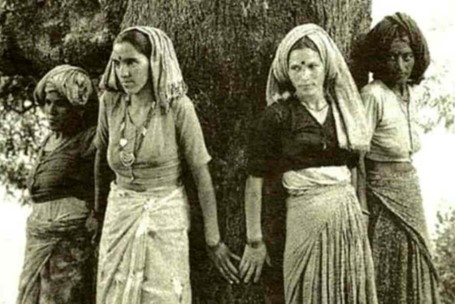
- Women played a central role—led by Gaura Devi, rural women mobilized entire villages, transforming Chipko into a women-led grassroots movement.
Women’s Role in the Chipko Movement
- Gaura Devi, a local leader, gathered women and children to stand against loggers in Reni village, Uttarakhand.
- Women became frontline defenders, preventing forest exploitation by physically embracing trees.
- The movement highlighted the connection between forests and women’s livelihoods, as deforestation led to water shortages, soil erosion, and loss of firewood.
- Chipko’s success in policy influence led to the recognition of community-driven conservation efforts and inspired similar movements across the country.
Appiko Movement: Extending Environmental Awareness to Southern India
- Inspired by Chipko’s success, the Appiko Movement emerged in Karnataka in 1983, led by Pandurang Hegde.
- The movement aimed to stop deforestation in the Western Ghats, an ecologically fragile biodiversity hotspot.
- Appiko followed similar methods as Chipko, with activists hugging trees and protesting against indiscriminate felling.
- It led to policy changes, promoting social forestry and sustainable management of natural resources in southern India.
Anti-Tehri Dam Protest: Fighting for River and Community Rights
- The Tehri Dam Project in Uttarakhand, one of India’s tallest and most controversial dams, was strongly opposed by Sundarlal Bahuguna due to its environmental and social consequences.
Key Concerns Raised by Bahuguna
- Submergence of villages—The dam displaced thousands of families, submerging the historic Tehri town.
- Threat to downstream communities—The dam posed risks of seismic activity and floods in the earthquake-prone region.
- Loss of biodiversity—Submerging vast tracts of land led to the destruction of forests and wildlife habitats.
- Water security issues—The diversion of rivers for hydropower affected water availability for agriculture and drinking needs.
Forms of Protest
- Bahuguna fasted for 74 days in 1995, drawing national and international attention to the destruction caused by the dam.
- He undertook a 5,000 km Himalayan march, advocating for sustainable development and alternative energy solutions.
- Despite his protests, the dam was eventually built, but his efforts led to greater environmental awareness and policy discussions on large-scale development projects.
Sundarlal Bahuguna’s Legacy and Recognition
A Champion of Sustainable Development
Sunderlal Bahuguna’s relentless activism played a pivotal role in shaping India’s eco-conscious policies, inspiring afforestation programs and strengthening environmental laws. His leadership in the Chipko Movement—where villagers, particularly women, hugged trees to prevent deforestation—brought global attention to the importance of ecological conservation. Bahuguna tirelessly advocated for the protection of the Himalayas, emphasizing the interdependence of human life and nature. His efforts influenced governmental initiatives, leading to reforestation drives and stricter regulations against deforestation.
Gandhian Philosophy in Environmentalism
Deeply inspired by Mahatma Gandhi’s principles of non-violence and self-reliance, Bahuguna integrated peaceful protest methods into environmental movements. His approach to activism—marked by fasting, silent marches, and grassroots mobilization—set a precedent for future conservation efforts in India and beyond. He championed the idea that protecting forests was not just about ecology but also about ensuring the survival of local communities dependent on them. His philosophy encouraged sustainable living, emphasizing the need to balance economic growth with environmental preservation.
International Recognition and Honors
Bahuguna’s dedication to environmental conservation earned him numerous prestigious awards:
- Padma Vibhushan (2009) – India’s second-highest civilian honor, recognizing his lifelong commitment to environmental protection.
- Right Livelihood Award (1984) – Often referred to as the ‘Alternative Nobel Prize,’ this award honored his extraordinary efforts in ecological sustainability and grassroots activism.
- Jamnalal Bajaj Award (1986) – Recognizing his contributions to rural development and environmental conservation, this award highlighted his role in advocating for sustainable policies.
Convention on Biological Diversity:
United Nations Convention on Biological Diversity (CBD)
The United Nations Convention on Biological Diversity (CBD) is a legally binding international treaty dedicated to the protection and sustainable management of the world’s biodiversity. It was first introduced during the Earth Summit in Rio de Janeiro in 1992 and officially came into effect in 1993. The treaty stands as a landmark global initiative aimed at addressing environmental challenges while promoting sustainable development.
Global Adoption and Membership
With the exception of the United States, all United Nations member states have ratified the convention, reflecting widespread global commitment to biodiversity conservation. Currently, the CBD has 196 Parties, comprising 195 countries and the European Union. Each Party to the convention has agreed to uphold and implement its principles, ensuring coordinated efforts in addressing biodiversity loss and fostering ecological sustainability.
Core Objectives of the Convention
The CBD is built on three fundamental pillars that guide global biodiversity policies and initiatives:
1. Conservation of Biological Diversity – Aiming to protect the vast variety of life forms on Earth, including species, ecosystems, and genetic resources. This involves measures such as habitat protection, wildlife conservation, and prevention of species extinction.
2. Sustainable Use of Biodiversity Components – Ensuring that biodiversity is utilized in a way that maintains ecological balance and meets the needs of both present and future generations. This principle promotes responsible land use, sustainable agriculture, and eco-friendly economic activities.
3. Fair and Equitable Sharing of Benefits Arising from Genetic Resources – Encouraging ethical and balanced access to genetic resources, such as medicinal plants and agricultural crops, while ensuring that the benefits derived from them—such as pharmaceuticals and biotechnology innovations—are shared fairly among all stakeholders, particularly indigenous communities and developing nations.
Impact and Global Significance
The CBD serves as a guiding framework for various international initiatives and national policies aimed at biodiversity conservation. It has inspired numerous agreements and protocols, including the Cartagena Protocol on Biosafety (2003) and the Nagoya Protocol on Access and Benefit-Sharing (2014). These complementary agreements strengthen regulations on biotechnology, genetic resources, and biodiversity protection.
Cartagena Protocol on Biosafety:
The Cartagena Protocol on Biosafety
The Cartagena Protocol on Biosafety is an international treaty linked to the Convention on Biological Diversity (CBD) that aims to ensure the safe handling, transportation, and use of living modified organisms (LMOs) derived from modern biotechnology. Established in 2000 and officially enforced in 2003, the protocol plays a crucial role in addressing the potential risks associated with biotechnology, particularly in relation to biodiversity, human health, and sustainable development.
Global Adoption and Participation
As of today, the protocol has been ratified by 173 Parties, demonstrating widespread global recognition of the importance of biosafety regulations. India is among the nations that have signed and ratified both the CBD and the Cartagena Protocol, reinforcing its commitment to sustainable biotechnology practices. The protocol was originally signed in Cartagena, Colombia, which is how it derives its name.
Key Objectives and Provisions
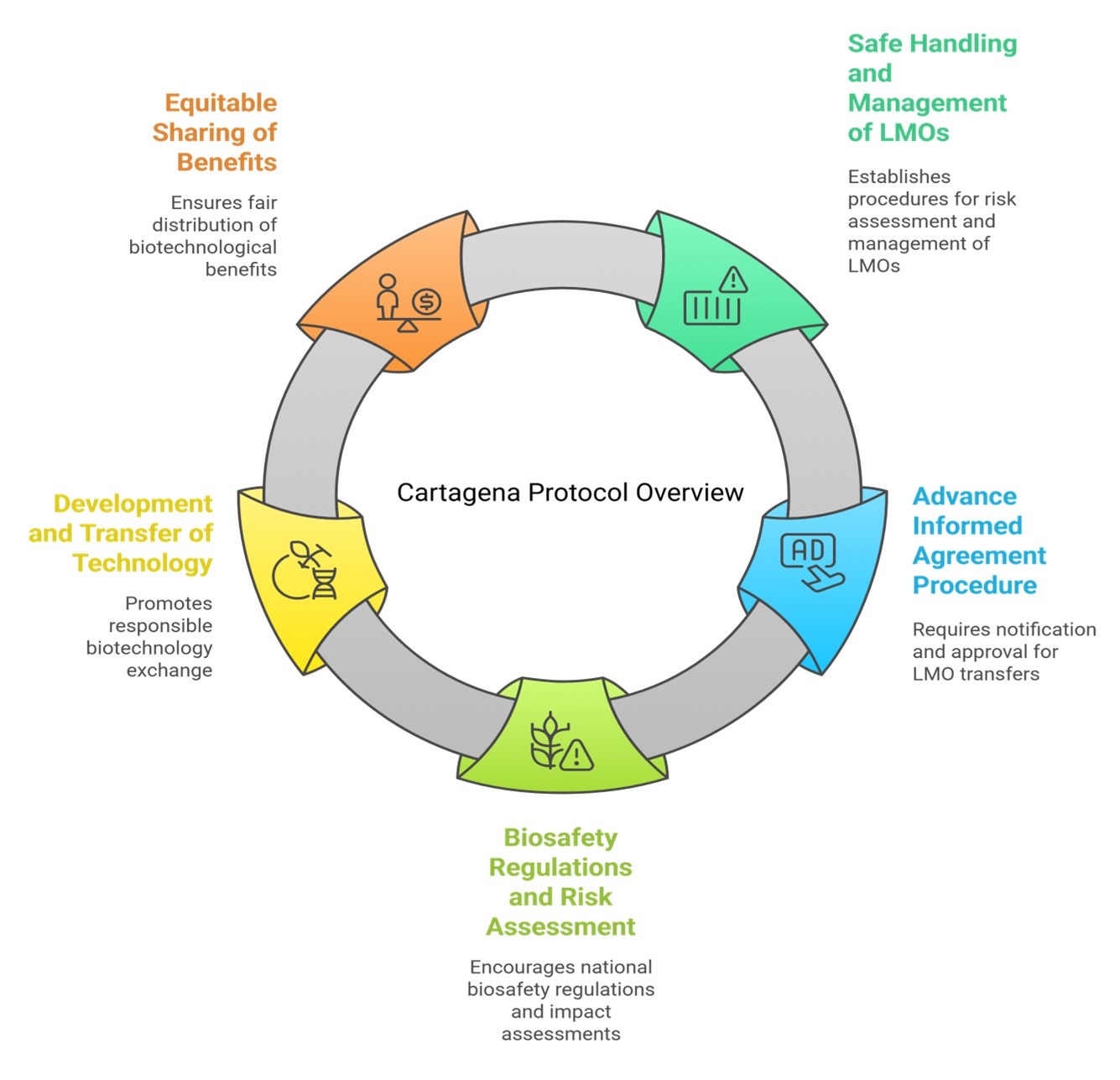
The Cartagena Protocol focuses on ensuring that the movement and utilization of LMOs do not pose risks to biological diversity or human health. The protocol operates under the precautionary principle, which means that even in the absence of complete scientific certainty, measures can be taken to prevent potential harm caused by LMOs. Its primary objectives include:
1. Safe Handling and Management of LMOs – Establishing clear procedures for assessing and managing the risks associated with the transfer, handling, and use of LMOs, particularly those intended for release into the environment, such as genetically modified crops.
2. Advance Informed Agreement (AIA) Procedure – Requiring exporting countries to notify and seek approval from importing countries before any first-time international transfer of LMOs intended for intentional introduction into the environment. This ensures that nations have the necessary information to make informed decisions.
3. Biosafety Regulations and Risk Assessment – Encouraging countries to develop and implement strict national biosafety regulations to assess the potential impacts of LMOs on biodiversity, ecosystems, and human health.
4. Development and Transfer of Technology – Promoting the exchange of scientific and technological advancements related to biotechnology while ensuring that they are applied in a responsible and environmentally sustainable manner.
5. Equitable Sharing of Benefits – Ensuring that the advantages derived from biotechnological innovations, including genetic resources, are distributed fairly among all stakeholders, particularly developing nations and indigenous communities.
Significance and Long-Term Impact
The Cartagena Protocol serves as a global framework for regulating biotechnology to safeguard biodiversity and human health. It has influenced national biosafety policies across various countries, encouraging the implementation of stringent laws governing genetic modifications and biotechnological research.
In addition, the protocol complements other international agreements, including the Nagoya-Kuala Lumpur Supplementary Protocol on Liability and Redress, which provides guidelines on legal responsibility and compensation in cases of damage resulting from LMOs.
Nagoya Protocol on Access and Benefit-sharing:
The Nagoya Protocol on Access and Benefit-Sharing
The Nagoya Protocol on Access to Genetic Resources and the Fair and Equitable Sharing of Benefits Arising from Their Utilization (ABS) is a landmark international agreement under the Convention on Biological Diversity (CBD). It was adopted during the 10th Conference of the Parties (COP10) to the CBD, held in Nagoya, Japan, in 2010, and officially entered into force in 2014.
The protocol aims to establish a transparent legal framework for the access and utilization of genetic resources, ensuring that benefits derived from their use—such as medicines, agricultural advancements, and scientific research—are shared fairly and equitably among all stakeholders. This agreement is particularly significant for biodiversity-rich nations and indigenous communities, as it protects their rights over biological resources and traditional knowledge.
Global Participation and India’s Role
The Nagoya Protocol currently has 137 signatory parties, including India, which has been a strong advocate for fair and ethical resource-sharing practices. By ratifying the protocol, these countries commit to implementing measures that promote responsible access to genetic resources while safeguarding the interests of indigenous populations and local communities that have historically conserved and utilized biodiversity.
Key Objectives and Provisions
As the second supplementary agreement to the CBD, the Nagoya Protocol reinforces one of the three primary goals of the convention:
1. Access to Genetic Resources – Establishing clear guidelines for countries and organizations seeking to use genetic materials from biodiversity-rich regions for research, industrial applications, or commercial purposes. Access must be based on prior informed consent (PIC) from the country or community providing the resource.
2. Fair and Equitable Sharing of Benefits – Ensuring that any financial gains, knowledge, or technological advancements arising from the use of genetic resources are fairly distributed to the countries and communities that provided them. This can take the form of monetary compensation, technology transfer, capacity-building programs, or scientific collaboration.
3. Traditional Knowledge Protection – Recognizing and respecting the role of indigenous peoples and local communities (IPLCs) in conserving genetic resources and traditional medicinal knowledge. The protocol emphasizes that their consent and participation must be secured before using their resources or knowledge.
4. Legal and Institutional Frameworks – Encouraging countries to develop national policies and regulations that align with the principles of the Nagoya Protocol, ensuring compliance at local, regional, and global levels.
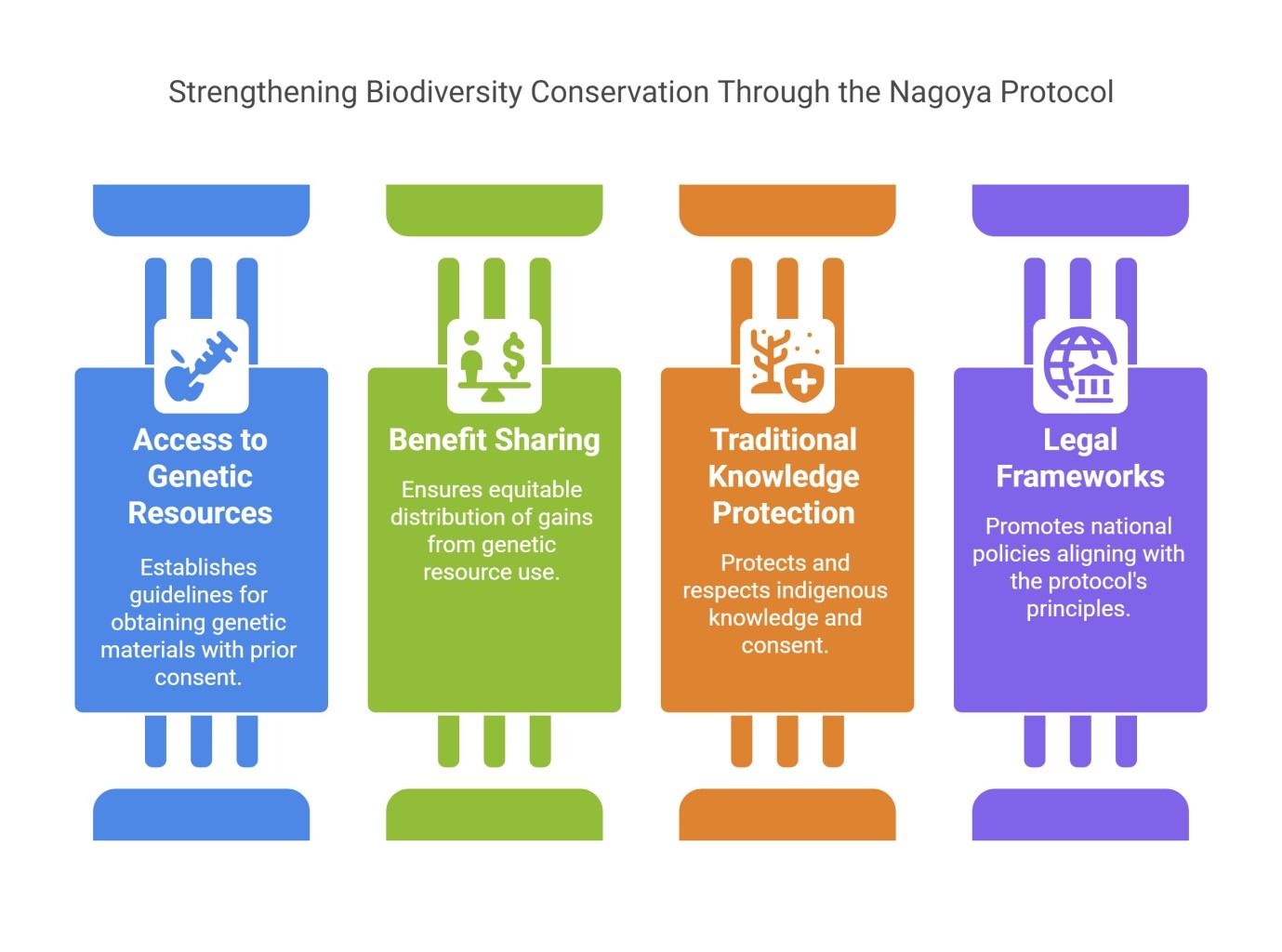
Impact and Long-Term Significance
The Nagoya Protocol is a crucial step toward ensuring justice and sustainability in biodiversity conservation. It prevents the exploitation of genetic resources by promoting ethical research and business practices while fostering international cooperation. Many pharmaceutical, agricultural, and biotechnology companies must now adhere to strict legal frameworks when utilizing biodiversity-based resources.
Additionally, the protocol supports the broader objectives of the United Nations Sustainable Development Goals (SDGs), particularly those related to biodiversity conservation, economic equity, and global partnerships.
By providing legal clarity and strengthening the rights of biodiversity-rich nations and indigenous communities, the Nagoya Protocol continues to be a driving force in fostering sustainable development, ethical bioprospecting, and global biodiversity conservation.
The International Treaty on Plant Genetic Resources for Food and Agriculture (PGRFA)
The International Treaty on Plant Genetic Resources for Food and Agriculture (PGRFA), commonly known as the International Seed Treaty, is a global agreement that aligns with the objectives of the Convention on Biological Diversity (CBD). This treaty plays a vital role in ensuring global food security by promoting the conservation, sustainable use, and equitable exchange of plant genetic resources essential for agriculture and human sustenance.
Adopted by the Food and Agriculture Organization (FAO) of the United Nations, the treaty aims to address challenges such as biodiversity loss, climate change, and the growing demand for resilient and high-yield crop varieties. It recognizes that agricultural biodiversity is a shared global resource that must be protected and utilized responsibly to sustain future generations.
Key Objectives of the Treaty
The International Seed Treaty is centered around several core principles that contribute to the long-term sustainability of global agriculture:
1. Conservation of Plant Genetic Resources – Ensuring the protection and preservation of diverse crop varieties and wild relatives of domesticated plants. This is critical for maintaining genetic diversity, which helps crops adapt to changing environmental conditions, pests, and diseases.
2. Facilitated Access and Exchange of Genetic Resources – Promoting global collaboration by enabling farmers, researchers, and plant breeders to access a vast pool of plant genetic materials for breeding improved crop varieties. This exchange is essential for developing crops that are more resistant to climate change, pests, and environmental stressors.
3. Sustainable Utilization of Plant Genetic Resources – Encouraging research, innovation, and agricultural practices that support sustainable farming systems while minimizing genetic erosion and habitat destruction.
4. Fair and Equitable Sharing of Benefits – Ensuring that the benefits derived from the use of plant genetic resources—such as new crop varieties, agricultural technologies, and economic profits—are shared fairly with the farmers and communities who have preserved these resources for generations. This includes royalty payments, capacity-building programs, and technology transfers to developing nations and indigenous communities.
5. Farmers’ Rights Protection – Recognizing and safeguarding the rights of farmers, particularly those in developing countries, to save, use, exchange, and sell farm-saved seeds. This provision empowers small-scale farmers by preserving traditional agricultural knowledge and practices.
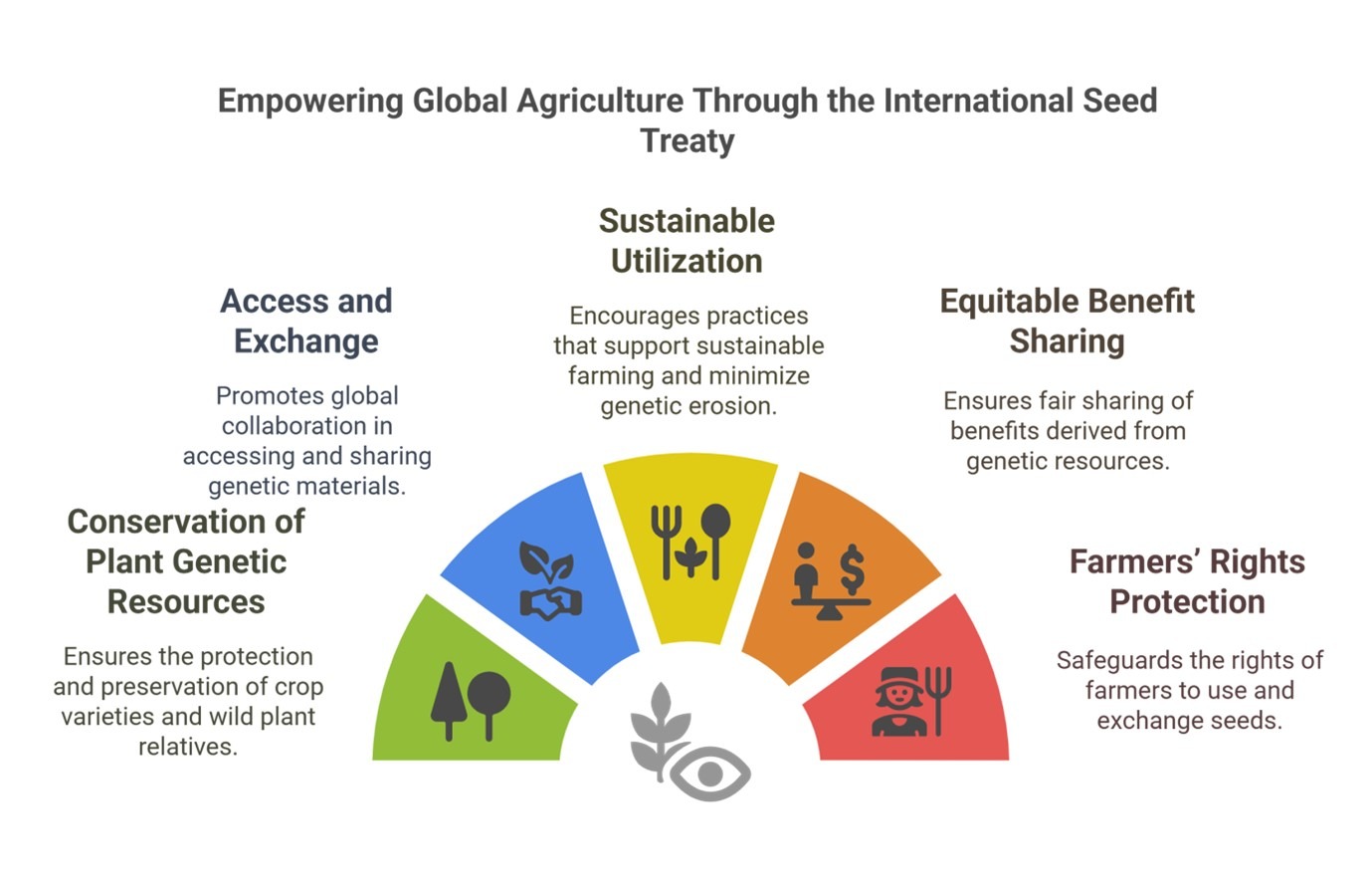
Global Significance and Impact
The PGRFA Treaty is a landmark agreement that fosters international cooperation in agricultural biodiversity conservation and food production. By enhancing genetic diversity in crops, it helps create resilient food systems capable of withstanding climate fluctuations, emerging diseases, and the increasing global population’s needs.
Additionally, the treaty supports the broader objectives of the United Nations Sustainable Development Goals (SDGs), particularly in areas related to zero hunger, sustainable agriculture, and biodiversity conservation.
By establishing a global framework for seed exchange and benefit-sharing, the International Seed Treaty continues to be a driving force in securing the future of food and agriculture, ensuring that plant genetic resources remain available for innovation, adaptation, and global food security.
Aichi Biodiversity Targets:
CBD COP 12 and the Aichi Biodiversity Targets
The 12th Conference of the Parties (COP 12) to the Convention on Biological Diversity (CBD) was held in 2014 and focused on evaluating progress toward the Strategic Plan for Biodiversity 2011–2020 and its associated Aichi Biodiversity Targets. These targets were developed to guide global efforts in halting biodiversity loss, promoting sustainable development, and ensuring the conservation and equitable use of biological resources by 2020.
During COP 12, member countries engaged in extensive discussions on the implementation strategies required to meet these targets. The overarching goals were structured as follows:
Aichi Biodiversity Targets – Five Strategic Goals
1. Goal A: Address the Root Causes of Biodiversity Loss
- Raise awareness of the importance of biodiversity.
- Incorporate biodiversity considerations into government policies, economic planning, and decision-making.
- Eliminate or reform harmful subsidies that contribute to environmental degradation.
2. Goal B: Reduce Direct Pressures on Biodiversity and Promote Sustainable Practices
- Reduce habitat destruction and fragmentation.
- Promote sustainable agriculture, aquaculture, and forestry.
- Manage pollution and combat invasive alien species.
3. Goal C: Safeguard Ecosystems, Species, and Genetic Diversity
- Expand protected areas to safeguard biodiversity-rich regions.
- Prevent species extinction and recover threatened populations.
- Conserve genetic diversity of cultivated plants, livestock, and wild relatives.
4. Goal D: Enhance Benefits from Biodiversity and Ecosystem Services
- Ensure sustainable livelihoods for communities that depend on biodiversity.
- Maintain ecosystem services, such as clean water, fertile soils, and climate regulation.
- Strengthen conservation efforts that support sustainable development.
5. Goal E: Strengthen Implementation through Inclusive and Participatory Governance
- Promote biodiversity conservation through participatory management and policy integration.
- Build capacity and enhance financial resources for biodiversity conservation.
- Foster partnerships between governments, indigenous communities, private sectors, and NGOs.
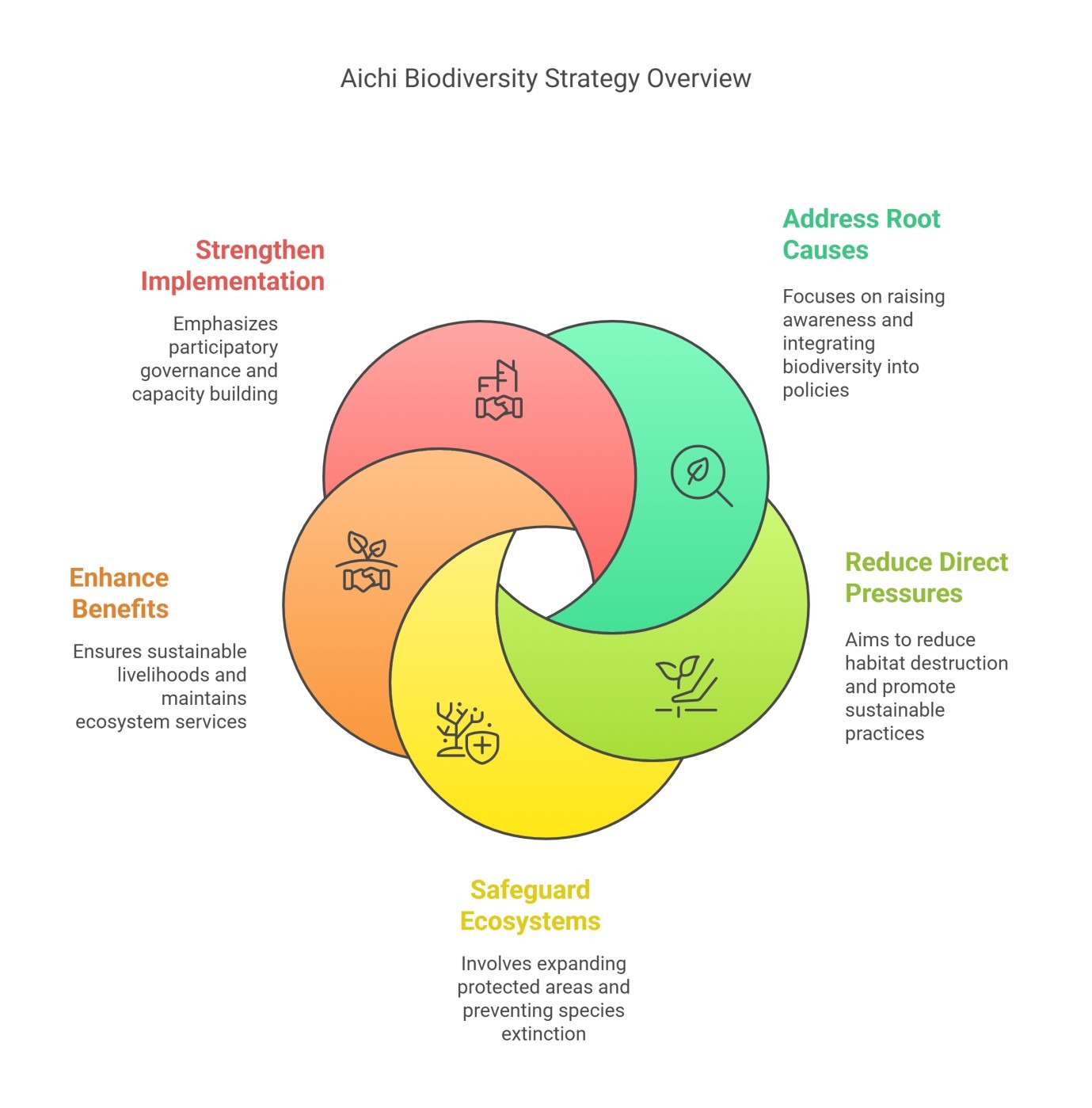
Failure to Meet the Aichi Biodiversity Targets
Despite global commitments, the Global Biodiversity Outlook 5 (GBO-5) report, published by the CBD, revealed that none of the 20 Aichi Biodiversity Targets were fully met by 2020. While progress was made in certain areas, challenges such as habitat destruction, climate change, pollution, and unsustainable land use continued to hinder biodiversity conservation efforts. This shortfall underscored the urgent need for a more ambitious and effective global framework to address biodiversity loss in the coming decades.
COP 14 Declaration on Biodiversity – A Path Toward the Post-2020 Global Biodiversity Framework
In response to the unfulfilled Aichi Targets, the 14th Conference of the Parties (COP 14) to the CBD, held in Sharm El-Sheikh, Egypt, in 2018, adopted the COP 14 Declaration on Biodiversity. This declaration emphasized the need to integrate biodiversity conservation into national and international legislative and policy frameworks, ensuring that biodiversity considerations are mainstreamed across all sectors, including agriculture, infrastructure, business, and finance.
The Post-2020 Global Biodiversity Framework – A New Deal for Nature
One of the major outcomes of COP 14 was the commitment to develop a new Post-2020 Global Biodiversity Framework to replace the Aichi Targets. This framework aims to set more ambitious, measurable, and enforceable goals that align with the 2050 Vision for Biodiversity, also known as the “New Deal for Nature.”
The key objectives of the Post-2020 Global Biodiversity Framework include:
- Establishing new global biodiversity targets that are stronger and more actionable.
- Mobilizing efforts from governments, businesses, indigenous communities, and civil society for collective conservation action.
- Enhancing financial and technological support for biodiversity-friendly policies and initiatives.
- Aligning biodiversity conservation with the United Nations Sustainable Development Goals (SDGs) and global climate action.
The framework is designed to mobilize urgent and coordinated global action to restore ecosystems, halt species extinction, and promote sustainable resource use, ensuring that biodiversity remains a top priority for future generations.
The Path Forward: Strengthening Global Biodiversity Commitments
The failure to meet the Aichi Targets highlights the complex challenges of biodiversity conservation and the need for stronger global commitments. Moving forward, the Post-2020 Global Biodiversity Framework is expected to drive transformational change, encouraging governments and organizations to take bold and urgent actions to protect the planet’s biodiversity.
The outcomes of COP 15 (Kunming, China, 2022) and COP 16 (2024) will play a crucial role in determining the success of this new biodiversity roadmap. Through sustained efforts, international cooperation, and policy integration, the world hopes to achieve a nature-positive future where ecosystems, species, and genetic resources are preserved for future generations.
COP-15 of the UN CBD:
CBD COP15, co-hosted by China and Canada, took place in Montreal in December 2022 after rescheduling from October 2020 in Kunming, China. It served as the 10th Meeting of the Parties to the Cartagena Protocol on Biosafety and the 4th Meeting of the Parties to the Nagoya Protocol on Benefit-sharing.
Adoption of the Kunming-Montreal Global Biodiversity Framework, setting four global goals for 2050 and 23 targets for 2030.
Establishment of the Global Biodiversity Framework Fund under the Global Environment Facility, aiming for at least USD 200 billion annually by 2030.
India’s Contributions:
- Advocated for a dedicated fund to assist developing countries, beyond the existing Global Environment Facility.
- Emphasized biodiversity conservation based on ‘Common but Differentiated Responsibilities and Respective Capabilities’ (CBDR), linking it to climate change impacts.
Post-2020 Global Biodiversity Framework:
Four Global Objectives for 2050:
- Decrease the extinction rate and the risk faced by all species by a factor of ten by the year 2050.
- Ensure that biodiversity is utilized sustainably to promote sustainable development.
- Significantly enhance fair and equitable sharing of benefits derived from the use of genetic resources.
- Secure sufficient financial resources and technology to execute the Kunming-Montreal Global Biodiversity Framework, gradually bridging the annual biodiversity finance gap of $700 billion.
23 Global Targets by 2030:
The targets set under the Kunming-Montreal Global Biodiversity Framework are divided into three categories:
1. Reducing Threats to Biodiversity (8 Targets):
- Minimize biodiversity loss in high-biodiversity areas.
- Restore 30% of degraded ecosystems and conserve 30% of ecosystems (terrestrial, coastal, marine).
- Halt human-induced extinction of threatened species and reduce extinction risks.
- Ensure sustainable and safe harvesting/trade of wild species.
- Reduce invasive alien species by 50% and lower pollution risks to non-harmful levels (cut nutrients lost and pesticide/hazardous chemical risks by 50%).
- Mitigate climate change and ocean acidification impacts on biodiversity.
2. Meeting People’s Needs via Sustainable Use and Benefit-Sharing (5 Targets):
- Promote sustainable use of wild species and management of agricultural, aquaculture, forestry, and fishery areas.
- Enhance ecosystem services (e.g., pollination, disaster protection).
- Support sustainable urbanization with increased green and blue spaces.
- Ensure fair and equitable benefit-sharing from genetic resources.
3. Tools and Solutions for Implementation (10 Targets):
- Integrate biodiversity into policies, planning, and national accounting.
- Encourage corporations to reduce biodiversity impacts.
- Promote sustainable consumption and minimize waste.
- Enhance biotechnology and biosafety measures.
- Phase out harmful subsidies ($500 billion annually) and mobilize $200 billion annually in biodiversity financing (wealthier nations to contribute $30 billion annually by 2030).
- Support technology transfer and scientific collaboration.
- Utilize high-quality data for decision-making.
- Ensure social and gender-responsive participation and achieve gender equality in implementation.
Other International Efforts:
Global Partnership on Forest and Landscape Restoration (GPFLR)
The Global Partnership on Forest and Landscape Restoration (GPFLR) is an international alliance initiated by the International Union for Conservation of Nature (IUCN). It brings together governments, organizations, research institutions, private sector entities, and local communities with a shared commitment to restoring degraded forests and landscapes worldwide.
Mission and Objectives of GPFLR
The GPFLR seeks to:
- Reverse land degradation and restore ecological integrity in forests and landscapes.
- Support sustainable land-use policies that enhance biodiversity, carbon sequestration, and climate resilience.
- Foster cooperation among nations, encouraging knowledge exchange and innovative restoration practices.
- Align restoration efforts with global commitments such as the Paris Agreement, Sustainable Development Goals (SDGs), and the UN Decade on Ecosystem Restoration (2021-2030).
Bonn Challenge – A Global Restoration Initiative
The GPFLR plays a vital role in supporting the Bonn Challenge, a global initiative that seeks to restore degraded and deforested lands at an unprecedented scale.
Key Highlights of the Bonn Challenge:
- Launched in 2011 by Germany and the IUCN, the Bonn Challenge initially aimed to restore 150 million hectares of degraded land by 2020.
- The target was extended in 2014 at the UN Climate Summit under the New York Declaration on Forests, increasing the goal to 350 million hectares by 2030.
- The challenge promotes the concept of Forest Landscape Restoration (FLR) as a means to enhance biodiversity, mitigate climate change, and ensure sustainable livelihoods for local communities.
India’s Commitment to the Bonn Challenge
India has made ambitious pledges under the Bonn Challenge:
- Initially committed to restoring 21 million hectares of degraded land by 2030.
- At the 2019 UNCCD (United Nations Convention to Combat Desertification) Conference, India increased its commitment to 26 million hectares by 2030—one of the most significant national restoration commitments globally.
By participating in the Bonn Challenge, India aims to:
- Combat land degradation and desertification.
- Enhance carbon sequestration through afforestation and sustainable forest management.
- Strengthen climate resilience and promote biodiversity conservation.
Forest Landscape Restoration (FLR) – A Holistic Approach
The concept of Forest Landscape Restoration (FLR) was first introduced in 2000 by IUCN and WWF as a comprehensive, large-scale approach to restoring degraded landscapes while ensuring human well-being.
FLR goes beyond simply planting trees—it focuses on reviving entire ecosystems, supporting sustainable agriculture, and enhancing rural livelihoods. The Bonn Challenge, launched in 2011, provided a global platform to promote FLR-based restoration efforts.
Key Principles of FLR
FLR is guided by a set of fundamental principles that ensure restoration efforts are ecologically, socially, and economically sustainable:
1. Maintaining Natural Ecosystems – Protecting and conserving existing forests and biodiversity-rich areas before engaging in active restoration.
2. Adopting a Landscape Approach – Considering the entire landscape, rather than isolated patches, to ensure restoration benefits both nature and people.
3. Sustainable Forest Management – Promoting conservation and reforestation strategies that balance economic development with ecological health.
4. Multi-Stakeholder Engagement – Involving governments, NGOs, private businesses, indigenous communities, and local farmers in decision-making and implementation.
5. Incorporating Traditional and Indigenous Knowledge – Recognizing and utilizing local wisdom and indigenous practices in forest conservation and landscape restoration.
6. Restoring Ecological, Social, and Economic Functions – Ensuring that restoration efforts benefit both the environment and the livelihoods of people dependent on forests.
7. Long-Term Resilience and Adaptation – Implementing restoration techniques that increase landscape resilience to climate change, extreme weather events, and human pressures.
Through FLR, the world can revive degraded ecosystems, enhance biodiversity, and create sustainable landscapes that support both people and nature.
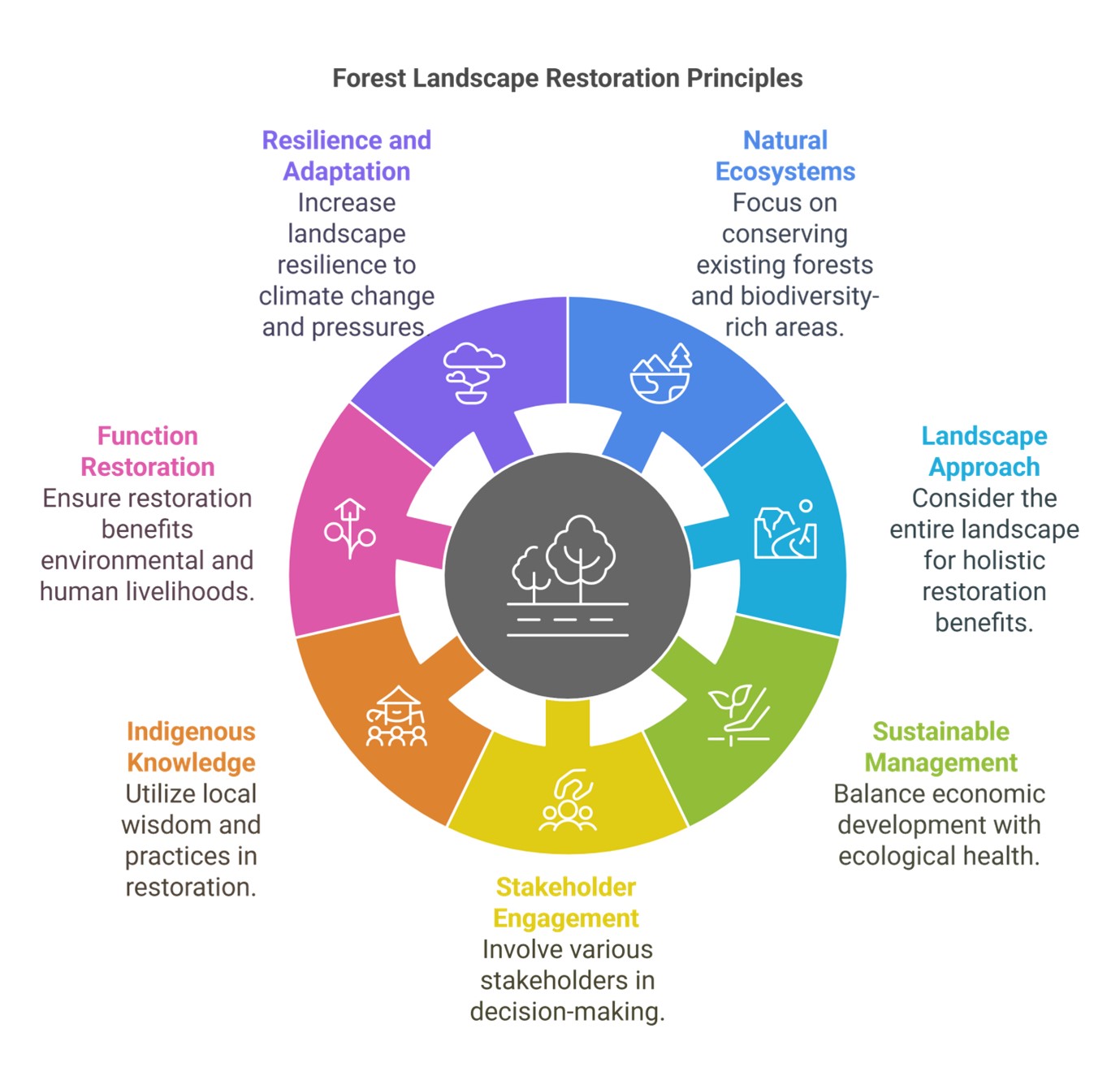
World Forestry Congress and the Seoul Declaration
The World Forestry Congress (WFC) is the largest international gathering of forestry professionals, policymakers, researchers, and conservationists. It serves as a global platform for discussing forestry-related challenges, innovations, and sustainable solutions.
The 15th World Forestry Congress – Seoul 2022
The 15th World Forestry Congress was organized in Seoul, South Korea, by the Korea Forest Service in collaboration with the Food and Agriculture Organization (FAO). It marked only the second time the congress was held in Asia, with the first being in Indonesia in 1978.
The event took place under the theme: “Building a Green, Healthy, and Resilient Future with Forests”
Key discussions at the Congress focused on:
- The role of forests in addressing climate change, biodiversity conservation, and sustainable development.
- Strategies for forest restoration, afforestation, and reforestation to combat deforestation and ecosystem degradation.
- Strengthening the circular bioeconomy—a concept that promotes using renewable biological resources for producing sustainable materials, chemicals, and energy.
- The importance of global cooperation and policy integration in forest governance and conservation.
The Seoul Declaration – A Global Commitment to Forest Conservation
The Seoul Declaration, adopted at WFC 2022, outlined key global priorities for the forestry sector, emphasizing the need to:
- Integrate forests into climate action to achieve carbon neutrality and combat global warming.
- Promote the circular bioeconomy by advancing sustainable alternatives to fossil fuels and non-renewable materials.
- Strengthen forest-based solutions for improving human health and well-being.
- Foster inclusive and sustainable forest management, ensuring the involvement of indigenous peoples, local communities, and youth in conservation efforts.
- Scale up restoration initiatives aligned with the Bonn Challenge and UN Decade on Ecosystem Restoration.
Initiatives By The UN:
United Nations Strategic Plan for Forests (2017–2030)
The United Nations Strategic Plan for Forests (UNSPF) 2017–2030 was adopted by the UN General Assembly in 2017 as a comprehensive global framework to promote sustainable forest management (SFM) worldwide. It seeks to enhance the role of forests in achieving the Sustainable Development Goals (SDGs), combating climate change, and promoting biodiversity conservation.
Key Features of the UNSPF
- The plan establishes six Global Forest Goals and 26 voluntary targets, which are to be achieved by 2030.
- Aims to increase the global forest area by 3%, which is equivalent to 120 million hectares of new forest cover worldwide.
- Seeks to eradicate extreme poverty in forest-dependent communities by ensuring sustainable livelihoods.
- Encourages countries to enhance forest financing by mobilizing funds from public, private, and philanthropic sources.
- Reinforces forest governance and law enforcement to combat illegal logging and deforestation.
- Promotes the role of forests in climate change mitigation by increasing carbon sequestration and fostering adaptation strategies.
Through this plan, the UN aims to reverse deforestation trends and establish a more resilient, productive, and sustainable forest ecosystem worldwide.
United Nations Decade on Ecosystem Restoration (2021–2030)
The United Nations Decade on Ecosystem Restoration (2021–2030) is a global movement led by the United Nations Environment Programme (UNEP) and the Food and Agriculture Organization (FAO). This initiative was proclaimed by the UN General Assembly in 2019, calling for urgent restoration efforts to revive degraded ecosystems and combat biodiversity loss.
Objective and Scope of the Decade on Ecosystem Restoration
This initiative aligns with key global agreements, including:
- The 2030 Agenda for Sustainable Development – Supporting SDG 15 (Life on Land) and SDG 13 (Climate Action).
- The Strategic Plan for Biodiversity 2011–2020 and the Aichi Biodiversity Targets – Emphasizing habitat restoration and conservation.
- The Paris Agreement and UN Framework Convention on Climate Change (UNFCCC) – Using ecosystem restoration to enhance carbon sequestration.
- The UN Convention to Combat Desertification (UNCCD) – Addressing land degradation and promoting sustainable land use.
- The Ramsar Convention on Wetlands – Restoring degraded wetlands and maintaining water security.
- The Global Partnership on Forest and Landscape Restoration (GPFLR) – Encouraging large-scale afforestation and sustainable land management.
Why Ecosystem Restoration Matters
- Nearly 75% of Earth’s land has been degraded due to deforestation, pollution, and climate change.
- More than one million species are at risk of extinction due to habitat destruction.
- The initiative calls upon governments, businesses, local communities, and individuals to take active measures in restoring ecosystems for a healthier planet.
- It provides an action-oriented framework to restore forests, farmlands, oceans, freshwater systems, and urban green spaces.
This decade-long movement is expected to generate millions of jobs, improve food security, and enhance climate resilience while safeguarding biodiversity.
Biodiversity Finance Initiative (BIOFIN)
The Biodiversity Finance Initiative (BIOFIN) was launched by the United Nations Development Programme (UNDP) in 2012 to address the global biodiversity finance gap and help countries implement their National Biodiversity Strategies and Action Plans (NBSAPs) effectively.
Key Goals of BIOFIN
- Assessing the biodiversity finance gap by analyzing financial flows in biodiversity conservation.
- Mobilizing financial resources through innovative mechanisms such as green bonds, conservation funds, and eco-tourism revenue.
- Aligning national budgets with biodiversity priorities to ensure adequate government funding for conservation efforts.
- Supporting countries in achieving their National Biodiversity Targets (NBTs) under the Convention on Biological Diversity (CBD).
BIOFIN in India
India is one of the countries actively implementing BIOFIN. In India, the initiative is:
- Hosted by the National Biodiversity Authority (NBA) under the Ministry of Environment, Forest and Climate Change (MoEFCC).
- Receives technical assistance from the Wildlife Institute of India (WII) and the National Institute of Public Finance and Policy (NIPFP).
- Helps mobilize public and private sector investments in biodiversity conservation and restoration projects.
- Supports the development of nature-based financial solutions, including green bonds, biodiversity taxes, and payment for ecosystem services (PES).
By bridging the biodiversity finance gap, BIOFIN plays a crucial role in securing sufficient funding for conservation efforts, ensuring that biodiversity remains a national and global priority.
UNESCO World Heritage Sites and the 1972 World Heritage Convention
The United Nations Educational, Scientific and Cultural Organization (UNESCO) established the 1972 World Heritage Convention as a framework for international cooperation to identify, protect, and conserve cultural and natural heritage sites of outstanding universal value.
Purpose of the UNESCO World Heritage Convention
- Encourages countries to identify, nominate, and protect sites of exceptional historical, cultural, or environmental significance.
- Provides international recognition and legal protection for World Heritage Sites.
- Mobilizes technical and financial assistance to support the conservation of endangered heritage sites.
- Strengthens global collaboration between governments, conservationists, and local communities to preserve humanity’s shared heritage.
Criteria for UNESCO World Heritage Site Selection
A site must meet at least one of the ten selection criteria to be inscribed as a World Heritage Site. These criteria are divided into Cultural Heritage and Natural Heritage categories:
Cultural Criteria (Man-Made Heritage)
1. Masterpiece of human creativity (e.g., Taj Mahal, Machu Picchu).
2. Interchange of cultural values over time (e.g., Great Wall of China).
3. Exceptional testimony to a civilization (e.g., Pyramids of Egypt).
4. Illustrates an important historical stage (e.g., Rome’s Colosseum).
5. Outstanding example of traditional settlement or land use (e.g., Venice).
6. Direct association with important events or living traditions (e.g., Auschwitz-Birkenau).
Natural Criteria (Biodiversity and Geology)
1. Exceptional natural beauty (e.g., Grand Canyon, Great Barrier Reef).
2. Outstanding geological processes or landforms (e.g., Volcanoes of Kamchatka).
3. Significant ecosystems or biodiversity hotspots (e.g., Amazon Rainforest).
4. Habitat for endangered species (e.g., Galápagos Islands).
India’s UNESCO World Heritage Sites
India has 42 UNESCO World Heritage Sites, including:
- Cultural Sites – Taj Mahal, Jaipur City, Hampi, Ajanta and Ellora Caves.
- Natural Sites – Kaziranga National Park, Western Ghats, Great Himalayan National Park.
- Mixed Sites (Both cultural and natural significance) – Khangchendzonga National Park.