TOne Academy

British Policies and their Economic Impacts

Home / Indian History / British Policies and their Economic Impacts

British Policies and their Economic Impacts

Phases of Economic Exploitation of Colonial India

     The economic history of colonial India, as interpreted by Marxist historians like Rajani Palme Dutt, reveals a systematic process of exploitation by the British, designed to serve imperialist objectives while undermining India’s economic foundations. This exploitation occurred in three distinct phases, each with its own methods, policies, and impacts.

1. First Stage – Merchant Capital (1757–1813)

Objectives

    • Secure monopoly over Indian trade.
    • Establish control over revenues of key provinces.
    • Eliminate European and Indian commercial rivals.


Methods

    • Used political dominance after the Battle of Plassey (1757) and Battle of Buxar (1764) to control Bengal’s resources.
    • Practiced buying cheap and selling dear, draining wealth through unequal trade.
    • Forced Indian producers to sell goods at low prices while charging high prices for imports.


Impact

    • Limited structural change in Indian society; traditional agrarian economy remained intact.
    • Substantial transfer of wealth to Britain; 2–3% of Britain’s national income during this phase funded the Industrial Revolution in Britain.
    • The East India Company evolved from a trading enterprise into a political and military power.

2. Second Stage – Colonialism of Free Trade (1813–1860s)

Key Features

    • Charter Act of 1813 ended the Company’s trade monopoly (except in tea and trade with China).
    • India became an open market for British manufactured goods and a supplier of raw materials like cotton, jute, and indigo.
    • Surge in British capital investments in plantations, mining, and early industries (mainly for export purposes).

Land Revenue & Administrative Reforms

    • Introduction of exploitative land systems:


        • Permanent Settlement in Bengal (1793) – high fixed rents, rise of absentee landlords.
        • Ryotwari System in Madras & Bombay – direct revenue settlement with cultivators but high tax burden.
  •  
    • Expansion of administrative machinery to enforce revenue collection and commercial policies.


Education & Social Policy

    • Promotion of modern education (Macaulay’s Minute, 1835) to create a cheap clerical workforce.
    • Heavy taxation burden on peasants to finance British military and administrative costs.

III. Third Stage – Finance Capital (1860s–1947)

Objectives

    • Consolidate British economic control to prevent entry of rival powers.
    • Promote foreign investment in railways, plantations, and industries under the guise of “trusteeship”.


Ideological Shift

    • Rejection of earlier ideas of Indian self-governance.
    • Justification of British rule through racial superiority, geographic destiny, and the so-called White Man’s Burden.

Economic Impact of British Colonial Policies in India

     The economic legacy of British colonialism in India was one of systematic exploitation, marked by policies that prioritized imperial interests over indigenous development. The economic consequences were multifaceted, affecting industry, agriculture, trade, and the social fabric of the country.

1. Deindustrialization

    • The most striking impact was the rapid decline of India’s traditional industries, especially the world-renowned textile sector of Bengal and Dhaka.
    • India transitioned from being an exporter of high-quality finished goods to an importer of mass-produced British textiles.
    • The Charter Act of 1813 opened Indian markets to British goods, while punitive tariffs (as high as 80%) were imposed on Indian exports, crippling local artisans and weavers.
    • This led to massive unemployment in artisanal communities and a collapse of urban craft economies.

2. Drain of Wealth

    • The colonial administration facilitated a continuous outflow of resources from India to Britain without any adequate economic return.
    • Historians estimate that 2–3% of Britain’s national income during the Industrial Revolution was financed by Indian revenues, trade surpluses, and exploitation of resources.
    • This wealth financed British industrial growth while stunting India’s own capital formation.

3. Industrial Stagnation

    • British policies deliberately suppressed strategic industries like shipbuilding, iron smelting, and steel manufacturing to prevent competition.
    • Even during late industrialization, foreign-owned enterprises dominated sectors such as jute, tea, coal, and cotton mills, sidelining Indian entrepreneurs.

4. Impoverishment of the Peasantry

    • Revenue settlements such as the Permanent Settlement (1793), Ryotwari, and Mahalwari systems imposed exorbitant land taxes.
    • Peasants often fell into perpetual debt cycles with moneylenders, losing land and livelihood.
    • Zamindars and intermediaries acted as agents of colonial extraction, prioritizing revenue collection over agricultural improvement.

5. Commercialisation of Agriculture

    • There was a forced shift from subsistence crops to cash crops such as cotton, jute, indigo, tea, and opium to serve British industries and global trade demands.
    • This increased peasants’ vulnerability to market fluctuations, leading to food shortages and famines when cash crops replaced food production.

6. Disintegration of the Village Economy

    • Traditional panchayat systems and communal landholding practices collapsed under colonial legal and property frameworks.
    • Land became a market commodity, and the rise of absentee landlords disrupted rural social cohesion.

7. Emergence of New Social Classes

    • Colonial policies created a new agrarian hierarchy, including landlords, moneylenders, traders, and a rural proletariat comprising landless labourers, sub-tenants, and marginal farmers.

8. Integration into the Global Market

    • India was incorporated into the British imperial economy as a supplier of raw materials (cotton, jute, tea, indigo, and opium) and a consumer of British manufactured goods.
    • This one-sided integration benefited British industry while undermining India’s economic self-sufficiency.

9. Capitalist Foundations – For Colonial Interests

    • Infrastructure developments like railways, telegraphs, canals, and ports were introduced not for Indian welfare but to facilitate the movement of raw materials to ports and the distribution of British goods inland.

10. Stunted Industrial Growth

    • Discriminatory policies restricted access to credit and technology for Indian entrepreneurs.
    • Indigenous industries faced unequal competition with British imports, preventing the growth of a self-sustaining industrial base.

11. Poverty and Social Unrest

    • The combination of rural impoverishment, recurrent famines, and economic discontent fuelled resentment against colonial rule.
    • Economic grievances became a powerful mobilizing factor for the Indian national movement.

The Concept of Economic Drain

    • Continuous outflow of wealth from India to Britain without adequate economic returns.
    • Considered an indirect tribute imposed by imperialism.

Historical Development

    • Before 1757, the East India Company imported bullion to pay for Indian goods (favourable trade balance for India).
    • After Plassey, the Company used Indian revenues to purchase export goods, eliminating the inflow of bullion.

Sources of the Drain

    • Land revenue surplus appropriated by the state.
    • Monopolistic trade practices.
    • Private fortunes of Company officials remitted to Britain.

Charter Act of 1813

    • Separated territorial and commercial revenues of the Company.
    • Led to unrequited exports—goods exported without payment in return.
    • Ended Company’s monopoly except for tea trade and trade with China.

Impact on Trade Balance

    • Despite a favourable trade balance until World War II, much of India’s surplus was siphoned off for political and military purposes, limiting capital formation.


Constituent

Definition

Data

Home Charges

Expenses incurred in England by the Secretary of State on behalf of India, primarily serving British interests. Funds used to pay salaries and pensions of British personnel engaged in India.

Pre-Revolt (before 1857): 10%–13% of India’s average revenues. Post-Revolt (1897–1901): Increased to 24%, reaching £17.36 million in 1901–02 and 40% by 1921–22. Components: – Dividends: £630,000 annually to shareholders until 1874. – Public Debt Interest: Debt rose from £70 million to £224 million in 1900, benefiting British interests. – Civil & Military Costs: Significant burden on India. – Supplies from England: 10%–12% of home charges (1861–1920).

Interest on Foreign Capital Investments

Interest and profits from private foreign capital represented another significant outflow from India’s national income. Included pensions and furloughs of British officers, payment to British War Office, etc.

Annual payments during the inter-war period ranged from ₹30 crores to ₹60 crores per annum, hindering indigenous industrial development.

Foreign Banking, Insurance, and Shipping Companies

Significant outflows for services rendered by foreign firms.

Drained resources and stunted growth of local enterprises, exacerbating the economic drain.

Economic Critique of the Drain of Wealth

Pioneering Analysts

    • Dadabhai NaorojiPoverty and Un-British Rule in India.
    • R.C. DuttEconomic History of India.
    • Justice M.G. Ranade, G.K. Gokhale, G. Subramania Iyer, Prithwishchandra Ray.

Key Critiques

1. Trade & Railways

    • Foreign trade designed to import finished goods and export raw materials.
    • Railways facilitated commercial exploitation rather than industrialisation.
    • G.V. Joshi: Railway spending was an “Indian subsidy to British industries”.


2. One-Way Free Trade & Tariff Policy

    • Destruction of handicrafts due to unequal competition.
    • Tariff policy favoured British capitalist interests.
    • Heavy tax burden on Indians, with minimal impact on British merchants and administrators.

Land Revenue Policies under British Rule – Transformation of Agrarian India

      The British colonial administration fundamentally reshaped India’s agrarian structure, introducing new land tenure systems that maximized revenue extraction at the cost of peasant welfare. This reorganisation, driven by economic motives rather than agricultural improvement, altered rural power structures, weakened village communities, and deepened agrarian distress.

Pre-British Agrarian Structure

Before British intervention, Indian agriculture operated within self-sufficient village communities:


    • Village Communities functioned as self-governing units, with no concept of absolute private ownership of land.
    • Cultivators’ Rights were secure, as peasants paid a share of produce to local rulers or overlords without fear of eviction.
    • The Patil acted as the village head, responsible for revenue collection, land allocation, irrigation management, and working alongside the Panchayat for dispute resolution.

British Economic Motives and Early Impact

The British saw India primarily as a revenue-generating estate:


    • Maximisation of Revenue was the priority, leading to a disregard for traditional agrarian systems.
    • Dependence on Land Revenue — forming the bulk of government income — made peasants the backbone of the colonial fiscal structure.
    • Consequences: Agricultural stagnation, abandonment of land due to excessive taxation, recurring famines, and eventual policy revisions.

Major Land Tenure Systems Introduced by the British

The colonial administration implemented three major systems of land revenue collection:


    1. Zamindari System – Covered ~19% of British India.
    2. Mahalwari System – Covered ~30%.
    3. Ryotwari System – Covered ~51%.

1. Zamindari System

Introduced after the East India Company gained Diwani rights (1765) in Bengal, Bihar, and Orissa.

Warren Hastings’ Ijaradari System (1769–70)

 

    • Concept: Revenue collection was auctioned to contractors (Ijaradars) for fixed periods.
    • Problems:


        • Exploitation – Contractors maximized profits without regard for peasant welfare.
        • Unrealistic Bids – Revenue demands exceeded agricultural capacity, pushing cultivators into debt.
        • Corruption – Traditional zamindars were replaced by speculative contractors.


    • These failures prompted Lord Cornwallis to introduce the Permanent Settlement (1793).

Permanent Settlement (1793)
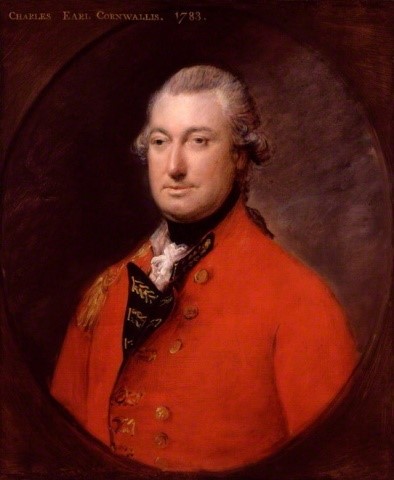


    • Architect: Philip Francis (concept), implemented by Lord Cornwallis.
    • Coverage: Bengal, Bihar, Orissa, parts of Madras (~19% of British India).
    • Key Features:


        • Permanent Revenue Fixation – The land revenue was fixed forever, irrespective of future productivity.
        • Proprietary Rights to Zamindars – They could sell, mortgage, or transfer land, retaining a fraction of collections.
        • Sunset Clause (1794) – Failure to pay on time led to auction of estates.


    • Shortcomings:
        • Excessive revenue demands (up to 89% in Bengal) caused peasant distress.
        • Growth of absentee landlordism and sub-infeudation (layering of intermediaries).
        • Neglect of agricultural improvement as zamindars focused on rent extraction.
  •  
    • Later Reforms: Bengal Rent Acts (1859, 1885) granted limited occupancy rights to tenants but did not resolve exploitation.

2. Mahalwari System (1819–1822)

 

    • Proposed by Holt Mackenzie (1819), formalised under Regulation VII (1822).
    • Coverage: North-West Provinces, parts of Punjab, Central India.
    • Structure:


        • Mahal (village or group of villages) as the basic revenue unit.
        • Revenue collected collectively by village headmen.
        • State Share: Initially 66% of rental value, later reduced to 50%.


    • Challenges:
        • Complex surveys, inaccurate assessments, and manipulation of rent calculations.
        • Heavy revenue burdens accelerated rural indebtedness and land alienation.
        • Discontent during the Revolt of 1857 was partly fuelled by these oppressive measures.
  •  
    • Reforms:
        • Regulation IX of 1833 simplified processes; Merttins Bird introduced 30-year settlements.
        • Saharanpur Rules (1855) capped state demand at 50%, though often ignored in practice.

3. Ryotwari System


    • Introduced in 1792 by Thomas Munro and Captain Alexander Read in Madras Presidency; formalised in 1820.
    • Coverage: Madras, Bombay, parts of Assam, Coorg, and Berar.
    • Key Features:


        • Direct Settlement with Ryots – No intermediaries; peasants were recognised as landowners with transferable rights.
        • Taxation: 45–55% of estimated produce, paid directly to the state.
        • Non-Permanent Settlement – Revenue periodically revised, creating uncertainty.
        • No Relief during Calamities – Taxes were collected even during droughts or floods.


    • Problems:
        • High and fluctuating tax rates created debt traps.
        • Coercion in collection was rampant — documented in the Madras Torture Commission Report (1855).


    • Reforms:
        • 1855 scientific surveys reduced over-assessment.
        • 1864 revision fixed rates at 50% for 30 years, marginally improving conditions.

Regional Impacts

    • Madras Presidency: The 50% demand was crippling; famine (1867–78) exposed structural flaws.
    • Bombay Presidency: Reforms by Elphinstone, Chaplin, and Wingate improved administration, but faulty surveys led to agrarian riots (1875) and the Deccan Agriculturists’ Relief Act (1879).

Overall Impact of British Land Revenue Policies

    • Agrarian Distress: Increased indebtedness, land alienation, and rural poverty.
    • Commercialisation without Safeguards: Shift to cash crops for export markets made agriculture vulnerable.
    • Disruption of Traditional Structures: Decline of self-governing village communities.
    • Social Change: Emergence of landlords, moneylenders, and rural proletariat.


Contribution to Revolts: Economic grievances fuelled uprisings, notably the Revolt of 1857

Colonial Policy on Industry – Impact on Indian Economy

     The industrial trajectory of India under British rule was deeply shaped by colonial economic policies that prioritised imperial interests over indigenous development. While modern infrastructure was introduced, these developments were largely intended to facilitate resource extraction and the sale of British goods, rather than fostering self-reliant industrial growth in India.

Deindustrialization – Decline of Indigenous Industry

    • Policy Objective: The British deliberately discouraged industrialization in India to preserve its role as a supplier of raw materials and a consumer of British manufactured goods.
    • Impact:


        • Collapse of Traditional Industries – The renowned handloom and handicraft sectors suffered a catastrophic decline.
        • Market Invasion – By the 1830s, cheap, machine-made British textiles flooded Indian markets, undercutting local products.
        • Trade Discrimination – Indian textiles faced heavy import duties in Britain, while British goods entered India almost duty-free.
        • Loss of Global Markets – British textiles captured Indian export markets in Europe, America, and Africa, displacing traditional exports.
        • Loss of Patronage – Support from kings, chieftains, and zamindars diminished after British political dominance, weakening artisanal livelihoods.


Infrastructure Development – Serving Imperial Needs

       Although the British introduced infrastructure such as roads, railways, ports, and telegraphs, these projects were primarily designed to:


    • Transport raw materials from interiors to ports.
    • Facilitate troop movement for political control.
    • Enable rapid import of British manufactured goods.


Key Milestones:

    • Railways – First line from Bombay to Thane in 1853, pivotal for colonial commerce.
    • Cotton Mills – The first Indian-owned mill, Bombay Spinning and Weaving Company (1854), was set up by Cowaszee Nanabhoy Davar. [UPSC 2020]

Rise of Indian Capitalist Enterprise

    • Initial Focus: The early Indian entrepreneurial class, particularly Parsis and Gujaratis, invested heavily in the textile industry of Bombay.
    • Challenges:
        • Severe competition from British imports.
        • Discriminatory tariffs that favoured British goods.
        • Limited access to credit from European-controlled banks.
        • Favourable freight rates for imports over domestic goods.
        • Dependence on imported machinery and technology.


    • Resilience and Nationalism:
        • The Swadeshi Movement encouraged consumption of Indian goods.
        • Industrialists adopted cost-reduction strategies and reinvested in expanding domestic production.


    • Tata Iron and Steel Company (TISCO) – Founded in 1907 by Jamshedji Tata, it became a landmark in Indian industrial history, producing pig iron and steel within a few years.
    • Other Sectors: Jute (largely European-owned), coal mining, and plantation industries (tea, coffee, indigo) expanded, but remained under heavy foreign control.

Impact of the First World War (1914–1918)

    • Positive Industrial Boost: War disrupted imports, leading to increased demand for Indian-made goods and expansion of industries such as textiles, steel, and chemicals.
    • Economic Benefits:
        • Drop in raw material prices and stagnant wages lowered production costs for manufacturers.
        • Greater government procurement for military needs.


    • Political Outcome:
        • Increased calls for economic self-sufficiency and industrial protection.
        • Establishment of:
            • Industrial Commission (1916) – Studied industrial potential for Indian capital.
            • Indian Munitions Board (1917) – Promoted domestic arms and equipment production.

Interwar Period Protection (1918–1939)

    • Need for Protection: Economic nationalism grew, demanding safeguards for nascent Indian industries.
    • Key Measures:
        • Stores Purchase Committee (1919) – Ensured minimum government procurement from Indian producers.
        • Montagu-Chelmsford Reforms (1919) – Increased fiscal autonomy for the Indian government.
        • Fiscal Commission (1921–1923) under Sir Ibrahim Rahimtoola – Introduced the Triple Formula for industrial protection:
            1. Industry must have natural advantages (raw materials, labour, market).
            2. Protection must be necessary for optimal growth.
            3. Industry should aim to compete globally without permanent protection.
        • Tariff Board – Evaluated requests for protective tariffs.


Imperial Preference System:


    • Adopted from the Ottawa Conference (1932), provided concessional tariffs within the British Empire.
    • Abandoned in 1936 as it proved disadvantageous to India.


    • Despite Obstacles (overvalued rupee, Great Depression 1929–30), industrial output grew significantly between 1923–1939.

Industrial Development During World War II (1939–1945)

Economic Impact:

      • Severe shortages for civilians but windfall profits for Indian industrialists due to absence of foreign competition.
      • Expansion of Joint Stock Companies, banks, and insurance firms.
      • Rise in speculation, hoarding, and black-marketing.


Government Role:

    • Tariff Board (1945) adopted more liberal criteria for granting protection.
    • Encouraged collaboration between Indian and foreign capitalists in new ventures.


Strengthening of Indian Capitalist Class:

    • Close association with the nationalist movement increased their political influence.
    • By Independence (1947), they emerged as a powerful socio-economic force.


Overall Assessment

      The British colonial industrial policy created a paradox: while it introduced modern infrastructure and certain industries, its primary aim was to maintain India’s economic dependency.


    • Negative Legacy: Deindustrialisation, dependence on raw material exports, foreign control of key sectors.
    • Positive Foundations: Railways, telegraphs, and select industries like steel laid the groundwork for post-independence industrialisation.