
Following the early medieval period, India witnessed the emergence of numerous powerful regional kingdoms, particularly after the weakening of the Delhi Sultanate. Between 1206 and 1526, several dynasties ruled over different regions of India under the Sultanate. Among these, Alauddin Khilji managed to establish control over a vast portion of the subcontinent. However, cracks began to appear during the reign of Muhammad bin Tughlaq, whose ambitious but ill-conceived reforms significantly weakened central authority.
As the successors of Firoz Shah Tughlaq struggled to contain the internal chaos and the devastating invasion of Taimur in 1398, several governors and regional rulers asserted their independence. Consequently, powerful states such as Vijayanagar, Bahamani, and several others including Gujarat, Malwa, Mewar, Marwar, Bengal, and Orissa, emerged from the remnants of the Delhi Sultanate and began charting their own political destinies.
The region of Gujarat was originally annexed to the Delhi Sultanate by Alauddin Khilji in 1297 CE. It remained a province of the Sultanate for over a century. However, the weakening of central authority allowed regional governors to assert their autonomy. In 1401, Zafar Khan, then the governor of Gujarat, declared independence. By 1407, he formally assumed the royal title of Muzaffar Shah, founding the independent Gujarat Sultanate.
Muzaffar Shah’s military strength was evident when he successfully repelled Sultan Hushang of Malwa and captured Dhar. His reign laid the foundation for a powerful and prosperous state. He was succeeded by his grandson, Ahmad Shah, who ruled for 32 years and founded Ahmadabad, which became the capital and a flourishing cultural center.
Subsequent rulers included Muhammad Shah II, Qutb-ud-din Ahmad Shah, Daud Khan, and again Muhammad Shah II. In 1458, the nobles deposed Daud Khan and placed Fath Khan—known historically as Mahmud Begarha—on the throne. Mahmud Begarha (1458–1511) is widely regarded as the most powerful and successful ruler of the dynasty. He not only consolidated power by quelling rebellious nobles and rivals but also expanded the kingdom by annexing key territories. He notably resisted Portuguese incursions with support from the Egyptian fleet.
His son, Muzaffar Shah II, succeeded him, followed by rulers such as Sikandar Shah and Mahmud Shah II. In 1526, Bahadur Shah ascended the throne. Under Bahadur Shah, the Gujarat Sultanate reached the height of its power. He conquered Malwa in 1531 and ravaged Chittor, the capital of Mewar. However, Bahadur Shah’s later years were marred by conflicts with the Portuguese, who ultimately murdered him in 1537. With his death, the sultanate weakened significantly and was eventually annexed by the Mughal Emperor Akbar in 1572.
The region of Malwa was also brought under the control of the Delhi Sultanate during the reign of Alauddin Khilji. It remained part of the Sultanate until the reign of the later Tughlaq rulers. In 1390, Firuz Tughlaq appointed Dilawar Khan as the governor of Malwa. By 1401, Dilawar Khan had declared himself the independent ruler, although he never officially assumed the title of Sultan. Upon his death in 1405, his son Alp Khan took the title Hushang Shah and established himself as the de facto Sultan.
Hushang Shah’s reign was marked by both military and architectural accomplishments. Although he was briefly imprisoned by Muzaffar Shah of Gujarat, he ultimately reasserted his authority and ruled independently. He shifted the capital to Mandu, where he initiated the construction of several impressive structures. After his death in 1435, his son Ghazni Khan took the throne under the title Muhammad Shah, but he proved ineffective.
In 1436, the competent and ambitious Mahmud Khan, the wazir of the state, usurped the throne and assumed the title Mahmud Shah. He founded the Khalji dynasty of Malwa and reigned until 1469. A capable administrator and military leader, he expanded the kingdom’s territory and received formal recognition from the Caliph of Egypt. He was succeeded by his son Ghiyas-ud-din, who preferred peace and luxury over warfare. It is believed that he was poisoned by his son, Nasir-ud-din, who assumed the throne in 1500 and ruled tyrannically until his death in 1511.
After Nasir-ud-din, his younger son Azam Humayun came to power as Mahmud Shah II. However, the internal disorder and external threats had already weakened the kingdom. Eventually, Mughal Emperor Akbar annexed Malwa, along with Gujarat, into the expanding Mughal Empire.
This period marked a significant fragmentation of centralized authority in India, but it also led to a flowering of regional cultures, architectural styles, and administrative innovations. Each of these independent states made significant contributions to the subcontinent’s political, economic, and cultural history before being absorbed by the larger Mughal Empire.
Rana Ratan Singh, a member of the senior branch of the Guhilot dynasty, ruled over Mewar when Alauddin Khalji launched his campaign and captured Chittor in 1303. During this siege, Lakshman Singh from the junior branch of the Guhilots, known as the Sisodiyas, was entrusted with the defense of the fort. Lakshman Singh, alongside his seven sons, heroically resisted the attack but perished in battle. Only one of his sons, Ajay Singh, managed to escape and went into hiding. Following his death in 1314, leadership passed to the son of his elder brother, Hammir Singh, who emerged as the true architect of Sisodiya dominance in Mewar.
Hammir Singh made persistent attempts to reclaim Chittor from the control of the Delhi Sultanate. Although initially unsuccessful in confronting Alauddin Khalji, he eventually regained Chittor, likely during the later years of Muhammad bin Tughluq’s reign. Hammir’s reign lasted for an impressive 64 years, during which he firmly re-established Mewar’s independence and laid the foundation for Sisodiya sovereignty.
Hammir was succeeded by his son, Kshetra Singh (1378–1405), a competent ruler who further extended the kingdom. Kshetra Singh’s son, Laksha Singh (also known as Lakha), fortified Mewar’s political influence by forging a matrimonial alliance with the Rathore princess of Marwar. His reign saw territorial expansion and consolidation. Upon his death in 1420, his son Mokal ascended the throne. Mokal expanded Mewar’s territory by annexing Marwar with the assistance of his maternal uncle, Ranamalla, and captured the Muslim-ruled territory of Nagaur. However, his promising rule was cut short in 1433 when he was assassinated by two relatives during a campaign against Gujarat.
Mokal’s death plunged Mewar into a period of internal instability and external threats. The kingdoms of Gujarat and Malwa launched invasions, exploiting the power vacuum. In these turbulent times, Ranamalla played a crucial role in restoring stability. He placed his grandnephew, Rana Kumbha, on the throne and effectively subdued both internal rebellions and external aggressions. However, Ranamalla’s growing influence aroused suspicion among the Sisodiya nobility, who orchestrated his assassination in 1438. This incident deepened the animosity between Mewar and Marwar.
Despite the initial challenges, Rana Kumbha rose as one of the most illustrious rulers in medieval Indian history. He decisively defeated the Rathores and annexed significant portions of Marwar. His military campaigns against Malwa were remarkably successful, leading to the construction of the Kirti Stambha at Chittor as a symbol of victory. Kumbha’s reign was marked not only by military prowess but also by cultural and architectural achievements. He was a prolific builder who constructed palaces, forts, and temples, including the city of Kumbhalgarh, where he fortified one of the strongest citadels in Rajasthan. Of the 84 forts in Mewar, 32 were constructed under his rule.
Rana Kumbha was also a scholar and a patron of the arts. He composed a commentary on Jayadeva’s Gita Govinda and authored four plays in different local languages. His legacy as a warrior, patron, and builder remains unmatched. Tragically, his reign ended in 1473 when he was murdered by his own son, Udaya Singh.
The Rathores of Marwar and Bikaner are traditionally believed to be descendants of the Rashtrakuta dynasty. The foundation of the Marwar kingdom was laid by Chunda (1394–1421), who established Jodhpur as its capital. Chunda faced formidable opposition from both neighboring Muslim and Rajput powers and struggled to maintain the sovereignty of his realm.
Chunda’s eldest son, Ranamalla, voluntarily renounced his claim to the throne out of respect for his father’s wishes. Consequently, Chunda was succeeded by his son Kanha, who was later succeeded by his younger brother Sata. Due to Sata’s near blindness and weak leadership, Ranamalla seized the opportunity, overthrew him, and assumed control over Marwar. Ranamalla allied himself with Rana Kumbha of Mewar and played a key role in supporting him during the early phase of his rule. However, Ranamalla’s rising influence led to his assassination at the hands of the Mewar nobles, triggering prolonged hostilities between Marwar and Mewar.
Ranamalla’s son, Jodha, managed to escape and sought to reclaim his inheritance. Although Mewar forces had occupied Marwar, Jodha persistently resisted Sisodiya control. Eventually, Rana Kumbha, engaged in battles with Muslim rulers from Gujarat and Malwa, agreed to a peace treaty, enabling Jodha to recapture Marwar. Jodha was a prolific ruler with seventeen sons. During his lifetime, his sons founded several semi-autonomous states such as Satal, Merta, and Bikaner. Upon his death in 1488, a succession conflict erupted among his sons, weakening the internal unity of Marwar. However, following the decline of Mewar’s supremacy, Marwar rose as a prominent power in Rajasthan.
The Eastern Ganga dynasty, widely known as the Chodagangas, was a powerful Hindu dynasty that ruled over Kalinga from the 11th to the early 15th century. Their dominion spanned present-day Odisha and extended into parts of West Bengal, Andhra Pradesh, and Chhattisgarh. Their capital, Kalinganagara (modern Srimukhalingam in Andhra Pradesh), served as a cultural and political hub.
The dynasty’s founder, Anantavarman Chodaganga (1076–1150), claimed lineage from the Western Gangas and took the prestigious title of Trikalingadhipathi, ruler of the three Kalingas — Kalinga (South), Utkal (North), and Kosala (West). A deeply religious monarch and patron of the arts, he commissioned the construction of the famous Jagannath Temple at Puri, one of the four major Hindu pilgrimage centers.
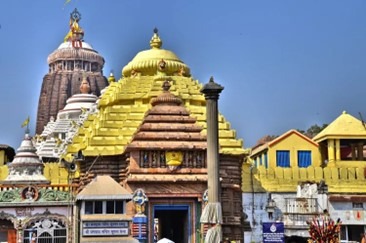
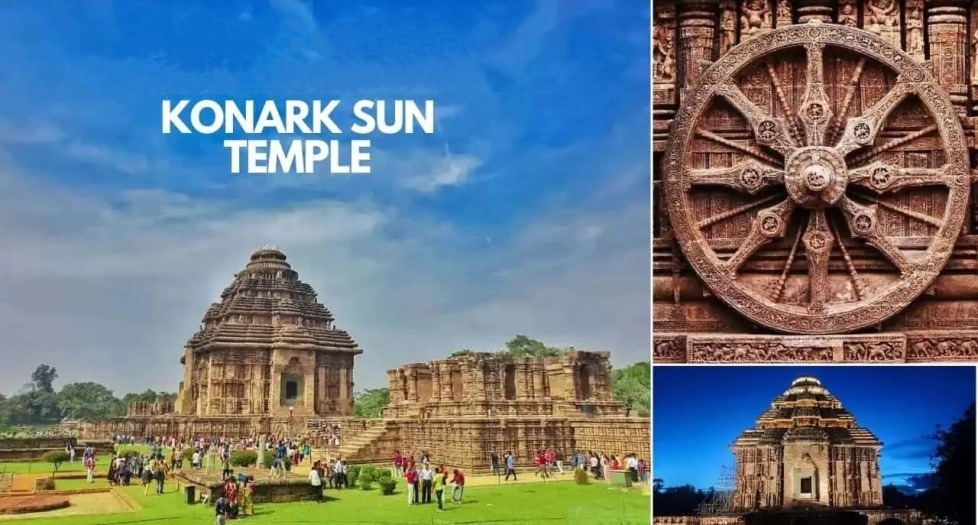
Another notable ruler, Narsimhadeva I (1238–1264), left an indelible mark on Indian architecture by building the Sun Temple at Konark, a UNESCO World Heritage Site renowned for its chariot-shaped structure and intricate carvings. The Eastern Ganga dynasty came to an end during the reign of Bhanudeva IV (1414–1434), after which it was succeeded by the Gajapati dynasty.
The Gajapati rulers, often associated with the Suryavamsi lineage, emerged in 1435 under the leadership of Kapilendra Deva. The term “Gajapati” means “Lord of Elephants,” symbolizing royal strength and military prowess. Kapilendra Deva expanded his dominion southward, challenging the Vijayanagara Empire, the Reddis of Kondavidu, and the Bahmani Sultans. In 1450, he appointed his son Hamvira Deva as governor of Rajahmundry and Kondavidu, and tasked him with further southern campaigns.
Hamvira successfully captured Hampi, the Vijayanagara capital, and forced Mallikarjuna Raya to pay tribute. His military commander, Tamavupala, led expeditions deep into southern India, capturing territories such as Udayagiri, Chandragiri, Trichinapalli, Tanjore, and Arcot. By 1464, Hamvira had assumed the title Dakshina Kapileswara, indicating his authority over southern India.
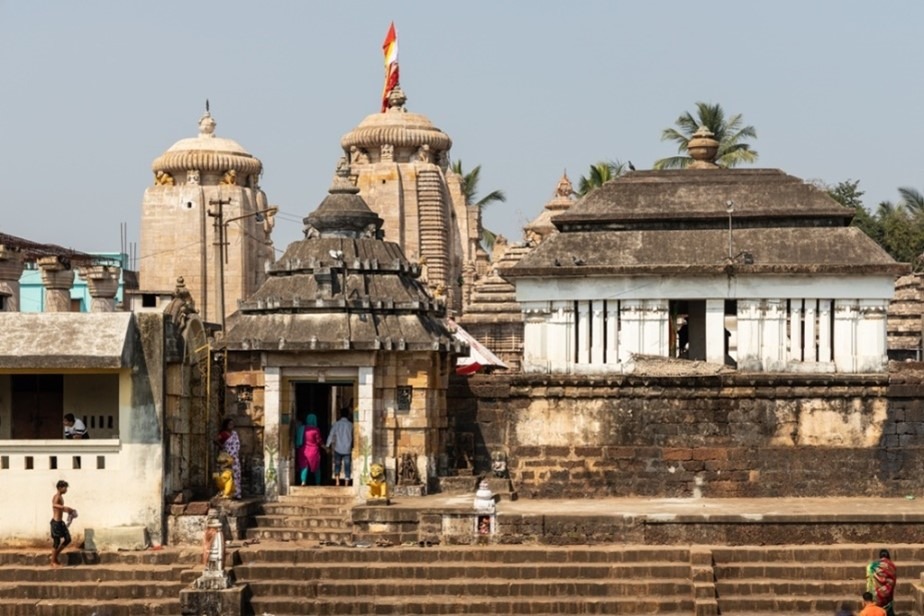
Kapilendra Deva was a devout Vaishnavite and a patron of both religion and literature. He renovated the Jagannath Temple, built the Kapileswara Temple in Bhubaneswar, and authored the Sanskrit drama Parshuram Vijaya. His reign also witnessed the formal adoption of the Odia language as the language of administration. The eminent poet Sarala Das composed the Odia Mahabharata during this period.
Upon Kapilendra’s death, his son Purushottama Deva (1466–1497) ascended the throne after defeating his brother Hamvira. Though he lost several territories in the south to Saluva Narasimha of Vijayanagara, he eventually managed to regain some of them. His successor, Prataparudra Deva (1497–1540), faced invasions from Alauddin Husain Shah of Bengal and Krishna Deva Raya of Vijayanagara. Despite several military setbacks, he maintained the sovereignty of Odisha for much of his reign.
Deeply influenced by the Bhakti movement and the teachings of Sri Chaitanya, Prataparudra gradually distanced himself from political affairs and embraced asceticism. His abdication created a leadership vacuum, leading to political instability. In 1541, his minister Govinda Vidyadhara usurped the throne by assassinating Prataparudra’s heirs, founding the short-lived Bhoi dynasty. Civil wars and invasions weakened the kingdom further.
In 1559, Mukunda Deva, another ambitious minister, seized power by killing the last Bhoi rulers and declared himself the ruler of Odisha. He is regarded as the last independent king of the region. However, in 1568, Odisha fell to Sulaiman Khan Karrani of the Bengal Sultanate. This conquest marked a significant turning point, as Odisha ceased to exist as an independent kingdom from that point forward.
Jaunpur, located in the eastern part of the Delhi Sultanate, emerged as a prosperous and influential region during the late 14th and 15th centuries. Its rise began under Malik Sarwar, a prominent noble during the reign of Firoz Shah Tughlaq. In 1394, Sultan Nasiruddin Mohammad Shah Tughlaq appointed Malik Sarwar as a minister and conferred upon him the prestigious title of Sultan-us-Sharq—the “Master of the East.” Thereafter, he became widely known as Malik Sarwar Sultan-us-Sharq.
Taking advantage of the political instability following Timur’s invasion and the weakening grip of the Delhi Sultanate, Malik Sarwar declared his independence and established control over large parts of Awadh and the Ganga–Yamuna doab. Under the Sharqi rulers, Jaunpur developed a distinctive cultural identity and architectural tradition, famously referred to as the Sharqi style of architecture. Due to its vibrant cultural life, it was affectionately called the “Shiraz of India”. Majestic monuments like the Atala Masjid, Lal Darwaza Masjid, and Jama Masjid stand as enduring symbols of this unique architectural heritage.
Upon Malik Sarwar’s death in 1399, he was succeeded by his adopted son Malik Qaranfal, who took the regal title of Mubarak Shah (1399–1402). He was followed by Ibrahim Shah Sharqi (1402–1440), also known as Shams-ud-din Ibrahim Shah, who is considered the most distinguished ruler of the dynasty. Under Ibrahim Shah, Jaunpur flourished as a center of Islamic learning and scholarship. Numerous madrasas (colleges) were established, and theological and legal works were produced, including Hashiyah-i-Hindi, Bahar-ul-Mawwaj, and Fatwa-i-Ibrahim Shahi. Although the foundation of the Atala Masjid was laid during the Tughlaq period in 1376, its grand completion occurred under Ibrahim Shah in 1408. He also commissioned the Jhanjhiri Masjid in 1430, further enriching the architectural heritage of Jaunpur.
Mahmud Shah (1440–1457), Ibrahim’s successor, expanded his territory by capturing the fort of Chunar, though he failed to seize Kalpi. In 1452, he mounted an unsuccessful invasion of Delhi and was repelled by Bahlol Lodhi. Another attempt followed when he advanced into Etawah, but lasting success remained elusive.
Mahmud Shah was succeeded by his son Bhikhan, who assumed the title of Muhammad Shah (1457–1458). He chose diplomacy over war, making peace with Bahlol Lodhi and acknowledging Lodhi authority over Shamsabad. The magnificent Lal Darwaza Masjid, constructed in 1450, was completed during Mahmud Shah’s reign.
The last and perhaps most culturally vibrant ruler of the Sharqi dynasty was Hussain Shah Sharqi (1458–1505). A connoisseur of music and art, he adopted the title Gandharva, reflecting his devotion to music. He made significant contributions to the development of Khayal, a genre of Hindustani classical music, and composed several new ragas. However, his reign ended in defeat when Sikandar Lodhi, son and successor of Bahlol Lodhi, annexed Jaunpur. With Hussain Shah’s death, the Sharqi dynasty came to a close.
Historically significant since ancient times, Bengal was a dominant regional kingdom under the Palas in the 8th century and the Senas in the 12th century. During the Delhi Sultanate, Bengal was its easternmost province, yet due to its geographic remoteness, humid climate, and reliance on riverine communication, effective control from Delhi proved difficult. Despite repeated attempts at consolidation, Bengal frequently asserted its autonomy.
In the late 12th century, Muhammad bin Bakhtiyar Khalji annexed Bengal to the Ghurid domains. However, after his death, his successors declared independence, backed by local support. Later, Balban reasserted Delhi’s authority and appointed his son Bughra Khan as governor. But following Balban’s death, Bughra Khan declared sovereignty, underlining the region’s political independence.
Ghiyasuddin Tughlaq attempted administrative reforms by dividing Bengal into Lakhnauti, Satgaon, and Sonargaon, but rebellions persisted. During Muhammad bin Tughlaq’s reign, Bengal seceded again in 1338. The foundation of an independent Bengal kingdom was laid by Haji Shamsuddin Ilyas Shah in 1342.
Ilyas Shah united the various provinces of Bengal and expanded westward to Tirhut, Champaran, Gorakhpur, and Varanasi, which led to conflict with Firoz Shah Tughlaq. After a confrontation, Ilyas Shah retreated to the Ekdala Fort, resulting in a peace treaty that fixed the Kosi River as the boundary. This settlement allowed Ilyas to focus eastward, annexing Kamrupa (modern Assam). A charismatic ruler, he adapted Indo-Aryan cultural norms, encouraged Bengali Muslim identity, and attracted migrants from across the Muslim world.
The capitals, Pandua and Gaur, flourished with grand architecture. While Persian was used for administration, Bengali began evolving as a regional literary language. The poet Maladhar Basu, author of Sri-Krishna-Vijaya, was honoured with the title Gunaraja Khan, and his son was given the title Satyaraja Khan.
Ilyas Shah’s son Sikandar Shah faced another invasion by Firoz Shah Tughlaq but successfully repelled it, maintaining Bengal’s independence for nearly two centuries until the Mughals arrived in 1538.
Among Ilyas Shah’s successors, Ghiyasuddin Azam Shah (1390–1411) is noted for his justice and diplomacy. He established trade ties with China, exchanging embassies and even sending Buddhist monks upon the Chinese emperor’s request. Bengal’s port of Chittagong emerged as a vital trading center during this time.
In 1414, a brief Hindu interlude occurred under Raja Ganesha, but Muslim rule was restored by Nasiruddin Mahmud Shah. From 1487 to 1494, Habshi rulers (African origin) briefly controlled Bengal, until overthrown by Alauddin Hussain Shah, founder of the Hussain Shahi dynasty.
Alauddin Hussain Shah (1494–1519) is widely considered the greatest Sultan of Bengal. His reign marked a cultural renaissance, and he actively promoted Bengali literature and art. He expanded his empire to include Kamata, Kamarupa, Jajnagar, Orissa, and extended his control to Chittagong, where the first Portuguese arrived. Notably inclusive, his court included Hindus in top administrative positions, and he offered deep respect to Chaitanya Mahaprabhu, the Vaishnava saint.
His son Nasrat Shah succeeded him and maintained a neutral stance during Babur’s invasion of North India. He continued his father’s expansionist legacy and formed a treaty with Babur, sparing Bengal from Mughal conquest. However, following military setbacks against the Ahoms, Nasrat Shah was succeeded by Alauddin Firuz Shah, who was later assassinated by his uncle Ghiyasuddin Mahmud Shah.
The last Sultan of the dynasty, Ghiyasuddin Mahmud Shah (1533–1538), was weak and indulgent. Initially hostile toward the Portuguese in Chittagong, he later permitted them to establish trading posts in Hughli. In 1538, Bengal was conquered by Sher Shah Suri, founder of the Sur Empire. Later in 1586, Akbar annexed Bengal, converting it into a suba of the Mughal Empire.
Assam’s history is a tapestry woven from multiple ethnic, linguistic, and cultural threads. A land of convergence for Tibeto-Burman, Indo-Aryan, and Austroasiatic communities, its early history is preserved in epics like the Mahabharata and sacred texts such as the Kalika Purana and Yogini Tantra. The historical narrative formally begins with Pushyavarman, who established the Varman dynasty in the 4th century, giving rise to the Kamarupa kingdom. This ancient state left behind rich inscriptions and grants, with a notable mention in Samudragupta’s Allahabad Pillar.
During the medieval period, the Ahom Kingdom rose to prominence. The Buranjis, royal chronicles written in Ahom and Assamese, provide detailed accounts of the kingdom’s history. Originally of Tai origin, the Ahoms migrated from Mong Mao (Yunnan, China), led by Siu-Ka-Pha, who arrived in Assam in 1218 with about 9,000 followers. After a long journey, they established a stable polity in 1228, eventually founding the Ahom dynasty.
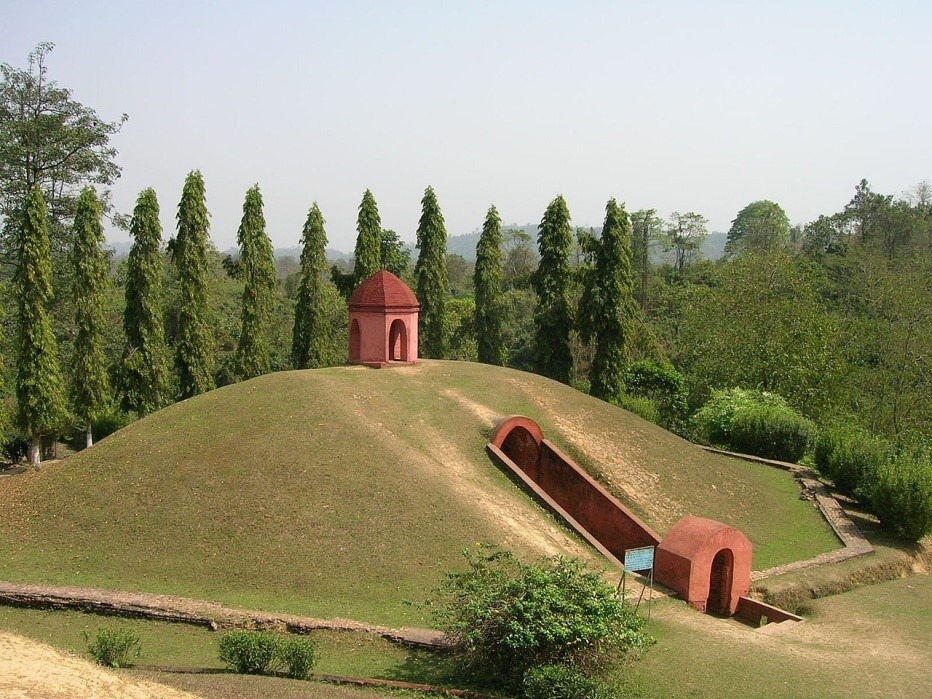
The first Ahom capital was established at Charaideo in 1253. It became known for its maidams—burial mounds of royalty. These structures reflected deep ancestral worship and were associated with the Me-Dam-Me-Phi festival. Out of 386 maidams, 90 royal tombs at Charaideo remain well-preserved, and in 2024, the Charaideo Moidams were declared a UNESCO World Heritage Site.
Though Ilyas Shah of Bengal once advanced as far as Guwahati, he failed to hold the territory. The Karatoya River became the recognized boundary between Bengal and Assam. Later, Alauddin Hussain Shah, with Ahom support, destroyed Kamatapur, capital of the Kamata kingdom, and appointed his son as governor. However, his successor Nusrat Shah’s advance was thwarted by the Ahoms.
Under Suhungmung (1497–1539), the Ahoms reached the peak of their power. He was the first Ahom king to adopt a Hindu title, Svarga Narayana, symbolizing their assimilation into Hindu society and inclusive governance. Known as Dihingia Raja, he made Bakata on the Dihing River his capital and expanded the kingdom in all directions. His reign coincided with the rise of Shankardeva, the great Vaishnavite reformer, who transformed the spiritual landscape of Assam.