
TOne Academy

South Indian Kingdoms

Home / Indian History / South Indian Kingdoms

Political Dynamics of Early Medieval South India (6th to 13th Century CE)

     By the sixth century CE, the decline of the Gupta Empire in North India ushered in a period of political disintegration, with the vast imperial structure giving way to numerous small and regional kingdoms. In contrast, South India and the Deccan region witnessed the rise of powerful and organized states that began to assert their dominance. Among the most prominent were the Chalukyas of Badami, the Pallavas of Kanchi (Tondaimandalam), and the Pandyas of Madurai. These three dynasties shaped the political landscape of peninsular India for several centuries, engaging in dynamic rivalries and military campaigns that redefined territorial boundaries and political hierarchies.


    From the sixth to the eighth century, the region was largely dominated by a prolonged power struggle between the Chalukyas of Badami and the Pallavas of Kanchi, each vying for supremacy over the fertile and strategically important regions of the south. The Pandyas, who controlled the districts of Madurai and Tirunelveli in present-day Tamil Nadu, played a comparatively minor role in this tripartite rivalry during this phase.


      The eighth century marked a significant turning point with the downfall of the Chalukyas of Badami, who were overthrown by the rising Rashtrakutas. Simultaneously, the Pallava dynasty began to lose its dominance and was eventually vanquished in the ninth century by the Cholas, who emerged as the new imperial power in Tamilakam. The Cholas not only defeated the Pallavas but also curtailed the influence of the Pandyas, ushering in a new era of imperial expansion and cultural revival.


    The Chola Empire, reaching its zenith under rulers like Rajaraja I and Rajendra I, embarked on ambitious military campaigns and engaged in fierce conflicts with the Rashtrakutas and later the Western Chalukyas of Kalyani. These constant confrontations, however, proved to be a double-edged sword. While they expanded Chola territory and influence, the relentless wars also drained resources and weakened both the Cholas and the Western Chalukyas over time.


    By the twelfth century, the Western Chalukyas of Kalyani began to crumble, eventually being overtaken by their former feudatories, including the Hoysalas. The thirteenth century witnessed a brief resurgence of the Pandyas, who managed to reclaim their prestige by defeating the last Chola ruler, effectively marking the end of the Chola Empire.


      Following the decline of the Cholas and Western Chalukyas, four new dynasties rose to prominence: the Hoysalas and Pandyas in the south, and the Yadavas and Kakatiyas in the Deccan. While these kingdoms initially established strong regional control, they soon became embroiled in internal conflicts and mutual hostilities. These incessant wars, which included plundering of towns and even sacrilegious attacks on temples, led to political instability and economic stagnation. Ultimately, these fragmented kingdoms proved vulnerable to external invasions, and by the early fourteenth century, most of them were conquered by the Delhi Sultanate, bringing a new phase of political transformation in South India.

Divine Lineage and the Legitimization of Rule

      A distinct feature of South Indian dynasties during this period was their emphasis on divine origins as a means to legitimize their rule and reinforce their authority. Performing Vedic rituals like the Ashvamedha yagna (horse sacrifice) was a common strategy used by monarchs to assert their sovereignty and gain religious approval.


    • The Chalukyas claimed descent from Brahma, the creator deity, or alternatively from Manu, the first human in Hindu cosmology, or even from the moon.
    • The Pallavas also traced their lineage directly to Brahma, thereby positioning themselves as divinely ordained rulers with a sacred duty to uphold dharma.
    • The Pandyas asserted their origin from the moon god (Chandravansha), aligning themselves with a revered lunar dynasty.
    • In contrast, the Cholas proclaimed themselves as descendants of the sun god (Suryavansha), identifying with the solar dynasty, a lineage considered auspicious and heroic in Indian tradition.


These divine genealogies were not mere myths; they played a crucial role in shaping dynastic identity, reinforcing political legitimacy, and fostering loyalty among subjects. They also symbolised the deep intertwining of religion, mythology, and monarchy in the political ideology of early medieval South India.

Chalukyas of Badami (c. Sixth to Eighth Century CE)

     The Chalukyas of Badami, also known as the Chalukyas of Vatapi, were among the most significant political powers in the Deccan region during early medieval India. Originally, they served as feudatories to the Kadambas, a dynasty that held sway over northern Karnataka from the fourth to the sixth century CE. However, the Chalukyas gradually rose in strength and asserted their independence, eventually carving out a vast and influential kingdom. From the sixth to the twelfth century CE, the Chalukya dynasty was represented by three interrelated but politically distinct branches: the Chalukyas of Badami (Vatapi), the Eastern Chalukyas of Vengi, and the Western Chalukyas of Kalyani.


     The founder of the Chalukya dynasty of Badami was Pulakesin I, who ruled from 543 to 566 CE. A petty chief originally based in Pattadakal, he declared independence from the Kadambas and established his capital at Vatapi (modern-day Badami in Karnataka). Pulakesin I undertook ambitious military campaigns, consolidating his rule over the Western Ghats and the region between the Krishna and Tungabhadra rivers, thereby asserting control over the crucial Raichur Doab. While some scholars also credit a figure named Vijaysimha with founding the dynasty, Pulakesin I is more widely accepted in mainstream historiography.


    Pulakesin I was succeeded by his son, Kirtivarman I (c. 566–597 CE), who expanded the empire towards the Konkan coast, extending Chalukya influence westward. However, it was Pulakesin II (c. 610–642 CE), one of the most powerful monarchs of the dynasty, who truly elevated the Chalukyas into a formidable empire. Under his leadership, the Chalukyan dominion stretched across large parts of Malwa, southern Rajasthan, and Gujarat, creating a formidable buffer against northern powers. His fame reached even foreign courts; the Persian Sassanid king Khusru II exchanged diplomatic embassies with him, and the Chinese traveller Xuanzang visited his court, recording glowing observations about his efficient administration and just rule.


     The grandeur of Pulakesin II’s reign is captured in the Aihole inscription, a Sanskrit prashasti (eulogy) composed by his court poet Ravikirti. This inscription not only praises Pulakesin II’s accomplishments but also traces his lineage through four generations, providing invaluable genealogical and historical details. Interestingly, the inscription suggests that Pulakesin inherited the throne from his uncle, highlighting the dynastic flexibility common in Indian monarchies of the time.


     Pulakesin II was an able military strategist and commander. He defeated the Kadambas of Banavasi and the Gangas of Mysore, bringing these territories under his control. His suzerainty was acknowledged by the Ganga ruler Durvinita, who solidified the alliance through a marriage alliance, giving his daughter in marriage to Pulakesin II. Perhaps Pulakesin’s most celebrated military achievement was his victory over Harshavardhana, the powerful ruler of North India. The two forces met near the Narmada River, where Pulakesin decisively halted Harsha’s southern advance. A treaty followed, recognizing the Narmada as the boundary between their two empires.


     Around 610 CE, Pulakesin II expanded his realm further east by conquering the territory between the Krishna and Godavari rivers, known as Vengi. To maintain control over this new acquisition, he appointed his brother Kubja Vishnuvardhana as governor, who later established the Eastern Chalukya dynasty of Vengi, thus marking the beginning of a new and lasting political lineage in the eastern Deccan.


    Pulakesin II also engaged in a long-standing rivalry with the Pallavas of Kanchi, one of the major powers of the Tamil region. In his first expedition, he successfully defeated Pallava king Mahendravarman I (600–630 CE), advancing deep into Pallava territory and forcing them to cede their northern provinces to the Chalukyas. However, in a subsequent campaign, Pulakesin’s fortunes reversed. In 642 CE, he suffered a devastating defeat at the hands of Narasimhavarman I (630–668 CE), the son and successor of Mahendravarman. Narasimhavarman captured and sacked Vatapi, killing Pulakesin II and earning the title “Vatapikonda” (conqueror of Vatapi).


  Pulakesin II’s reign coincided with other prominent rulers of early medieval India, including Harshavardhana of the Pushyabhuti dynasty in the north, as well as Mahendravarman I and Narasimhavarman I of the Pallava dynasty in the south. These interactions and rivalries reflect the complex political matrix of the subcontinent during this period.


    Following the death of Pulakesin II, his son Vikramaditya I ascended the throne and focused on restoring Chalukya prestige. He reorganized the kingdom, reinforced Chalukya power, and resumed hostilities against the Pallavas. This culminated during the reign of Vikramaditya II (733–745 CE), who invaded Kanchi three times, finally achieving a resounding victory in 740 CE. His campaigns marked the decline of Pallava dominance in the southern peninsula, although the Pallava dynasty managed to linger on for a century more.


     Despite their military successes, the Chalukyas could not consolidate their supremacy for long. In 757 CE, the dynasty met its end when Dantidurga, the powerful Rashtrakuta king, defeated the last Chalukyan ruler, Kirtivarman II, and established Rashtrakuta rule in the Deccan. Thus ended the glorious reign of the Chalukyas of Badami, though their legacy continued through their architectural achievements, administrative reforms, and cultural patronage.


King (Ruler)

Reign (Rule)

Important Points

Pulakesin I

543 to 566 CE

• Founder of the Chalukya dynasty of Badami

Kirtivarman I

566 to 597 CE

• Expanded Chalukya territory to the Konkan coast

Pulakesin II

610 to 642 CE

• Most powerful ruler of the Chalukya dynasty

• Defeated Harshavardhana (606–647 CE), ruler of the Pushyabhuti dynasty

• Defeated Pallava ruler Mahendravarman I (600–630 CE)

• Was later defeated and killed by Pallava ruler Narasimhavarman I (630–668 CE)

Kirtivarman II

743 to 757 CE

• Last ruler of the Chalukyas of Badami

• Defeated by Rashtrakuta king Dantidurga, marking the end of the dynasty


Social Life Under Chalukyas

      The social life under the Chalukyas of Badami was characterized by a deeply rooted commitment to Brahmanical Hinduism, yet marked by a spirit of religious tolerance and cultural inclusiveness. The Chalukya rulers were staunch patrons of Vedic traditions and placed great importance on performing elaborate rituals and sacrifices, such as the Ashvamedha Yajna, which was conducted by Pulakesin I to assert his sovereign power and religious legitimacy. Temples dedicated to various deities of the Hindu pantheon—particularly Vishnu and Shiva—were constructed in large numbers, signifying the devotion of the dynasty to the promotion of Hindu religious practices. Alongside these architectural projects, the Chalukya rulers made numerous land grants to Brahmanas, strengthening their socio-religious influence and ensuring the continuity of Brahmanical learning and rituals.


    Despite their strong Brahmanical orientation, the Chalukyas of Badami were remarkably tolerant towards other religions. Jainism, in particular, enjoyed considerable support and growth during their reign. This is exemplified by the fact that Ravikirti, the celebrated court poet of Pulakesin II and composer of the famous Aihole inscription, was a devout Jain. His prominence in the royal court illustrates the inclusive nature of the Chalukya administration and their willingness to accommodate non-Hindu scholars and officials. Buddhism, on the other hand, was on the decline during this period, although remnants of its influence still lingered in certain regions.


     Culturally, the Chalukyas of Badami played a pivotal role in promoting regional language and literature, particularly Kannada, which began to gain prominence during the sixth century CE. This early encouragement laid the foundation for the eventual flourishing of Kannada literature in later centuries. Thus, the Chalukya period was a time of vibrant religious, social, and cultural life that reflected both devotion to tradition and an openness to diversity.

Eastern Chalukyas of Vengi (Seventh to Twelfth Century CE: 616 – 1189 CE)

      The Eastern Chalukyas of Vengi, who ruled from the seventh to the twelfth century CE (616–1189 CE), played a pivotal role in shaping the political and cultural landscape of the eastern Deccan, particularly in what is now Andhra Pradesh. Their lineage was established when the celebrated Chalukya ruler Pulakeshin II conquered the fertile region between the Krishna and Godavari rivers, known as Vengi. In 616 CE, he appointed his younger brother, Kubja Vishnuvardhana, as the viceroy of Vengi, thereby laying the foundation for a new and independent Eastern Chalukya dynasty. Although they initially functioned as subordinates of the Chalukyas of Badami, they soon asserted their independence following Pulakeshin II’s death.
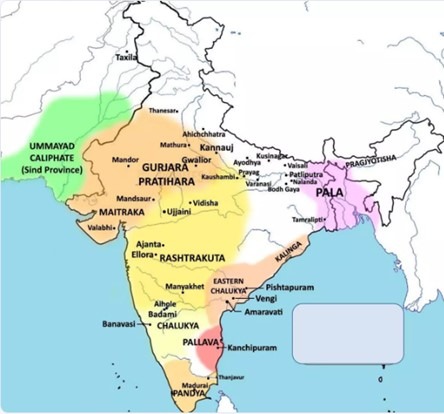


     For nearly five centuries, the Eastern Chalukyas were entangled in a continuous cycle of warfare, diplomacy, and shifting alliances. They engaged in both conflict and cooperation with major contemporary powers such as the Pallavas of Kanchi, the Rashtrakutas of Manyakheta, the Western Chalukyas of Kalyani, and eventually, the Cholas of Tamilakam. Following the decline of the parent Chalukya dynasty in the west, the Eastern Chalukyas submitted to the authority of the Rashtrakutas. Later, from 1002 to 1189 CE, they served as feudatories under the Imperial Cholas, marking a significant phase of political integration and cultural exchange between Andhra and Tamil regions.


      Despite the turbulent political environment, the reign of the Eastern Chalukyas is most celebrated for the emergence and consolidation of a distinct ‘Andhra’ identity. Their prolonged rule contributed immensely to the development of Telugu language, literature, and cultural ethos. The Eastern Chalukya courts became vibrant centres of learning and literary activity. One of the most noteworthy cultural achievements of this period was the initiation of the Andhra Mahabharatam, a monumental Telugu literary work undertaken by Nannaya Bhattaraka, the court poet of Rajaraja Narendra in the 11th century CE. Nannaya’s translation of the Mahabharata from Sanskrit into Telugu not only laid the foundation for classical Telugu literature but also elevated the status of Telugu as a literary language.
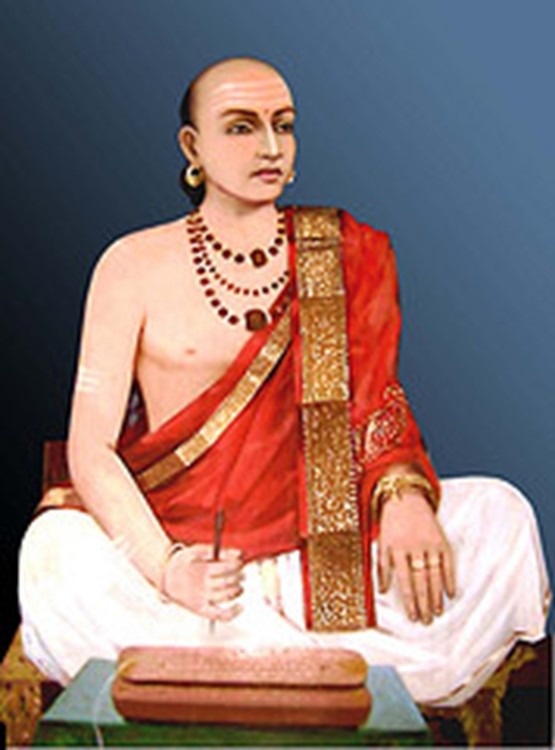


     In essence, the Eastern Chalukyas of Vengi not only sustained a strong and influential dynasty amidst political upheavals but also significantly shaped the cultural identity of the Telugu-speaking people, leaving behind a legacy that continues to influence Andhra’s linguistic and literary traditions to this day.

Western Chalukyas of Kalyani (Tenth to Twelfth Century CE: 973 – 1189 CE)

      The Western Chalukyas of Kalyani, who ruled from the tenth to the twelfth century CE (973–1189 CE), emerged as a powerful dynasty in the Deccan, reviving the legacy of their ancestral Chalukyas of Badami. After the fall of the Badami Chalukyas at the hands of Dantidurga, the founder of the Rashtrakuta dynasty, in the eighth century CE, the remnants of the Chalukya line served as feudatories under the Rashtrakutas. However, the tide turned in 973 CE, when Tailapa II, a former feudatory, successfully overthrew the Rashtrakutas and re-established Chalukya rule. He founded what came to be known as the Western Chalukya dynasty, with Kalyani (modern Basavakalyan in Karnataka) as its new capital.
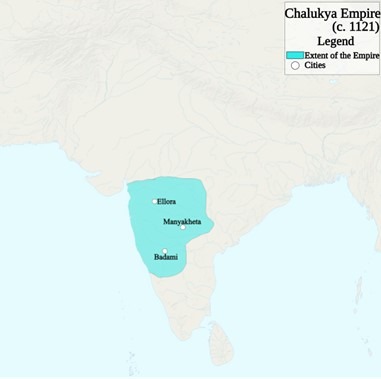


     For over two centuries, the Western Chalukyas were embroiled in prolonged and often fierce military conflicts, particularly with the Cholas of Thanjavur and their close relatives, the Eastern Chalukyas of Vengi. These hostilities were not only battles for territory but also deeply rooted in dynastic rivalries, influencing the political dynamics of the entire southern Indian peninsula.


      Among the rulers of this dynasty, Vikramaditya VI (reigning from 1076 to 1126 CE) stands out as the most illustrious. Under his leadership, the Western Chalukya empire reached the pinnacle of its territorial and administrative power. His authority extended from the Narmada River in the north to the Kaveri River in the south, consolidating a vast stretch of the Deccan under Chalukya control. Vikramaditya VI was not only a formidable military leader but also a patron of art, literature, and law, ushering in a cultural renaissance during his reign.


      The last significant ruler of this dynasty was Someshvara IV, who ruled until 1189 CE. After his reign, the Western Chalukya empire weakened significantly, leading to its gradual disintegration. Their former subordinates—the Hoysalas in the south, the Kakatiyas in the east, and the Yadavas in the north—seized the opportunity to assert their independence and carved out their own kingdoms, marking the end of Western Chalukya dominance in the region.

Contributions to Literature and Culture

     The Western Chalukyas of Kalyani made significant contributions to Indian literature, law, and intellectual traditions. One of the most remarkable literary achievements of this period was the Manasollasa, also known as Abhilashitartha Chintamani, composed by King Someshvara III in the early twelfth century CE. Written in Sanskrit, this encyclopaedic work is an invaluable source of information on the social, cultural, and administrative life of medieval India. It encompasses a wide range of subjects including statecraft, governance, ethics, economics, astronomy, astrology, medicine, horticulture, culinary arts, architecture, painting, music, and dance. The Manasollasa offers a detailed window into the intellectual sophistication of the period and stands as a testament to the scholarly interests of the Chalukya kings.


    Another eminent figure from this period was Vijnaneshwara, a renowned legal scholar who served in the court of Vikramaditya VI. He authored the Mitakshara, a profound commentary on the Yajnavalkya Smriti. This text laid down a comprehensive framework for Hindu law, particularly focusing on inheritance laws. The Mitakshara school of law, based on his work, went on to become the most influential legal tradition in medieval and modern Hindu jurisprudence across much of India.


    Bilhana, an 11th-century poet originally from Kashmir, was also associated with the court of Vikramaditya VI. He authored the Vikramankadevacharita, a biographical poem in Sanskrit that vividly narrates the life and achievements of King Vikramaditya VI. Bilhana’s work is celebrated for its literary grace and historical value, offering insights into the grandeur of the Chalukyan court and its cultural milieu.


    In conclusion, the Western Chalukyas of Kalyani were not only significant political actors in medieval Deccan but also pioneers of intellectual and cultural advancement. Their patronage of literature, law, and science enriched the Indian cultural tradition and left a lasting legacy that would shape the course of Deccan history for centuries to come.

The Pallavas (Third to Ninth Century CE)

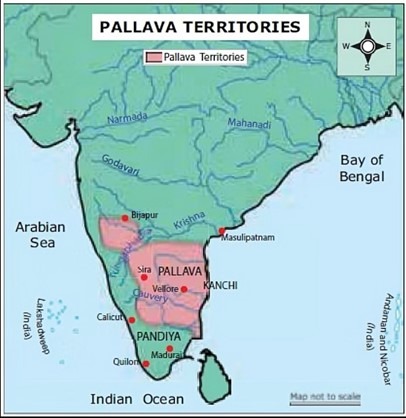
      The Pallavas, who rose to prominence between the third and ninth centuries CE, played a pivotal role in shaping early medieval South Indian history. Their rule marked a transition from the Sangam era to a more structured political and cultural order in northern Tamil Nadu and parts of Andhra Pradesh. As the Sangam age declined by the end of the third century CE, the ancient Tamil kingdoms of the Cholas, Cheras, and Pandyas faded from the political scene. This vacuum was briefly filled by the Kalabhras, a little-known dynasty that disrupted traditional Tamil society. However, by the sixth century, the Pallavas in the north and the Pandyas in the south expelled the Kalabhras and restored Tamil rule.

Origins and Early Rise

      The Pallavas were initially feudatories of the Satavahanas, the dominant power in the Deccan until their decline in the third century CE. Following the fall of the Satavahanas, the Pallavas asserted independence and gradually expanded their authority over northern Tamil Nadu, southern Andhra Pradesh, and parts of Kerala. Though their presence is recorded from the third century, it was under Simhavishnu in the sixth century CE that the Pallavas emerged as a formidable force. Simhavishnu successfully expelled the Kalabhras and established control over Tondaimandalam, the region between the Pennar and Vellar rivers, with Kanchipuram as the imperial capital.

Conflict with the Chalukyas

     The Pallavas’ political ambitions brought them into direct confrontation with another rising power—the Chalukyas of Badami. This long-standing rivalry significantly shaped South Indian geopolitics for over two centuries.
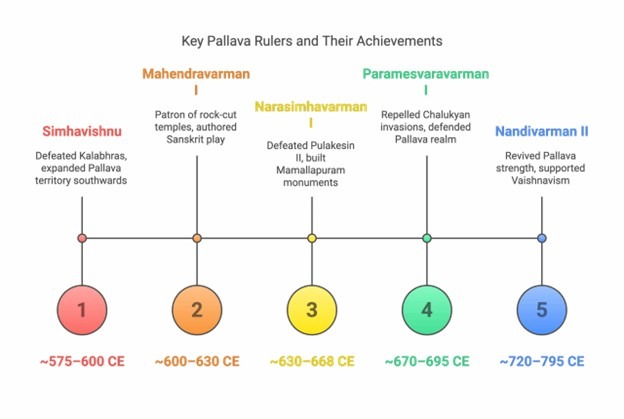
 

Mahendravarman I (600–630 CE)

      Simhavishnu’s successor, Mahendravarman I, was a capable and cultured ruler. During his reign, the Chalukya–Pallava conflict began. Both dynasties sought to dominate the fertile and strategic land between the Krishna and Tungabhadra rivers. Mahendravarman suffered a defeat at the hands of the Chalukya king Pulakesin II, who annexed parts of northern Pallava territory. Mahendravarman was initially a follower of Jainism but later embraced Shaivism under the influence of the Shaiva saint Thirunavukkarasar (Appar). He is credited with constructing a Shiva temple at Tiruvadi and was known for his architectural patronage.

Narasimhavarman I (630–668 CE)

     Mahendravarman’s son, Narasimhavarman I, emerged as one of the greatest Pallava rulers. He avenged his father’s defeat by decisively defeating and killing Pulakesin II and capturing Vatapi (modern Badami), the Chalukya capital. In recognition of this achievement, he assumed the title Vatapikonda, meaning “conqueror of Vatapi.” Narasimhavarman also crushed other regional powers including the Cholas, Cheras, Kalabhras, and Pandyas, consolidating Pallava dominance in the Tamil region. A skilled military leader, he even dispatched a naval expedition to Sri Lanka to help his ally, Manavarma, reclaim his throne. Known as Mamalla or “great wrestler,” Narasimhavarman founded the famous port city of Mamallapuram (Mahabalipuram), which became a hub of maritime trade and artistic expression.

Narasimhavarman II or Rajasimha (c. 700–728 CE)

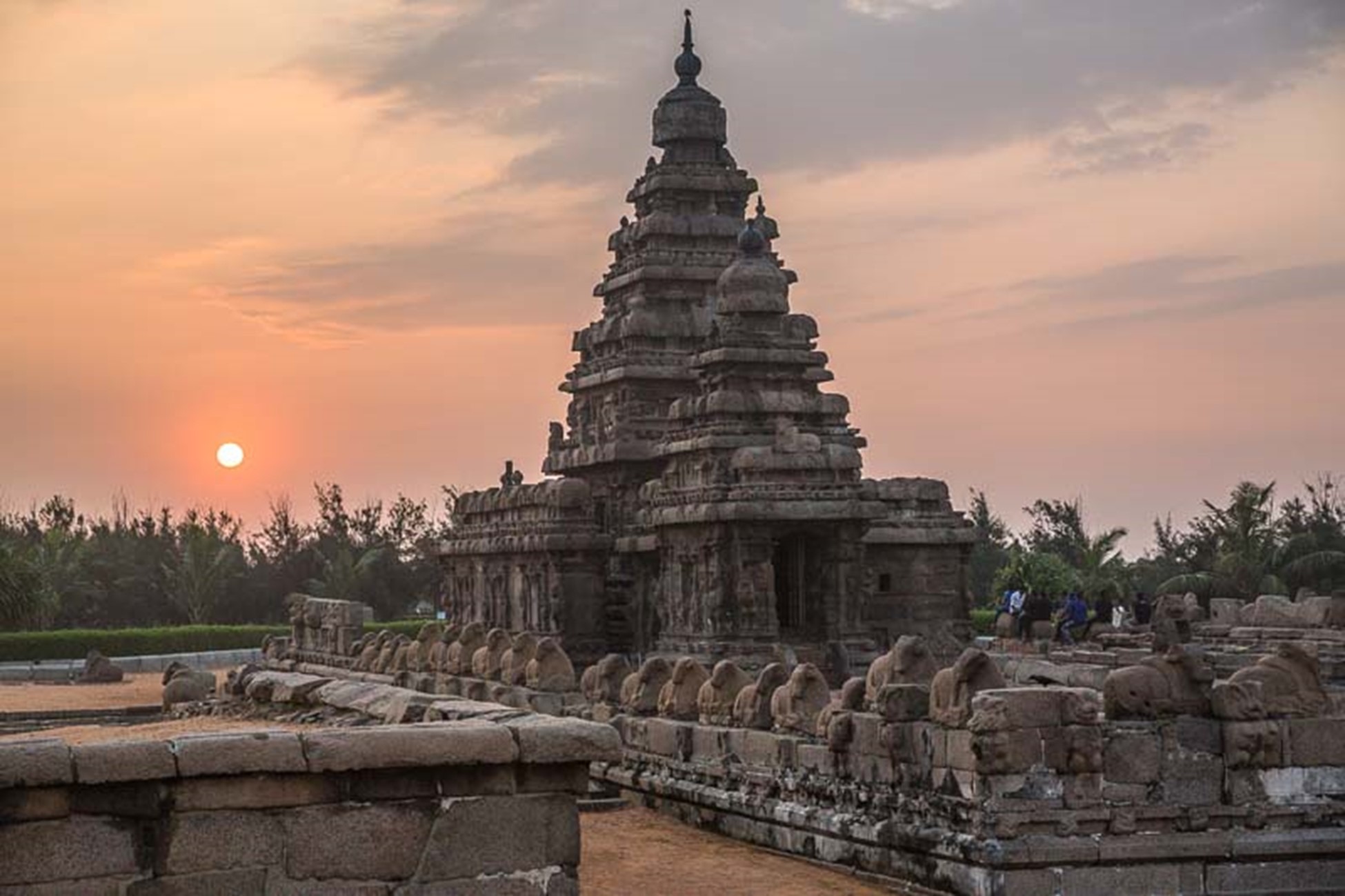
      Narasimhavarman II, also known as Rajasimha, presided over a relatively peaceful and prosperous reign. He maintained diplomatic relations with China and focused on artistic and architectural pursuits. Under his patronage, some of the most iconic Pallava monuments were built, including the Shore Temple at Mamallapuram and the Kailasanatha Temple at Kanchipuram. His court was graced by the renowned Sanskrit scholar Dandin, who made enduring contributions to classical Indian literature.
 

Relations with Kadambas and Western Gangas

      The early Pallavas clashed with the Kadambas, who controlled parts of northern Karnataka and the Konkan coast. According to legend, Mayurasharman, the founder of the Kadamba dynasty, traveled to Kanchipuram for education but was humiliated and expelled. Enraged, he rallied local tribal support, defeated the Pallavas, and forced them to acknowledge his authority. In return, he was granted royal status and performed several Ashvamedha sacrifices, asserting his sovereignty and donating numerous villages to Brahmins.


      The Western Gangas, who ruled from Talakkad in southern Karnataka, were also contemporaries of the Pallavas. Their territory lay between the domains of the Pallavas and the Kadambas. Though they were often feudatories of the Pallavas, the Gangas maintained their distinct identity. Their early capital at Kolar, known for its gold mines, gave them economic strength. Later, they shifted their base to Talakkad on the banks of the Kaveri River.

Decline of the Pallavas

      The decline of the Pallava dynasty began towards the end of the ninth century CE, when they faced renewed aggression from the rising Cholas. The final blow came in either 897 CE or 903 CE (sources vary slightly), when the Chola king Aditya I defeated the last Pallava ruler, Aparajita, and seized Kanchipuram, bringing the Pallava rule to an end.

Contributions to Literature and Arts

    The Pallava period was a golden age of art, architecture, and literature in South India. The dynasty actively patronised Sanskrit and Tamil scholarship. Mahendravarman I, himself a learned ruler, authored two famous Sanskrit plays:


    • Mattavilasa Prahasana, a humorous satire targeting the eccentricities of different religious sects including Shaivites, Buddhists, and Jains.
    • Bhagavadajjuka, which explores themes of body and soul with philosophical undertones.


The Pallava court also supported great literary figures such as Bharavi, the sixth-century poet known for his epic Kiratarjuniya, which narrates the mythological duel between Arjuna and Lord Shiva.
Another iconic scholar was Dandin, who authored two celebrated Sanskrit texts:


    • Dashakumaracharita, a romantic-adventurous prose narrative
    • Kavyadarsha, a foundational work on Sanskrit poetics.

Legacy

     The Pallavas left a profound legacy, particularly in architecture, as seen in the rock-cut temples of Mahabalipuram, which later influenced Chola and Vijayanagara styles. Their promotion of Sanskrit literature and their integration of religious tolerance—supporting Shaivism, Vaishnavism, Jainism, and Buddhism—fostered a cosmopolitan and inclusive society. Their contributions to temple architecture, especially the Dravidian style, laid the foundation for the monumental temples built by later dynasties in South India.


    In conclusion, the Pallava dynasty stands out as a period of political consolidation, cultural renaissance, and architectural innovation in early South Indian history. Their achievements in governance, military conquest, literature, and the arts continue to be celebrated as milestones in the subcontinent’s rich historical tapestry.


King (Ruler)

Reign (Rule)

Important Points

Mahendravarman I

600 – 630 CE

Defeated by Western Chalukya ruler, Pulakesin II

Narasimhavarman I

630 – 668 CE

Defeated Pulakesin II and assumed the title Vatapikonda (conqueror of Vatapi)

Aparajita

880 – 897/903 CE

Defeated by Chola king Aditya I, marking the end of the Pallava dynasty

Imperial Cholas

      The Cholas were one of the most illustrious dynasties in the history of South India. Originating during the Sangam age (3rd century BCE to 3rd century CE), they were among the three dominant Tamil powers, alongside the Cheras and Pandyas. However, after the Sangam period, historical records about the Cholas faded until their resurgence in the 9th century CE. The later rulers of this dynasty came to be known as the Imperial Cholas due to their vast empire, powerful navy, and successful overseas conquests, particularly in Sri Lanka and Southeast Asia. The exact lineage connection between the Sangam-era Cholas and the later Imperial Cholas remains unclear.

The Rise of the Chola Empire (850 CE – 1279 CE)
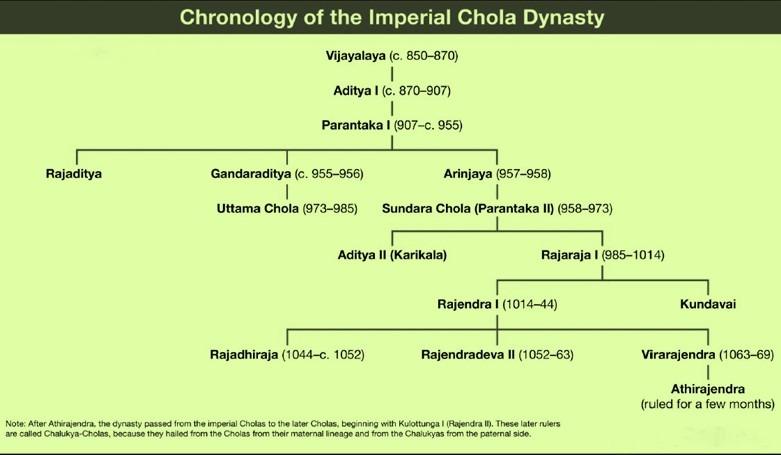


     The re-emergence of the Cholas began under Vijayalaya Chola, a feudatory of the Pallavas. In 850 CE, Vijayalaya captured the fertile Kaveri delta region from the Muttaraiyars and established his capital at Thanjavur (Tanjore). Though he initially accepted Pallava overlordship, this marked the foundation of an independent Chola kingdom.


      Vijayalaya’s son, Aditya I (c. 871 – 907 CE), expanded the kingdom significantly. He defeated both the Pallavas and the Pandyas, annexing Pallava territories and bringing an end to their rule. The Chola state was further strengthened during his reign.


      Parantaka I (c. 907 – 953 CE) continued the legacy of expansion. He successfully captured Madurai, the capital of the Pandyas, thereby consolidating Chola control over Tamil Nadu. However, his campaign in the north met with a serious setback when he was defeated by Krishna III of the Rashtrakuta dynasty in 949 CE. Despite this defeat, the Cholas regained strength following the decline of the Rashtrakutas after Krishna III’s death in 965 CE.

Rajaraja Chola I (c. 985 – 1014 CE)

   One of the most distinguished rulers of the Chola dynasty, Rajaraja Chola I, significantly expanded the empire and solidified Chola supremacy. He defeated the Cheras, Pandyas, and the Western Chalukyas of Kalyani. His military conquests also extended into Karnataka, where he annexed parts of the Ganga kingdom.


   Rajaraja supported Eastern Chalukya prince Saktivarman I in Vengi, restoring him to the throne in 1002 CE under Chola suzerainty. This alliance would play a vital role in future Chola policies.


     Rajaraja also led successful naval expeditions. He conquered northern Sri Lanka by defeating King Mahinda V and annexed the Maldives, marking the beginning of Chola naval dominance in the Indian Ocean.

Rajendra Chola I (1012 – 1044 CE)

   Rajaraja appointed his son Rajendra Chola I as co-regent in 1012 CE, and they ruled jointly for two years. Upon ascending the throne fully, Rajendra continued his father’s policy of military expansion with even greater ambition.

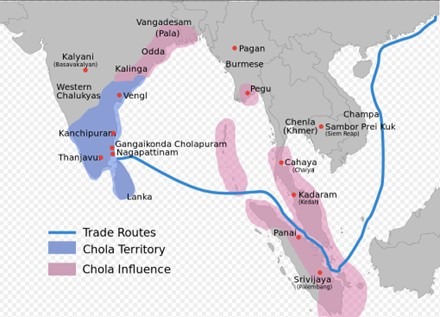
  He launched successful campaigns along the eastern coast of India, reaching up to the Godavari River. His most celebrated military venture was a northern expedition that led the Chola army across the Ganges. Victorious against multiple rulers in the north, Rajendra commemorated this achievement by establishing a new capital city, Gangaikondacholapuram (“The city of the Chola who conquered the Ganga”).

     Rajendra also completed the conquest of southern Sri Lanka, bringing the entire island under Chola control. His most remarkable feat was the naval expedition against the Sri Vijaya Empire in Southeast Asia, ruled by the Sailendra dynasty. This campaign led to the conquest of Kadaram (modern Kedah in Malaysia), Sumatra, Java, and several other strategic regions. These exploits illustrate the strength of Chola naval power.


Rajendra Chola earned several prestigious titles, including:

    • Mudikonda Cholan (The Crowned Chola)
    • Gangaikonda Cholam (The Chola Who Conquered the Ganga)
    • Kadaramkondan (Conqueror of Kadaram)
    • Pandita Cholan (The Scholarly Chola)


Monumental Contributions: Brihadeshwara and Gangaikondacholapuram Temples

Both Rajaraja and Rajendra were patrons of art, architecture, and religion. They commissioned numerous temples dedicated to Lord Shiva and Vishnu, showcasing exquisite Dravidian architecture and sculpture.


    • Brihadeshwara Temple (Rajarajeswara Temple) in Thanjavur was constructed by Rajaraja Chola and completed in 1010 CE. It remains one of the finest examples of South Indian temple architecture and a UNESCO World Heritage Site.
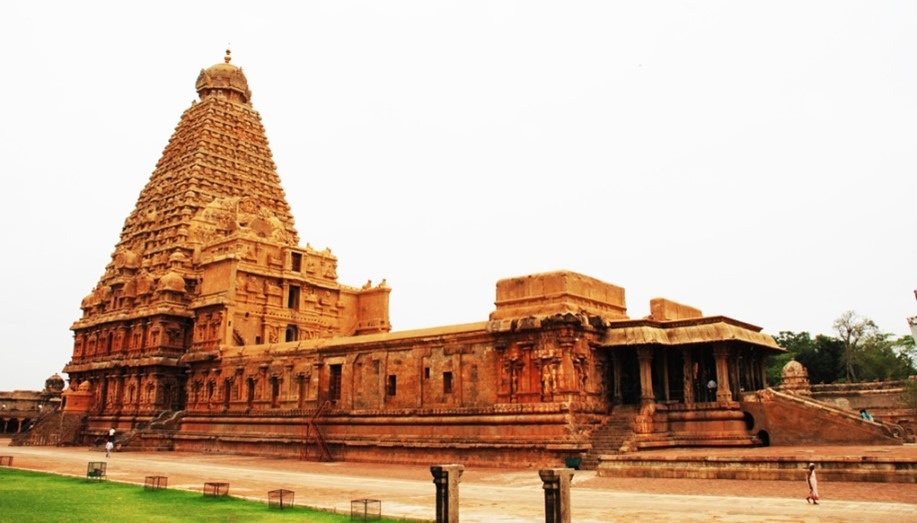


    • Shiva Temple at Gangaikondacholapuram, built by Rajendra Chola, mirrored the architectural grandeur of the Brihadeshwara temple and celebrated his conquests in northern India.
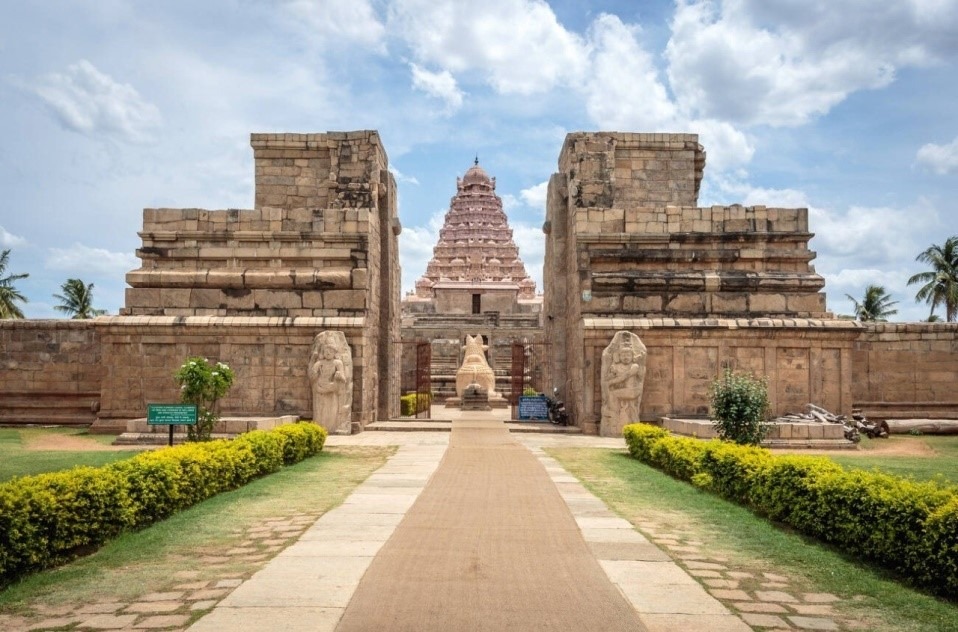


These temples were not only places of worship but also centers of economic activity, education, and administration.


The Decline of Chola Power

    The Cholas maintained their dominance over South India and parts of Southeast Asia for nearly four centuries. However, by the late 12th century, the rise of regional powers such as the Hoysalas, Kakatiyas, and Yadavas began to erode Chola influence.


     In 1279 CE, Pandya king Maravarman Kulasekara dealt the final blow by defeating the last Chola ruler, Rajendra Chola III, marking the end of the illustrious Chola dynasty. The Pandyas and Hoysalas then rose to prominence in the Tamil and Kannada regions respectively, while the Kakatiyas and Yadavas emerged as significant powers in the Deccan.


King (Ruler)

Reign (Rule)

Important Points

Vijayalaya

850 CE

Founder of the Chola dynasty

Aditya I

871 – 907 CE

Defeated the last Pallava king, Aparajita, and ended Pallava rule

Parantaka I

907 – 953 CE

Defeated by Rashtrakuta ruler Krishna III (934 – 963 CE)

Rajaraja Chola I

985 – 1014 CE

• Defeated Sri Lankan king Mahinda V and conquered northern Sri Lanka

• Conquered the Maldives

• Invaded Vengi to support Saktivarman I

Rajendra Chola I

1012 – 1044 CE

• Conquered southern Sri Lanka

• Led naval expedition against the Srivijaya Empire in Southeast Asia

• Sent victorious expedition to North India

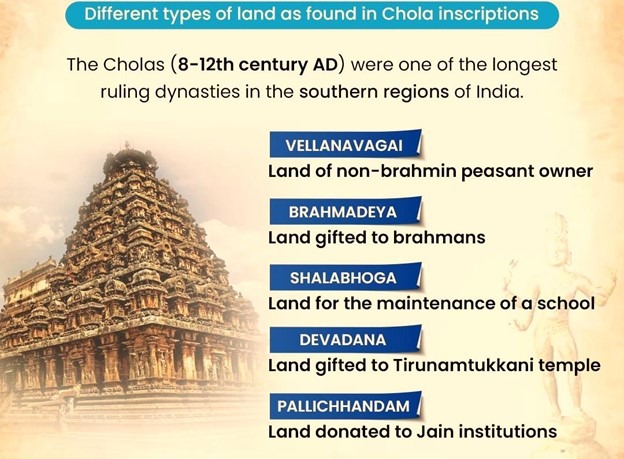
Types of Land in the Chola Empire

Chola inscriptions provide valuable insight into the categorisation of land during their rule. The administration maintained detailed records and classified land based on its ownership and purpose.


    • Brahmadeya lands were those donated to Brahmanas as a mark of royal patronage, often granted in perpetuity and exempted from tax obligations.
    • Vellanvagai referred to lands owned and cultivated by non-Brahmana peasant proprietors, forming the agricultural backbone of rural society.
    • Pallichchhandam was land gifted specifically to Jaina religious establishments, highlighting the Cholas’ religious tolerance.
    • Shalabhoga lands were allocated to support educational institutions such as schools and were often tax-free.
    • Devadana and Tirunamattukkani were lands donated to temples for religious and maintenance purposes, reflecting the deep association between the state and temple institutions.
 

Central Administration under the Cholas

    The Chola administrative system was highly centralised and efficient, with the king at the apex of authority. The monarch was supported by a council of ministers and various high-ranking officials who managed different facets of governance. In recognition of loyalty or military service, Chola kings conferred honorific titles such as “muvendavelan” (a velan or peasant who served three kings) and “araiyar” (chief). These individuals were often entrusted with key administrative roles and given charge of land, revenue collection, and military functions.

Military Organisation

    The Cholas maintained a powerful and well-disciplined army comprising the traditional three limbs—elephants, cavalry, and infantry. The elephant corps was considered the pride of the Chola military, used to intimidate and overwhelm opponents in battle. The cavalry provided swift mobility, while infantry formed the backbone of the armed forces. Notably, the Chola navy was among the most advanced of its time, playing a pivotal role in overseas expeditions and the protection of trade routes across the Indian Ocean.

Revenue Administration and Economy

    Land revenue was the principal source of income for the Chola state. To ensure accurate revenue collection, some Chola rulers undertook meticulous land surveys to assess productivity and determine the state’s share. Taxes were also levied on trade, professional activities, and war booty. The state reinvested this income into infrastructure development, including irrigation tanks, canals, temples, and roads, which were essential for both agriculture and trade.


   Trade flourished under Chola patronage, supported by a well-maintained network of royal roads, facilitating the movement of goods and armies. Markets and merchant guilds thrived, further boosting economic prosperity.

Provincial Administration

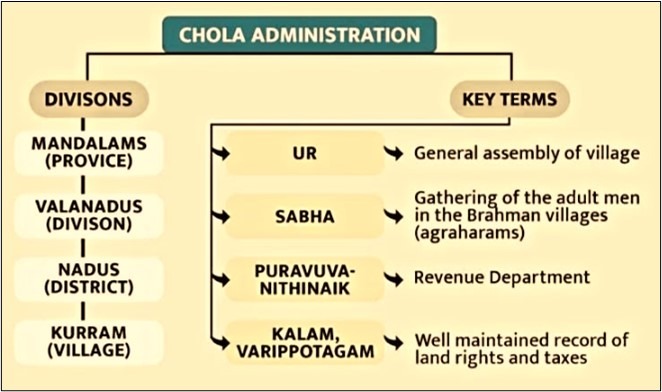
     The vast Chola Empire was divided into mandalams or provinces. Each mandalam was subdivided into valanadus, and these were further divided into nadus, which contained several villages. Some provinces were governed by princes of the royal family or high-ranking officials. These governors were often remunerated with revenue-yielding land assignments instead of salaries, aligning their interests with efficient administration.

Village Autonomy and Local Self-Government

     One of the most remarkable features of Chola governance was the promotion of village autonomy through structured local self-government. Three principal types of local assemblies functioned within the empire: sabha, ur, and nagaram, each performing distinct administrative roles.


    • Sabha was the assembly of Brahmana landowners in Brahmadeya villages. These self-governing bodies managed a wide range of responsibilities including revenue assessment and collection, maintenance of law and order, irrigation, temple administration, judicial functions, and public works. The sabha operated through various committees or sub-committees, with adult male members of the village participating in decision-making.
  •  
    • Ur was the village assembly in non-Brahmana or peasant settlements. The urar, or local landholders, acted as the representatives and executed similar administrative functions as the sabha, such as enforcing law, collecting taxes, and resolving disputes.
  •  
    • Nadu referred to a larger administrative unit comprising several urs, but excluding Brahmadeyas. The Vellala caste, particularly rich peasants, played a dominant role in the governance of the nadus, under the broader supervision of the Chola state.
  •  
    • Nagaram was the assembly of merchants or traders, primarily functioning in urban centres. While focused on commercial activities, it occasionally undertook administrative duties and supported local governance, infrastructure, and temple upkeep.


Irrigation and Infrastructure

    The Cholas invested significantly in irrigation systems, recognising its importance for agricultural sustainability and prosperity. The river Kaveri, along with numerous tanks and canals, formed the backbone of Chola irrigation. Massive man-made reservoirs and tanks were constructed, and meticulous attention was given to water management. These efforts ensured year-round agricultural productivity and reduced the risk of famine.

Legacy of the Cholas

     The Imperial Cholas are remembered not only for their military exploits and vast empire but also for their significant contributions to art, architecture, administration, and overseas trade. Their rule laid the foundation for a flourishing Tamil culture and maritime power that influenced regions far beyond the Indian subcontinent.


    The grandeur of their temples, the efficiency of their governance, and the reach of their naval expeditions continue to be celebrated in Indian history and heritage.

South Indian Kingdoms after the Twelfth Century

      Following the decline of the Western Chalukyas of Kalyani in the 12th century and the Cholas in the 13th century, the political landscape of the Deccan and South India underwent a significant transformation. By the early 14th century, the region was divided among four prominent kingdoms:


1. The Yadavas of Devagiri (Western Deccan; present-day Maharashtra)

2. The Kakatiyas of Warangal (Eastern part of present-day Telangana)

3. The Hoysalas of Dvarasamudra (Modern Karnataka)

4. The Pandyas of Madurai (Southern Tamil Nadu)


These regional powers enjoyed varying degrees of success and stability, but by the mid-14th century, they were all eventually subjugated by the expanding Delhi Sultanate through a series of invasions led by generals such as Malik Kafur.

The Pandyas (3rd Century BCE – 14th Century CE)

     The Pandya dynasty stands as one of the longest-ruling and most culturally influential dynasties in South Indian history. Their rule extended from the Sangam Age well into the 14th century CE.

Early Rule and Kalabhra Interruption (Sangam Age – 3rd Century CE)

   The early Pandyas ruled from their capital at Madurai, overseeing southern and southeastern Tamil Nadu. Their early prominence faded by the third century CE, largely due to the invasions of the Kalabhras, a mysterious group that disrupted established kingdoms in Tamilakam.

Revival and Regional Conflicts (6th – 9th Century CE)

  The Pandya power was revived in the 6th century CE under Kadungon and his son Arikesari Maravarman, who drove out the Kalabhras and re-established Pandya dominance. During this period, they engaged in military campaigns against the Chalukyas of Badami, Rashtrakutas of the Deccan, and the Pallavas of Kanchi. The Cholas remained minor chieftains during this phase.

Chola Domination and Decline (9th – 12th Century CE)

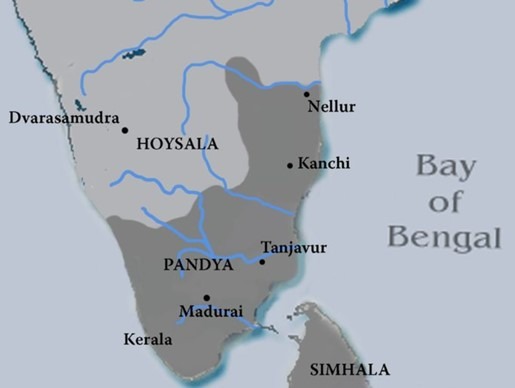
    In the 9th century, the Pandyas suffered a major setback when the rising Cholas turned their attention southward. Chola king Parantaka I defeated Pandya ruler Rajasimha II around 920 CE, forcing him to seek refuge in Sri Lanka. The Pandyas were subdued and their territories administered by Chola-appointed governors known as Chola Pandyas.


Brief Revival and Collapse (13th – 14th Century CE)

   With the weakening of Chola authority in the late 12th century, the Pandyas reasserted themselves. Maravarman Kulasekara Pandyan decisively ended Chola rule by defeating the last Chola king. This marked a brief resurgence in Pandya power, but internal disputes and external threats soon led to their decline.


     A succession crisis broke out when Kulasekara appointed his elder son Jatavarman Sundara Pandyan III as co-regent, which angered the younger son Vira Pandyan, who later assassinated his father. A civil war ensued, culminating in Vira Pandyan’s victory and Sundara Pandyan fleeing to Delhi, seeking help from Alauddin Khalji.


     This appeal prompted Malik Kafur’s brutal southern campaign in 1310 CE. The Pandya kingdom was plundered, temples were desecrated, and wealth looted. The kingdom splintered under internal rivalries, and by 1335 CE, Jalaluddin Ahsan Khan, the governor of Madurai, declared independence from Delhi and founded the Madurai Sultanate, marking the end of Pandya sovereignty.

The Yadavas of Devagiri (c. 1187 – 1317 CE)

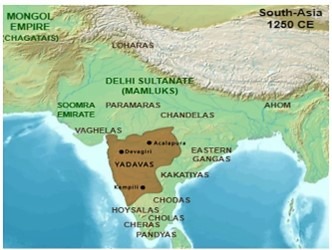
    The Yadavas, also known as Seunas or Sevunas, ruled from Devagiri (modern-day Daulatabad in Maharashtra). They were initially subordinate to the Western Chalukyas and Rashtrakutas, but rose to independence under Bhillama V in the late 12th century.


     Under King Singhana in the 13th century, the Yadava Empire reached its zenith, extending from the Narmada River in the north to the Tungabhadra River in the south. Their domain included parts of present-day Maharashtra, Karnataka, and Madhya Pradesh.


      In 1307 CE, Alauddin Khalji sent Malik Kafur to invade the Yadava kingdom. The capital, Devagiri, fell, and King Ramachandra was taken to Delhi. Though he was released and allowed to rule as a vassal, the dynasty ultimately fell in 1317 when the kingdom was annexed by the Delhi Sultanate.
 

The Kakatiyas of Warangal (c. 1110 – 1326 CE)

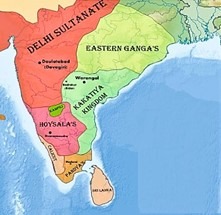
      The Kakatiyas, a powerful Telugu dynasty, ruled from Warangal and controlled large parts of present-day Telangana, Andhra Pradesh, and parts of eastern Karnataka and southern Odisha.


      Originally vassals of the Western Chalukyas, the Kakatiyas gained independence under Prola II. Their greatest ruler, Ganapati Deva (r. 1199–1262 CE), unified the Telugu-speaking regions and promoted trade and agriculture.


     He was succeeded by his daughter Rani Rudramma Devi (r. 1262–1289 CE), one of the few female monarchs in Indian history. Her reign was noted by the Venetian traveler Marco Polo as prosperous and well-administered. After her, Prataparudra ascended the throne and was forced to pay tribute to Delhi after Malik Kafur’s 1309 raid.


      When the Tughlaqs came to power in Delhi, Prataparudra attempted to assert independence. However, in 1323 CE, Ghiyasuddin Tughlaq’s forces decisively defeated him, bringing an end to the Kakatiya kingdom. Their remnants later contributed to the rise of regional resistance under the Musunuri Nayakas.
 

The Hoysalas (12th – 14th Century CE)

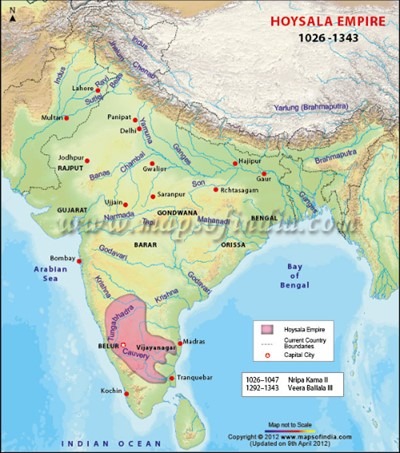
     The Hoysala dynasty, ruling from Dvarasamudra (modern Halebidu  in Karnataka), rose to prominence between the 12th and 14th centuries. They controlled most of present-day Karnataka, parts of Tamil Nadu, and southwestern Telangana.


     Initially feudatories of the Western Chalukyas, they became independent under Vishnuvardhana in 1108 CE, who defeated the Cholas and his former overlords. His grandson, Veera Ballala II, expanded the kingdom and asserted full independence.


     However, the dynasty faced severe challenges during the Delhi Sultanate’s southern invasions. In 1310 CE, Malik Kafur attacked Dvarasamudra, and Veera Ballala III, the last prominent Hoysala king, surrendered. Though he continued resisting, he was finally captured and killed in 1343 CE during a battle against the Madurai Sultanate.


    After his death, the Hoysala territories were absorbed by Harihara I, laying the foundation of the Vijayanagara Empire.
Hoysala Contributions to Literature and Culture

   Hoysala rulers were great patrons of Kannada and Sanskrit literature, which flourished during their reign. Religious themes dominated literary works, particularly those from Jain and Veerashaiva traditions, alongside early Vaishnava compositions. The Hoysalas are also celebrated for their iconic temple architecture, including the temples of Belur and Halebidu, which stand as masterpieces of Indian art.


      These four dynasties—the Pandyas, Yadavas, Kakatiyas, and Hoysalas—represent a rich and dynamic chapter in South Indian history. While they were eventually overshadowed by the Delhi Sultanate, their contributions in literature, architecture, administration, and cultural development laid a robust foundation for future kingdoms like the Vijayanagara Empire.

South Indian Kingdoms: Politics, Society and Culture

Political Administration of Southern Kingdoms

    In medieval South India, governance was primarily monarchical. Most kingdoms followed hereditary succession, wherein either the son or brother of the reigning monarch could inherit the throne. The king was the supreme authority in the administrative hierarchy, assisted by a council of ministers and senior officials.


     Underneath the monarchy existed a complex web of feudatories—powerful landlords and warrior chiefs—who served as vassals. They paid tributes, attended royal courts, and provided military support. However, when central authority weakened, many of these chiefs declared independence and established their own territories.


    At the grassroots level, governance was remarkably decentralized. Village and district administrations functioned with significant autonomy, ensuring continuity of local governance regardless of dynastic changes. Local village assemblies such as Ur, Sabha, and Nagaram formed the bedrock of rural administration.

Types of Village Assemblies in South India

Following the Sangam Age, South Indian society evolved with distinct village systems based on caste, occupation, and economic functions:

1. Ur: A common peasant village, typically inhabited by landowning agricultural communities. These villages functioned under a village headman responsible for collecting and paying taxes to the state.


2. Sabha: These were exclusive Brahmadeya or Agrahara villages—land grants to Brahmins. The land was individually owned but managed through a collective assembly. These villages often enjoyed tax exemptions and had high autonomy.


3. Nagaram: These villages were trade-centered settlements dominated by merchant guilds. They emerged due to declining urban centers, encouraging traders to settle in the countryside while continuing commercial activities.

Maritime Trade and Economic Prosperity

   South India, particularly during the Chola and Rashtrakuta periods, was deeply involved in overseas trade. Its extensive maritime networks connected the Indian subcontinent to China, Southeast Asia, the Arab world, and beyond.


     Key exports included spices, sandalwood, precious stones, ivory, camphor, textiles, and perfumes, while horses, a critical military resource, were primarily imported from the Middle East. Coastal regions like the Coromandel Coast and Malabar Coast played pivotal roles in this trade.


   Under the Rashtrakutas, the Deccan region emerged as an economic powerhouse, fostering robust commercial exchanges with Arab traders. Similarly, Chola rulers such as Rajaraja I and Rajendra I launched naval expeditions to gain control of key trade routes, especially targeting Sri Lanka and the Srivijaya Empire.

Land Grants and Rural Transformation

     To expand agriculture and integrate remote regions, South Indian rulers granted land—often tax-free—to Brahmins and religious institutions. These lands were exempt from state duties and were meant to spread advanced agrarian techniques among tribal and forest-dwelling populations.


     Initially, these grants were recorded on stone in Prakrit, later transitioning to copper plate inscriptions in Sanskrit. Different dynasties supported different religious groups through land grants:


    • Western Gangas: Favored Jain communities
    • Kadambas: Supported both Jains and Brahmins
    • Pallavas: Primarily granted lands to Brahmins

Social Hierarchy and Cultural Practices

     Medieval South Indian society was distinctly stratified. Kings often performed elaborate Vedic sacrifices to legitimize their rule and claim Kshatriya status. Priests composed genealogies linking these rulers to solar or lunar dynasties, thereby enhancing their legitimacy. In return, priests received land grants and wealth, elevating their social status.


     Brahmanas collected dues directly from the peasantry and often benefited from tax exemptions. Below them were various peasant castes, artisans, and service providers. Failure to fulfill societal roles was seen as violating Dharma, contributing to the decline known as Kaliyuga. Kings claimed the title Dharma-Maharaja, positioning themselves as restorers of righteousness.


    A unique social group, the Devadasis—unmarried women dedicated to temple service—played a prominent role in religious rituals, music, and dance.

Scientific Advancements

South India produced several intellectual luminaries:

Mahaviracharya (9th century)

    • A Jain mathematician from Karnataka, patronised by Rashtrakuta emperor Amoghavarsha.
    • Authored Ganita Sara Sangraha, the earliest Indian text solely on mathematics.
    • Distinguished astronomy from mathematics for the first time in India.

Bhaskaracharya (Bhaskara II, 12th century)

    • Born in Karnataka, headed the observatory at Ujjain.
    • Authored Siddhanta Shiromani, divided into:
        • Lilavati (Arithmetic)
        • Bijaganita (Algebra)
        • Grahaganita (Planetary Mathematics)
        • Goladhyaya (Spherical Astronomy)

Bhakti Movement: Devotion and Reform

     The Bhakti Movement arose as a spiritual revolution against ritualism and caste hierarchy, emphasizing personal devotion to a deity. Originating in Tamil Nadu between the 7th and 9th centuries, it spread across South India.

    • Nayanars: Devotees of Shiva
    • Alvars: Devotees of Vishnu


They composed devotional hymns in Tamil, traveled widely, and identified sacred sites. These songs were later compiled into anthologies and integrated into temple worship.


Inclusivity

    • Saints emerged from various castes, including marginalized communities.
    • Women saints like Andal (Alvar) and Karaikkal Ammaiyar (Nayanar) played significant roles.


Religious Classifications

    • Saguna Bhakti: Worship of deities with attributes (e.g., Shiva, Vishnu, Devi)
    • Nirguna Bhakti: Devotion to a formless, abstract divinity


Critique of Other Religions

      Nayanars and Alvars were vocal critics of Buddhism and Jainism, likely due to competition for royal patronage.

Philosophical Foundations of Bhakti

1. Adi Shankaracharya (8th century):

    • Born in Kerala; advocated Advaita Vedanta (non-dualism).
    • Founded four Hindu mathas (monasteries) across India.

2. Ra manujacharya (11th century):

    • From Tamil Nadu; promoted Vishishtadvaita (qualified non-dualism).
    • Believed in devotion (bhakti) to Vishnu for salvation.

3. Madhvacharya (13th century):

    • Based in Karnataka; founded Dvaita Vedanta (dualism).
    • Advocated worship of a distinct and personal god.


Ruler

Dynasty

Temple

Mahendravarman I

Pallava

Rock-cut temples

Narasimhavarman I

Pallava

Panchapandava Rathas (Five Monolithic Temples)

Rajasimha

Pallava

The Kailasanatha Temple at Kanchi


The Shore Temple at Mamallapuram

Rajaraja Chola

Chola

Brihadeeswarar (Rajarajeswara) Temple, Thanjavur

Rajendra Chola

Chola

Gangaikondacholapuram Temple

Queen Lohamahadevi

Chalukya

Virupaksha Temple, Pattadakal

Krishna I

Rashtrakuta

Monolithic Kailasanath Temple

Temple Architecture and Bronze Sculpture

Temples became centers of culture, economy, and politics. Under Pallavas and Cholas, temple construction flourished.

Pallava Architecture

    • Rock-cut Temples: Mandapas (Mahendravarman I)
    • Monolithic Rathas: At Mamallapuram (Narasimhavarman I)
    • Structural Temples:
        • Kailasanatha Temple, Kanchi
        • Shore Temple, Mamallapuram

Chola Architecture

    • Brihadeeswarar Temple, Thanjavur (Rajaraja Chola)
    • Gangaikondacholapuram Temple (Rajendra Chola)
    • Airavatesvara Temple, Darasuram
    • Bronze Sculptures: Chola bronzes, especially Nataraja, are world-renowned.

Chalukya and Rashtrakuta Architecture

Chalukya Temples

    • Developed the Vesara style.
    • Notable sites: Badami, Aihole, Pattadakal.
    • Virupaksha Temple, Pattadakal (Queen Lokamahadevi)

Rashtrakuta Temples

    • Kailasanatha Temple, Ellora (Krishna I): World’s largest monolithic excavation.
    • Elephanta Caves, near Mumbai: Trimurti sculpture shows Shiva as creator, preserver, and destroyer.

Ellora Caves (Verul Leni)

    • UNESCO World Heritage Site in Maharashtra.
    • Houses 34 renowned caves:
        • 1–12: Buddhist
        • 13–29: Hindu
        • 30–34: Jain
    • Caves include early works by Kalachuris and Chalukyas, with later patronage from Rashtrakutas.


Dynasty

Founder

Pushyabhutis

Pushyabhuti

Maitrakas of Saurashtra

Bhattarka

Maukharis of Kanauj

Yajnavarman

Kingdom of Gaud

Shashanka

Palas

Gopala I

Sena Dynasty of Bengal

Vijayasena

Pratiharas

Nagabhata I

Chalukyas of Badami

Pulakesin I (some scholars consider Vijaysimha)

Rashtrakutas

Dantidurga

Western Chalukyas of Kalyani

Tailapa II

Yadavas of Devagiri

King Bhillama V

Hoysalas

Vishnuvardhana

Kakatiyas

Prola II