
The historical phase in South India is believed to have commenced around the third century BCE. This period marks the emergence of significant socio-political and cultural developments, laying the foundation for early state formation in the Tamil region. During this time, Sangam literature is believed to have started taking shape, reflecting the evolution of settlements into organized villages and towns and the rise of early monarchies. The three prominent kingdoms—Chola, Chera, and Pandya—emerged in this era, dominating the landscape of ancient Tamilakam, which encompassed present-day Tamil Nadu and Kerala.
The era from the third century BCE to the third century CE is typically referred to as the Sangam Period, named after the literary assemblies (Sangams) that produced a wealth of Tamil poetry and prose. These literary works are the primary sources of historical reconstruction for this era. In addition to Sangam texts, several other sources provide valuable insights into the period. The Ashokan inscriptions, for instance, mention South Indian kingdoms such as the Cholas, Pandyas, Keralaputras, Satyaputras, and the Tamraparnis (people of Sri Lanka), although the identity of the Satyaputras remains uncertain.
Further corroboration comes from foreign accounts such as Megasthenes’ Indica, which offers the earliest mention of the Pandyas. He notes their fame for pearl fisheries and intriguingly mentions that the kingdom was ruled by a woman, possibly suggesting the existence of matriarchal elements in Pandya society. Megasthenes even refers to the Pandyan queen, Pandaia, as a daughter of Heracles, indicating a blend of myth and observation.
Additional literary sources, including the Periplus of the Erythraean Sea, Ptolemy’s Geography, and Pliny the Elder’s Natural History, record thriving commercial exchanges between South India and the Roman world. These writings speak of bustling port cities, a flourishing trade in spices, pearls, textiles, and ivory and maritime routes connecting India with the Mediterranean. The Hathigumpha inscription of King Kharavela of Kalinga also refers to Tamil kingdoms, thereby reinforcing the antiquity and influence of South Indian polities during this period.
The transformation of South India from a predominantly tribal society into an organized political and agrarian economy began around the third century BCE. The megalithic people, who were initially confined to the uplands, gradually migrated to fertile river basins and deltas, reclaiming marshy lands for cultivation. This agricultural expansion was significantly aided by the introduction of iron technology, which facilitated large-scale forest clearance and encouraged plough-based wet paddy cultivation. These developments led to the establishment of numerous villages and towns, along with a stratified social structure.
This agrarian and material transformation set the stage for the rise of three major kingdoms—Chola, Chera, and Pandya—which flourished in the fertile rice-growing regions of Tamilakam, extending from the Tirupati hills in the north to the southernmost tip of the Indian peninsula. Several factors contributed to their consolidation and prosperity. The spread of iron tools and weapons enabled better land management and defense capabilities. Additionally, north-south trade links are evidenced by the discovery of punch-marked coins in the region, indicating economic interaction with northern India. From the first century CE, Roman trade became a major economic driver, with Indian rulers accruing wealth through the export of luxury goods to Egypt and other parts of the Roman Empire.
The cultural landscape of South India during this period was shaped by both internal developments and external influences. From the fourth century BCE onwards, cultural and economic interactions between the Gangetic plains of the north and the deep south intensified. This exchange was facilitated not only by traders and conquerors but also by the missionary efforts of heterodox religious sects such as the Jainas, Buddhists, and Ajivikas, who played a pivotal role in the spread of material culture and literacy.
The earliest Tamil-Brahmi inscriptions attest to the presence and influence of these sects in the region. These inscriptions, often found in rock shelters and caves, reflect the integration of northern cultural practices with indigenous traditions. While the Brahmanical influence was initially limited, it began to make significant inroads into the Tamil region after the fourth century CE. Over time, elements of Tamil culture also traveled northward, and the river Kaveri gained recognition in Brahmanical texts as a sacred river, illustrating the mutual exchange of religious and cultural values.
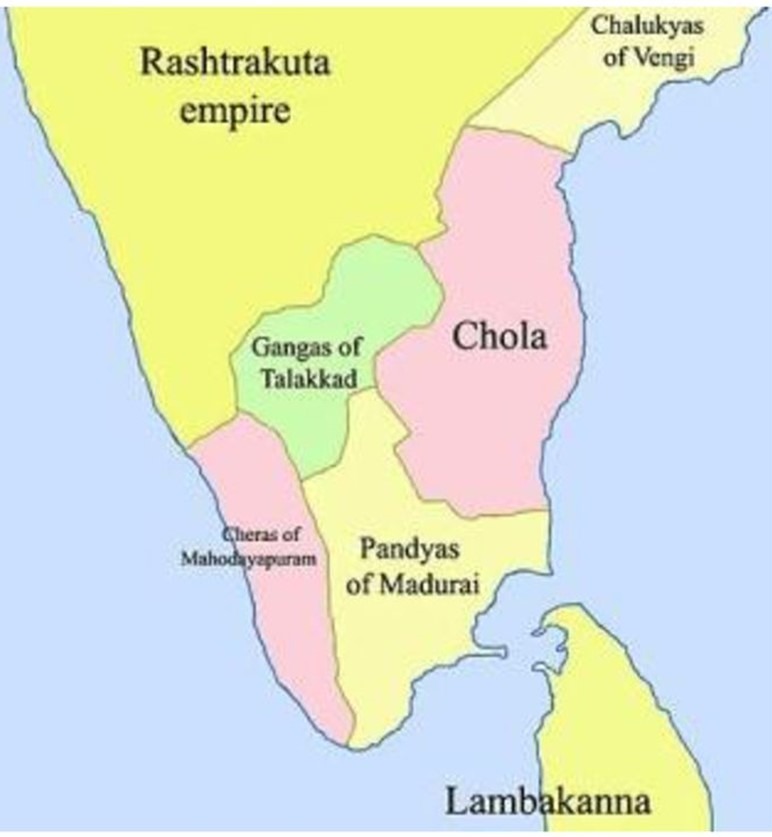
The geographical region south of the Krishna River, encompassing present-day Tamil Nadu and Kerala, was historically divided among the three great dynasties of the early Sangam age—the Cholas, Cheres, and Pandyas. The Sangam texts vividly depict the political rivalry and military engagements among these kingdoms and also with external powers like Sri Lanka. The Sangam poets referred to the rulers of these dynasties as Muvendar, meaning “three chiefs,” underscoring their prominence in South Indian polity.
Each of these dynasties had both inland and coastal capitals that served as administrative and trade hubs:
The Sangam literature offers a rich portrayal of the political dynamics, economic life, and cultural practices of this period, giving us a window into the early history of South India. It reveals a complex society where kings patronized poets, trade thrived across oceans, and religious ideas flowed across regional boundaries, shaping the course of civilization in peninsular India.
Kingdom | Emblem | Capital | Chief Port | Important Ruler |
Cheras | Bow | Karur / Karayur / Vanji | Muciris (Musiri or Muchiri), Tondi | Senguttuvan |
Cholas | Tiger | Uraiyur | Puhar (Poompuhar or Kaveripattinam) | Karikalan |
Pandyas | Fish | Madurai | Korkai | Nedunchezhiyan |
The Pandya Kingdom is considered the earliest of the three great Tamil powers to rise during the Sangam Age, with Madurai as its capital. The Pandyas ruled over the southernmost and southeastern regions of the Indian subcontinent, covering much of modern-day Tirunelveli, Ramnad, and Madurai districts in Tamil Nadu. This region played a crucial role in shaping the early political and cultural history of South India.
One of the significant ports under the Pandyas was Korkai, located near the Gulf of Mannar. Known for its rich pearl fisheries, Korkai is referred to as Kolkoi in the Periplus of the Erythraean Sea. The port was a thriving center of maritime trade and served as a gateway for economic interaction with the West, particularly the Roman Empire.
The Pandyas are traditionally regarded as the patrons of the Tamil Sangams, the literary academies that facilitated the composition and compilation of Sangam literature. These texts provide invaluable insights into the political, social, and economic life of the period, although chronological succession and regnal years of the kings remain uncertain due to the poetic nature of the sources.
According to Sangam literature, the Pandya kingdom was affluent and culturally vibrant. Their rulers engaged in extensive trade with the Roman Empire, and historical accounts suggest that the Pandyas even sent embassies to Emperor Augustus, highlighting their international engagement. The Brahmanas enjoyed considerable influence at the Pandyan court, and some Pandya kings were known to perform Vedic sacrifices, indicating the growing importance of Brahmanical rituals during the early centuries of the Christian era.
One of the most celebrated Pandya rulers was Nedunchezhiyan, renowned for his military prowess. He is praised in Sangam poems for defeating a formidable alliance comprising the Cholas, Cheras, and five Velir chieftains at the Battle of Talayalanganam. However, the Pandya dynasty witnessed a period of decline following the Kalabhra invasion in the third century CE. This interruption, known as the “Kalabhra interregnum,” disrupted the traditional dynastic order across Tamilakam. Nevertheless, the Pandyas eventually reasserted their dominance by the sixth century CE, restoring their political control over the region.
The Chola dynasty was one of the most significant powers of early South India and played a central role during the Sangam Age. Their kingdom, later known as Cholamandalam (from which the term Coromandel Coast is derived), encompassed the central and northern regions of Tamil Nadu. Geographically, it extended from the Pennar River in the north to the Velar River in the south, lying northeast of the Pandya territory.
The capital of the Cholas was Uraiyur, which became known for its flourishing cotton textile industry. The Cholas also had a prominent port city, Puhar (also called Kaveripattinam or Poompuhar), which functioned as an alternate royal residence and was a thriving center of international trade. Archaeological excavations in Puhar have revealed the remains of a large dockyard, indicating the advanced maritime capabilities and vibrant overseas commerce of the Cholas.
One of the early Chola kings, Elara, achieved fame by conquering Sri Lanka in the mid-second century BCE and ruled there for nearly five decades. However, the most illustrious Chola ruler during the Sangam period was Karikalan, who reigned in the second century CE. His rule is vividly described in the Sangam poem Pattinappalai, which portrays him as a powerful monarch and efficient administrator.
Karikala Chola achieved a major victory in the Battle of Venni, where he defeated a strong confederacy of the Chera and Pandya kings along with eleven Velir chieftains. His reign marked a period of economic prosperity, infrastructural development, and agricultural expansion. He is credited with founding Puhar and constructing 160 kilometers of embankment along the Kaveri River, facilitating the reclamation of forested lands for cultivation. This enhanced the agrarian economy and improved the livelihood of the people.
The Cholas derived considerable wealth from the export of cotton cloth, and their well-organized navy helped them maintain supremacy in maritime trade. However, after the reign of Karikala, the Chola dynasty began to decline. Their port city, Kaveripattinam, was eventually overwhelmed and destroyed, possibly due to natural calamities or conflict. Subsequently, the Chera and Pandya dynasties expanded their territories at the expense of the weakened Cholas. The Pallavas, emerging from the north, further marginalized Chola influence. By the fourth century CE, the Cholas had been reduced to a minor regional power, and they remained politically insignificant until their resurgence in the ninth century CE.
The Chera Kingdom was another major political power of the Sangam Age. It controlled the central and northern parts of present-day Kerala and the Kongu region in western Tamil Nadu. Situated to the west and north of the Pandya territory, the Cheras played a crucial role in facilitating trade and cultural exchange between India and the western world.
The capital of the Cheras was Karur, also known as Vanji, while Musiri (modern Muziris) and Tondi served as important seaports. These port towns were vital centers for maritime trade with the Roman Empire, particularly in pepper, pearls, and other luxury items. The importance of Musiri is highlighted by Roman records that mention the presence of two Roman regiments stationed there to protect their trade interests. Additionally, a temple dedicated to Augustus was established by the Romans, underscoring the depth of Indo-Roman commercial relations.
The Cheras were often engaged in conflict with their powerful neighbors, the Cholas and the Pandyas. According to literary sources, a Chera king once killed the father of Karikala Chola, but he too lost his life in the confrontation. Later, the Cheras allied with the Pandyas against the Cholas, but their combined forces were defeated in the Battle of Venni. One Chera king, deeply humiliated by being wounded in the back during battle, is said to have committed ritual suicide, as death in such a manner was considered dishonorable.
The most celebrated ruler of the Chera dynasty was Senguttuvan, also known as the Red or Good Chera. He is credited with subduing various local chieftains and securing the safety of Musiri by eliminating piracy. Silappathikaram, one of the great Tamil epics, mentions that Senguttuvan led a military expedition to North India, crossing the Ganga to establish a temple for Kannagi, the deified heroine of the text. However, this event is not corroborated by Sangam literature and may be symbolic or exaggerated.
The Cheras contributed to the development of Tamil-Brahmi inscriptions and even issued copper and lead coins with legends that imitated Roman coinage. The Pugalur inscription near Karur, dated to the first century CE, refers to three generations of Chera rulers, while the Patitrupathu, a Sangam anthology, provides detailed accounts of eight Chera kings, their territories, and achievements.
After the second century CE, the power of the Cheras began to wane. There is a historical void regarding their political status until their reappearance in South Indian history around the eighth century CE, when a new line of Chera rulers emerged in Kerala.
The political system of the Sangam period was predominantly a hereditary monarchy, where the king was considered the supreme authority. Several terms were used to denote kings, including Ko, Mannan, Vendar, Iraivan, and Korravan. Among these, Ko was often used interchangeably for both a monarch and a deity, reflecting the semi-divine status of kingship. Mannan typically referred to lesser or regional kings, while Vendar was a prestigious title reserved exclusively for the three crowned monarchs of Tamilakam—the Cheras, Cholas, and Pandyas.
The king was advised by his court consisting of ministers, poets, and high-ranking nobles. The avai or imperial court played a significant role in governance and was attended by various dignitaries and officials. The administrative framework included five major councils: ministers (amaichar), priests (anthanar), military commanders (senapathi), envoys (thuthar), and spies (orrar), indicating a structured governance system.
Interestingly, kings were often guarded by women warriors, and the state maintained a modest but functional army. The military was composed of chariots drawn by oxen, elephants, cavalry, and infantry. Elephants played a central role in battles and symbolized royal power. Horses were imported into the Pandyan kingdom through maritime trade, and the commanders typically used horse-drawn chariots, while the nobles and captains preferred elephants.
Succession was hereditary, and the king’s eldest son inherited the throne by right, a concept known as Murai Mudal Kattil. Each dynasty had its own royal emblem—the fish for the Pandyas, the tiger for the Cholas, and the bow for the Cheras—which also symbolized their identity and military might.
The primary source of state income was land revenue, and land was classified into five ecological zones: Kurinji (hilly areas), Mullai (pastoral tracts), Marudam (agricultural plains), Neydal (coastal lands), and Palai (arid zones). Each zone supported specific occupations and livelihoods, demonstrating early ecological awareness in administration.
For administrative convenience, kingdoms were divided into units called Mandalam. The Chola Mandalam, Pandya Mandalam, and Chera Mandalam were the principal regions. Urban areas were referred to as Ur, large villages as Perur, and smaller settlements as Sirur.
In addition to the major dynasties, the Sangam era was characterized by numerous minor chieftains or Velirs, who played a crucial role in regional politics. Although they acknowledged the supremacy of the three crowned monarchs, they exercised considerable autonomy within their territories. These chieftains paid tribute to the major kings and often supported them in warfare. Their prominence in local governance and their patronage of Tamil poets and culture earned them a lasting legacy in Sangam literature.
The economy during the Sangam period was robust and diversified, with agriculture, trade, and war booty forming the backbone of royal income. Agriculture was the principal occupation, especially in fertile regions such as the Kaveri delta. A wide range of crops were cultivated, including paddy, ragi, sugarcane, cotton, pepper, ginger, turmeric, cinnamon, and numerous fruits. The king received a share of all agricultural produce, which served as the main source of state revenue.
The internal and external trade networks were well-organized and highly lucrative. South India’s natural wealth, including pepper (black gold), pearls, ivory, precious stones, and high-quality textiles, attracted traders from the Roman Empire and Greek world. The Sangam kingdoms established commercial links with these foreign powers, especially after the Roman conquest of Egypt in 30 BCE and the discovery of monsoon wind patterns in the early first century CE. These seasonal winds allowed ships to travel swiftly between the Indian subcontinent and the western world, fostering two-way maritime trade.
Key exports included cotton fabrics, spices like pepper, ginger, cardamom, cinnamon and turmeric, ivory products, pearls, and gemstones. In return, India imported gold, horses, fine wine, Roman pottery, and amphorae. The abundance of Roman gold coins found in southern India is testament to the flourishing trade and the wealth it generated.
Foreign merchants, known as Yavanas, resided in specially designated quarters in port towns. Because of the seasonal nature of sea voyages and the limitations of contemporary shipbuilding, these merchants often stayed for extended periods, contributing to the cultural and economic life of the region.
Several ports emerged as hubs of commercial activity, including Puhar (also known as Poompuhar or Kaveripattinam), Tondi, Musiri, Korkai, Arikkamedu, and Marakkanam. Of these, Puhar became a significant emporium, attracting large ships laden with goods.
Arikamedu, near modern Puducherry, was a vital Indo-Roman trading center. Archaeological findings include a massive brick warehouse, Roman amphorae, Arretine ware, glassware, and gemstones. Dyeing vats used in the textile industry have also been unearthed, indicating the scale of local craftsmanship.
The Sangam period was renowned for its handicrafts, such as weaving, metalwork, carpentry, shipbuilding, and the manufacture of ornaments from beads, stones, and ivory. The weaving of cotton and silk garments reached an exceptional level, with poetic references likening the fabric to “a slough of a snake” or “a cloud of steam.” Uraiyur was particularly famous for its cotton trade.
The Sangam kings and chieftains frequently engaged in warfare, both among themselves and with foreign powers like Sri Lanka. Victories in battle brought spoils of war, including wealth, livestock, land, and tribute, which were redistributed among royal family members, commanders, and court poets. This martial culture emphasized honor and valor, and in cases of defeat, kings sometimes committed ritual suicide by starvation—a tradition known as Vattakirutal.
The Sangam society was stratified yet dynamic, with early signs of caste distinctions. The Tolkappiyam, an ancient Tamil grammar text, categorizes society into four functional classes: Arasar (rulers), Anthanar (priests), Vanigar (traders), and Vellalar (farmers). The Vellalars formed the dominant land-owning community. However, sharp caste divisions, as seen in later periods, were not rigidly entrenched.
Lower social strata included Kadaisiyar (agricultural laborers), Pariyars (who worked with animal skins), and several tribal groups like the Parathavar, Panar, Eyinar, Kadambar, Maravar, and Pulaiyar. These communities often lived in extreme poverty and engaged in subsistence activities. Wealth inequality was pronounced—while the affluent lived in multi-storey brick mansions, the poor resided in mud huts.
The Brahmanas first appear in the Tamil region during the Sangam period and gradually grew in influence. The Sangam literature portrays the ideal king as one who protected Brahmanas, donated generously to religious causes, and patronized art and literature. Many Brahmanas were also poets and were lavishly rewarded by kings, sometimes with gold, land, chariots, horses, and even elephants. Interestingly, Tamil Brahmanas were not strictly orthodox and are said to have consumed meat and wine.
The state and society of early historic Tamilakam increasingly came under the influence of Brahmanism. Vedic rituals and sacrifices became popular among the ruling elite, and local deities were assimilated into the Hindu pantheon. For instance, Murugan, a prominent local deity, became associated with Subramanya or Kartikeya, son of Shiva.
Murugan was the chief deity of the hilly regions, and his worship was deeply rooted in the local culture. Vishnu worship is also mentioned, though likely introduced at a later stage. A unique religious tradition of the period was the hero stone (Nadu Kal) worship, where stones were erected in memory of fallen warriors. These memorials were often inscribed and venerated as symbols of courage and honor.
While Jainism and Buddhism made inroads into the Tamil country, their influence varied. Jainism had a more substantial presence, evident from cave inscriptions and rock-cut shelters with Tamil-Brahmi script. Merchants and lay devotees provided support to Jain monks. Buddhism, though less prevalent, left its mark in sites like Kaveripattinam and Kanchipuram, where Buddhist stupas have been discovered. In the post-Sangam period, Jains played an important role in shaping early Tamil literature.
Sangam was an assembly of Tamil poets held under royal patronage of Pandyan kings. According to Tamil legends, three sangams were held at different places under the royal patronage of Pandyan kings.First two were held in cities since destroyed, while the last was in Madurai.The sangam literature is the collection of work of tamil poets and authors in three sangams. As no text of first sangam survived and only Tolkappiyam of second sangam survived, most of the available Sangam literature was produced by third sangam (assembly).The period of composition of sangam literature is disputed among the scholars. However, it was most likely composed between third century BCE to third century CE. These poems were transmitted for several generations before they were being written down.
Sangam | Place | Chairman | Surviving Texts |
First Sangam | Thenmadurai | Agastya | No surviving texts |
Second Sangam | Kapadapuram | Agastya, Tolkappiyar (disciple of Agastya) | Tolkappiyam |
Third Sangam | Madurai | Nakkiar | Other existing corpus of Sangam literature such as: |
The Sangam literature can roughly be divided into two groups, narrative (tells stories) and didactic (instructional).
The Melkannakku, or Eighteen Major Works, form a significant component of classical Sangam literature and are broadly divided into two primary collections: the Eight Anthologies (Ettuthogai) and the Ten Idylls (Pattuppāṭṭu). These poetic compilations offer valuable insights into the emotional, social, and cultural life of the ancient Tamil people.
Eight Anthologies (Ettutogai) are – Natrinai, Kurunthogai, Aingurunuru, Patitruppathu, Paripadal, Kalithogai, Akananuru, Purananuru.
Ten Idylls are – Thirumurugatrupatai, Porunaratrupatai, Sirupanatruppatai, Perumpanatruppatai, Mullaipattu,Maduraikanchi, Nedunalvadai, Kurinjipattu, Pattinappalai, Malaipadukadam.
Both Ettutogai and Pattuppattu were divided into two main groups
The literary works in both these collections are categorised under two thematic genres: Akam (inner field) and Puram (outer field). Akam poetry primarily deals with personal emotions, especially romantic love, longing, separation, and fear. In contrast, Puram poetry focuses on external realities such as warfare, heroism, generosity, and public life.
In addition to the Melkannakku, two timeless and revered works — the Tolkappiyam and the Tirukkural — also form the core of Sangam literature.
The Tolkappiyam, authored by Tolkappiyar, a disciple of sage Agastya, is one of the oldest surviving works of Tamil literature. Though primarily a grammatical treatise, it goes far beyond the scope of language and delves into the poetics, cultural practices, societal norms, and even the geography of the Tamil land during the Sangam era. It provides detailed discussions on phonetics, syntax, and prosody, as well as insights into human behavior and social structure.
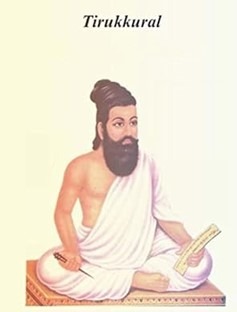
The Tirukkural, attributed to the legendary poet-philosopher Thiruvalluvar, is one of the most widely respected texts in Tamil literature. Composed of 1,330 couplets or Kurals, it is a secular text offering profound wisdom on ethics, governance, and love. Unlike religious scriptures, the Tirukkural is universal in its appeal, drawing moral and philosophical lessons without reference to specific religions. It has earned the distinction of being referred to as the “Universal Veda” and remains a household treasure in Tamil culture, much like the Bhagavad Gita or the Ramayana in North Indian homes. Interestingly, the Tirukkural itself does not mention the name of its author. Thiruvalluvar’s identity is affirmed later in a medieval anthology called the Thiruvalluva Malai.
Sage Agastya is one of the most revered figures in Indian spiritual and literary traditions. Recognized as one of the Saptarishis (Seven Great Sages) of the Vedic era, Agastya played a pivotal role in the transmission of Vedic knowledge and Sanskritic culture to South India. He is credited with having composed numerous Sanskrit hymns and is often depicted alongside his equally scholarly wife, Lopamudra, as authors in the Rigveda and other Vedic texts.
Agastya occupies a unique place in Tamil tradition. According to legend, he is believed to have brought Sanskrit-speaking civilization to the Tamil lands, thereby serving as a cultural bridge between the North and the South. He is traditionally regarded as the author of the earliest Tamil grammar, the Agattiyam (now a lost work), and is venerated as the Father of the Tamil language. His contribution is not limited to literature; Agastya is also considered the founding father of Siddha medicine, an ancient system of healing based on Tamil knowledge and practices. He is said to have established the Agathiyar Thapanam, a medical and alchemical school in ancient Sri Lanka.
Through his multifaceted legacy as a sage, grammarian, poet, physician, and civilizational pioneer Agastya remains a central figure in both Tamil and broader Indian cultural memory.
The five great Tamil epics belong to the post-Sangam period, a time marked by literary flourish and religious diversity in South India. These epics — Silappathikaram, Manimekalai, Jivaka Chintamani, Valayapathi, and Kundalakesi — provide vivid portrayals of the social, cultural, religious, and economic fabric of Tamil society from the early centuries of the Common Era. While their narratives are fictional, the underlying themes and historical references make them invaluable sources for understanding the Tamil civilization beyond the Sangam age.
Among these, Silappathikaram and Manimekalai are the most prominent and widely studied. These two epics, dated between the 4th and 6th centuries CE, are especially important for the historical insights they offer into Tamil life and values up to the sixth century. On the other hand, Jivaka Chintamani, attributed to the Jain ascetic Tiruttakkatevar, is believed to have been composed in the early 10th century CE, reflecting a later phase of Tamil literary evolution. The other two epics, Valayapathi and Kundalakesi, though only partially available today, were equally significant in their time, contributing to the religious and ethical discourses of Jainism and Buddhism.
The Silappathikaram (The Tale of the Anklet), often hailed as the brightest gem of early Tamil literature, was authored by Ilango Adigal, a Jain monk and the supposed brother of Chera king Senguttuvan. Composed around 1800 years ago, this epic is a powerful blend of romance, tragedy, and moral justice. The narrative revolves around Kovalan, a wealthy merchant from the Chola capital Puhar, who becomes infatuated with a courtesan named Madhavi, neglecting his devoted wife Kannagi.
Eventually, Kovalan realizes his error and, seeking a new life, travels with Kannagi to Madurai, the capital of the Pandyas. There, he is falsely accused of theft by the royal goldsmith and is unjustly executed by the king. Overwhelmed by grief and righteous rage, Kannagi proves her husband’s innocence and, in a dramatic act of divine fury, curses and destroys the city of Madurai. The epic is notable not only for its moral undertones and tragic intensity but also for its pan-Tamil outlook, as the events span across the three ancient Tamil kingdoms — Chola, Pandya, and Chera. The Cauvery River is beautifully celebrated in its verses, showcasing the deep connection between nature and Tamil literature.
The Manimekalai, composed by the Buddhist poet Sīttalai Sāttanār, continues the story from Silappathikaram. Written approximately 1400 years ago, this epic follows Manimekalai, the daughter of Kovalan and Madhavi. Unlike her parents, Manimekalai renounces worldly pleasures and adopts a life of Buddhist asceticism. The epic is more religious than literary in tone, emphasizing Buddhist ideals such as compassion, renunciation, and the impermanence of life. It reflects the spread of Buddhism in Tamilakam and provides philosophical debates and descriptions of Buddhist monasteries, making it a key text for understanding religious pluralism in early medieval South India.
The Jivaka Chintamani is one of the most important Jain contributions to Tamil literature, authored by Tiruttakkatevar, a Jain ascetic and court poet. Composed in the 10th century CE, this epic weaves the life story of Jivaka, a prince endowed with extraordinary beauty, knowledge, and virtue. The text emphasizes Jain ethical values such as non-violence, chastity, and spiritual liberation. Though it contains vivid and sometimes sensual descriptions, its ultimate message promotes moral restraint and spiritual elevation. The work is considered one of the longest Tamil epics and is a masterpiece of narrative and philosophical prose.
Evidence suggests that the art of writing was well known to the Tamil people before the beginning of the Common Era. The Brahmi script, the earliest script used for writing Tamil, has been found in over 75 short inscriptions, mostly etched in natural cave shelters in the Madurai region. These inscriptions, dating back to the 2nd–1st centuries BCE, are some of the earliest specimens of written Tamil, often mixed with Prakrit vocabulary, and offer crucial insights into the linguistic and cultural exchanges of the time. Many of these early inscriptions were left by Jaina and Buddhist monks, affirming the deep influence of these religions on Tamil society before and during the early historic period.
The Sangam literature, comprising both narrative and didactic texts, provides a rich and detailed picture of the early social evolution of Tamil society. These texts, composed during the early historic period in South India, reflect multiple stages of societal development, ranging from tribal pastoralism to rudimentary forms of kingship, urban life, and occupational diversity.
The narrative texts, often characterized by heroic poetry, glorify valiant warriors and recount tales of perpetual warfare, cattle raids, and martial heroism. These themes closely align with archaeological discoveries, which reveal numerous iron weapons and tools such as swords, spearheads, arrowheads, lances, wedges, and horse-bits. These implements were predominantly used in warfare and hunting, indicating a society deeply engaged in combat and survival-based subsistence. The emphasis on martial valor in the literature reflects the prominence of conflict in everyday life and the significance of warriors in early Tamil society.
According to these texts, early Tamil communities were primarily pastoralists, hunters, and fishermen, although they also practiced rice cultivation. The absence of ploughshares and the presence of tools like hoes and sickles at many South Indian archaeological sites support the notion of a late megalithic phase of economic activity, wherein agriculture was present but not yet fully mechanized or intensive. The texts portray a society where war booty and spoils of raids were major sources of livelihood. This aligns with the frequent references to cattle raids as a means of asserting dominance and acquiring wealth.
One of the most striking cultural practices referenced in Sangam literature is the erection of hero stones (virarkal or nadukal). These memorials were raised in honor of warriors who died valiantly in battle, embodying the ideal of martial sacrifice. This practice bears a strong resemblance to the megalithic tradition of placing stone circles over graves, suggesting continuity between megalithic burial customs and early historic memorial culture. The ritual significance of these stones highlights the deep reverence for heroism and the warrior ethos in Tamil society.
In addition to its celebration of martial virtues, Sangam literature also offers early glimpses of state formation. These texts mention the emergence of organized armies comprising warrior groups, rudimentary forms of taxation, and a nascent judiciary. They describe urban centers such as Kanchi, Korkai, Madurai, Puhar, and Uraiyur, which were thriving hubs of commerce, governance, and cultural activity. The economic vibrancy and town life depicted in the Sangam texts are corroborated by Greek and Roman accounts as well as by findings from excavated Sangam-era sites, which reveal artifacts of foreign trade and local craftsmanship.
Sangam texts also provide valuable insights into village-level social stratification. The society was composed of distinct occupational and social groups, such as:
These categorizations indicate a clearly demarcated social hierarchy, with agriculture forming the economic backbone of rural life.
The didactic texts, many of which were written by Brahmana scholars proficient in Prakrit and Sanskrit, reflect a more evolved and moralistic phase of Tamil society. These works, dated to the early centuries of the Common Era, prescribe ethical codes and social norms not only for kings and courtiers but also for various occupational groups and social classes. The presence of such structured ethical systems suggests a growing complexity in social organization and cultural life. The proliferation of Brahmana authors and religious figures in Tamilakam is especially evident after the 4th century CE, particularly under the influence of the Pallava dynasty, which encouraged Sanskritization and formal statecraft.
These texts also make mythological references to dynastic lineages such as the solar and lunar races, and mention land grants and village donations, indicating a transition toward a feudal social order and ritual kingship.
In essence, the Sangam texts—both narrative and didactic—offer a dynamic and layered view of Tamil society transitioning from tribal and pastoral beginnings to a more complex social fabric marked by urbanization, stratification, political organization, and religious patronage. They serve not only as literary treasures but also as historical documents that chart the gradual evolution of civilization in South India.
Towards the end of the third century CE, the Sangam period slowly witnessed its decline. During the period, roughly between c. 300 CE and 600 CE, the three early kingdoms disappeared and Kalabhras occupied their territory. However, around the sixth century CE, the Pallavas in the northern Tamil Nadu and Pandyas in southern Tamil Nadu drove the Kalabhras and established their rule.