
PLANNING
PLANNING
Economic planning indeed serves as a key framework for guiding a country’s economic activities toward achieving defined objectives. By planning, governments can strategically allocate resources such as labor, capital, and materials to optimize outcomes like economic growth, stability, and social welfare.
Fiscal policies play a crucial role in economic planning by adjusting government spending and tax policies to influence the economy. Investments, particularly in infrastructure, education, and technology, are essential for fostering long-term growth and competitiveness. Regulations create a stable and fair environment for businesses and consumers, ensuring markets function efficiently without overreliance on government intervention.
Overall, economic planning seeks to balance the dynamics of free markets with strategic governmental intervention, aiming to provide a stable and flourishing economic environment.
significance of planning in economic development
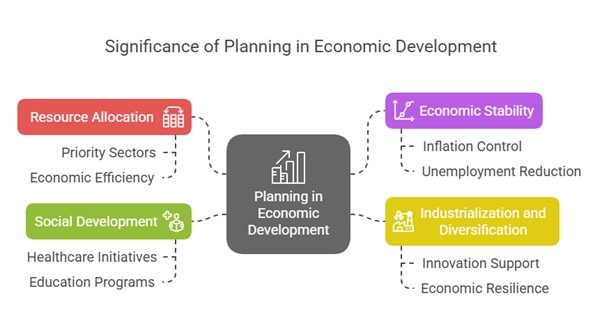
The significance of planning in economic development is multifaceted and crucial for nurturing a balanced and sustainable growth trajectory. Here’s how each aspect contributes:
1. Resource Allocation:
- Effective planning ensures that a country’s finite resources—such as labor, capital, and materials—are directed towards the most productive uses. By identifying priority sectors and aligning resources accordingly, planning helps optimize economic efficiency and equity, promoting widespread economic growth.
2. Economic Stability:
- Through planning, governments can craft policies aimed at minimizing economic fluctuations and uncertainties. By systematically addressing issues like inflation, unemployment, and external shocks, planning contributes to a stable economic environment conducive to long-term growth.
3. Industrialization and Diversification:
- Planning is vital in steering economies toward industrialization and diversification, reducing dependence on a narrow range of industries or sectors. This diversification enhances economic resilience, supports innovation, and paves the way for sustained economic advancement.
4. Social Development:
- Beyond economic metrics, planning integrates social objectives to ensure holistic development. Initiatives in healthcare, education, and infrastructure are prioritized to uplift social well-being and improve the overall living standards of the population, fostering an equitable society.
Need for economic planning in India
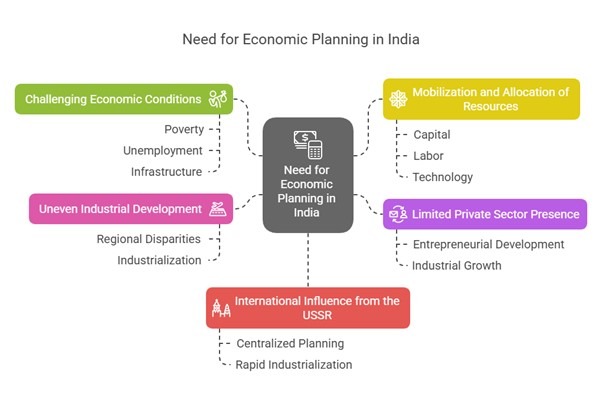
The need for economic planning in India, especially at the time of independence, arose from several critical factors that highlighted the challenges facing the country. Here are the key reasons for the necessity of economic planning:
1. Challenging Economic Conditions:
- Upon gaining independence in 1947, India faced numerous economic challenges, including high levels of poverty, unemployment, and inadequate infrastructure. These conditions necessitated a structured approach to economic development to address pressing issues and foster growth.
2. Limited Private Sector Presence:
- The Indian economy at the time was characterized by a minimal presence of the private sector, which hindered entrepreneurial development and industrial growth. This lack of private investment made it essential for the government to take a proactive role in economic planning and development.
3. Mobilization and Allocation of Resources:
- Effective mobilization and efficient allocation of resources were critical to transforming the economy. Economic planning provided a framework for organizing scarce resources—such as capital, labor, and technology—towards prioritized sectors and initiatives that could stimulate growth and improve living standards.
4. Uneven Industrial Development:
- The colonial legacy left an uneven development of industries across regions, with certain areas being more industrialized than others. Economic planning aimed to address these regional disparities by promoting balanced growth and encouraging industrialization in less developed areas.
5. International Influence from the USSR:
- The initiation of centralized economic planning in the Soviet Union during the early 1920s served as an influential model for many developing countries, including India. The USSR’s success in using planning as a tool for rapid industrialization and economic growth inspired Indian leaders to adopt similar strategies to drive development in the post-independence context.
Types of economic planning:
Economic planning can be categorized into several types, each reflecting different approaches and methodologies suited to varying economic systems and goals. Here’s an overview of the major types of economic planning:
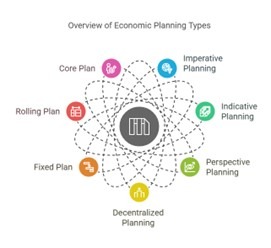
1. Imperative Planning
Imperative planning often referred to as authoritative or command planning, is an economic planning approach characterized by the following key features:
1. Central Authority Control: In imperative planning, a central authority typically the government exercises comprehensive control over the planning process. This authority is responsible for making decisions that determine how resources are allocated and which objectives are pursued.
2. Decision-Making: The government plays a dominant role in all critical decisions related to economic activities. This includes setting production targets, determining allocation of resources across various sectors, and prioritizing projects based on strategic goals.
3. Maximized Resource Utilization: The primary focus of imperative planning is to ensure the maximum utilization of available resources. This approach aims to achieve specific and predetermined economic objectives, often aligned with social welfare and equity, through structured and systematic intervention.
4. Application in Socialist Economies: Imperative planning is commonly associated with socialist economies, where the state assumes a leading role in economic management. It contrasts with market-driven systems, where prices and production decisions are largely determined by supply and demand.
5. Focus on Collective Goals: This type of planning often emphasizes collective societal goals such as reducing inequality, improving public welfare, and fostering comprehensive development, as opposed to individual profit motives.
Overall, imperative planning represents a centralized approach to economic management, aimed at directing economic activity towards achieving broader social objectives in a systematic manner. It seeks to eliminate inefficiencies associated with market fluctuations and externalities, promoting stability and coordinated development.
2. Indicative Planning
Indicative Planning also known as inducement planning, is a flexible approach to economic planning characterized by the following key features:
1. Facilitation of Private Sector Participation: Indicative planning encourages active involvement from the private sector while the government plays a supportive and regulatory role. This collaboration aims to foster a dynamic economic environment where both sectors contribute to growth.
2. Setting Targets and Guidelines: In this planning method, the government establishes specific economic targets and provides guidelines to direct investment and production. These targets are meant to align with broader developmental goals, such as improving infrastructure, boosting certain industries, or enhancing social welfare.
3. Decentralized Decision-Making: Unlike imperative planning, indicative planning allows private entities to retain the autonomy to make final decisions regarding production, investment, and resource allocation. This flexibility enables businesses to respond effectively to market signals and demand fluctuations.
4. Common in Mixed Economies: Indicative planning is particularly prevalent in mixed economies, where both public and private sectors coexist. The government intervenes to guide the economy while allowing the private sector to operate, maintaining a balance between regulation and market forces.
5. Encouragement of Strategic Collaboration: The indicative approach aims to create a partnership between the government and the private sector, encouraging cooperation for achieving national economic objectives. This partnership can manifest in various forms, including public-private partnerships (PPPs) and collaborative ventures.
6. Responsive to Economic Changes: Since indicative planning allows for flexibility, it can adapt to changing economic conditions and priorities over time. This responsiveness is crucial for addressing emerging challenges and opportunities in the economy.
Overall, indicative planning seeks to harmonize the strengths of both government and private sectors, leveraging their respective roles to achieve sustainable economic growth and development. This approach promotes a cooperative environment that encourages private initiative while ensuring that public interests are addressed through government guidance.
3. Perspective Planning
Perspective Planning is a strategic approach to economic development that emphasizes long-term goals and a comprehensive vision for the country’s future. Here are its key characteristics:
1. Extended Timeframe: Perspective planning typically spans a duration of 15 to 20 years, allowing for long-term forecasting and establishment of developmental objectives that guide the nation’s progress over an extended period.
2. Multiple Planning Frameworks: Instead of relying on a single, continuous plan, perspective planning is operationalized through various frameworks, particularly Five-Year Plans (FYPs) and annual plans. These shorter-term plans serve as actionable steps to achieve the overarching goals laid out in the perspective plan.
3. Broad Vision for Economic Direction: The primary goal of perspective planning is to create a broad vision that lays out desired economic trajectories. This vision encompasses a range of socio-economic objectives, including poverty alleviation, infrastructure development, and sustainable growth.
4. Role of NITI Aayog: The National Institution for Transforming India (NITI Aayog) has adopted perspective planning as part of its mandate to provide strategic direction for India’s development. By utilizing this approach, NITI Aayog aims to align various sectors and initiatives with long-term goals, fostering integrated and sustainable progress.
In summary, perspective planning is essential for setting a coherent and forward-looking framework for economic development, allowing for adaptability and the ability to respond to changing circumstances while focusing on achieving significant developmental milestones over the long term.
4. Decentralized Planning
Decentralized Planningis an approach to economic planning that emphasizes local involvement and decision-making. Here are the key characteristics and advantages of decentralized planning:
1. Grassroots Initiatives: Decentralized planning starts at the grassroots level, meaning the process initiates with the local communities and authorities. This ensures that the unique perspectives, needs, and circumstances of the local population are taken into account.
2. Collaborative Process: This approach fosters collaboration between local authorities and central government agencies. By facilitating dialogue and partnership, decentralized planning aligns local initiatives with national goals while enabling tailored responses to specific regional challenges.
3. Recognition of Local Needs: By prioritizing local input, decentralized planning enables the development of plans that are more relevant and responsive to the actual needs and conditions of the communities. This localized approach helps ensure that resources are used effectively and that development strategies are culturally and contextually appropriate.
4. Market-Driven Dynamics: In decentralized planning, market mechanisms play a crucial role in determining the prices of goods and services. This reliance on supply and demand dynamics allows local economies to adjust based on market conditions and consumer preferences, promoting efficiency and competitiveness.
5. Flexibility and Adaptability: Decentralized planning supports a more flexible and adaptive approach to economic development. As conditions change—whether due to economic shifts, environmental factors, or social dynamics—the plans can be revised to better meet the evolving needs of the community.
6. Empowerment of Local Communities: This approach empowers local communities by giving them a voice in the planning and implementation processes. It encourages participation, ownership, and a sense of responsibility for local development initiatives.
Overall, decentralized planning aims to create a more inclusive and effective planning process by integrating local insights and fostering collaboration between different levels of government. This approach not only enhances the relevance of development initiatives but also drives sustainable economic growth tailored to the specific needs of communities.
5. Fixed Plan
Fixed Plan is a type of economic planning characterized by a structured approach to resource allocation and goal setting over a predetermined timeframe. Here are the key attributes of a fixed plan:
1. Specific Duration: Fixed plans are established for a designated period, typically ranging from 4 to 7 years. This clear temporal framework allows for focused efforts and accountability in achieving the set objectives.
2. Clearly Defined Targets: Fixed plans come with well-articulated physical targets and performance indicators. These targets outline specific goals in terms of production, growth, or other measurable outcomes that need to be achieved during the plan’s duration.
3. Pre-Determined Budget: A total budget is set in advance for the entire duration of the plan. This budgetary framework ensures that financial resources are allocated effectively and that expenditures are planned according to the established priorities.
4. Straightforward Approach: The fixed planning structure is typically more straightforward than other planning types. It reduces complexity by focusing on tangible goals and specific outcomes, which makes it easier to monitor progress and assess performance.
5. Focus on Implementation: Since fixed plans are designed to achieve certain objectives within a set timeframe, they emphasize implementation and monitoring. Regular assessments can help determine if targets are being met and if adjustments are needed.
6. Accountability: The clearly delineated goals and timeframes enhance accountability among implementing agencies. Stakeholders can evaluate performance based on whether or not established targets are achieved within the planned duration.
Overall, fixed plans offer a structured framework for economic development, allowing governments and organizations to set clear goals, allocate resources efficiently, and monitor progress toward achieving desired outcomes within a specified time frame. This approach can provide clarity and direction, making it easier to mobilize efforts towards national development agendas.
6. Rolling Plan
Rolling Plan is a dynamic approach to economic planning that emphasizes flexibility and adaptability in response to changing circumstances. Here are the key features of a rolling plan:
1. Annual Planning Structure: The rolling plan consists of three separate components created annually:
- Current Year Plan: This plan focuses on immediate priorities and operational goals for the current year, including the annual budget and specific initiatives.
- Fixed-Term Plan: This component covers a shorter fixed timeframe (usually 3 to 5 years) and is regularly updated based on current economic conditions, allowing for adjustments as necessary to remain relevant and effective.
- Perspective Plan: This long-term plan extends over a period of 10, 15, or 20 years, outlining broader strategic goals and vision for the economy. It provides a long-range framework for development.
2. Adaptability: One of the main advantages of the rolling plan is its adaptability. By allowing for regular revisions to the fixed-term plan, it can respond to new economic realities, emerging challenges, or opportunities, ensuring that planning remains aligned with present conditions.
3. Responsive to Economic Changes: The rolling plan’s structure enables policymakers to address unforeseen circumstances, such as economic shocks, changes in market conditions, or shifts in public needs. This responsiveness helps maintain the relevance of the planning process.
4. Continuous Evaluation: The rolling plan facilitates ongoing assessment and evaluation of progress towards goals. By reviewing and revising plans regularly, stakeholders can better track performance and make informed adjustments as needed.
5. Introduced by the Janata Government: The rolling plan was introduced by the Janata Government in India in 1978 for the period of 1978-83. This innovative approach aimed to create a more responsive and flexible framework for economic planning that could address India’s evolving challenges.
Overall, the rolling plan provides a structured yet flexible approach to economic planning, allowing governments and organizations to maintain a balance between immediate needs and long-term aspirations while adapting to changing realities in the economy. This adaptability is crucial for ensuring sustained growth and development in a dynamic environment.
7. Core Plan
Core Plan is a structured approach to economic planning that focuses on the systematic allocation of financial resources based on projected revenue estimates. Here are the key features of the core plan:
1. Revenue Estimation: In the core planning approach, the planning authority solicits projected revenue estimates from state governments. This step ensures that the planning process is grounded in realistic financial forecasts, reflecting the expected income available for development activities.
2. Expenditure Determination: Based on the revenue estimates provided by the states, the planning authority determines the expenditure for state annual plans. This allocation is crucial for ensuring that available funds are utilized effectively and in alignment with the projected revenues.
3. Focus on Priority Sectors: The core plan emphasizes the allocation of resources to priority sectors that are deemed essential for economic development and social welfare. By prioritizing these sectors, the plan aims to address critical needs and promote overall growth.
4. Prevention of Misallocation: One of the primary advantages of the core planning approach is its ability to prevent the diversion of funds from planned activities to non-priority or non-planned activities. By establishing clear guidelines for resource allocation based on projected revenues, the core plan helps maintain focus on key developmental objectives.
5. Alignment with Development Goals: Core planning ensures that financial resources are aligned with the broader economic and social goals of the government. This structured approach facilitates coherent planning and aids in achieving optimal developmental outcomes.
6. Collaboration with State Governments: The core plan fosters collaboration between central and state governments, encouraging input from local authorities while enabling centralized oversight to ensure that planning efforts are cohesive and effective.
Overall, the core planning approach allows for a disciplined and focused method of economic planning, ensuring that financial resources are aligned with priority areas and used efficiently to drive development objectives. By basing allocations on realistic revenue projections, the core plan contributes to sound fiscal management and strategic resource utilization.
Historical Context:
The pre-independence economic scenario in India was heavily influenced by British colonial rule, which primarily served British economic interests rather than fostering indigenous development. This historical context is characterized by several distinct features and consequences:
1. Integration into the World Capitalist System: India was integrated into the global capitalist system in a subordinate position, functioning mainly to benefit British industry. This resulted in a skewed production structure and an international division of labor that did not favor local economic advancement.
2. Appropriation of Economic Surplus: Economic growth was stunted by the limited retention and reinvestment of economic surplus in India. A significant proportion of wealth was extracted by the colonial administration, landlords, and moneylenders, with minimal reinvestment in agriculture, industry, or infrastructure.
3. Regressive Tax System and “Drain”: The tax system was regressive, placing a heavy burden on the peasantry while favoring bureaucrats and landlords. The “Drain” of wealth involved the transfer of a substantial portion of India’s surplus to Britain, depleting the resources available for domestic development.
4. British-Determined Policies: Economic policies favored British interests, depriving Indian industries and agriculture of state support, unlike the protectionist measures that facilitated industrial growth in other developing nations at the time.
By the time of independence, India faced numerous challenges stemming from its colonial legacy:
- The agrarian economy was dominated by landlords and moneylenders, stifling investment in agricultural improvements.
- The decline of handicrafts was accelerated by competition with cheaper British goods and restrictive trade policies, leading to increased reliance on agriculture.
- Industrial development was limited to certain sectors like cotton, jute, and tea, with an absence of heavy industries necessary for self-sustained growth.
- The industrial and financial sectors were heavily influenced by foreign, especially British, capital, with many Indian firms under foreign control.
Independence left India with significant economic underdevelopment, widespread poverty, high illiteracy, and social inequalities. These historical challenges informed the post-independence drive towards economic planning, aiming to rectify these systemic imbalances and lay the foundation for independent economic growth.
Early efforts towards economic planning in India
The early efforts towards economic planning in India were shaped by visionary leaders and global influences, illustrating a growing recognition of the need for systematic economic development.
1. Dadabhai Naoroji and Economic Justice: Dadabhai Naoroji, often called the “Grand Old Man of India,” was instrumental in highlighting the economic injustices under British rule. His seminal work, “Poverty and Un-British Rule in India,” published in 1901, critically examined the “drain of wealth” theory. Naoroji’s analysis underscored the exploitation of Indian resources for British benefit, creating awareness about the necessity for economic planning aimed at poverty alleviation and national upliftment.
2. M. Visvesvaraya and National Planning: M. Visvesvaraya, a distinguished engineer and statesman, emphasized the importance of planned economic development. During his tenure as Diwan of Mysore, he implemented various development projects that demonstrated the efficacy of systematic planning. In 1934, he articulated a vision for India’s economic future in his book “Planned Economy for India,” advocating for a ten-year development plan to stimulate growth and modernization.
3. Influence of Soviet Planning and the Great Depression: The Soviet Union’s first Five-Year Plan in 1928 showcased the potential of centralized economic planning, capturing global attention. The relative insulation of the USSR from the effects of the Great Depression further highlighted the benefits of planned development. Indian leaders took note of these successes, bolstering support for economic planning in India.
4. Congress Resolution and Provincial Autonomy: The Government of India Act of 1935 introduced provincial autonomy, allowing the Indian National Congress to form governments in several provinces between 1935 and 1937. The Congress Working Committee proposed creating an interprovincial committee to tackle urgent economic and social planning challenges, reflecting a coordinated approach to national issues.
5. National Planning Committee (NPC, 1938): Under the leadership of Congress President Subhash Chandra Bose and chaired by Jawaharlal Nehru, the NPC was established to study India’s economy comprehensively. The NPC laid the groundwork for structured economic planning, focusing on identifying priorities and strategies for national development.
6. Bombay Plan: The Bombay Plan, drafted during World War II, was a significant blueprint for India’s economic development post-independence. Conceived by leading industrialists such as J.R.D. Tata and Ghanshyam Das Birla, it reflects the aspirations and strategic thinking of India’s business establishment at the time.
Key aspects of the Bombay Plan include:
1. State Intervention and Import Substitution: The plan strongly advocated for government intervention to support economic growth, particularly through import substitution industrialization. This approach aimed to reduce foreign dependency by developing domestic industries capable of meeting local demand.
2. Ambitious Growth Targets: The Bombay Plan set ambitious goals, aiming to double agricultural output and increase industrial production fivefold over 15 years. To achieve these targets, it proposed an investment of 100 billion Rupees, with nearly half earmarked for industrial development.
3. Protection for Nascent Industries: Recognizing the vulnerability of emerging Indian industries in a competitive global market, the plan recommended protective measures such as tariffs and quotas to shield them from foreign competition.
4. Government Role in Economic Strategy: The plan emphasized the need for government participation in deficit financing and equitable growth planning. It also suggested that critical industries might need to be established as public sector enterprises to ensure strategic control and development.
5. Transition to an Industrial Society: Shifting from an agrarian economy to an industrialized one was a central theme, with the belief that industrialization was key to ensuring sustainable economic growth and social advancement.
7. People’s Plan: The People’s Plan, drafted by M.N. Roy, was a significant economic proposal that embraced Marxist socialist principles. It was designed as a ten-year strategy with a primary focus on agriculture. The plan advocated for the nationalization of land and production, reflecting the view that state control and resource redistribution were crucial to eliminating economic disparities and achieving holistic development.
Key features of the People’s Plan included:
- Priority on Agriculture: Recognizing agriculture as the backbone of India’s economy, the plan sought to revamp and prioritize agricultural development to ensure food security and support rural livelihoods.
- Nationalization: The proposal called for nationalizing key sectors, especially land and agricultural production, to align with socialist ideals and reduce power concentrated in private hands.
- Redistribution of Resources: Central to the plan was the idea that redistributing resources through government intervention could address economic inequality and promote equity.
The People’s Plan highlighted a radical approach to economic planning, emphasizing government control and socialist policies as pathways to comprehensive national development. Although not implemented in its entirety, the plan influenced the discourse on how India could achieve socio-economic transformation through planned interventions.
8. Sarvodaya Plan: The Sarvodaya Plan, championed by J.P. Narayan, was deeply inspired by Gandhian philosophy and the principles of Vinoba Bhave. It aimed to create an economic framework based on non-violence, social justice, and equitable distribution of wealth, reflecting a different paradigm of development compared to more conventional models.
Key aspects of the Sarvodaya Plan include:
- Self-Reliance: The plan emphasized the importance of communities being self-reliant, reducing dependency on centralized systems, and promoting local resources and capabilities.
- Cooperative Farming: Encouraging cooperative cultivation and collective ownership of land, the plan aimed to boost agricultural productivity and ensure fair distribution of produce while fostering community spirit and shared responsibility.
- Local Self-Sufficiency: The Sarvodaya Plan promoted the idea that villages and local communities should be self-sufficient, producing what they needed for a sustainable livelihood, thus supporting a decentralized economic structure.
- Voluntary Cooperation and Sharing: A central tenet was the creation of a just society through voluntary cooperation, where resources and wealth would be shared equitably, aligning economic activities with broader social and ethical values.
By advocating for economic progress that aligns with moral and ethical standards, the Sarvodaya Plan sought to establish a development model rooted in peace, equality, and community welfare. Its principles continue to influence contemporary discussions on creating inclusive and sustainable development strategies in India.
Industrial Policy Resolution of 1948
The Industrial Policy Resolution of 1948 (IPR) was a foundational document that significantly shaped India’s industrial landscape in the post-independence era. Introduced in April 1948, it laid the groundwork for a mixed economy by defining the roles of public and private sectors in industrial development.
Key aspects of the Industrial Policy Resolution of 1948 include:
1. Emphasis on Growth and Equity: The IPR aimed to ensure continuous growth in industrial production while promoting equitable distribution of the benefits of industrialization across different segments of society. This focus on social justice reflected India’s commitment to addressing the inequalities inherited from colonial rule.
2. Active State Role in Development: The resolution advocated for a strong interventionist role for the state in promoting industrialization, marking the transition towards a mixed economy where both the government and private sector would coexist.
3. Categorization of Industries: The IPR categorized industries into four main groups based on the extent of government control or involvement:
- State Monopolies: Certain sectors, such as the manufacturing of arms and ammunition, atomic energy, and railway transport, were designated as state monopolies, meaning they were exclusively managed and operated by the government.
- Basic Industries: Key industries essential for economic development, including coal, iron and steel, shipbuilding, and telecommunication, were under the purview of the central government. However, existing private firms in these sectors could continue operations.
- Regulated Industries: Industries such as automobiles, chemicals, fertilizers, and textiles were categorized as regulated industries, subject to governmental oversight regarding production quantities, pricing, and other operational aspects, acknowledging their significance to the general populace.
- Private Industries: All other industries that did not fall under the previous categories were open for private sector operation and cooperatives, encouraging entrepreneurial initiative.
4. Foundation for a Mixed Economy: The IPR was crucial in establishing the framework for balancing public and private sector roles in the economy, aiming to harness the strengths of both to accelerate industrial development.
The Industrial Policy Resolution of 1948 set the stage for subsequent industrial policies and reforms in India, helping to shape the country’s economic trajectory in its early years of independence while promoting the principles of self-reliance and equitable growth.
Planning Models Adopted in India
Harrod-Domar Model (1st Five-Year Plan)
The Harrod-Domar Model was influential in shaping the economic planning framework during India’s First Five-Year Plan (FYP), which commenced in 1951. Here are the key components and features of the model:
1. Capital Accumulation:
- The model underscores the critical role of capital accumulation in driving economic growth. It posits that increased investment leads to higher production capacity and, subsequently, an increase in national income.
- According to the model, the level of investment directly influences the growth rate of the economy, making it a crucial factor for planning.
2. Dual Role of Capital:
- The Harrod-Domar Model highlights a dual role of capital in two main ways:
- Demand-Side Role: Increased investment stimulates demand for goods and services, which can lead to higher levels of production and employment.
- Supply-Side Role: Investment enhances the production capacity of the economy, enabling it to achieve higher output levels.
- The Harrod-Domar Model highlights a dual role of capital in two main ways:
3. Balancing Demand and Supply:
- A central tenet of the model is the need to balance demand and supply sides to achieve sustainable economic growth. This balancing act is essential for maintaining economic stability and ensuring that increases in production are matched by adequate demand.
- Effective planning requires managing investment levels so that they can support both current and future economic activities without resulting in excess supply or underutilization of resources.
4. Investment and Economic Growth Relationship:
- The model suggests that the rate of growth of national income is directly proportional to the net investment made in the economy. Specifically, a higher rate of investment is necessary to achieve desired growth targets.
- Planners use the model to estimate the necessary level of investment needed to achieve specific economic growth rates.
5. Application in India’s First FYP:
- During the First Five-Year Plan, the model informed strategies for capital investment in agriculture, infrastructure, and industry, laying the groundwork for subsequent planning efforts.
- The plan aimed to mobilize resources effectively to promote growth, reduce poverty, and stabilize the economy during a crucial period of transition post-independence.
Nehru-Mahalanobis Model (2nd Five-Year Plan)
The Nehru-Mahalanobis Model, implemented during India’s Second Five-Year Plan (1956-1961), was a pivotal economic strategy characterized by its focus on heavy industrial development. Below are the key features and goals of this model:
1. Focus on Heavy Industrial Investment:
- The model emphasized significant investment in heavy industries, such as steel, coal, machinery, and infrastructure. This focus was intended to address the foundational needs of the economy and facilitate expansive industrial growth.
- By prioritizing heavy industries, the model aimed to create a self-sustaining industrial base capable of producing essential goods domestically.
2. Two-Sector Framework:
- The Nehru-Mahalanobis Model operated within a two-sector framework, distinguishing between capital goods and consumer goods sectors:
- Capital Goods Sector: This sector included industries involved in the production of machinery, tools, and equipment, which are essential for manufacturing processes.
- Consumer Goods Sector: This sector focused on producing goods that cater directly to consumer demands, such as textiles and food items.
- The model recognized the interdependence of these sectors and aimed to establish a balanced approach to industrialization.
- The Nehru-Mahalanobis Model operated within a two-sector framework, distinguishing between capital goods and consumer goods sectors:
2. Goals of Self-Reliance:
- A central objective of the model was to achieve self-reliance, thereby reducing India’s dependency on foreign goods and services. This goal aligned with the broader vision of fostering an independent economy that could sustain its own development.
- By boosting domestic production capacity, the model sought to minimize the reliance on imports, thereby stabilizing the balance of payments and enhancing national security.
4. Rapid Industrialization:
- The model aimed for rapid industrialization to accelerate economic growth. The government focused on establishing a strong industrial base, which was seen as crucial for overall economic development and modernization.
- It promoted infrastructure development, including transportation and energy, to support industrial activities and improve efficiency.
5. Soviet Influence:
- The Nehru-Mahalanobis Model drew considerable inspiration from Soviet planning strategies, particularly regarding central planning and state intervention in the economy.
- The Soviet approach to industrialization and economic management provided a blueprint for Indian planners to emulate during this critical period of nation-building.
6. Long-Term Vision:
- This model extended beyond the immediate objectives of the Second Five-Year Plan; it set the stage for India’s long-term economic policies that continued to prioritize industrialization and self-sufficiency in subsequent plans.
Gandhian Plan
The Gandhian Plan, drafted by Acharya Sriman Narayan Agarwal in 1944, presents a distinctive approach to economic planning rooted in the principles of Mahatma Gandhi. Below are the key features and objectives of the Gandhian Plan:
1. Focus on Material and Cultural Standards:
- The main objective of the Gandhian Plan was to enhance both the material and cultural standards of the masses. It sought to improve the overall quality of life for individuals, emphasizing balanced development that incorporates economic, social, and cultural dimensions.
2. Emphasis on Agricultural Development:
- The plan prioritized the agricultural sector, recognizing its integral role in the Indian economy, especially in rural areas. It advocated for the scientific development of agriculture to increase productivity, improve farming techniques, and ensure food security.
- By focusing on agriculture, the Gandhian Plan aimed to address the livelihoods of the majority of the population engaged in farming.
3. Promotion of Cottage Industries:
- The Gandhian Plan strongly promoted the establishment and growth of cottage and small-scale industries. These industries were seen as vital for providing employment opportunities, enhancing self-reliance, and empowering local communities.
- The emphasis on cottage industries aligned with Gandhi’s vision of promoting rural self-sufficiency and reducing reliance on large-scale industrial production.
4. Employment-Oriented Planning:
- Unlike the Nehru-Mahalanobis model, which focused primarily on large-scale industrialization and production, the Gandhian Plan adopted a more employment-oriented approach. The aim was to create job opportunities for the rural population and enhance local economic activities.
- This approach sought to uplift rural communities by providing sustainable sources of income through local enterprises and agriculture.
5. Minimum Standard of Living:
- A central tenet of the Gandhian Plan was to ensure that all individuals attain a minimum standard of living. This concept integrated economic, social, and ethical dimensions, advocating for policies that prioritize the well-being of all citizens, particularly the marginalized and disadvantaged.
6. Holistic Development:
- Overall, the Gandhian Plan aimed for holistic development that integrated material prosperity with cultural enrichment and social upliftment. It reflected Gandhi’s belief in the importance of ethical standards and community values as essential elements of development.
Rao-Manmohan Model
The Rao-Manmohan Model refers to the significant economic reforms implemented in India during the early 1990s, named after Prime Minister P.V. Narasimha Rao and Finance Minister Dr. Manmohan Singh. This model marked a transformational period in India’s economic policy, transitioning from a controlled economy to a more market-oriented one. Below are the key features of this model:
1. Liberalization:
- The Rao-Manmohan Model focused on reducing the intervention of the state in economic affairs by dismantling the License Raj. This system had imposed extensive regulations and permits for business operations, which stifled entrepreneurship and economic growth.
- By promoting a market-oriented environment, the model encouraged private investment, innovation, and competition, facilitating a more dynamic economic landscape.
2. Globalization:
- The model aimed to integrate the Indian economy with the global market by lowering trade barriers. This included reducing tariffs, eliminating quotas, and simplifying import/export procedures.
- Foreign Direct Investment (FDI) was encouraged, providing opportunities for international companies to invest in the Indian market, bringing in capital, technology, and expertise that contributed to economic growth.
3. Privatization:
- A key aspect of the Rao-Manmohan Model was the initiation of the privatization process for numerous state-owned enterprises. This was aimed at improving efficiency, competitiveness, and overall performance in various sectors.
- The shift towards privatization allowed the government to focus its resources on essential services while enabling private players to thrive in areas like manufacturing, telecommunications, and banking.
4. Financial Sector Reforms:
- The model introduced significant reforms in the financial sector, including the liberalization of interest rates and the restructuring of banking systems. These reforms aimed to enhance the efficiency of financial intermediation and stabilize the economy.
- Changes in capital markets were also implemented, leading to a more robust and transparent stock exchange environment that attracted both domestic and foreign investors.
5. Stabilization Measures:
- In response to the balance of payments crisis that India faced in 1991, the Rao-Manmohan Model included stabilization measures to restore economic balance and confidence. These measures involved:
- Currency Devaluation: The devaluation of the Indian rupee aimed to correct trade imbalances by making Indian exports more competitive on global markets.
- Fiscal Policy Adjustments: Implemented fiscal consolidation efforts, including measures to reduce the fiscal deficit and enhance government revenue while ensuring essential expenditure on social programs.
- In response to the balance of payments crisis that India faced in 1991, the Rao-Manmohan Model included stabilization measures to restore economic balance and confidence. These measures involved:
Amartya Sen Model
The Amartya Sen Model represents a transformative approach to understanding development economics, emphasizing human well-being and capabilities rather than merely focusing on economic growth metrics like Gross Domestic Product (GDP). Sen’s work has profoundly influenced development policies and thinking globally. Here are the key aspects and contributions of this model:
1. Capability Approach:
- Sen advocated for focusing on enhancing individuals’ capabilities, which refers to the real opportunities people have to do and be what they value in life.
- The capability approach shifts the focus from traditional metrics of development, such as income or wealth, to a more holistic view that considers what individuals can achieve with the resources available to them.
2. Human Development Index (HDI):
- Sen’s ideas contributed to the formulation of the Human Development Index (HDI), a composite measure that assesses a country’s development based on three key dimensions: income, life expectancy, and educational attainment.
- The HDI provides a broader perspective on development, highlighting the importance of social and human factors, and moving beyond purely economic indicators to encompass overall quality of life.
3. Social Choice Theory:
- In his exploration of social choice theory, Sen examined how individual preferences can be aggregated to inform collective decision-making processes.
- He highlighted the significance of fairness and equity in decision-making, emphasizing that policies should reflect social justice and consider the needs and preferences of all individuals within a society.
4. Focus on Freedoms:
- Sen stressed that true development should be about expanding individuals’ freedoms, enabling people to lead fulfilling lives and make choices that align with their values.
- This perspective emphasizes that economic growth should not be the sole objective; rather, the empowerment of individuals and the enhancement of their capabilities is crucial for meaningful development.
5. Participatory Development:
- Sen advocated for participatory development, which calls for the involvement of communities in the decision-making processes that affect their lives.
- By engaging citizens in governance, policies can be better aligned with local needs and priorities, enriching the democratic process and ensuring that development efforts are relevant and effective.
Establishment of Planning Commission
The Planning Commission of India was a pivotal institution in the country’s economic planning and governance, playing a vital role from its establishment until its dissolution in 2015. Here are the key details regarding the Planning Commission:
1. Establishment:
- The Planning Commission was established through a Government of India Resolution in March 1950. Its creation aimed to orchestrate the country’s development efforts in the wake of independence.
2. Primary Objectives:
- The main goal of the Planning Commission was to elevate the living standards of the Indian populace. This was to be achieved through effective utilization of the nation’s resources, enhancing production capacities, and creating employment opportunities, aligning with broader social welfare goals.
3. Leadership:
- Pandit Jawaharlal Nehru, India’s first Prime Minister, served as the inaugural Chairman of the Planning Commission, reflecting the importance of planning in the newly independent country’s vision for development.
4. Key Functions: The functions of the Planning Commission encompassed several critical areas, which included:
- Resource Assessment: Evaluating the country’s material, capital, and human resources, including skilled personnel, and exploring ways to augment deficient resources in line with national needs.
- Resource Utilization Plan: Devising comprehensive plans to ensure the productive and balanced utilization of available resources across various sectors.
- Implementation Stages: Defining prioritization stages for the execution of plans and proposing resource allocations necessary for the successful completion of each stage.
- Identifying Hindrances: Recognizing barriers that might impede economic development and recommending solutions to overcome these challenges.
- Condition Determination: Establishing the necessary conditions for successful plan execution, considering the prevailing sociopolitical landscape.
- Implementation Mechanisms: Specifying the mechanisms required to ensure that each stage of the plan is implemented successfully, addressing all aspects of planning and execution.
- Periodic Evaluations: Conducting regular evaluations of the progress made in plan implementation and making recommendations for policy adjustments and necessary measures to facilitate success.
- Recommendations: Making informed recommendations regarding economic conditions, policies, measures, or development programs relevant to achieving the overarching objectives of the commission.
Five-Year Plans in India
The Five-Year Plans (FYPs) represent a crucial framework for economic planning in India, marking the country’s efforts to achieve strategic growth and development since its independence. Here’s an overview of the key aspects related to the Five-Year Plans:
First Five-Year Plan (1951-1956)
The First Five-Year Plan marked a significant milestone in India’s approach to planned economic development, with a focus on addressing immediate socio-economic challenges while laying the groundwork for future growth. Below is a comprehensive overview of the key aspects, targets, achievements, and impacts of the First Five-Year Plan:
Target and Actual Growth
- Target Growth Rate: 2.1%
- Actual Growth Rate: 3.6%
The plan not only met its expected growth rate but also exceeded it, showcasing the effectiveness of the strategies employed.
Key Features and Aspects
1. Inspiration from the Harrod-Domar Model:
- The First Five-Year Plan was influenced by the Harrod-Domar Model, which emphasized the importance of capital accumulation and investment in enabling economic growth.
- Adaptations were made to this theoretical framework to suit India’s specific economic challenges and conditions.
2. Leadership and Objectives:
- Spearheaded by Prime Minister Jawaharlal Nehru, the first plan sought to establish a solid foundation for rapid industrialization alongside agricultural growth and self-sufficiency.
- The plan aimed to address immediate challenges, such as the influx of refugees, food shortages, and inflationary pressures.
3. Focus on Agricultural Development:
- Recognizing that agriculture was the backbone of the economy and employed a significant portion of the population, the primary focus of the First Plan was enhancing agricultural productivity.
- The strategy included the implementation of irrigation projects, agricultural research, and infrastructure development, all aimed at promoting rural growth and achieving food security.
4. Community Development Programme:
- Launched in 1952, this initiative aimed to foster integrated rural development by addressing multiple aspects of community well-being, including health, education, irrigation, and infrastructure.
5. Irrigation and Infrastructure Projects:
- Notable projects included:
- Bhakra Nangal Dam
- Damodar Valley Project
- Hirakud Dam
- These projects were vital for increasing agricultural output and ensuring efficient water management.
- Notable projects included:
6. Prioritization of Key Areas:
- The First Five-Year Plan prioritized:
- Agricultural development
- Price stability
- Irrigation
- Rural development
- Power generation
- Transportation
- The First Five-Year Plan prioritized:
7. Growth Achievements:
- The plan’s success in achieving a growth rate of 3.6% can be attributed to favorable harvests in the final two years of the plan.
- Key objectives like refugee rehabilitation, food self-sufficiency, and price control were substantially achieved.
Establishment of Educational Institutions:
- A significant outcome of the First Five-Year Plan was the establishment of five Indian Institutes of Technology (IITs) in:
- Kharagpur
- Mumbai
- Chennai
- Kanpur
- Delhi
- These institutions played a crucial role in advancing engineering and technology education in India, helping to cultivate a skilled workforce necessary for future industrial growth.
- A significant outcome of the First Five-Year Plan was the establishment of five Indian Institutes of Technology (IITs) in:
Second Five-Year Plan (1956-1961)
The Second Five-Year Plan was a critical phase in India’s economic development strategy, focusing on industrialization and structural change in the economy. Here are the key components, achievements, and challenges associated with this plan:
Target and Actual Growth
- Target Growth Rate: 4.5%
- Actual Growth Rate: 4.3%
While the plan aimed for a growth rate of 4.5%, it fell slightly short, achieving a 4.3% growth rate. Despite this, the plan represented an important continuation of India’s efforts toward economic development.
Key Features and Aspects
1. Influence of the Harrod-Domar Model:
- The Second Five-Year Plan utilized the simple aggregative Harrod-Domar growth model to guide overall economic projections, emphasizing the role of capital investment in driving growth.
- Professor P.C. Mahalanobis was instrumental in devising the resource allocation strategy, which later became known as the Mahalanobis Plan.
2. Nehru-Mahalanobis Strategy:
- The plan was grounded in the vision articulated by Jawaharlal Nehru and P.C. Mahalanobis, which sought to establish a socialist pattern of development that focused on enhancing production capabilities in key industries.
3. Shift in Focus:
- The Second Five-Year Plan unfolded in a context of economic stability, which led to a reduced emphasis on agriculture. The plan transitioned to emphasize rapid industrialization, particularly in heavy and basic industries such as steel, chemicals, and machinery.
- This shift reflected a strategic decision to bolster India’s industrial base and reduce dependence on imports.
4. Import Strategy:
- The plan proposed significant imports of capital goods to facilitate industrial development, which was supported by foreign loans. This approach was essential for acquiring the technology and equipment needed for the rapid expansion of industries.
5. Industrial Policy of 1956:
- Central to the Second Five-Year Plan was the Industrial Policy of 1956, which aimed to establish a socialist pattern of society through economic policies. This entailed an increased role for the public sector in industrial development.
6. Economic Challenges:
- Despite its ambitions, the Second Five-Year Plan faced several challenges, including:
- A severe shortage of foreign exchange, which hindered the import of necessary machinery and inputs.
- A notable rise in prices (around 30%), which undermined economic stability and raised concerns about inflation.
- Criticism from experts who argued that the plan’s heavy industrial focus came at the expense of agriculture and other vital sectors.
- Despite its ambitions, the Second Five-Year Plan faced several challenges, including:
7. Establishment of Public Sector Enterprises:
- The plan did witness progress in the establishment of various public sector enterprises, which were crucial for industrial development.
- Investment in infrastructure development was also prioritized, facilitating industrial growth and connectivity.
8. Major Projects:
- Notable projects launched during this period included the Bhakra-Nangal Dam, which aimed to enhance irrigation, power generation, and flood control, contributing to agriculture and rural development.
Second Five-Year Plan (1956-1961)
The Second Five-Year Plan was a critical phase in India’s economic development strategy, focusing on industrialization and structural change in the economy. Here are the key components, achievements, and challenges associated with this plan:
Target and Actual Growth
- Target Growth Rate: 4.5%
- Actual Growth Rate: 4.3%
While the plan aimed for a growth rate of 4.5%, it fell slightly short, achieving a 4.3% growth rate. Despite this, the plan represented an important continuation of India’s efforts toward economic development.
Key Features and Aspects
1. Influence of the Harrod-Domar Model:
- The Second Five-Year Plan utilized the simple aggregative Harrod-Domar growth model to guide overall economic projections, emphasizing the role of capital investment in driving growth.
- Professor P.C. Mahalanobis was instrumental in devising the resource allocation strategy, which later became known as the Mahalanobis Plan.
2. Nehru-Mahalanobis Strategy:
- The plan was grounded in the vision articulated by Jawaharlal Nehru and P.C. Mahalanobis, which sought to establish a socialist pattern of development that focused on enhancing production capabilities in key industries.
3. Shift in Focus:
- The Second Five-Year Plan unfolded in a context of economic stability, which led to a reduced emphasis on agriculture. The plan transitioned to emphasize rapid industrialization, particularly in heavy and basic industries such as steel, chemicals, and machinery.
- This shift reflected a strategic decision to bolster India’s industrial base and reduce dependence on imports.
4. Import Strategy:
- The plan proposed significant imports of capital goods to facilitate industrial development, which was supported by foreign loans. This approach was essential for acquiring the technology and equipment needed for the rapid expansion of industries.
5. Industrial Policy of 1956:
- Central to the Second Five-Year Plan was the Industrial Policy of 1956, which aimed to establish a socialist pattern of society through economic policies. This entailed an increased role for the public sector in industrial development.
6. Economic Challenges:
- Despite its ambitions, the Second Five-Year Plan faced several challenges, including:
- A severe shortage of foreign exchange, which hindered the import of necessary machinery and inputs.
- A notable rise in prices (around 30%), which undermined economic stability and raised concerns about inflation.
- Criticism from experts who argued that the plan’s heavy industrial focus came at the expense of agriculture and other vital sectors.
- Despite its ambitions, the Second Five-Year Plan faced several challenges, including:
7. Establishment of Public Sector Enterprises:
- The plan did witness progress in the establishment of various public sector enterprises, which were crucial for industrial development.
- Investment in infrastructure development was also prioritized, facilitating industrial growth and connectivity.
8. Major Projects:
- Notable projects launched during this period included the Bhakra-Nangal Dam, which aimed to enhance irrigation, power generation, and flood control, contributing to agriculture and rural development.
Third Five-Year Plan (1961-1966)
The Third Five-Year Plan, often referred to as the Gadgil Yojna after D.R. Gadgil, who was the Deputy Chairman of the Planning Commission at the time, was focused on achieving economic self-sufficiency in India. However, it encountered significant challenges and setbacks during its implementation. Here are the key aspects and impacts of the Third Five-Year Plan:
Target and Actual Growth
- Target Growth Rate: 5.6%
- Actual Growth Rate: 2.8%
The Third Five-Year Plan achieved only a 2.8% growth rate, falling considerably short of its ambitious target due to various external and internal challenges.
Key Features and Aspects
1. Objective of Economic Self-Sufficiency:
- The main goal of the Third Five-Year Plan was to achieve economic self-sufficiency, promoting the idea that India could support its own development and reduce reliance on foreign aid and imports.
- There was a prevailing belief that the Indian economy had entered a take-off stage, transitioning into a ‘self-reliant’ and ‘self-generating’ economy.
2. Focus on Industrialization and Agriculture:
- The plan aimed for heavy industrialization while also emphasizing food grain production to ensure food security and support economic growth.
- Learning from the experiences of the first two plans, agriculture was given priority to enhance production, support exports, and stabilize the industrial sector.
3. Impact of External Conflicts:
- The execution of the Third Plan was severely affected by two major wars during this period:
- Sino-India War of 1962: This conflict strained India’s resources and shifted focus toward defense expenditures.
- Indo-Pakistani War of 1965: Similar to the Sino-India war, this conflict further siphoned resources away from developmental projects towards military expenditure and stabilization.
- The execution of the Third Plan was severely affected by two major wars during this period:
4. Drought Conditions:
- Additional challenges arose from severe drought conditions in certain regions between 1965 and 1966, which contributed to poor agricultural output and food shortages.
- These unforeseen circumstances disrupted the planned agricultural growth and exacerbated economic difficulties.
5. Foreign Exchange Crisis:
- The country faced a significant foreign exchange crisis, leading to the necessity of borrowing from the International Monetary Fund (IMF).
- The economic pressures necessitated the introduction of measures to stabilize the economy, including the devaluation of the rupee, which occurred in June 1966, a critical moment for India’s monetary policy.
6. Acute Food Shortages:
- India experienced acute food shortages during this period, prompting the United States to export food grains to India under the PL-480 program, which allowed for the exchange of U.S. food supplies for Indian rupees.
- This program was a stopgap measure to address the immediate crisis of food insecurity.
7. Delay in the Fourth Five-Year Plan:
- The combination of war, drought, and economic instability delayed the finalization of the Fourth Five-Year Plan, reflecting the significant challenges India faced during the Third Plan’s implementation.
Annual Plans
Background
- Reasons for Plan Holidays: The failure of the Third Five-Year Plan was influenced by external factors, including the Indo-Pakistani War and the Sino-Indian War, which created significant economic instability.
Focus of the Annual Plans (1966-1969)
- Immediate Economic Challenges: The annual plans aimed to address pressing economic issues rather than follow a long-term strategy.
- Balanced Emphasis: Both agriculture (and allied sectors) and industry were given equal importance during this period.
Devaluation of the Indian Rupee
- Boosting Exports: To enhance the competitiveness of Indian goods internationally, the government devalued the Indian rupee, which lowered the prices of exports relative to foreign currencies.
Agricultural Strategy Implementation
- Green Revolution Initiatives: The annual plans implemented a New Agricultural Strategy focused on:
- Distribution of High-Yielding Variety (HYV) seeds.
- Exploitation of irrigation potential.
- Extensive use of fertilizers.
- Soil conservation efforts.
- Green Revolution Initiatives: The annual plans implemented a New Agricultural Strategy focused on:
Impact
- The three Annual Plans played a crucial role in stabilizing the economy, helping to absorb the adverse effects from the earlier financial challenges experienced during the Third FYP.
Fourth Five-Year Plan
The Fourth Five-Year Plan (1969-1974) in India marked a crucial phase in the country’s economic development, driven by the leadership of Prime Minister Indira Gandhi. Here’s an overview of its key aspects and challenges:
Goals and Objectives
- Sustainable Growth with Stability: Aimed at achieving economic growth while maintaining stability and self-reliance.
- Agricultural Emphasis: Adhered to the Gadgil strategy, focusing on agricultural growth as a foundation for progress in other sectors.
Achievements in the Initial Years
- Record Production: The first two years of the plan saw significant agricultural production, largely due to effective implementation of the Green Revolution.
Challenges Faced
- Poor Monsoon Conditions: The final three years of the plan fell short of the production targets primarily due to adverse weather conditions.
- Growth Rate: The planned growth rate was 5.7%, but actual growth reached only 3.3%.
Significant Developments
- Bank Nationalization: In a bid to strengthen the banking sector and enhance financial inclusivity, 14 major banks were nationalized.
- Social Justice: This plan prioritized social justice for the first time, addressing inequities in society.
- Abolition of Privy Purses: The government abolished the privy purses, which were payments to former princes.
- Family Planning Initiatives: Focused on controlling population growth and promoting family welfare through various programs.
- Indo-Pakistani War and Bangladesh Liberation War: The 1971 conflicts placed additional strain on the economy, diverting resources from developmental goals.
Fifth Five-Year Plan
The Fifth Five-Year Plan (1974-1979) was a significant initiative in India’s economic landscape, focusing on poverty eradication and self-reliance. Below are the key highlights and features of this plan:
Goals and Objectives
- Poverty Eradication: The plan aimed to tackle poverty head-on, encapsulated in the slogan “Garibi Hatao” (Remove Poverty).
- Self-Reliance: Emphasizing economic independence and reducing reliance on foreign assistance.
Major Initiatives
- Minimum Needs Programme (MNP): Introduced to provide essential services and improve living standards, particularly in rural areas.
- Twenty-Point Programme: Launched in 1975, this program focused on a broad range of socio-economic issues, including:
- Unemployment
- Housing
- Education
- Healthcare
Key Strategies
- Economic Growth: Promoting a high rate of economic growth was a central strategy.
- Income Distribution: Efforts were made to ensure better income distribution to uplift marginalized communities.
- Domestic Savings: A significant increase in the domestic savings rate was encouraged as a means to finance development.
Outcomes
- Growth Rate: The Fifth Five-Year Plan surpassed its target, achieving a growth rate of 4.8% compared to the intended 4.4%.
- Challenges: The plan faced challenges such as the global oil crisis and overall economic instability during the period.
Premature Termination
- Emergency Declaration: The plan was cut short in 1978 due to the declaration of the Emergency in 1975-1976, which led to significant political and social changes.
- Change in Government: The newly elected government led by Morarji Desai terminated the plan, indicating a shift in priorities.
Rolling Plan (1978-1980)
The Rolling Plan (1978-1980) represented a shift in India’s approach to economic planning after the termination of the Fifth Five-Year Plan. Here’s an overview of its key features, advantages, disadvantages, and eventual conclusion:
Key Features
- Interim Strategy: The Rolling Plan was designed as a temporary planning approach to allow for greater flexibility and adaptability in the face of changing economic conditions.
- Types of Plans:
- Current Year Plan: Focused on the annual budget and short-term objectives.
- Medium-Term Plan: Spanned 3 to 5 years, addressing medium-term goals.
- Perspective Plan: Envisioned long-term goals over a timeframe of 10, 15, or 20 years.
Advantages
- Flexibility: The Rolling Plan allowed for the adjustment of targets and policies based on current economic realities, enabling a more responsive planning methodology.
- Annual Revisions: Projects, allocations, and policies could be revised annually, which aimed to better align them with the prevailing socio-economic situation.
Disadvantages
- Instability: The frequent changes to targets and plans could lead to confusion and instability in the economy, making long-term planning difficult.
- Achieving Outcomes: Constant amendments might hinder the effective implementation of policies, damaging the likelihood of reaching desired economic outcomes.
Sixth Five-Year Plan
The Sixth Five-Year Plan (1980-1985) represented a pivotal period in India’s economic development, focusing on various socio-economic objectives under the leadership of Prime Minister Indira Gandhi. Here’s a comprehensive overview of the plan:
Goals and Objectives
- National Income Growth: Emphasis was placed on increasing national income and achieving sustainable economic growth.
- Poverty and Unemployment Reduction: The plan aimed at a continuous decrease in both poverty and unemployment levels.
- Technological Modernization: Highlighted the need for technological self-reliance to boost productivity.
Shift in Focus
- Infrastructure Development: There was a noticeable shift from purely industrialization to infrastructure development, which included:
- National Rural Employment Programme: Aimed at generating employment in rural areas.
- Integrated Rural Development Programme: Focused on holistic development, improving living standards for rural populations.
- Village and Small Industries Development Programme: Promoted small-scale industries to enhance local employment opportunities.
- Infrastructure Development: There was a noticeable shift from purely industrialization to infrastructure development, which included:
Financial Allocations
- Energy Sector: The energy sector received the highest financial allocation during the plan, reflecting its critical role in supporting overall economic growth and development.
Key Achievements
- Growth Rate: The plan originally targeted a growth rate of 5.2%, but it ultimately surpassed expectations with an achieved growth rate of approximately 5.7%.
- Investment in Key Sectors: Significant investments were made in agriculture, healthcare, education, and energy, which contributed to overall economic development.
Social Welfare and Amenities
- The Sixth Five-Year Plan also focused on improving healthcare services, expanding access to education, and strengthening social welfare programs, aimed at enhancing the quality of life for citizens.
Seventh Five-Year Plan
The Seventh Five-Year Plan (1985-1990) was a significant phase in India’s economic planning, marked by a focus on self-sufficiency and gradual liberalization under the leadership of Prime Minister Rajiv Gandhi. Here’s a detailed overview of the plan:
Goals and Objectives
- Food Grain Production: The plan prioritized rapid growth in food grain production to address the needs of a growing population and enhance food security.
- Employment Generation: It aimed to create increased employment opportunities and improve productivity across various sectors.
- Technological Upgradation: Emphasis was placed on upgrading technology to boost efficiency and competitiveness.
Key Features
- Infrastructure Focus: Often referred to as the “Infrastructure Plan,” it highlighted the importance of developing infrastructure in supporting overall economic growth.
- Fiscal Policy Initiatives: Introduced a long-term fiscal policy for the first time, including a three-year export-import policy, which aimed to streamline trade and improve economic performance.
- Import Substitution Strategy: This approach aimed to reduce dependency on imports by promoting domestic production, indicating the economy’s initial steps towards liberalization.
Approach to the Private Sector
- Shift in Priority: For the first time, the plan gave priority to the private sector over the public sector. This shift was intended to:
- Foster entrepreneurship.
- Attract investments.
- Stimulate economic growth through private enterprise.
- Shift in Priority: For the first time, the plan gave priority to the private sector over the public sector. This shift was intended to:
Key Achievements
- Growth Rate: The Seventh Five-Year Plan set a growth target of 5.0%, which was exceeded with an actual growth rate of approximately 6%.
- Addressing Challenges: Despite facing economic challenges and social unrest during this period, the plan achieved notable success in its objectives.
Annual Plans for 1990-91 and 1991-92
The Annual Plans for 1990-91 and 1991-92 were introduced as a temporary measure due to the political instability in India that prevented the timely implementation of the Eighth Five-Year Plan. Here’s an overview of this period:
Context and Background
- Political Instability: The rapid changes in the political landscape at the center delayed the commencement of the Eighth Five-Year Plan, originally scheduled to start in 1990.
- Immediate Response: As a result, the years 1990-91 and 1991-92 were treated as Annual Plans to address pressing economic challenges and maintain continuity in planning.
Key Objectives of the Annual Plans
- Addressing Economic Concerns: The annual plans were designed to tackle immediate economic issues arising from the political turmoil, including inflation, unemployment, and slow economic growth.
- Preparation for Eighth Plan: They aimed to create a foundation for the upcoming Eighth Five-Year Plan, helping to mitigate the impacts of its delayed implementation.
Economic Challenges
- Balance of Payments (BOP) Crisis: In 1991, India faced a severe balance of payments crisis that prompted significant economic challenges.
- IMF Conditions: The conditions set by the International Monetary Fund (IMF) for financial assistance led to substantial changes in economic policy, marking a shift towards liberalization and structural reforms.
Transition to the Eighth Five-Year Plan
- Formulation of Eighth Plan: Eventually, the Eighth Five-Year Plan was formulated for the period 1992-1997, establishing a new direction for India’s economic strategy post-crisis.
Eighth Five-Year Plan (1992-1997)
The Eighth Five-Year Plan (1992-1997) was a significant turning point in India’s economic policy, marked by a focus on liberalization and human resource development under Prime Minister V. Narasimha Rao. Here’s a detailed overview of the plan:
Goals and Objectives
- Human Resource Development: The plan prioritized the development of human resources through improvements in employment, education, and public health.
Key Policies and Reforms
- New Economic Policy: The plan introduced India’s New Economic Policy, emphasizing Liberalization, Privatization, and Globalization (LPG) to stimulate economic growth. Key measures included:
- Deregulation: Reducing government control over various sectors to encourage competition.
- Privatization: Encouraging the privatization of state-owned enterprises to improve efficiency.
- Liberalized Foreign Investment: Attracting foreign investments through more favorable policies.
- New Economic Policy: The plan introduced India’s New Economic Policy, emphasizing Liberalization, Privatization, and Globalization (LPG) to stimulate economic growth. Key measures included:
Economic Outcomes
- Growth Rate: The Eighth Five-Year Plan achieved a remarkable annual growth rate of 6.8%, the highest recorded at that time.
- Trade and Current Account: There were notable improvements in trade performance and the current account deficit.
- Sectoral Growth: The plan facilitated rapid growth across agriculture, manufacturing, and allied sectors, contributing to overall economic expansion.
Investment Trends
- Public vs. Private Sector Investment: A decline in the share of public sector investment to approximately 34% of total investment reflected a strategic shift toward encouraging greater participation from the private sector, reducing the government’s role in direct economic activities.
Structural Reforms
- Planning Model Shift: The planning approach transitioned from imperative and directive to indicative planning, allowing for more flexibility in implementation and encouraging private sector involvement in development.
Ninth Five-Year Plan (1997-2002)
The Ninth Five-Year Plan (1997-2002) was a significant phase in India’s economic development, emphasizing social justice and equality under the leadership of Prime Minister Atal Bihari Vajpayee. Here’s an overview of the plan’s objectives, initiatives, challenges, and outcomes:
Goals and Objectives
- Growth with Social Justice and Equality: The plan aimed to enhance the quality of life for all citizens while promoting self-reliance and generating productive employment.
- Focus Areas: It specifically targeted four crucial dimensions:
- Enhancement of Quality of Life
- Productive Employment Generation
- Regional Balance in Development
- Promotion of Self-Reliance
Key Initiatives
- Agriculture and Rural Development: The plan placed a special emphasis on enhancing agricultural productivity and supporting rural development.
- Swarnajayanti Gram Swarojgar Yojana (SGSY): Launched in 1999, this initiative aimed to promote self-employment opportunities in rural areas by providing skill training and financial support.
- Pradhan Mantri Gram Sadak Yojana (PMGSY): Introduced in 2000, this program focused on improving rural road connectivity to facilitate access to markets and services.
- National Highway Development Program: Aimed to enhance the nation’s infrastructure through the development and modernization of highways.
Privatization Efforts
- Public Sector Units: The Ninth Five-Year Plan marked the continuation of privatization efforts initiated in the previous plan, building on disinvestment and promoting private sector participation in the economy.
Economic Performance
- Growth Rate: The plan aimed for a growth rate of 6.5% but achieved only 5.6%, falling short of its target.
- Challenges: Various factors contributed to this outcome, including:
- Global economic fluctuations.
- Domestic issues such as policy implementation challenges.
- Infrastructure bottlenecks.
- Regional disparities that limited uniform growth.
Contributions and Impact
- Despite the shortfall in growth targets, the Ninth Five-Year Plan made notable contributions to key sectors, particularly in education and infrastructure. Initiatives like Sarva Shiksha Abhiyan (Education for All) sought to enhance educational access and quality.
Tenth Five-Year Plan
The Tenth Five-Year Plan (2002-2007) represented a crucial period in India’s economic development, marked by ambitious goals aimed at enhancing growth and addressing socio-economic challenges. Here’s a detailed overview of the plan:
Goals and Objectives
- Poverty Reduction: Aiming to reduce the poverty ratio by 5 percentage points by the end of the plan period, targeting a reduction to 15% by 2012.
- Gender Equality: Narrowing the gender gaps in literacy and wages by at least 50%.
- Population Growth: Lowering the decadal rate of population growth between 2001 and 2011 to 16.2%.
- Infant Mortality Rate: Achieving an infant mortality rate of 45 per 1,000 births by 2007 and 28 per 1,000 births by 2012.
- Capital Outflow Minimization: Minimizing overall capital outflows.
- GDP Growth: Increasing the GDP growth rate to 8% per year.
- Literacy Improvement: Elevating literacy rates to 75% during the plan period.
- Forest Cover: Augmenting forest and tree cover to 25% by 2007 and 33% by 2012.
- Enhanced Investment: Boosting domestic savings, foreign investment, and foreign exchange reserves.
- Universal Education Access: Ensuring universal access to primary education and enhancing employment opportunities.
- River Cleanup: Achieving the cleaning of all major polluted rivers by 2007 and other designated stretches by 2012.
Challenges and Context
- The plan was initiated during a time of significant change, transitioning leadership from Atal Bihari Vajpayee to Manmohan Singh.
- Drought Impact: A severe drought in 2002-03 posed substantial challenges to agricultural output and rural incomes, impacting overall economic performance.
Major Outcomes
- Growth Rate: The Tenth Five-Year Plan achieved a growth rate of 7.6%, slightly below the target of 8.0%. While this was a solid performance, various factors including global economic uncertainties and domestic policy challenges played a role in this outcome.
Infrastructure Development
- Focus Areas: Significant focus was placed on infrastructure development, particularly in:
- Roads
- Railways
- Power generation
- Telecommunication networks
- Focus Areas: Significant focus was placed on infrastructure development, particularly in:
Social Initiatives
- Inclusivity: The plan emphasized inclusive growth and social welfare, ensuring development reached all societal segments.
- Employment Programs: Notable initiatives included:
- National Rural Employment Guarantee Act (NREGA): Launched to provide guaranteed employment to rural households and combat poverty.
- National Rural Health Mission: Aimed at improving healthcare access and services in rural areas.
Eleventh Five-Year Plan (2007-2012)
The Eleventh Five-Year Plan (2007-2012) was launched during a time of global economic uncertainty, specifically in the wake of the Global Financial Crisis. Under the leadership of Prime Minister Manmohan Singh, the plan focused on achieving rapid and inclusive growth. Here’s a comprehensive overview of its objectives, strategies, and outcomes:
Key Objectives
- GDP Growth: Aim to increase overall GDP growth from 7% to 9%.
- Agricultural Growth: Target growth of the agriculture sector at 4%.
- Real Wage Improvement: Enhance the real wage rate of unskilled workers by 20%.
- Literacy Rate: Improve the literacy rate for individuals aged 7 years and above to 85%.
- Sex Ratio: Attain a sex ratio of 935 for the age group 0-6 by 2011-12 and 950 by 2016-17.
- Forest Coverage: Expand forest coverage by 5 percentage points.
- Energy Efficiency: Achieve a 20% improvement in energy efficiency by 2016-17.
Strategies for Achieving Objectives
- Education: Decrease dropout rates from elementary school from 52.2% in 2003-04 to 20% by 2011-12.
- Population Control: Reduce the total fertility rate to 2.1.
- Infant Mortality Rate: Lower the infant mortality rate to 28 per 1,000 births.
- Child Nutrition: Halve malnutrition among children aged 0 to 3 years from existing levels.
- Anemia Reduction: Reduce anemia among girls and women by 50%.
- Employment Generation: Create 58 million employment opportunities and reduce educated unemployment to below 5%.
- Social Services Allocation: Allocate 30.2% of the total outlay for social services for the first time.
- Women and Girls Empowerment: Ensure that at least 33% of beneficiaries of all government schemes are women and girl children.
- Infrastructure Development: Establish all-weather road connectivity to habitations with a population of 1,000 and above by the end of 2009, and provide telephone and broadband connectivity to all villages by 2012.
- Air Quality Standards: Attain World Health Organization (WHO) standards of air quality in all major cities by 2011-12.
Theme
The overarching theme of the Eleventh Five-Year Plan was “Towards Faster and More Inclusive Growth.” It aimed to address challenges such as poverty, unemployment, and regional disparities while pursuing sustainable economic growth.
Outcomes
- Growth Rate: The plan achieved a commendable growth rate of 8%, which, although lower than the targeted 9%, was still significant given the challenges posed by the global economic slowdown.
- Social Progress: The emphasis on social services and inclusive growth marked a notable shift toward improving the quality of life for vulnerable populations.
Twelfth Five-Year Plan (2012-2017)
The Twelfth Five-Year Plan (2012-2017) was an important phase in India’s economic planning, emphasizing sustainable growth along with inclusivity. Here’s a detailed overview of the plan, its objectives, strategies, and outcomes:
Goals and Objectives
- Agricultural Growth: Targeting a 4% growth rate in agriculture to ensure food security and support rural livelihoods.
- Poverty Reduction: Aiming to reduce poverty by 10 percentage points during the plan period.
- Sustainable Growth: Striving towards achieving faster, sustainable, and more inclusive growth through comprehensive strategies.
Theme
- The central theme of the Twelfth Five-Year Plan was “Faster, More Inclusive, and Sustainable Growth,” reflecting a commitment to balancing economic development with social equity and environmental sustainability.
Key Focus Areas
- Economic Development: Promoting robust economic growth through various sectors, including industry, services, and agriculture.
- Poverty Reduction: Implementing policies aimed at alleviating poverty and improving living standards for marginalized populations.
- Social Inclusion: Ensuring that social welfare programs reached diverse communities, enhancing access to education, health care, and employment opportunities.
- Environmental Sustainability: Integrating environmental considerations into the growth strategy to address climate change, promote sustainable resource management, and protect ecosystems.
Outcomes
- Growth Rate: The plan originally targeted a growth rate of 8.2%, but the actual growth rate achieved was around 6.5%. Various factors, including global economic challenges and domestic issues, impacted the growth potential during this period.
- Poverty Alleviation and Social Welfare: While the plan faced challenges in fully realizing its ambitious targets, it highlighted the importance of ongoing efforts in social welfare and economic reforms.
Achievements of India’s Five-Year Plans
The achievements of India’s Five-Year Plans and the context of economic conditions that led to significant reforms in the 1990s reflect a complex journey of growth, challenges, and strategic responses. Here’s a comprehensive overview of the key achievements and the circumstances that prompted reforms:
Achievements of Five-Year Plans
1. GDP Growth
- Overall Growth: The Five-Year Plans have facilitated a steady rise in India’s GDP, increasing from a modest 2.1% growth rate during the First Plan (1951-1956) to an impressive 8.2% during the Eleventh Plan (2007-2012).
- Sectoral Shifts: Economic focus has evolved, transitioning from agriculture and heavy industries in the early years to services and knowledge-based sectors in recent plans, reflecting the changing nature of India’s economy.
2. Poverty Reduction
- Significant Decrease: The poverty rate declined from about 55% in 1973-74 to approximately 22% in 2012, according to official estimates.
- Targeted Programs: Initiatives such as the Mahatma Gandhi National Rural Employment Guarantee Act (MGNREGA) and the Pradhan Mantri Jan Dhan Yojana played a crucial role in this reduction.
3. Education and Healthcare
- Literacy Boost: The literacy rate surged from 18.3% in 1951 to 74.4% in 2018, largely attributable to investments in education and programs like Sarva Shiksha Abhiyan.
- Improved Healthcare: Life expectancy increased significantly from 37 years in 1951 to 69 years in 2020, thanks to enhanced healthcare facilities and access to medical services.
4. Infrastructure Development
- Connecting the Nation: Five-Year Plans prioritized infrastructure, resulting in extensive networks of roads, railways, and airports. The length of National Highways grew from 19,811 km in 1950-51 to 140,995 km by 2021-22.
- Power Generation: Total power generating capacity increased from 1,362 MW in 1947 to about 482.23 GW by March 2022.
5. Technological Advancements
- Space and Nuclear Strides: Significant achievements in space exploration and nuclear technology occurred, with India successfully launching indigenous satellites and developing nuclear power plants.
- Digital Push: Recent initiatives like Digital India emphasized building digital infrastructure to bridge the digital divide and leverage technology for economic progress.
Economic Situation in the Early 1990s
1. Slow Economic Growth
- During the 1980s, India’s economy was characterized by sluggish growth, averaging around 3-4% per year due to a traditional socialist economic model, leading to inefficiencies and low competitiveness.
2. Fiscal Imbalance
- High government spending, extensive subsidies, and welfare programs strained public finances and limited private investment.
3. Inefficient Public Sector
- The dominant public sector was plagued by inefficiencies, overstaffing, and lack of accountability, with state-owned enterprises struggling to remain competitive on a global scale.
Immediate Reasons for Market-Oriented Reforms in the 1990s
1. Balance of Payments Crisis: A severe shortage of foreign exchange reserves threatened India’s ability to meet international payment obligations, prompting urgent reform.
2. Liberalization Wave: A global trend of liberalization and globalization pushed many countries to adopt market-oriented policies, urging India to align with these developments to access international markets and attract foreign investment.
3. External Pressure: International financial institutions, particularly the IMF and World Bank, pressured India to undertake structural reforms as a condition for financial assistance, motivating the country to initiate essential market-oriented reforms.
Criticisms
The Five-Year Plans in India, while achieving several successes, also faced a number of criticisms that highlighted inefficiencies and gaps in their design and implementation. Here’s a detailed overview of the main criticisms:
1. Inefficiency and Slow Implementation
- Bureaucratic Delays: The planning process was often bogged down by lengthy bureaucratic procedures, leading to significant delays in project implementation.
- Resource Allocation Issues: Inefficiencies in how resources were allocated and executed hampered the overall effectiveness of the plans, leading to missed targets in poverty eradication and employment generation.
2. Regional Disparities
- Inequitable Benefits: Critics pointed out that the planning process did not adequately address regional disparities; the benefits of economic development were unevenly distributed across states and regions.
- Income and Gender Gaps: The plans showed shortcomings in addressing income inequality and gender disparities, perpetuating existing imbalances instead of alleviating them.
3. Lack of Flexibility
- Rigid Framework: The long-term nature of the Five-Year Plans made them less adaptable to rapidly changing economic scenarios, often unable to respond effectively to emerging challenges or global economic shifts.
4. Focus on Inputs, Not Outcomes
- Measurement of Success: There was a tendency to emphasize input indicators (such as financial allocations and physical targets) over measurable outcomes and the actual impact on socio-economic development.
- Quality of Education: The plans often failed to ensure optimal quality of educational outcomes, despite increased allocations.
5. Top-Down Decision-Making
- Centralized Control: The decision-making process was concentrated at the central level, which limited the involvement of state governments and local bodies in planning.
- Undemocratic Approach: This top-down method was seen as less responsive to the diverse needs of different regions and communities, making it less effective in addressing local issues.
6. Rigidity and Centralized Planning
- Program-Driven Approach: Plans were often program-driven rather than responsive to demand, creating a disconnect between planning and regional variances.
- Limited Flexibility: Centralized control hampered the adaptability needed to respond to dynamic economic changes or local conditions.
7. Changing Economic Paradigms
- Outdated Model: By the late 20th century, the traditional planning model was viewed as outdated amid a global shift towards market-oriented economic reforms, necessitating a more decentralized and flexible approach to economic development.
8. Emerging Challenges
- New Issues: Rapid urbanization, environmental problems, technological advancements, and the need for innovation presented challenges that the traditional planning model struggled to address effectively.
9. Need for Collaboration and Innovation
- Global Trends: The global economic environment increasingly emphasized collaborative decision-making, innovation, and flexibility, which highlighted the need for a contemporary institution that could promote cooperative federalism and engage experts.
10. Globalization and Liberalization
- Incompatibility with Market Reforms: With the onset of globalization and economic liberalization in the 1990s, the Five-Year Plans were seen as incompatible with the principles of market-driven reforms and the need for an open economy.
liberalization, privatization, and globalization (LPG) policies
The liberalization, privatization, and globalization (LPG) policies introduced in India during the early 1990s marked a pivotal shift in the country’s economic approach, aimed at transforming its economy and integrating it into the global market. Here’s an overview of each component:
1. Liberalization
Liberalization involved the removal of restrictions to promote a more open and competitive economy. Key measures included:
- Reduction of Import Tariffs: India significantly reduced import duties to foster international trade and open domestic markets. The average import duty decreased from around 85% in the early 1990s to approximately 30% by the mid-1990s. This reduction aimed to make imported goods more accessible and increase competition within the Indian market.
- Foreign Direct Investment (FDI) Liberalization: The government relaxed restrictions on foreign investment, allowing greater foreign participation in key sectors. This included opening up industries such as telecommunications, automobiles, and insurance to FDI. The influx of foreign capital stimulated economic growth and brought in advanced technology and management practices.
- Liberalization of the Banking Sector: The entry of private and foreign banks into the Indian banking sector broke the monopoly of public sector banks. This increased competition led to improved banking services, a broader range of financial products, and enhanced customer service.
- Interest Rate Liberalization: The government transitioned towards market-determined interest rates, enabling banks to set their own lending and deposit rates based on market conditions. This change encouraged more efficient capital allocation and responsiveness to economic dynamics.
- Capital Market Reforms: The establishment of the Securities and Exchange Board of India (SEBI) aimed to regulate and develop the capital markets. Key reforms included the introduction of electronic trading, improved transparency standards, and the liberalization of Foreign Institutional Investments (FIIs), which encouraged global investors to participate in Indian financial markets.
2. Privatization
Privatization in India during the economic reforms of the early 1990s represented a significant shift in government policy aimed at enhancing efficiency and fostering private sector participation in the economy. Here’s an overview of the key components of privatization, including disinvestment of public sector enterprises and deregulation of industries:
Disinvestment of Public Sector Enterprises
- Objective: The primary goal of disinvestment was to reduce the government’s stake in state-owned enterprises, thereby decreasing the public sector’s dominance in various industries and encouraging private investment to improve efficiency and competitiveness.
- Partial and Full Privatizations: The government took measures to sell off its stakes in several key public sector enterprises. Notable examples include:
- Maruti Udyog: The government divested a significant portion of its stake in this automobile company, which allowed for greater operational autonomy and invited more private sector participation in its management.
- Bharat Aluminium Company (BALCO): This company was partially privatized, providing a model for privatization in the aluminum sector and increasing operational efficiency through private management.
- Impact: The disinvestment process aimed to not only improve the financial performance of these enterprises but also to invite investments, technology transfer, and best practices from the private sector, contributing to overall economic growth.
Deregulation of Industries
- Objective: Deregulation aimed to create a more competitive and open market environment by easing or abolishing licensing requirements and regulatory controls that hindered private sector entry and innovation.
- Key Sectors Affected:
- Telecommunications: The deregulation of the telecommunications sector led to a surge in private operators entering the market, resulting in increased competition, lower prices, and improved services for consumers.
- Aviation: The liberalization of the aviation industry opened it up to private players, resulting in improved services, competitive pricing, and greater choice for travelers.
- Banking: The easing of regulations allowed for private and foreign banks to operate in India, enhancing competition and improving the quality of banking services through better customer service and innovation.
- Key Sectors Affected:
- Impact: The deregulation efforts stimulated entrepreneurship and allowed new businesses to emerge, fostering an environment conducive to innovation and growth. It also helped reduce bureaucratic red tape, making it easier for businesses to operate and compete in the market.
3. Globalization
Globalization in India during the economic reforms of the early 1990s aimed at opening the economy to global markets and integrating it with the world economy. Here’s a detailed overview of the key components of globalization, particularly focusing on current account convertibility and the reduction of import licensing:
Current Account Convertibility
- Definition: Current account convertibility refers to the ability to freely exchange the national currency (in this case, the Indian Rupee) for foreign currencies for all current account transactions, such as trade in goods and services.
- Gradual Relaxation: The Indian government gradually relaxed restrictions on the convertibility of the rupee for current account transactions, which facilitated:
- International Trade: By allowing easier currency exchange, Indian exporters and importers could transact more freely with foreign partners, leading to an increase in trade volumes.
- Capital Flows: Enhanced convertibility enabled foreign investors to participate in the Indian economy with greater ease, contributing to increased foreign direct investment (FDI) and portfolio investment.
- Impact: The move towards current account convertibility strengthened India’s integration into the global economy, bolstered its trade relationships, and contributed to greater economic stability as the country was better able to manage its trade deficits.
Reduction of Import Licensing
- Simplification of Procedures: The Indian government took significant steps to simplify and eventually reduce import licensing requirements that were previously cumbersome and bureaucratic.
-
- Impact on Imports:
- Facilitating Imports: The reduction of import licensing removed many of the bureaucratic hurdles that impeded businesses from obtaining the necessary permissions to import goods and raw materials. This allowed businesses to access a wider range of products and inputs, crucial for industries that relied on imported goods.
-
- Increased Competition: By easing import restrictions, the government fostered competition within domestic markets as foreign products became more accessible. This led to better prices and quality for consumers.
- Impact on Imports:
- Market Expansion: The reduction of import licensing contributed to expanding the market for both consumers and businesses, enabling access to international products and technologies that spurred innovation and growth.
liberalization, privatization, and globalization Outcomes:
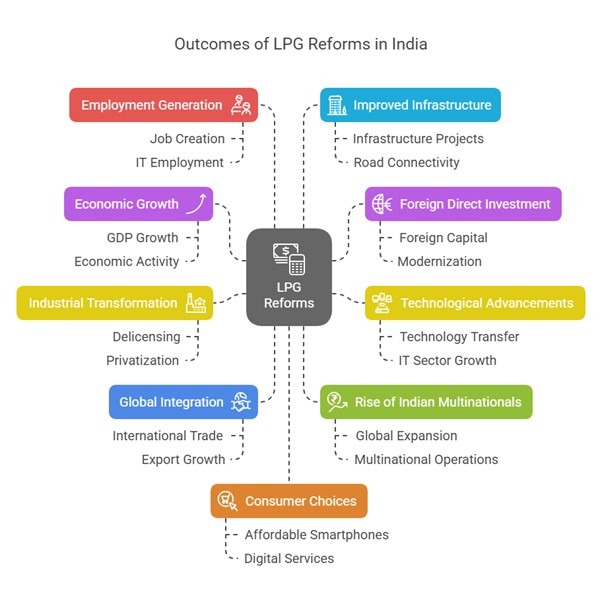
The liberalization, privatization, and globalization (LPG) reforms implemented in India during the early 1990s had profound and far-reaching outcomes across various sectors of the economy. Here’s an overview of the key outcomes:
1. Economic Growth
- Significant Increase in GDP: The LPG reforms were instrumental in driving India’s economic growth, with the average GDP growth rate rising from around 4% in the pre-reform era to over 7% in the post-reform period. This marked a departure from the earlier slow growth trajectory, positioning India as one of the fastest-growing economies in the world.
2. Foreign Direct Investment (FDI)
- Attraction of Foreign Capital: The reforms attracted substantial direct foreign investment into India. This influx of capital helped modernize various industries and fostered technological advancements, particularly in sectors like automotive manufacturing, where global companies established production bases in India.
3. Technological Advancements
- Technology Transfer: The LPG reforms facilitated the transfer of technology and know-how to Indian firms. The information technology sector experienced remarkable growth, with Indian companies becoming key players in global IT services, driving advancements in software development and IT-enabled services.
4. Industrial and Sectoral Transformation
- Increased Competition and Efficiency: The delicensing and privatization of industries resulted in heightened competition and improved operational efficiency. For example, the telecom sector underwent substantial transformation, leading to a significant expansion in mobile phone usage and affordable services for millions.
5. Global Integration
- Active Participation in Global Markets: The reforms opened the Indian economy to global markets, leading to an increase in international trade. India’s merchandise exports grew dramatically, from $18.1 billion in 1991 to $345.6 billion in 2020, highlighting its integration into the global economy.
6. Rise of Indian Multinational Companies
- Global Expansion: The LPG reforms empowered Indian companies to expand internationally. Prominent firms such as Tata Group, Infosys, and Reliance Industries transitioned into multinational corporations with operations and investments across several countries.
7. Employment Generation
- Job Creation: The reforms contributed to the creation of increased job opportunities in various sectors. For example, the IT and business process management (BPM) industry alone employed over 4.4 million professionals by 2020, becoming a significant source of employment.
8. Improved Infrastructure
- Investment in Development: The LPG reforms spurred investments in infrastructure development. Initiatives like the Golden Quadrilateral project, initiated in 1999, significantly improved road connectivity among major cities, enhancing transportation and logistics.
9. Consumer Choices and Quality
- Increased Choices and Quality: Liberalization and increased competition led to a wider range of goods and services for consumers, along with improved quality. The availability of affordable smartphones and internet connectivity transformed the digital landscape, enabling greater access to information, online shopping, and various digital services.
10. Entrepreneurship and Innovation
- Growth of the Startup Ecosystem: The LPG reforms fostered a culture of entrepreneurship in India, leading to significant growth in the startup ecosystem. India ranked third globally in terms of the number of startups, with companies like Flipkart, Ola, and Paytm revolutionizing traditional sectors and introducing innovative business models.
11. Poverty Reduction
- Positive Economic Impact: The sustained economic growth resulting from the LPG reforms contributed positively to poverty reduction, lifting millions out of poverty and improving living standards across the country.