
State Information Commission (SIC)
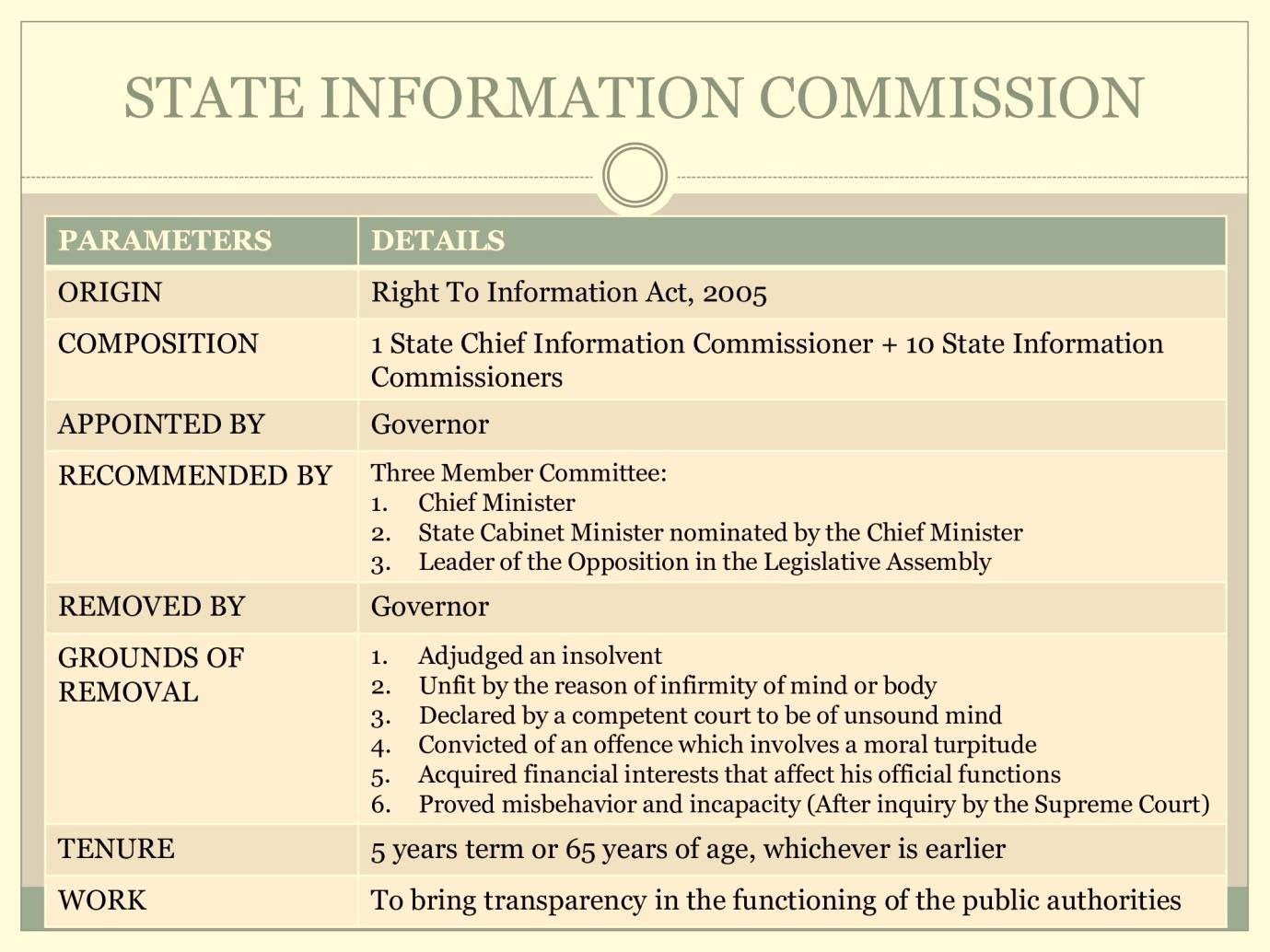
The State Information Commission (SIC) was established under the Right to Information Act, 2005, to promote transparency and accountability in government by addressing complaints related to the non-disclosure of information by public authorities. Below are the key aspects regarding its establishment, composition, powers and functions, and the impact of the Right to Information (Amendment) Act, 2019.
Establishment
- The State Information Commission is formed in every state to facilitate the implementation of the Right to Information Act.
- Each state’s commission is established through an Official Gazette Notification, ensuring that it addresses local governance issues effectively.
Composition
1. Chief Information Commissioner:
- The head of the State Information Commission, appointed by the Governor of the state.
2. State Information Commissioners:
- The commission can have up to ten State Information Commissioners.
- They are appointed on the recommendation of a committee that includes:
- The Chief Minister (as chairperson).
- The Leader of Opposition in the Legislative Assembly.
- A state Cabinet Minister nominated by the Chief Minister.
3. Eligibility Criteria:
- Appointees should be persons of eminence with wide knowledge and experience in law, science and technology, social service, management, journalism, mass media, or administration.
4. Terms and Conditions:
- The term of office is not fixed by the Constitution but is determined by the Central Government, generally holding office until the age of 65 years.
- They are ineligible for reappointment after their term and cannot accept any other office of profit after their term.
Powers of the Commission
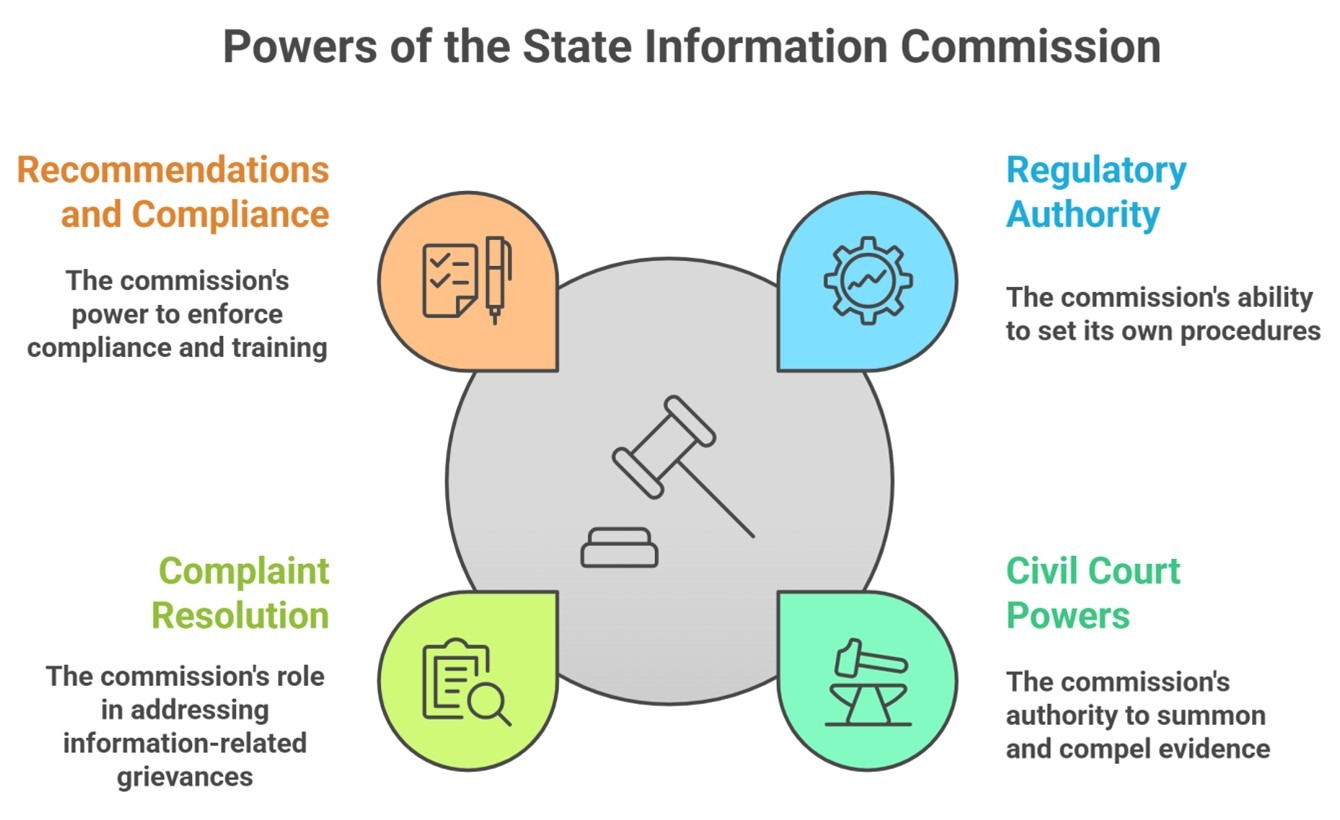
The State Information Commission is granted several powers that enable it to function effectively:
1. Regulatory Authority:
- The Commission can regulate its own procedures during investigations and inquiries.
2. Civil Court Powers:
- When investigating complaints, the Commission has the powers of a civil court, including:
- Summoning individuals and enforcing attendance.
- Compelling the production of documents.
- Receiving evidence on affidavits.
- Issuing summons for witness examinations.
- Accessing public records relevant to its inquiries.
- When investigating complaints, the Commission has the powers of a civil court, including:
3. Complaint Resolution:
- The Commission can inquire into complaints regarding:
- Non-appointment of Public Information Officers (PIOs).
- Refusals of information requests.
- Delayed responses to information requests.
- Unreasonable fees charged for information.
- Incomplete, misleading, or false information supplied.
- The Commission can inquire into complaints regarding:
4. Recommendations and Compliance:
- The Commission has the authority to secure compliance, including:
- Providing access to information and directing public authorities to appoint PIOs.
- Publishing information.
- Implementing training programs for officials regarding the Right to Information.
- Imposing penalties for non-compliance.
- The Commission has the authority to secure compliance, including:
Reporting Mechanism
- The Commission presents an annual report to the state government, which is then laid before the state legislature, along with a memorandum detailing the actions taken on the Commission’s recommendations.
Right to Information (Amendment) Act, 2019
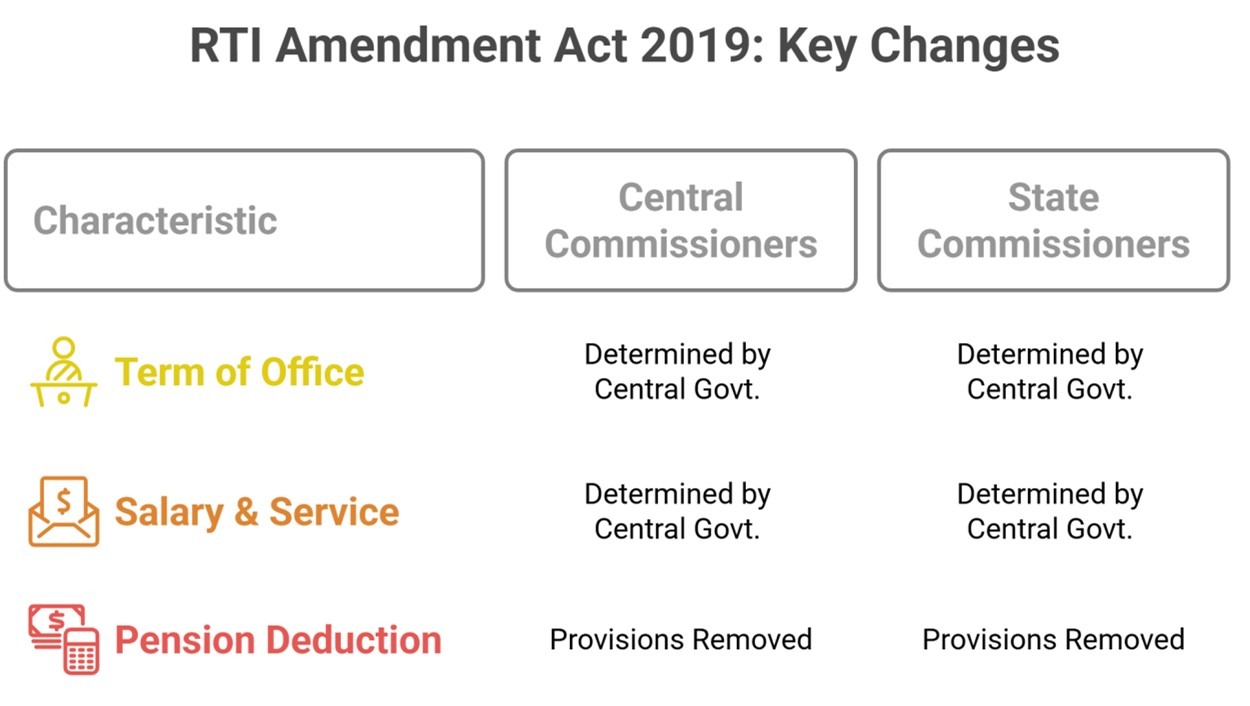
The Right to Information (Amendment) Act, 2019 introduced several significant changes aimed at refining the functioning of Information Commissions in India:
1. Term of Office:
- The Act changed the term of the Chief Information Commissioner and Information Commissioners from a fixed five years to a term prescribed by the Central Government.
2. Salary and Service Conditions:
- It provided that the salary, allowances, and conditions of service for these positions are to be determined by the Central Government, removing previous parity with the Chief Election Commissioner and the Election Commissioners.
3. State Information Commissioners:
- Similar changes were applied to the State Chief Information Commissioner and State Information Commissioners regarding their term and compensation structure.
4. Removal of Pension Deductions:
- The Act eliminated provisions that deducted salaries of the Commissioners based on pensions or retirement benefits from prior government service.
The State Information Commission plays a vital role in promoting transparency and accountability in governance through the effective implementation of the Right to Information Act. Its powers and responsibilities, alongside recent amendments, underscore the importance of fostering an informed citizenry and improving governmental accountability in India. The changes introduced by the 2019 Amendment aim to enhance the operational efficiency and independence of Information Commissions, thereby strengthening the democratic framework.