Administrative Framework
1. Scheduled Areas and Scheduled Tribes:
- Article 244(in Part X of the Constitution) establishes the framework for the administration of Scheduled Areas and Tribal Areas.
- The Fifth Schedulegoverns Scheduled Areas and Scheduled Tribes in all states except for Assam, Meghalaya, Tripura, and Mizoram.
- The Sixth Scheduleaddresses the administration of Tribal Areas specifically in the northeastern states of Assam, Meghalaya, Tripura, and Mizoram.
Administration of Scheduled Areas (Fifth Schedule)
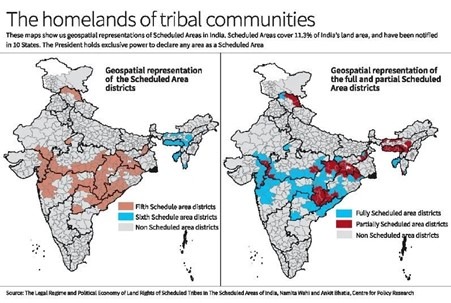
Scheduled Areas are designated for areas inhabited predominantly by “aboriginal” tribes identified as socially and economically backward. The Constitution stipulates certain administrative features to address their unique needs:
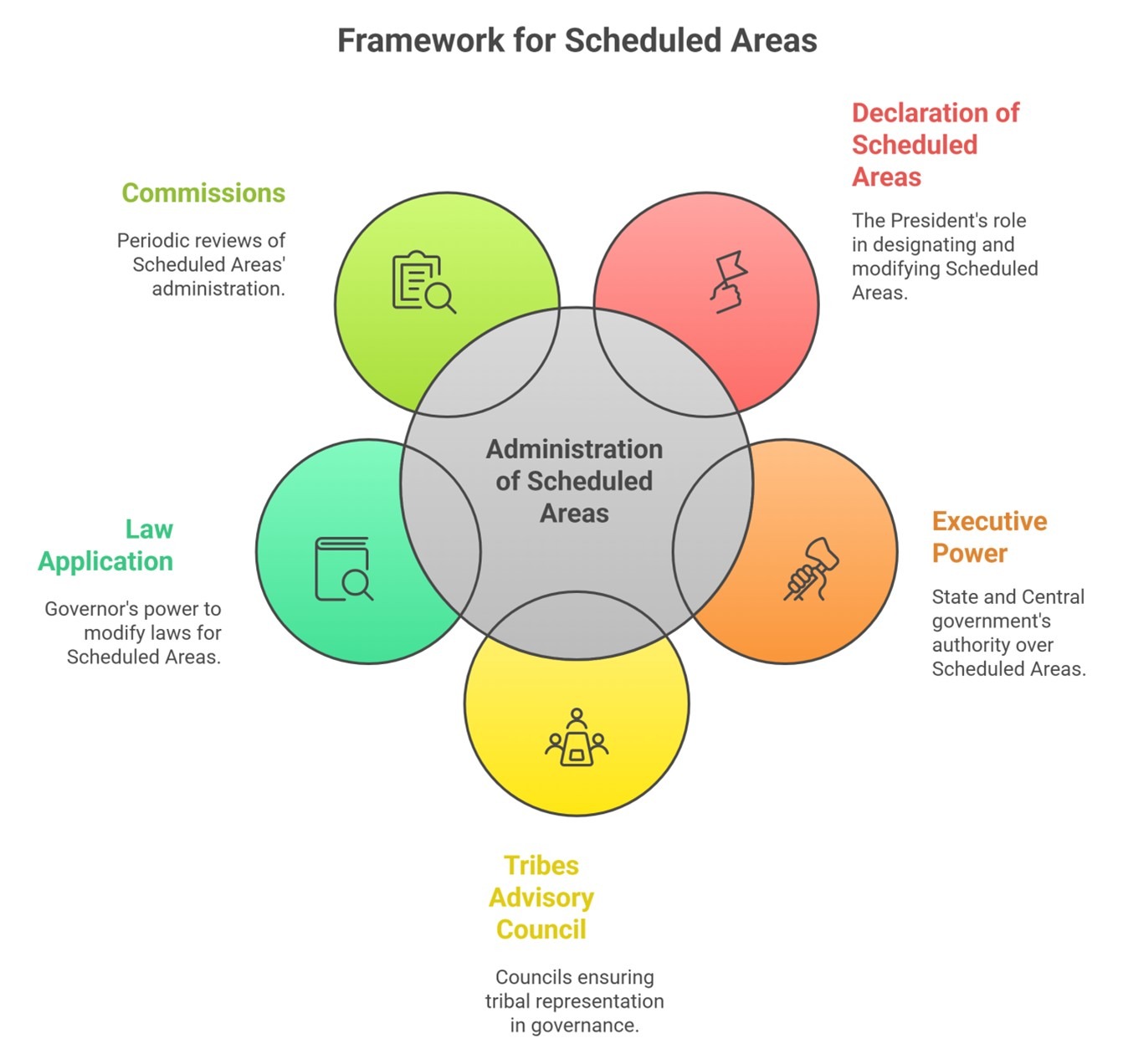
1. Declaration of Scheduled Areas:
- The Presidentis empowered to declare areas as Scheduled Areas, modify their boundaries, or rescind such designations in consultation with the state’s Governor.
2. Executive Power of State and Centre:
- The executive power of the state extends to Scheduled Areas, with the Governor holding special responsibilities to report to the President regarding their administration.
- The Central Government can direct states regarding the governance of these Scheduled Areas.
3. Tribes Advisory Council:
- Each state with Scheduled Areas must establish a Tribes Advisory Councilconsisting of 20 members, with three-fourths being representatives of Scheduled Tribes in the state legislative assembly.
- A similar council can be constituted in states with Scheduled Tribes but without Scheduled Areas if directed by the President.
4. Law Applicable to Scheduled Areas:
- The Governor has the authority to exempt certain acts of Parliament or state legislatures from applying to Scheduled Areas or to apply them with specific modifications.
- He can make regulations for governance, such as prohibiting land transfers among Scheduled Tribe members, regulating land allotments, and overseeing money-lending practices.
- These regulations require approval from the President.
5. Commissions:
- The President must appoint a commission to monitor the administration and welfare of Scheduled Areas every ten years.
- The first commission, led by U.N. Dhebar, reported in 1961, while the second commission was established in 2002 under Dilip Singh Bhuria, submitting its report in 2004.
The provisions related to Scheduled and Tribal Areas in India reflect the government’s commitment to addressing the unique conditions faced by indigenous populations. By granting special rights and administrative frameworks, the Constitution aims to promote their development while safeguarding their cultural identity and societal interests. The establishment of advisory councils and regulatory powers for Governors highlights the emphasis on localized governance to better address the needs of these communities.
Administration of Tribal Areas (Sixth Schedule)
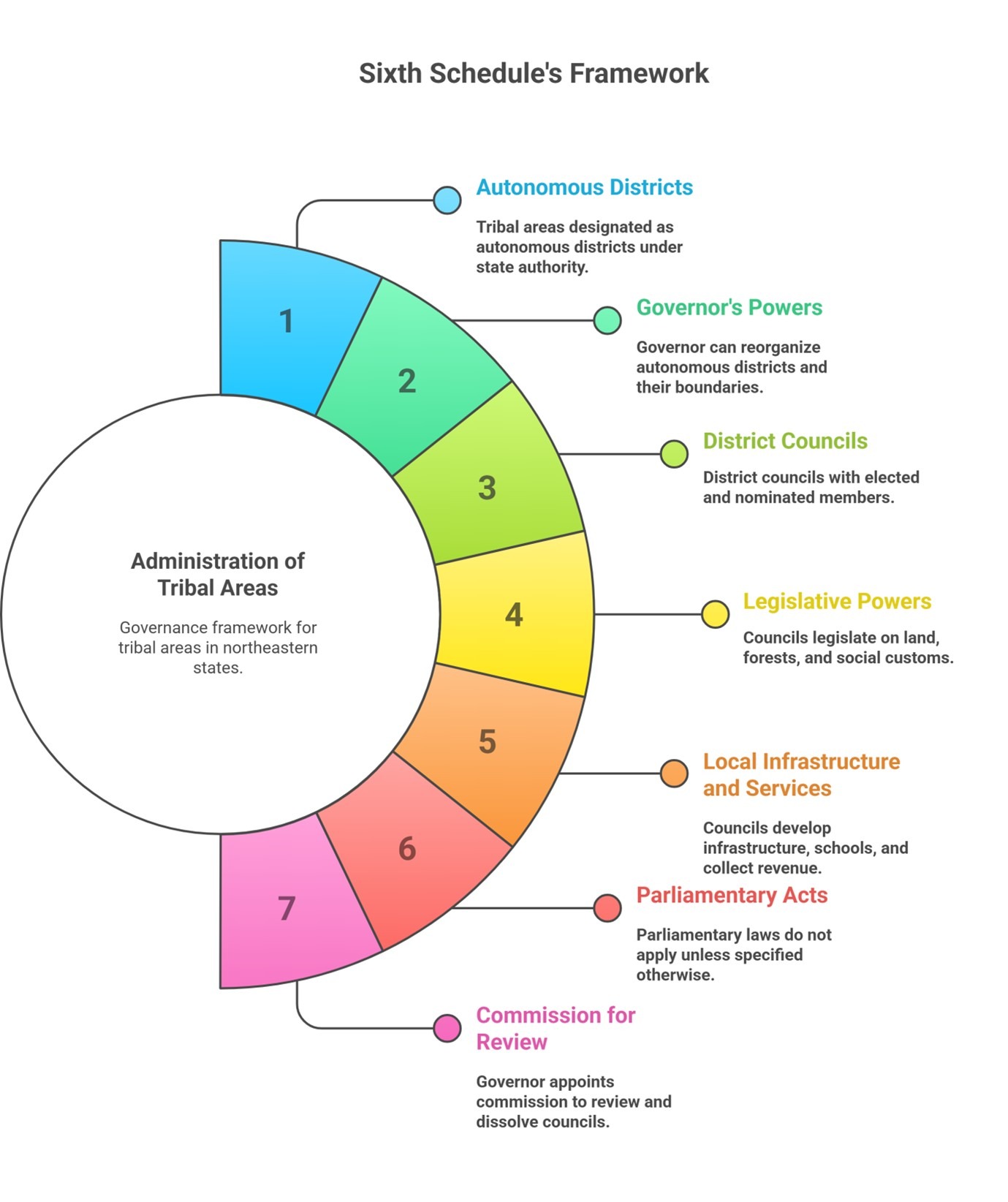
The Sixth Schedule provides for the administration of tribal areas specifically in the northeastern states of Assam, Meghalaya, Tripura, and Mizoram. The rationale for these provisions lies in preserving the unique cultures and traditions of the tribes which remain distinct from the wider cultural practices in the rest of the states.
1. Autonomous Districts:
- Tribal areas are designated as autonomous districtsbut still fall under the executive authority of the respective state.
2. Governor’s Powers:
- The Governor can organize or reorganize these autonomous districts, allowing changes to their areas, names, and boundaries.
3. Dividing Autonomous Districts:
- The Governor may divide an autonomous district into multiple autonomous regions if it houses different tribes.
4. District Councils:
- Each autonomous district has a district councilwith 30 members—26 elected and 4 nominated by the Governor.
- The elected members serve a five-year term. Each autonomous region also has its separate regional council.
5. Legislative Powers:
- District and regional councils can legislate on specified matters such as land, forests, village administration, and social customs, but these laws require the Governor’s assent.
- They can establish village councils and courts for resolving disputes among tribes, with appellate jurisdiction specified by the Governor.
6. Local Infrastructure and Services:
- Councils can establish schools, dispensaries, and develop basic infrastructures like roads and markets.
- They also have powers to assess and collect land revenue and impose certain taxes.
7. Parliamentary Acts:
- Laws passed by Parliament or state legislatures do not apply to autonomous districts or regions unless specified otherwise.
8. Commission for Review:
The Governor can appoint a commission to review the administration of autonomous districts or regions and may dissolve councils based on its recommendations.